

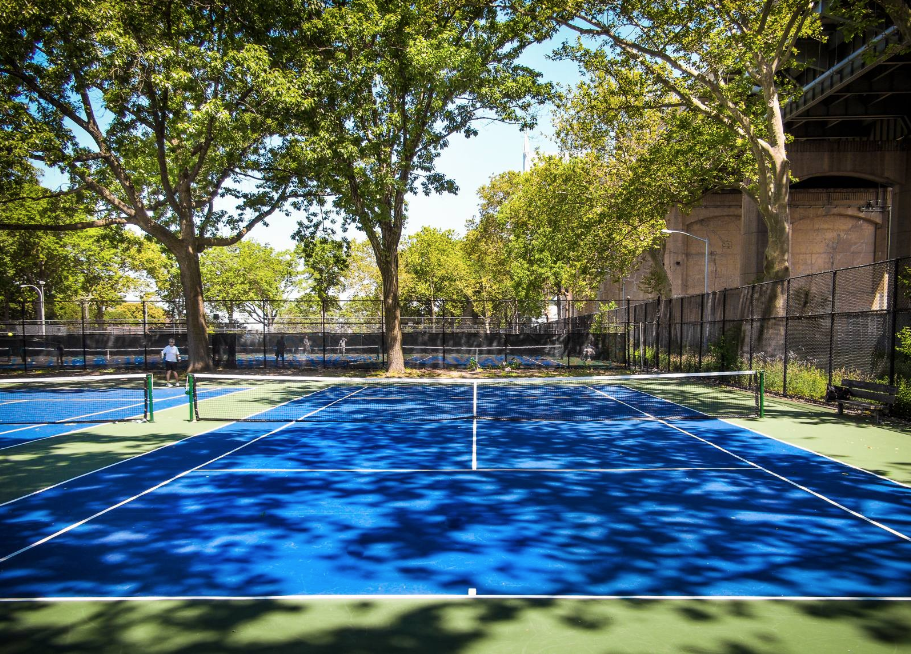
ASTORIA PARK — NYC Parks might hire a private company to build a giant “bubble” enclosure over the Astoria Park Tennis courts for part of the year, leading some local tennis players to fear that booking tennis time could soon get more expensive.
While supporters say it would improve the courts’ year-round accessibility, skeptics worry that the enclosure — which would be up from May-October and cover eight of the park’s 14 courts — could do just the opposite, bringing increased prices for court rentals.
They cite the similar McCarren Tennis Center in Greenpoint as an example of how enclosures operated by for-profit companies can lead to higher rental rates. The McCarren enclosure charges as high as $100 per hour for weekend court reservations, while the currently uncovered, publicly operated Astoria Park courts cost just $100 for the entire outdoor season, while courts are accessible for free during the winter off-season.
“They’re a private vendor, you know?” said Chris DiMino, an investigator for the New York State Department of Health’s Bureau of Funeral Directing and avid Astoria Park tennis player. “So we feel they won’t work in the best interests of the entire community.”
“We promote tennis in the community for all, and when you put in a bubble, you’re basically limiting it to people that can go and play there, because firstly they’re going to be charging, they say 50 to $100,” he continued. “But that’s the first year — they can always charge more, make it go up.”
At a Queens Community Board 1 meeting at Astoria World Manor in March, a NYC Parks Department team presented the plan. The City has yet to issue a Request for Proposal (RFP), meaning it is still unclear if the plan will proceed and no company has been chosen to devel- op the bubble. According to NYC Parks concessions head Alexander Han, who presented at the meeting, the City lacks the funds to build and operate the bubble itself.
Astoria resident Lena Wu submitted the petition to the Parks Department last year that led to the proposal, although according to DiMino, Wu did not thoroughly consult the rest of the tennis community before doing so.
“I didn’t play sports until I became an adult, and I think it’s super helpful to take this beloved, public resource that we have and make it something that can really serve us,” said Wu during her public testimony at the March meeting.
On the website astoriatennis. com, opponents of the bubble also list wildlife and concern for the trees that surround the courts — some of which would likely have to be removed during construction — as part of their opposition. Since the March community board meeting, opponents of the bubble have submitted their own petition, which has garnered 2,128 signatures as of May 26.
“We would totally be okay with the idea of someone buying a warehouse in Long Island City, knocking it down and putting up courts there,” DiMino said. “But we don’t want it on park land.”