
A film-production worker’s take on sharing space on Astoria’s increasingly busy streets.
NICOLAS STERGIOU | nicolas.stergiou@gmail.com
Producer, Social Media Manager, labor Organizer, and Unofficial “Astoria Street Spectator.”
I’m one of the crew members on those pesky film sets and I hear this all the time. From drivers to cyclists and pedestrians alike–we are a minority that manages to annoy all three. But here’s the thing: most of us are from here and live here in NYC. And yeah – the frustration that comes when a truck blocks a bike lane, I get it.
And with productions like The Exorcist shooting around Astoria lately, it’s not exactly subtle when a block gets taken over.
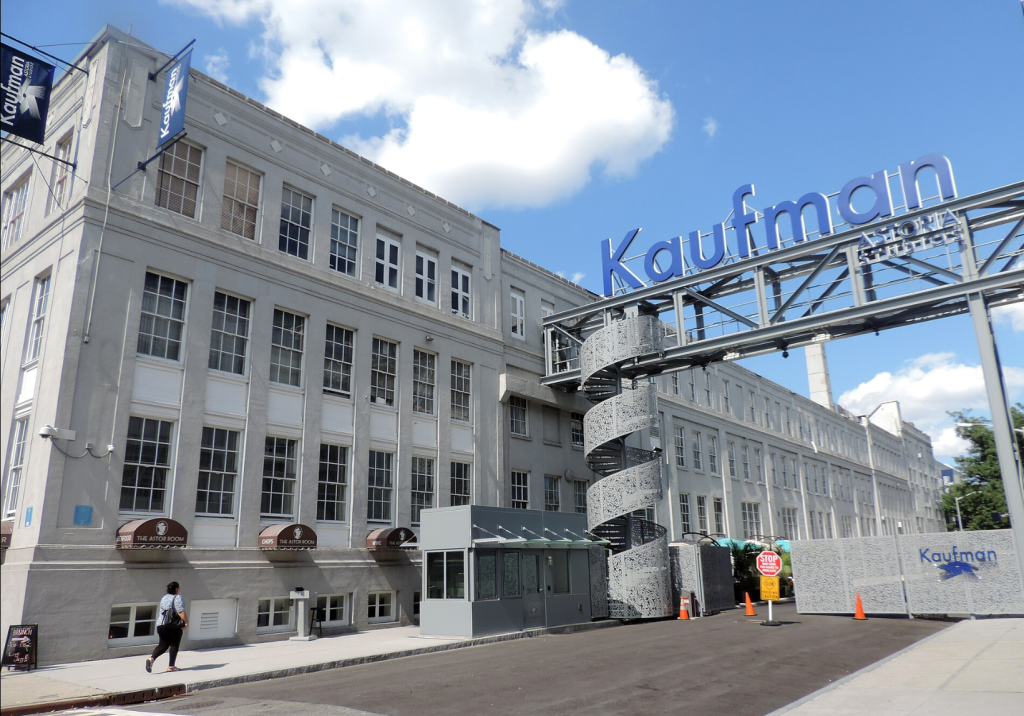
You know how to get to Sesame Street? Take the N to 36th Avenue or the R/M to Steinway. They shoot at Kaufman Astoria Studios. That’s not Hollywood. That’s Astoria baby. Did you know the first Nickelodeon theater was in Astoria? It wasn’t—it was Pittsburgh. But you believed me for a second. Still, “Nickelodeon” comes from the Greek word “odeon”… and Astoria’s still pretty Greek last time I checked. “THERE YA GO!”
Film history and Astoria have always been closer than people think. Most of what you’re seeing on your block isn’t even a movie. It’s more likely a commercial, a TikTok campaign, a TV spot, or something you’ll scroll past in five seconds. Those trucks and vans are holding lights, cameras, wardrobe, and catering—everything needed to make that content. The people inside them are your neighbors. It might look like chaos, but it’s organized and necessary chaos for us to do our jobs properly and safely.
We hire locally, too. Background actors come from companies like Central Casting and Background Inc., and many of them live right here in Astoria. When I worked at Sesame Street we regularly got catered meals from Napoli, Pollos Mario Astoria Restaurant, and Chicken Shack. This neighborhood has long been a hub for working actors, rental houses, and crew because it’s a bit more affordable and well-connected. Astoria isn’t just part of film history—it helped build it.
But the industry is changing fast. What used to be “film” is now “content.” It’s faster, smaller, and increasingly vertical. Attention spans are shorter. At the same time, costs in New York are rising, AI is replacing parts of the process, and crews are shrinking. As Bernie Sanders often says, AI should benefit workers and not just billionaires. Right now, it doesn’t. Our days are getting cut, but the workload isn’t getting lighter.
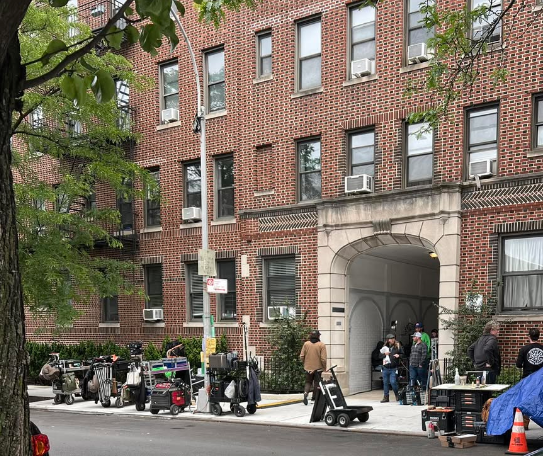
If there’s one group carrying the weight on set, it’s them. PAs are often the most reflective of the working-class, marginalized black and brown communities that make up New York—people from the Bronx, Brooklyn, and Queens. Many are born and raised here and the rest are transplants who are driving a truck in the city for the first time, desperate to try to make it here and accepting their first job on an indie film set. They work the longest hours for basically minimum wage, and they take the most heat. They’re the ones holding parking spots, coordinating trucks, making runs, knocking on doors, and dealing with frustrated neighbors. They get yelled at and are often too scared to speak up.
Of course, companies should pay fair wages—that’s something we fight for every day. And it’s happening finally with movements like Production Assistant United for TV/Film and our new labor union IATSE Local 111 The Production Workers Guild for commercials. But in real time, it’s usually the PA absorbing pressure from all sides. And when you’re just trying to make a living, getting yelled at on your own block by someone who doesn’t see how long and difficult of a day you’ve had… yeah, there’s going to be friction.
And look—I’m pro-bike lane even though I don’t ride a bike (anymore). I’m pro-safety. I’m pro-making Astoria better for everyone. But I’m also going to look out for the truck driver–especially that non-union one fighting labor rights.
And to be clear, when a truck blocks a bike lane, that’s not okay. It’s dangerous. I don’t expect cyclists to just deal with that, and they shouldn’t have to. No one should be put in harm’s way because of how a job is planned. The issue isn’t cyclists versus drivers—it’s a system where workers are sent out with nowhere to legally stop, and where companies aren’t held accountable for planning safe, realistic logistics. If we actually enforced clear loading zones and required productions to plan for them, we wouldn’t be having this conversation. Until then, both cyclists and workers are stuck dealing with the consequences.
Because those are workers under pressure to deliver, to move, to keep things running—often with nowhere to legally stop even when there are loading zones (often taken by cars wingin’ it). I think about people like Chris Smalls, who fights for delivery workers and reminds people that convenience has a human cost. The same people getting yelled at for double-parking are the ones delivering your packages, your food, your life. The film industry runs on that same backbone.
So while we build a safer, better neighborhood, we can’t forget the people doing the hardest, most exhausting jobs to keep it running. And we still need to hold companies accountable for safely executing that work.
Yeah, when a production takes up your parking spot for a day or two, I get the frustration. But those trucks represent jobs—local ones—for laborers and artists trying to make a living in a historic filmmaking city and an industry that is getting harder to work in by the year.
Astoria has always been a place where culture is made, not just consumed. That hasn’t changed. What’s changed is how fragile that ecosystem has become.
So the next time you see cones and trailers on your block, just remember: it’s not Hollywood invading. It’s your neighbors trying to hold onto an industry that’s shifting under their feet.
And if things keep going the way they are, you might see me out of work more often and DJing karaoke or running a Super Smash Bros tournament on 31st Avenue. But you know what? That’s not the worst outcome for me at all. The worst outcome is a city where the people who make it run can’t afford to work in it anymore.