

In the 19th century, Astoria was the summer playground of New York’s elite.
GEOFFREY COBB | gcobb91839@Aol.com
Author, “Greenpoint Brooklyn’s Forgotten Past
My wife and I have always had a soft spot for Astoria. We lived there in the early 90s and fell in love with the immigrant vibe, the food and the amazing cultural diversity. Astoria was very Greek then, but there were also Italians, Croats, Serbs, Czechs and Irish. Since then, Egyptians, Brazilians and other immigrants have arrived, adding to the area’s amazing diversity. The streetscape is a mix of bustling avenues full of shops, ethnic restaurants, trendy bars and cafes, along with side streets, which are a mix of decades old row houses, squat two family homes and brick apartment buildings.
Today’s working class, low rise, multi-ethnic Astoria seems light years away from what Astoria was in the nineteenth century. It is hard to believe that Astoria was once an elite community of mansions, elegant estates and the summer residence of New York’s merchant kings. Astoria was once what the Hamptons are today. A lengthy 1896 New York Times profile of the area stated, “The history of Astoria would read like a sketch of some of New York’s oldest and most honored families, because thirty years ago the summer homes of many of New York’s famous old New York merchants lined the shores, surrounded by generous and beautiful grounds superbly kept.”
Though I lived there, I never suspected Astoria boasts the oldest continuously occupied residence in New York City, the Lent Riker Homestead erected in 1656. The house remained in possession of the Riker-Lent family until the 20th century, when it passed to William Gooth, who had been the personal secretary to the last Riker owner of the house. Gooth rented the house to tenants during the mid-20th century, on the condition that nothing about the property could be changed and almost nothing has. Today, you can tour this historic home.
Many of these legendary mansions are long gone, but a few have survived. One of the victims of time was an elegant country home called Sunswick that stood near today’s Hallet’s Point. Built in 1792, it was the home of Major John Delafield and his wife, Ann Hallett. The two-story home with an elegant façade faced the East River and was surrounded by a wide expanse of farmland.
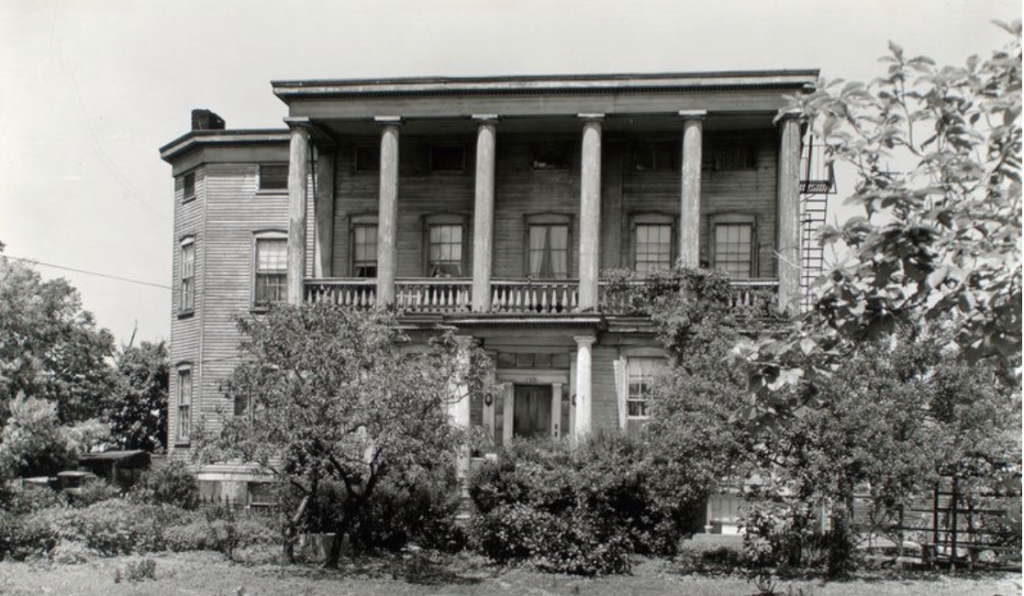
Another ancient house was the Josiah Blackwell Mansion that once stood on the former elegant Franklin Avenue around what is today 27th Ave and 8th Street. The home belonged to the family who were the original settlers of the area and who once owned Blackwell’s Island, now known as Roosevelt Island. The home featured two floors of doric columns and an elegant veranda as well as a large lawn.
Stephen Halsey, the founder of the village of Astoria, came to Astoria from Manhattan fleeing a cholera outbreak. Finding the area rural and charming, Halsey decided to stay and built his home in 1838 around the same year he named the area for his friend, fur merchant John Jacob Astor. Halsey hoped that Astor could be induced to sponsor the new neighborhood by naming the new village Astoria in his honor, but Astor, a shrewd businessman, only contributed $2,000, yet the name stuck. Still fearing disease, Halsey built a mansion in 1840 with two-foot-thick granite walls. He lived in the house until his death in 1870. The mansion later became an elementary school and lasted until 1953.
Other wealthy New Yorkers followed Hasley. Astoria offered large, inexpensive plots of land just a ferry ride away from Manhattan. Manhattan merchant Horace Whittemore built a three-story residence called La Roque Mansion with elegant columns nearby the Halsey estate. Its sumptuous interior featured a large central hall flanked on the right by a pair of formal parlors and on the left by a family living room and a billiards room. Though the house was demolished in 1965, its parlor survives today in the American Wing of the New York Metropolitan Museum.
The 1896 New York Times article mentioned the elegant Barclay Mansion. The Barclays were a rich merchant family, whose name graces a street in lower Manhattan. The three-story brick mansion built in the 1840s featured verandas on the first two floors and spacious grounds. The mansion was demolished in 1916, and the site of the mansion today lies in Astoria Park.
The mansion once known as Rosemont has survived at 25-37 14th Street, but little of its former glory survives. The home was once a beautiful two-level Doric-columned country house, built in a grand Southern-plantation style by varnish moguls Smith & Stratton in 1852, who operated in Astoria Village till 1856. The house then passed to the Benner family. Mr. Benner was an enthusiast in floriculture and arboriculture. His beautiful gardens contained many specimens of rare trees and shrubs while the flower beds, chrysanthemums and rose houses had wide renown. The cultivation of these flowers was Mr. Benner’s delight, and he added many new specimens by propagation and cultivation to the world’s knowledge.
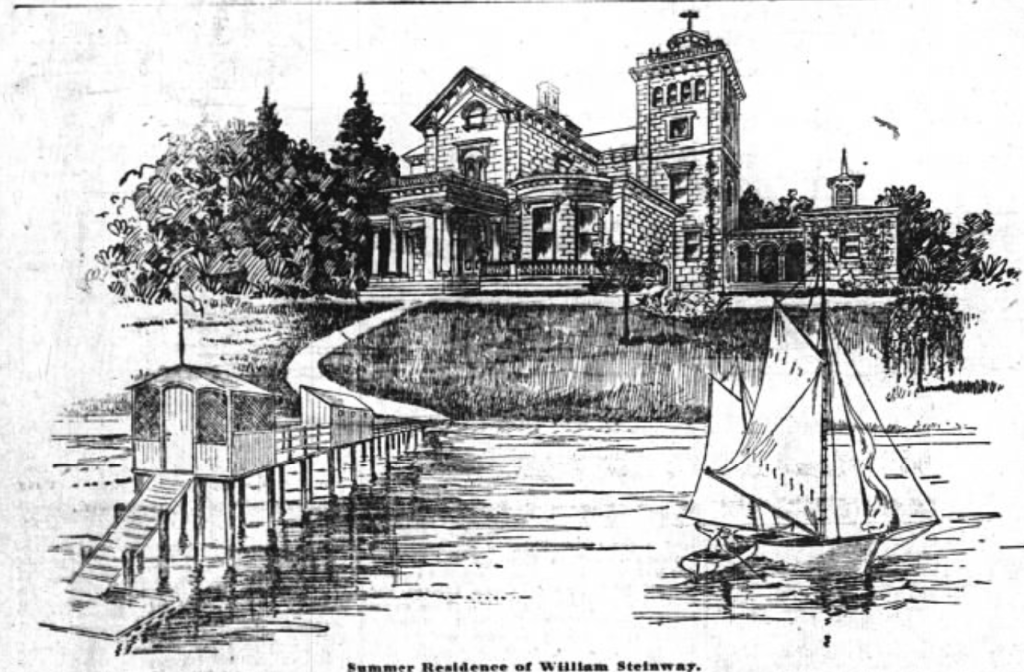
Steinway Street is one of the principal thoroughfares of Astoria, named for German-born William Steinway, who not only built his piano factory here, but much of Astoria as well. Luckily his mansion survives at 18-33 41st Street and is listed on the National Register of Historic Places. The Italianate and Renaissance Revival house was built by Benjamin Pike in 1853-1854, but in 1870 Steinway purchased the mansion and the grounds, which he used for his Steinway Village, which became home for many of the workers in his piano factory.
Many of these old mansions were located on Astoria Boulevard in Hallet’s Cove. So, what happened to them? Robert Moses had them in his sights for urban renewal. The City wanted to build the Astoria Houses and acquired title to 134 properties on 29 acres on Hallets Points including the old Haley mansion. In 1946, the groundbreaking took place and the last Hallets Cove mansions vanished, robbing Astoria of a rich architectural legacy.