

BY COLE SINANIAN
CITY HALL — Amazon does not directly employ its delivery drivers, but that could be about to change thanks to a bill sponsored by Astoria City councilmember Tiffany Caban.
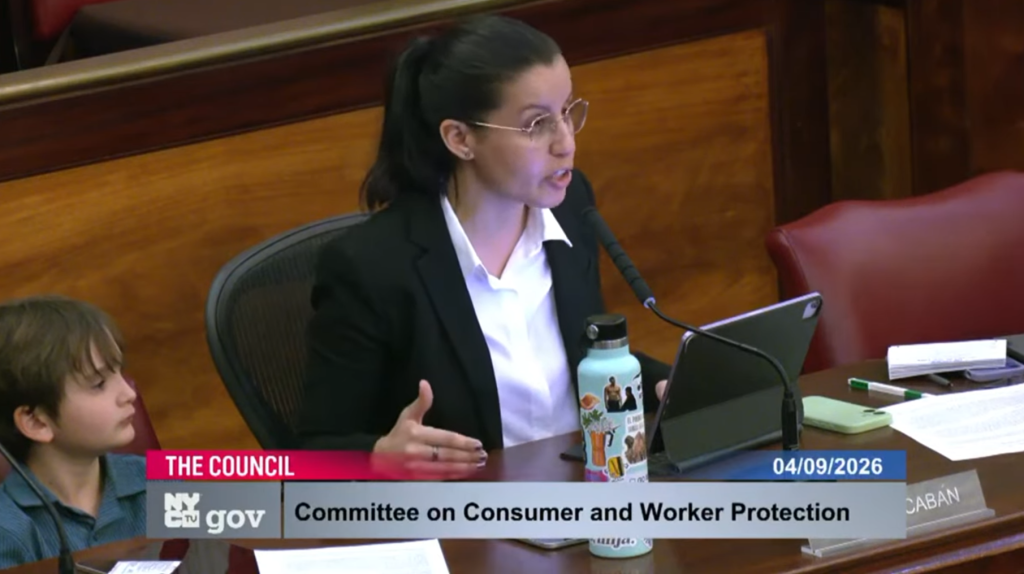
The New York City Council’s Committee on Consumer and Worker Protection convened Thursday to hear testimony regarding Intro 518, also known as the Delivery Protection Act. The bill, which would require last-mile delivery facilities to obtain licenses from the city, has been backed by unions and Mayor Mamdani, who’ve hailed it as a potential win for labor that would make Amazon accountable to its workers and improve street safety. Critics, however, have maintained that the bill would only cost consumers by adding unnecessary fees to the delivery process, and hurt the local “Delivery Service Partners” that Amazon contracts to complete deliveries.
Though they wear Amazon uniforms, drive Amazon vehicles, and deliver Amazon packages, Amazon delivery drivers are not technically Amazon employees. Instead, they are employed by the smaller, local companies that operate the last-mile warehouses, called Delivery Service Providers (DSP). Amazon pays workers salaries and sets their schedules and quotas, but if something goes wrong — a traffic accident, for example — it is the DSP that is liable, not Amazon.
As Caban explained in her introduction Thursday, high delivery quotas encourage drivers to move as fast as possible, increasing the risk of accidents. According to a 2025 report from the city comptroller’s office, rates of traffic accidents are on average 137% higher around last-mile facilities. In the streets around just one in Maspeth, Queens, crash rates rose by 53 percent.
“And when these accidents happen, the company who controls the van, the worker, and the route suddenly tells us that this worker is not their employee and that it’s the subcontractors who are to blame,” Caban said.
“My bill would make New Yorkers, including workers, safer,” she continued. “It would require licensing for last mile facilities, direct employment of drivers, protection against unfair termination and retaliation, real worker training, and we have an outpouring of support from workers, unions, environmental groups, and traffic safety organizations.”
If passed, the Delivery Protection Act would require DSPs to pay $500 for a city license. Carlos Ortiz, chief of staff and deputy commissioner of external affairs at the Department of Consumer and Worker Protections (DCWP), characterized the bill as necessary to holding corporations accountable for malpractice.
“This model externalizes costs as well as liabilities which can lead to labor violations and the exploitation of workers in unsafe working environments,” Ortiz said. “We can’t allow protections for New Yorkers to be held hostage to corporate threats.”
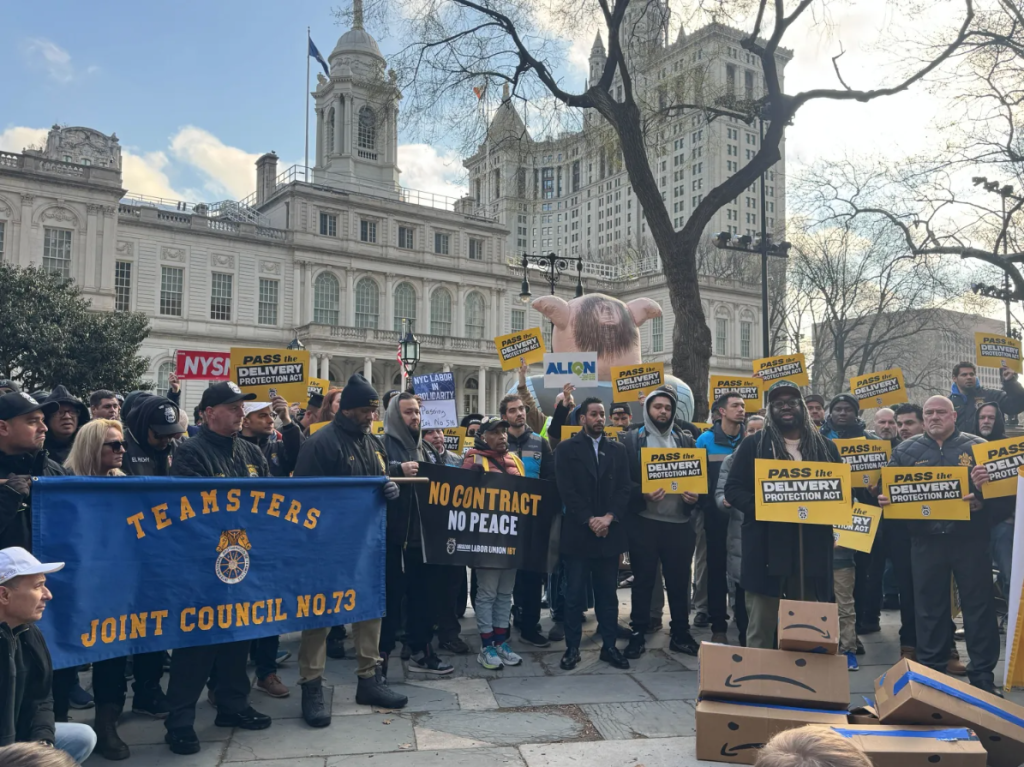
As lawmakers heard testimonies at City Hall, a group of delivery drivers convened by a coalition of trade groups called New York Delivers rallied outside against the Delivery Protection Act. Councilmember Caban, however, noted that she had received an email from a group of delivery drivers prior to the hearing which suggested that DSPs had paid their workers to show up to the hearing to protest the bill.
“Drivers were forced to attend,” Caban said in her introduction, quoting the email. “In mandatory meetings, management asked in front of everyone who was not going to go, and they made us raise our hands in front of our co-workers.”
One Amazon driver, a man named Jose Suerta who’s worked at the DBK1 warehouse in Woodside for four years, testified in support of the bill, criticizing the company’s apparent disregard for worker safety.
“I decided to focus on organizing after a particularly hot summer day when a co-worker fainted,” he said, speaking in Spanish through an interpreter. “When she called the dispatcher, this was her response: ‘Sit down, drink some water, and then continue with your work route.’”
”The following week, the same thing happened to another woman,” Suerta said. “She received the exact same response when she called the dispatcher of Amazon.”
Manhattan Chamber of President Jessica Walker, meanwhile, criticized the bill, noting that while its intentions were good, it would add needless bureaucratic hurdles and contradict Mayor Mamdani’s affordability agenda.
”I support every goal this bill claims to address,” Walker said. “I want delivery workers to be safe. I want them paid fairly. I want our streets safer. “What I oppose is the mechanism because the mechanism doesn’t achieve any of them and it imposes serious collateral damage on small businesses and consumers in the process.”
She continued: “This is the equivalent of putting a New York City tariff on every package that is brought into our city. 2.5 million packages a day. Every one would be more expensive.”
Manhattan City councilmember Harvey Epstein, who chairs the Committee on Consumer and Worker Protection, clapped back:
“There’s an agreement that we need to deal with the issues of additional crashes that are happening in our city, so the questions are, how do you resolve those problems? Sounds like you may disagree that that will resolve those problems, but we need tools to be able to resolve these issues in our city.”