

By Christian Spencer
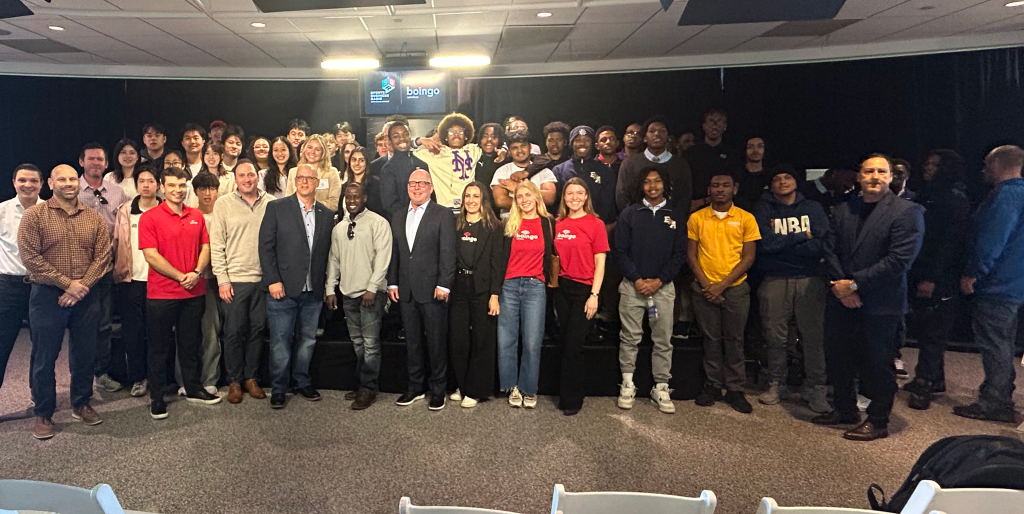
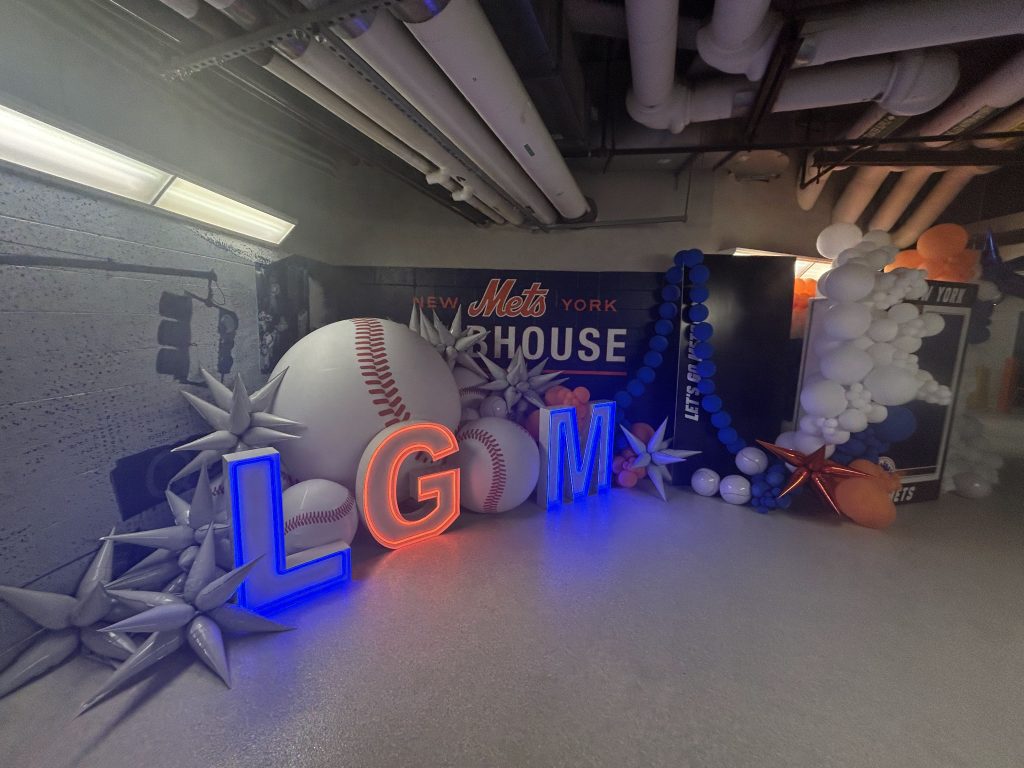
Boingo Wireless and the New York Mets are partners, having brought students to Citi Field for a behind-the-scenes look at stadium technology.
In total, about 150 students of various ages visited the building, but 30 students from Eagle Academy, Columbia University, and NYU had the privilege to attend the live podcast recording and be in the presence of Mets executives and Boingo representatives.
The event on March 31 ran from 10 a.m. to noon on the Excelsior Level, home to VIP lounges and private event spaces, as part of the Sports Business Radio Road Show, hosted by Brian Berger.
Students toured the stadium, attended the live podcast, and learned how connectivity supports operations and fan engagement.
When fans walk into Citi Field, they see baseball, food, music, and big moments—but what they don’t see is a massive, always-on technology ecosystem that makes the entire experience feel seamless. What fans experience as a fun, seamless night at the ballpark is actually powered by a carrier-grade wireless network, thousands of connected devices and endpoints, a massive digital display ecosystem of roughly 1,300 screens, and real-time coordination between operations, entertainment, and technology teams.
“Boingo Wireless is the backbone of connectivity at Citi Field, powering the Wi-Fi and cellular network that keeps game days running smoothly,” said Vanessa Figueroa, Vice President at Bolton-St. Johns. “Its infrastructure supports everything from mobile ticketing and cashless payments to in-seat ordering, live stats, and the content delivered across more than 1,000 screens throughout the ballpark, along with critical behind-the-scenes operations like security and staff communications. Without it, fans would feel the difference immediately. Boingo’s network is the invisible foundation that makes the entire Mets game day experience fast, seamless, and connected.”
“Anytime we create connectivity at a venue, it’s really what the venue wants to deliver,” said Mike Finley, CEO of Boingo Wireless. “The Mets, like almost every one of our customers, wants to deliver a great customer experience. So at Citi Field, what that means is the ability to get into the stadium, contactless entry and ticketing. But really it’s to have high speed, low latency, very secure type of connectivity so that they can engage them in various aspects, whether it’s engagement with the game, engagement with the scoreboard, engagement with activities, the food, a lot of different capabilities.”
Students were exposed to career paths in stadium operations and technology.
Among the most overlooked are network and connectivity engineers, often working with partners like Boingo Wireless. “They power the Wi-Fi and cellular systems that enable mobile ticketing, cashless payments, and real-time fan engagement across venues like Citi Field,” Figueroa said. Control room and broadcast technicians are another critical group, managing live video, audio, and in-game entertainment across hundreds of screens in real time. IT and systems support teams keep everything running, from ticketing and concessions to security and internal communications, often resolving issues before fans ever notice. There are also data and analytics specialists optimizing operations and fan experience, and digital signage and content operators who shape what fans see and feel throughout the ballpark.
Also, on the ballpark experience side, there are a lot of career opportunities most don’t think about. “Everything from culinary, hospitality, field maintenance and horticultural landscaping,” Figueroa said. “These roles may not be visible, but they are essential. Without these roles, the modern stadium experience wouldn’t function.”
“I think we are at an inflection point when it comes to AI, what we were talking about, where the sky is really the limit. I mean, it’s transformative for you all,” said Oscar, Senior Director of Technology at the Mets. “I think embrace it, because it’s changed radically in the last three months, the last three years, certainly, but it will continue to change.”
Opportunities for college students were outlined.
“We have plenty of entry-level positions across the organization, especially on the game day level, are largely populated by college students,” said Oscar. “We have a tremendous amount of opportunities from handing out bobbleheads, which is where I started many years ago, to being part of our food service operation, our retail operation. I think there’s plenty of roles that you can get into just on a game day level. And then beyond game day, we have a bunch of internships, associateship programs that we offer to college kids.”
Students learned how data informs fan experiences. “We spend a whole lot of time taking a look at all that data that comes through,” said Oscar. “But we’ll also spend a whole lot of time taking a look at our sales data and analyzing that accordingly to see what’s hitting, what’s missing, and making the adjustments from there.”
James, Director of Digital Operations at the Mets, explained AI’s role in speed and decision-making. “Now to process that data, to analyze that data, to take action, that’s where AI is coming in to make that so much faster. Where literally something that might have taken a couple weeks, well now we’re building solutions that are telling us that in minutes, right? And allowing us to ideate, allowing us to also even use AI to create different messaging that would marry with that.”
Why is it important for organizations like Boingo and the Mets to invest in exposing students to these types of career paths?
“The modern sports industry runs on technology as much as talent on the field,” Figueroa said. “Many students simply aren’t aware that roles in networking, IT, data, and live event production even exist within sports. By creating early exposure, these organizations help build a pipeline of diverse, skilled talent ready to support the next generation of stadium experiences. It also shows students that a career in sports doesn’t have to mean being an athlete, it can mean building, powering, and innovating the game behind the scenes.”
What skills should students be developing now if they’re interested in working in sports business or stadium technology?
“Students interested in sports business or ballpark technology should focus on building a mix of technical and practical skills,” Figueroa said. “Foundational knowledge in areas like IT, networking, and data analytics is increasingly valuable, especially as venues rely on partners like Boingo Wireless to power connected experiences at places like Citi Field. Equally important are problem-solving, adaptability, and communication skills. Game day environments are fast-paced and live, meaning teams need people who can think quickly, collaborate across departments, and troubleshoot in real time. Just as critical is gaining hands-on experience through internships, campus tech roles, or live event work, to understand how operations function behind the scenes.”
Brandon Stuart, a senior at Eagle Academy, said, “Yes, about how they go about talking about technology, which I won’t have to be using materials that you would have to use back then.”
Isaiah, another Eagle Academy student, said, “The sky is really the limit. I mean, it’s transformative for you all.”
Finley described Boingo’s presence in New York. “Boingo really has been engaged and involved in New York for a long period of time delivering great secure connectivity in venues that people need it,” he said.“Secondly is for an event like this where students can come and get a better feel for what goes on in the sports world. And then the third thing is really just making sure that this is a continuous evolution.”