

By Jack Delaney | jdelaney@queensledger.com
RIDGEWOOD — It was a Thursday evening, and on the second floor of P.S. 88 two members of the outreach team for the Inter-Borough Express (IBX) stood chatting in the hallway. “The first one of these I went to was in Middle Village,” said a grizzled man. “It was contentious.”
But there were few confrontations at this public workshop in Ridgewood, the last neighborhood presentation on the light rail project before the results of an initial study, the Draft Environmental Impact Statement, are released later this fall.
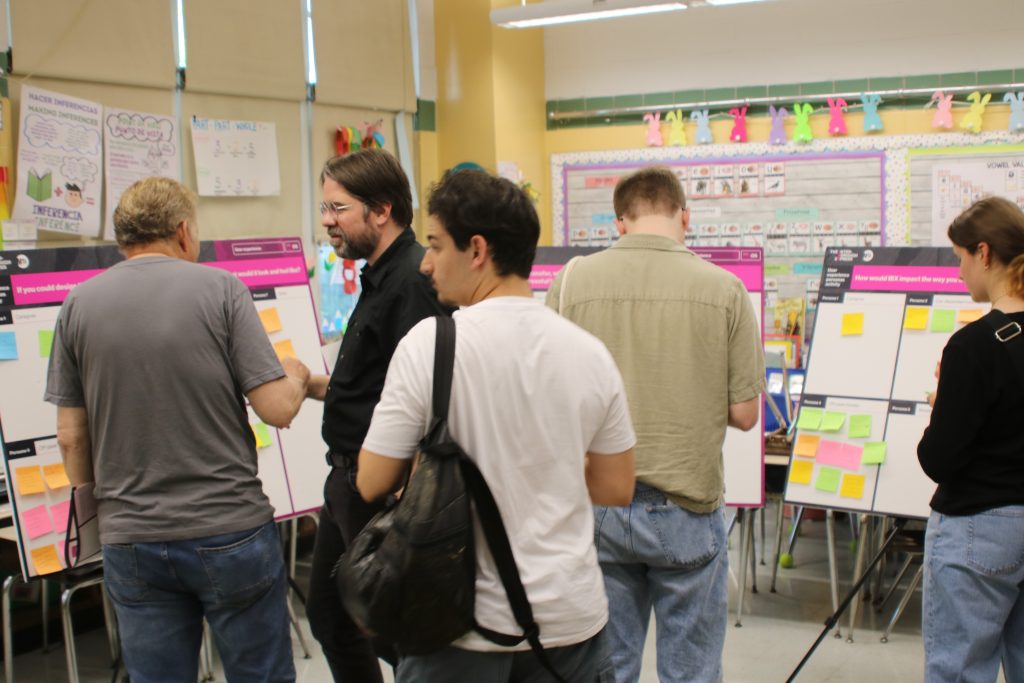
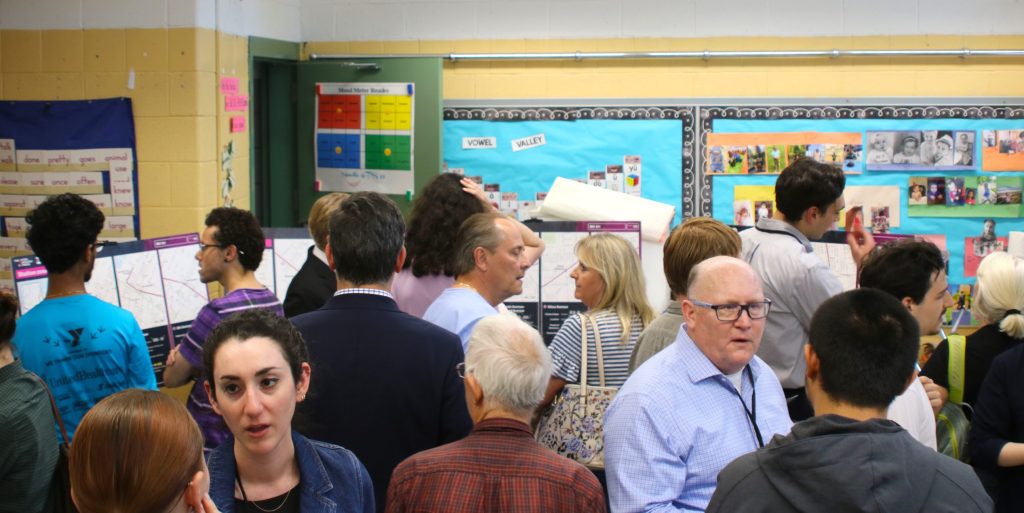
Instead, hundreds of residents filtered through the school’s hallways, scribbling their feedback on Post-It notes and testing IBX representatives with a laundry list of passionate — and highly specific — questions about the proposal.
First floated in 1996 as the Triboro RX, the IBX was rechristened and revived by Governor Kathy Hochul in 2022 as a 14-mile route from Sunset Park in Brooklyn to Jackson Heights in Queens.
The MTA argues that the project, which currently boasts a roughly $3 billion budget, would transform swaths of the city long considered transit deserts by providing an estimated 160,000 daily riders with a 32-minute end-to-end ride between the boroughs.
Fans and Skeptics
That’s not to say there weren’t sharp critiques at the expo, however.
Faye Au, a retired insurance broker from downtown Elmhurst, lives right next to the proposed corridor. The line is already used by a commercial freight company, CSX Transportation, which sends trains rattling along the tracks roughly twice per day.
But Au worries that the IBX — which representatives said will run every five minutes, around the clock — could cause untenable levels of noise pollution. She recently reached out to a window company that quoted her over $1000 to double up one of her yard-facing windows, a common tactic to dampen din.
“I only care about the noise,” said Au, who was skeptical of an outreach staff member’s argument that the IBX would be lighter and quieter than the CSX. “Some people can get used to it, but not me.”
Some attendees were simply curious to know more. Hank Hamann lingered outside the final room of the workshop, accompanied by his friend Melissa Orlando, a transit activist and now congressional candidate from Sunnyside.
Hamann explained that his neighbors in Middle Village, which he has called home for more than a decade, overwhelmingly oppose the plan. “It’s going to disrupt a lot of people where I live, because they’re used to things not changing,” he noted. “You’re going to have a different type of people coming to look at houses there.”
But when pressed on his own opinion, Hamann broke ranks. “I hope it’s going to happen, because I think change is inevitable,” he said. “Positive change is better than negative change. And this would be a positive change for all the neighborhoods, because you’ll have another option to get from one place to another.”
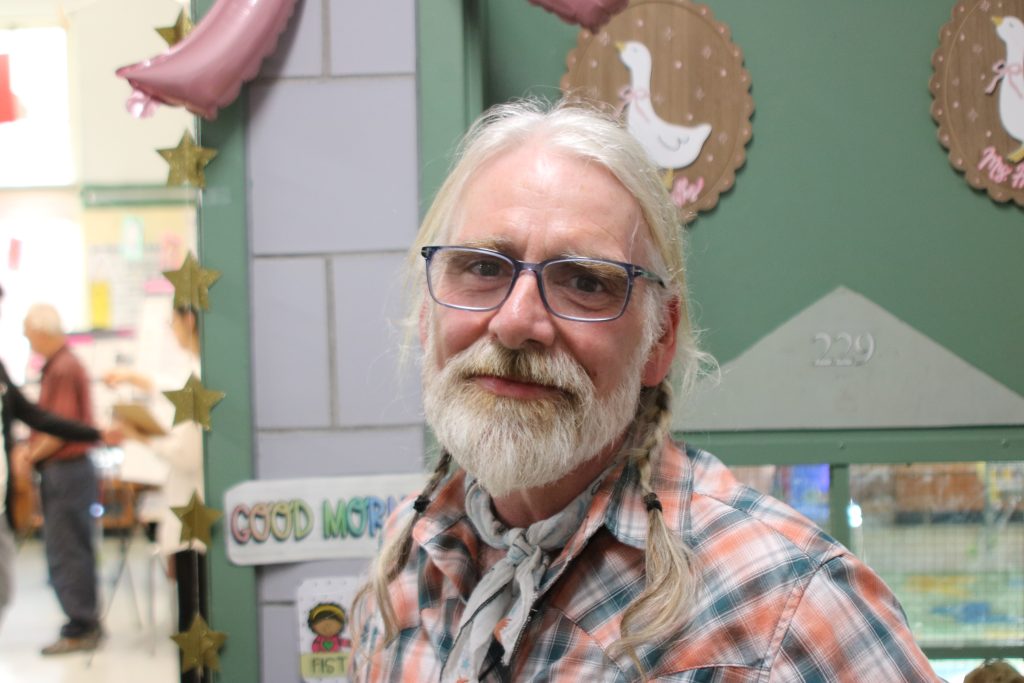
Other visitors to last week’s expo had never heard of the IBX. Josh Morse and his daughter Shea live a few blocks from P.S. 88, and were passing by when they saw signs advertising the event.
Shea, who was sporting a yellow hard hat, expressed excitement about the project: “I can do cool tricks on trains!” she said, outlining the beginnings of a parkour-based busking routine.
The elder Morse was more sanguine. His mother’s house would be near the line, so Josh is cognizant of the noise pollution, but he reiterated his support for the IBX — it would make it easier to see his friend in Sunset Park and to watch Mets games with Shea, though “I don’t think they’ll finish it in my lifetime,” he said.
Updates at Borough Hall
On Monday, June 1, many of the same conversations from the expo played out in a smaller venue: Queens Borough Hall, where Borough President Donovan Richards received a report from the team behind the IBX.
The dozen-odd community board chairs who had gathered in the wood-paneled conference room were eager to establish the light rail line’s projected completion date. Yet Jordan Smith, the project manager for the IBX, deftly deflected those questions.
Smith redirected his response to a range of other concerns raised during the outreach process. In response to an inquiry about eminent domain, he stressed that the IBX will repurpose an existing transit corridor — used for passenger rail from the 1870s until 1924 — and that his team is committed to minimizing the need to add land that is currently occupied.
Richards also asked about power: Given that many neighborhoods in Queens have been pummeled by outages and brown-outs, would the IBX increase the risk of those events? Smith replied that the MTA was working on the issue with Con Edison. “It will be electrically powered,” he said, “but it will not draw from the residential community.”
Another worry is stormwater runoff, which causes semi-frequent flooding along the proposed route. “We have to develop a comprehensive stormwater plan for our project,” said Smith, in conversation with the state Department of Environmental Protection.
The MTA expects to wrap its preliminary studies and to publish a tentative design for the corridor by this fall, with a new round of public engagement set for next year. Smith and his team project that construction could start in the early 2030s, though mega-projects have notoriously mercurial timelines.
Still, it’s a start. “You can’t plan from a desk,” said Smith, “so that’s not what we’re doing.”