Judge Orders City to Resume Negotiations with Queens Garden

The Jardin de Santa Cecilia Gentili, formerly known as Sunset Community Garden, was facing immediate eviction after members condemned Zionism.

BY COLE SINANIAN

At a federal district court house in Downtown Brooklyn on Friday, US District Judge LaShann DeArcy Hall ordered NYC Parks to resume negotiations with the Jardin de Santa Cecilia Gentili, a community garden in Ridgewood that the City had moved to evict after a neighbor complained its community values statement — which condemns Zionism, anti-semitism, nationalism, transphobia and “all forms of hate” —  was discriminatory. 

The City had previously terminated the garden’s license in May and issued a notice in August directing gardeners to vacate the space — located at the intersection of Onderdonk and Willoughby Avenues in Ridgewood — by September 3rd. The case had been moving through State court, but after a judge sided against the gardeners in July, the garden’s legal team re-filed in federal court, seeking a preliminary injunction to halt eviction. 

Judge Hall gave the gardeners and the City until November 7th to negotiate outside of court, asking the City’s lawyers to tell NYC Parks they must come to an agreement with the garden and present it to her on the 7th. 

The City alleged the gardeners had failed to adjust their community values to comply with public space rules and that a small memorial to Cecilia Gentili, a deceased neighbor and trans-rights activist, violated Parks’ rules. The City received complaints about the garden through City Councilmember and staunch Israel supporter Robert Holden, who submitted them on behalf of a neighbor named Christina Wilkinson. Wilkinson had been involved in the garden’s development in the early 2010s, but was no longer involved by the time the garden opened in 2023. 

But the gardeners, who are the plaintiffs in the case, argued that the City’s termination of the garden’s license based on the content of its values statement constitutes viewpoint discrimination, violating their First Amendment rights. And an NYC Parks official had admitted that the City rarely enforces rules on art installations in public gardens, which the garden’s legal team has argued is evidence of selective and discriminatory enforcement as the art piece in question honors a transgender woman. Successful eviction of the gardeners on behalf of a single disgruntled neighbor would set a dangerous legal precedent, the plaintiffs argued, and would embolden critics to employ the City’s power as a cudgel to silence marginalized groups. 

“It would unleash a chilling effect across the city, sending a clear command: censor yourself — surrender your Constitutional rights — or risk license termination and harassment,” wrote Niki Cross, the garden’s co-counsel, in a prepared statement to Judge Hall. 

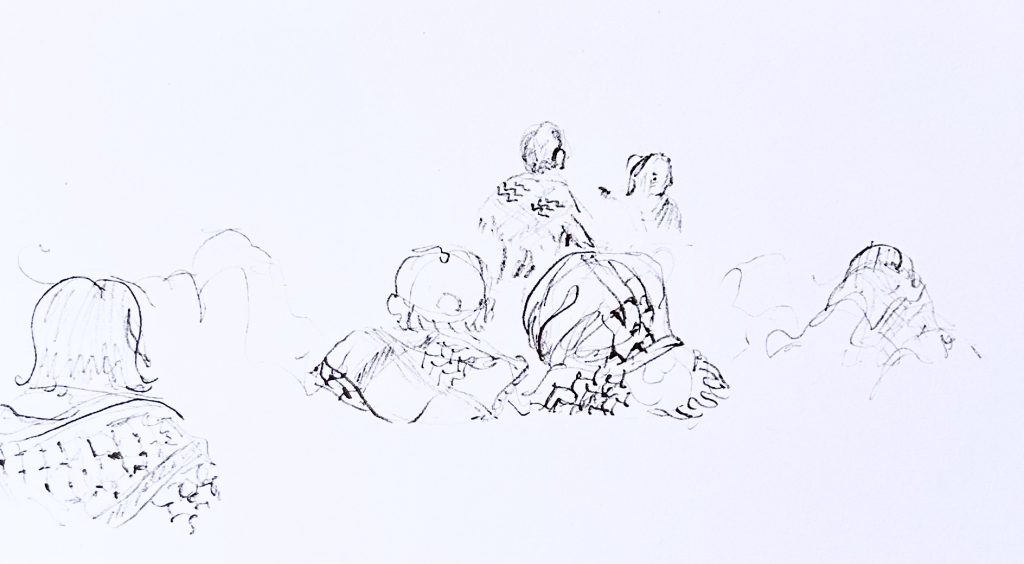
Cross addressed the courtroom draped in a black keffiyeh — a traditional scarf known to symbolize solidarity with Palestinians — while the garden’s attorney, Jonathan Wallace, sat silently, sporting a low gray ponytail. Besides NYC attorneys Leslie Spitalnick and Blake Ahlberg, the City’s side of the courtroom was empty. About a dozen observers sat on the gardeners’ side, several of whom wore keffiyehs as well. In the minutes before the hearing began, an observer on the garden’s side distributed a pamphlet titled “The Land and the People: Community Gardens in NYC.”

A courtroom sketch by Melo Davis.

Cross argued that since the community values were written by private citizens who do not represent the City, they are protected by the First Amendment. Cross then addressed the Gentili memorial, asserting that it was targeted not because of City rules, but because of the message it memorializes a transgender activist. The gardeners provided evidence in a series of NYC Parks Instagram posts that depicted another, much larger wooden art installation in the garden that the City had not enforced, and in comments made by Carlos Martinez, director of NYC Parks’ Green Thumb program — which administers community gardens. He told gardeners in a meeting that the City tries to “turn a blind eye” to enforcing art installations because they are “part of the vibrancy of gardens.” 

Ahlberg delivered the City’s defense, arguing that the gardeners’ request for injunction was invalid since proceedings began in State court had been re-filed in federal court. He then characterized language in the community values — particularly the mention of Zionism — as likely to discourage members of the public from joining. 

Judge Hall expressed frustration that the case was in federal court at all, and criticized the City for halting negotiations with the garden. She also criticized the gardener’s discrimination claim and insisted that the City responding to a complaint is not equivalent to discriminatory animus. 

According to Cross, the City confirmed it would not evict the gardeners before November 7. 

“If negotiations fail for whatever reason, we will resume litigation, with the next step of seeking an injunction again if necessary,” Cross wrote in an email statement. 

Since it opened in 2023, the Jardin de Santa Cecilia Gentili has grown into a highly productive operation, producing hundreds of pounds of fresh fruit and vegetables. The gardeners deliberately built it as a safe space for Ridgewood’s queer, trangender and immigrant communities, though they maintain that no one has ever been turned away and that all are welcome in the garden. The community values statement that triggered the initial complaint was the democratically agreed-upon result of months of meetings and votes, and were intended to ensure inclusivity, gardeners say. This intent has been misconstrued— a series of New York Post articles falsely characterized the gardeners as antisemites, which gardeners say couldn’t be further from the truth. 

“As a Jewish person, I have always felt safe and accepted at the Garden,” wrote Jewish garden member Marcy Ayres in an affidavit. “With the response from the City and GreenThumb, I feel like they are endangering our safety, including my safety and that of the Garden’s other Jewish members.”

Ridgewood Community Garden at the Center of Free Speech Legal Battle

Facing eviction from a beloved community garden after a neighbor complained about its values statement, gardeners have accused the City of discriminatory enforcement

COLE SINANIAN

It’s 10am on a bright and breezy late-summer Sunday, harvest season at Jardin de Santa Cecilia Gentili, a community garden in Ridgewood, Queens. Originally named “Sunset Community Garden” due to the view atop its gently sloping hillside, from which the towers of Midtown can be seen bathed in gold at sunset, the garden is already buzzing. Stewards shovel compost and pick cherry tomatoes, bell peppers, purple basil, and other crops available to all members of the community. 

“Everyone is welcome here,” says Indalesio Tellez, one of the garden’s few dozen members. “We’ve just started harvesting,” Tellez calls in Spanish to a pair of women passersby pushing strollers. “You’re welcome to come by anytime to pick up some food!” A toddler with a dripping nose, accompanied by a young man wearing a gold Star of David around his neck, reaches giddily for a watering can that’s nearly his size. 

Many of the garden’s members hail from Ridgewood’s immigrant, trans and queer communities, and view it as a safe space in a world that’s often hostile to marginalized groups, says Tellez, whose family is from Mexico. 

Still, the garden is, first and foremost, a garden. A highly productive one. Piper Werle, who’s been a garden steward for the past year, doesn’t do much shopping for produce anymore. She’s proud to admit that most of her fruits and vegetables come from the garden, planted by either herself or one of her neighbors. In the past year, gardeners have processed nearly 7,000 pounds of kitchen scraps into compost and produced hundreds of pounds of fruits and vegetables, available to all community members. 

As a source of pride and community for Werle, Tellez, and dozens of other gardeners, it’s understandable, then, that when she found out the City was evicting the garden, Werle’s reaction was to burst into tears. 

It all began when a disgruntled neighbor reported the garden’s values statement — which urges garden members to interrupt “violent behavior or rhetoric that expresses all forms of hate,” including Zionism, anti-semitism, nationalism and transphobia” — to the City’s parks department as discriminatory. After a drawn-out negotiation and several inaccurate hit pieces from The New York Post, the City moved to terminate the garden’s license in May. 

In July, a New York County judge called the gardeners’ activities discriminatory — a claim that the gardeners and their lawyers vehemently deny. The garden’s legal team then brought the case to federal court and has since managed to delay eviction until October 3rd. But for Tellez, Werle and the other gardeners, this is about more than just keeping the garden open. The City’s efforts to close the space could set a troubling precedent, they say, where vibrant community spaces are vulnerable to closure at the request of a single well-connected neighbor.  

“The City claims to care about community-building, especially around community gardens,” Werle said. “But here is this vibrant, diverse community that’s been built to take care of the land and to feed ourselves, and it feels like they’re trying to tear it apart instead of offering even basic conflict resolution.”

The complaints

Sunset Community Garden sits behind Grover Cleveland High School track and field complex at the intersection of Onderdonk and Willoughby Avenues. According to Carlos Martinez, the director of NYC Parks’ Green Thumb program — which administers the City’s community gardens — the garden originated in funding awarded to the neighborhoods surrounding the Newton Creek Wastewater Treatment Plant.

The funding was secured in a lawsuit against the plant, after which the Ridgewood and Greenpoint communities,  guided by the NYC Parks Department, began a yearslong visioning process. Dozens of potential projects were identified, and over 500 people were involved in the discussions. By 2016, Green Thumb had secured $500,000 of funding for a community garden in Ridgewood. After a few more years of discussion between the community and the City, the location was settled and the garden opened in 2023.

A local woman named Christina Wilkinson, who is president of the Newtown Historical Society, was involved in the initial visioning process back in 2016, Martinez said in a recorded meeting with gardeners in April. Werle and Tellez joined the garden in 2023, although by then, Wilkinson was nowhere to be found.

Werle and Tellez said the gardeners decided to draft a series of community values after their first season working together as a way to facilitate collaboration among such a diverse group of people. This is a normal thing to do in communal land stewardship, Werle asserts, and the values were an enormous collaborative effort, the result of six months of surveys, virtual meetings, and in-person discussions among garden members.  As the final document — published in the summer of 2024 — notes in its introduction, it is a “living document,” meant to evolve and change as the garden does. Its tenets are a means of ensuring that all who use the garden feel welcome, Werle says.

“That’s why the agreements were made, because we want everyone to feel safe, so we can make decisions in the most productive and healthy ways possible,” she said. “Which is why it’s so ironic that it’s being touted as a tool of exclusion when it was meant to be a method of inclusion.”

The garden’s community values, written in Spanish and English, include a land acknowledgement and a statement of solidarity with oppressed people around the world, including in Palestine. The document ends with the “community agreements” that condemn and identify homophobia, transphobia, sexism, ableism, fatphobia, xenophobia, Zionism, anti-semitism, nationalism, and racism as forms of hate. The values, the gardeners assert, are not a litmus test but democratically agreed-upon epxression of shared values, and are not meant to exclude. 

In an affidavit, Jewish garden steward Marcy Ayres explains the sense of community she’s fostered at the garden: “I have never felt any anti-semitism from the garden members, and have only felt support and celebration of my identity and faith,” Ayres writes. “Members of the garden even came to a Passover Seder that I held with my family last year.” 

Wilkinson, who had been monitoring the garden’s social media although she was no longer involved, complained to the City in September 2024. According to Martinez in the April meeting, Wilkinson was submitting her complaints through New York City Councilmember Robert Holden, who is known for his pro-Israel stance and with whom Wilkinson has a close relationship.

“Christina Wilkinson has direct access to councilmember Holden, so that’s how we are getting these complaints,” Martinez said. “It’s coming from the top. Basically, we are trapped in the middle.”

When asked via email about the discrimination that spurred her complaint, Wilkinson wrote: “I pointed out that their community values statement was discriminatory and both Parks and a judge agreed with me. There’s nothing further to discuss.” Wilkinson declined to be interviewed for this article.

The Post article 

Shortly after submitting her complaints, Wilkinson spoke to The New York Post, and the conservative outlet launched an aggressive attack against the garden, attempting to paint the gardeners as antisemites. Wilkinson had previously appeared in a July 2024 Post article for her support of an initiative to buy headstones for fallen New York City police officers.

The Post’s September 21, 2024 article, which opens with the line “They’re planting hate,” brought immediate threats and harassment to the gardeners. On September 24, 2024, a group of six white men entered the garden and approached two gardeners. The men, who did not identify themselves, began interrogating the gardeners, who happened to be immigrants from Middle Eastern countries. 

The men asked how they got their keys to the space and whether they were “pro-Hamas.” Meanwhile, dozens of violent and racist comments began appearing in the Post article’s comment section:

“You know what I like?” read one. “Gasoline and matches. Great for removing weeds.” 

“Kilemall,” read another, using an intentional misspelling of “Kill them all” to avoid censors. The commenter continued: “And their families that support them and their terrorism.” 

“Table cloth heads and sarin gas go together,” wrote another. 

Quoted sources in the article include Wilkinson, who has not set foot in the garden in years, and an Israeli woman named Sarah Schraeter-Mowers, whose name neither Werle nor Tellez recognizes. The Post quotes Mayor Eric Adams in its most recent article, whose campaign to confront the “unprecedented rise in anti-semitism and anti-Jewish hate” has been criticized as a tool to silence constitutionally protected speech.

In a written statement, Niki Cross, one of the attorneys representing the gardeners, suggested the garden may be another victim of the mayor’s crackdown.

“The City is favoring the unjustified and baseless feelings of exclusion of someone it openly admits is a transphobe, and who is openly Zionist (that is, supportive of an explicitly discriminatory and genocidal state) precisely in order to actually exclude and punish anyone who expresses solidarity with oppressed peoples and to remove the trans people of color from the community they have carefully cultivated alongside allies,” Cross wrote. “This is what Mayor Adams means by ‘stamping out hate’—in fact he and the City are illegally stamping out dissent.”

In a text message sent to gardeners on April 23, NYC Green Thumb Assistant Director of Community Engagement Alex Muñoz, described the City’s enforcement as “unfair,” and appeared to refer to Wilkinson as a “transphobe.”

“I’m sorry for everything,” Muñoz wrote. “For the changing requirements, the unfair policies, for empowering a transphobe, and for not being there on the ground as soon as the Post article happened.”

The violations 

The violations that the City is enforcing as a result of Wilkinson’s complaints concern the community agreements and a small memorial for Cecilia Gentili, a prominent Argentinian-American trans-rights activist who lived near the garden. When Gentili passed away in February 2024, Tellez and other gardeners who had known her built a 3×3.5 feet tall memorial in the space’s far corner as a way to remember their neighbor.

In September 2024, the City notified the garden that the community agreements constituted an “ideological litmus test” that’s prohibited in NYC Parks’ public spaces.

A few months later, the City told gardeners the Gentili memorial violated NYC Parks’ policy about memorials. The gardeners responded with a clarification that it was in fact an art installation, not a memorial, and was thus subject to NYC Parks’ Arts and Antiquities guidelines. When garden members communicated that they wished for the installation to be permanent, the City suggested either moving the altar to a different space, or subjecting it to a formal approval process that would have it moved to a new space the following year, as large, permanent art installations are prohibited on City land. On May 5, 2025, the City sent the gardeners a termination notice, citing their continued failure to comply with NYC Parks’ public space rules.
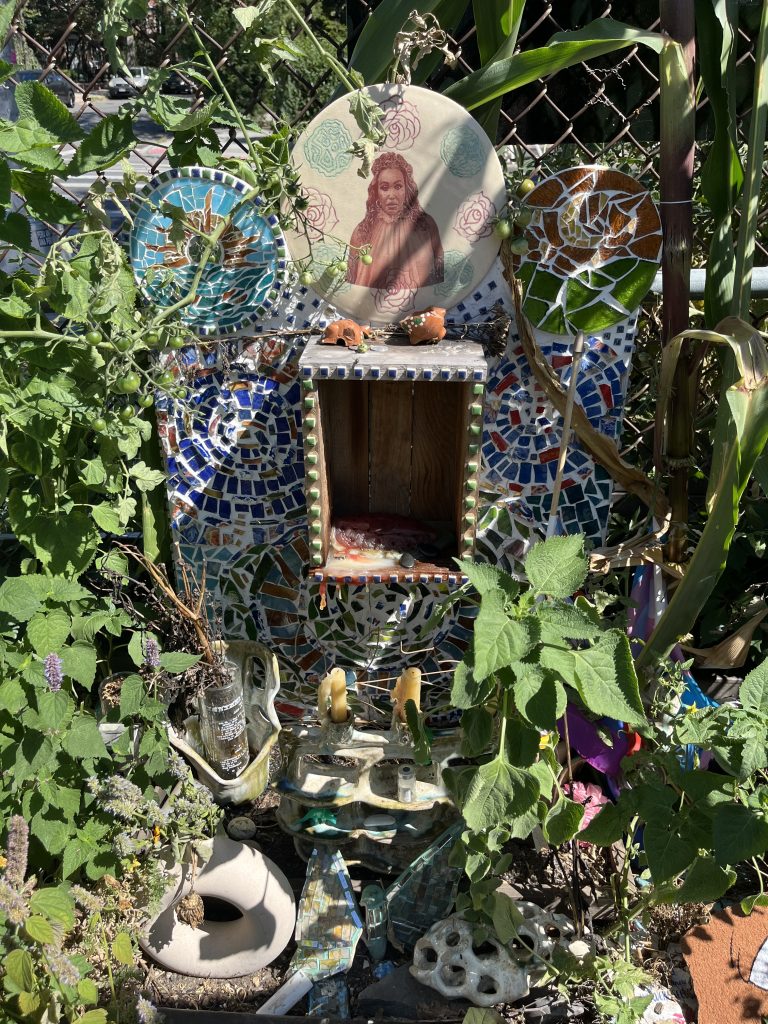
The 3×3.5ft memorial for local trans-rights activist Cecilia Gentili is one of the violations cited in the City’s eviction notice.

Werle, Tellez, and the garden’s legal team, however, point out that small art installations are common throughout the city’s public gardens and are — by the City’s own admittance — rarely enforced. Furthermore, Green Thumb’s community garden handbook states only “large art installations” are subject to the written approval process, while gardeners say Green Thumb has not defined what constitutes “large.” 

We try to turn a blind eye,” Martinez said. “Because we know that you guys having art installations is part of the vibrancy of gardens, but when the powers reach out to us and say, ‘hey, you have illegal activity in the garden,’ unfortunately we need to act.”

On June 4th, the NY Supreme Court granted the garden a temporary restraining order halting immediate eviction, but in a July 18 hearing, NY County Supreme Court Judge Hasa Kingo sided against the gardeners, claiming that the garden’s community values violate the First Amendment.

The gardeners withdrew from the NY case and quickly re-filed in federal court, for which a preliminary injunction hearing has been scheduled for October 3. In a written statement directed at Kingo, garden attorney Jonathan Wallace wrote that the judge “completely misapprehends the First Amendment” by construing the community members who lease the garden as the state itself. Gardeners are no more subject to free speech law than would be private citizens leasing government-owned office space, Wallace writes.

The ‘gift that keeps on giving’

In subsequent press releases, the gardeners claim to have attempted to contact and dialogue with the City since the first notice was sent last September, but struggled to get any meaningful compromise. 

Gardeners attempted to meet directly with NYC Parks Department by contacting Public Advocate Jumaane Williams, Ridgewood City Council Member Jennifer Gutierrez, NY State Senator Julia Salazar, and NY State Assembly Member Claire Valdez. The Parks Department ignored requests, and Salazar, Valdez, and Gutierrez condemned Kingo’s statement in a July 24 letter:

“We are deeply troubled by accounts of racist and transphobic harassment against the members of Sunset Garden,” they wrote. “People in our community care and want to enjoy this space without fear or intimidation. We need to come together to ensure this garden remains a place of safety and inclusion, and we urge all parties to work toward that future.“

It is unclear exactly what would happen if the City successfully evicts the gardeners.

What will certainly be lost if the City locks the space in October — a critical time for garden care — are years worth of labor and hundreds of pounds of food. And as attorney Wallace notes in his condemnation of Kingo’s decision, successful eviction of the gardeners could lay the groundwork for similar outcomes in other community gardens. He described the legal precedent as potentially a “gift that keeps on giving,” likely to be cited for years to come “by litigants eager to suppress any criticism of Israel and to establish that trans people, people of color, and immigrants do not warrant the protection of our laws.”

The NYC Parks Department declined to comment through its press officer, Chris Clark, due to the ongoing litigation.


Smyth Gets Our Endorsement in the 30th

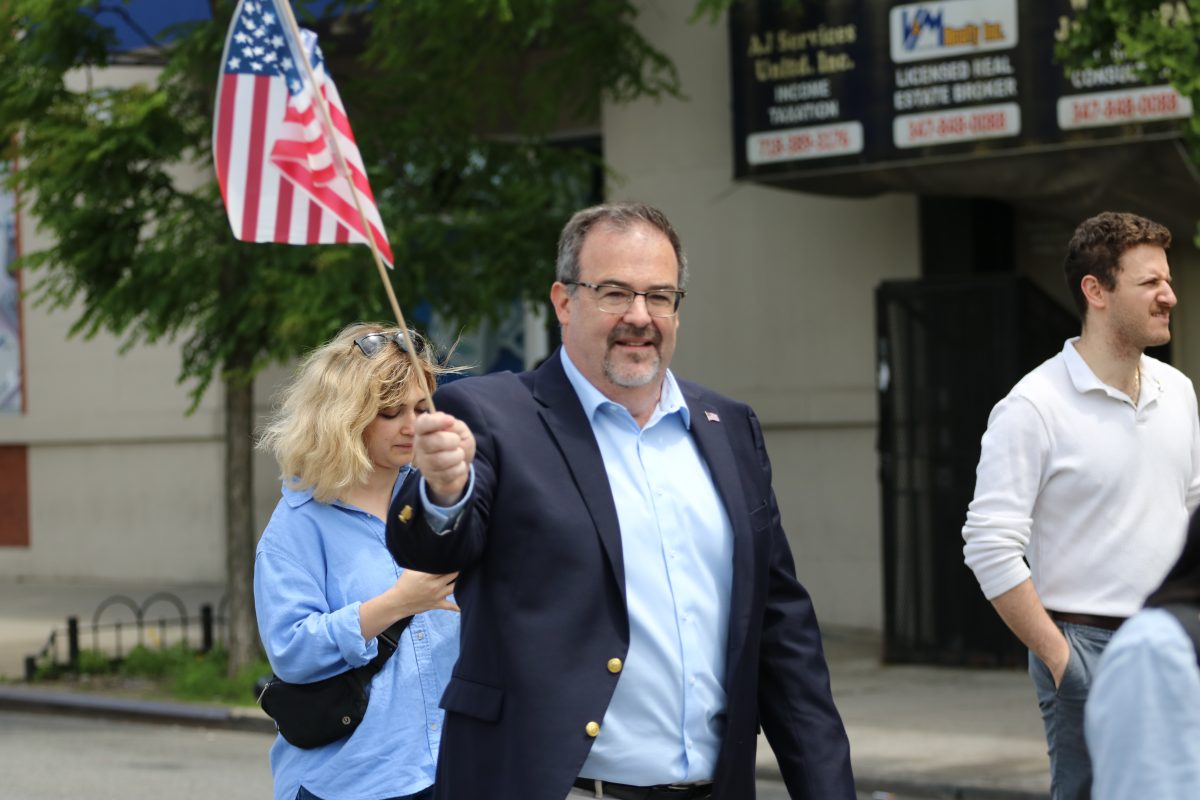
The voters in this district covering Maspeth, Middle Village, parts of Ridgewood, Glendale and Rego Park, want an activist and have elected legacy community organizers in the past. A legacy activist is someone who has been active in a civic for a decade or more. Civic membership is high here, with organizations like The Ridgewood Property Owners, COMET, Juniper Civic and Glendale Civic. But the current councilman, Bob Holden, while giving the constituents what they want, as someone who has their social values and does the constituent service part of the job better than most, is an outcast in the city council. That might not necessarily be a bad thing, but with this city council, they dump on districts of council people that they see as weak inside the chamber. Case in point, this district is targeted to have a lithium battery storage facility, have had an extra-large ‘problem homeless shelter’ dumped in Glendale and all our council sources tell us that the 30th is considered a district that the council body ignores.

While there is no clear legacy activist running, there are three contenders on the democratic side that are clearly different. While Holden staffer Phil Wong would not come to meet with us to tell us all about his platform, candidate Paul Pogozelski has fully engaged with the media, has walked the district for a few months now, has even gone as far as becoming active on park issues as well as bringing attention to what he sees as a plight on the quality of life – those nasty campers that sit on some of our more industrial streets. He is a newbie to politics, and we find his engagement with internet-trollers troublesome. The territory comes with detractors, and most of it just distracts a POL from doing their job effectively. Since he has little experience and few friends in politics his endorsement list is empty, so he touts he is endorsed by ‘the people.’ Very creative indeed! He has put together a pretty lively youth hockey program in Juniper Park, which means he is an effective community organizer.

Queens’ UFT government relations veteran Dermot Smyth has gotten endorsements from anyone who matters. Not only did he get the UFT and a host of labor organizations, he also has a host of influential legislators who have told us that Dermot has always been ‘the adult in the room’ when the UFT has been at the negotiations table. Although endorsements from politicians don’t typically matter to us, there is an overriding issue with the city council that makes it vital Dermot gets this spot. District 30 has been an outsider in all city council votes for a decade now. Support around Manhattan Councilperson Julie Menin to be the next council speaker is important. The city council has moved so far to the left that the movement by a group of ‘common sense’ council members (which happens to be more than just Republicans) to have a moderate speaker is more important to this district than anything else. The stage is set to have Menin become the next speaker. Menin and her supporters have helped Dermot. Smyth will be part of the leadership fairly immediately.  

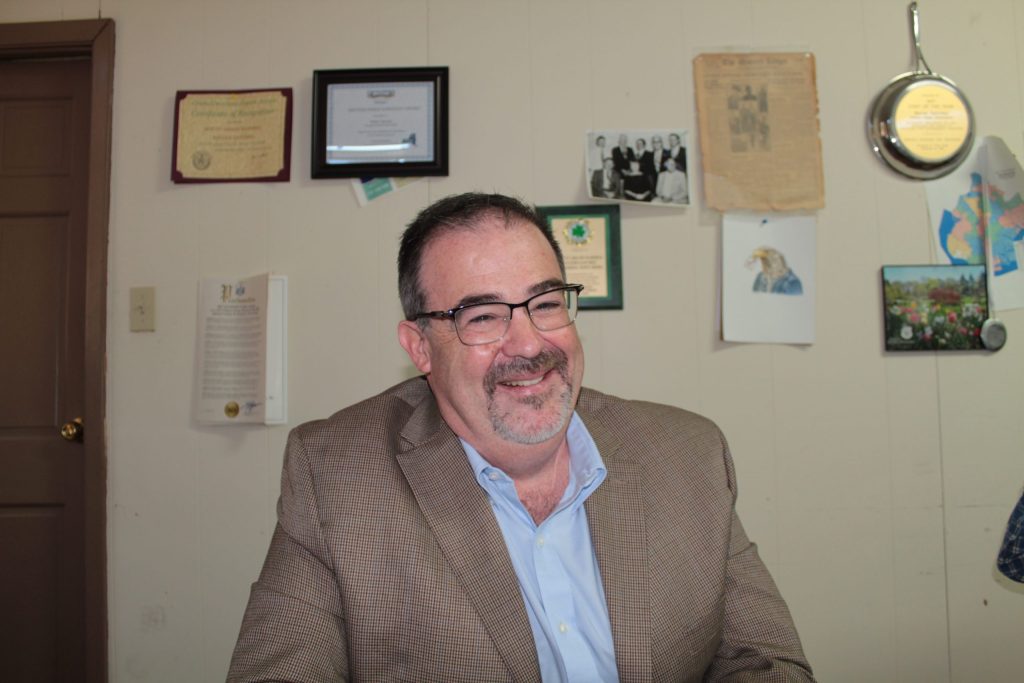
Dermot first broke the news that he was running for this seat with our newspapers a year ago. He has lived in this district for decades and has spent the past year learning the ins and outs of constituents’ needs, knocking on doors. He was quite impressive in our editorial meeting a few weeks ago, in that he learned a great deal about the neighborhood’s priorities while campaigning. He listened, and that’s crucial for our endorsement. Vote early.

Organizers Push Ardila to Resign With Sit-In

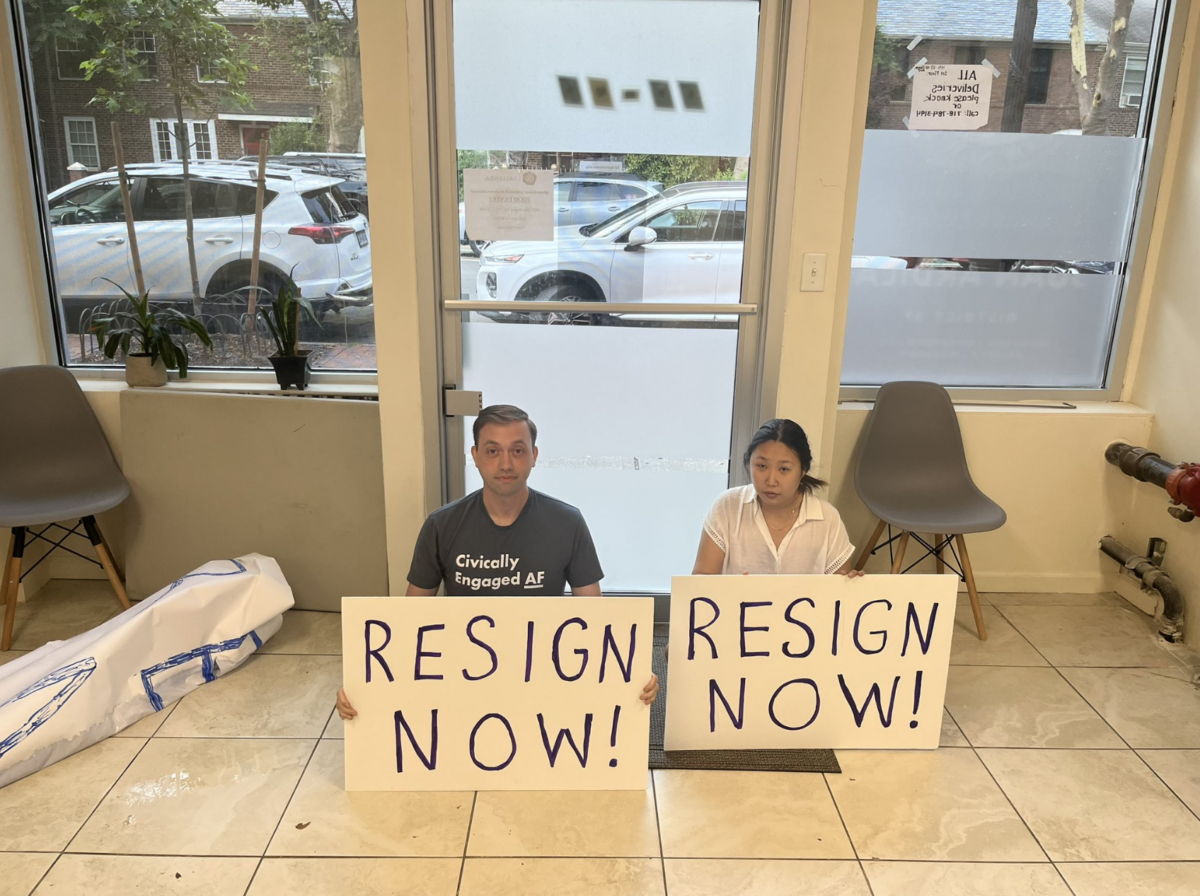
The organizers held a sit-in at Ardila’s office on Skillman Ave. in Sunnyside. Photo Credit: @hailieforqueens on Twitter

By Iryna Shkurhanishkurhan@queensledger.com 

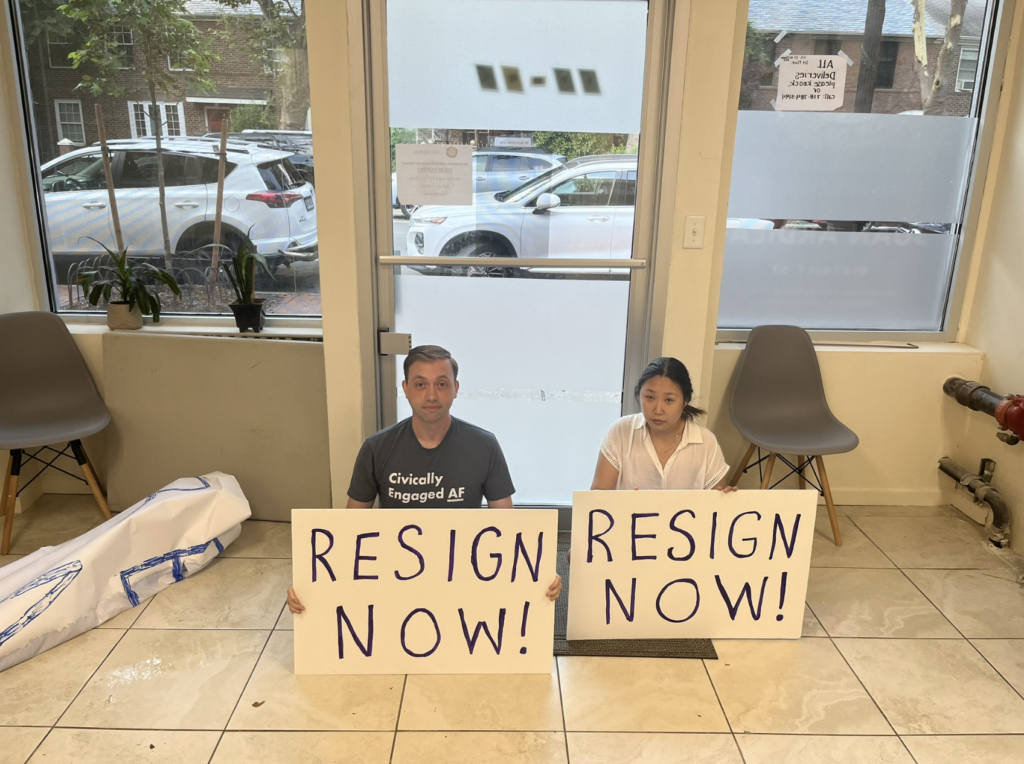
Three community members held a sit-in for over ten hours in Assemblyman Juan Ardila’s Sunnyside office last week, in an effort to push him to resign. 

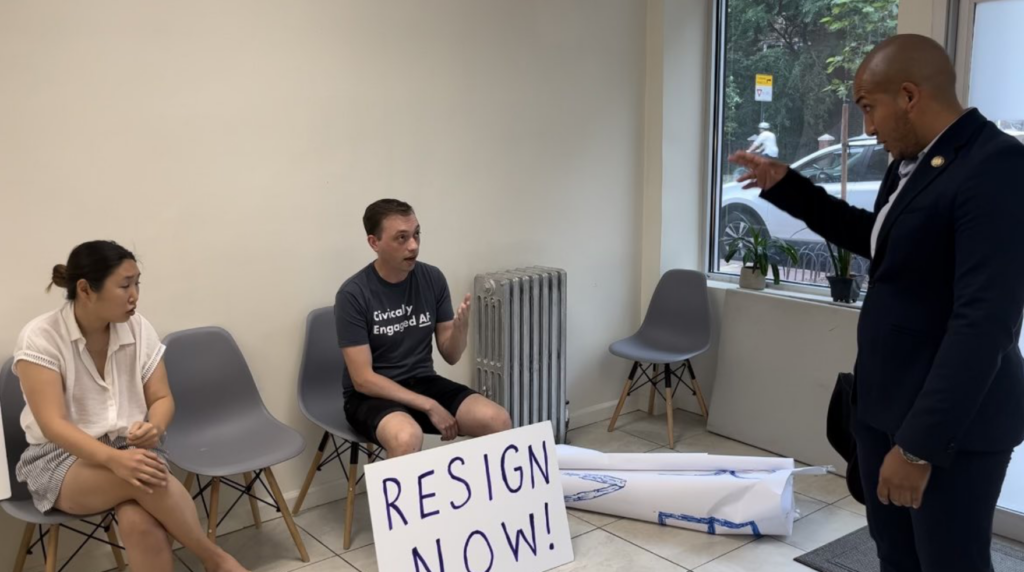
The individuals, including Hailie Kim, former city council candidate in district 26, and Thomas Muccioli, a campaign staffer for Congresswoman Alexdra Ocasio-Cortez, confronted Ardila with a sign that read “Resign Now!” in the office’s lobby. Adam Friedman, a former staffer for Ardila, also showed up and documented the interaction. 

“It was not a comfortable situation for anybody involved, I can say that,” said Kim, a Sunnyside resident, in an interview with the Queens Ledger. “We were there for over 10 hours, or at least 10 hours.” 

The assemblyman, who represents Maspeth, Ridgewood, Sunnyside and Long Island City, was first accused of sexually assaulting two women earlier this March, and since then, countless electeds across the city and state have called for his resignation. Despite the large push for him to step down, Ardila has maintained his innocence and says he will carry on serving his constituents. 

But other elected officials whose districts overlap with his say that a working relationship with him, both in the district and in Albany, has been difficult due to his outcast status. Kim also pointed out that the lack of collaboration has hurt nonprofits and constituents in the district. 

There is an issue of leadership in our district where there was no coordinated effort to distribute discretionary funds to nonprofits in our community and so there were nonprofits who do great work and were zeroed out,” wrote Kim on Twitter alongside images from the sit-in. “This is unacceptable.”

At one point during the day, Ardila says he spoke to the protestors for two hours. Photo credit: @hailieforqueens on Twitter

In May, the New York Post reported that Jeffrion Aubry handled $250,000 worth of discretionary funds from the state budget to support community based organization within Ardila’s district.

Kim also pointed out that during her lengthy stay in the office, only a handful of constituents stopped by the office on Skillman Ave for services.

“This office is not fully functional,” said Kim, who previously worked in the nonprofit sector. “All day, there were not many constituents at all. And especially in a district like ours, it is highly unusual that there are not constantly people there.”

“Three individuals came to my office, and I spoke with them for over two hours, explaining that the allegations were false and that I have never been under any type of criminal investigation,” Ardila said in a statement to the Queens Ledger. “They repeatedly stated that they did not care if I was guilty or innocent, but that I needed to resign regardless.” 

Ardila denied that there were few constituents who came by the office on July 19 when the sit-in was held. 

“No, we were serving many constituents. We had a couple of walk-ins, and a lot of phone calls,” said Ardila in a follow up interview. “I even had to get involved because we were getting a few folks that needed some support. So we were pretty busy throughout the day.”

Ardila confirmed that he spoke to them for “over two hours” while they remained in his office and when it came time to close the office, “they refused to leave.” Kim also said that the conversation “felt like forever” and upon closing, “Juan and his staff stepped over us to leave and we were told if the landlord called the police on us, it would not be their fault.”

In a video of the interaction shared by Ardila, Kim and Muccioli are seen planted in front of the office’s main door as Ardila and his staffer stepped around them to leave for the day. The landlord remained in the office for an unknown period of time after their exit. 

Both Kim and Muccioli also shared their personal experiences with sexual assault with the Assemblyman during the confrontation in an effort to encourage him to take a restorative justice approach to the accusations against him. This approach aims to have offenders take responsibility, admit harm caused and take the opportunity to redeem themselves. 

“We weren’t trying to center the allegations, specifically, we were trying to center the fact that there were things that Assemblymember ought to be able to do that were not being done as a result of these allegations,” clarified Kim. 

Kim previously ran for city council twice in district 26, which includes Sunnyside, against current Councilwoman Julie Won. But she says that this act of protest should not be viewed in an electoral light.

“I want a district where if someone holds an action like this to hold an elected official accountable, I don’t want it to be seen as an electoral choice,” said Kim. “We have the right to express discontent and just want better for our district. And not necessarily just with the intention of running for office.”

Shower Power Addresses Lack of Hygiene Resources for Migrants

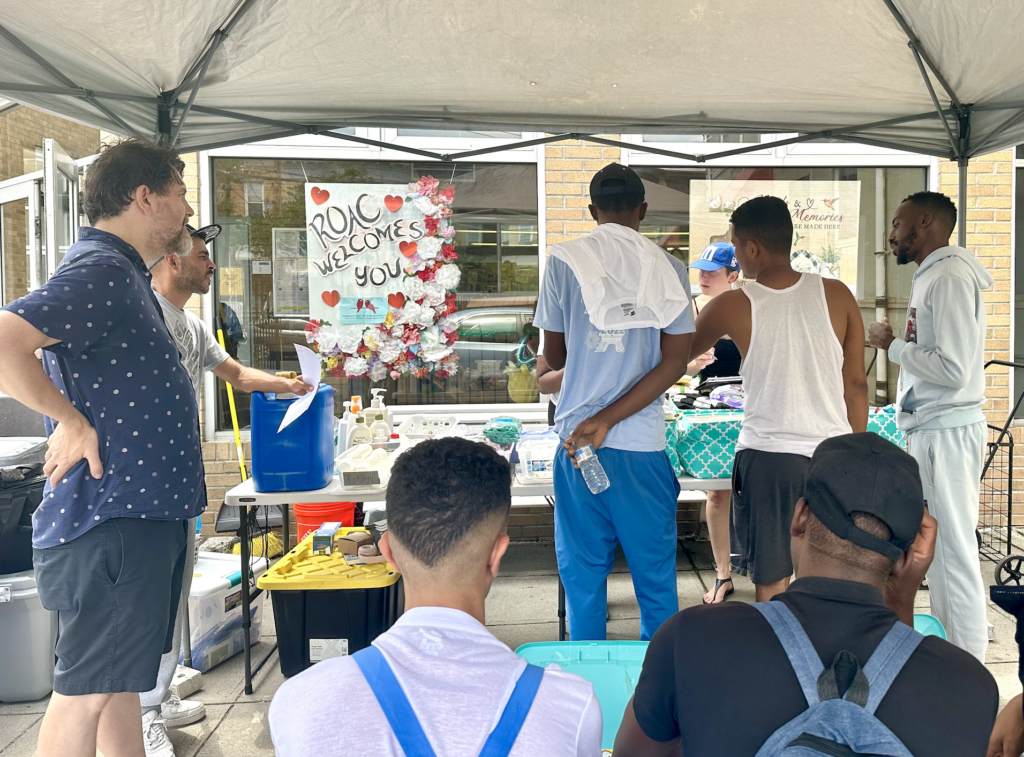
The Shower Power team is establishing themselves in Queens at a new location in Ridgewood.

By Iryna Shkurhan | ishkurhan@queensledger.com

While many organizations are tackling food insecurity, Shower Power is one of the few providing proper hygiene resources to the city’s most vulnerable one shower at a time. 

Since 2017, the nonprofit has facilitated over 5,000 showers to individuals in need through their mobile shower trailers. They have also distributed over 25,000 personal care kits stuffed with necessary toiletries such as toothpaste, deodorant and soap. 

For the thousands of New Yorkers that sleep in a shelter, access to a shower may not be necessarily clean, private or even safe. And for those who sleep on the streets, taking a shower is almost impossible. With self care in mind, Shower Power has been stepping in to provide hygiene resources, and friendship, to anyone in transition to permanent housing.

“Hunger is a major concern, but there’s more to a person. There’s more to their needs, and a lot of places don’t address that,” said Chantal Wallace, a Jamaica native, who joined the organization in 2021. 

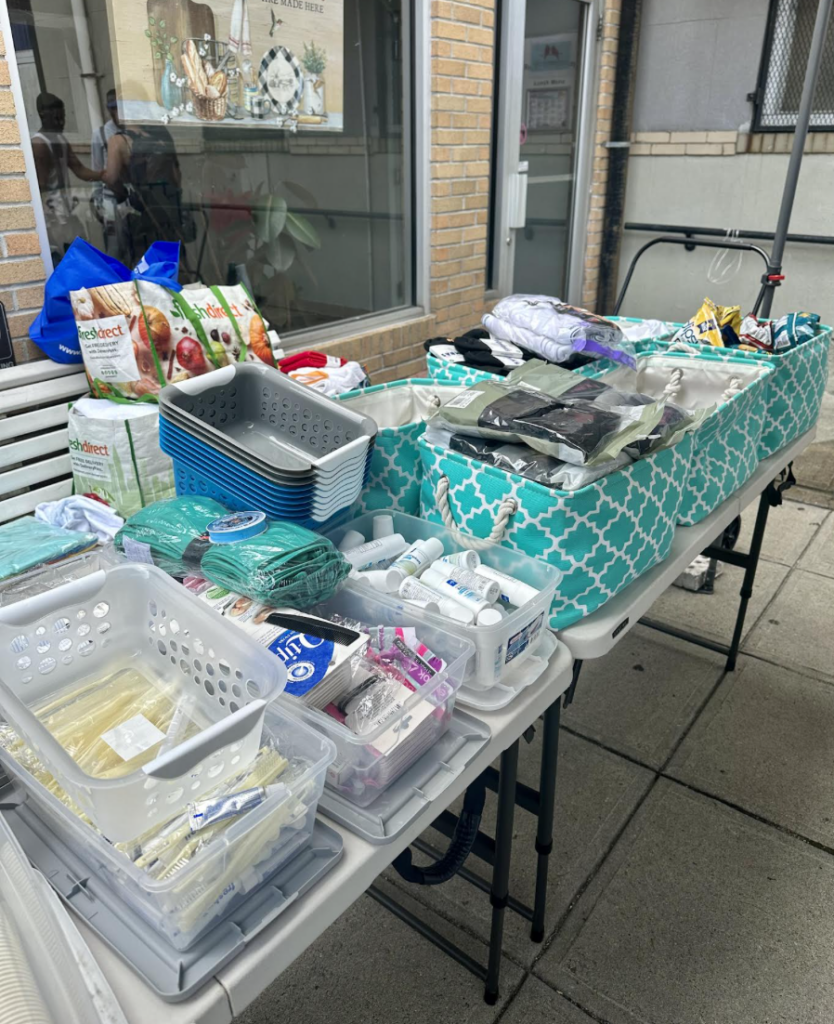
Before heading into a freshly cleaned, and ultra private shower stall, a team member hands visitors a freshly laundered towel and a personal caddy filled with cups of toiletries that they  request. New socks, underwear and shirts are also offered up, and gladly accepted by most. 

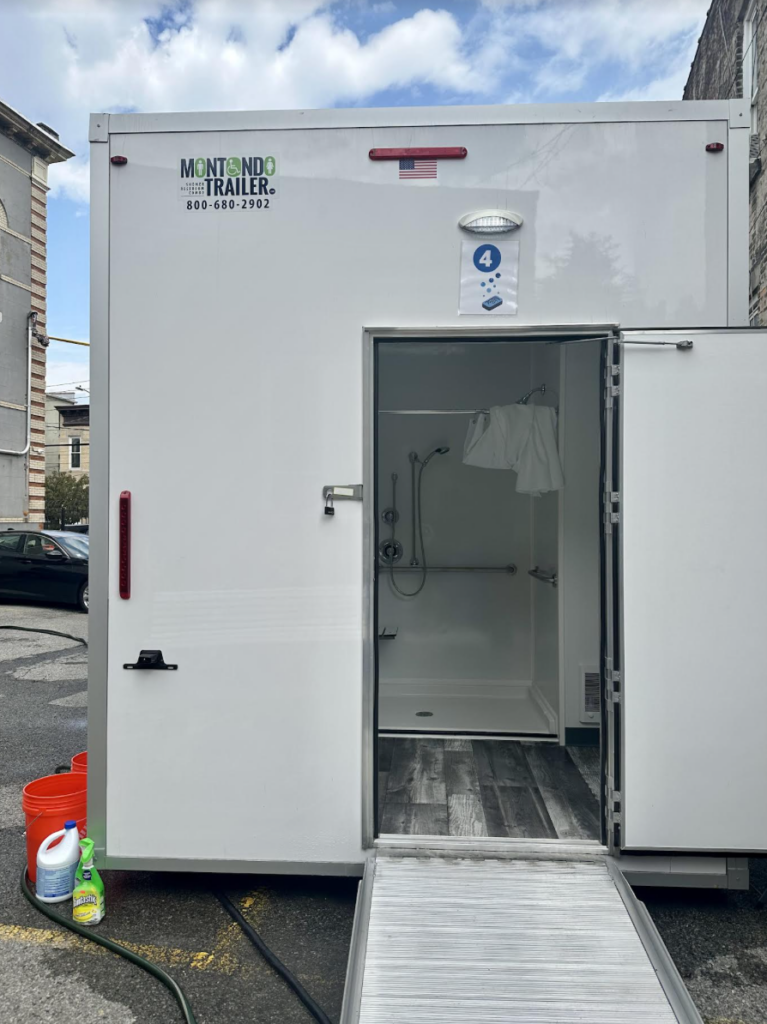
The shower trailer, and parking lot where it’s located, is ADA accessible.

The city’s homeless shelter population ballooned dramatically in 2022 and reached levels unseen since the Great Depression. Experts attribute the dire crisis to a lack of affordable housing and higher rates of serious mental illness, both of which worsened following the pandemic. Since last spring, 90,000 asylum seekers have arrived in the city and ensued an ongoing struggle to provide adequate housing and resources. 

For its fourth season, which typically lasts eight months, Shower Power landed in Queens for the first time after solely being based in Manhattan. For now, they’re open three days a week in Ridgewood from 10 a.m. to 1 p.m. until cold weather will force them to end the season. Last year, they provided free showers up until the second week of November.

Tucked away in the parking lot of Ridgewood Presbyterian Church, the unmarked white shower trailer unassumingly fits three shower rooms with separate entrances, and one larger wheelchair accessible room. These types of trailers have been used in disaster relief, as well as summer camps and music festivals. 

Richard Vernon, the Executive Director of Shower Power for the past year, says that it was a priority to secure a location that was ADA compliant and easily accessible for those in wheelchairs. The church on 70th Ave, with a ramp from the sidewalk leading to the parking lot, fit the bill.  

Dan DeBrucker, the Parish Associate for Community Engagement at Ridgewood Presbyterian Church, heard about their need for a new location through the Supportive Housing Network. The church invited them to use the lot, along with water and electricity to make the shower trailer functional. 

Before moving to Ridgewood two years ago, DeBrucker was a social worker that focused on addressing homelessness and a lack of affordable housing in the Syracuse area. He is also the National Organizer at the Presbyterian Network to End Homelessness. 

“As the community tells us what they’re looking for, we basically don’t say no,” said DeBrucker, who also serves on Community Board 5. “Our best commodity is that we have space.”

When the trailers were stationed in Manhattan, which has a larger concentration of homeless individuals than outer boroughs, they had no issue attracting people. Some days they would even have to turn away shower seekers after serving around 90 people in a single day. But since coming to Queens several weeks ago, they have only had the opportunity to provide a handful of showers. 

The nonprofit provides various free toiletries, as well as new socks and underwear to visitors.

“It’s still in the very early days,” said Vernon, who previously worked in disaster preparedness and recovery with The Salvation Army. “It’s not it’s not like setting up in a busy part of Manhattan. It’s going to take a little bit longer.”

“It always starts like that. But then once that first group comes, then it’s just flooded,” added Luis Melindez, who has been working with Shower Power since 2018. 

The team agrees word of mouth has been the most effective way of bringing in the people that need their services the most, and turning them into regulars. 

“​In this particular area, we’ve been just going everywhere. Any business we see, any place we may see someone that looks like they’re in need of our services,” said Wallace, who oversees community outreach. “We’ve just been going all around handing out cards, flyers, talking to people and just getting the word out that we’re here and we’re looking for people to come.”

But on Friday morning, a group of a dozen migrants from a shelter in Brooklyn walked through the gates of the church’s parking lot led by a volunteer. With lit up faces, the Shower Power team sprang into action. 

While the volunteer took down names, Wallace started pumping various toiletries into disposable cups to fill up the caddies. Melindez guided the men to their private showers and kept track of their time, before cleaning the stall for the next person. Vernon went on the hunt for extra plastic containers where the migrants could store their personal belongings while showing. 

It was a rush that the Shower Power team was hoping for after weeks of low turnout at the new location. 
The migrant men have been sleeping in a temporary shelter at Stockton St. in Bushwick since arriving in the city the last week of June. They say that the location has no showers available to use, and barely functioning bathrooms. 

Since arriving in the city, the men have only been able to take showers at a nearby public pool. But some say that they feel uncomfortable using the showers there out of necessity, instead of related to recreational visits like others. The pool is also located several blocks away from the shelter. 

Souleimane, a 33-year old who arrived in New York from Mauritania last month, shared that his shower in the trailer was great, and much more comfortable than the public pool’s communal showers where he has to pretend he is there recreationally. Prior to his visit to Ridgewood, he was only able to take two showers arriving in the city, and both were at the pool. 

The migrants signed in and selected their toiletries before taking a private shower in the trailer.

“If I knew all your names, I would thank you individually,” said Souleimane through the French speaking volunteer that escorted the group to the site on public transportation. “I would feel comfortable coming here to shower everyday.”

The mutual aid group volunteer, who did not want to be named, is a French teacher during the school year. With some extra time on her hands in the summer, she guided the group to the site since many are still unfamiliar with the city and need translation assistance. 

Sidi, another recent migrant whose journey to New York from Mauritania totaled twelve days, said the living arrangement at the shelter “would be much better” if showers were available on site. While he says that he is grateful for a place to sleep and food to eat, not having a place to maintain proper hygiene is “not a good situation.”

“You know that when you come here, you’re going to be treated well and consistently,” said Vernon. “People show up time after time. Then friendships form, which is part of the idea.”

The Shower Power team says that their organization is about more than just providing showers and toiletries, creating a sense of community where people can return, whether they need the shower or not, is just as important.

“We get attached to the people that come, and it’s not a job for me. We do have relationships with these people outside of our work hours,” said Wallace. “We check on them. We call them, you know the ones that have access to phones, and we make sure they’re doing well.” 

“You get to know their names, their backstories and sometimes they don’t even come here for a shower,” she added. “They just want an ear, and we’re here to provide that for them too, while working of course in serving the ones that do need to take a shower.”

Establishing the necessary trust with the community can be an issue initially. Showering in itself is a vulnerable experience, even more so in public when you need strangers to assist you. And being homeless adds another layer of vulnerability that makes one more likely to experience traumatic events.

“A lot of them are very fearful when we approach them, because of the experiences that they may have had in shelters, or even just people not being nice to them on the streets,” said Wallace. “They’re almost frightful to come, you know, use our services, which is very unfortunate.”

The issue is especially prevalent among homeless women. Wallace recalled that women who would stop by the trailer when it was in Manhattan would feel more comfortable waiting for all the men to finish showering, despite having access to a private shower behind a closed door. 

A study conducted in Florida found that 78 percent of homeless women were subjected to rape, physical assault, and/or stalking at some point in their lifetimes. They also found that physical or sexual assault leads to longer periods of homelessness for victims. 

“That’s why a lot of people don’t like to go into shelters, they’d rather stay outside, as sad as it is,” said Melindez, who heard about shower advocacy when he was coming out of a shelter in Brooklyn three years ago.

Ideally, Shower Power hopes to be able to provide showers year round from a host site that already has a shower space that is underutilized. And their two existing trailers would come in handy during the summer months, when people generally want to shower more. 

“Even now having two trailers is just such a big feat for us. Being able to operate in two locations at a time is amazing because the need is everywhere,” said Melindez. “This is something that needs to be in every borough, with several locations. It’s only up from here.”

‘Matchmaking’ Fair Connects Schools with STEM in District 24

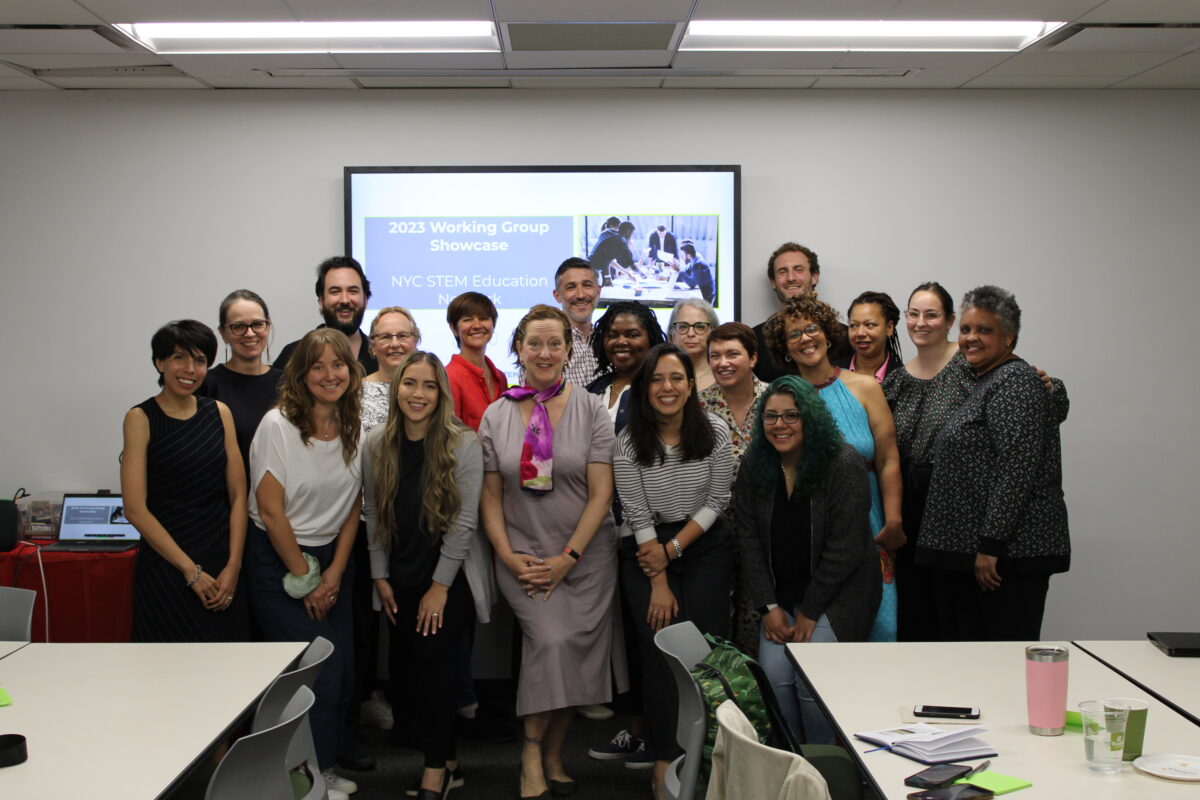
The team at NYC Stem Network.

By Ariel Pacheco | news@queensledger.com

To provide students in Pre-K-8 with more opportunities in STEM, Community School District 24 held a matchmaking STEM provider fair on Friday, June 9, where representatives from schools were able to connect with STEM providers to lay the groundwork for programs beginning in September of 2023.  

Although the fair was scheduled to be held at PS/IS 128 in Middle Village, it quickly shifted to taking place virtually due to poor air quality in the New York City area. Despite the last-minute shift, about 100 participants were still in attendance.

District 24 covers Middle Village, Maspeth, Ridgewood, Glendale, Elmhurst and Corona.

Schools will be allowed to apply for financial assistance to bring and sustain these programs into their curriculum. The fair was hosted by NYC STEM Education Network in partnership with ExpandED Schools and Community School District 24. There is a total of $25,000 available in funding from ExpandED schools with awards capped at $5,000 per school. 

“STEM education really is just a window into the world,” said Ellen Darensbourg, the Grants Manager and STEM Support for Community School District 24, during the fair. “It really gives our kids a leg up into all the possibilities that are out there for them and it helps make what they learn everyday real and applicable.” 

Emma Banay, the Senior Director of STEM at ExpandED Schools, estimates that they should be able to assist about five to ten schools with the funding allocated to the school district. 

“There’s a real focus on creating high-quality engaging STEM experiences and making sure there is access and equity for those who have been historically excluded,” said Banay. “We want to engage students in a creative, critical thinking way so that they can express who they are and who they want to become.” 

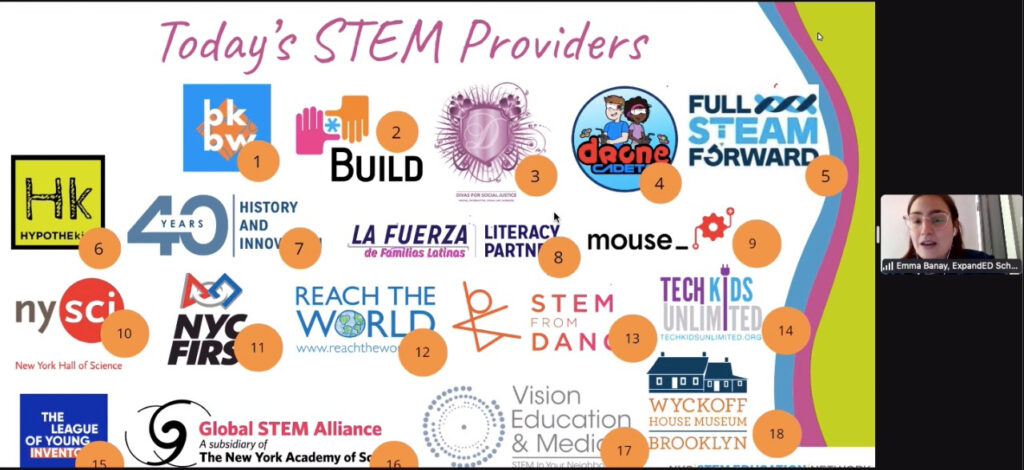
Representatives from schools across the district were able to get detailed overviews from nearly 20 STEM providers in attendance. It was a forum for discussion and the first step towards partnerships between schools and STEM providers. 

Planning for the fair had been ongoing since early March when an initial “needs assessment” was conducted. The needs assessment entailed a survey created in tandem with District 24’s planning team to see what schools were looking for from STEM programs and gave them a setting to have their voices heard. 

“The survey was distributed to teachers and principals across the district to get a better feel for what they were looking for and a better understanding of what was going on in the district,” said Banay. 

Through this needs assessment, the coalition of STEM organizations learned that District 24 needed programming that supported multilingual learners, students with disabilities, and mixed-ability age groups. They also learned that there was a need for in-class programs, field trip locations and programming geared toward professional development. 

City Councilmember Julie Won, who represents District 26 in Queens, was in attendance and spoke about her own personal experience working in tech and how it helped lead her to where she is now. Won worked at IBM for close to a decade in various roles prior to becoming a councilwoman.

“It is so important that our schools have these programs and that our students are getting exposure from early on,” said Won. “I am grateful that everyone is here to make sure that we’re connecting our children to the most holistic education possible.” 

Similar fairs will be held for Community School District 4 in Harlem in August and Community School District 9 in the Bronx in November. 

Fuoco Music Center to Celebrate 50 with Concert

By Iryna Shkurhan | ishkurhan@queensledger.com

Walking inside Joe Fuoco’s Music Center is asking to be transported back in time to the days when music was tangible.

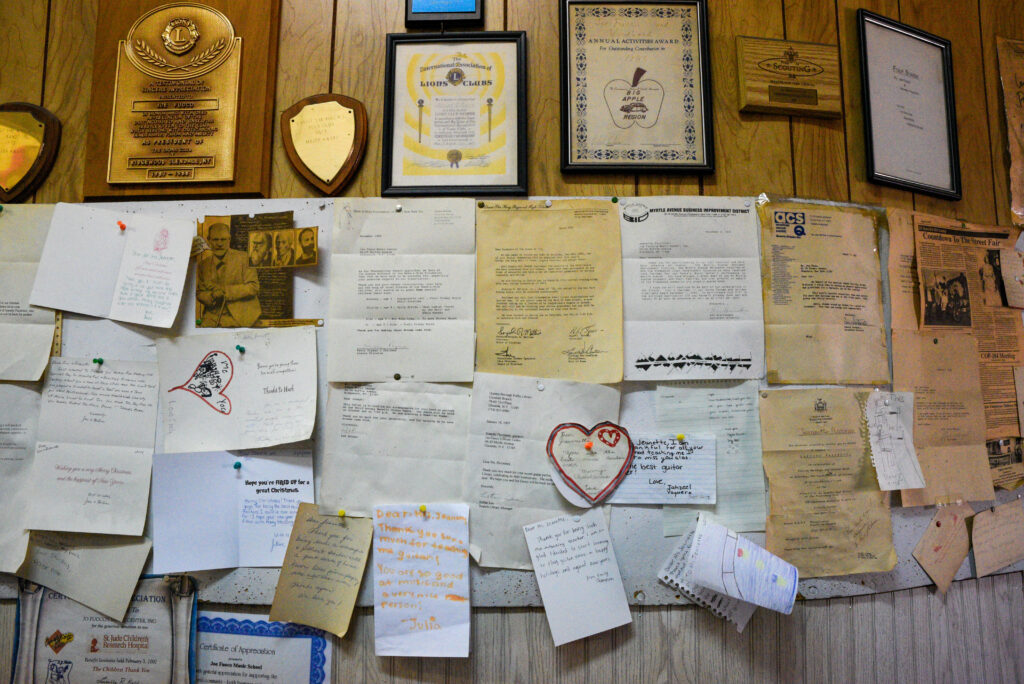
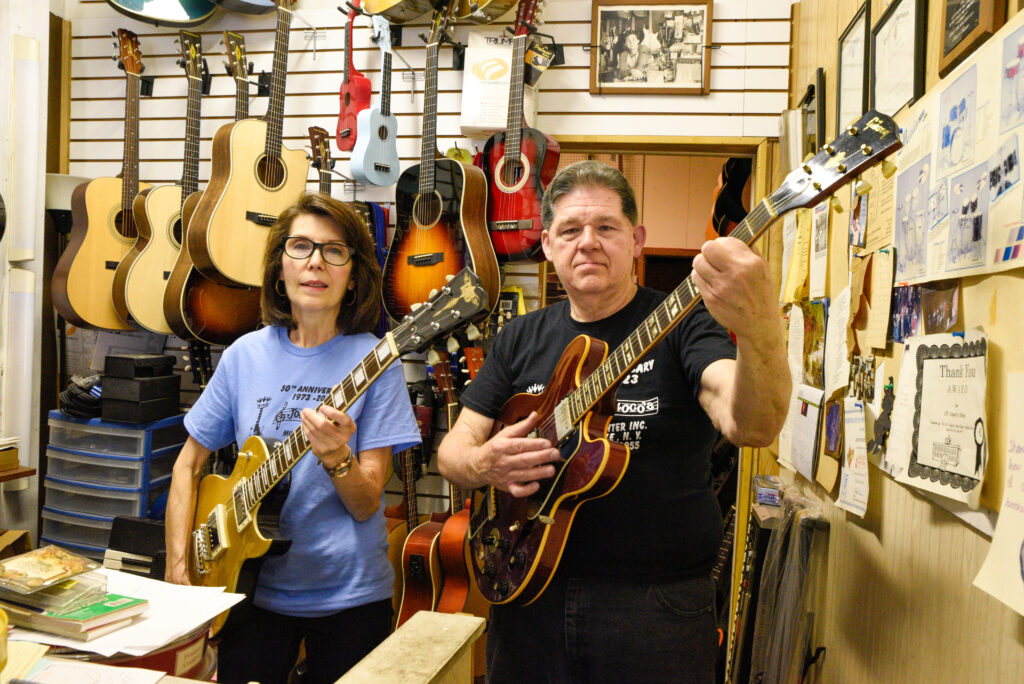
Underneath hanging guitars, the walls are packed with grateful letters from past students and yellowing newspaper clips from the days before the internet, when listening to music took more than turning on your phone.

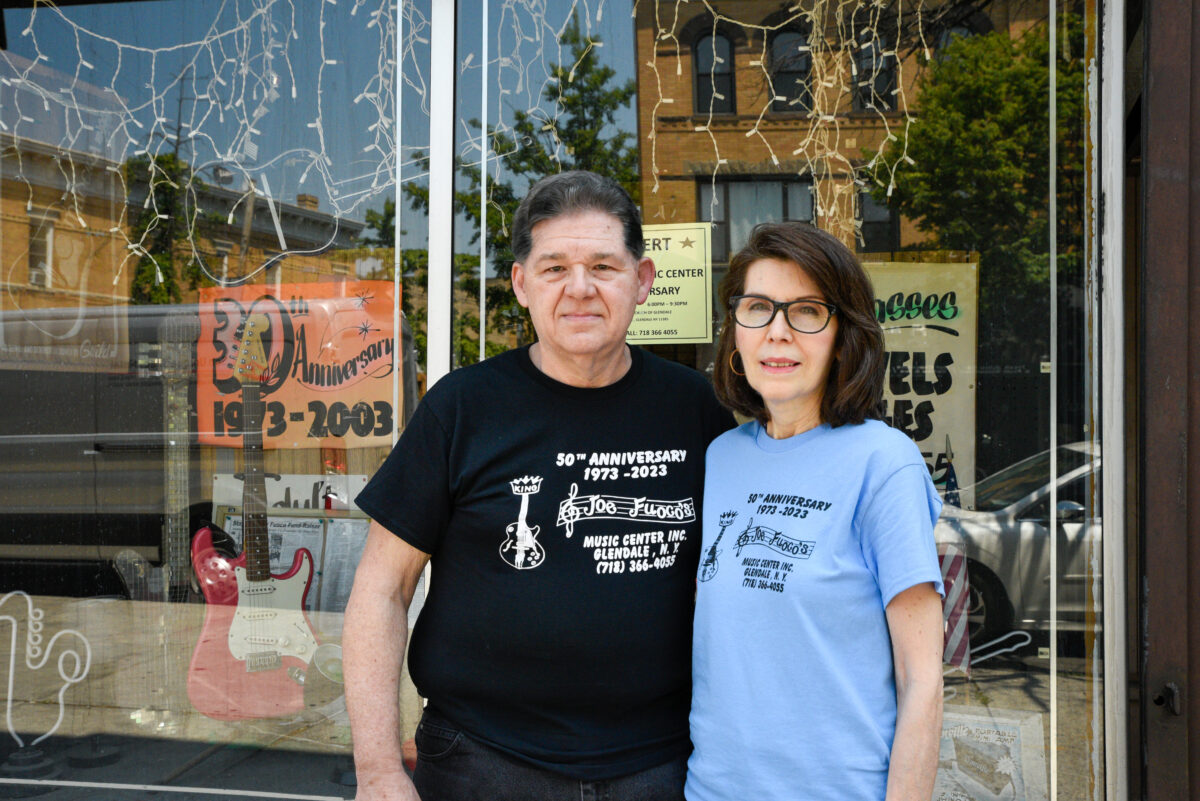
This year, Joe and Jeanette Fuoco marked 50 years of providing the community with a space to take music lessons and acquire instruments. The duo has also been a well-known staple in the community for live performances, ranging from weddings to street festivals and philanthropic events.

“People say to me, did you ever think you’d go 50 years with the business, I say, I didn’t think I’d go 50 years, but I did,” said Joe Fuoco in an interview with the Queens Ledger.

To celebrate the anniversary, they are holding a concert on Saturday, June 10 at 6 p.m outside at Glendale United Methodist Church where old and new students, ranging from eight-years old to 75 will perform. The music will range from jazz to country, and include oldies from the 1950s and 1960s, as well as some originals written by Joe and Jeanette. Proceeds from the event will go to organizations that benefit children with cancer.

“Music has no age. You can learn at any age,” said Joe, who has taught students in their 60s and 70s.

Joe started playing the accordion at four years old, and by 15 he was also playing guitar, the piano and was well versed in music theory and composition. His parents encouraged him to start giving out music lessons out of their home at the time, and he says there was no shortage of students who lined up.

The doors to the original Fuoco Music Center on 71st Avenue and 60th Lane in Ridgewood opened on March 1, 1973. And after a brief stint on Cooper Ave, they bought the building they currently teach out of on Myrtle Ave. in Glendale and have played there ever since.

Since then, Joe says thousands of students have come through their door for music lessons. Today the center has a packed enrollment of about 60-100 students per week, as well as a waiting list. Joe and Jeanette both teach the keyboard, guitar, drums, bass, violin, saxophone and vocals those interested in learning.

“It’s as strong as it ever was,” said Joe on the business. “We do teach just about all the instruments and you know, because, I mean it’s only 12 notes, just a question of finding them on the instrument that you have. That’s all it really is. That simple.”

For the past 50 years, Joe and Jeanette have held down the fort largely on their own. The couple balances running the business side of things, teaching students five days a week and performing live gigs in the community. But to them, it doesn’t feel like work.

In a way, Joe and Jeanette met through music. The two were students at Christ The King High School in Middle Village when they came across each other in the library and began talking about music.

“I really couldn’t do it without her because you just gotta have somebody with you,” said Joe, who will perform alongside Jeanette at the concert.

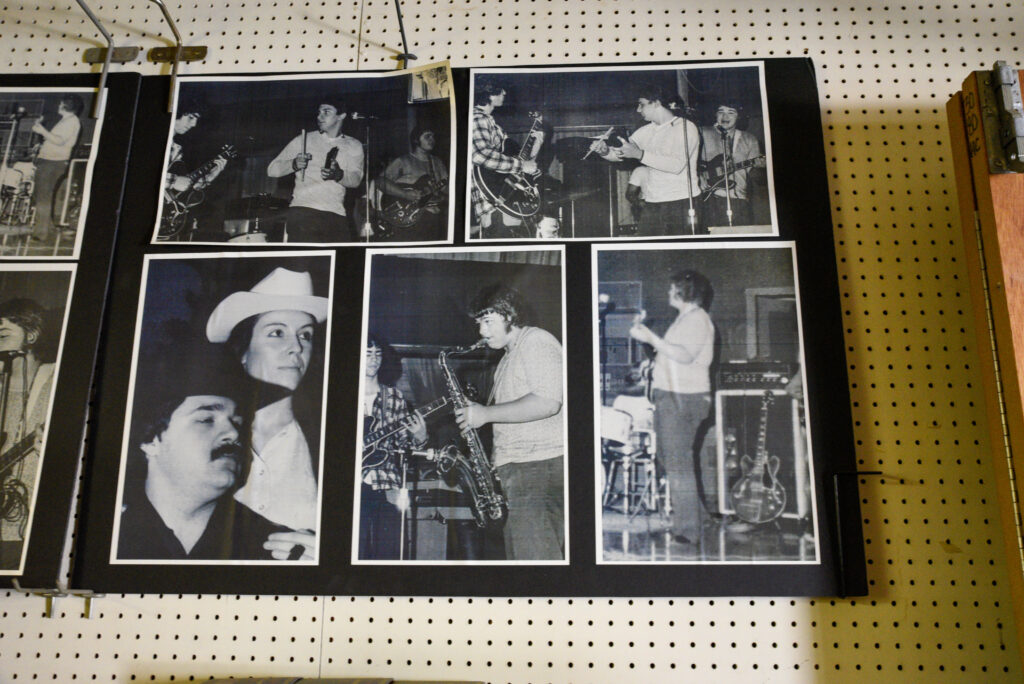
Around that time, he spent days and nights playing in more bands than he can recall at weddings, parties, clubs and on the radio. The same versatility that allowed him to play in a jazz club one night and in a wedding band the next, showed up as a music teacher that can teach just about anything.

He recalls that some of his students from decades past are now grandparents who bring their grandkids in for music lessons. And many of his former students are in the music business in some way. Whether as recording engineers, songwriters or playing weddings in a band. One of his former students is even traveling from Florida to perform at the anniversary concert.

“They were young kids at the time. And it just meant a lot to them. And in many ways, that’s, that’s better than a hit record, the fact that it made their lives better, you know, that’s certainly something that I felt really good about,” said Joe, who received an outpouring of support when he announced the anniversary on his Facebook page.

According to the couple, they have no plans to stop teaching music and playing in the community any time soon.

Joe says that getting good at playing all comes down to practice, how much you love it, your passion and ultimately some degree of talent. Though, he says that persistence is key.

“I want to make you good,” he said. “I want to make you feel as good as I do when I play.”

5 Community Fridges For Giving and Taking

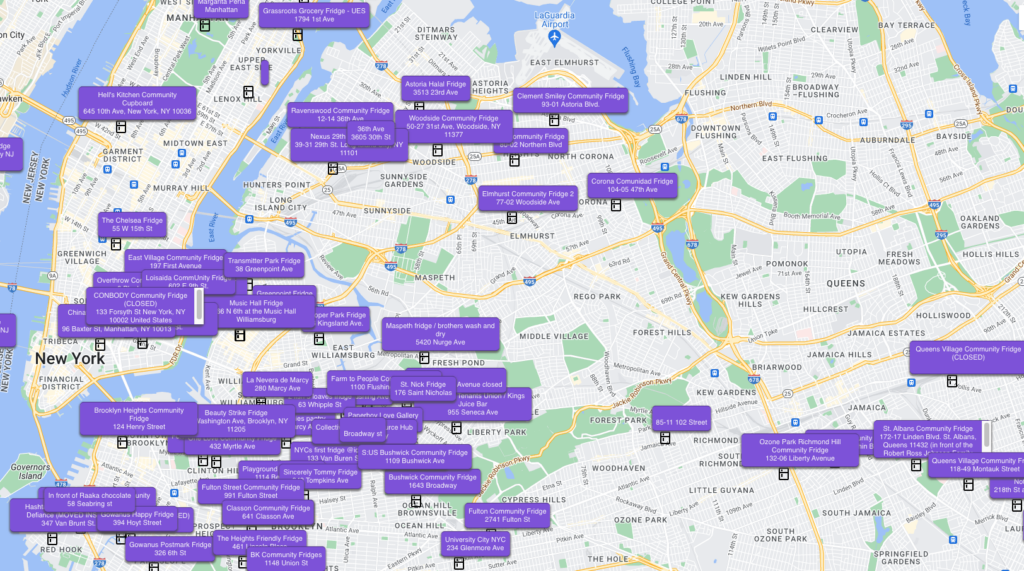
The NYC Community Fridge Mapping project features 136 fridges across the city and allows anyone to post an update with a look inside the fridge.

By Iryna Shkurhanishkurhan@queensledger.com 

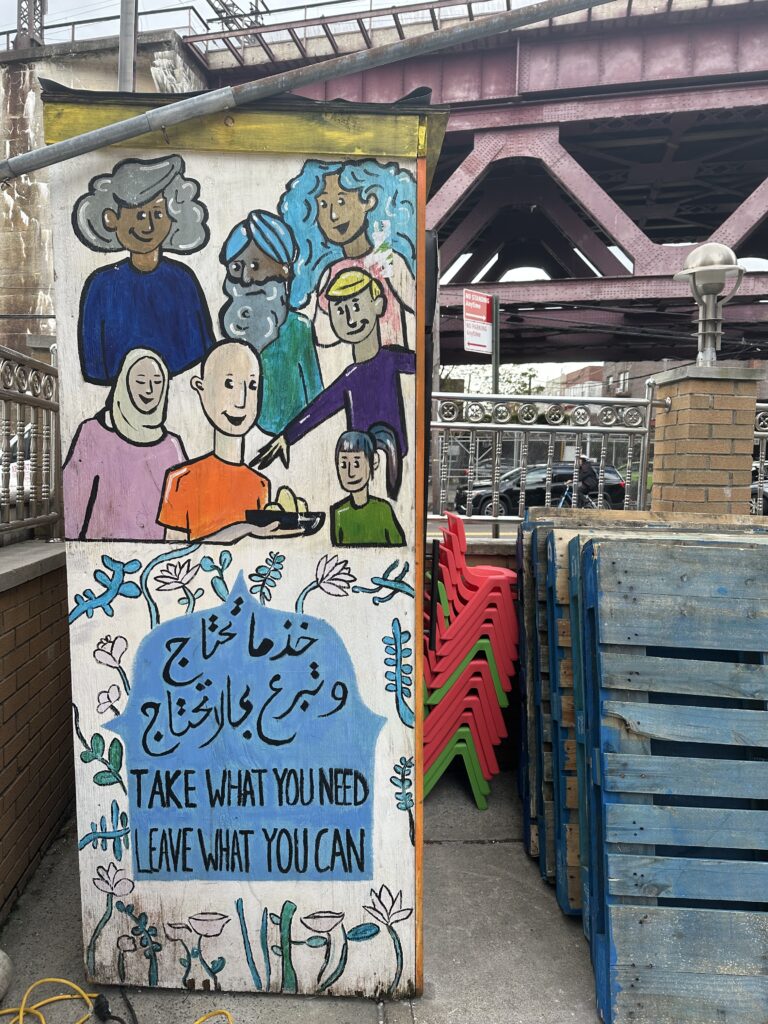
In an effort to address food insecurity during the pandemic, community fridges started by regular New Yorkers popped up across the city. Oftentimes they are regular fridges, colorfully decorated, that sit on the sidewalk. Anyone can open the door and take what they need, no questions asked. And If your circumstances permit, you are welcome to leave quality food items for others. 

The fridge movement is based on the concept of mutual aid, which rejects charity and encourages building interdependent relationships outside of power structures. It is powered through cooperation and the responsibility to take care of your neighbors. 

Currently there are 136 community fridges across the city, according to the NYC Community Fridge Mapping project which tracks their location and status. The site allows visitors to post photos and updates on the contents of a fridge to keep fridge users informed. Fridgekeepers can also add a new fridge or update the status of an existing one. 

There are several fridges that closed operations in the past several months due to various circumstances. But these five locations across Queens are still up and running. 

Fenix Community Fridge

Located in Ridgewood, this fridge is run by Beatriz Perez who started the project in the beginning of the pandemic. At the time, she was working at Fenix Car Service on Seneca Ave where the fridge is currently located. With the recent influx of Latin American migrants arriving in NYC, organizers at the location stepped up to collect clothes, strollers and other necessary goods on top of their regular food distribution work. They regularly post updates on collections and events. You can find them on Facebook at @FenixCFridge. 

Astoria Halal Fridge 

In an effort to accommodate Astoria’s Muslim residents, the fridge only accepts food donations that are designed halal. It is located on 3513 23rd Avenue in Astoria, just behind the gates of the Dar Al-Da’awa Mosque. Once a former church, the location is now under the Muslim American Society of Queens. The weekly stocked fridge was an initiative of Little Egypt NYC, a community seeking to create safe spaces and economic power for the Egyptian diaspora. More information can be found on their Instagram @astoriahalalfridge.

Glennon’s Community Fridge

This fridge has been operated by Becky Glennon outside her home in Rockaway since 2020. For the past three years, Glennon has been providing food despite resistance from her neighbors who tried to destroy the fridge. Last week Councilwoman Ariola and her staff delivered over 2,000 pounds of fresh produce, the largest donation the fridge has received so far. It is located on Beach 92nd Street between Rockaway Beach Boulevard and Holland Avenue. 

Ravenswood Community Fridge 

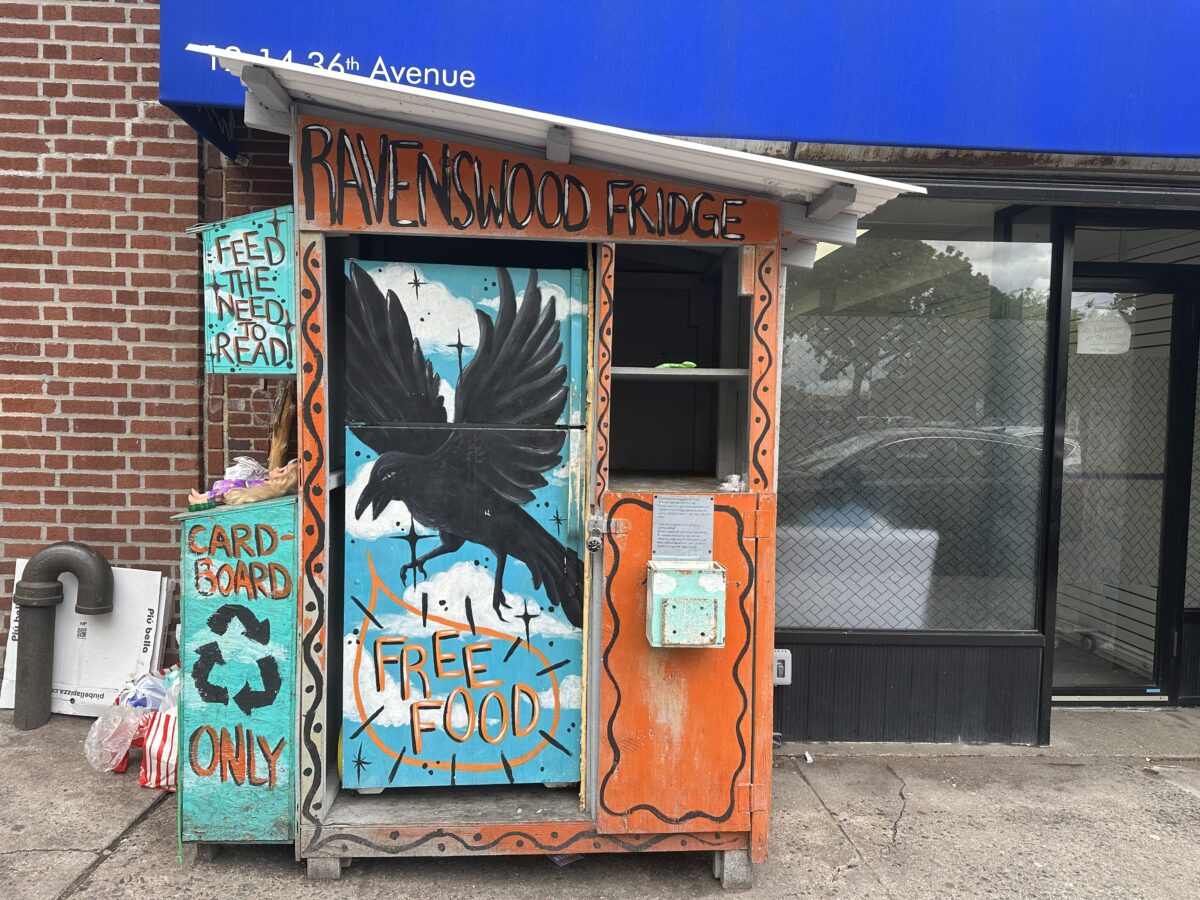
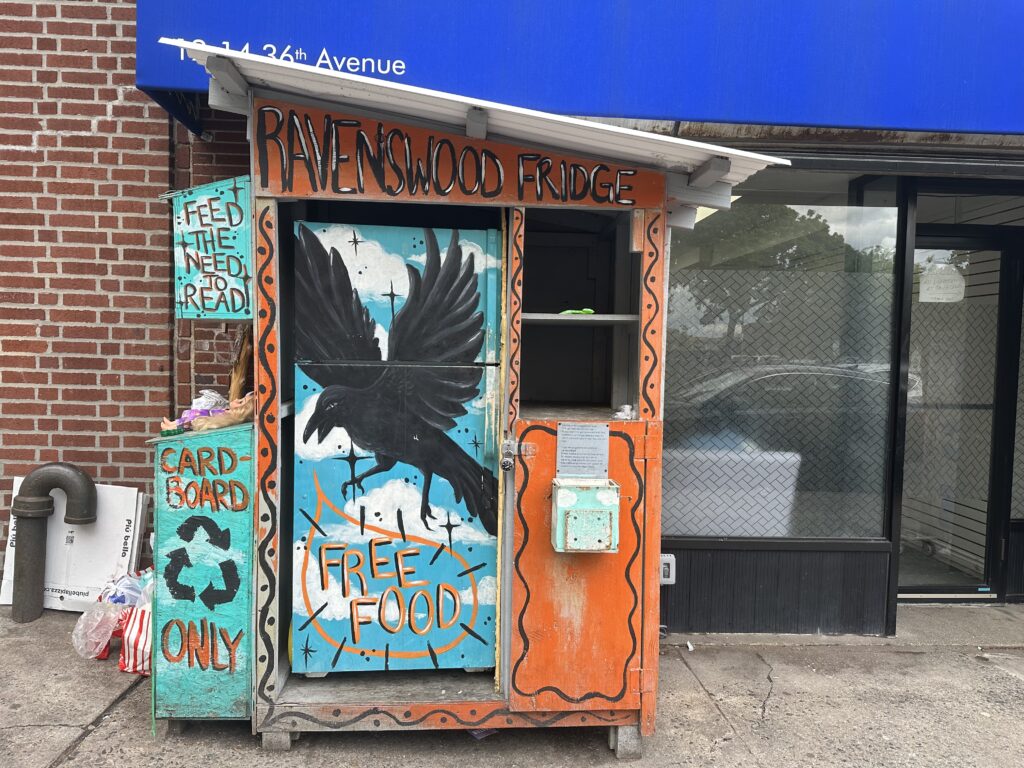
A fridge outside of Hour Children, a nonprofit organization that supports women and families impacted by a mother’s incarceration. It is located near the Ravenswood Houses on 12-14 36th Avenue in Astoria. You can’t miss the colorful fridge with a flying raven and “free food” painted on the door. There is also a space for book donations on the side. Local residents say that the fridge is maintained and utilized regularly. They can be found on Instagram at @ravenswoodfridge for updates. 

Maspeth Fridge

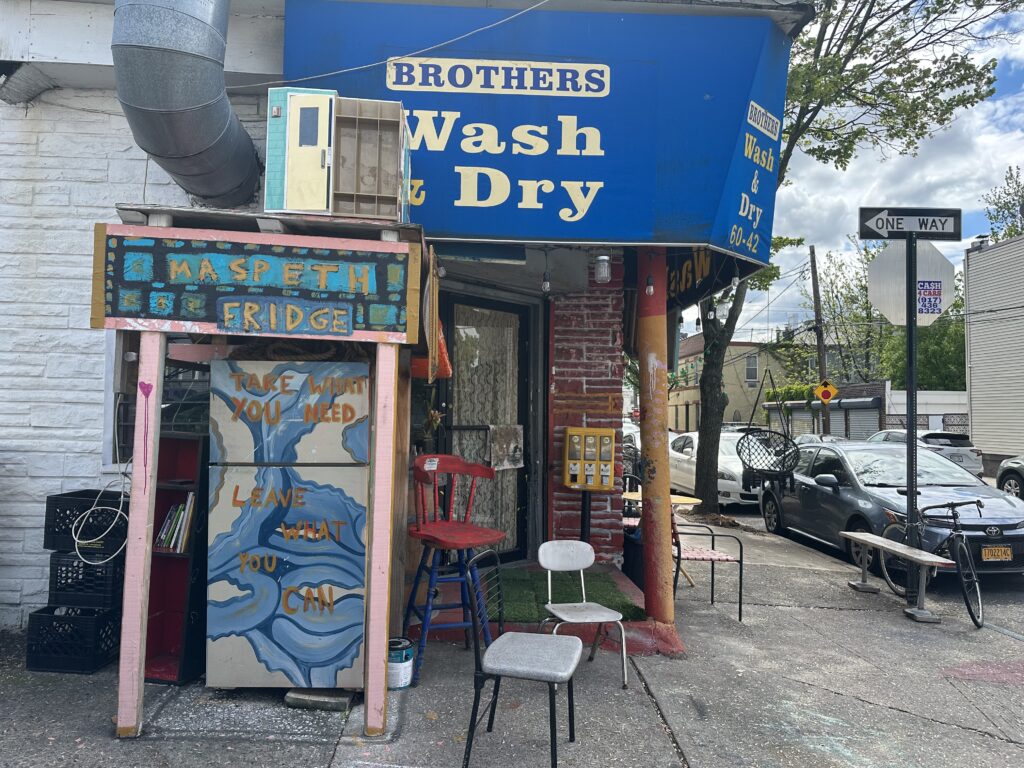
This fridge is located outside of Brothers Wash and Dry, a community space home to music events since the spring of 2019. It is run by Sampson Dahl, who also resides in the former laundromat. More information on the space can be found on his instagram @brotherswashndry or on his website https://sampsondahl.com/.

Gamelan Dharma Swara to Perform ‘Springtime Super Nova’ in Ridgewood

By Stephanie Meditz

news@queensledger.com

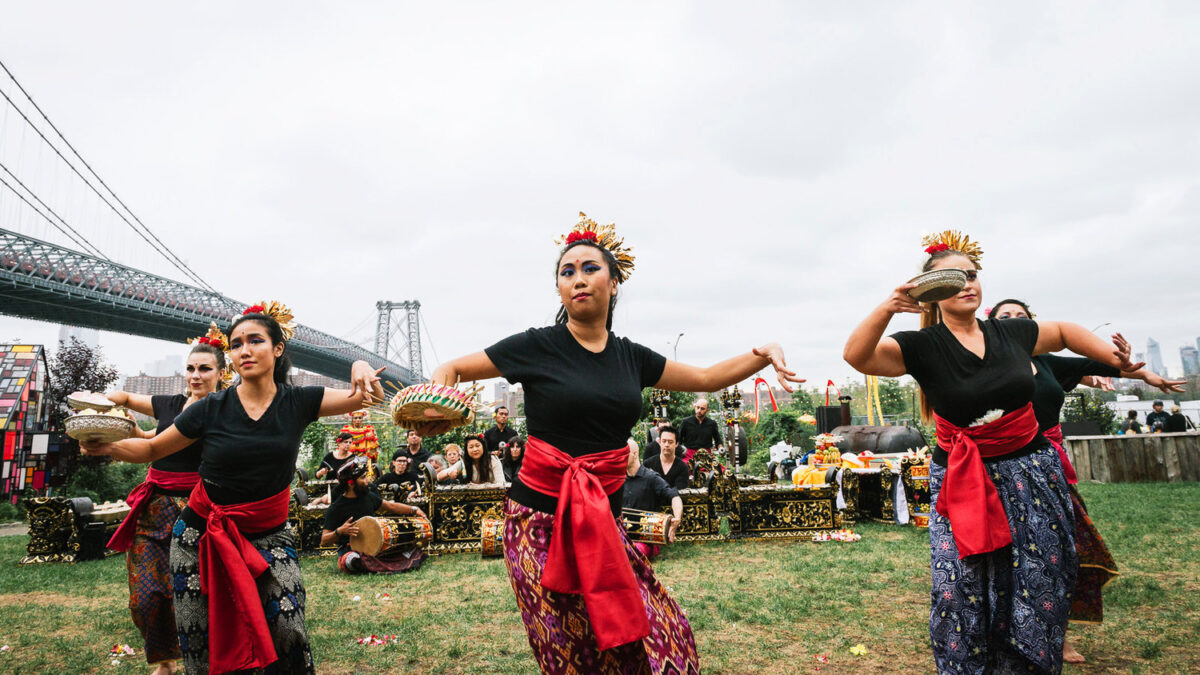
Ridgewood-based performing arts ensemble Gamelan Dharma Swara will present traditional music and dance from the Indonesian island of Bali to ring in the spring season with a bang.

On April 15 at 7 p.m, they will perform traditional Balinese gamelan music and dance in their “Springtime Super Nova” at Ridgewood Presbyterian Church’s Stone Circle Theatre.

Balinese gamelan is a type of music characterized by quick tempo shifts and melodic sounds produced by percussion instruments.

“They call this traditional ensemble Balinese gong kebyar,” president Victoria Lo Mellin said. “Kebyar is a term that means kind of like a flowering, a blossoming or an explosion.”

Gamelan famously uses metallophones, or bronze-keyed, intricately carved instruments, as well as several drums, gongs and sulings, or bamboo flutes.

“One of the things that gives gamelan that intrinsic sound is the fact that all of the instruments are tuned in pairs, and they’re tuned slightly apart from each other so it creates this wavelike sound in the air, which is a symbol of the spirits inhabiting the instruments,” she said.

The group will perform three full ensemble works —  two dances and one instrumental piece.

One of the dances will depict the fierceness of a warrior, and the other is about ideal qualities in a king. 

“What I really love about our presentation is that our dancers are female, and it’s kind of subverting this idea of gender identity and really putting this new feminine strength behind those gendered dances,” Lo Mellin said.

The dancers’ colorful costumes and makeup take between four and five hours to put on.

“An audience can expect to see what that dynamic, classic sense of what Balinese gamelan would mean for any person who were to come across it for the first time, even in Bali, those traditional dances that really give Balinese gamelan its characteristic sound, characteristic visual,” she said.

Founded in 1989, Gamelan Dharma Swara is a community-based ensemble, meaning that it consists of members who may not have played instruments or visited Bali previously.


Gamelan music has a very dynamic sound, and is played mostly with percussion instruments.
Photo via dharmaswara.org.

The group meets once a week to learn and eventually perform Balinese arts for the community.

Some members have over thirty years’ experience performing with the group, and others have only joined within the last six months.

Mellin has performed gamelan for over fifteen years, and she has been Gamelan Dharma Swara’s president for seven years.

She got her start in Gamelan Galak Tika, a group based in the Massachusetts Institute of Technology.

“I had found gamelan as just a part of my individual study and loved sitting in on rehearsals so much that I wanted Lo Mto learn what it was all about,” she said.

She played the bamboo flute for many years, but she has since picked up several instruments.

Lo Mellin now plays the ugal for Gamelan Dharma Swara, a metallophone that essentially leads the ensemble.

The group performed for the first time since the COVID-19 pandemic as part of the New York Philharmonic’s Nightcap series on March 18.

In 2010, they were the first Western group to be invited to the Bali Arts Festival as part of their gong kebyar competition.

Gamelan Dharma Swara is currently in residence at Ridgewood Presbyterian Church, and they have been based in Ridgewood since September.

“I think one of the biggest things for this ensemble and one of my goals for this particular performance is to really start integrating the ensemble into the local arts ecology,” she said. “As a resident in Ridgewood myself, it’s the first time in my life where I’m really in touch with small business owners. I run into people every single day where I know the people’s first name. I really wanted to feel as though the community ensemble had that same feel, could really integrate itself into the community. Because I think it’s important the community understands what we’re trying to bring to their neighborhood as well.”

Gamelan is integral to daily life in Bali, and she hopes to break down artistic barriers in the Ridgewood community as well. 

To accomplish this, Gamelan Dharma Swara offers two interactive public workshops per year in which the ensemble explains the way the music is structured.

By the end of each workshop, the group can play a few short pieces that demonstrate some key tenets of gamelan music.

“I think gamelan is such an interesting conduit for community members to find their own artistry…it’s really important for people to feel like, as a community member, they have that kind of potential, that they have a wellspring of creativity,” Lo Mellin said. “We’re offering an alternative culture to find that latent talent. I think everybody has a part that they can bring to the table, and they can challenge themselves to be a performer, and within a very very short period of time.”

The next workshop will take place on April 30 at Ridgewood Presbyterian Church.

The performance will consist of two sets, the first of which will feature Concetta Abbate’s ensemble.

Abbate’s contemporary classical music has a lyrical, narrative quality, which will contrast gamelan’s explosive, dynamic style.

“Through gamelan, you meet a lot of interesting people, and gamelan sort of has been an important part of my communal and social network. I met Concetta through somebody who used to perform in the gamelan,” Lo Mellin said. “The fact that we’re able to bring so many local creative cohorts…into one singular place, I think it’s going to be really exciting.”

Tickets for Gamelan Dharma Swara’s Springtime Super Nova are available for $25 at https://bandsintown.com/e/104251052 or for $30 at the door.

“Gamelan is an important interwoven experience in the daily culture of somebody who is Balinese. Gamelan is really integrated into the daily life, and I want the community to feel as though gamelan has a place in that community.”

“King of Ridgewood” Joey G Lives On In Community’s Memory

Sanitation Worker, DJ and Local Legend Passes Away at 51

By Matthew Fischetti

mfischetti@queensledger.com

In the morning, Joseph Guarisco would wake up early to clean the streets of New York City. At night, he would keep the party going as a local DJ. And in between, he put a smile on the faces of the Ridgewood community with his infectious warmth and charm.

Joseph Guarisco, more commonly known as “Joey G” unexpectedly passed away on March 8 at 51-years-old. Joey G was seemingly everywhere in the community, family and friends recalled. Whether it was neighborhood cleanups, coaching soccer at Christ The King, DJing for Sweet Sixteens or birthdays, Joey G was there and is fondly remembered by members of the Ridgewood community.

Marco Conter, who knew Joey G for 18 years working for the Sanitation Department, said that Jey G was one-of-a kind. He never saw him in a bad mood, always had a lot of energy and would crack jokes about himself.

“He was the only guy who I knew who would sing at six in the morning,” Conter recalled at his funeral, noting how he would still be wiping the crust out of his eyes while Joey G brimmed with energy.

Steven Meditz, who knew Joey G since they were in fifth grade when they attended St. Matthias together, quickly became friends and bonded over their love of music.

“He was larger than life and everybody loved him. He was very involved with everything. Always organizing events, coaching for the kids, DJing, creating events, reunions for St. Matthias and Christ The King,” Meditz recalled in a Zoom interview. “He was always the center of attention.”

Meditz, a fellow lover of Freestyle music (a form of electronic dance music that was popular in the 80s and 90s) even began DJing with Joey G in their highschool years.

He recalled the many late nights carrying the “coffin” of DJ equipment from Fresh Pond Road, and early morning breakfasts at diners.

“He made you feel like you were friends for years. Even if you just met him. He just had that personality, that charisma,” Christina Meditz, Steven Meditz’s wife, who knew Joey since they attended high school together at Christ The King, recalled in a Zoom interview.


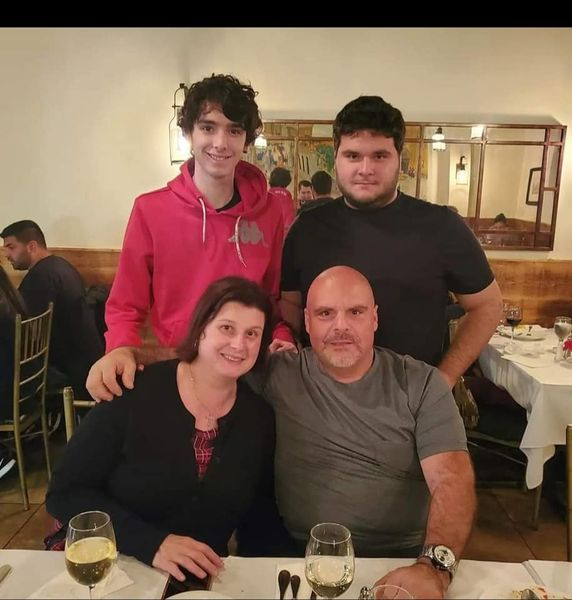
Joey G with his wife Vicky and his two sons Michael and Nicholas

She sat two seats ahead of him in homeroom class and said that he reminded her of a brother-like figure.

“He reminded me so much of my own brother – it was crazy, resemblance wise, attitude wise. And he acted like a brother, protective and caring,” she recalled.“I would bet my life savings that you would not find someone to find a bad word to say about him.”

Robert Schoemig, the owner of the Avenue Restaurant Bar and Grill in Ridgewood, had many memories of Joey G. They first met at Christ The King but also had many memories of him helping out at The Avenue.

Joey G used to DJ at the eatery and bar during ‘Freestyle Fridays.’ While the music waned in popularity in subsequent years, Joey G would still come out and support the restaurant.

After pandemic restrictions were lifted, Joey G “brought in the troops” to the restaurant and DJ’d to try and help the business. He also came to watch nearly every Super Bowl at The Avenue, regardless of who was playing. During a recent Super Bowl game, which he couldn’t attend, Joey G still sent his kids to go and watch the game to keep the tradition alive.

“He was the party. He was the guy to talk to. If you needed something, he would get up in the middle of the night and come help you, Schoemig recalled in a phone interview. “You know that wasn’t just for me, that was for all his friends. He’d offer the shirt off of his back.”

Arlene Lomastro knew Joey G since her sons worked with him at a local deli in their teenage years and said she remembered him by his respectful nature, big smile and always being a source of laughter and fun.

“Every time he would pass on the truck, he would see me jump off the truck, hug me and just tell his partner. ‘Oh, she makes the best penne alla vodka you ever wonder to taste,’” Lomastro recalled in a phone interview.

Joey G is survived by his wife Vicky and his two sons, Michael and Nicholas; as well as his father Michael, his mother Josephine and his sister Rossana.

A GoFundMe is raising money for the family to deal with expenses, which can be found at: https://www.gofundme.com/f/joseph-guariscos-family.

Fill the Form for Events, Advertisement or Business Listing