It’s The Economic Impact

It’s not a well-kept secret that the economic impact of the US Open to New York City exceeds that of the Mets and Yankees combined. While a million people attend the Open every year, estimates are that 6500 seasonal jobs pull off this yearly 3-week event. Last week we called it the ‘best-dressed mosh pit’ in the world. It’s crowded, it’s loud and it’s the place to be for celebrity sightings and pure passion on the court. Everyone seems to be smiling.

It was busy in Flushing this year as One million people attended the US Open!

Almost Lost

Every year some of the veterans of the history of the US Open muse about how close it was that we lost the tournament to the city of Atlanta in 1978. The tournament had been played at the famed West Side Tennis Club of Forest Hills, until it was obvious expansion there was impossible. Then Mayor, David Dinkins, was able to pave the way politically to ensure there was a swath of land in the park to host the ever-growing tournament. And the USTA was convinced that New York was the place to keep this event. Every year it seems to have grown and now with a week of free admission during the qualifying tournament and Kid’s Day, The tournament and its operation is a model for the growth of any sport. Our conversation with the proprietor of a number of tennis facilities in NYC revealed that tennis is having a surge of popularity not seen since the early 1980s.

The draw and tournament results sign at the entrance is still done by hand. Some of the vets remember the sign in Forest Hills that was hand painted. When a player won, their name would be painted as they won.

Well we love the economic impact to New York, which could top 1.4 billion dollars this year.

Golden Age Silent Film “Sentimental Tommy” Filmed in Forest Hills

Help Find A Long-Lost Silent Film, “Sentimental Tommy”

By Michael Perlman

Forest Hills and Rego Park have made the cut for films, television series, and plays, and achieved an impressive record on camera since its founding in the early twentieth century. Rewinding to what is likely one of our neighborhood’s earliest moments on camera, transpired in 1920.

That year, the rural steep hills along 66th Road (formerly Sample Street) between 102nd Street and 110th Street (formerly Colonial Avenue) grasped the attention of the landmarked Kaufman Astoria Studios (originally Astoria Studios), which erected a set depicting Thrums, a Scottish village for “Sentimental Tommy.” This nearly 80-minute acclaimed silent film was a drama, which was released on May 29, 1921, and screened in theaters including Brooklyn’s DeKalb Theatre and the Merrick Theatre, known as “Long Island’s Finest Theatre.”

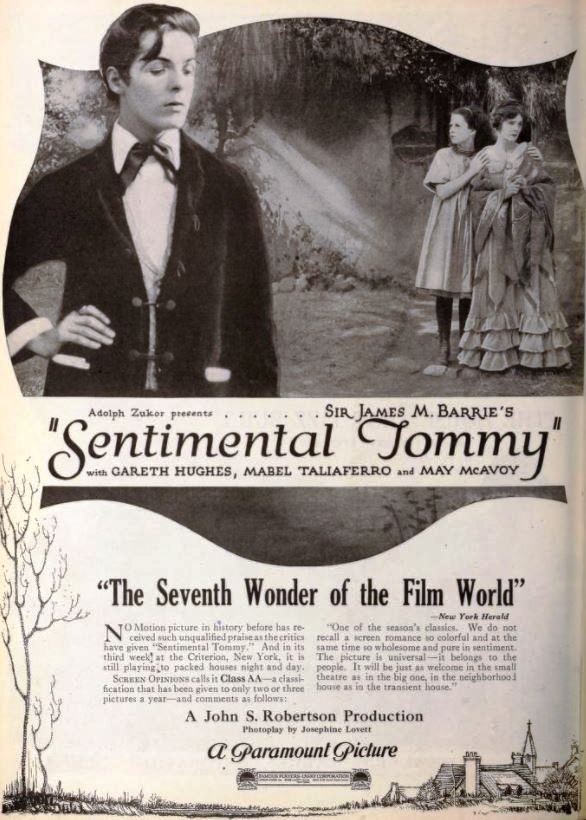
1921 ad

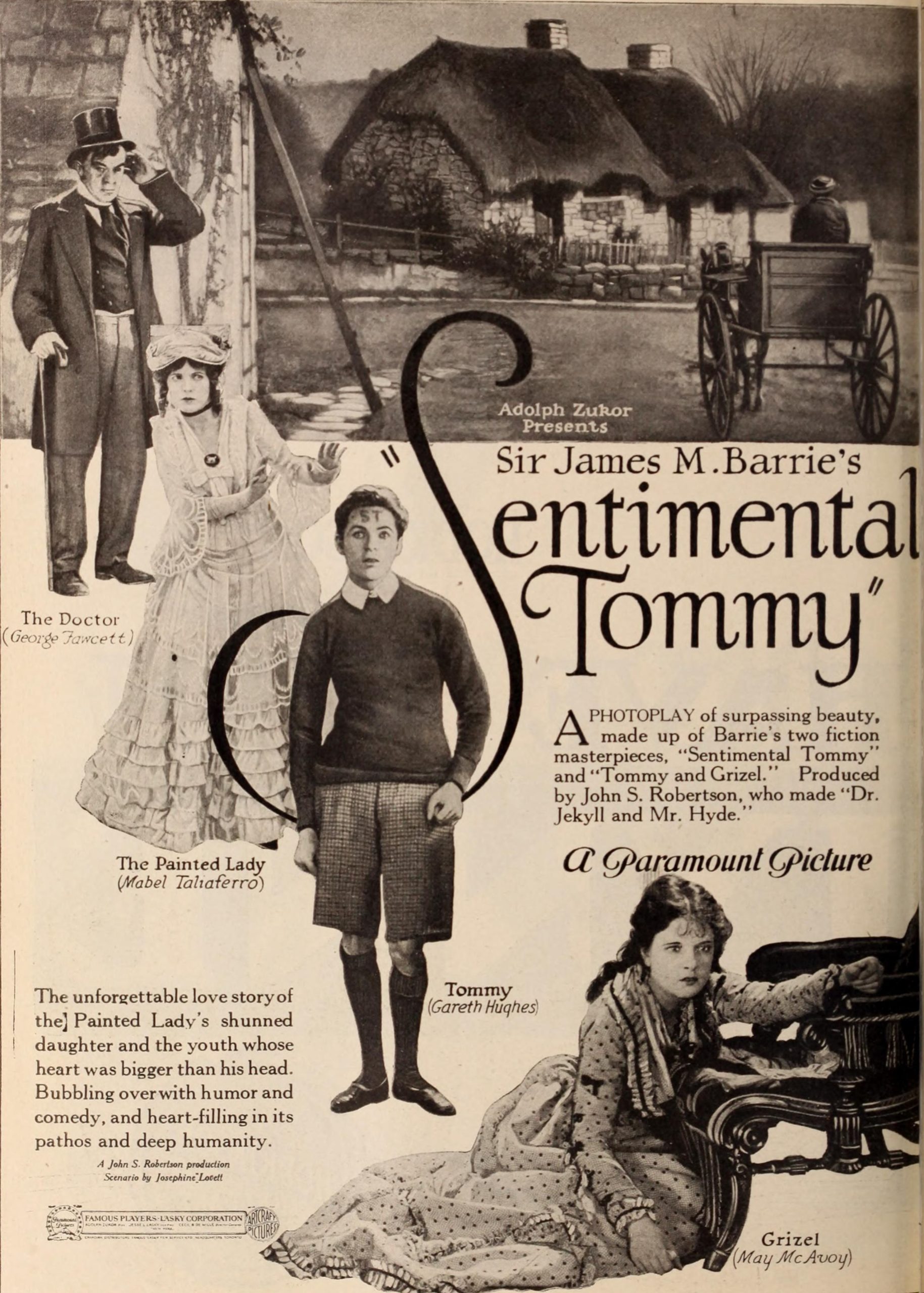
Residents of the village of Thrums ostracized Grizel and her mother, who was named “The Painted Lady.” Scottish-born Tommy Sandys was a needy boy with a rich imagination, who proves to Grizel that he loves her for who she is, and not on the basis of pity.

In the fall of 1919, the same Forest Hills spot accommodated a replica of a Civil War era American village for Augustus Thomas’ play, “The Copperhead.” Brooklyn architect Robert M. Haas of 101 Union Street, who served as Chair of the art and decoration department of the Famous Players-Lasky Corporation, designed both sets. This same forested hill, where children would tend to their sleds, was nicknamed “The Green Jungle.” In the mid-1960s, Birchwood Towers replaced a destination that was a trace of Forest Hills’ farming days.

The Silent Film Era spans 1894 to 1931. Today, “Sentimental Tommy,” a significant film of the era, is believed to be lost. Either it is concealed in a dusty archive and forgotten about, or may be a complete loss as a result of the unstable nitrate film base that was typically used. Currently, stills of the film survive. Approximately 75 percent of silent films have been lost, according to the Library of Congress. That would account for an estimated 2,749 that exist in a complete form out of an estimated 10,919 American silent films. There is hope, since some silent films that were believed to be lost forever, were rediscovered. Such is the case for the 1915 film “The Heart of Lincoln” starring Francis Ford, which was classified as missing for over a century, but rediscovered this year by intern Dan Martin, who browsed boxes at the Historic Films Archive in Greenport, NY.

Sentimental Tommy still

“If a list were made of the best photoplays ever made, the (director) John S. Robertson production for Paramount of Sir James M. Barrie’s (renowned book) ‘Sentimental Tommy’ would undoubtedly be included,” read a 1921 edition of the Mount Vernon-based publication, The Daily Argus. “When this picture was shown yesterday at the Playhouse, there was not a sound to be heard, and at the close the audience broke into sincere applause.” It also references that Mr. Robertson, who would be remembered for his work, “Dr. Jekyll and Mr. Hyde” a year prior, produced “Sentimental Tommy” faithfully in respect for the author’s delightful touches. Gareth Hughes, who appeared as Tommy Sandys, was compared to a genuine “flesh and blood Barrie-esque character.” Actress May McAvoy, who appeared as the devoted and pitiful Grizel, was referenced as a great example for her emotional work. The cast of excellence included other major names, such as Mabel Taliaferro who portrayed Grizel’s mother, “The Painted Lady,” and George Fawcett, Harry Coleman, Leila Frost, Kempton Greene, Virginia Valli, Kate Davenport, and Alfred Kappeler.


Sentimental Tommy ad Exhibitors Herald March 19, 1921

An April 19, 1921 edition of The Brooklyn Standard Union featured a review of the silent film, which was subject to an extended engagement at Manhattan’s Criterion Theatre in Times Square. It read, “Seldom has a photoplay which relied upon whimsy and refinement been developed with such delicacy and naive romance as ‘Sentimental Tommy.’ With rare artistry, the director, players, and scenarists, have kept the Barrie spell in all its lightness, thus making the story more gripping and realistic. The imagination is stirred, and the emotions are played upon with deft nuances, while the eye is intrigued through the charming and almost toy-like settings. Lovers of good literature are turning to the Criterion to see ‘Sentimental Tommy’ as they rarely turn to a photoplay.”

“An Architect in the Movies” was a headline of The Brooklyn Daily Eagle on October 17, 1920. In the spotlight was Robert M. Haas, who designed a faithful reproduction of the Scottish village. After Haas’ training at the Newark Technical School, Ohio Northern University, and University of Pennsylvania, he practiced with a firm consisting of architects. Among the achievements were the Presidential Palace of Cuba interior, and countrywide estates including Lillian B. Ryan’s in Bryn Mawr, Pennsylvania.

Sentimental Tommy set by architect Robert M Haas, insert, Brooklyn Daily Eagle, 1920

An excerpt read, “After he had completed the Allen place, Mr. Haas had a call from Mr. Allen one day, saying that he was leaving for Europe, and that he had a request from some motion picture people to take some exteriors on the estate. Would Mr. Haas take care of them? He would and did by calling around at the Famous Players’ studio to talk things over. The general manager showed him around the studio and asked him what he thought of some of the sets. From the architectural point of view, he didn’t think much of them, and told him so.” Haas responded to a request for producing improved sets, and abandoned his architectural work to develop a specialized field.

As the head of the art and decoration department of the Famous Players-Lasky Corporation, Haas conducted the business in the manner of a large architect’s office, with directors as his clients, and script was reviewed with him. “Each scene is considered in detail as to the style of architecture, the nationality of the setting, and the character of the actor. For the larger scenes, such as the building of entire villages, fantastic or elaborate sets, models are constructed to scale and arranged and rearranged until satisfactory. The settings are built by carpenters from blueprints developed from the rough sketches made in conference,” the publication continued.

The village of Thrums’ reproduction for “Sentimental Tommy” in 1920 in Forest Hills was highly regarded by experts on Scottish architecture and landscapes. The praise continued in 1921 with the reproduction of Thrums in the shadow of California hills for Barrie’s “The Little Minister.” “Nannie’s home, the manse, the town hall, and the auld licht kirk fairly breathe the air of Scotland,” read The Sunday Star of Washington D.C. on December 5, 1921.

Scottish novelist & playwright, Sir James Matthew Barrie (1860 – 1937) was born in Kirriemuir, Angus, Scotland and later relocated to 100 Bayswater Road in London, a home where he achieved many successes in the literary and theatrical world. One of his great creations was Peter Pan. His novel, “Sentimental Tommy,” was published initially in 1896, and another edition was available in 1920; both copyrighted through the notable Charles Scribner’s Sons of New York. The film is also based on J.M. Barrie’s novel, “Tommy and Grizel.”

Novelist Playwright James Matthew Barrie in 1892 Photo by Herbert Rose Barraud

For leads on locating the long-lost silent film masterpiece and to volunteer, email mperlman@queensledger.com

ClearView Kids Daycare Center Planting Roots in Forest Hills

A Dynamic Daycare Inspiring Young Minds

By Michael Perlman

It is essential to build a solid foundation in our earliest years, and in the forefront is ClearView Kids Daycare Center. Located in the heart of Forest Hills’ residential and commercial district at 68-60 Austin Street, Suite 200, this full-time weekday nursery to prep school center for children, ages 2 to 5, has been educating, motivating, and enriching young minds in distinctive ways since opening day on April 1, 2025.
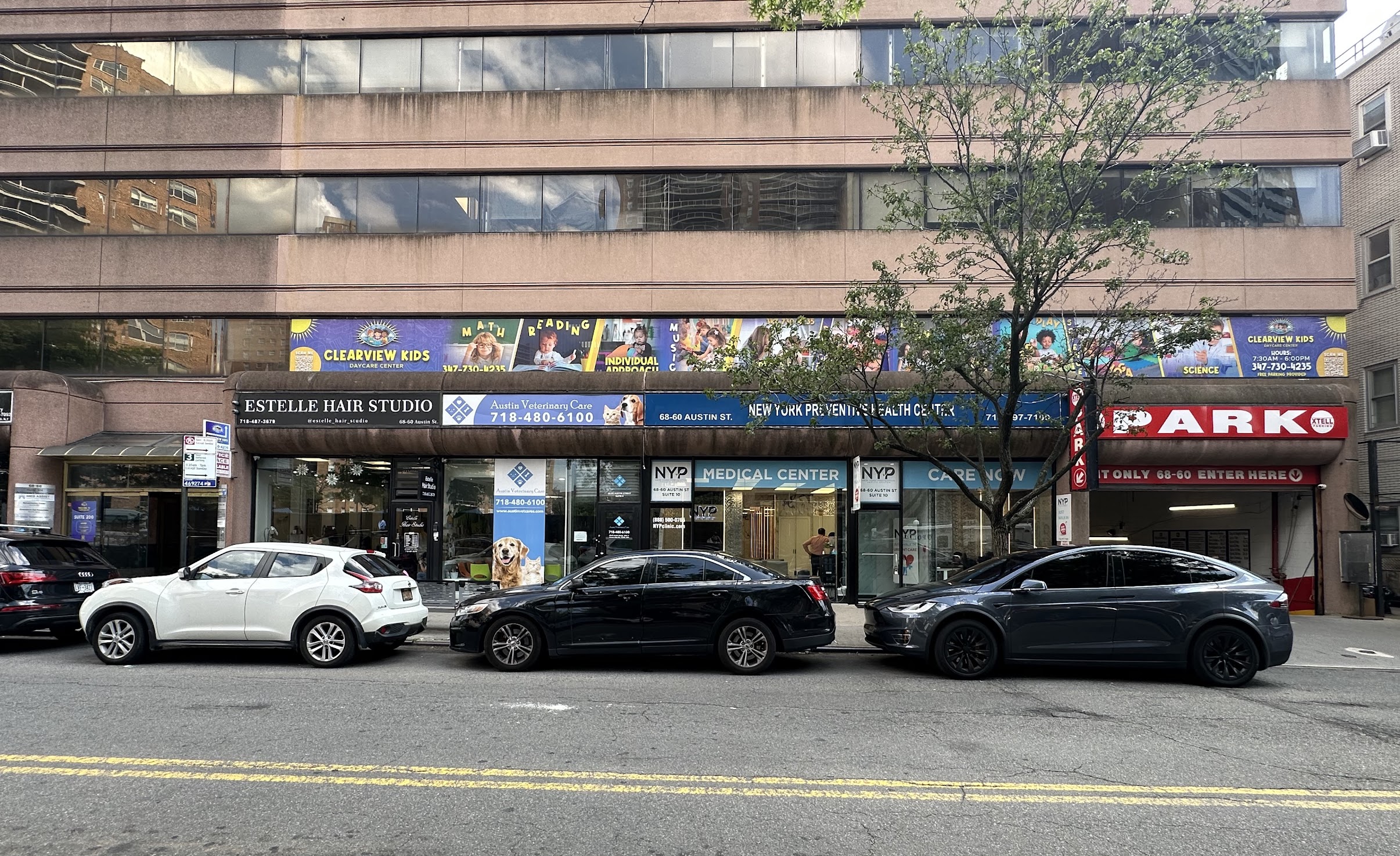
ClearView Kids Daycare, 68-60 Austin St, 2nd floor, Photo by Michael Perlman

Upon entering the daycare, warm smiles and a friendly demeanor light the way. A logo in the foyer reads, “A place where every child shines. A place of love, learning, & support.” A thought bubble features an eye with three children sharing a book, and lustrous rays extend into depictions of diverse activities. Personalized attention and a variety of group settings becomes apparent.
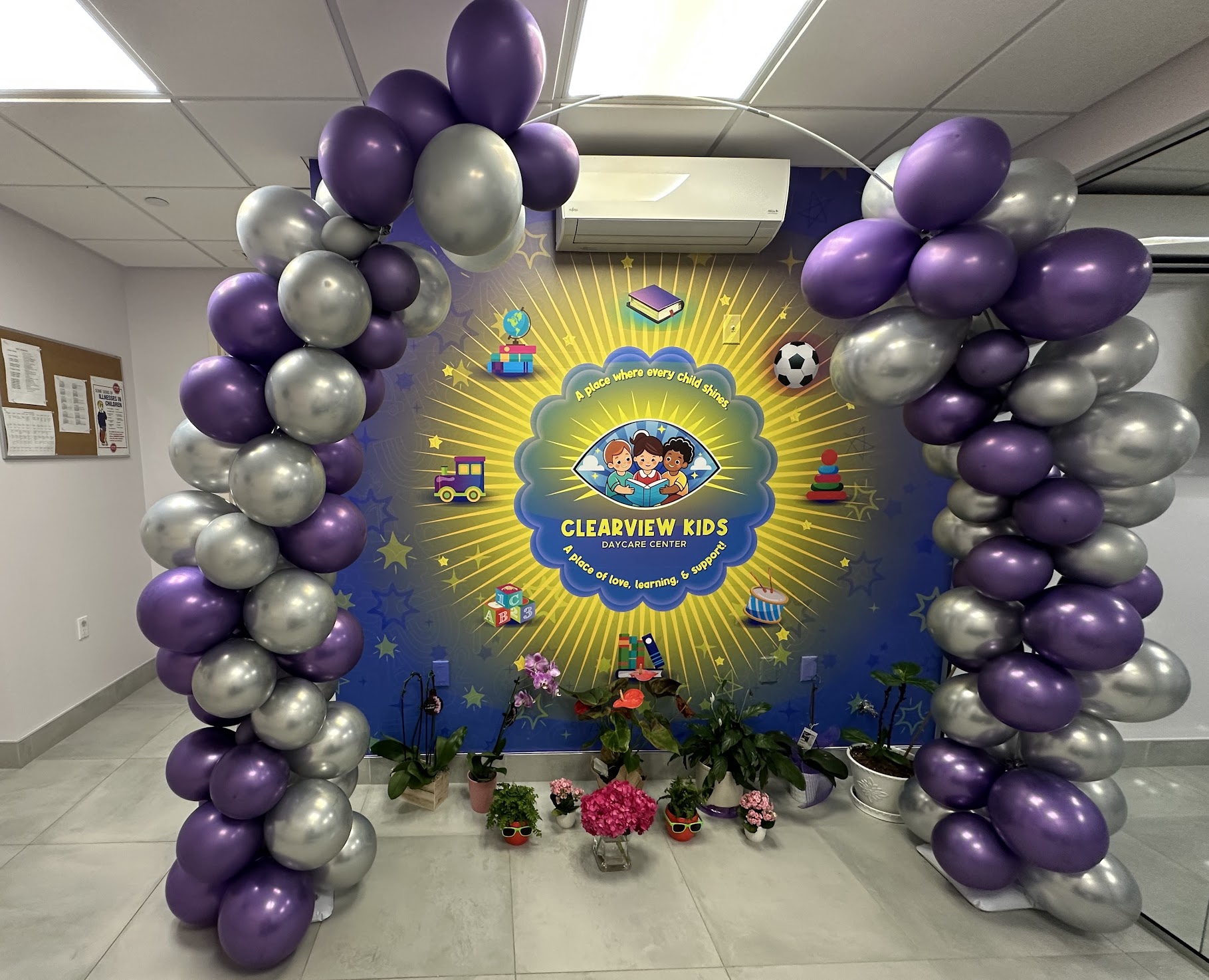
A welcoming space, Photo by Michael Perlman

Bianna Mazler, who achieved a Masters in Speech and Language Pathology, serves as ClearView Kids’ executive director. After immigrating from Uzbekistan, she settled in Rego Park, and currently resides in Kew Gardens.

Diana Mozner serves as the center’s educational director. She resides in Queens Village and formerly called Rego Park home. She achieved a Masters in Music in Turkmenistan, and locally, she achieved a Masters in Special Education from Touro College. She takes pride in being a licensed music and special education teacher.

ClearView Kids Daycare offers bright and spacious classrooms to teach and nurture up to 100 students, and enrollment currently remains open. Students are enrolled from Forest Hills, Rego Park, Kew Gardens, Fresh Meadows, and sections of Long Island, which indicates how students and their parents value the daycare’s vision and commitment to excellence. The curriculum blends diverse research-based approaches, tailored to developmental milestones and each child’s individual needs.
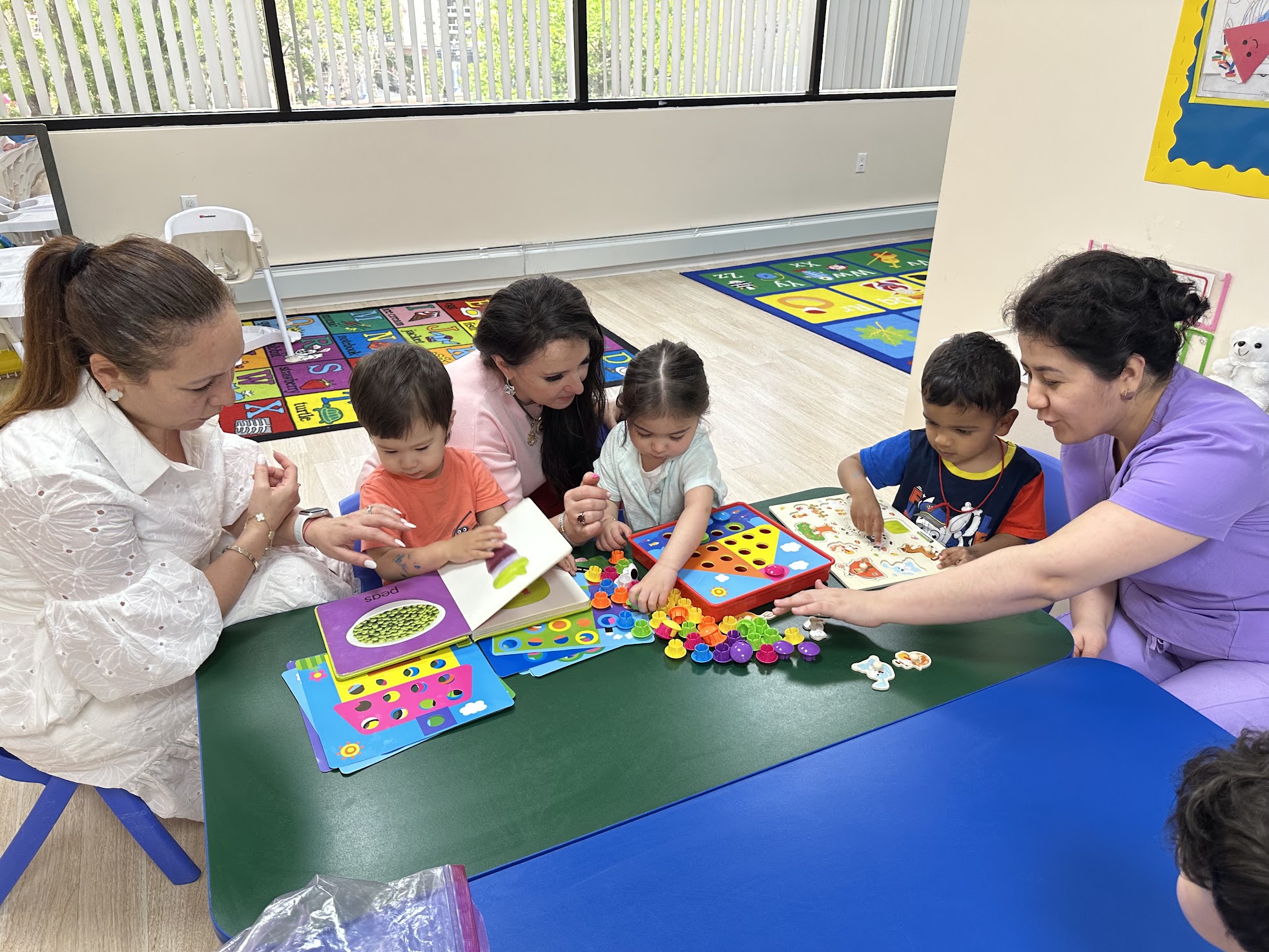
Developing bonds over interactive games, Photo by Michael Perlman

“In regard to education, we integrate various curriculums to deliver highest quality services. We make learning fun and meaningful,” explained Mozner. Mazler added, “Our children learn best through exploration and play, and we create an environment where those moments materialize daily.”

The highly skillful staff consists of teachers and teachers assistants, who achieved Bachelors and Masters degrees. Also ready to serve are chefs, who Mazler feels are “very kind and loving people,” which is their most important title. “We believe in teamwork. Everyone is valued, and it does not matter if you are cleaning, cooking, or a teacher. We are all one,” she said.
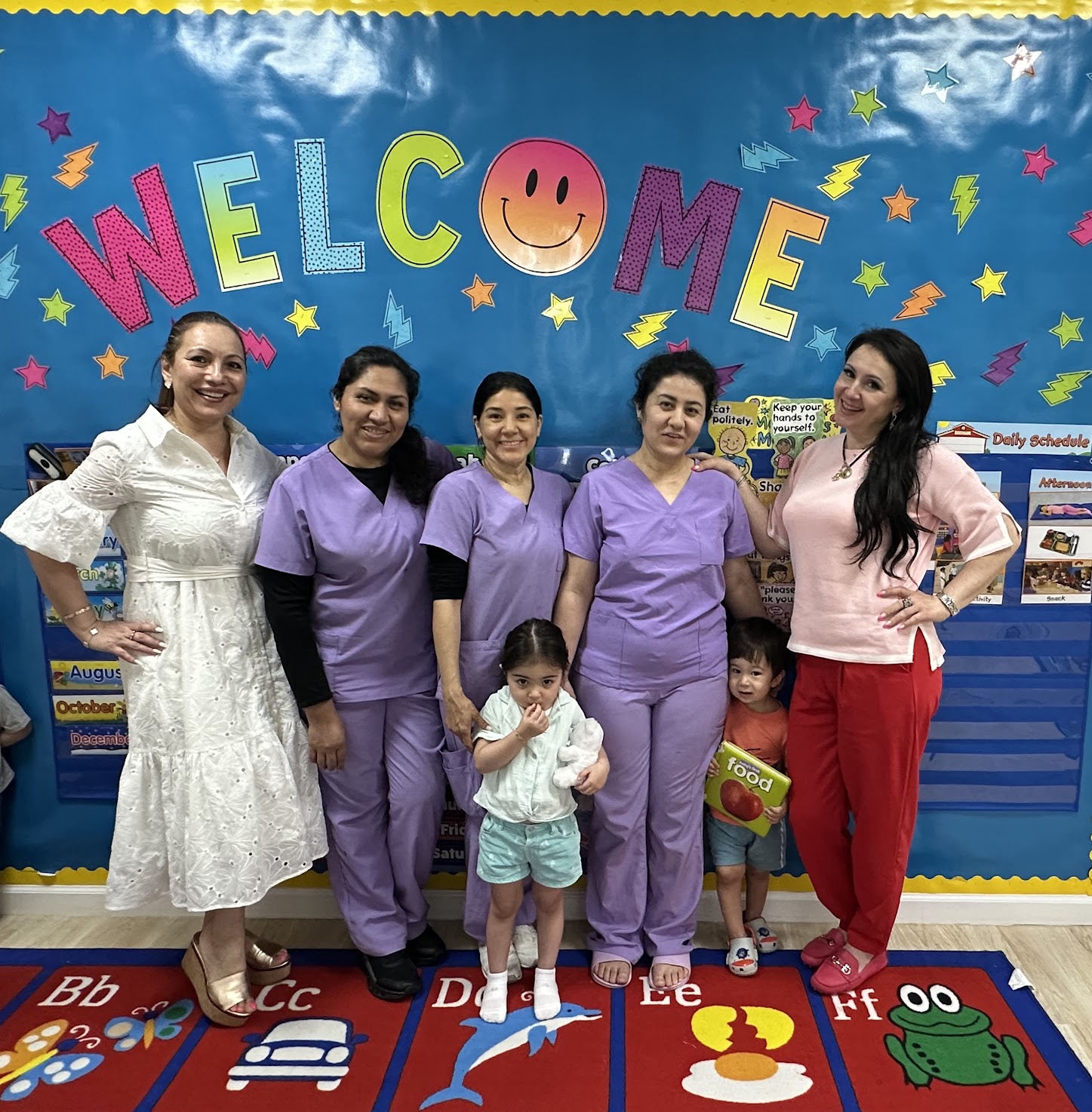
Owners, staff, & children welcome you, Photo by Michael Perlman

Mazler explained how their enduring friendship evolved into a thriving business partnership, after meeting approximately twenty years ago while working in the field. “Since Diana is a special education teacher and I’m a speech pathologist, we were providing homecare services for the same client. We quickly became friends, and then best friends. Over the years, we worked as a team, celebrated many successes, and realized we could achieve so much more together. That’s when we decided to open our own daycare, knowing we could make a greater impact in the lives of many children.” Their shared passion, mutual respect, and seamless collaboration, strengthened by two decades of experience in daycare center environments, remain the driving forces behind their success.

“Our mission is to provide the highest quality of care for children, to embrace inclusivity and diversity, and to nurture each child with love, guiding them toward a life built on compassion and support,” continued Mazler. She also shared the inspiration behind the center’s engaging name, “ClearView,” which was mutually selected. “As parents, we wanted to offer families a ‘clear view’ by being open, transparent, and deeply committed to the well-being of every child in our care. We want parents to know exactly what their child is learning and eating, while we provide a safe and positive environment. Simultaneously, we maintain a clear vision of how we conduct our work by helping children grow strong, confident, and ready to thrive.”

The Monday to Friday schedule, which runs from 7:30 AM to 6:00 PM, offers significantly more than a standard daycare routine. It is a day filled with opportunities for growth, learning, and joy. Children enjoy a rich variety of activities, including free play and library time, circle time, learning centers and small-group projects, indoor and outdoor play, gross motor activities, music and movement, art and sensory exploration, and storytime, among others.

Outdoor play area, Photo by Michael Perlman

Mazler highlighted several qualities that distinguish their daycare apart from others. “We truly love children from the bottom of our heart, and that love is felt from the very moment that parents bring them through our doors,” she shared. The team also places great emphasis on helping children transition smoothly from their home to the daycare environment, which is an experience that can be stressful. With years of expertise, they apply gentle, preventative strategies to ease separation anxiety, and create a sense of comfort and security from day one.

Another standout is preparing three balanced meals and two nutritious snacks, consisting of high-quality ingredients in a kosher kitchen. Milk and eggs are among the organic products. They are committed to accommodating dietary needs, as well as diverse tastes, since healthy food should be delectable and suited to a child’s preferences. Breakfast, for example, may consist of oatmeal with fruits, eggs, and toast or French toast. Vegetarian and vegan options are also available. “We introduce our students to a variety of foods and textures, prepared in a healthy manner, and over time, they become curious and often end up loving them,” said Mazler.

“We offer music classes and sports once per week, and we have our students help prepare challah from scratch on Fridays in our weekly cooking class,” said Mozner. The hands-on approach not only engages their senses, but teaches practical skills that they can carry into their homes as they mature.

“By playing sports, children learn how to follow directions and develop motor skills,” said Mazler. The program offers judo and karate classes, which help children develop physical strength, coordination, balance, and self-discipline, while also building confidence and fostering respect for themselves and others. Another unique aspect is etiquette classes, where children acquire essential social skills, such as sharing, expressing gratitude, and showing respect.

Students also participate in themed performances in conjunction with upcoming holidays, such as Mother’s Day and Father’s Day, which reinforces the traditions and values each season represents. Sensory integration therapy consists of exposing children to materials, including sand and water. This summer, shows are held weekly, which feature a range of subjects. Animals were in the spotlight of one show, and others featured interactive foam and paper as a source of entertainment. Water activities enable students to discover the properties of water, develop interpersonal cues and establish bonds, and enjoy the summer warmth in the center’s enclosed on-site playground.
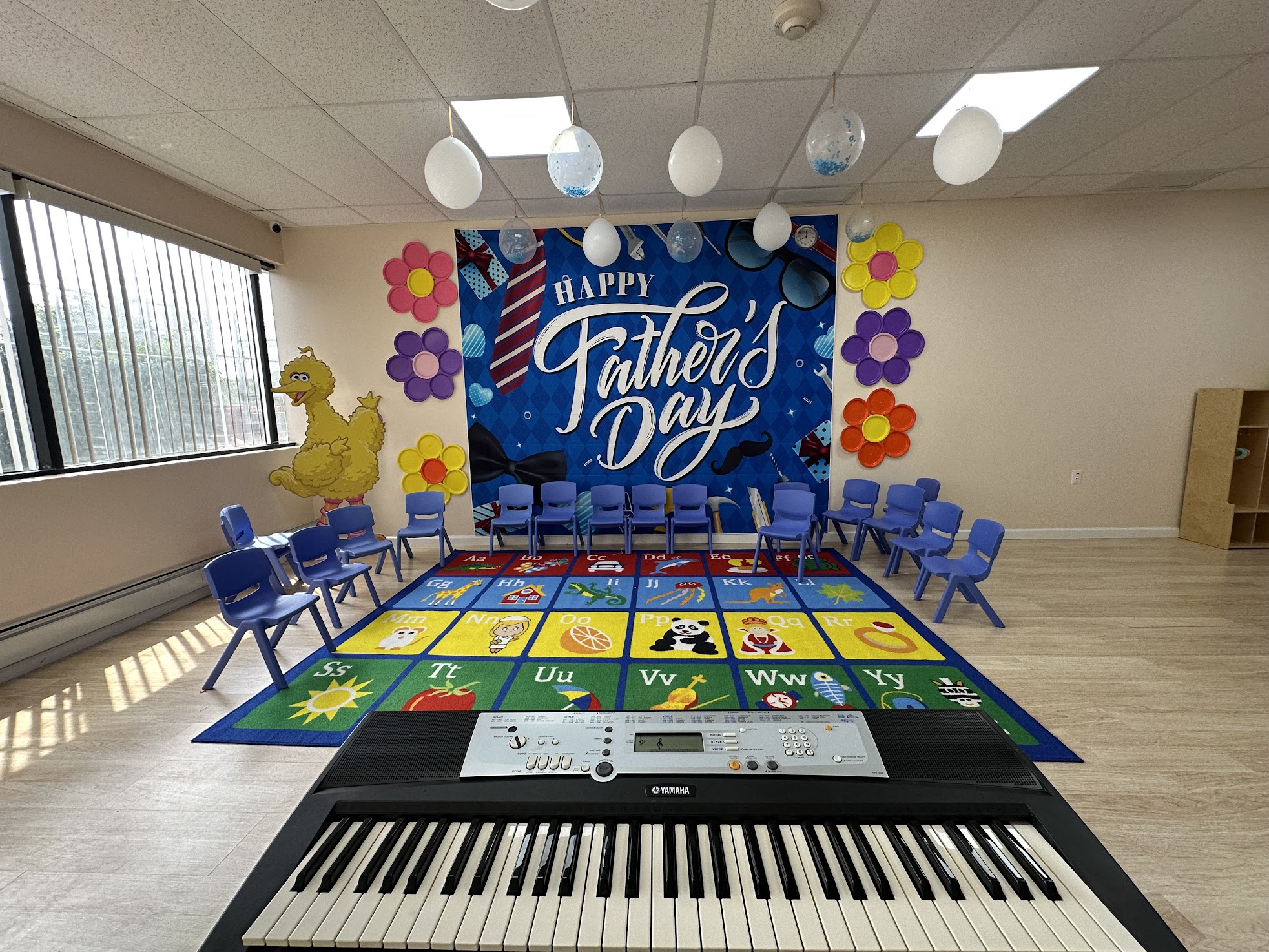
Where creativity is key, Photo by Michael Perlman

Based on Mazler’s observations and feedback from parents, she shared a few of many reasons why co-owning a daycare is gratifying. “After a few months of operation, their children start following directions. They develop speech and language skills. They start interacting with other children and are more mature. They’re never hungry when they come home. Parents tell us ‘Thank you!’ We also hear how their children, even on weekends, are looking forward to visiting our daycare.”

“Kids feel the atmosphere. They feel it’s a home when they come to our daycare, since we all have positive energy,” said Mozner. “When they come here with their parents, they don’t want to leave, even if it is their first visit. They already feel loved. You don’t have to tell them ‘I love you.’ They know. We always recommend parents to take a tour and see for themselves, since only parents can feel if this is the right place for their child. Our daycare is education combined with positive energy and love.”

Colorful interactive spaces along with a Tree of Life, Photo by Michael Perlman

The layout and configuration of rooms with their purpose, lighting, and the whimsical and colorful huge murals lining the hallway also contribute to the daycare’s unique personality. Children are inspired to use their imagination. One of the murals features toddlers steering a rubber duckie alongside a rainbow, above a rainbow pencil-inspired house, and a toddler hitting a drum as another makes their way down a sliding pon. In a room, cutouts of Cookie Monster and Bert surround a miniature library, enabling a classic adventure. Another space features an interactive colorful growth wall, where children can learn to measure their height alongside a giraffe, monkeys, flowers, and insects.
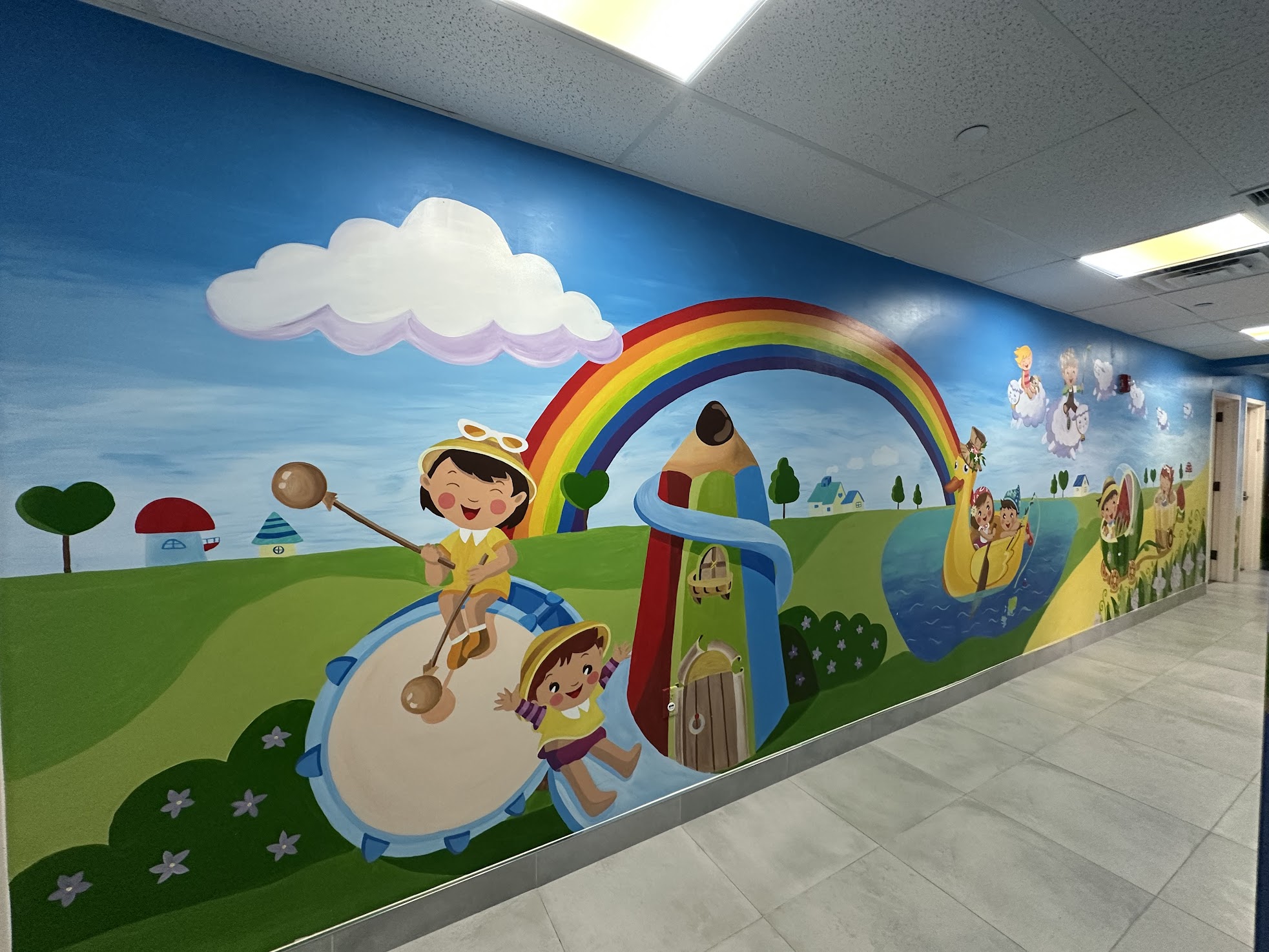
Murals enable one’s imagination, Photo by Michael Perlman

The duo can also be regarded as artists from designing their center’s engaging logo and beyond. Mozner explained, “We conducted much research regarding what is good for kids, such as how the lights are supposed to be and what colors to use. We read lots of literature, but also applied our own imagination.”
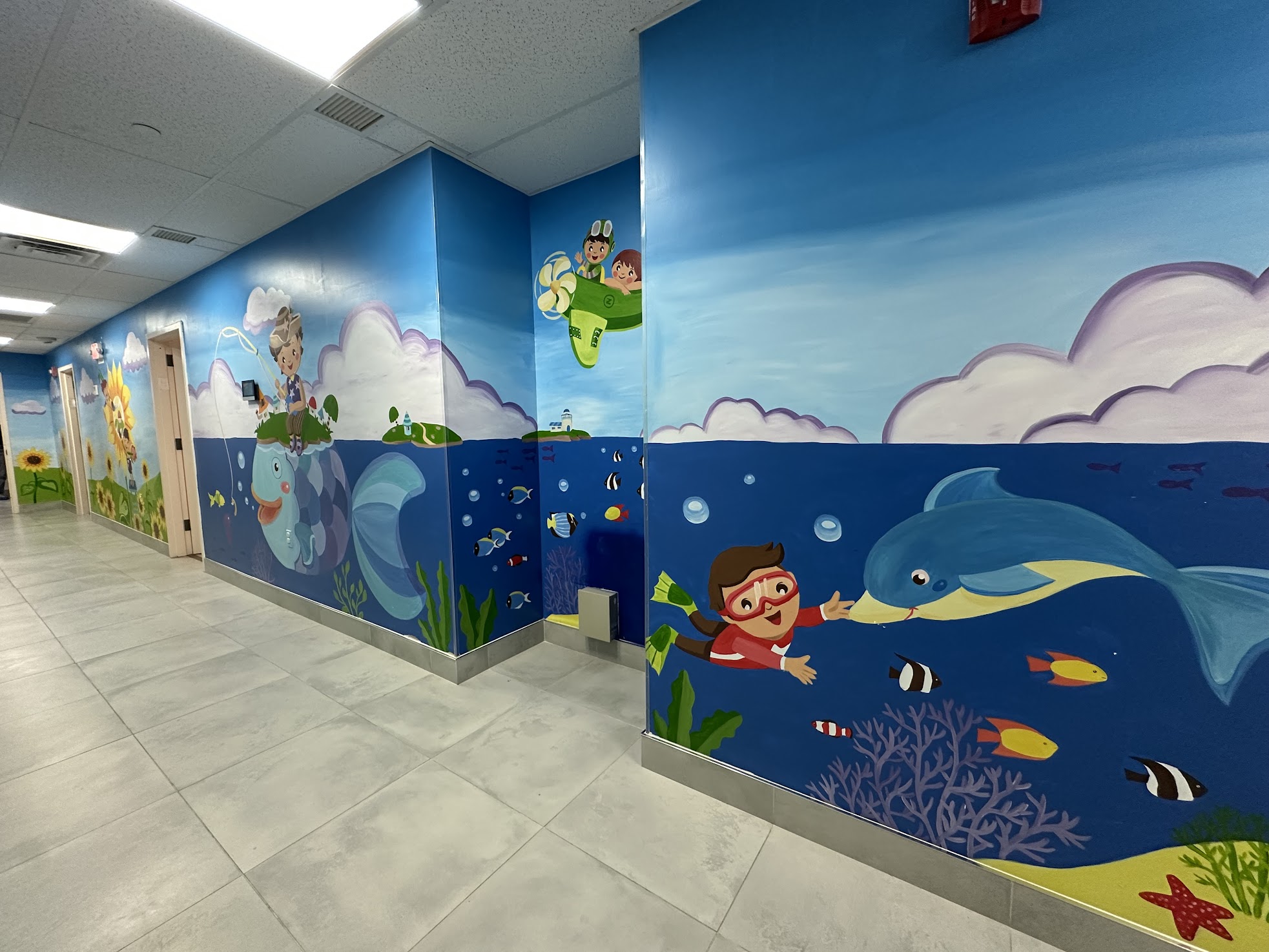
A journey begins at ClearView, Photo by Michael Perlman

ClearView Kids Daycare Center is partnering with the QUALITYstarsNY program, a rating and improvement system for early childhood programs, which provides support and resources throughout New York State.

To discover the magic at ClearView Kids, visit www.clearviewkids.com, call 347-730-4235, email Clearviewkidsinc@gmail.com, follow @clearview_kids_daycare_center_ on Instagram, and book a consultation and tour. Enrollment and a journey awaits!


Op-Ed: Take Fears About Battery Storage Facilities Seriously

Guest Op-Ed by Michael P. Mezzacappa

Dozens of Battery Energy Storage System (BESS) facilities are currently proposed or being built in some of New York City’s tightest-knit communities. As policymakers prioritize climate goals over the health and safety of neighborhoods like Middle Village and, most recently, St. Albans, residents are right to be concerned.

The push for battery storage centers is born out of the desire to cut greenhouse gas emissions. The New York Climate Leadership and Community Protection Act (NYCLCPA) calls for cutting emissions 40% by 2030 and 85% by 2050. However, this law totally disregards the reality of fire science, which is within my area of the practice of law.

Toxic Chemicals Forced Fire- fighters to Let Fires Burn Out

While the FDNY is the best and most experienced in confronting fires and fatalities from small-scale lithium-ion battery fires – 277 toxic fires in 2024 – it’s entirely different on an industrial scale. Lithium-ion batteries burn hotter and faster, requiring much more water to extinguish. In fact, incidents involving these are more akin to an explosion, followed by a fire. Putting aside the fact that harvesting lithium has grave environmental consequences, including emitting 15 tons of carbon dioxide for every 1 ton of lithium harvested, New York is rushing too far, too fast down this road. Consider what happened this past January at the Moss Landing Power Plant, about 90 minutes south of San Francisco. While the facility has now caught fire on five separate occasions, the scale of the January 2025 blaze was incomparable. Due to the emissions of hydrogen fluoride and other toxic chemicals, firefighters were forced to let the fire burn itself out, rather than risking severe damage to their own lungs along with that of members of the surrounding community. Upwards of 1,200 people were forced to evacuate and in the days that followed, community residents report- ed feeling unwell.

While that west coast power plant had the benefit of being over half a mile from any built-up residential areas, imagine such a fire in a crowded New York residential neighborhood like St. Albans, where the latest planned BESS center is set to go up across from the St. Albans Veterans Hospital, on the site of a former gas station, where the underground gas tanks have been left in place for decades.

The borough is already home to 16 other functional BESS centers, only accounting for a minuscule 11.9 megawatts, the equivalent to power less than 12,000 homes. At least 14 more are planned for the borough, putting our homes and schools in the shadow of these potentially hazardous facilities. The FDNY deserves credit for its successful crackdown on illegal manufacturing and battery repair sites, and their ingenious use of specialized fire blankets to smother lithium-ion fires. Having litigated dozens of cases involving building infernos that resulted from lithium- ion batteries, I can personally attest to the insurance underwriting nightmare these massive scale facilities pose.

Most Batteries are From China – Companies Uninsured

What the BESS sponsors might not tell you is that the U.S. currently gets most of its lithium-ion batter- ies from China. It’s relevant because the producers responsible for mak- ing these batteries never respond to a single court summons and are, in the majority of cases, completely uninsured. Also, attorneys often cannot obtain jurisdiction over the manufacturer or the supplier of the batteries due to laws that, in many instances, favor foreign countries more than our own citizens. When something goes wrong, buyer beware!

Directly Across From PS 128

Yet while most new commercial, industrial or residential buildings here are required to have sprinkler systems, there is no current fire suppression technology capable of confronting industrial-sized lithium-ion battery fires.

While the FDNY has specialized fire blankets that can cover an electric vehicle, is it even possible to deploy one to cover an entire industrial building? The countless families in Middle Village, where a BESS facility is planned directly across from K-8 school PS 128, should be rightly concerned, as should those living near the 250-bed St. Albans VA Medical Center.

While New York City law prohibits smoking within 100 feet of a school building, why on earth can it be sensible to put a building packed full of materials that can emit toxic fumes when set alight, adjacent to a school, or a hospital serving our veterans?

As New York recklessly gallops ahead with building more BESS facilities, it should heed the concerns of its citizens before it is too late. The instability of lithium-ion batteries will simply not go away because they want it to. The time has come for a moratorium on any further construc- tion of BESS centers, near schools and residential neighborhoods.

Michael Mezzacappa, a partner and general counsel with New York-based Coffey Modica, represents insurers, property owners, managing agents and other professionals in major litigations that include lithium-ion battery explosions and fires.

In Our Opinion: ICY Schools

We’re keenly aware that the readers of our newspapers are English speaking individuals mainly concerned with quality of life in the neighborhoods of Brooklyn and Queens, and the idea of ICE coming into their child’s school and sweeping up their kids is not really on their minds. But it’s real to some teachers or administrators who follow our news.

At a meeting in Long Island City this week we met up with one such school administrator who indicated her staff has indeed prepared for ICE doing a sweep at their school and taking kids out. While we never want to be accused of sitting at our desks and having our heads in the sand, we did pay attention to the stated objective of the president’s executive order, which clearly is intended to deport ‘criminals’ who are undocumented. We all are keenly aware that spin works both ways. Those on the right will say that nobody but criminals are being deported, while those on the left will swear they know people who were just minding their own business, got arrested in a sweep, and get deported. Spin? Maybe.

As we hear and read about hospitals, schools and business association’s efforts to prepare for raids we wonder just how much work time and money is being spent giving attention to how to react to raids. We also know, first hand, that attendance at schools has rapidly changed. There is a noticeable depletion in school attendance. It’s a fairly safe bet that families feel their undocumented children will be taken away. But are raids, arrests and deportation of aliens who are not criminals a ‘real’ thing here?  We don’t want to have our heads in the sand, so please let us know if you witness ICE conducting random arrests, a raid in a school or even deportation of non-criminals. We need first hand accounts.

Need to address safety in subways

Workers are steadily returning to their offices in Manhattan and across the five boroughs, but a new poll shows that 60 percent of them still fear for their safety.
But they aren’t worried about contracting COVID-19, they’re worried about their physical safety as they return to the city’s subway system.
Stations across the city were nearly deserted for the first few months of the pandemic last year except for the brave men and women working on the front lines, paving the way for an unsavory element to feel more comfortable taking over the system.
We have all heard the stories of random attacks, including people being assaulted or pushed onto the tracks or both, that have become far too common in the mass transit system. If the city is going to get back to work, people need to feel comfortable using the subways.
Would more cops patrolling the platforms and trains help? Mayor Bill de Blasio recently added 250 more cops to the 3,000 already safeguarding the subways, and it certainly can’t hurt.
But in addition to the criminal element, there is a far bigger problem with the homeless and mentally ill living in the stations. More cops won’t necessarily solve that issue.
Instead, the city and MTA need a social solution. They need people who are trained in dealing with the homeless and mentally ill to join the police in engaging these individuals and try to get them help.
Simply locking them up and then releasing them back on the street won’t accomplish anything.
After a year of us all worrying about our health due to the pandemic, we need to feel safe in the subways as our lives slowly return to normal.

City bracing for a summer of violence

If Memorial Day weekend is any indication, it looks like it’s going to be a bloody summer in the city.
On Monday night alone, a teenager was killed and eight others were injured in incidents across the five boroughs. That’s on top of several other acts of violence over the weekend.
Police sources were quoted in published reports saying crime would have been a lot worse over the weekend if the weather hadn’t been so awful.
In other words, as the calendar turns to summer we can expect the violence to get much worse.
This is on top of the spike in hate crimes, primarily directed at the Asian community. On Monday, another woman was randomly punched in front of a restaurant in Manhattan’s Chinatown.
The city is trying to address the growing violence, from flooding troubled neighborhoods with extra police to employing community groups to try to stop the shooting before it starts, but it doesn’t seem to be working.
The de Blasio administration and the NYPD will have to get creative if New Yorkers are going to feel safe walking the streets this summer.
But residents need to do their part, too, when they can. If you see something suspicious or witness an act of violence, make sure you come forward and help our officers get the dangerous elements off our streets.

Fill the Form for Events, Advertisement or Business Listing