New York Renaissance Faire celebrates 45th anniversary

By Stephanie Meditz

news@queensledger.com

Fairies and woodland creatures dance around the Maypole to celebrate the change of season.

Over Labor Day weekend, the vendors and actors at the New York Renaissance Faire in Tuxedo did not take any days off from transporting visitors back to Elizabethan England. 

The Faire, open on weekends in late summer and early fall, celebrated its 45th anniversary with its traditional marketplace, performances, costumes and food, including its infamous turkey legs. 

Upon entering the Faire, guests immediately land on Spende Penny Lane, a street aptly named for the 125+ artisans who set up shop there. 

Some of the many souvenirs to purchase include flower crowns, corsets, armor, swords, candles, incense, leather goods and even psychic readings. 

The marketplace consists almost entirely of independent vendors, meaning that artisans craft their merchandise by hand and rent their booths at the Faire every year. 

The Royal Candle Maker even holds live demonstrations where the artisan shows potential buyers how he designs his candles to retain less heat. 

Not only do these unique candles burn longer, but the wax melts in such a way that turns them into candle holders. 

Tara Vazquez, who sells intricate garlands and flower crowns that rival Titania herself, returned to the Faire for her third year. 

Vendor Tara Vazquez loves to help visitors find garland to match their outfits.

She loves to match her merchandise to visitors’ outfits, whether they come dressed in period costumes or everyday attire. 

“The most fun part is honestly that most people, between workers and patrons, just blend right in,” she said. “You’re just here to have fun. Everyone’s here for the same reason.” 

This past weekend was the Faire’s Marketplace Weekend, where patrons who spend $250 at the marketplace earn two free tickets to return to the Faire through Sept. 25. 

Although costumes are optional, many of the Faire’s patrons go all out with their Renaissance looks, and several travel to Renaissance fairs across the country. 

Suelen Feltrin frequently travels to fairs in the tri-state area and crafts a brand new look every time, with months of planning behind each one.

Suelen Feltrin wears a different look to each of the many Renaissance fairs she attends.

She visited the New York Renaissance Faire for the first time last weekend with her two daughters. 

“The last time I brought them, because of COVID, they were so little, so they don’t really remember it much,” she said. “They think this is their first one, but it’s really not. But they’re loving it so far.” 

Feltrin is happy to share this tradition with her daughters, who also dressed up in princess gowns. 

Although patrons often steal the spotlight, the Faire’s cast members stay in character during every visitor interaction for a truly transformative experience. 

There is a wide range of characters to encounter: fae in the Enchanted Forest, knights in shining armor at jousts and sly pickpockets who skulk across the Faire. 

One such character, Charles Schilling, has been a “secondhand salesman” at the Faire for four years. 

“Sometimes the first hand knows not that the second hand has it, but we tell the first hand not,” he said. 

He also noted the attention people give him, a “strange little man,” at the Faire as opposed to the bustle of urban centers. 

For the past nine years, Moe DeLawns has, appropriately, been the Shire groundskeeper and florist. 

“The Shire, in my opinion, is a very special place with a very special energy about it,” he said. “Because ne’er not you can see many places that are filled with such wonder and merriment as you can with Sterling Faire.” 

Charles Schilling and Moe DeLawns wear their “Faire day best” attire.

The Faire also hosts a Pub Crawl where guests can pay an additional $65 for a drink at four of its pubs. 

Guests who do not participate can laugh as the group quite literally crawls across the Faire to get to each pub. 

The New York Renaissance Faire is a show in itself with its immersive experiences, but it also includes games, rides and shows for the whole family. 

To commemorate the change in season, fairies dance and scatter pixie dust around the Maypole. 

The Chess Board hosts a real-life game of chess — two teams face off in a series of random one-on-one sword fights. 

A game called “Rotten Revenge,” faithful to the public humiliation that was common in Elizabethan England, allows guests to throw tomatoes at a human target. 

With all that it has to offer, the New York Renaissance Faire welcomes all lords and ladies to visit Sterling Shire on weekends through Oct. 9.

In Our Opinion: Local news is not a competition

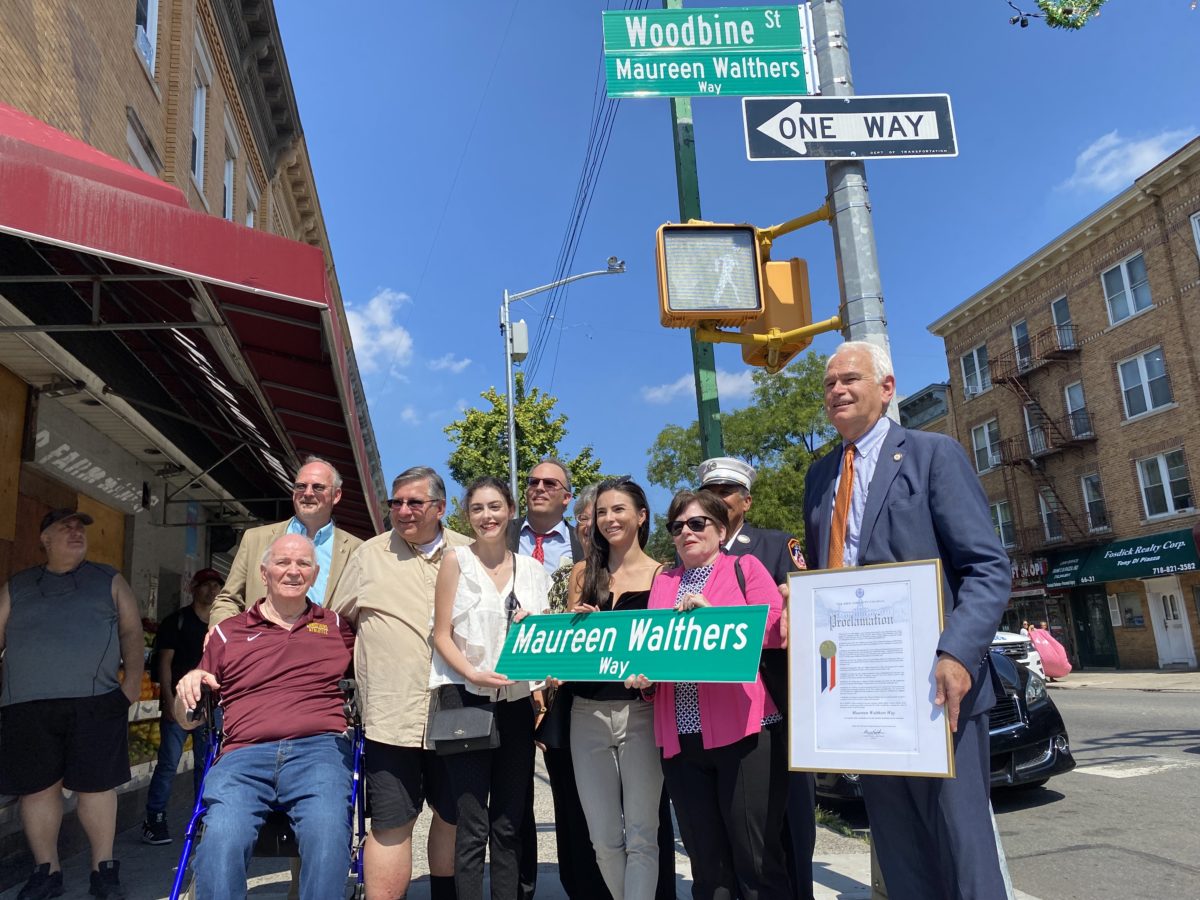
Two weekends ago, Councilman Bob Holden honored the late, great Maureen Walthers, the long-time matriarch of the Ridgewood Times, with a street co-naming on Woodbine Street in Ridgewood, where she called home.

Walthers served as the first female editor of the Ridgewood Times, as well as its executive vice president and co-owner.

She went on to purchase the paper in 1983, and eventually launched the Times Newsweekly, extending to other parts of Queens.

Her contributions to the neighborhood also include her involvement in Community Board 5 and Greater Ridgewood Restoration Corporation, her efforts to preserve and landmark the Onderdonk House and co-founding the Greater Ridgewood Historical Society — among many other commendable endeavors.

Walthers passed away in 2020 after an illness, and dozens of people gathered on Aug. 27 to celebrate her work as a journalist and civic leader, and reminisce on her kind, witty personality.

But what should have been a wholesome event to commemorate her life and legacy quickly turned sour when speakers on the mic made strange, competitive remarks pitting the Ridgewood Times and other local papers against each other.

“The Ridgewood Times at that time was the newspaper. The layout of the Ridgewood Times was again, the most complete, the most professional, and it rivaled actually many, many daily newspapers,” Holden said.

Sheesh, Bob. That’s a perfectly fine opinion to have, but to say it on the mic in front of a crowd of people, which included reporters from said papers, is a bit awkward.

Many of Walthers’ close friends and loved ones took turns on the mic to reminisce. The comments got weirder as the ceremony went on.

Outgoing Assemblywoman Cathy Nolan said that local journalism should be about what Walthers exemplified: “fearless, fun and community-focused,” and that although other papers “try,” she misses what Walthers brought to the table.

Another community resident who’s known Walthers since the ‘70s even went as far as suggesting that other local papers misrepresent people and events, and the Ridgewood Times always got it right.

“Any time you wanted to put something in [the Ridgewood Times], *boom* it was in. And it was always put in a great light,” he said. “Those of you who might’ve been portrayed in other papers or in other media and say, ‘That’s not really what happened,’ but with the Ridgewood Times, it really was what happened.”

News flash: it is not a journalist’s job to portray people and events in a “positive light,” it’s our job to seek the truth — the good, the bad and the ugly — and report it to our readers.

Any journalist worth their title will promptly make a correction or retraction if something was somehow taken out of context or misinterpreted in any way. Reach out to us and start a dialogue if that’s ever the case.

The Ridgewood Times has done and continues to do admirable work for the community, and Maureen Walthers’ work in the newspaper business serves as inspiration for all young reporters, especially young women.

But for elected officials and community leaders to make her event a competition is a blatant slap in the face to reporters at other newspapers who work tirelessly to provide readers with relevant local news.

In the same way that politicians represent a community whether people like it or not, established local newspapers influence and serve thousands of readers in the community —  whether politicians like it or not.

We should all aim to work together to provide the most factual, up-to-date news to our communities.

The remainder of Walthers’ street co-naming event was lovely, revealing fond memories of her along with a shiny new street sign that reads, “Maureen Walthers Way.”

Based on Maureen’s personality and life philosophy, she wouldn’t have appreciated the needless, subtle digs at other papers. We knew her well. She was a true pioneer in our industry and she believed as we do, in the growth and prosperity of our communities. Local papers are a strength of the neighborhood.

Her work at the Ridgewood Times speaks for itself.

Porcelli: The Other Side of Education (9/1)

It’s Not Your Grandfather’s – It’s High-Tech

By Mike Porcelli

Shop Class is coming back…at least I hope it is.

Last month I attended the City & State Education Summit, featuring some of the leading voices on education in New York.

In his keynote address, School Chancellor David Banks announced his intention to bring back CTE – Career & Technical Education programs – the modern version of trade education, or what I call: ‘the other side of education,’ by saying, ‘It’s Not Your Grandfather’s CTE.’

His phrasing immediately got my attention, because the reference to grandfathers in the title of this column, was selected a week before the conference.

When I heard Chancellor Banks stress “It’s not your grandfather’s CTE,” I immediately thought, he understands modern CTE must necessarily be high-tech, because all trades now use technology extensively.

At least, I hope he understands, and acts accordingly.

Everything the Chancellor said, indicated he understands the importance of trade training for students who are suited for and desire it, and he has plans to make shop classes available to all who can benefit from them.

He indicated that the destruction of trade training programs over the past six decades, was misguided and destructive to many students.

It absolutely was, resulting in millions of students being under-educated by schools that deprived them of the training they needed.

Hopefully, the restoration of CTE will reduce the number of students forced into programs that don’t match their talents, desires and ambitions, leading to their poor grades, high drop-out rates, low employability and high frustration.

This combination of low skills and high frustration in students deprived of their best options, is a major cause of mental, emotional and economic distress.

When students do not have the opportunity to develop their natural talents, they will be less employable, less productive and less satisfied than those allowed to develop their potential.

Our education system is obligated to provide all students the best training options based on their abilities and needs.

Hopefully, Chancellor Banks and his administration can increase the availability of CTE programs, so that all students who need them can take advantage of them.

The goal of restoring CTE poses a commendable challenge for Banks.

For the sake of his students, I hope he is successful – but he must be held accountable.

Academic & Trade Education are Two Sides of a Coin.

This column explores the impact of CTE programs on students, society, and the economy.

Mike Porcelli is a life-long mechanic, adjunct professor and host of Autolab Radio.

He is committed to restoring trade education in schools before it’s too late.

‘The Play That Goes Wrong’: Slapstick comedy to die for

By Stephanie Meditz

news@queensledger.com 

Photo courtesy of “The Play That Goes Wrong” via Facebook.

Everyone knows the saying, “The show must go on.” 

The players in “The Play That Goes Wrong,” who power through their scenes despite a hazardous set, missing props and unconscious actresses, embody it in a way that makes audiences howl with laughter. 

Written by Jonathan Sayer, Henry Lewis and Henry Shields, the 2012 play follows the Cornley University Drama Society’s opening night of “The Murder at Haversham Manor.” 

The set, however, is incomplete and falling apart in every imaginable way. 

The play begins with a pre-show of sorts in which stage manager Annie and lighting and sound operator Trevor tinker with the set, replace floorboards, put a stubborn mantelpiece on the wall and force a perpetually open door to close. 

They even solicit an audience member onstage to hold the mantelpiece in place and the door shut while the two promptly run offstage. 

Director and serious thespian, Chris Bean (played by Chris Lanceley), then assures the audience that his directorial debut will be a treat compared to the drama society’s former productions, such as the one-man show, “Cat.” 

The play within the play, “The Murder at Haversham Manor,” begins with Charles Haversham (Chris French) lying dead on the night of his engagement party to Florence Colleymoore (Maggie Weston).

Also present are Florence’s brother and Charles’ old friend, Thomas Colleymoore (Brent Bateman), his butler, Perkins (Adam Petherbridge) and his brother, Cecil Haversham (Alex Mandell). 

Knowing that someone in the group must have committed the murder, they solicit the help of Inspector Carter to find out whodunit. 

At the start of “The Murder at Haversham Manor,” the audience sees that Annie and Trevor have won their battle with the door: it will not budge when the players try to open it. 

Not only that, Charles Haversham is extremely mobile and sentient for a corpse – he visibly inhales after Thomas declares that he is not breathing and squirms when other players step on his hand. 

When Thomas and Perkins try to carry Charles’ body offstage on a stretcher, it rips, so the two pretend to carry it while the corpse slug crawls offstage. 

The defective set and players slipping out of character are laughable evidence of a production going south, but “The Play That Goes Wrong” especially succeeds in its hilariously convincing slapstick. 

During Florence’s interrogation by Inspector Carter, Thomas throws open the now functional door, knocks Florence unconscious and schleps her body offstage. 

Arguably the funniest recurrence throughout the show, however, is the bottle of paint thinner in place of scotch. 

Since the show must go on, the players are trapped in a vicious cycle — they drink the paint thinner, spit it out and comment on the high quality of the “scotch” while visibly recovering from the blow to their mouths. 

The spit take has long been used in comedies, but it especially works in “The Play That Goes Wrong” because the players still deliver their lines after each one to pretend nothing went wrong. 

The play’s other mishaps have a similar effect — they are funnier because “The Murder at Haversham Manor” is not intended to be a comedy, so audience members must suspend their disbelief and watch it as such. 

The audience laughs when Dennis, who plays Perkins, mispronounces “cyanide” as “ky-uh-needy” precisely because he is mortified. 

After intermission, a flustered Chris Bean begs the audience to stop laughing and take his play as seriously as they would “Hamilton.”

The audience laughs on, both because of the appropriate pop culture reference and because he is still somehow taking the play seriously after its disastrous first act. 

Overall, “The Play That Goes Wrong” is as funny as it is because people like to see just how far these players will go to ensure that the show goes on. 

Or, simply put, seeing people get hurt in elaborate and unlikely ways is plain hilarious. 

The actors in “The Play That Goes Wrong” are exceptionally talented, not only because they perform this riot of a show without laughing, but because they must be locked into two separate characters. 

The actors transform into their respective members of the Cornley University Drama Society, and then they must play that actor’s role in “The Murder at Haversham Manor” in a logical way based on their traits. 

The current off-Broadway cast does a stunning job of remaining locked into their roles – the only breaks in character are written in the script. 

Alex Mandell, whose character, Max, plays Cecil Haversham and Arthur the gardener, gives an especially vibrant and interactive portrayal of a lovable fool who is just happy to be in front of an audience. 

The set is also successful in its astonishing failure — the furniture falls apart at just the right time to leave the audience laughing out of incredulity. 

This is an impressive feat by the real-life stage crew because the deliberately malfunctioning set drives the comedic timing that dictates the play’s effectiveness.

Because the successive mishaps are meticulously choreographed, “The Play That Goes Wrong” is a difficult show to put on, and the current off-Broadway run at New World Stages is an immense theatrical achievement. 

To find out who killed Charles Haversham or, more likely, to see what else can possibly go wrong, buy tickets for “The Play That Goes Wrong” here or through Telecharge. 

Before the performance, make sure to grab one of the show’s signature cocktails — just make sure it isn’t actually paint thinner.

MARIA GUAGENTI

Maria Guagenti passed away on Tuesday, August 23, 2022 at the age of 89. Beloved Wife of the late Vincenzo Guagenti. Loving Mother of Alfonso (April) Guagenti and Anthony (Amanda) Guagenti. Cherished Grandmother of Vincenzo, Massimo, Ryan and Mark. Mass of Christian Burial offered at Our Lady of Hope Church on Wednesday, August 31, 202 at 10:45 AM. Entombment followed at St. John Cemetery Resurrection Mausoleum, Middle Village, NY under the direction of Papavero Funeral Home, 72-27 Grand Avenue, Maspeth NY 11378.

Inflation & Chip Shortages Cause New Car Prices In Queens & NYC To Soar

Car prices have increased to historically high levels in recent months, as with many other consumer goods. According to figures from data analytics firm J.D. Power, the average transaction price of new vehicles in the U.S. was up 11.8% year-over-year in July 2022. Combined with soaring gasoline prices and rising interest rates, this is making car ownership more difficult and putting the brakes on auto sales. Dan Rose, a manager at a VIP Car Leasing & Financing of NYC lot was quoted as saying “Manufacturers are trying to squeeze end users with exorbitant prices to protect their bottom line and pass on the price increases to the end-user”.

We will examine why car prices are rising, how inflation is impacting car sales trends and when car prices are expected to drop.

Car prices are rising due to global supply chain issues.   An ongoing chip shortage is holding up production in the auto industry, creating a supply crunch. Rising raw material costs are also driving car prices up, intensified by the Russia-Ukraine crisis.

Data from J.D. Power shows U.S. consumers forked out an average of $45,869 for a new vehicle in July 2022, a record high. The weighted average cost of raw materials used to produce a new vehicle hit an all-time high in 2021, rising 116% year-over-year. Electric vehicles have been especially affected by rising material costs, as the prices of key metals including lithium, nickel and cobalt — essential components of electric car batteries — have spiked.

What’s more, chip shortages mean that manufacturers are prioritizing their most expensive vehicles, further increasing average transaction prices.  Automakers don’t have enough semiconductors and semiconductors are interchangeable to some degree.  Why would a car manufacturer put them in $25,000 cars instead of $85,000 cars?

These supply chain issues have combined with the already existing imbalance of supply and demand in the auto industry, which was precipitated by COVID-19. In the U.S., there are historically more than 3.5 million vehicles in dealer lots at the end of each month. However, this figure fell to 2.7 million before the chip crisis even began, due to pandemic-induced factory shutdowns. At the same time, demand remained heightened throughout COVID-19, as pandemic stimulus checks and accumulated savings meant that many consumers were still willing and able to purchase new cars.

How Is Inflation Impacting Car Sales Trends?

Rising sticker prices have dampened consumer demand for new and used cars alike, and sales have plummeted as a result. The seasonally adjusted annual rate (SAAR) of U.S. light vehicle sales tracked 13.51 million in July 2022, marking a 9% decline year-over-year.  Likewise, year-to-date retail sales in June 2022 came in at just under 5.9 million units — marking the worst first half sales volume performance since 2011.

Consumers have expressed record low sentiment toward the purchase of a new vehicle, citing high prices and rising interest rates.

The same holds true for the used car market, where sales (as estimated by software firm DealerTrak) fell 13% year-over-year in June 2022.  This has been caused by the high prices and historically poor selection that has been plaguing the industry, but is likely now joined also by declining demand given declining consumer confidence, rising interest rates and slowing economic activity.

Sales of electric cars are faring better despite the aforementioned supply chain woes.  Estimates show that in the EU5 (France, Germany, Italy, Spain and the U.K.), penetration of electric vehicles (EVs) and plug-in hybrid electric vehicles (PHEVs) grew to 19% month-over-month in June 2022, rising 0.9 percentage points. The U.S. also renewed its record penetration high of 7.2%. Indeed, the future of electric vehicles continues to look bright: In July 2022, the American Automobile Association (AAA) posted its latest survey results, indicating that one-quarter of Americans would likely opt for a fully electric vehicle for their next automobile purchase.

When Will Car Prices Drop?

Used car prices are already starting to drop as the market cools, having seemingly peaked in early 2022. On the other hand, new vehicle prices are unlikely to drop in 2022 due to persistent inflationary pressures.

There’s still a lot of inflation bubbling up in the new vehicle supply chain. Even though raw material costs are falling, suppliers have a lot of other higher non-commodity costs like diesel, freight, shipping, logistics, labor and electricity.  They will continue to pass these costs on to the automakers.

In addition, the effects of the chip shortage will continue to linger. Companies will need to rebuild inventory, which means that wholesale demand will compete with retail demand. This will in turn stabilize new vehicle prices; hopefully sometime in early to mid- 2023.

Car Price Increase Examples

So bad has it really been? A quick search on the internet will reveal these staggering numbers that really tell the whole story.

  • In the past year, Chevrolet prices have increased 39.10%.
  • In the past year, Cadillac prices have increased 24.70%.
  • In the past year, Jeep prices have increased 35.30%.
  • In the past year, Dodge prices have increased 33.90%.
  • In the past year, GMC prices have increased 24.30%.
  • In the past year, KIA prices have increased 23.70%.
  • In the past year, Chrysler prices have increased 24%.
  • In the past year, Mitsubishi prices have increased 23.50%.
  • In the past year, Nissan prices have increased 29.90%.
  • In the past year, Mercedes prices have increased 11.86%.
  • In the past year, Mazda prices have increased 13.49%.
  • In the past year, Ram prices have increased 42.60%.
  • In the past year, Audi prices have increased 21%.

In conclusion, Queens & NYC residents can only sit-back, wait and hope that inflationary pressure subsides, chips supply increases and car prices start to go down.

States with the most and least student debt

Michael Barera // Wikimedia Commons

States with the most and least student debt

In the late 1980s, a high school graduate who wanted to attend college or university was looking at average tuition of $15,160 per year for a private, nonprofit school and $3,190 per year for a public college or university. As of 2021, that number had ballooned to $37,600 for private, nonprofit colleges and $9,400 for public schools. Once the cost of books, room and board, and other fees are added in, paying for college with a part-time or summer job is increasingly becoming a thing of the past.

Today’s students are instead turning to loans, leading to a widespread debt crisis. Americans currently owe a collective $1.58 trillion in student loans, changing the shape and trajectory of the U.S. economy. Instead of buying cars or houses, many millennials are focused on finding jobs that will enable them to make loan payments without defaulting.

Some states are taking steps to help by adopting a Student Borrower Bill of Rights and offering a variety of scholarship and loan repayment programs for qualified graduates. In New York in 2017, for example, New York announced a scholarship program that would provide free tuition at public colleges to residents whose families make less than $125,000 a year.

Stacker looked at 2022 data from the Federal Reserve of New York to determine where student debt is hitting the nation the hardest. In the case of a tie, we looked at the number of borrowers in all tied states.

Read on to see where your state falls on the list.

You may also like: Highest-paying management jobs
Jacob Boomsma // Shutterstock

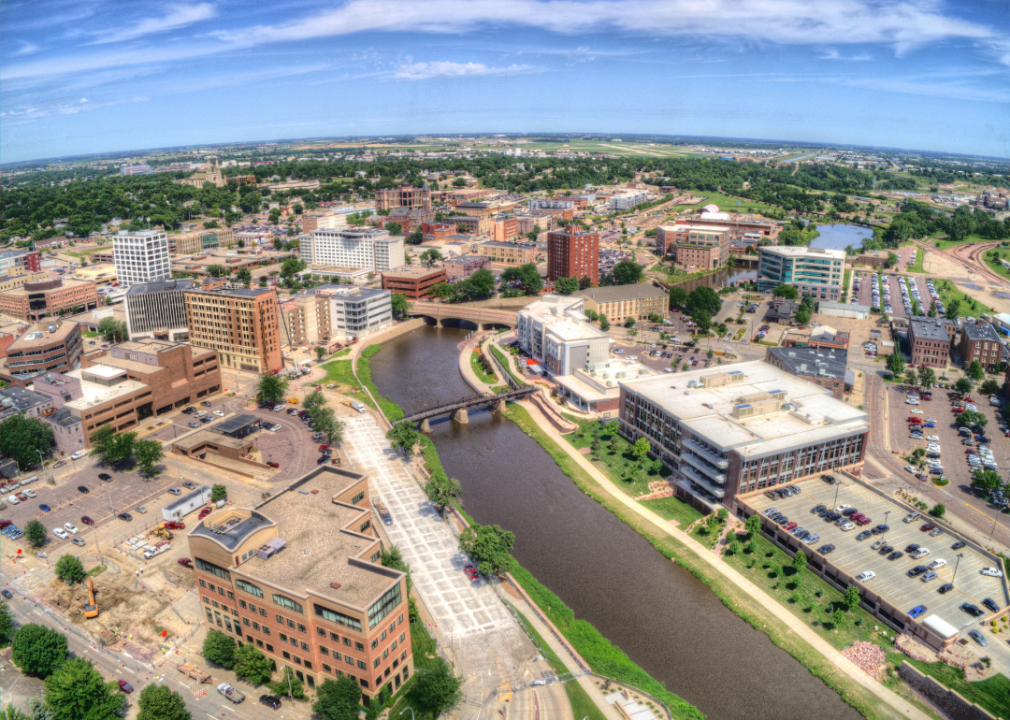
#51. South Dakota

– Number of borrowers: 135,600
– Average loan balance per borrower: $28,218

South Dakota participates in the Teacher Loan Forgiveness Program, while the Dakota Corps Scholarship aims to help students in the state.
Tony Webster // Flickr

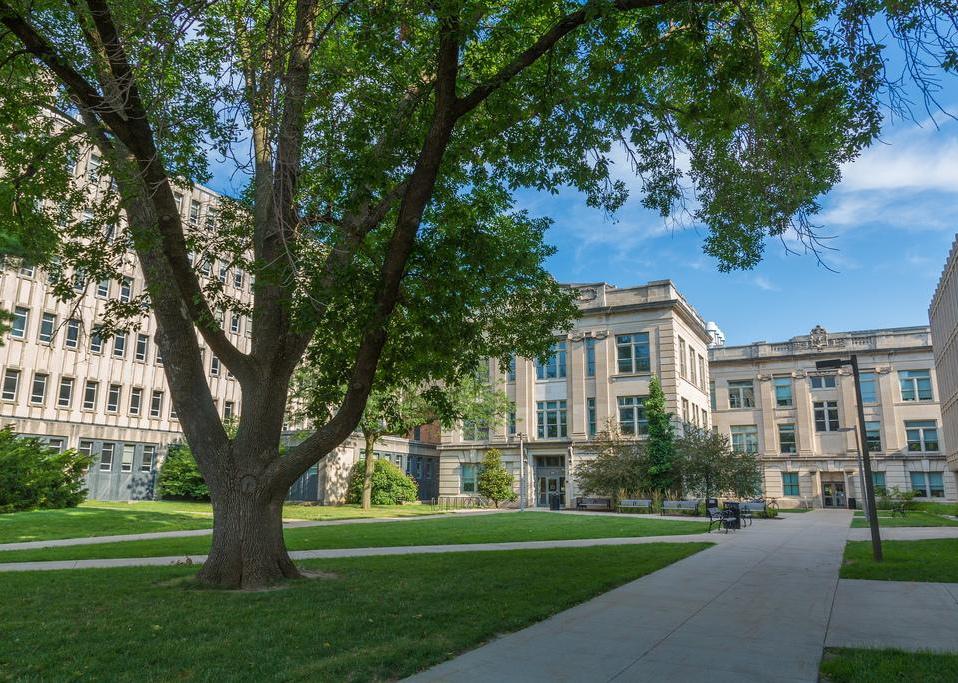
#50. Iowa

– Number of borrowers: 465,500
– Average loan balance per borrower: $29,845

Iowa has a number of student loan forgiveness programs, including programs for teachers, nurses, doctors, physician assistants, and other health care providers.
Enrico Blasutto // Wikimedia Commons

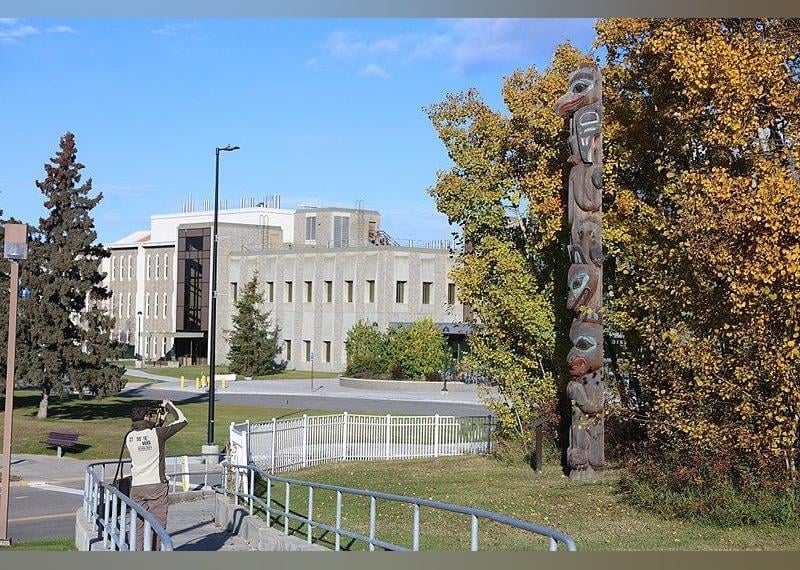
#49. Alaska

– Number of borrowers: 70,600
– Average loan balance per borrower: $30,427

Alaska offers a loan repayment program for health care workers who will live and work in areas with a shortage of medical, dental, and behavioral health professionals. The state is among those with the lowest proportion of students with debt, according to WalletHub.
MatthewUND // Wikimedia Commons

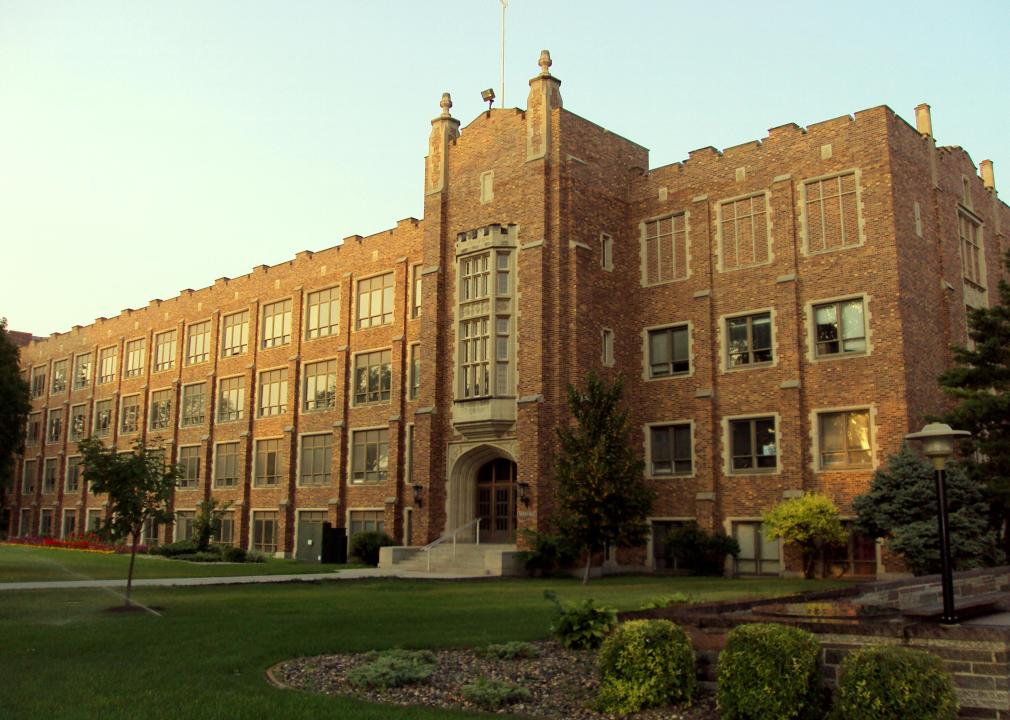
#48. North Dakota

– Number of borrowers: 114,100
– Average loan balance per borrower: $30,542

Veterinarians can qualify for loan forgiveness in North Dakota if they will serve in high-need areas. Three are chosen each year, with the goal of attracting new veterinarians for animals raised for meat.
Thecoldmidwest // Wikimedia Commons

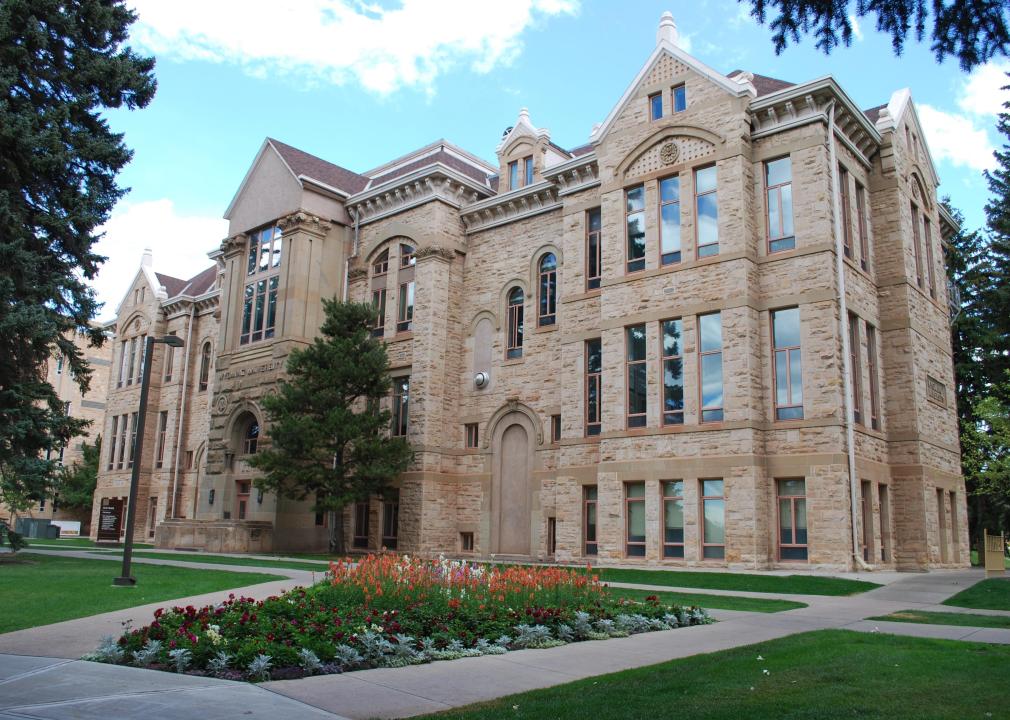
#47. Wyoming

– Number of borrowers: 57,600
– Average loan balance per borrower: $30,581

Wyoming’s Hathaway Scholarship, created in 2005 with a $400 million permanent endowment, pays for qualified high school graduates to attend the University of Wyoming or any of the state’s seven community colleges. The Wyoming Healthcare Professional Loan Repayment Program repays health professionals’ educational loans if they practice in an underserved area for at least three years.

Ron Cogswell // Flickr

#46. Wisconsin

– Number of borrowers: 785,600
– Average loan balance per borrower: $31,482

In 2020, Wisconsin’s governor created a task force to look for ways to reduce student debt in the state. The loans disproportionately affect low-income and first-generation college students, students of color, women, and veterans, according to the governor.

You may also like: 50 best public colleges ranked from least to most expensive
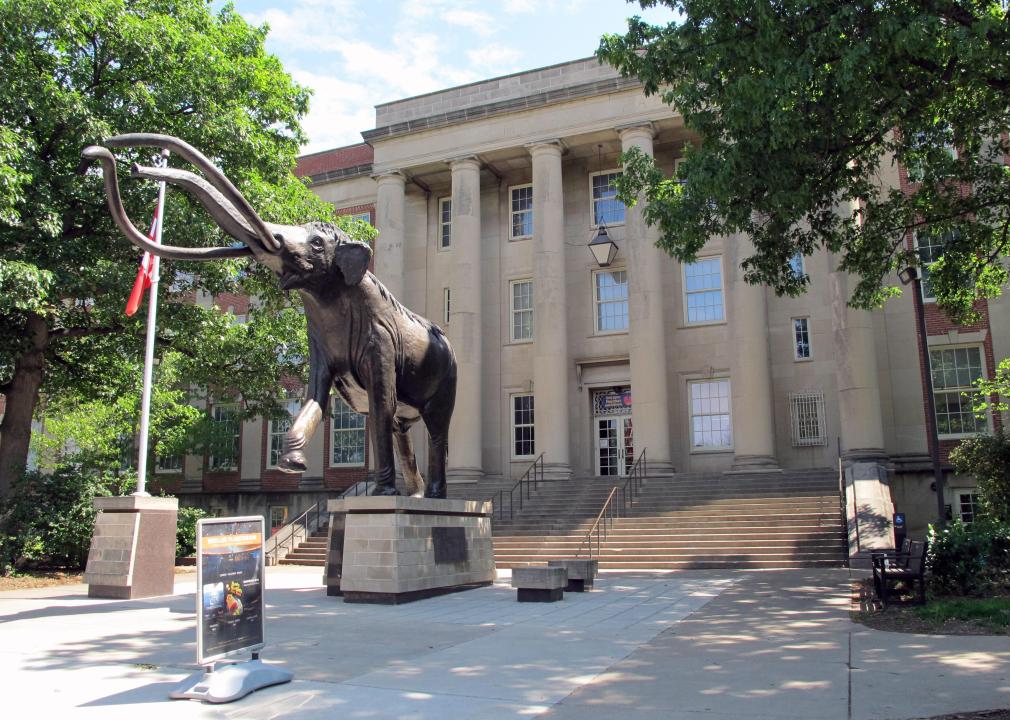
Hanyou23 // Wikimedia Commons

#45. Nebraska

– Number of borrowers: 261,000
– Average loan balance per borrower: $31,551

Primary care doctors, dentists, and other medical professionals are eligible for loan repayment awards in Nebraska if they practice in areas where there are shortages.
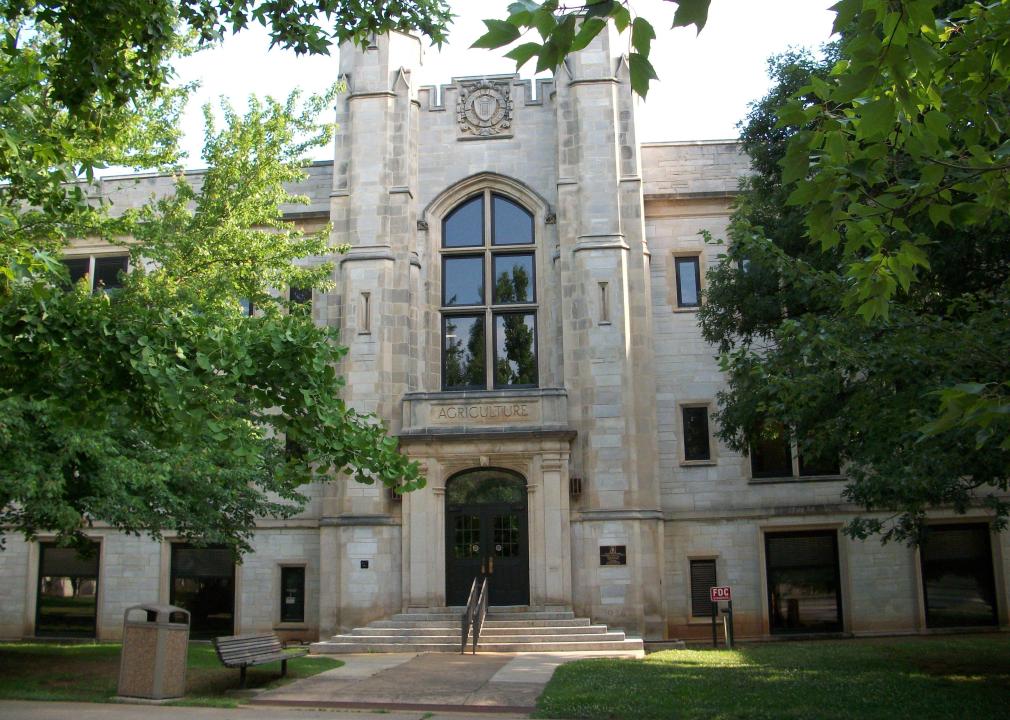
Brandonrush // Wikimedia Commons

#44. Arkansas

– Number of borrowers: 374,900
– Average loan balance per borrower: $31,851

After Arkansas began a default management program in 2013, students’ default rates fell almost every year. From 2013 to 2018, Arkansas’ default rate dropped 7.8 percentage points, compared to the national rate, which fell 3.9 percentage points. By the end of 2021, the state’s delinquency rate was 9%.
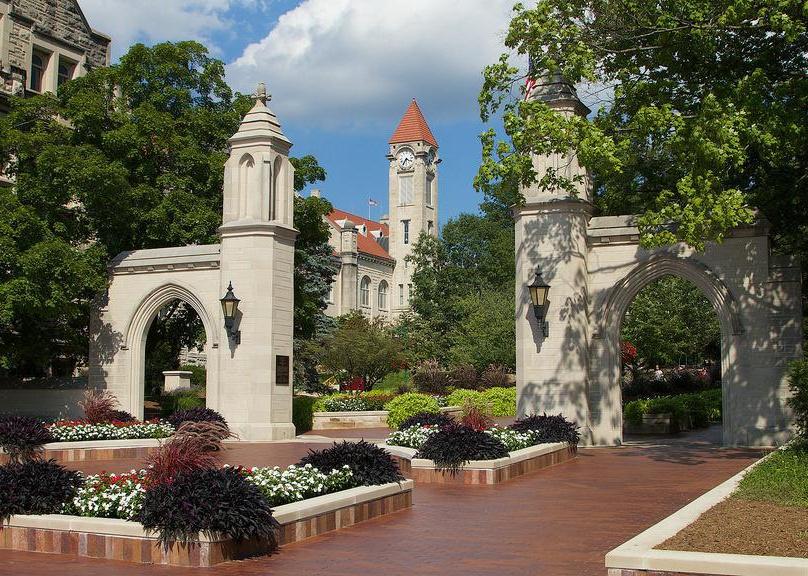
IT Communications Office // Flickr

#43. Indiana

– Number of borrowers: 924,000
– Average loan balance per borrower: $32,045

Indiana provides student loan relief for lawyers working in legal aid through its Richard M. Givan Loan Repayment Assistance program. Another program, Hon. J. Terrence and Peggy Cody Loan Repayment Assistance, provides aid to law school graduates working in child services. Legal scholarships are also available.
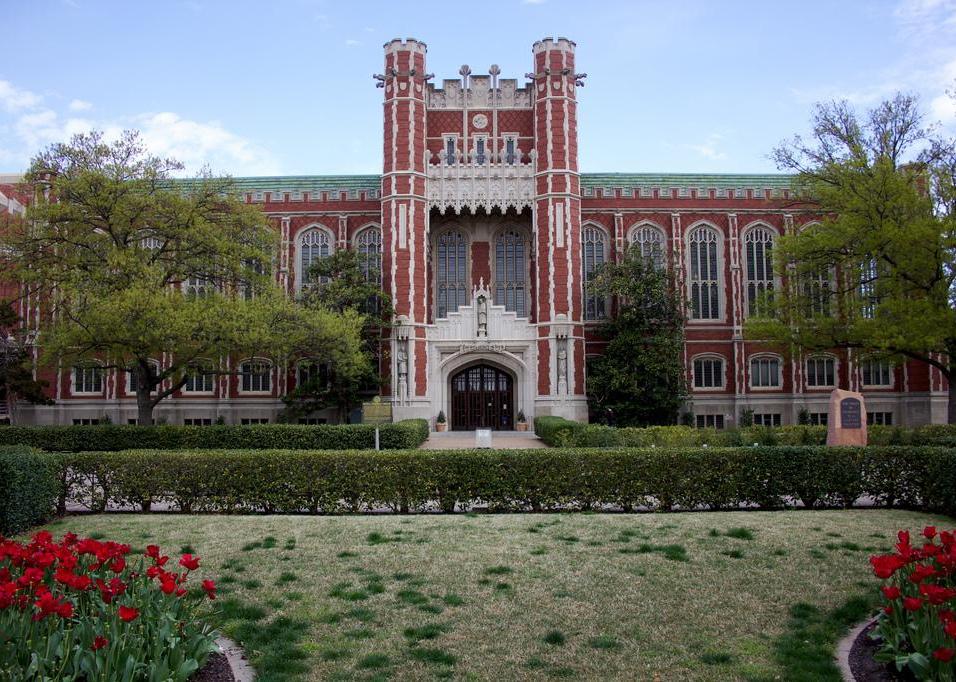
Sage Ross // Flickr

#42. Oklahoma

– Number of borrowers: 480,800
– Average loan balance per borrower: $32,102

Oklahoma offers loan forgiveness to physicians, dentists, and other health professionals who agree to serve in specific communities in the state.
Swimmerguy269 // Wikimedia Commons

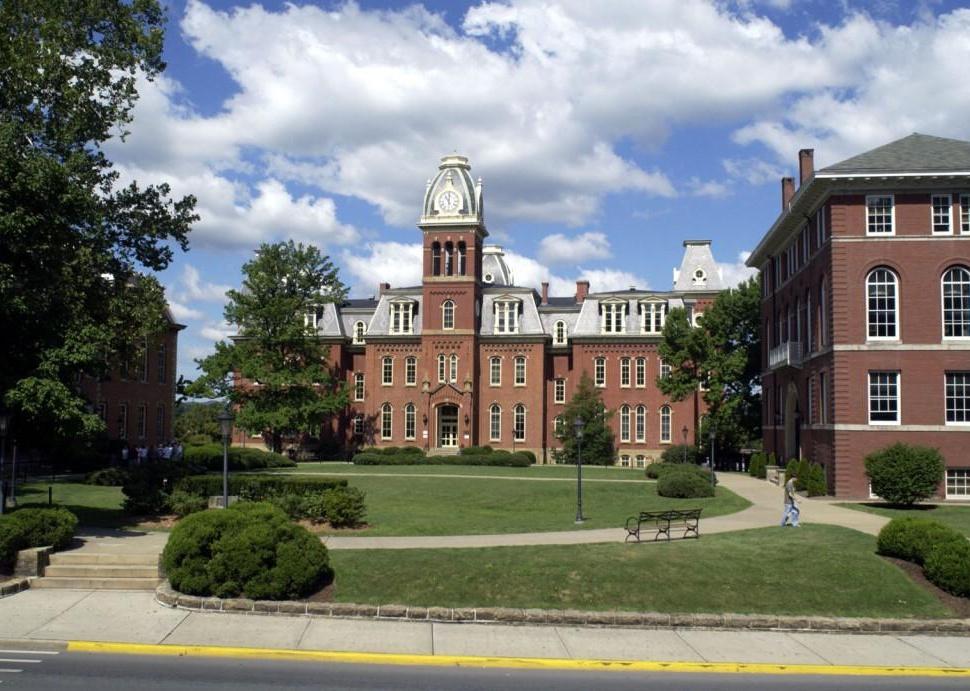
#41. West Virginia

– Number of borrowers: 217,200
– Average loan balance per borrower: $32,214

West Virginia recruits medical professionals to rural areas through student loan forgiveness. It looks for doctors, nurses, midwives, physician assistants, pharmacists, dentists, and other providers.
Jitze Couperus // Flickr

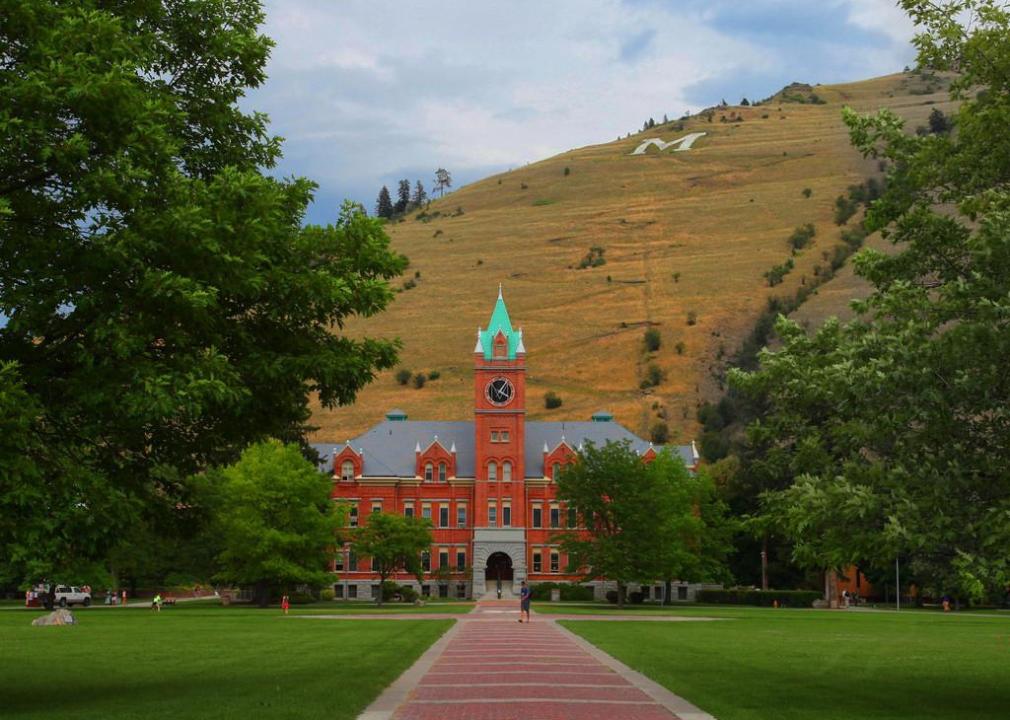
#40. Montana

– Number of borrowers: 132,900
– Average loan balance per borrower: $32,459

In Montana, medical professionals can receive up to $15,000 a year by working in certain areas in the state through the Montana State Loan Repayment Program.
Eugene Kim // Flickr

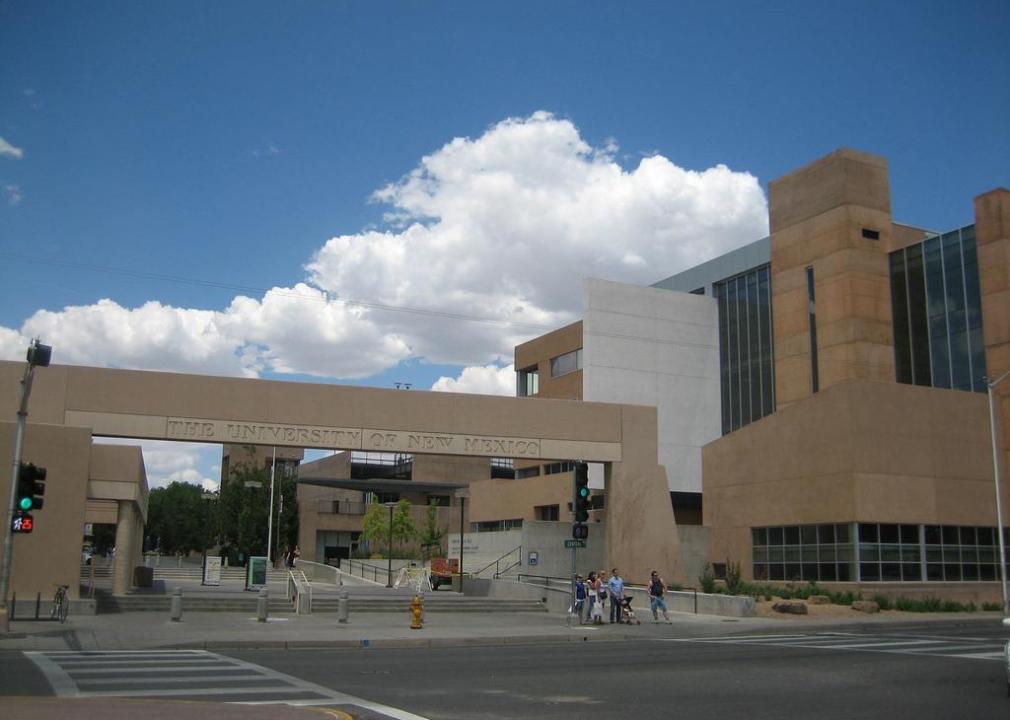
#39. New Mexico

– Number of borrowers: 215,500
– Average loan balance per borrower: $32,944

For students at risk of defaulting on loans, New Mexico offers student loan forgiveness and consolidation of debt. Doctors and nurses who help address the health care shortage in New Mexico can qualify for no-interest loans and other benefits.
Larry D. Moore // Wikimedia Commons

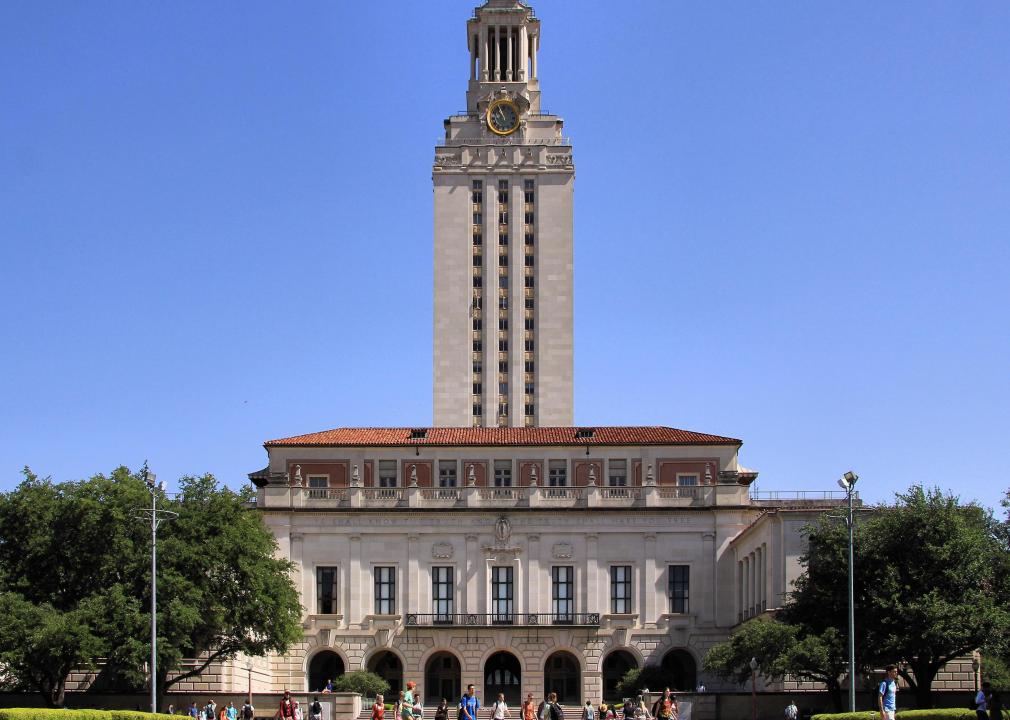
#38. Texas

– Number of borrowers: 3,759,300
– Average loan balance per borrower: $32,998

A 2019 study by Southern Methodist University found that Black and Hispanic students in Texas borrow more than white students on average: $7,124 more for Black students and $453 for Hispanic students; meanwhile, Asian students borrow $3,155 less.
Millyard800 // Wikimedia Commons

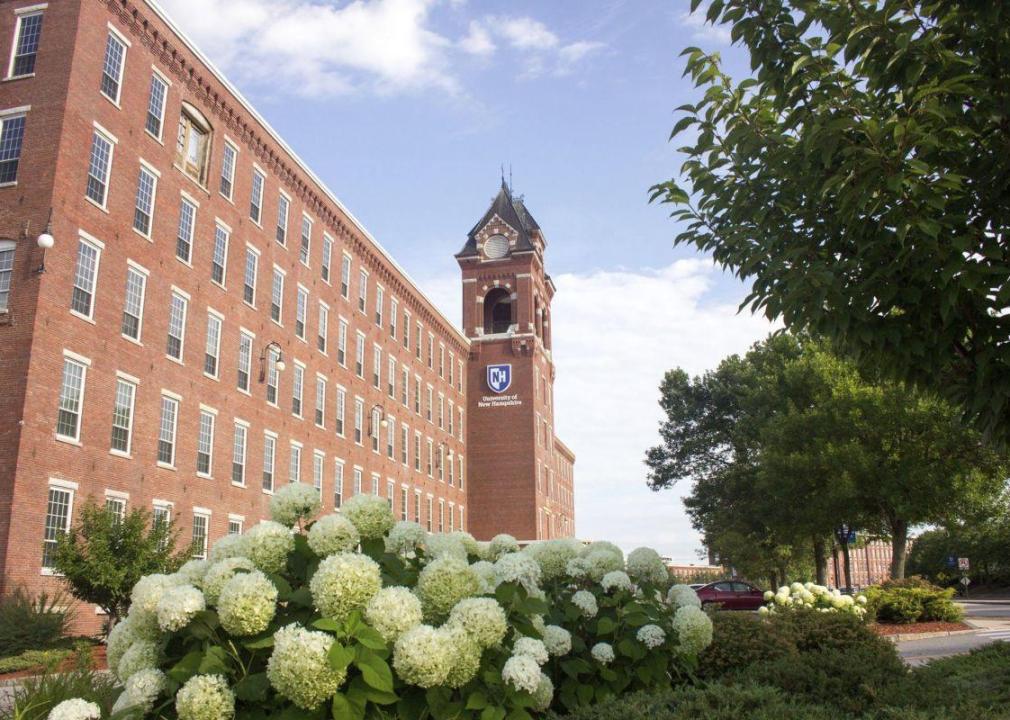
#37. New Hampshire

– Number of borrowers: 219,000
– Average loan balance per borrower: $33,094

New Hampshire offers student loan forgiveness to primary care doctors, dentists, and other health care providers, with the goal of drawing them to underserved or low-income areas. It also offers help to lawyers working for nonprofit organizations.
Tom Ipri // Flickr

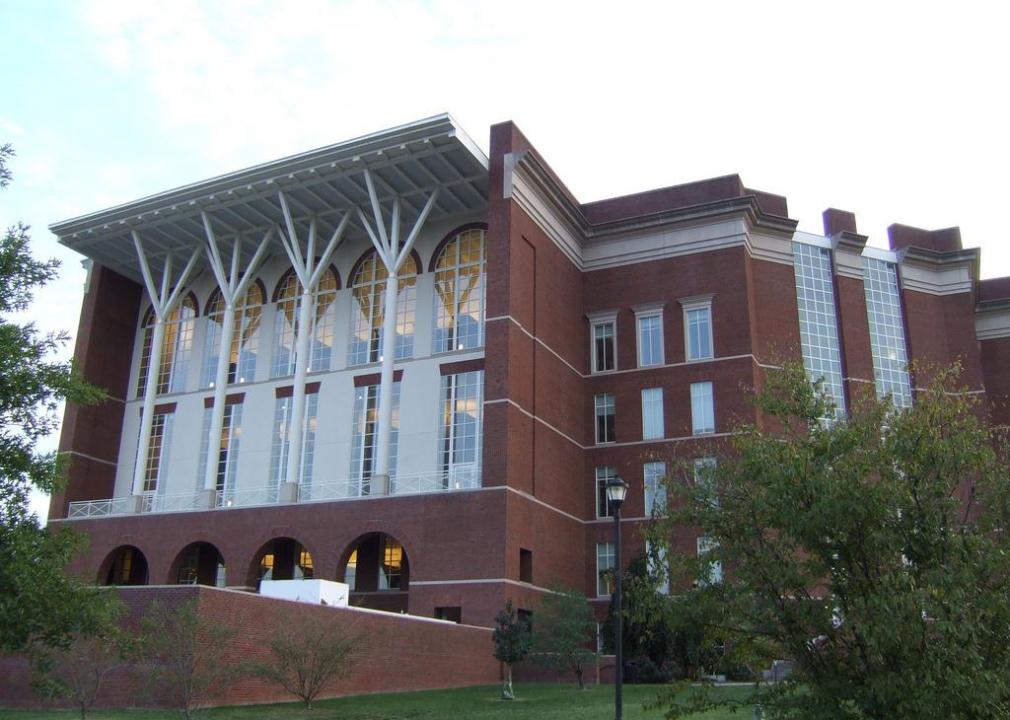
#36. Kentucky

– Number of borrowers: 588,800
– Average loan balance per borrower: $33,155

By the end of 2021, Kentucky had a student loan delinquency rate of 10%, putting it among the top five states with the highest delinquency rates in the country. Kentucky has a loan repayment program for health care professionals who work in rural and underserved areas.
August Schwerdfeger // Flickr

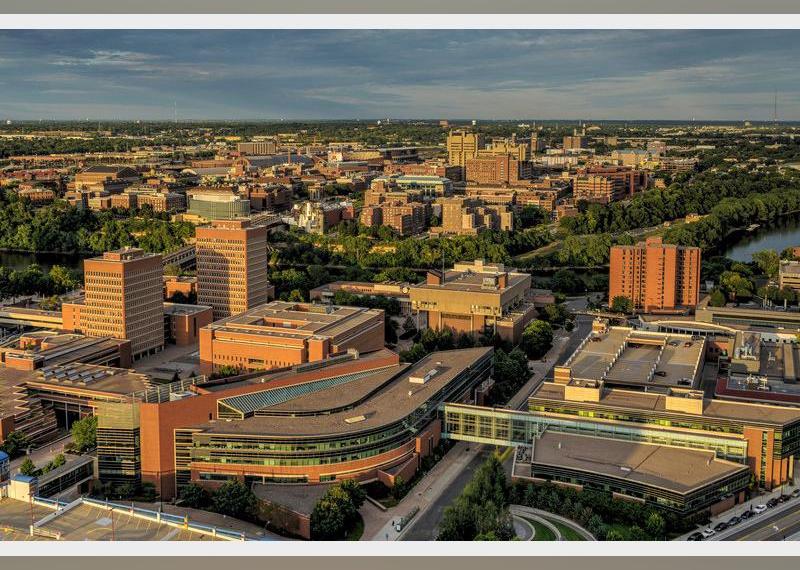
#35. Minnesota

– Number of borrowers: 902,500
– Average loan balance per borrower: $33,161

Minnesota offers a range of loan forgiveness programs for health care technicians, dentists, rural mental health professionals, nurses, pharmacists, physicians, and veterinarians.

You may also like: Best private colleges in every state
Jaren Wilkey // Wikimedia Commons

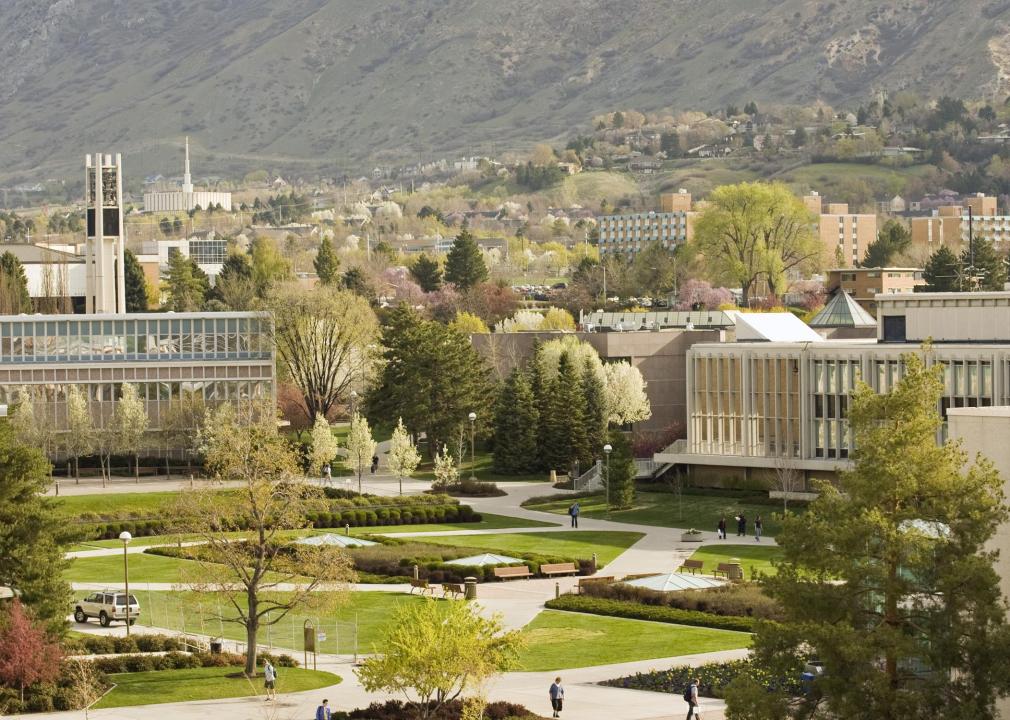
#34. Utah

– Number of borrowers: 325,100
– Average loan balance per borrower: $33,474

Utah has some of the country’s lowest tuition costs at public universities and colleges but still has a higher average loan balance per borrower than 15 other states.

You may also like: 30 college majors that didn’t exist 50 years ago
Jalnet2 // Wikimedia Commons

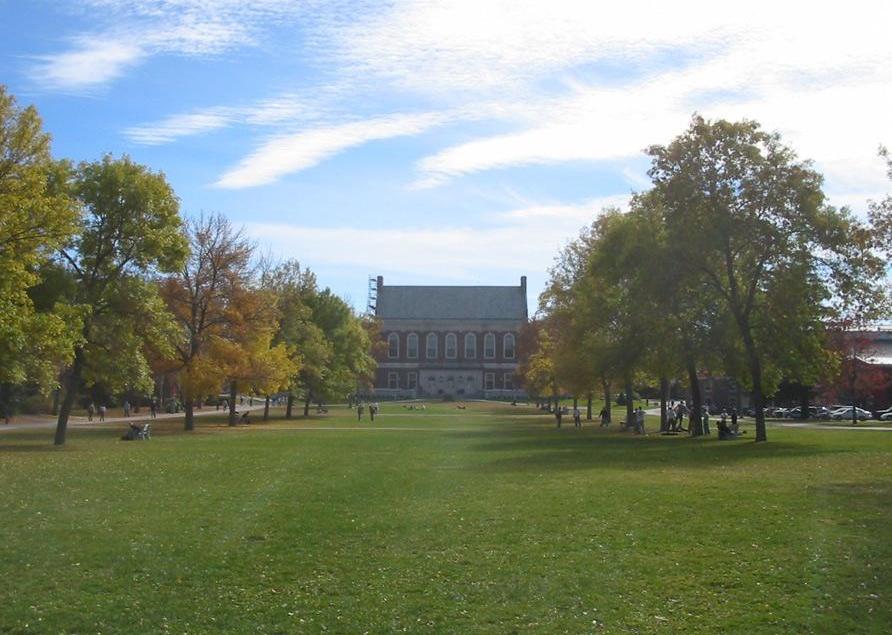
#33. Maine

– Number of borrowers: 203,200
– Average loan balance per borrower: $33,584

On average, Maine college graduates owed more than $33,500 each in student loans. The state offers student debt relief to graduates who live and work there under the Educational Opportunity Tax Credit.
Tnricci // Wikimedia Commons

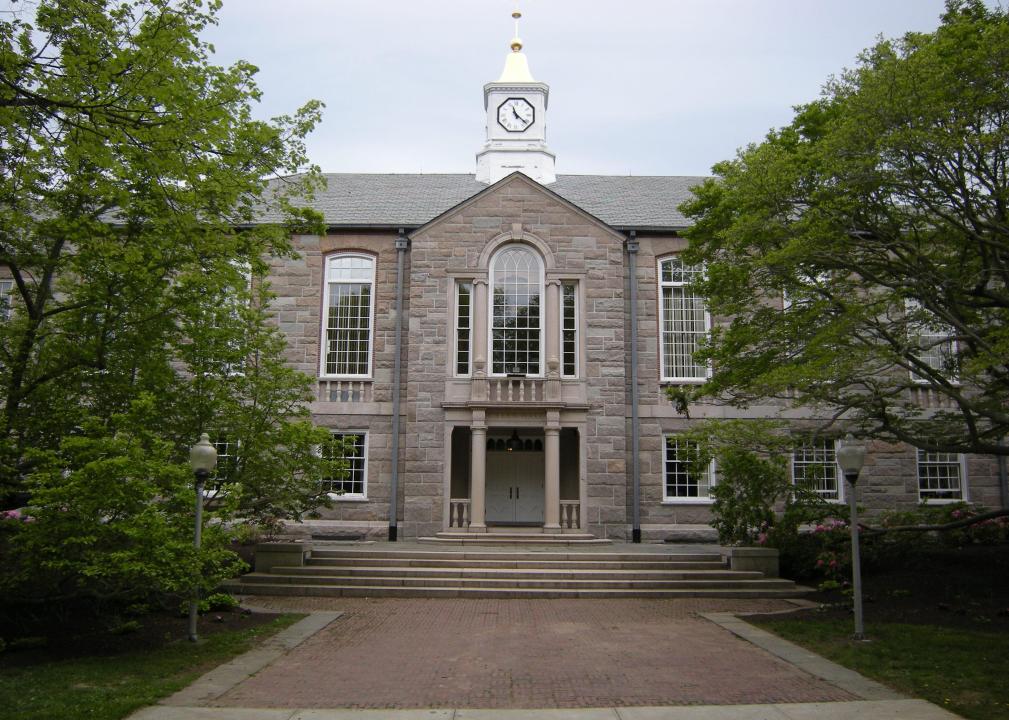
#32. Rhode Island

– Number of borrowers: 153,200
– Average loan balance per borrower: $33,838

The Rhode Island Student Loan Authority offers low-cost student loans, refinancing choices, and free tools to find internships and scholarships. In 2019, it enacted a Student Loan Bill of Rights to make sure borrowers are treated fairly.
Nightryder84 // Wikimedia Commons

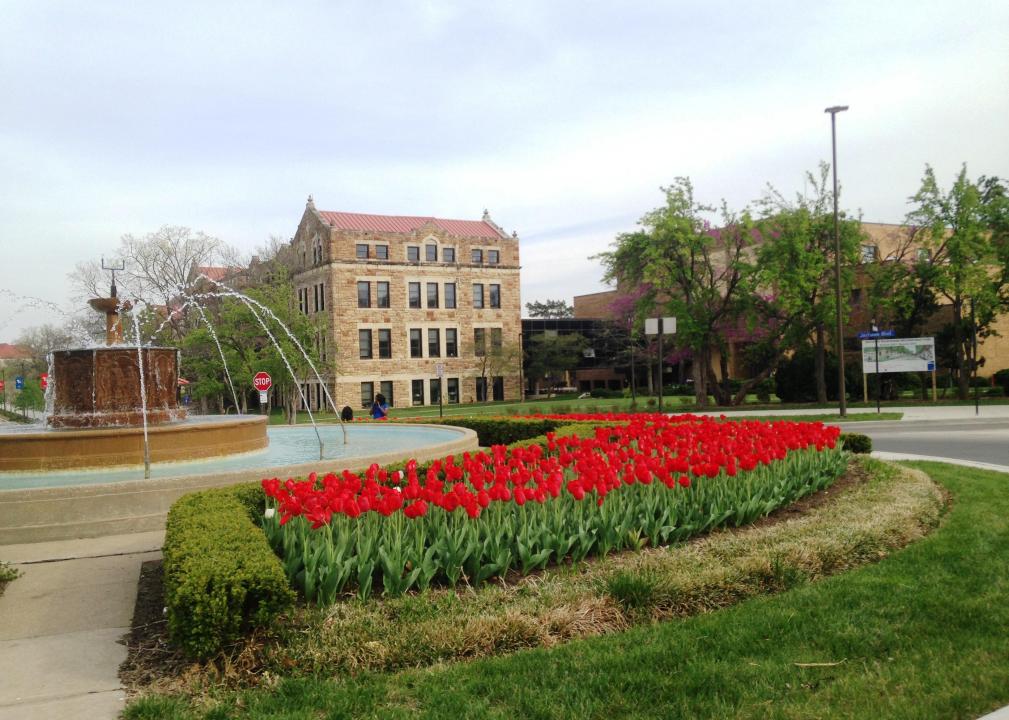
#31. Kansas

– Number of borrowers: 395,200
– Average loan balance per borrower: $33,954

Kansas offers loan repayment relief to students who will live in rural areas, are health care professionals, and are primary care or psychiatry residents through its Bridging Plan.
Apstrinka // Wikimedia Commons

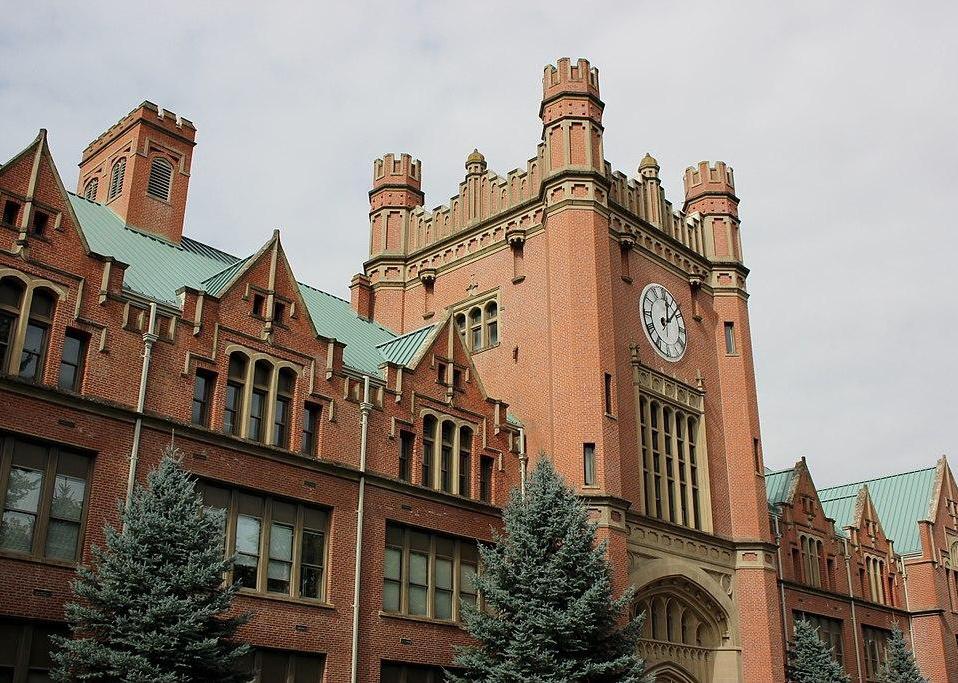
#30. Idaho

– Number of borrowers: 219,400
– Average loan balance per borrower: $34,196

Idaho provides loan forgiveness programs for those working in areas short on health professionals. This includes physicians, clinicians, and nurses in rural and underserved areas. Idaho students owe, on average, $34,196.

You may also like: Best value colleges in every state
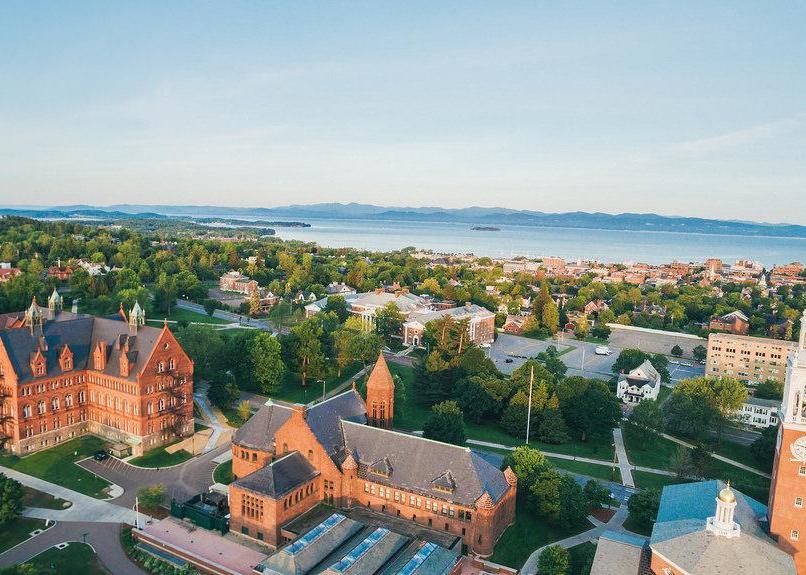
The University of Vermont // Flickr

#29. Vermont

– Number of borrowers: 96,300
– Average loan balance per borrower: $34,595

Vermont has the highest number of student loan borrowers who are 50 or older, according to a 2019 WalletHub study. Student loan debt there averaged $34,595 per borrower by the end of 2021—about $5000 more than the national average.

You may also like: Colleges that are richer than some countries
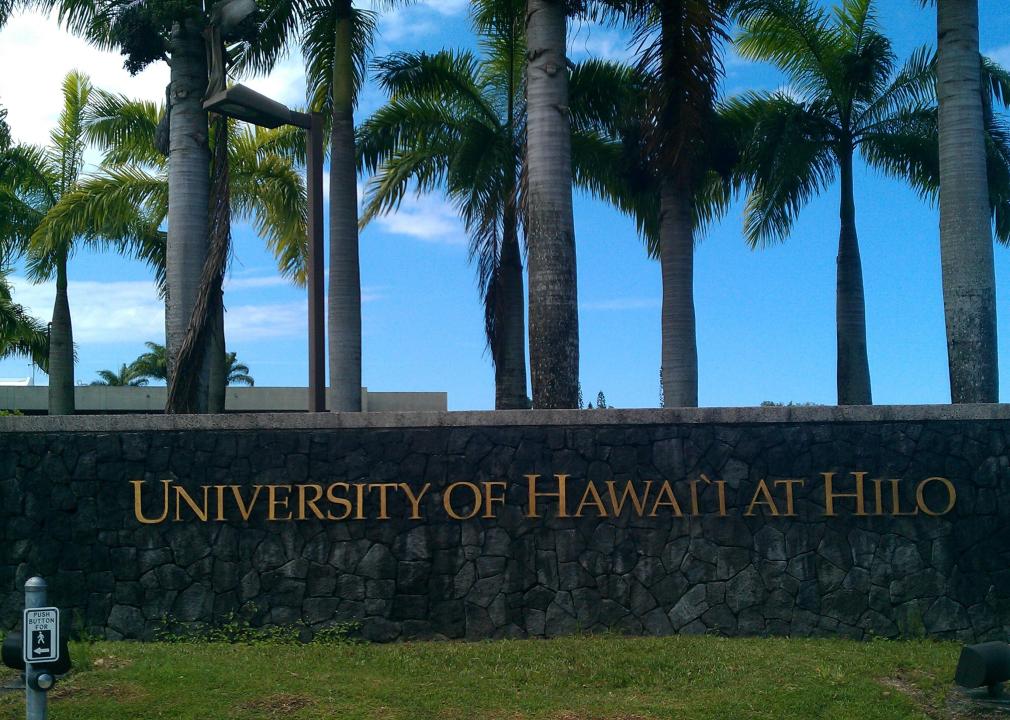
Vreed // Wikimedia Commons

#28. Hawaii

– Number of borrowers: 123,600
– Average loan balance per borrower: $34,608

The 10 campuses of the University of Hawaii are considered affordable, with in-state tuition at the three four-year schools below the national average. The state also has programs to keep costs down—namely the Hawaii Promise scholarship program for community college students and the Hawaii State Loan Repayment Program, which provides grants to health care professionals who fill geographic shortages.
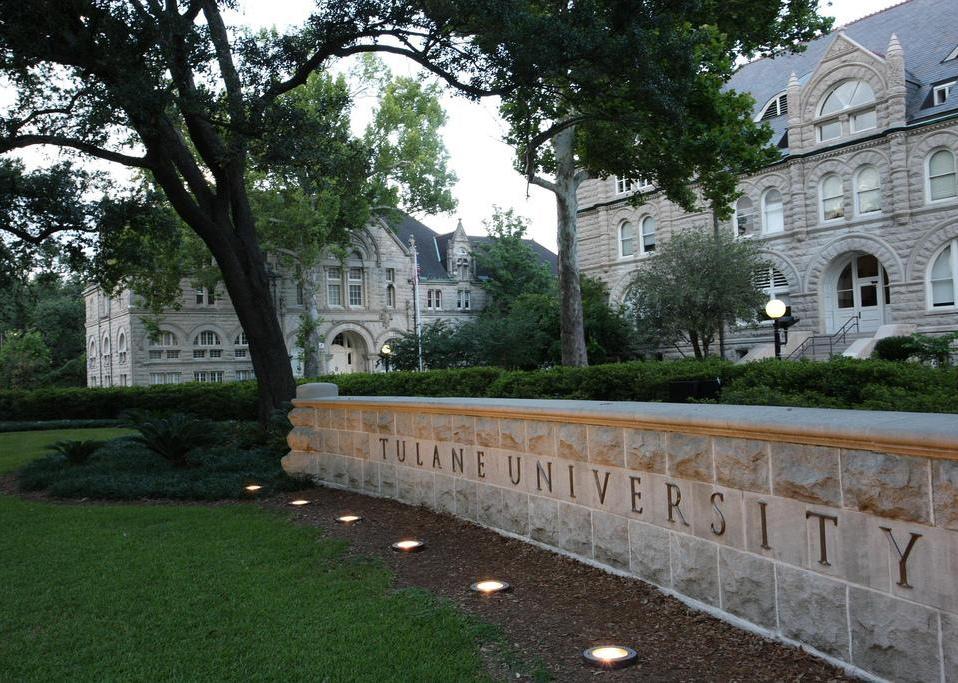
Louisiana Travel // Flickr

#27. Louisiana

– Number of borrowers: 644,600
– Average loan balance per borrower: $34,839

In 2022, Louisiana reported that more than half of its high school graduates were eligible for state scholarships for college. The state’s FY23 budget also includes a 12% increase in funding for higher education.
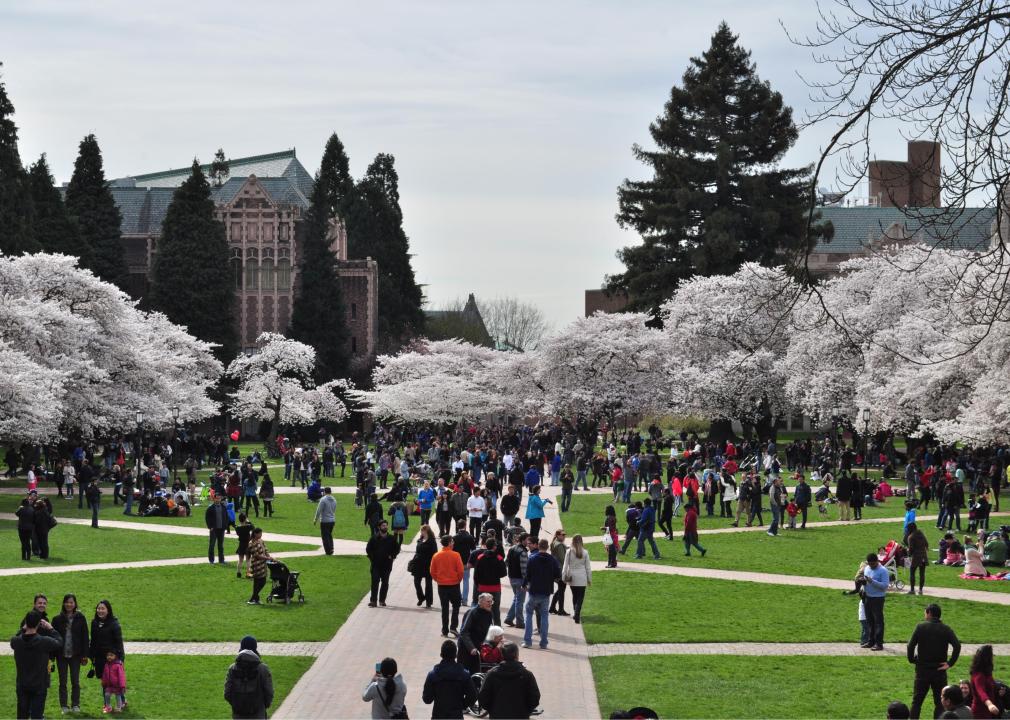
Joe Mabel // Wikimedia Commons

#26. Washington

– Number of borrowers: 816,900
– Average loan balance per borrower: $34,846

The Student Loan Survival Guide, published by the Washington attorney general’s office, offers links to resources for financing higher education to every high school student considering college loans and former college students who struggled with the cost of school.
Adam Procter // Flickr

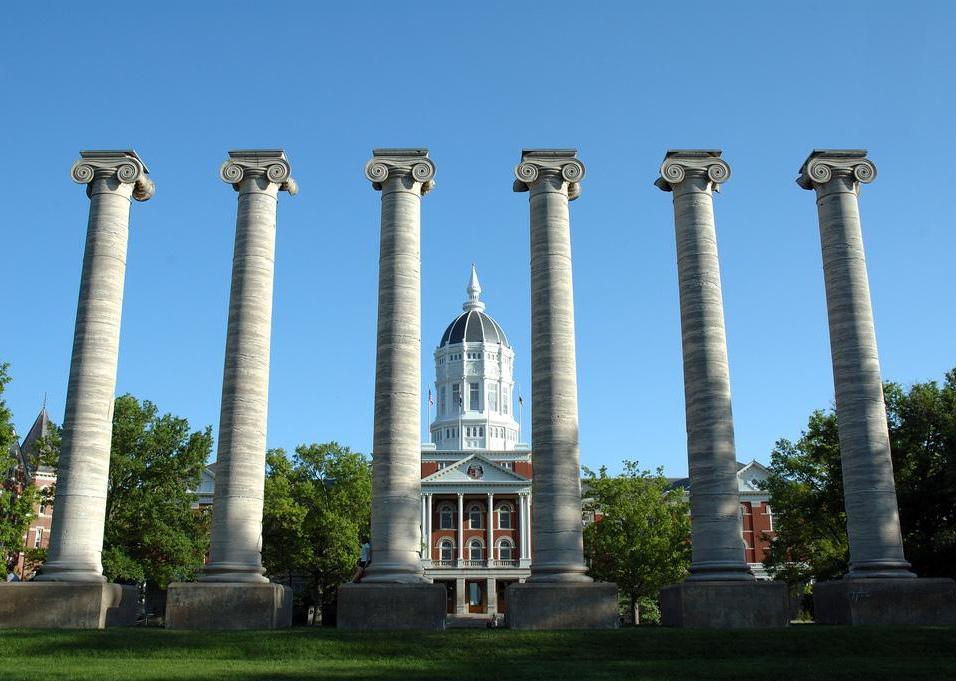
#25. Missouri

– Number of borrowers: 829,100
– Average loan balance per borrower: $35,095

In Missouri, 58% of graduates had student loan debt in 2017, and they owed an average of $28,650. By the end of 2021, borrowers owed more than $35,000 each on average. The state offers student loan forgiveness to some employees of government agencies or nonprofit organizations.
shidairyproduct // Flickr

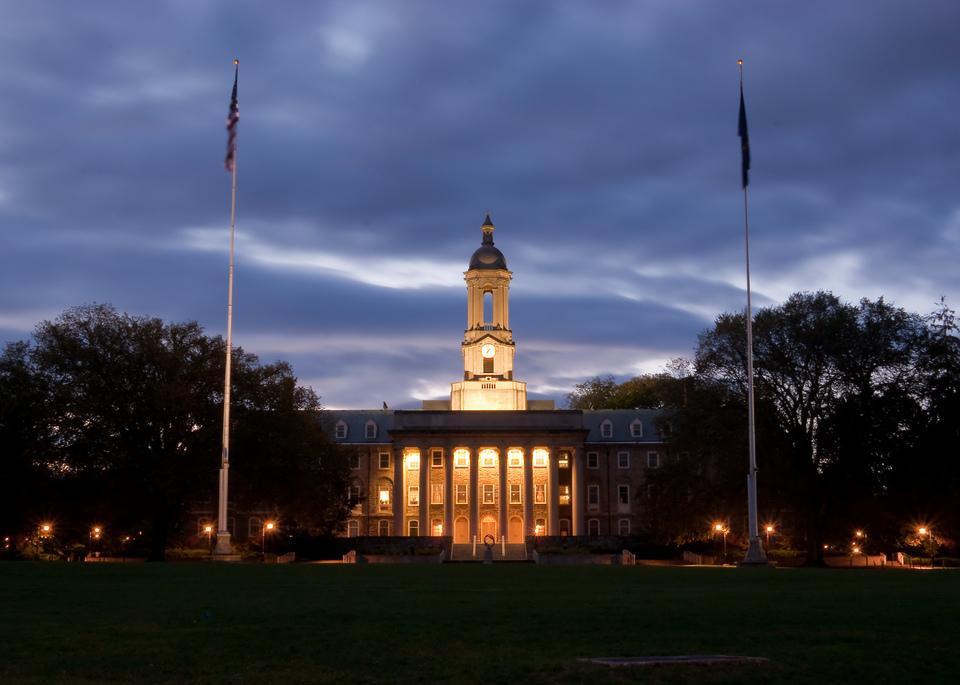
#24. Pennsylvania

– Number of borrowers: 2,032,400
– Average loan balance per borrower: $35,349

With its borrowers owing more than $35,000 each on average, Pennsylvania has some of the highest student debt in the country. It hovers around the middle of the pack for delinquency rate, though, at 7.2%
John Phelan // Wikimedia Commons

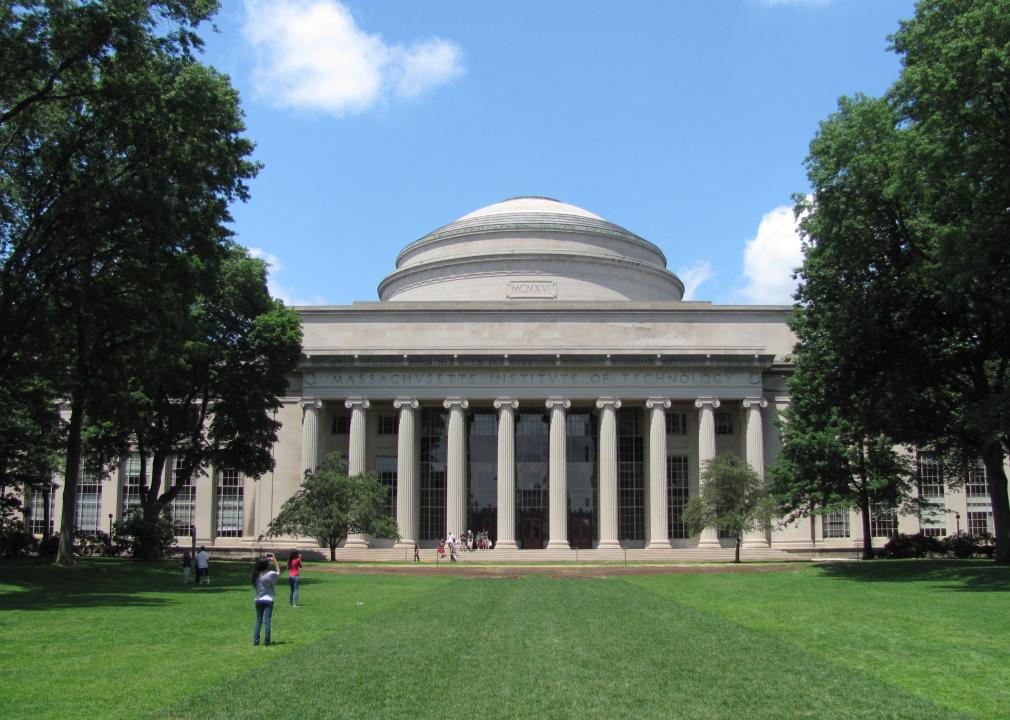
#23. Massachusetts

– Number of borrowers: 1,046,800
– Average loan balance per borrower: $35,400

In 2021, Massachusetts put into place a Student Borrowers Bill of Rights and appointed a Student Loan Ombudsman in order to protect student borrowers.
Ken L. // Wikimedia Commons

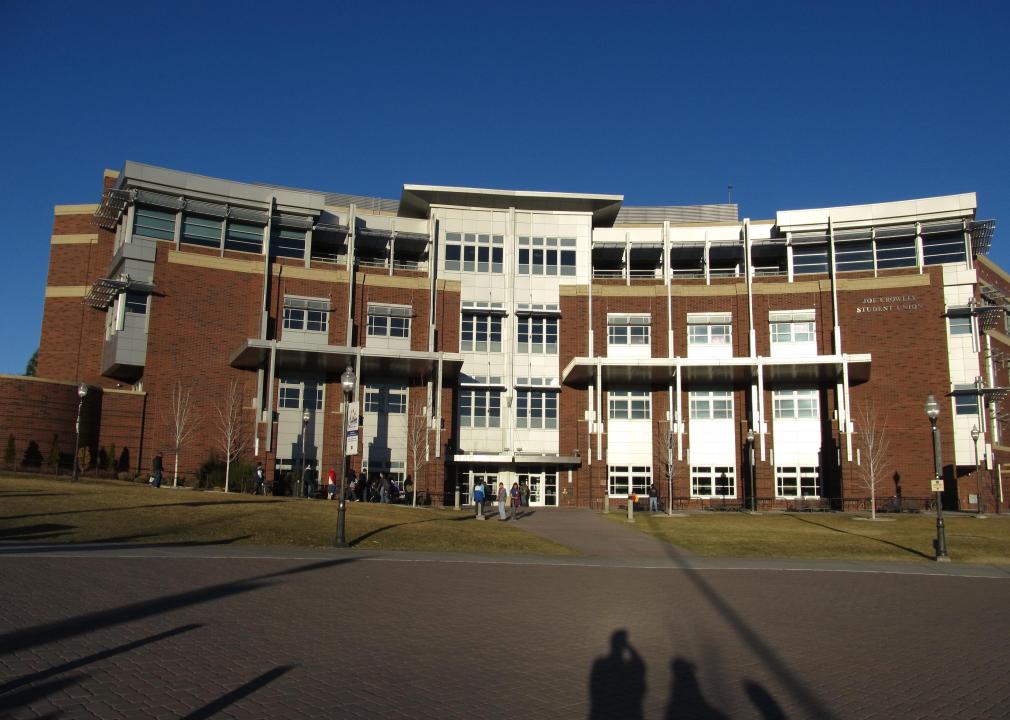
#22. Nevada

– Number of borrowers: 351,300
– Average loan balance per borrower: $35,688

Nevada State College provides students with access to a financial literacy program. Still, in the last quarter of 2021, the state’s loan delinquency rate was the fifth-highest in the nation.

You may also like: Highest-paying jobs that require a bachelor’s degree
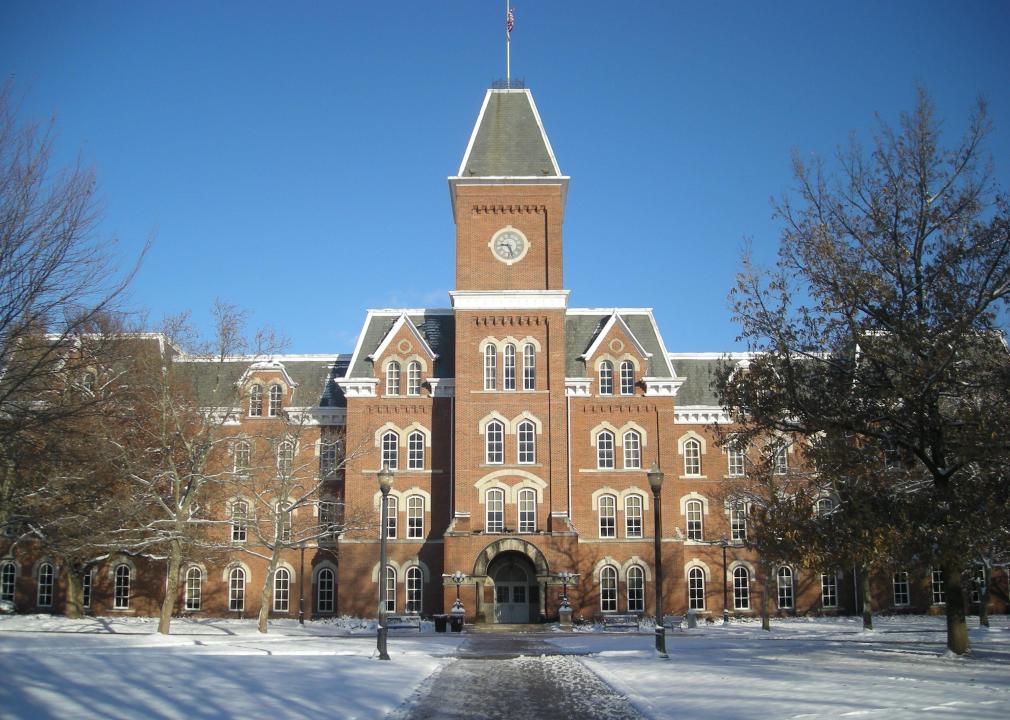
Michael Barera // Wikimedia Commons

#21. Ohio

– Number of borrowers: 1,810,900
– Average loan balance per borrower: $35,806

Ohio offers a variety of repayment programs for doctors, dentists, and other health care providers, including the Ohio Department of Health State Loan Repayment Program, the Ohio Physician Loan Repayment Program, the Ohio Dentist and Dental Hygienist Loan Repayment Program, and the Nurse Education Assistance Loan Program.
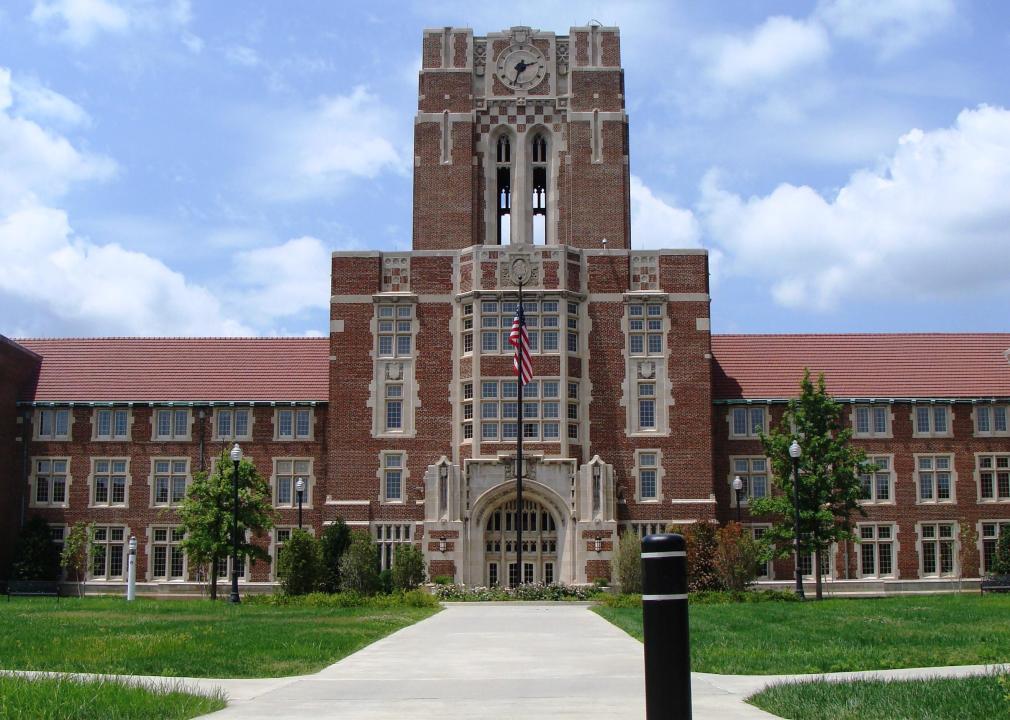
Nightryder84 // Wikimedia Commons

#20. Tennessee

– Number of borrowers: 872,000
– Average loan balance per borrower: $36,155

Tennessee offers a loan forgiveness program for state residents who are registered nurses that agree to become administrators or teachers in nursing education programs. It also offers a Minority Teaching Fellows Program that grants $5000 per year for qualified students pursuing teacher certification at an eligible Tennessee college.
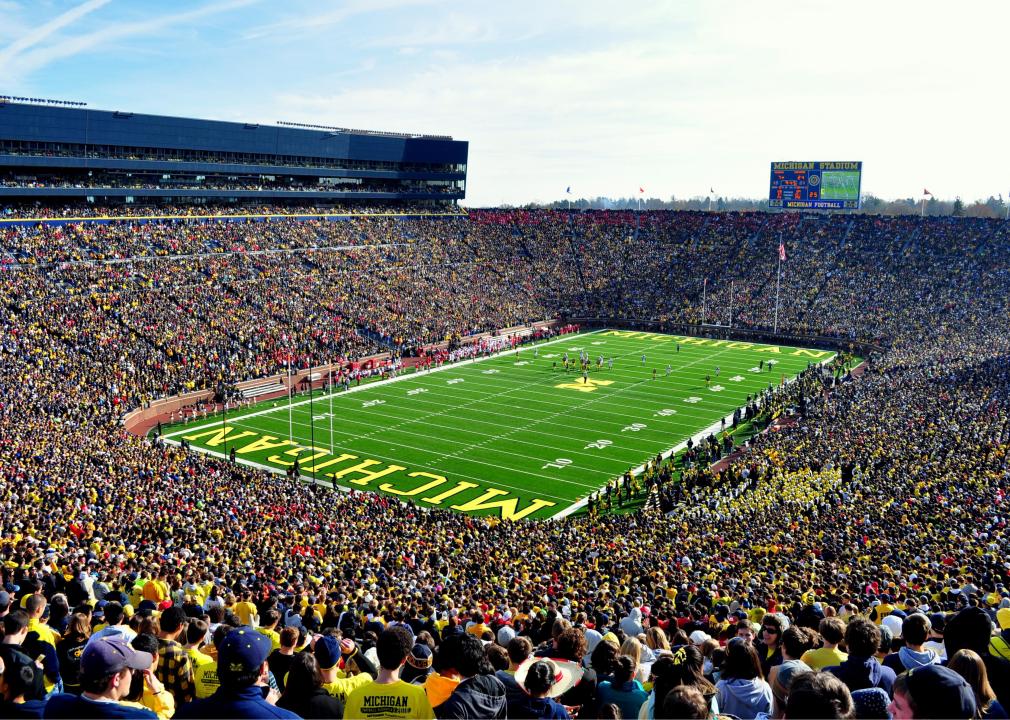
AndrewHorne // Wikimedia Commons

#19. Michigan

– Number of borrowers: 1,430,900
– Average loan balance per borrower: $36,221

Michigan places fifth in student loan debt as a percentage of income, according to a 2019 WalletHub study. The state offers scholarships or loan forgiveness programs for teachers, nurses, doctors, dentists, and other health care professionals.

You may also like: Best value big colleges in America
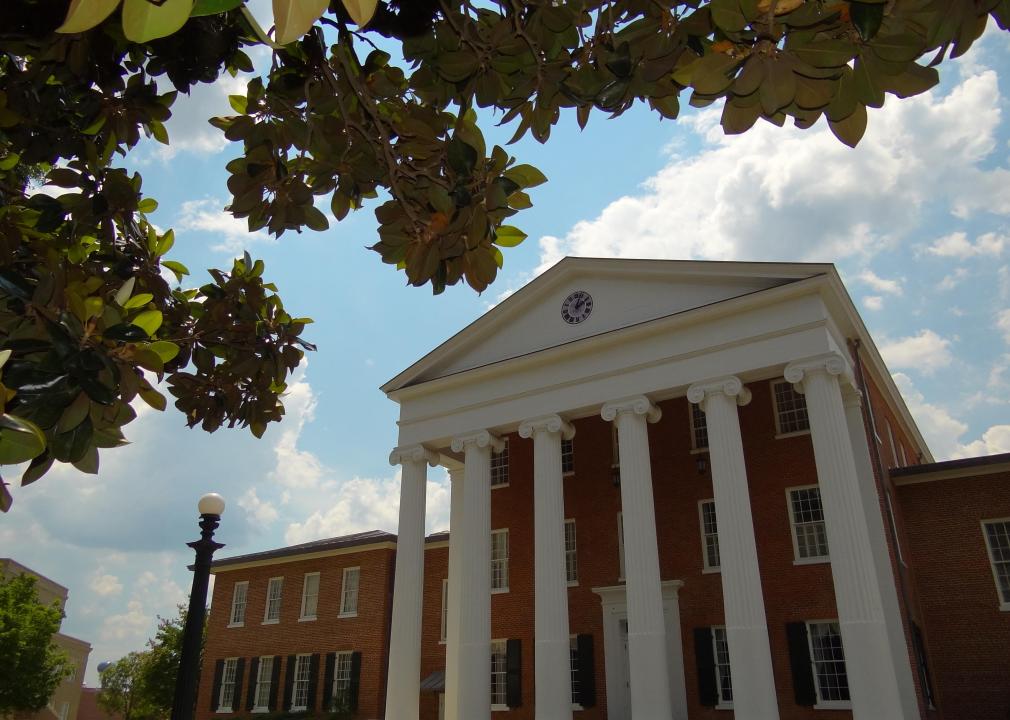
Adam Jones Ph.D. // Wikicommons

#18. Mississippi

– Number of borrowers: 414,300
– Average loan balance per borrower: $36,366

Mississippi offers forgivable loans to nurses and teachers in undergraduate programs and to counselors, school administrators, dyslexia therapists, and speech pathologists in graduate programs.
Daderot // Wikimedia Commons

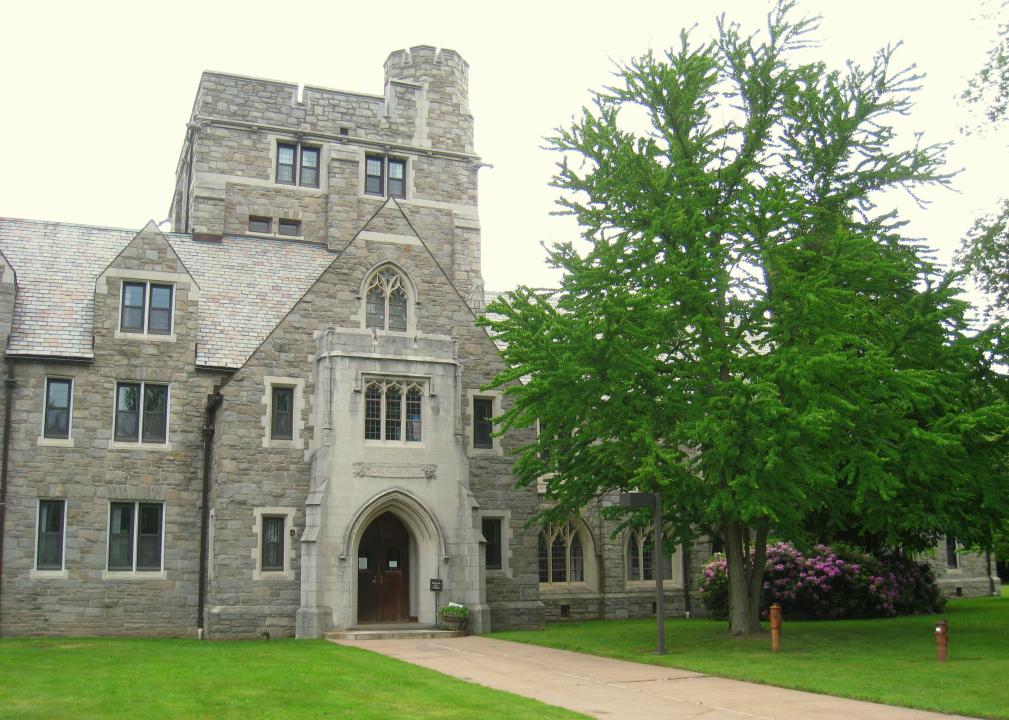
#17. Connecticut

– Number of borrowers: 542,800
– Average loan balance per borrower: $36,391

In April 2020, Connecticut’s governor announced that in collaboration with other states, Connecticut had reached an agreement for relief for some privately held student loans. The state also offers a Minority Teacher Incentive program that provides grants to students and loan reimbursement of up to $2,500 a year for participants who become teachers for Connecticut’s public school system.
Wars // Wikimedia Commons

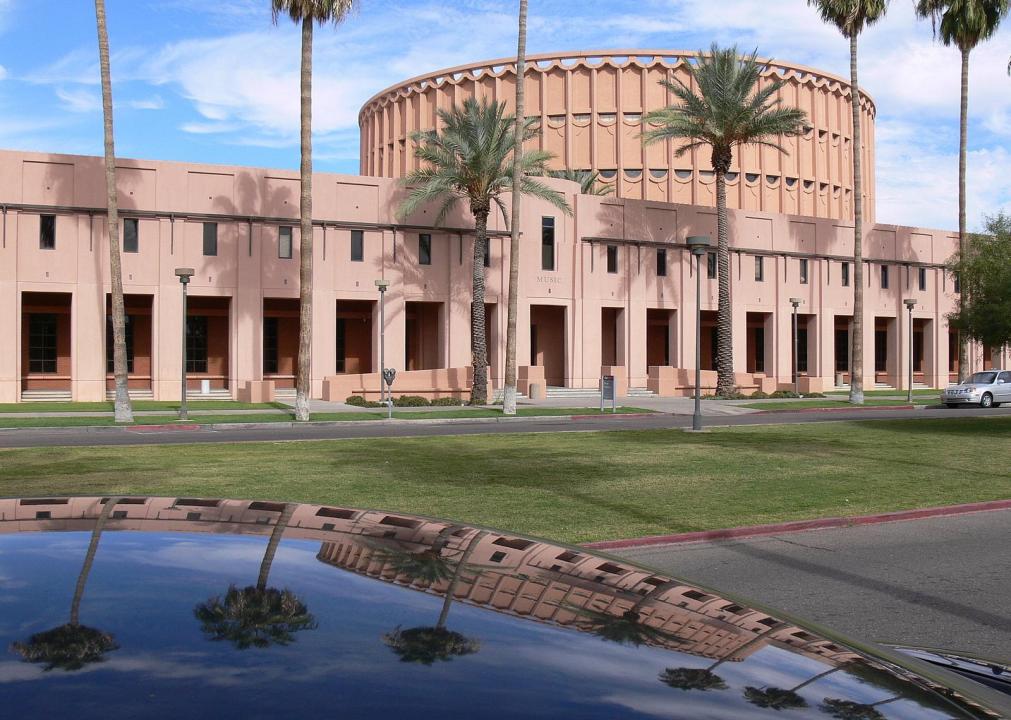
#16. Arizona

– Number of borrowers: 872,600
– Average loan balance per borrower: $36,682

The student loan delinquency rate for borrowers in Arizona was 8.7% at the end of 2021—down 3% from the previous year. The state has a few loan repayment programs for teachers and qualified borrowers working in health services.
Dfscgt21 // Wikimedia Commons

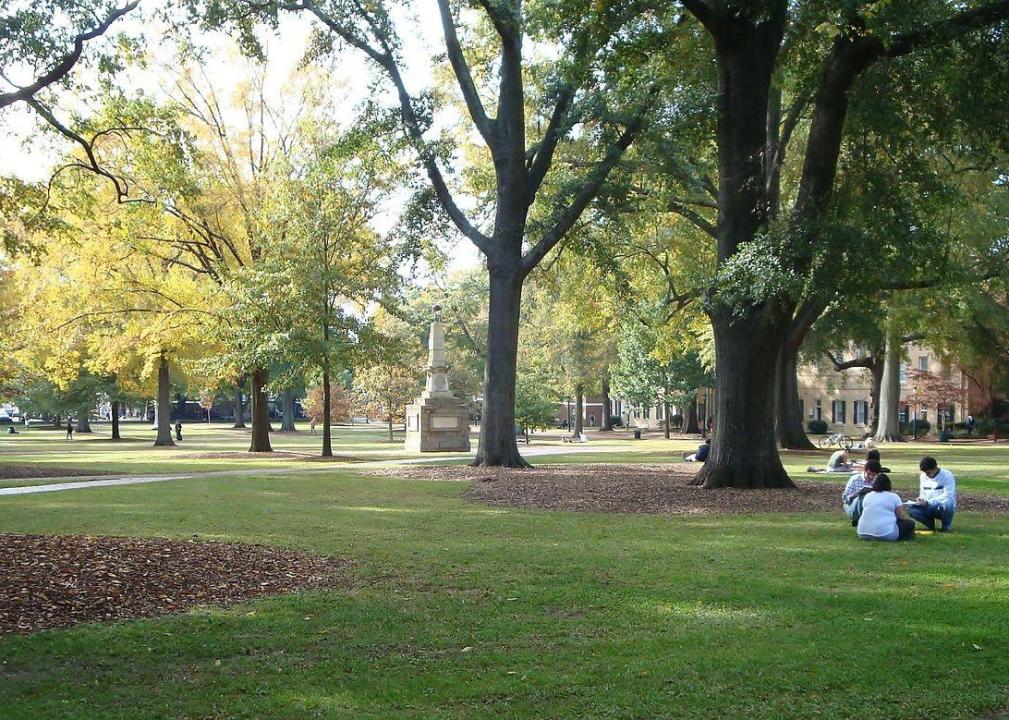
#15. South Carolina

– Number of borrowers: 745,500
– Average loan balance per borrower: $36,698

A WalletHub study in 2019 found that South Carolina ranked fourth for debt as a percentage of income in the U.S. The state offers several types of loans and loan forgiveness programs for students pursuing the teaching profession and graduates serving as teachers.
Lacwal12 // Wikimedia Commons

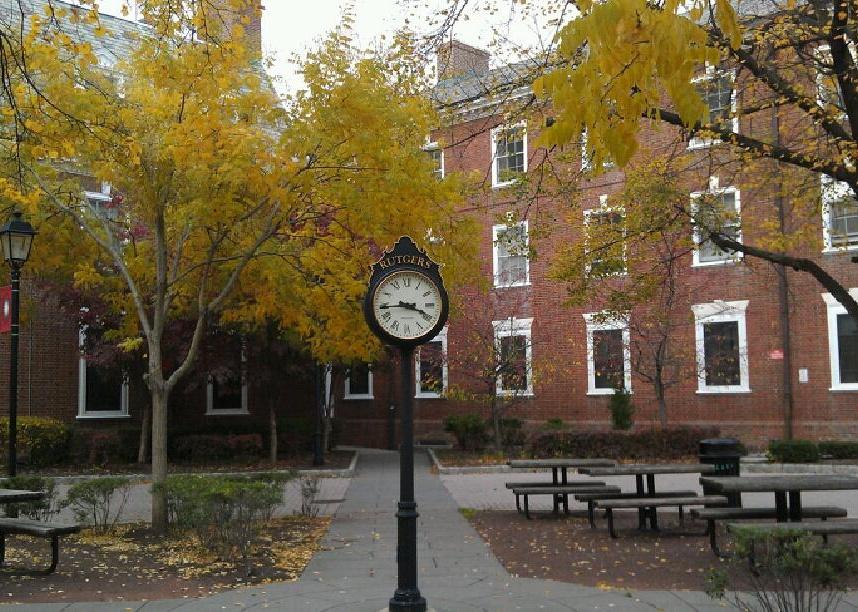
#14. New Jersey

– Number of borrowers: 1,339,800
– Average loan balance per borrower: $37,003

Although New Jersey borrowers owe more than borrowers in 36 other states as of the last quarter of 2021, the state has a borrower delinquency rate of just 5.8%—which is better than 37 other states. The state also offers loan redemption programs for borrowers in specific professions, including lawyers, nursing instructors, and primary care health providers.
Cooopersmith // Wikimedia Commons

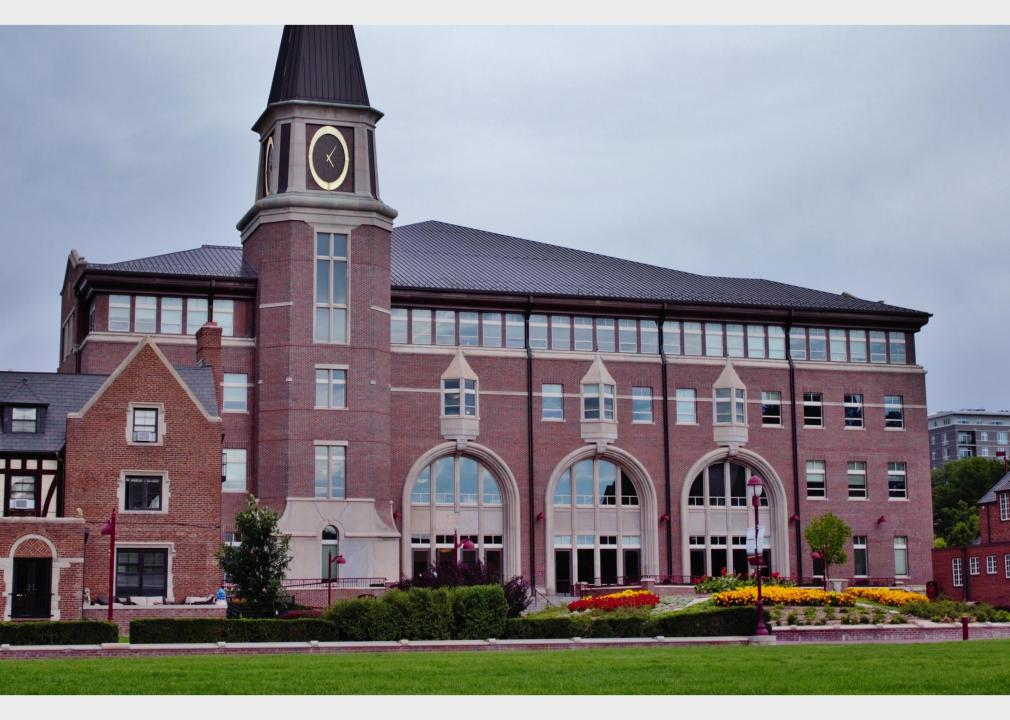
#13. Colorado

– Number of borrowers: 804,300
– Average loan balance per borrower: $37,235

Colorado is more reliant on tuition than other states. In fact, 70% of funding for higher education in the state comes from tuition; the national average is 46.6%. This policy forces many students in Colorado to borrow.
Caroline Culler // Wikimedia Commons

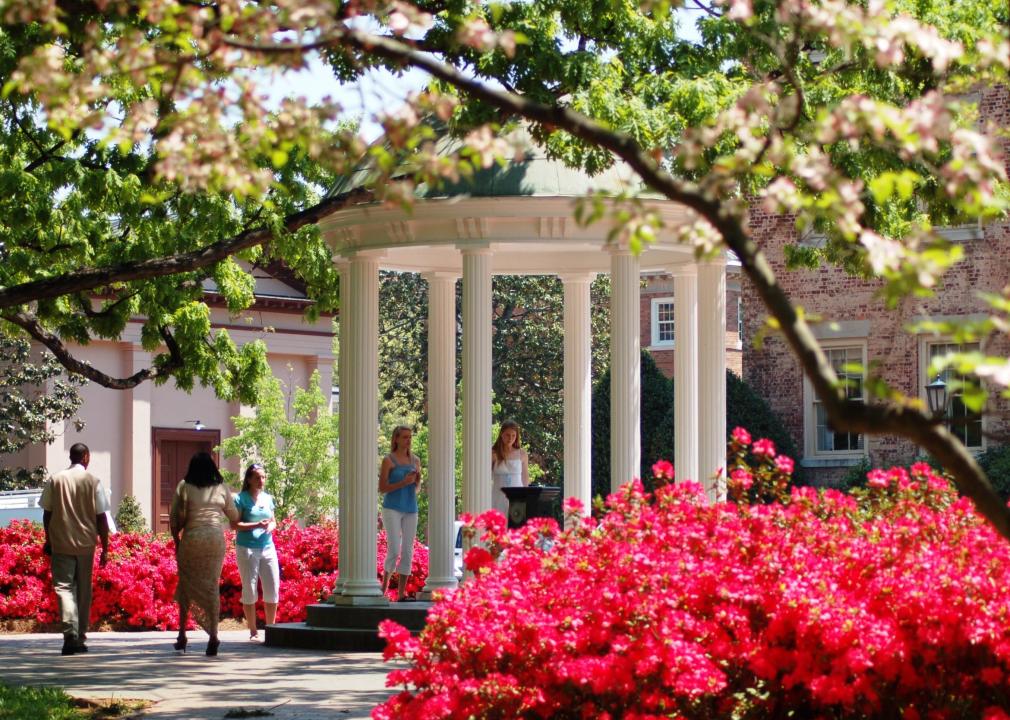
#12. North Carolina

– Number of borrowers: 1,340,500
– Average loan balance per borrower: $37,511

In North Carolina, more than 60% of students who graduate have debt; however, its schools have relatively low tuition and the state’s governor directed an additional $34 million dollars for postsecondary education in April 2022.

You may also like: 50 best colleges in the Midwest
Deutschlandreform // Wikimedia Commons

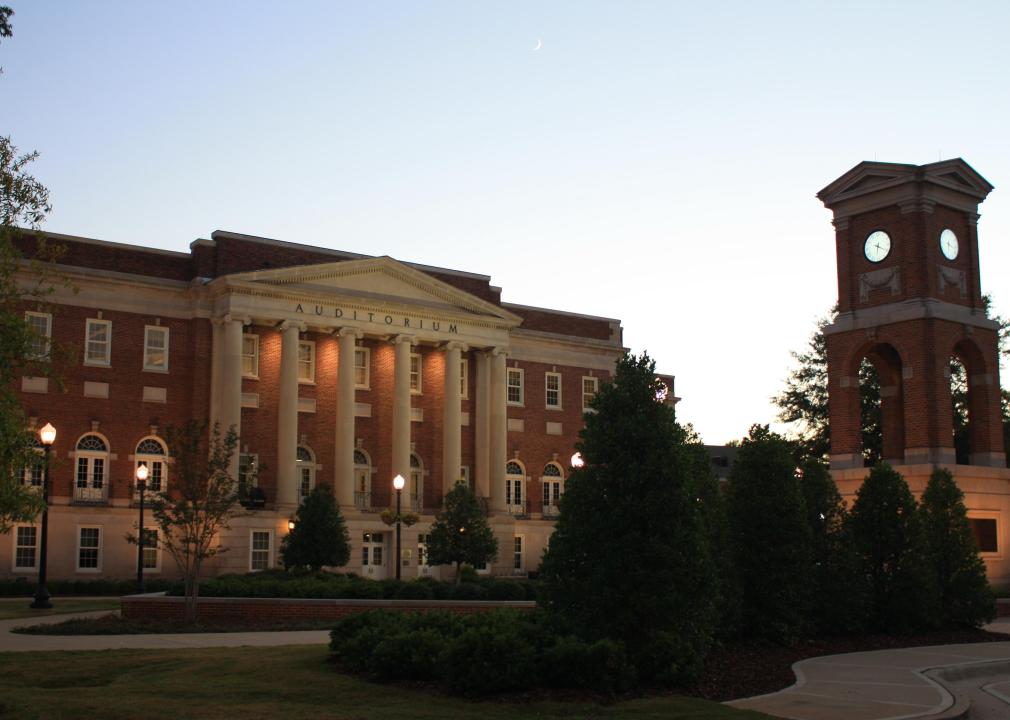
#11. Alabama

– Number of borrowers: 615,800
– Average loan balance per borrower: $37,730

Alabama ranks in the top states for rising student debt over five years, according to an Experian analysis in 2019, and 50.3% of borrowers are under age 35. The state offers a student grant program for qualified applicants that attend one of 12 participating colleges.
Michael Camilleri // Flickr

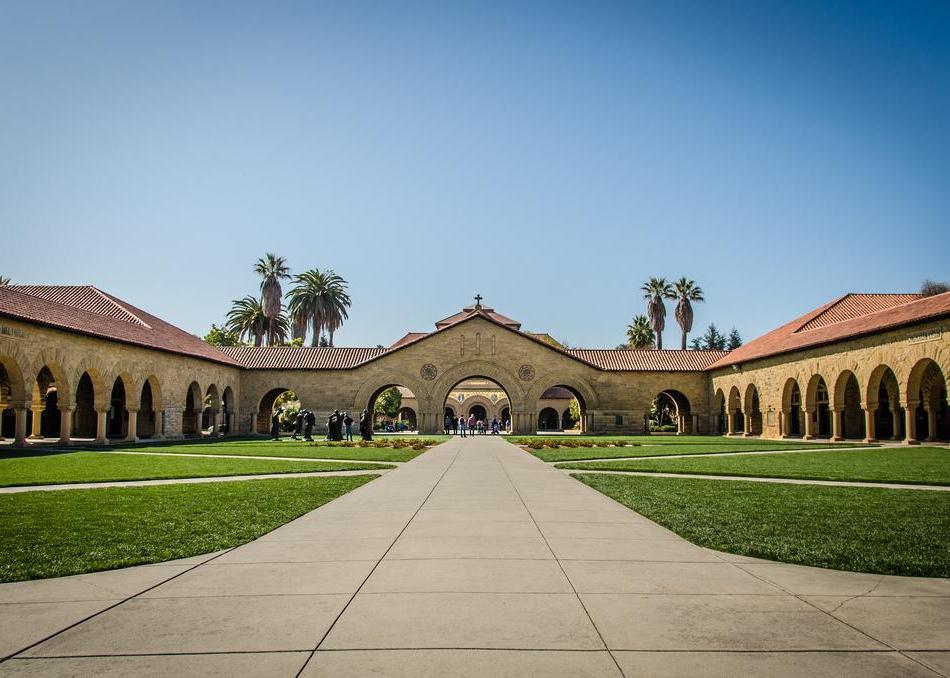
#10. California

– Number of borrowers: 4,021,200
– Average loan balance per borrower: $37,783

In September 2020, California’s governor signed the Student Borrower Bill of Rights into law. The law helps students participate in loan repayment and forgiveness programs. The California State Loan Repayment Program offers relief to doctors, nurses, midwives, pharmacists, and other health care providers who will practice in areas of the state where they are most needed.
Ibrahim Old // Wikimedia Commons

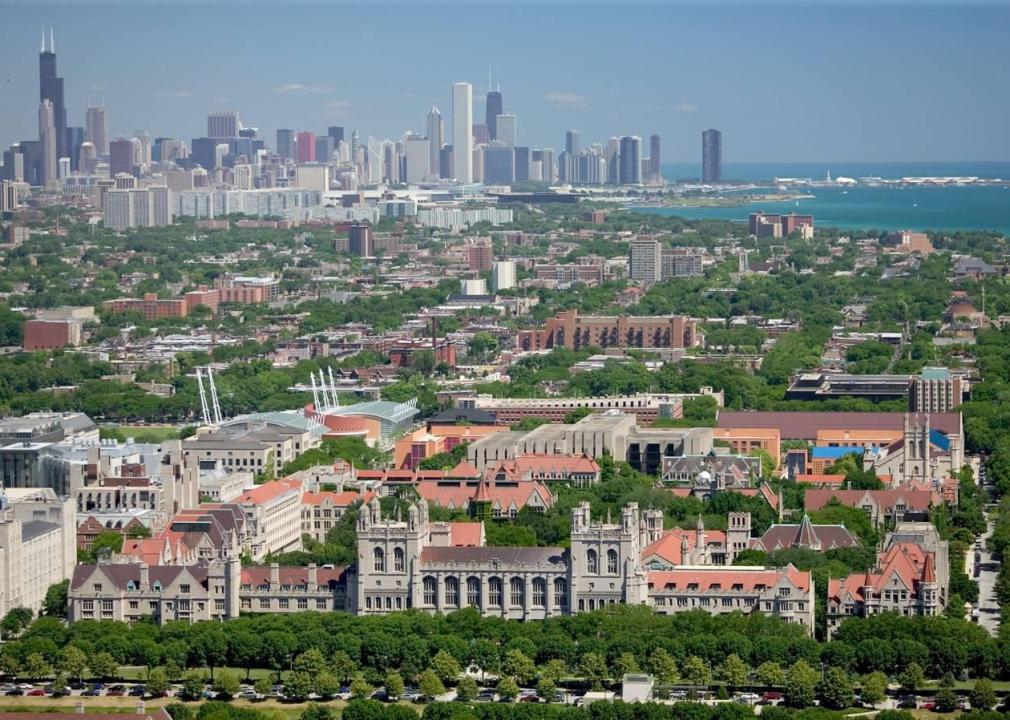
#9. Illinois

– Number of borrowers: 1,713,900
– Average loan balance per borrower: $37,869

College loans in Illinois can be refinanced at low interest rates by the Illinois Treasurer’s Office under the Illinois Student Loan Investment Act passed in 2019. Some 17% of the state’s population has student loan debt. Its balance per borrower is nearing $40,000 —which is among the top 10 highest.

You may also like: 30 famous people you didn’t know were college athletes
Don Hankins // Flickr

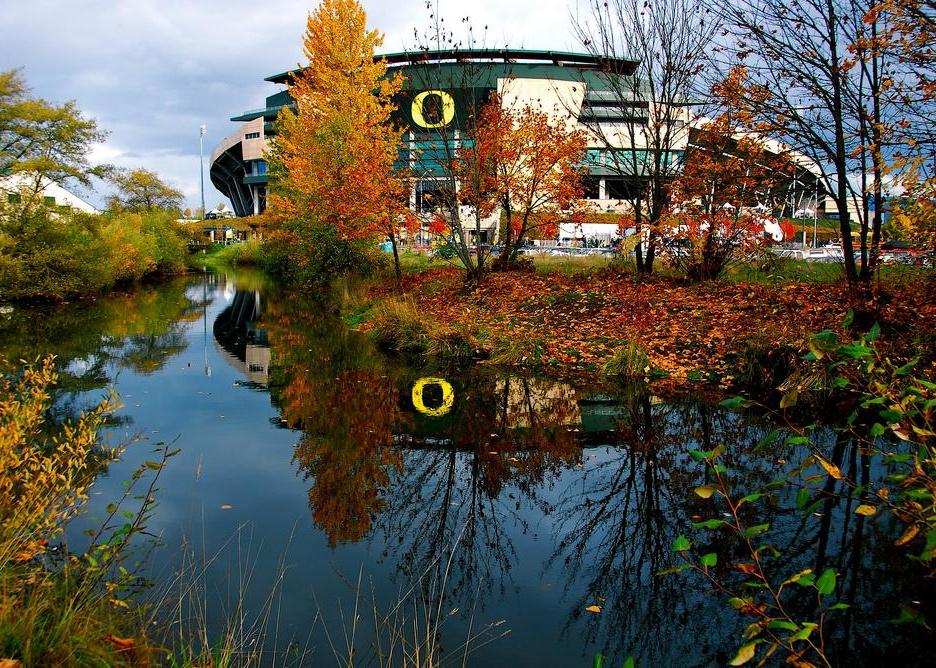
#8. Oregon

– Number of borrowers: 556,000
– Average loan balance per borrower: $38,248

Oregon’s borrower delinquency rate was 8.3% as of the end of 2021—down three percent from the previous year. The state offers forgiveness and incentive programs for health care providers and lawyers.
Jackson Myers // Flickr

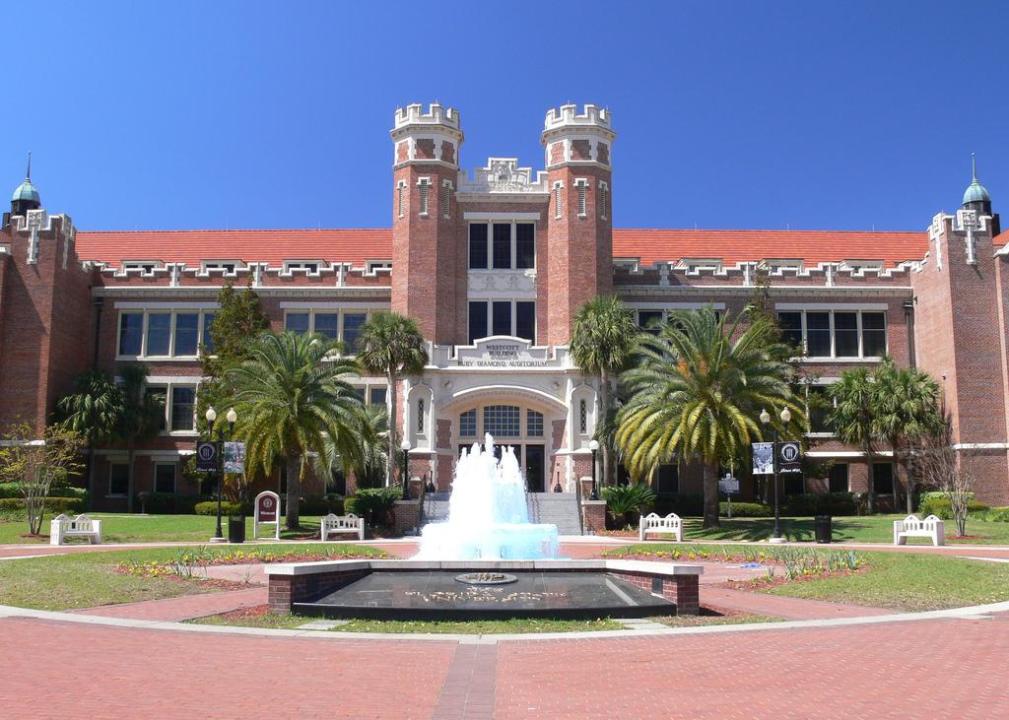
#7. Florida

– Number of borrowers: 2,646,400
– Average loan balance per borrower: $38,653

Florida passed a law in 2020 to protect graduates’ professional licenses if they defaulted on their loans; prior to the passage of this law, graduates could have professional licenses revoked for failing to pay their student loans. Florida also has forgiveness programs for different professions, including the law and nursing fields.
InSapphoWeTrust // Flickr

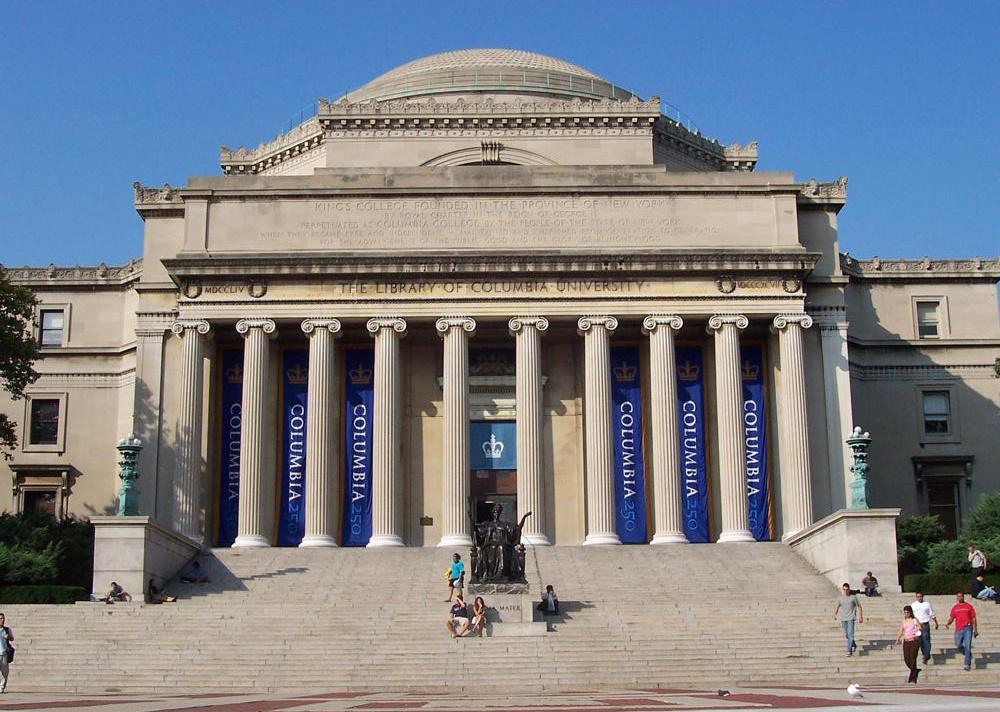
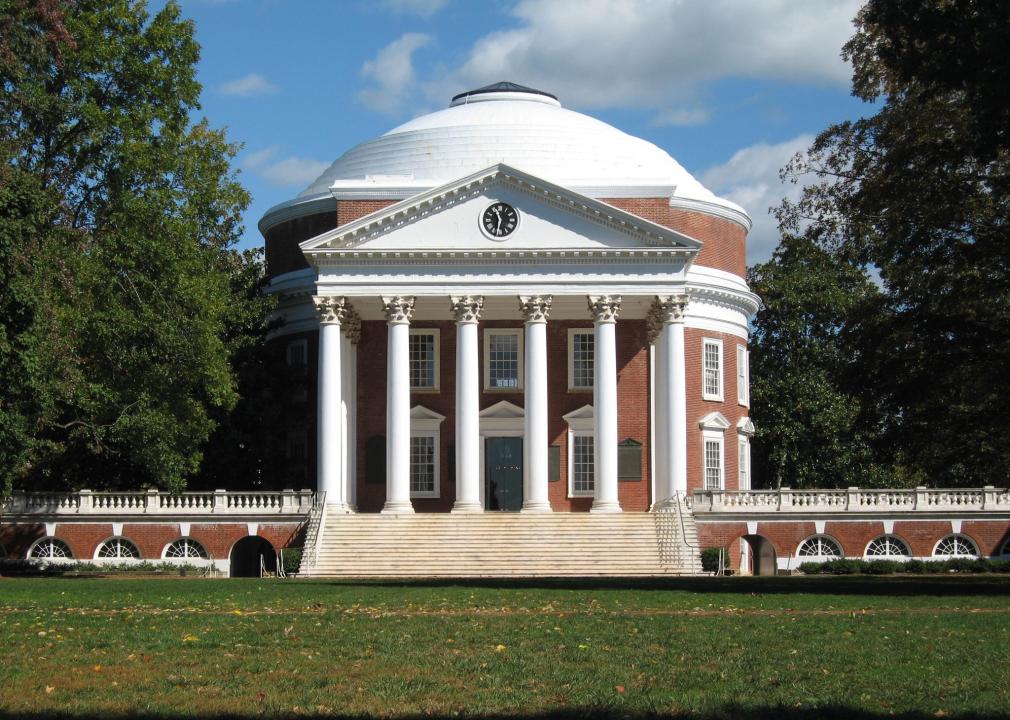
#6. New York

– Number of borrowers: 2,579,600
– Average loan balance per borrower: $38,668

College graduates of an approved New York State college or university who agree to operate a farm in the state full time for five years can obtain loan forgiveness under a young farmers program. The state has forgiveness programs for a number of other professions as well.
Aaron Josephson // Wikimedia Commons

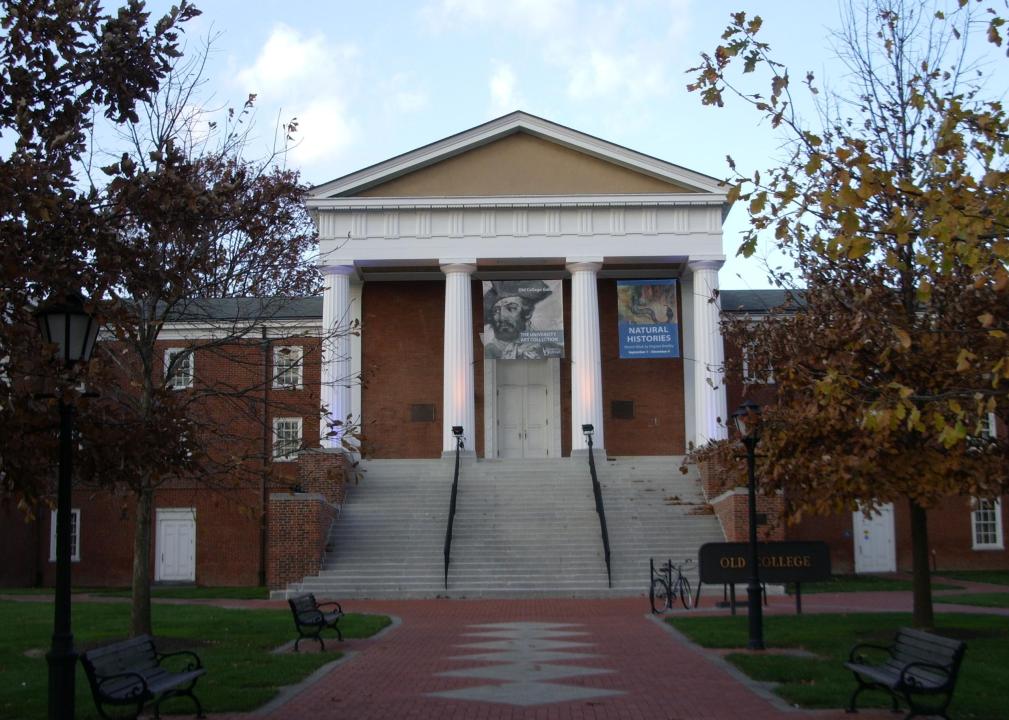
#5. Virginia

– Number of borrowers: 1,143,200
– Average loan balance per borrower: $39,001

Among Virginia’s graduates, 57% had student loan debt, according to a 2019 report from the nonprofit The Institute for College Access and Success. In 2021, the state passed a bill of rights for student borrowers.
Artstuffmatters // Wikimedia Commons

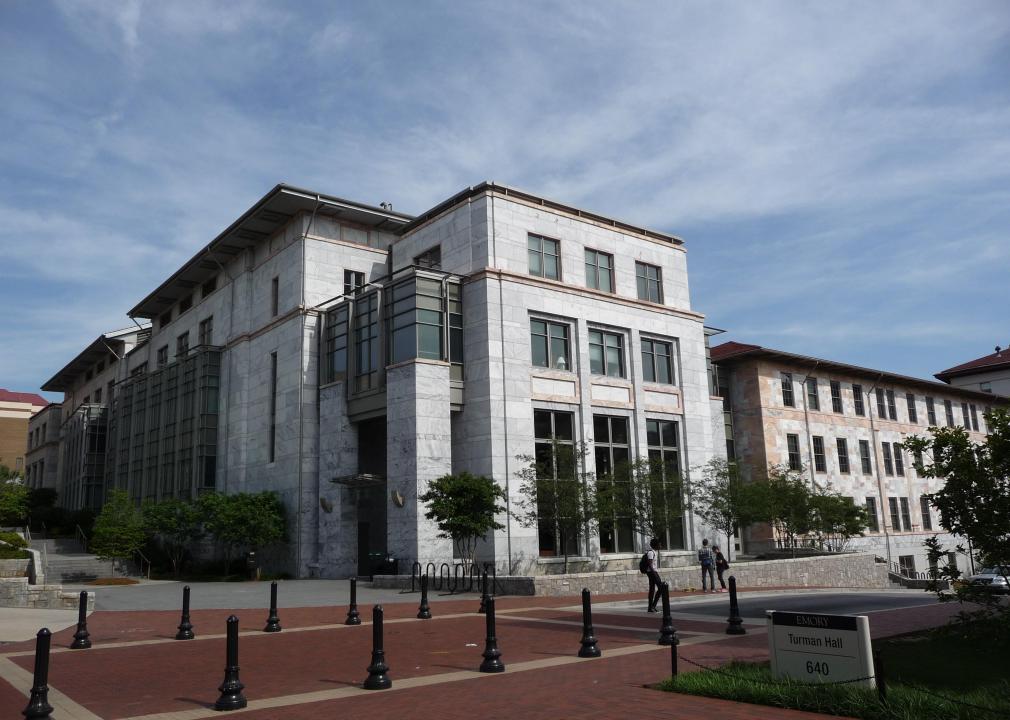
#4. Delaware

– Number of borrowers: 137,300
– Average loan balance per borrower: $39,238

Delaware’s average debt per borrower is among the highest in the country; only Georgia, Maryland, and Washington D.C. surpass it. Delaware’s student loan repayment program helps to offset this burden.
Daniel Mayer // Wikimedia Commons

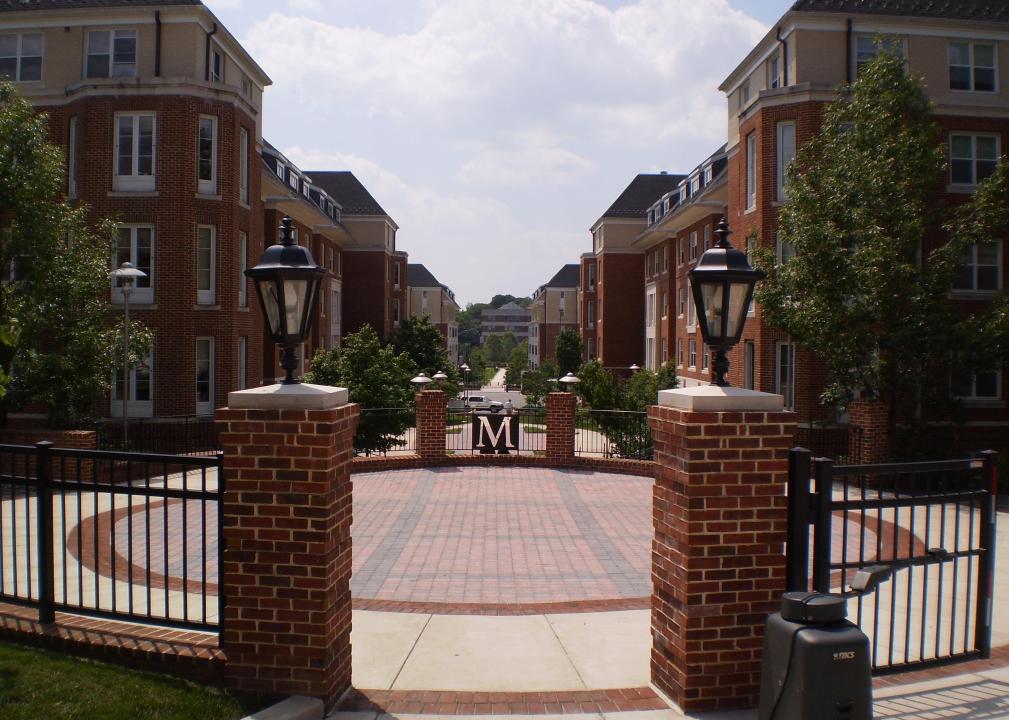
#3. Georgia

– Number of borrowers: 1,641,600
– Average loan balance per borrower: $41,826

In Georgia, 56% of the graduating class of 2020 had student loan debt. The average loan balance per borrower is especially high in the state, considering that 79% of students attended public colleges which are usually less expensive than private colleges.
Bgervais // Wikimedia Commons

#2. Maryland

– Number of borrowers: 864,700
– Average loan balance per borrower: $42,543

Only Washington D.C. has an average loan balance per borrower higher than Maryland. But the state offers a Loan Debt Relief Tax Credit for borrowers who took out at least $20,000 in loans and have at least $5,000 in debt still outstanding.

You may also like: The most conservative public colleges in America
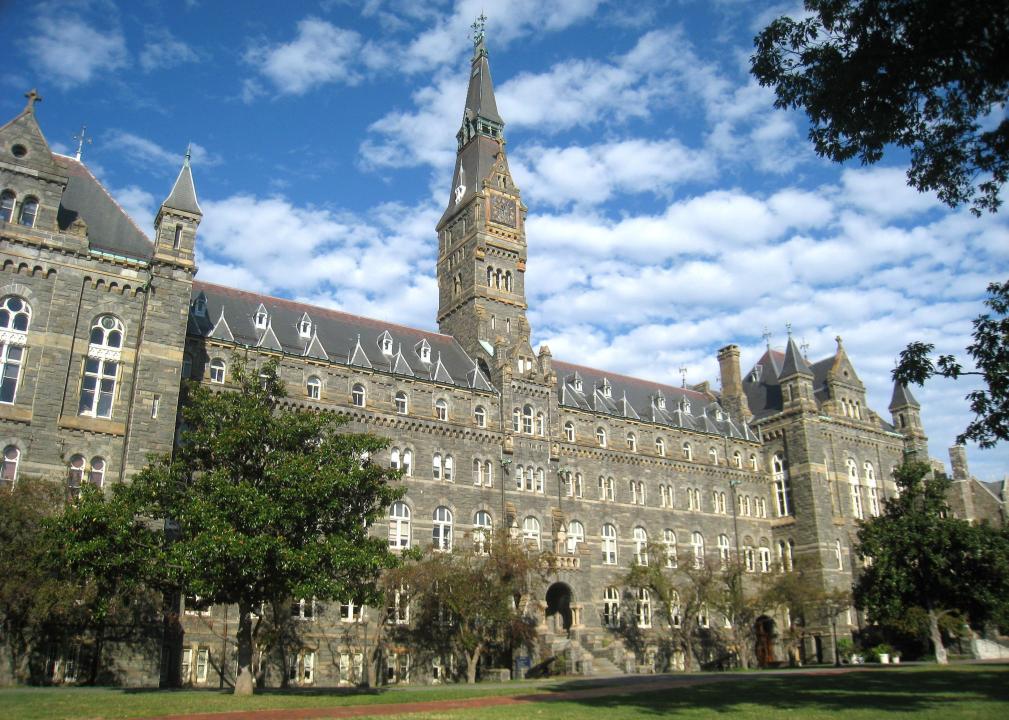
Daderot // Wikimedia Commons

#1. District of Columbia

– Number of borrowers: 125,000
– Average loan balance per borrower: $53,769

The District of Columbia’s ombudsman and its Department of Insurance, Securities, and Banking help students minimize their debt. The district’s attorney general’s office has also compiled a web page of student loan repayment resources. Even so, Washington D.C. borrowers have the highest average loan balance in the country.

You may also like: The most conservative public colleges in America

Free concert and car show attract crowds at Atlas Park

By Stephanie Meditz

news@queensledger.com

White Wedding, mostly an ‘80s cover band, treated Atlas Park to their ‘90s set.

On Tuesday, The Shops at Atlas Park took the Glendale community back in time with a ‘90s concert and classic car show.

While cover band “White Wedding” performed hits from back in the day in the penultimate show of Atlas Park’s Concerts on the Green series, volunteers from the East Coast Car Association displayed their vintage vehicles.

Although White Wedding is mostly an ‘80s cover band, the evening’s setlist consisted of ‘90s sensations, including Britney Spears, The Spice Girls, Sublime and Alanis Morissette.

The band also dressed for the occasion, decked out in flannel shirts and Dr. Martens boots.

Emily McNamara belted all the ‘90s girl power anthems.

Although the members of White Wedding come from different states on the east coast, they frequently perform in New York.

White Wedding was voted “Best Cover Band in the Boro” of Queens for the third year in a row.

“We play in Queens, we play New York, New Jersey, Connecticut, all around the tri-state area,” David Artiaga, front vocalist of White Wedding, said.

In July, the band performed their ‘80s set at Juniper Valley Park.

Artiaga, whose voice effortlessly resembled those of numerous ‘90s icons, has never formally studied music.

“I was just born with talent,” he joked. “Never had a lesson in my life, and it just seemed to work out.”

Emily McNamara, also a front vocalist for White Wedding, has been involved in theater for most of her life.

“It’s a good group. Everyone brings a good piece,” Artiaga said.

White Wedding plays private parties, corporate events and weddings throughout the tri-state area.

For bookings, email info@whiteweddingband.com or visit www.whiteweddingband.com.

The band is also on Instagram (@whiteweddingband) and Twitter (@whitewedding80s).

While the ‘90s music played, the East Coast Car Association held a classic car show in the parking lot at Atlas Park.

Harold Mecabe promotes the East Coast Car Association’s 24th annual toy drive in November.

Established in 1999 by Eddie Walter, the East Coast Car Association hosts car shows and cruise nights to raise money for St. Mary’s Children’s Hospital in Bayside.

Harold Mecabe, master of ceremony, has been involved with the club for 22 years.

After Walter passed away in 2007, he and other members unanimously decided to continue to support St. Mary’s Children’s Hospital to honor Walter’s legacy.

“We have a handful of members in the club, and all the people here support us,” Mecabe said. “They know what we do and they help us. Without those people, we would actually be nothing…And we will continue doing what we’re doing as long as we possibly can.”

In November, the club will host its 24th annual toy run.

“We will leave from the Forest Park bandshell area. The NYPD will shut down the Jackie Robinson Highway, the Grand Central Parkway and the Clearview Expressway to give us direct access to St. Mary’s Hospital,” Mecabe said. “At that time, we will present whatever proceeds that we collect during the course of the year to St. Mary’s.”

The East Coast Car Association has raised over $250,000 and $40,000 worth of toys since it was founded.

The club has hosted two car shows at Atlas Park this summer, both of which occurred on the same night as a concert.

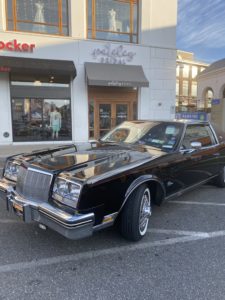
Among the classic cars displayed was a 1979 Buick Riviera.

“It was just coordinated that way, which is good because it brings out more people,” Mecabe said.

To join or donate to the East Coast Car Association, visit their website at https://eccatoysfortots.org.

The Shops at Atlas Park has hosted its annual Concerts on the Green series since 2013.

General manager Peter DeLucia has found that the concerts not only show people all that Atlas Park has to offer, but also provide a fun, free night out for the neighborhood.

“It’s just a way to engage the community,” he said. “Have them come out, see what we’ve got going on at Atlas Park, like the roller skating rink and some of the new stores.”

The concert, as well as other concerts and movie nights at Atlas Park, was sponsored by Main Street Radiology.

Surgey Santiago, a marketing agent from Main Street Radiology, said that these events are great opportunities to inform the community about the essential services offered, such as X-rays, ultrasounds and MRIs.

“Since we sponsor The Shops at Atlas Park, we’ll give knowledge about the facility and what we do,” she said. “We just want to attract the neighborhood, let them know that we’re here.”

Main Street Radiology recently opened a fifth location on Cooper Avenue in Glendale, right down the street from Atlas Park.

IVAN TRDOSLAVIC

Ivan Trdoslavic passed away on Monday, August 15, 2022 at the age of 78. Beloved Husband of Annie Trdoslavic. Loving Father of Lisa Trdoslavic and Suzy Trdoslavic. Cherished Grandfather of Mallory, Freddie, Thomas and Isabella and Great-Grandfather of Joshua. Mass of Christian Burial offered at St. Adalbert’s Church on Friday, August 19, 2022 at 10 AM. Interment followed at Calvary Cemetery, Woodside, NY under the direction of Papavero Funeral Home, 72-27 Grand Avenue, Maspeth NY 11378.

ARTURO VIDAL DEMEZA

Arturo Vidal Demeza passed away on Tuesday, August 16, 2022 at the age of 48. Loving Father of Tiffany Andrea Vidal. Beloved Son of Victoria & Rudolfo. Dearest Brother and Cherished Uncle. Mass of Christian Burial offered at St. Stanislaus Church on Saturday, August 20, 2022 9:30 AM. Interment followed at Mount Olivet Cemetery, Maspeth, NY under the direction of Papavero Funeral Home, 72-27 Grand Avenue, Maspeth NY 11378.

Fill the Form for Events, Advertisement or Business Listing