Super Bowl Sunday Buffet & Open Bar at Maspeth’s Ocean Prime

This Super Bowl Sunday, Feb. 8th, the Super Bowl comes alive in Maspeth with an unforgettable viewing party at one of Maspeth’s hottest spots, Ocean Prime.

Kickoff is set for 6:30 PM ET, and Ocean Prime is rolling out the red carpet with a $50 cash open bar (tip included) and a full all-you-can-eat buffet that starts at 6 PM and runs through the end of the game — perfect for fans who want great food, great drinks, and non-stop football vibes.

Football fans won’t miss a moment of Super Bowl LX, featuring the Seattle Seahawks and the New England Patriots at Levi’s Stadium in Santa Clara, California. Both teams finished the regular season with impressive 14–3 records, and while Seattle is chasing its second title since 2013, New England is aiming for a record seventh Super Bowl championship in franchise history. It’s a classic matchup with deep storylines and plenty of excitement. 

At Ocean Prime, the game day party elevates every fan’s experience. Beyond unbeatable food and drinks, patrons can challenge friends to a friendly game of darts, letting competitive spirits shine off the big screen. And whether you’re rooting for the Seahawks in electric blue or the Patriots in crisp red and navy, you can choose your favorite music between quarters on Ocean Prime’s brand-new jukebox — creating the perfect soundtrack to your Super Bowl celebration.

“We wanted to create a Super Bowl party where everyone feels at home — great drinks, great food, and entertainment that keeps the energy going from kickoff to the final whistle,” says Ocean Prime co-owner, Jose. “Whether you’re here for the game, the atmosphere, or just to have a great night with friends, we’re ready to make this Super Bowl Sunday one to remember,” added Ocean Prime co-owner, Danny.

Whether you’re in it for the action on the field, the eats at the buffet, or the party atmosphere, Ocean Prime’s Super Bowl Sunday special is the place to be in Queens. Get there early, grab your seat, and make this year’s Super Bowl one to remember! 

Guests are encouraged to arrive early to secure their spot and settle in before kickoff. For more information or to reserve a table, contact Ocean Prime Bar and Restaurant at 718.326.3707 or visit them at 64-14 Grand Avenue, Maspeth, Queens. Gather your friends, bring your team spirit, and experience one of Queens’ best Super Bowl Sunday celebrations from the first snap to the final play.

Three Hopefuls, One Seat: AD 36 Candidates Go Head to Head

By COLE SINANIAN | news@queensledger.com

On paper, the three socialists running to fill Mayor Mamdani’s former State Assembly seat have a lot in common.

But while Diana Moreno, Rana Abdelhamid, and Mary Jobaida are all mothers and members of the NYC Democratic Socialists of America, each belongs to a different one of Astoria’s ethnic communities and brings a unique set of lived experiences that shape their approach to politics. 

Assembly District 36, which spans Astoria and parts of Long Island City, is notable for being the only administrative district in the country to have elected socialists at the municipal, state, and federal levels.

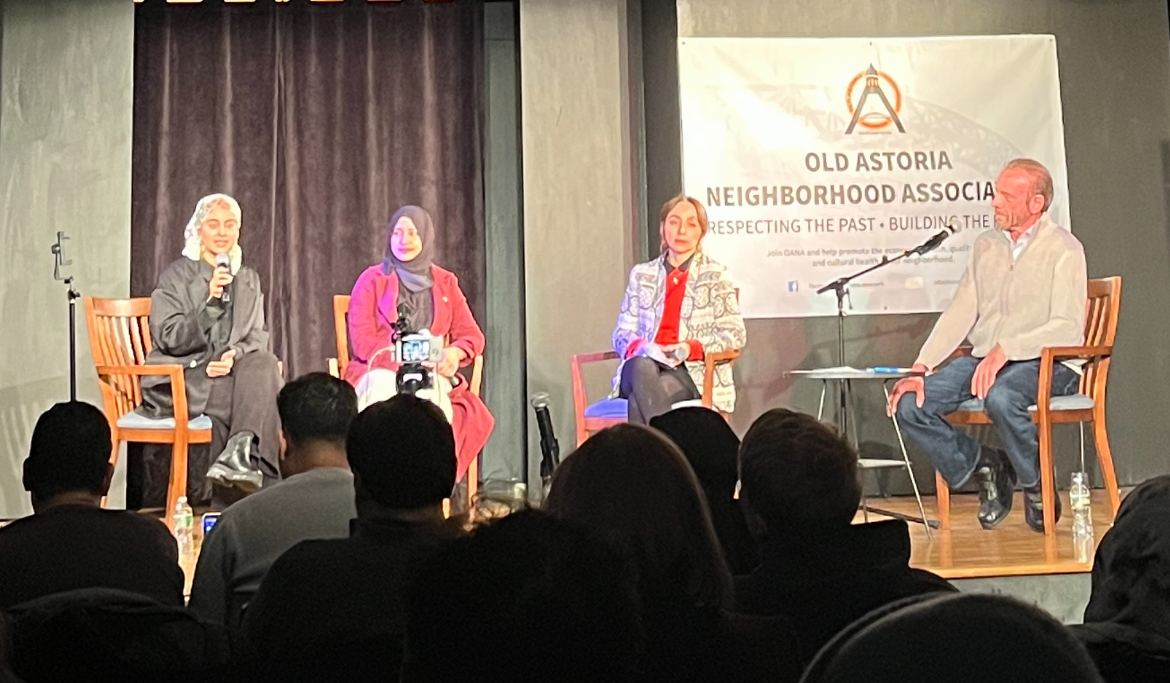
On February 3, Astorians will head to the polls to elect a replacement for Mamdani, whose State Assembly seat was vacated when he was sworn in as mayor on January 1. During a three-way roundtable discussion at the Hellenic Cultural Center on January 22, the three women all pledged to protect immigrants from a hostile federal government, fund universal childcare and public transportation by taxing the rich, and slow neighborhood displacement, but offered different explanations as to how they would do so.

The Candidates 

Moreno, who’s originally from Quito, Ecuador, arrived in the US in 1999 and has built a career working for immigrant justice-nonprofits and labor unions, most recently as communications manager for the New York State Nurses Association. She’s emerged as the race’s frontrunner, having secured key endorsements from the NYC-DSA, the NYC Working Families Party, Mayor Mamdani, and the Queens Democratic Party.

Jobaida, meanwhile, arrived in New York in 2001 as an immigrant from Bangladesh and self-described “Bengali housewife,” and quickly rose to prominence in Astoria’s South Asian community as a powerful local advocate and organizer. A mother of three, Jobaida has worked as a public school teacher and helped found Time Television, one of New York City’s first Bangladeshi TV networks. Many of Jobaida’s supporters live in and around Queensbridge houses, so she’s made sure to keep the working-class immigrant community she hails from at the center of her campaign.

And as the daughter of Egyptian immigrants, the Queens born-and-raised Abdelhamid is well-known among Western Queens’ Middle Eastern and North African communities for her work at Malikah, a nonprofit she founded that provides self-defense training to women vulnerable to gender-based violence. Known to some as “Mayor of Queens,” Abdelhamid also operates a mutual aid hub out of Malikah’s Steinway Street storefront. 

The discussion was hosted by the Old Astoria Neighborhood Association in the Hellenic Cultural Center’s auditorium and moderated by Richard Khuzami, who began by requesting respect and civility from the audience and asking candidates to introduce themselves. 

All three candidates pledged their support for the New York Health Act, a bill currently stuck in the state legislature that would implement a universal, single-payer healthcare system in New York state, as well as other affordability-focused legislation like Childcare for All and the Commercial Rent Stabilization Act, which would implement a rent-freeze for small businesses. The candidates supported funding these policies via a tax hike on high-earning businesses and individuals — a proposal promoted by Mayor Mamdani but criticized by Governor Kathy Hochul, whose approval is needed to make it law. Candidates argued that these tax hikes could also be used to fund both new transportation infrastructure projects like the Interborough Express, for which all three candidates expressed support.

On Immigration 

When asked about how they’d respond to federal immigration enforcement in their district, the candidates described different approaches to protecting their district’s immigrant communities. Abdelhamid said she would work to immediately pass the NY for All Act, which would prohibit state and local agencies from enforcing federal immigration law, and the Mandating an End to Lawless Tactics (MELT) Act, a bill that would prohibit federal agents in New York State from wearing masks. Abdelhamid also said she would pass funding packages that would ensure immigrant legal council services are fully funded. She also proposed a state “mutual aid fund,” which could support immigrant families and street vendors who are in hiding from ICE and cannot work. 

 “So many of our immigrant neighbors who are street vendors, for example, do not feel safe going out in public and vending or going to work because they don’t know if they’re going to be able to make it home the next day,” Abdelhamid said. 

Jobaida, for her part, took a more holistic approach to answering the question. She described the marginalization she felt in the years following her arrival to America and urged the importance of representation and services that help immigrants integrate into American society as the best protection against a hostile federal government.

“Home should be home, not a threatening place,” she said. “So we have to make sure that our new immigrant people, they are met with compassion and services and the care they need to become a productive member of our society.” 

Moreno meanwhile, agreed that legislators must pass both NY for All and the MELT Act and went on to call for the total abolition of ICE, though she acknowledged that this falls beyond the scope of the State Assembly. She also promised to use her legislative offices as an “organizing hub”  for supporting her immigrant neighbors. 

“The next assembly person,” Moreno said, “which I hope will be me, should use their office as a hub of organizing to ensure that our immigrant neighbors have the resources that they need, the information that they need to keep each other safe.”

On Housing 

When asked about how she’d address the city’s housing crisis, Moreno again vowed to turn her office into an “organizing hub,” this time for tenants. She called for the state government to construct more social housing in New York City for low-income residents, and said she would work to implement the Social Housing Development Authority, a proposed public benefit corporation that would develop permanently affordable, environmentally sustainable, union-built housing. 

Abdelhamid pointed to several organizations she would support if elected. She mentioned the Astoria Tenant’s Union and the Western Queens Community Land Trust, an organization that seeks to preserve affordability by putting buildings under the control of tenants and community stakeholders instead of for-profit real estate companies. She also supported expanding rent stabilization, and called on the legislature to fund tenants’ legal representation. 

“I’ve been to housing court,” Abdelhamid said. “The line is long. The lawyers are not enough. When you show up with a lawyer, you’re much more likely to be able to confront tenant harassment, landlords.” 

Jobaida echoed calls to build more social housing, but was more blunt in her condemnation of the YIMBY, housing-maximalist approach to development promoted by prior mayoral administrations. In an effort to better understand her district’s housing supply, she vowed to fund a study that would reveal exactly how many apartments are currently vacant so they could potentially be converted into affordable units. 

“The more high-rise luxury buildings we saw, the more people were displaced,” Jobaida said. “So the way they were using the word ‘housing’ never solved our problems, it only deepened the crisis.” 

On Criminal Justice 

When asked about their role in improving the state’s criminal justice system, the candidates diverged in their approach. Moreno highlighted the need to prevent public safety issues from being appropriated by right-wing agitators who seek to sow fear and division, and to instead focus on the systemic issues that lead to crime, like substance abuse disorder. 

“That also means we should resort to treatment instead of jail when necessary when folks are suffering from substance abuse disorder,” Moreno said, “because substance abuse disorder is a public health issue and should be treated as such.”

Abdelhamid described what she’s learned from her experience running the Malikah self-defense center and the stories she’s heard from its patrons. Although rates of other kinds of violence in Astoria are low, gender violence remains a major issue, and must be taken just as seriously, Abdelhamid said. She also called out a criminal justice system that funnels underserved youths into the state prison system for petty crime and churns out lifelong criminals. 

“So many young people in our communities are impacted by the school-to-prison pipeline,” she said.  “If there’s a young person in our community who’s struggling, who’s dealing with a challenge, then they should be taken care of. They should be provided opportunity, not thrown away in a jail and left to a system that’s harmful to them and harmful to their communities long term.” 

Jobaida used the opportunity to condemn what she called a “deeply flawed” criminal justice system that equates punishment with justice. She praised restorative justice, a practice that she grew up with in Bangladesh. In restorative justice, the person who commits the injustice is responsible for remedying it.  

She argued that crime is best addressed by taking a holistic approach, tackling “the root causes where the problems are beginning,” which is usually poverty. 

“I represent the working class, the excluded people, the poor people,” Jobaida said. “Rich people see us through their lenses. The people who come to us, who sell our struggles back to us, have zero idea how my people are living in Queensbridge, Ravenswood, and Astoria houses. You make us so ashamed that we don’t even feel comfortable talking about our struggle,” she said. 

“I prefer justice over criminalizing people, over criminalizing poverty,” Jobaida concluded

Unlocking Soccer for Kids on the Spectrum

Two brothers-in-law have designed a structured and inclusive soccer program for kids on the autism spectrum. By COLE SINANIAN | news@queensledger.com 

The grown-ups didn’t stand a chance. 

A curly-haired 9-year old named Maximiliano maneuvers the ball around the indoor soccer field in Greenpoint with the ease of a future pro. Coaches Virgilio Baez and Jeffrey Cortez — Maximiliano’s father and uncle, respectively — offer little in terms of defense. The goalie, a slightly older boy, masterfully intercepts Baez’s attempted shot, while 12-year-old Isaac, Maximiliano’s cousin, seems to be getting distracted. 

Fortunately, Isaac’s mother, Isaira Abreu, is on the grown-ups team. “Isaac!” she shouts. “What are you doing? Kick the ball!” 

This happens often, Abreu said. Isaac is highly intelligent, with near-encyclopedic knowledge of the universe, but can struggle with communication, focus, and hand-eye coordination. 

“For you and I, it’s easy to open a door, or put on a scarf, or keep balance,” Abreu said. “But for him, it’s easier to tell you what is the distance from the Sun to the Earth. For him, the things that for us are so hard become easy.” 

At ordinary soccer practice, such distraction would be grounds for reprimand. But at Open Goal soccer, held every Saturday, distractions are no problem at all. The program is designed to help kids like Isaac — who’s on the autism spectrum — stay active, build social skills and learn teamwork in a fun and judgement-free environment. It’s the project of brothers-in-law Jeffrey Cortez and Virgilio Baez, who launched Open Goal after struggling to find a soccer program that fit Isaac’s needs. The program is currently in its second season, and offers inclusive soccer lessons for kids on the spectrum without isolating them. Cortez and Baez — who have backgrounds in tech and banking, respectively — explained that the idea is to pair neurodivergent kids with neurotypical “buddies,” in an effort to help them both socialize and learn leadership skills. 

“It’s really about movement, about connection,” Cortez said. “If they learn soccer, great. But it’s also unifying, it brings people together. So besides the soccer skills that we’re teaching, we’re also building community.” 

Open Goal parents are invited to join a WhatsApp group chat upon registration, where they can share materials and connect over their shared struggles in raising neurodivergent children.  

Abreu, Isaac’s mother and Cortez and Baez’s sister-in-law, said that while programs exist in the city for neurodivergent kids, they can be exclusionary, grouping children on the spectrum with children with other physical and developmental disabilities with whom they have little in common. This happened when Abreu placed Isaac in a program recommended by his school, the Manhattan Children’s Center. 

“He actually wanted to be part of a team in which you have all types of kids,” Abreu said, “not just kids like him. 

Open Goal offers an ideal solution, she said, as Isaac gets the opportunity to play soccer at his own pace alongside neurotypical peers like Maximiliano, who can serve as role models for teamwork and sportsmanship. 

But the challenge at Open Goal, Baez said, is staying flexible while also maintaining the strict routine that kids on the spectrum so often need. In a traditional soccer program, the coach will give instructions, then expect the kids to complete the task without question. This doesn’t work for kids on the spectrum, who can be easily distracted and sometimes need breaks, Baez said.  

“You cannot do whatever your traditional soccer program does with these kids,” he said. “It just doesn’t work. A lot of kids, you tell them an instruction and a minute later they’re off doing something else.” 

“And sometimes,” he continued, “kids say, ‘I don’t want to do it.’ And I’ll say ‘ok, then don’t do it. Let’s sit on the turf for two or three minutes.” 

Baez recalled a kid from a few weeks ago who didn’t want to do one of the planned exercises, so Baez offered to allow the child to take a break on the sideline. But once he realized that none of his teammates would be sitting on the sideline with him, he decided to rejoin the group. 

Abrupt changes to routine are also off the table. Every one of the hour-long sessions, for example, ends with a game, during which neurodivergent kids like Isaac and budding soccer stars like Maximiliano play against the coaches and parents. If ever a Saturday session is canceled due to weather, rescheduling for Sunday simply will not do, Cortez said.

“Structure is very important,” he said. “The kids are like, ‘we have to go on a Saturday, it’s our routine.’”

The eight-week  program costs $500 at registration, though parents can apply for reimbursements through the NY Office for People with Developmental Disabilities (OPWDD). Eventually, Cortez and Baez intend to register the company as a nonprofit, which could give them access to more funding that would expand the program’s accessibility. 

For now, Baez and Virgilio are content with their roles as the program’s sole coaches. But as it expands, they said they plan to hire more coaches and offer them specific training for working with kids on the spectrum. 

Dual Pricing in Queens, NYC: How a Simple POS Strategy Can Save Local Businesses Thousands

In the bustling neighborhoods of Queens, where neighborhood cafés, bodegas, and mom-and-pop shops compete for every dollar of revenue, rising credit card processing fees are an ongoing challenge. But a growing number of local businesses are turning to an innovative pricing model called dual pricing — and with help from Queens-based SwipeSave, many are keeping more of what they earn.

What Is Dual Pricing?

Dual pricing is a payment strategy that displays two prices for the same product or service:

  • A standard price for customers paying with credit or debit cards

  • A lower price for customers who pay with cash

Rather than adding a surcharge to card transactions — which can be legally restricted or frowned upon — dual pricing rewards cash payments with a discount. The result is price transparency and a clear incentive for customers to choose cash when possible.

This approach is completely legal in New York and across the U.S. when done properly, and it helps businesses reduce the amount they pay in card processing fees without raising advertised prices.

How Businesses in Queens Are Saving Money

Credit card processing fees typically range from about 2% to 4% per transaction — a significant expense for high-volume or low-margin businesses. By encouraging cash payments through dual pricing at checkout, merchants can keep more revenue in house instead of losing it to processing networks.

Swipesave, a locally founded merchant services company in Queens, has helped restaurants, cafés, retail stores, and other neighborhood businesses slash these costs while keeping daily operations running smoothly.

“Most business owners don’t realize how much they’re overspending on every swipe,” says Michael Louca, co-founder of SwipeSave. “We wanted to create a service that finally puts the power back in their hands — letting them reduce fees without sacrificing customer experience.”

Why it Works for NYC Shops

Queens’ independent business owners often operate on thin margins. A discount for cash payments — clearly displayed on the point-of-sale (POS) system — helps them retain more income per sale. When a customer chooses to pay with cash, the POS automatically applies the discount, reducing processing costs without hassles.

“Business owners need more than savings — they need visibility,” explains John Sanchez, who brings decades of local marketing experience to SwipeSave. “We’re not just lowering their bills; we’re helping them grow their presence in Queens and across NYC.”

This includes complimentary marketing support for local eateries and retail shops — a value proposition rarely seen with traditional payment processors.

POS Systems Make It Easy

Modern POS platforms can handle dual pricing automatically. With the right setup:

  • Cash discounts are clearly shown up front

  • Employees don’t have to manually calculate adjusted prices

  • Receipts accurately reflect pricing differences
    This automation ensures consistency and reduces the risk of mistakes at the register.

“We built our system to be seamless,” says Joe Carrozza, SwipeSave co-founder and technology lead. “Business owners shouldn’t have to think twice about how the discount applies — it just works at checkout, letting them focus on serving their customers.”

Customer Perception and Transparency

One common concern is customer reaction. But in Queens — where many residents still carry cash — customers often appreciate the lower price for cash purchases, especially when the pricing difference is communicated clearly at the point of sale. With proper signage and staff training, most customers understand they are being rewarded for choosing cash, not penalized for using a card.

Who Benefits Most?

Dual pricing can help a wide range of local businesses:

  • Restaurants and cafés

  • Convenience stores and bodegas

  • Local retailers

  • Salons and barbershops

  • Service providers like auto shops and dry cleaners

For many in Queens’ diverse entrepreneurial ecosystem, the cumulative savings from dual pricing can be significant — sometimes covering much of what they previously paid in processing fees.

Car Review: The 2025 Volkswagen GTI 2.0 SE Hatch

With an upgraded and larger touch screen, we have to say that the 2.0 liter, 6-speed, 241 horsepower 2025 Volkswagen GTI 2.0 SE 4-door hatchback is a pleasure to drive for a number of reasons. The front wheel drive makes it easy to handle and the 18 inch wheels on the one we reviewed tendered a great deal of attention on the streets of Woodside, Queens. It’s called GTI, meaning Grand Touring Injection. Direct fuel injection gives it a signature response that gives a different experience that’s actually thrilling, as it feels close to driving a stick. They discontinued the 6-speed manual option this year, replaced by the 7-speed (what they call ‘dual-clutch’) automatic. It truly feels like a sports car, which makes it fun to drive. 0-60 in just under 4 seconds, this ride takes curves in the tight way that gives you confidence, and it seats five pretty comfortably. It’s a ‘hot hatch’ for sure.

There is a distinct difference in the look of the 2025 version of this model. There is a newly designed grille and headlights and one new cool feature is that the VW logo on front of the car lights up. Nice touch.

The driver touch screen panel on these Volkswagens seem to be easier to navigate than most, mainly because the system is quite intuitive. Cruise control is easy to use and has all the lane control features in top-notch cars. For just about $40,000, the GTI 2.0 SE we drove had all the luxuries we would want in order to feel like we were driving a car we love. The collision avoidance system, heated – power seats and phone charging is what you’d expect from VW and the rain sensing wipers is always a great feature. Get in, drive and have fun with this model.

Queens Community Board 5 Hearing on Fresh Pond Property – Feb 11th

Community Board #5 Covering Maspeth, Middle Village, Glendale and Ridgewood will hear a plan for development on Fresh Pond Road lot.

The owners of Rosa Pizzeria on Fresh Pond Road will testify at the Community Board #5 meeting next week to build a 7-story, 54 unit development with 7.000 square feet for commercial and parking for 19 cars. The empty lot on Fresh Pond Road between Bleecker and Menahan has been vacant for over a decade. The request is to rezone from a current R5b district with a commercial overlay to an R6a, with a commercial overlay and would allow for a building height of 73 feet. 16 residential units would be deemed affordable.


This hearing will be followed by a presentation from Outreach Development Corp. The regular Community Board meeting will follow, including the district manager’s report and reports by the cannabis, transportation, parks, land use and library committees. The meeting will be held on Wednesday, February 11, beginning at 7:30PM at Christ The King High School cafeteria located at 68-02 Metropolitan Avenue in Middle Village.

Maspeth Federal Hosts Youth Financial Literacy Workshop


Children Learn Saving Basics at Maspeth Federal Event

By MOHAMED FARGHALY

mfarghaly@queensledger.com

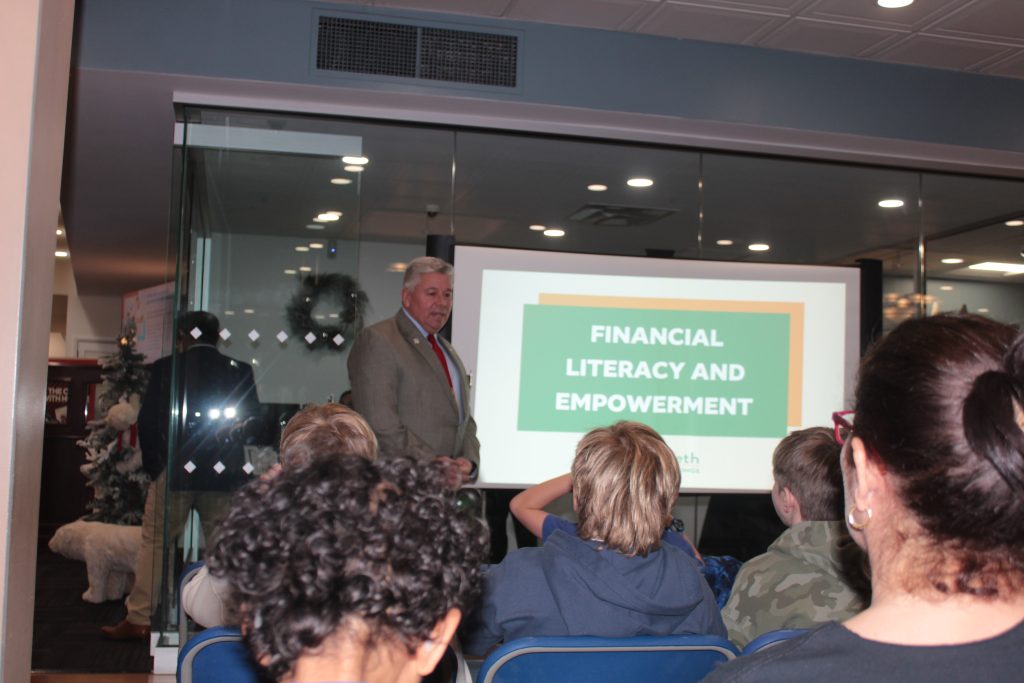
Maspeth Federal Savings hosted a financial literacy workshop on January 13, aimed at teaching children and their families the basics of saving, budgeting and making smart money decisions, using interactive lessons designed to engage students at an early age.

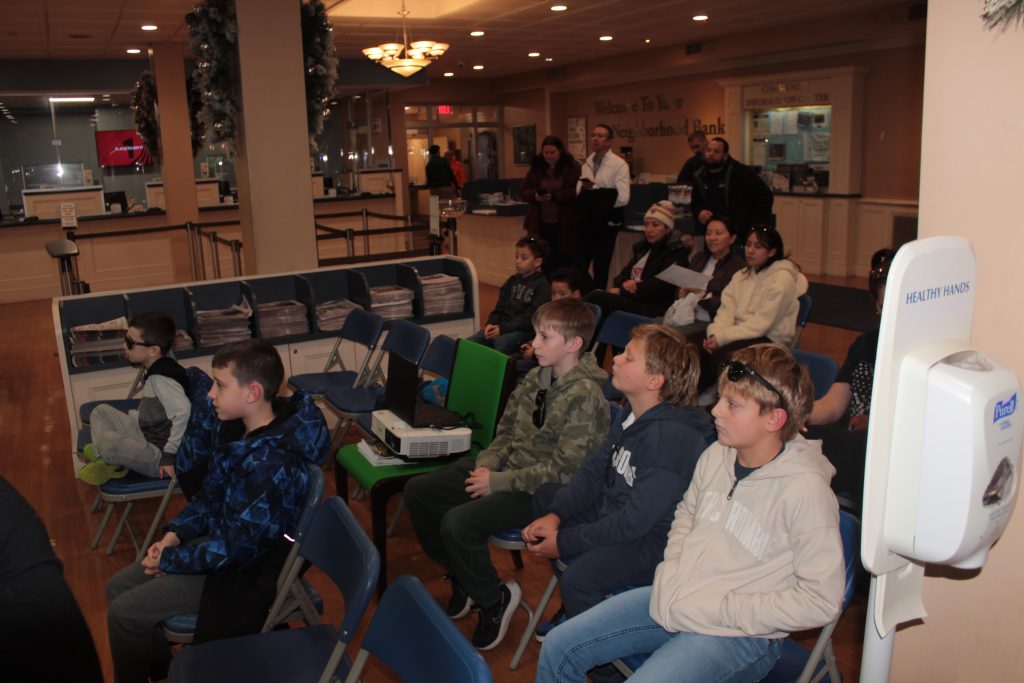
The event, held at the bank’s Maspeth location, brought together children ages 7 to 11 and their parents for a hands-on seminar that blended storytelling, critical thinking and teamwork. Bank staff guided students through a “secret agent” themed activity in which participants were tasked with helping a character named Sammy make better financial choices.

“Our goal is to teach people how to save money,” said Thomas Rudzewick, president and CEO of Maspeth Federal Savings, as he welcomed families and young learners.

During the program, children became “Maspeth Federal Savings Agents,” using badges and role-playing to identify financial mistakes made by Sammy, a squirrel who wants to buy a $200 video game console. As the story unfolded, students were encouraged to call out poor decisions such as spending too much on candy, failing to keep money in a safe place, and giving up on long-term savings goals too quickly.

Jamie Lynn, a member of the bank’s retail team, led the lesson and explained key concepts in simple terms, including goal setting, patience and tracking spending. “Savings takes time, smart choices and patience,” she told the group, reinforcing the idea that even small amounts of money can add up over time.

Children actively participated by answering questions, raising their hands to point out mistakes, and discussing how Sammy could correct his behavior. Lessons emphasized the importance of keeping money in secure places like a piggy bank or bank account, resisting impulse purchases and staying committed to financial goals.

Parents, meanwhile, had the opportunity to speak with Maspeth Federal Savings staff about products and services designed for young savers, including youth accounts that grow with children as they get older. Bank representatives said these tools are intended to help families build healthy financial habits early and promote long-term financial independence.

The event concluded with a recap of the key lessons learned, including setting clear goals, budgeting and tracking spending. Children were rewarded with applause for their participation and later had the chance to meet the bank’s mascot, Sam the Savings Squirrel, and take photos.

Born in the District, Built by the Community: Brian Romero for District 34 

Lifelong Queens Story: Brian Romero Seeks Assembly Seat

By MOHAMED FARGHALY

mfarghaly@queensledger.com

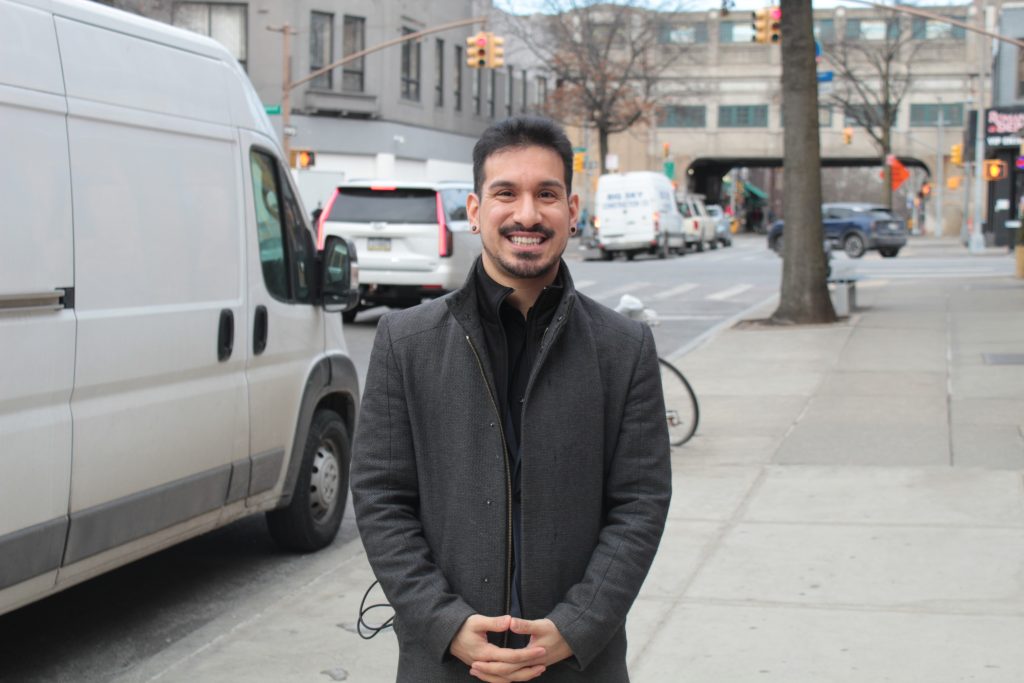
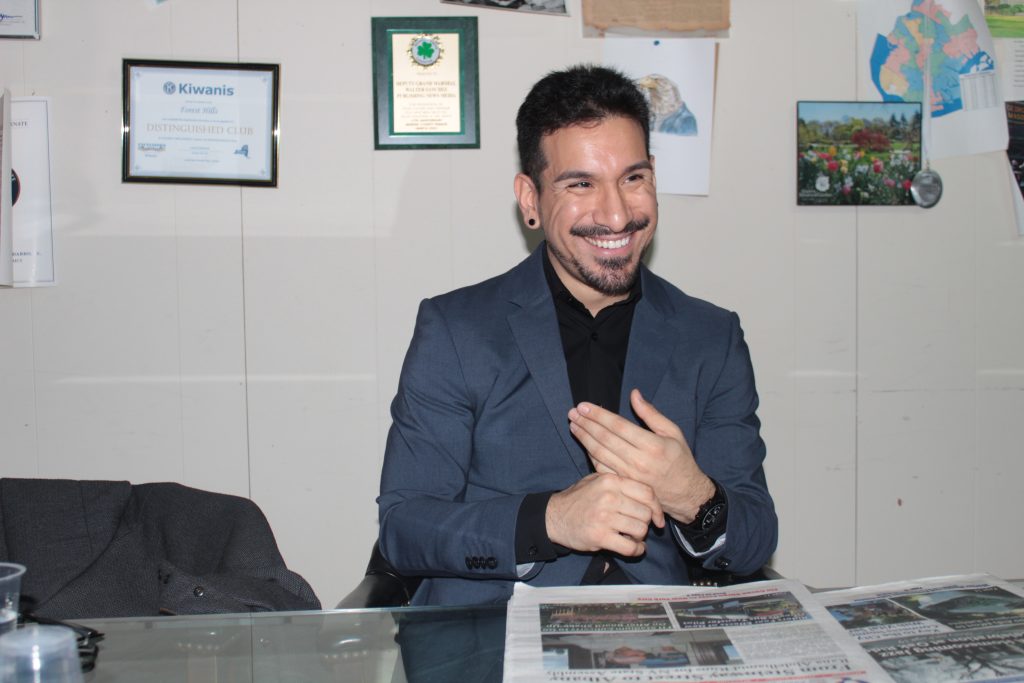
Brian Romero grew up in a flood-prone basement apartment in East Elmhurst, later couch-surfed through homelessness, and spent years working as a social worker and activist in western Queens. Now, the former chief of staff to Assemblymember Jessica González-Rojas is running to succeed her in Assembly District 34, the same neighborhoods that shaped his politics and his life.

Assembly District 34 stretches across parts of East Elmhurst, Jackson Heights, Woodside, Corona and Astoria.

Romero says his candidacy is rooted less in ambition than in lived experience, growing up poor, housing insecure and surrounded by the same pressures facing many families in western Queens today.

“I’ve lived in four of the neighborhoods of this district,” Romero said. “These neighborhoods are very personal to me.”

Romero is the son of Colombian immigrants who arrived in the United States on work visas. His father came first, followed by his mother and older sister; Romero and his identical twin brother were born in New York. The family lived in a basement apartment in East Elmhurst that was not up to code and flooded frequently, an experience Romero says shaped his views on housing and public safety.

“It flooded often,” he said. “We often had to put things above the ground. There were things we couldn’t have on the floor, because we were like, ‘That’s going to be ruined.’ And we had very little.”

When Romero was seven, his family unraveled. His father struggled with alcoholism and was abusive, leading Romero’s mother to leave with three children. She worked multiple jobs but could not keep up with the cost of rent. Eventually, the family became homeless.

Romero spent about a year sleeping on his aunt’s couch. His siblings were separated, staying with relatives and family friends while their mother worked to put the family back together.

“She tried,” Romero said. “Two jobs, three jobs. That’s why all the after-school programs were really important.”

The family eventually resettled in Astoria, chasing cheaper rents — a familiar story for many immigrant and working-class families in Queens. Romero attended I.S. 141, later enrolling at the Academy of American Studies, a Long Island City high school. Unsure of his future, he gravitated toward social work after a conversation with a priest who later became his godfather.

“He said, ‘Maybe you should consider social work. Sounds like you want to help people,’” Romero recalled.

Romero began his higher education at Borough of Manhattan Community College before transferring to John Jay College of Criminal Justice and later Hunter College, earning all of his degrees through the City University of New York. At BMCC, he joined an LGBTQ committee and became politically active, inspired in part by seeing openly gay men, including Danny Dromm and Jimmy Van Bramer, successfully run for office in Queens.

“It was the first time I thought, ‘Wow, people like that can actually win,’” he said.
That activism led to an internship with then-Councilmember Ydanis Rodríguez in 2018 and 2019, where Romero worked on legislation and budget issues while still an undergraduate. But he remained torn between politics and social work, ultimately choosing to pursue the latter.

After graduating, Romero worked in outpatient mental health clinics, including on the Lower East Side, before completing an internship at Rikers Island. The experience was deeply personal: Romero’s twin brother had been incarcerated at age 16, and Romero saw echoes of his family’s trauma in the young men he worked with.

“It wasn’t an easy job,” he said. “But there was something about being closer to those young men and being able to listen and be there for them.”

Romero later provided psychotherapy to young Black and brown men in the city’s juvenile detention system and worked extensively with immigrant communities, LGBTQ New Yorkers and people living with HIV. But he grew increasingly frustrated by the limits of clinical work.

“There’s gotta be something more I can do for them,” Romero said, describing patients who lost care due to insurance cuts, immigration status or poverty. “No matter how much I trained, the system kept failing them.”

That frustration pushed Romero back toward policy. He became a policy manager at the nonprofit GMHC, where he was forced to quickly learn the mechanics of city, state and federal advocacy. During the COVID-19 pandemic, he helped build coalitions around healthcare access, criminal justice reform and the early “tax the rich” movement aimed at stabilizing nonprofits as funding evaporated.

It was during this period that Romero met González-Rojas, who was then running to unseat longtime Assemblymember Michael DenDekker. After she won, she asked Romero to become her chief of staff.

He hesitated, wary of elected office and determined not to abandon activism. Romero made his conditions clear, including continuing to participate in protests, even risking arrest.

“She said, ‘You’re an activist. I’m an activist too,’” Romero recalled. “She told me, ‘I would never stop you from being an activist.’”

Romero stayed for four and a half years. As chief of staff, he helped González-Rojas build relationships across ideological and regional lines in Albany, encouraging her to meet with more than 40 legislators during her first year. He points to the successful campaign for universal school meals as his proudest legislative accomplishment.

“I would not have been nourished as a kid were it not for free breakfast,” Romero said.

Those experiences now inform his pitch to voters. Romero describes himself as “all three”, an activist, a community board member and a legislative staffer — arguing that his background gives him a rare understanding of how policy affects people on the ground.
On public safety, Romero rejects a narrow law-and-order framing, arguing instead that safety is inseparable from affordability.

“I don’t distinguish community safety from the larger questions about affordability,” he said. “When the rent is as high as it is and people can’t afford housing, that is an unsafe situation.”

He supports expanding mental health services, school-based health clinics and access to care for undocumented immigrants, and argues that police are often tasked with problems they are not trained to solve.

“We cannot separate safety from affordability,” Romero said.

Romero has also staked out opposition to the planned casino development in Queens, while acknowledging the appeal of union jobs and new housing.

“I think our community absolutely deserves jobs and affordable housing,” he said. “I just wish we lived in a city and state where we didn’t rely on Steve Cohen to give us all these things.”

If elected, Romero says his priorities would center on three areas: making the wealthy “pay their fair share” to fund public services, protecting immigrant communities through measures like the New York for All Act and access to legal representation, and advancing an affordability agenda that includes social housing, a livable wage and universal childcare.

“No one should have to go through what I did as a kid,” Romero said. “We are treating individuals as disposable when we have such incredible wealth in this state.”

Romero has drawn endorsements from Rep. Nydia Velázquez, Queens Borough President Donovan Richards, González-Rojas, Assemblymember Catalina Cruz, the Working Families Party and City Councilmember Julie Won.

Asked what success would look like after four years in office, Romero returned to the sense of solidarity he witnessed during the pandemic.

“A successful District 34 is one where we all show up for each other,” he said. “Because our livelihoods are connected.”


Democrats Claim Incompetence at Redistricting

Robert Hornak

Robert Hornak is a veteran political consultant who has previously served as the Deputy Director of the Republican Assembly Leader’s NYC office and as Executive Director of the Queens Republican Party. He can be reached at rahornak@gmail. com and @roberthornak on X.

Last week, Judge Jeffrey Pearlman, a Hochul appointee who previously served as Hochul’s Special Counsel as well as her Chief of Staff while she was Lt. Governor, threw out the lines of the 11th Congressional District, represented by NYC’s only Republican House member, Nicole Malliotakis.

The suit, filed by Democrat election law firm Elias Law Group on be- half of four registered New York City voters, claims that the 11th District was drawn, by the Democratic Party, in a way that disenfranchises Black and Hispanic voters. This would actually be the Democrats THIRD attempt at redrawing NY’s congressional lines since the 2020 census.

Drawing politically gerrymandered district lines was made much harder in NY due to a voter referendum passed in 2014 designed to curtail exactly what the Democrats have desperately been trying to do since 2022. The referendum empowered the Independent Redistricting Commission to draw lines once – and only once – every ten years that do not create advantage for either political party.

In other words, NY’s majority of Democrat voters believe that elections should be fair, without the political leadership in control trying to rig the process. This wasn’t really an issue for decades when control of the state legislature was split and both sides had to agree and compromise on the new

lines. But since Democrats took control of both legislatives houses in 2019, they have sought every possible way to undermine the will of the voters of their state.

In 2022, they refused to pass the lines the IRC submitted, and went ahead with their own, constitutionally negligent, redistricting plan. Lawsuits were naturally filed, forcing the state Supreme Court to step in and appoint a special master to handle the once- in-a-decade redrawing of districts in a way that met constitutional requirements. In the 2022 election, after the state lost one seat due to declining population, Republicans performed well with the new, non-partisan lines and picked up three seats, leaving Democrats with a 15-11 majority after an election where the Republican candidate for governor pulled approximately 45% of the vote.

But Democrats were beside them- selves seeing Republicans get their fair share of the state’s congressional seats and brought a lawsuit to redraw the lines once again for the 2024 election. They claimed that by once-in-a decade the state constitution meant once each decade – by the legislature. They argued the court-drawn lines were only meant to be temporary.

A Democrat judge agreed with this argument and gave Albany Democrats another chance. They redrew the lines and after taking back the 3rd district in a special election earlier in 2024, Democrats were able to flip back another three seats in the 2024 General Election. The balance was now 19-7.

Now NY Democrats are trying once again, flouting the will of the voters and the intent of the state constitution, to get yet another attempt to gerrymander the state’s congressional lines. And on the most specious argument – once again.

The lawsuits claims that the growing Black and Hispanic population of Staten Island was disenfranchised by the Democrats who drew the district previously, and therefore, the Republican in office, who is mixed Hispanic and Greek, should have her lines redrawn to include lower Manhattan instead of areas of south Brooklyn that are just across the water and most contiguous to Staten Island.

They claim this would better represent the Island, with its demographics at 56% white and nearly 30% Black and Hispanic, according to the suit. However, if you look at the Statistical Atlas of the US, the demographics of the Island are 62.6% White, 17% His- panic, 10.3% Black, and 8% Asian. For the entire 11th CD it’s 61.6% White, 15.6% Hispanic, 7.5% Black, and 13.3% Asian.

Yes, the percent of Black and His- panic voters did drop slightly, but so did White voters in favor of Asian voters who gained significantly. However,the alleged remedy, cutting out the Asian and Hispanic neighborhoods in Brooklyn and replacing them with lower Manhattan, draws in an area also known for its significant population of Asians and Hispanics, but who are seen as more liberal and reliable Democrat voters.

This is exactly what NY voters tried to prevent in their 2014 referendum and hopefully the appeal will overturn a very bad decision by a very partisan judge.

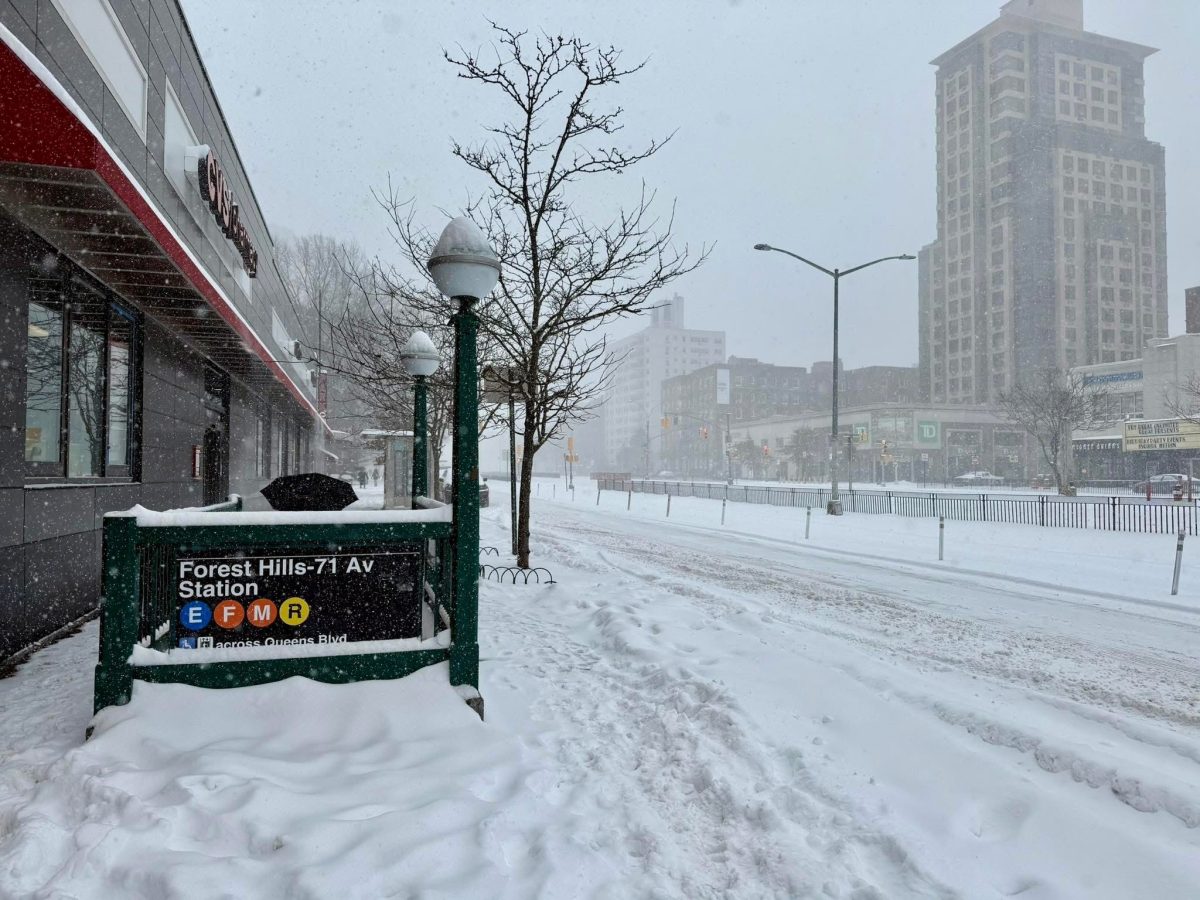
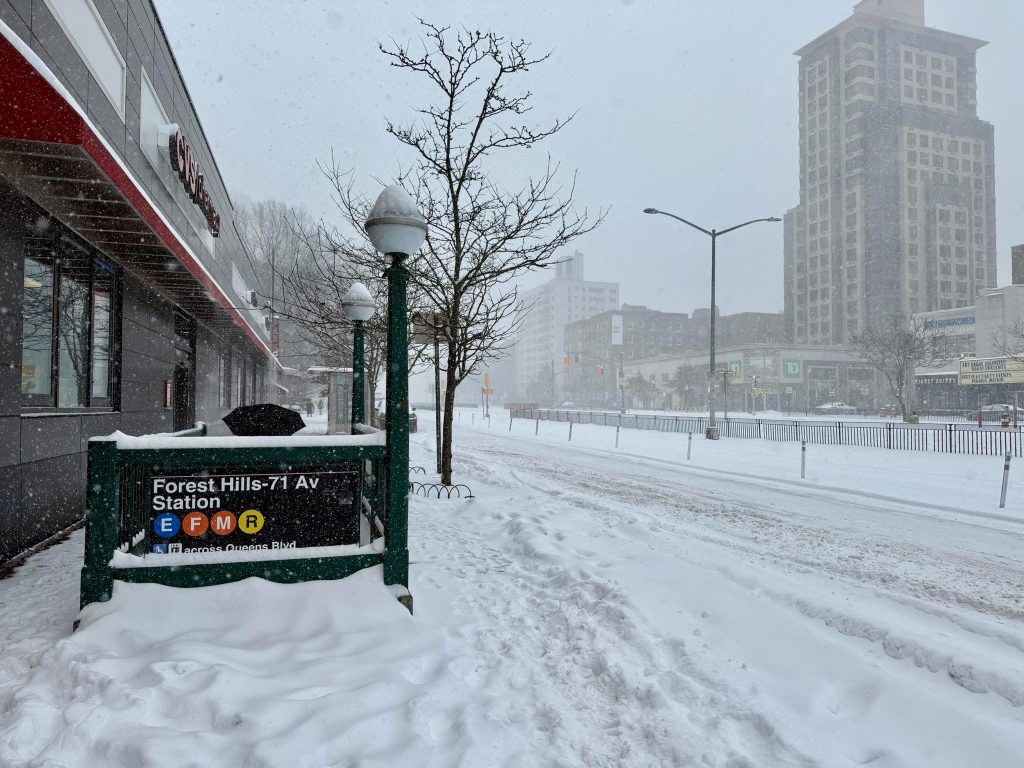
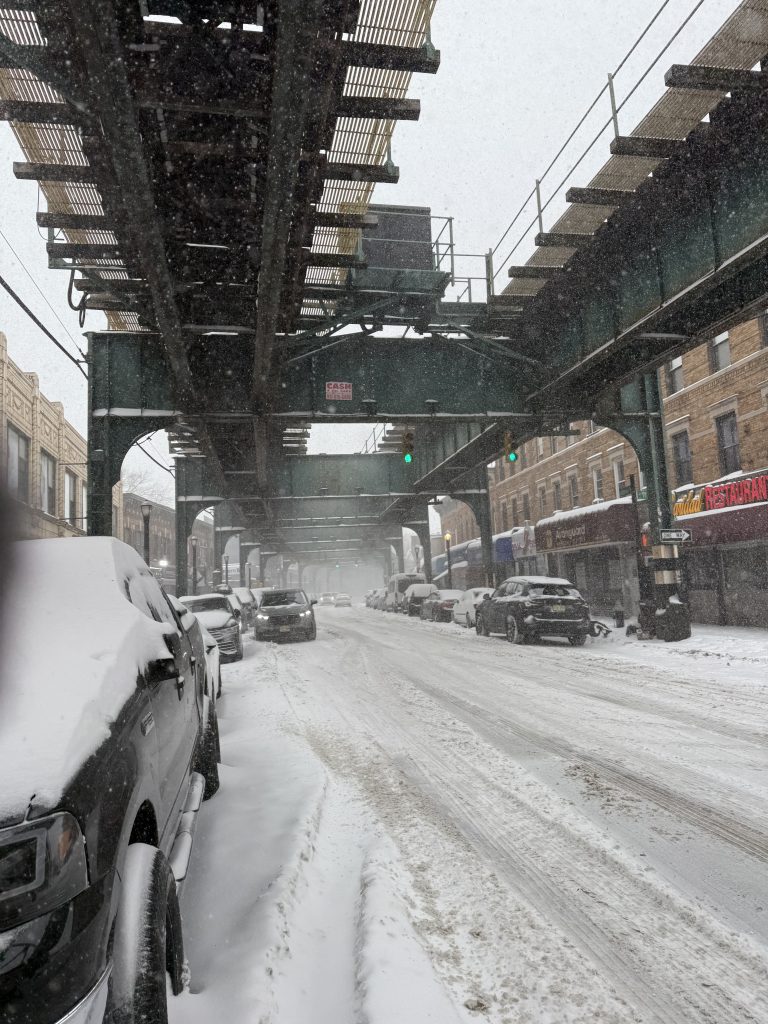
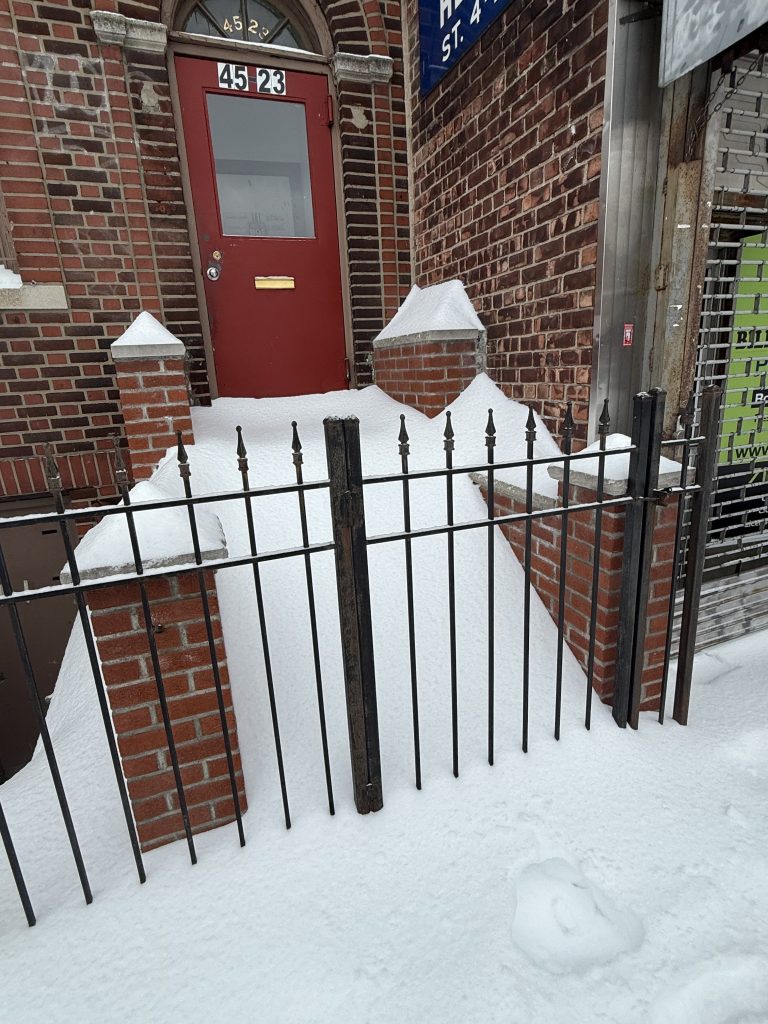
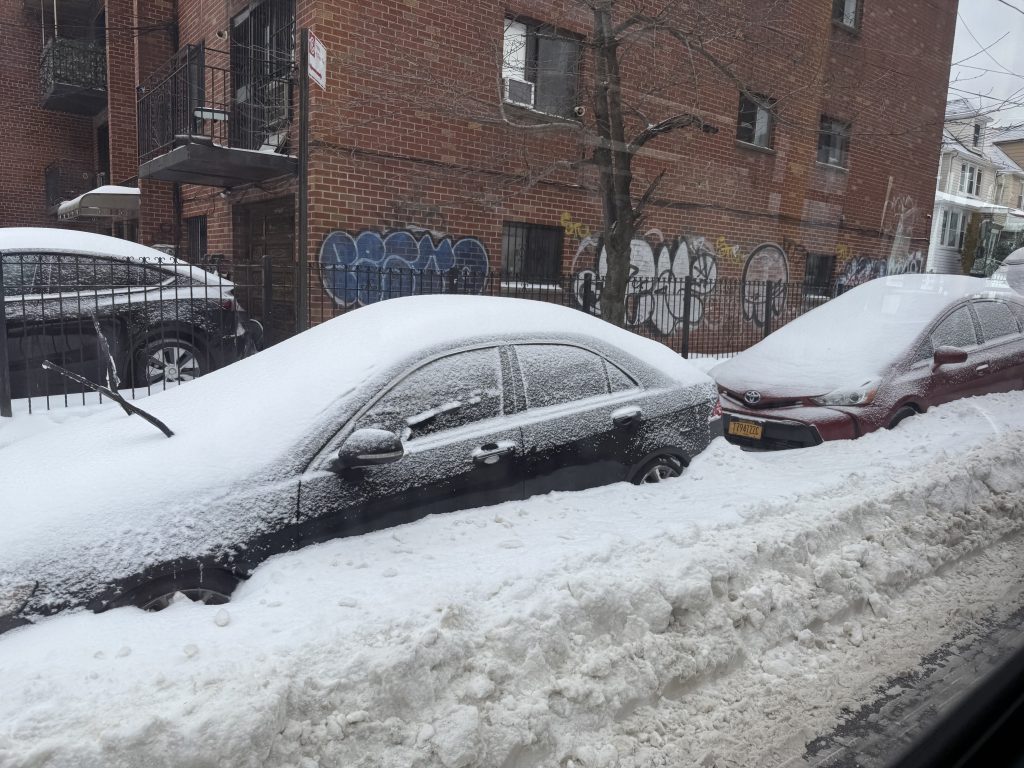
More Than a Foot of Snow Slams New York City

By MOHAMED FARGHALY

mfarghaly@queensledger.com

A powerful winter storm that pummeled New York City over the weekend dumped more than a foot of snow in several neighborhoods, snarled transportation across the region and marked the city’s most significant snowfall in years, according to weather officials.

Snowfall totals varied widely across the five boroughs, with the heaviest accumulations reported in upper Manhattan and parts of the Bronx. The National Weather Service recorded nearly 15 inches of snow in Washington Heights, the highest total reported within the city.

Central Park measured more than 11 inches of snow and sleet, breaking a daily snowfall record and marking the first time the city has seen more than a foot of snow since February 2021. Parts of the Hudson Valley recorded more than 18 inches.

Queens also saw significant accumulation, with 11.1 inches reported in Whitestone and 11 inches in Howard Beach. John F. Kennedy International Airport recorded 10.3 inches of snow, while LaGuardia Airport measured 9.7 inches.

The storm, named Winter Storm Fern by meteorologists, brought air travel to a standstill at times. LaGuardia Airport was forced to shut down for several hours as blowing snow and near-zero visibility left planes surrounded by large drifts. Flight delays and cancellations rippled through the region.

Mass transit systems struggled to recover as well. New Jersey Transit suspended all service during the height of the storm and resumed limited operations days later. The Metropolitan Transportation Authority adjusted subway, bus and commuter rail service as crews worked through icy conditions and extreme cold.

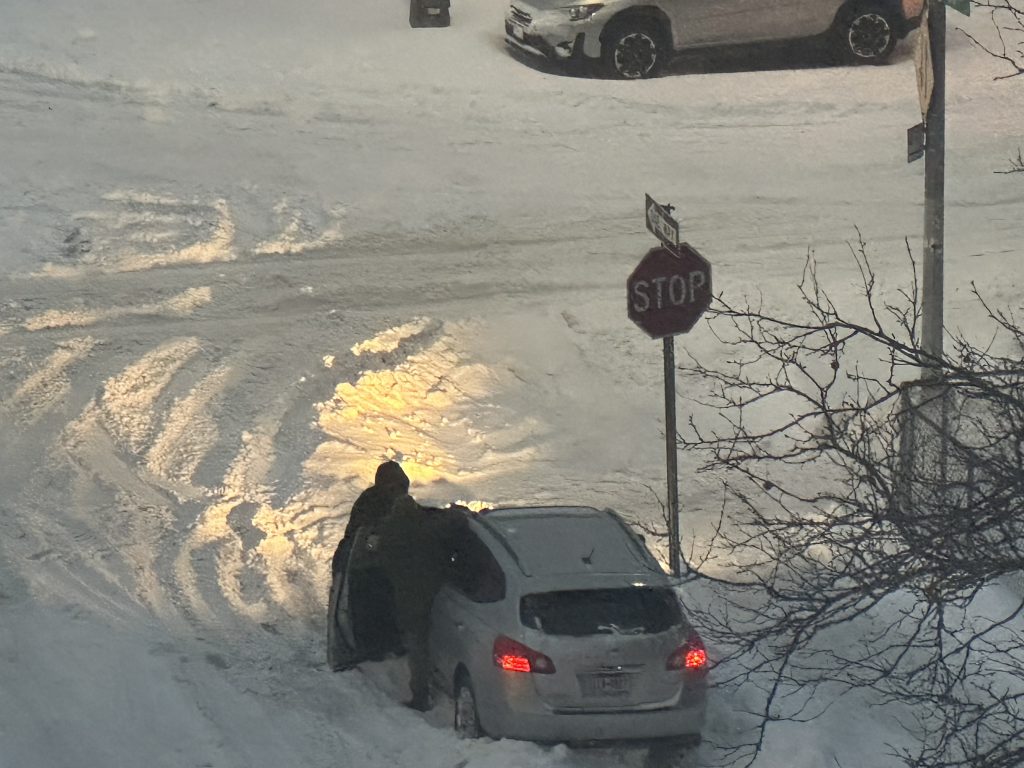
Roadways across the region were hazardous, with heavy, wet snow contributing to numerous accidents and prolonged delays. City officials urged residents to avoid unnecessary travel and to use caution while shoveling, warning that the weight of the snow posed a risk for injuries and heart strain.

As the winter storm approached, New York City residents flocked to grocery stores across the boroughs, frantically stocking up on essentials. Shoppers filled carts with milk, bread, eggs, bottled water, and other staples, often buying far more than usual in anticipation of being snowed in. The rush left many neighborhood markets stripped bare, with empty shelves and limited supplies, creating a scene of chaos as city dwellers prepared for what would become one of the biggest snowstorms in years.

Schools across the region closed, with many districts canceling classes outright. New York City public schools shifted to virtual learning during the storm.

Food delivery services, including DoorDash and Grubhub, temporarily suspended operations in New York City as conditions worsened, resuming service once travel became safer.

Mayor Zohran Mamdani ordered New York City public schools to shift to remote learning Monday as the powerful winter storm blanketed the city, a move officials said proved largely successful. The remote day applied primarily to K–8 students, while high school students and some middle school grades were already off for a scheduled professional development day. Mamdani and Schools Counselor Samuels both joined virtual classrooms Monday morning, with the chancellor saying students were able to log in quickly and begin lessons without major disruptions. Mamdani acknowledged some students’ disappointment at missing a traditional snow day but said state requirements for 180 instructional days left little flexibility.

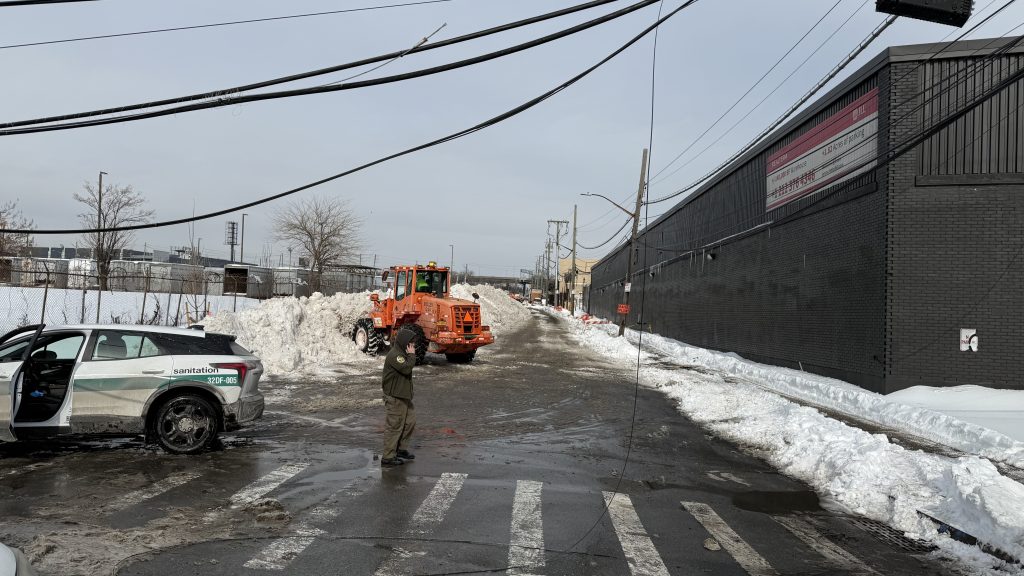
While snowfall tapered off early in the week, frigid temperatures lingered, raising concerns about icy roads and sidewalks. Warming centers remained open across the region as officials warned of dangerously cold wind chills.

Meteorologists said the storm was one for the history books, ranking among the most impactful winter weather events the New York City area has experienced in recent years, and forecasters are already monitoring the potential for another winter system in the days ahead.

More Photos Around Queens: 

Fill the Form for Events, Advertisement or Business Listing