
New York City Marathon Becomes World’s Largest Marathon Ever with 59,000+ Finishers

For the second year in a row, the 2025 New York City Marathon broke the global record for the largest marathon ever, with 59,226 finishers on Sunday, November 2. The TCS New York City Marathon, held on the first Sunday of November, attracts over 50,000 runners, including the world’s greatest professional athletes as well as runners of all experience levels, ages, genders, talents, and backgrounds. It seemed all of NYC took to the streets early Sunday afternoon to cheer on, offer fist bumps and hug the thousands of marathoners as they sweated their way through the different legs of the race.

The runners were sturdy and cheerful, spanning all ages and speeds. But it was the spectators who stole the show, waving signs that spanned the political to the risqué, sipping pumpkin IPAs and generally taking advantage of the unseasonably warm November Sunday as an excuse to day drink while showing up for their more athletic friends and family members.

Near Lafayette Street and St. James Place, a woman carrying a sign that read “Run like you’re escaping the Louvre Heist” dangled a pretzel in front of runners in what appeared to be a taunt. Across the street, a sign with a different kind of taunt: “Did you turn your stove off?”

Whether the taunts effectively boosted the runners’ speed is hard to say, though the sign carriers were a spectacle in their own right. Anyone wondering what’s generally on the minds of city residents in late 2025 need look no further than the marathon route. References to the Paris Louvre Heist of last month were abundant. As was AI— running is a sport not easily infiltrated by machines, as New Yorkers were eager to point out. “Keep Running. AI Ain’t Taking This Job,” read one sign. “AI could NEVER!!” read another. Election day is Tuesday and by the looks of it voter turnout will be high. Mamdani canvassers seized the moment’s  good vibes to ensure their candidate’s win, handing out voting info and carrying near-life-size cutouts of the assemblyman. Cuomo could be found elsewhere: “Run like Cuomo is behind you,” one sign read. Another, inexplicably, displayed the word “Poop!”

The cheering was not limited to friends and family members. Near Lafayette and St. James Place, Clinton Hill’s beanie-clad millennials rang cowbells and doled out high-fives and “Let’s go ya’ll”s to each and every passing marathoner. One group looked at each passing runner’s name tag to give personalized pep talks.

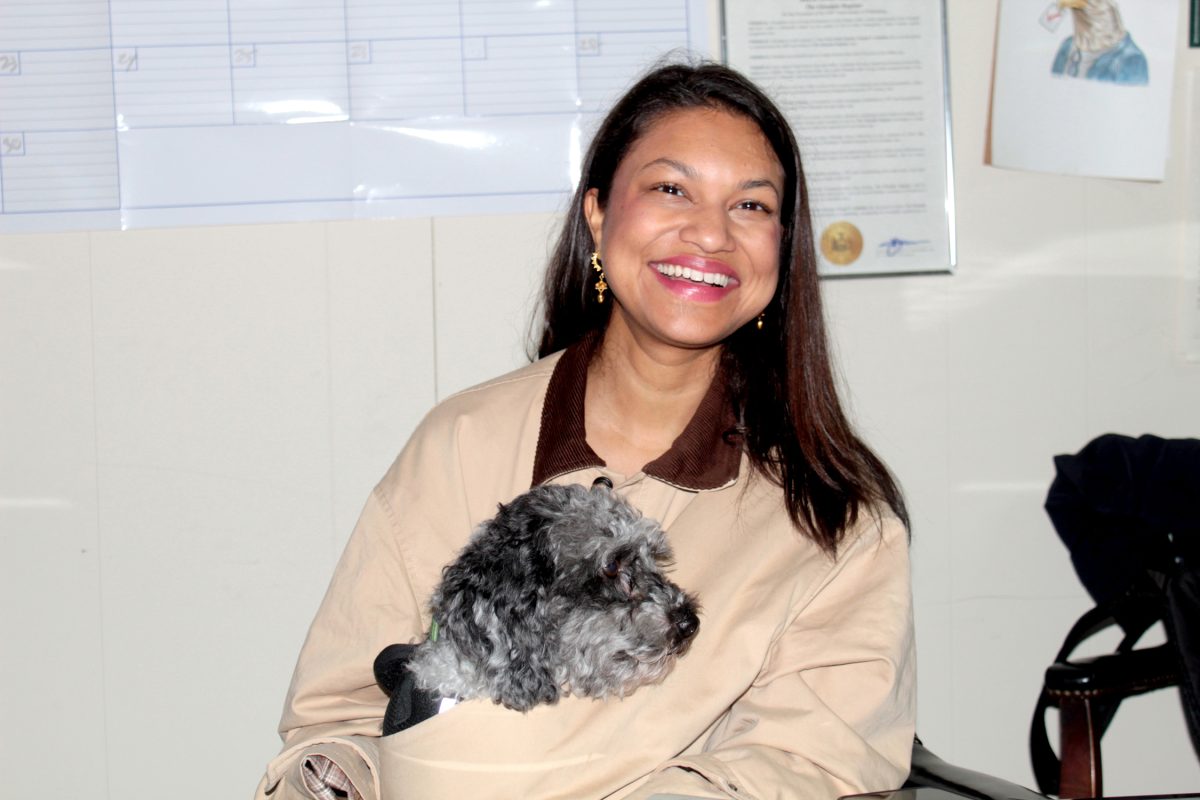
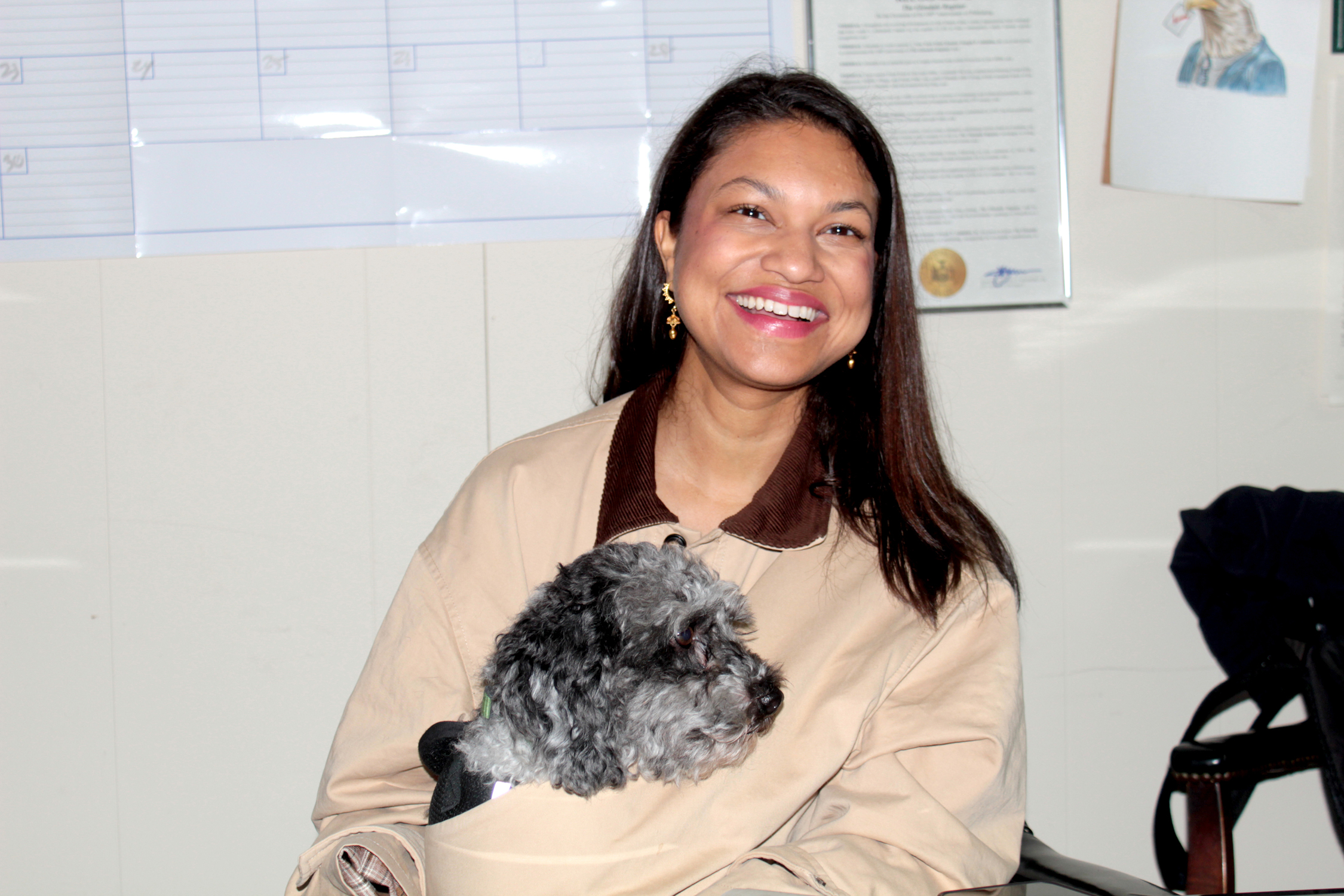
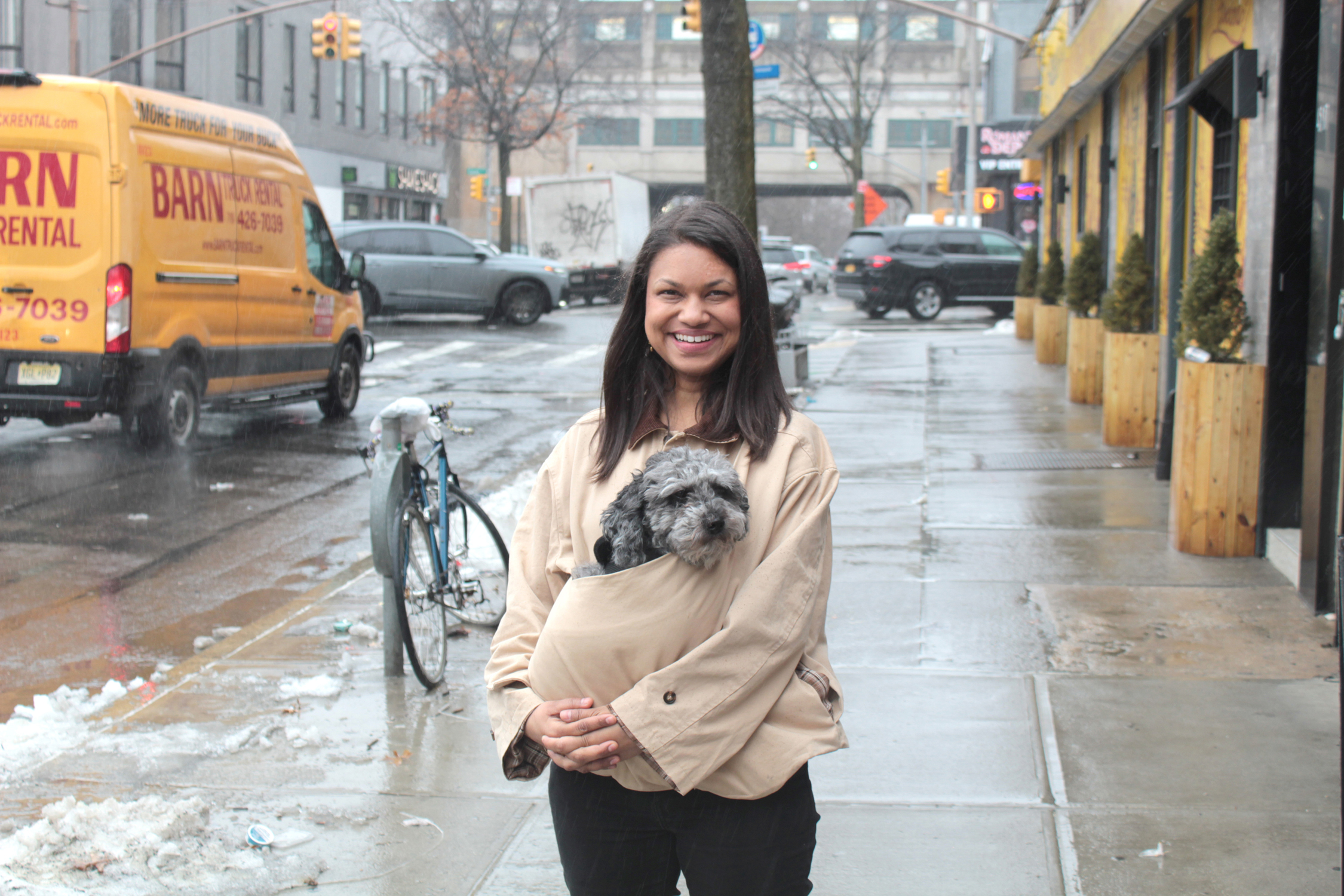
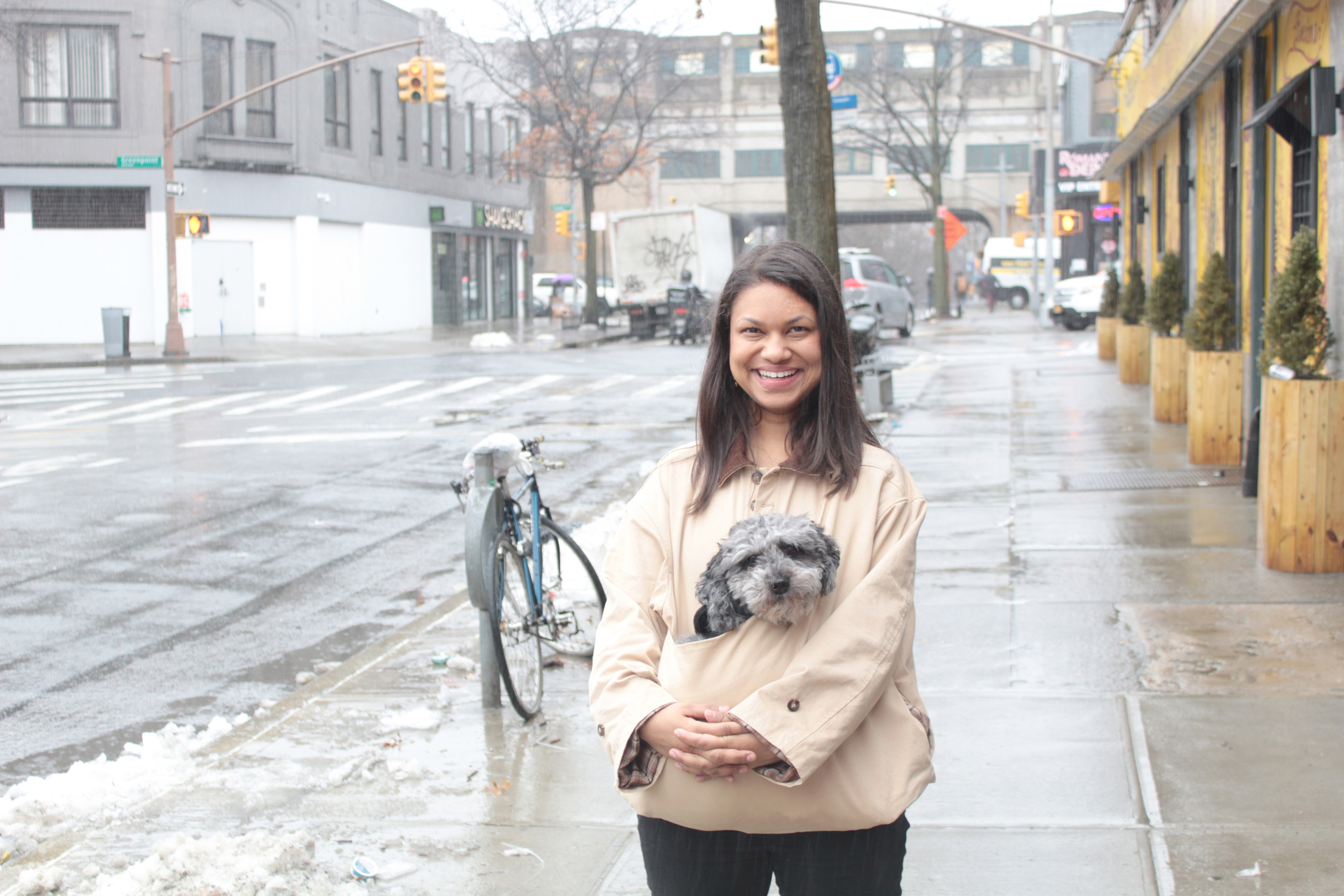
The only one not enjoying herself was Sunny, a small terrier cowering from the noise in a young woman’s arms. “She hates it here,” the owner said.

A Coming Fight for the Soul of the Democratic Party

Robert Hornak

Robert Hornak is a veteran political consultant who has previously served as the Deputy Director of the Republican Assembly Leader’s NYC office and as Executive Director of the Queens Republican Party. He can be reached at rahornak@gmail. com and @roberthornak on X.

Tuesday was election day, but when you read this we should al- ready know who the next mayor will be. According to all the polls, that will be Zohran Mamdani.

Mamdani’s win will be due to his running the best campaign in this contest, with energy and a positive message. And while you can argue with his message on many levels, and I surely have, he had the only positive message in the race and that appeals more to people than just attacking the other candidates.

But win or lose, Mamdani’s unarguable success this year in coming from nowhere to become the Democrats primary winner over a former governor with a famous last name, poses many challenges for the Democratic Party.

Yes, it signals a changing of the guard for the party, but it also signals a potentially new direction for them, and that direction may not be one that many traditional democrats can accept. While generation- al shifts are inevitable, directional ones don’t happen without a big fight.

Mamdani is highly controversial, like AOC before him but much more so. As mayor of the biggest and most dynamic city in the country, he will be able to wield power like no other in his party. And he strongly represents the direction the Democratic Party has been slowly moving in, an anti-American and western values, and strongly pro-Palestinian and anti-Israel direction that makes many in his own party uncomfortable.

So much so that many major figures in the Democratic Party refused to endorse him, including most of NYC’s congressional delegation, the Queens Democratic Party, and major figures in the par- ty including Chuck Schumer and Barack Obama.

However, Mamdani’s success goes well beyond just his campaign, he has built a machine that the far left in the party tried to create through the Working Families Party but have not seen anywhere near the success that that the Socialist movement has had. Where the WFP was able to influence the Democratic Party to a small degree, the DSA has infiltrated and is taking over the Party in NY.

And there lies the problem, many Democrats do not hold the sentiments that Mamdani and his movement strongly believe in. And the movement they are building is not looking to peacefully coexist with the old guard.

They are already promising to primary a number of local elected Democrats next year and there are likely many more to come. And many moderate elected Democrats are in fear of the power of this radi- cal movement and their ability to mobilize younger voters and focus them on the races they can win.

As the Democratic Party is pushed to be more anti-Israel, many Jews and those who support Israel and our shared western values will be pushed out of power in the Party and possibly out of the Party altogether. Will this lead to most joining the Republican Party, becoming Independents and a swing voting bloc, or possibly starting a new par- ty remains to be seen.

Yes, the Republicans have had their internal conflicts as well, and are dealing with another one now with the likes of Tucker Carlson and a few influencers who harbor their own antisemitic views. But they are being quickly marginalized by republicans who are over- whelmingly pro-Israel and are not willing to accept people like Nick Fuentes into the party just like they pushed out David Duke, the former KKK Grand Wizard who switched from Democrat to Republican a few years earlier, in his 1981 run for governor of Louisiana.

This appears to be an existential crisis for the Democrats and will determine not only what direction the party will go in, but what it’s most basic and core values will be and what kind of country they will work toward. This goes way beyond the typical conflicts over spending priorities, fights over the debt, or any specific policy. This appears to be heading toward a divide between those who love America and what it currently stands for and those who don’t and want to radically change it into something very, very different.

Back at Barclays: Nets Attempt Daring Comeback vs Cavs

By Noah Zimmerman

noah@queensledger.com

The Brooklyn Nets staged a wild and improbable comeback in their home opener against the Cavaliers last Friday night at the Barclays Center. After trailing Cleveland by as much as 25 points in the second half, Brooklyn powered their way within a single point before their late run ultimately came up short.

It’s been a lackluster start to the season for a team most expect to be among the league’s bottomdwellers. Despite the low bar the Nets have put up impressive fights against solid teams, showing their capability to hang with playoff teams like Cleveland and San Antonio.

It’s clear that the focus and priority this season is on development and asset management, especially with the NBA record recently set with five first round selections in the 2025 draft. Of those five rookies, the two with significant minutes so far have been 8th overall pick Egor Dëmin and #26 overall Ben Saraf.

In the season opener Dëmin scored his first 14 points in NBA action. The Moscow-born BYU product showed potential as a scorer and playmaker, tied for the team lead with 5 assists in the losing effort in Charlotte. He was one of six Nets in double figures against the Hornets.

During Friday’s game at the Barclays Center it was a slow start for Brooklyn. A seasoned playoff team in Cleveland outscored the hosts in the first three quarters, led by star guard Donovan Mitchell, Sam Merrill, and former Net Jarrett Allen. The Cavs defense also gave Brooklyn fits, seemingly getting their hands on the ball in each defensive possession.

At its worst, the Nets saw their deficit grow to 25, but even in the face of adversity they battled back in the final frame.

Leading the charge for Brooklyn were new acquisition Michael Porter Jr., third year scoring sensation Cam Thomas, and Ziaire Williams, each finishing with at least 25 points.

To cap the run, Dëmin knocked down a clutch three, making it a 1-point game and sending the home crowd into a frenzy. The rookie showed great composure and his shooting skill will be paramount in his development.

“[Egor’s] a great player and an even better human. I’m really glad we added him to the team,” commented Williams postgame. “I’m excited to see his future and work with him.”

While Dëmin only scored three points the following game in San Antonio and missed Monday’s game in Houston, the rest of the Nets stepped up to be competitive despite losses. Thomas recorded his first 40-point game of the season against the Spurs, the 10th of his career. He battled Victor Wembanyama who scored 31 in the 118-107 victory as San Antonio recorded their third win in the first three games.

After Monday the Nets sat at 0-4, the lowest mark in the league. It’s going to be a long and difficult season in Brooklyn, but still one worth watching as long as the Nets can continue their development and competitive play.

Bowl Bites 5K Raises $5,000 for Breast Cancer Awareness Month

In honor of Breast Cancer Awareness Month, BowlBites hosted its fourth Run & Refresh community 5K run on the evening of Thursday, October 23, bringing together nearly 100 runners for a spirited, community-paced run through the scenic trails of Forest Park.

Watch the recap video here.

Thanks to the incredible generosity of Bowl Bites’ tight knit community and support from sponsors Zara Realty—a philanthropic real estate group known for its commitment to local causes—and Heroes Basketball, a staple youth and men’s basketball league in Queens, the BowlBites team successfully raised $5,000 to fund care packages for cancer patients.

“This run was about more than just fitness—it was about coming together as a community to make a difference,” said Kevin Baksh, co-owner of BowlBites. “Seeing so many people show up, donate, and support the cause reminds us why we started these runs in the first place.”

The BowlBites 5K Run Club has quickly grown into one of Queens’ most positive and inclusive community movements. Over the past year, the brand has collaborated with Nike and welcomed appearances from high-profile musicians and Division I athletes, building a loyal network of runners and supporters who believe in the power of food, fitness, and community impact.

“This was our fourth run, and every time, the energy gets bigger,” said Amir Aldoais, co-owner. “It’s not about speed—it’s about showing up and standing together for something meaningful.”

After the run, the group gathered back at BowlBites to cool down, refuel, and share in the spirit of community. The evening concluded with heartfelt words from cancer survivor Mike Troll, who grew up in the neighborhood and spoke about the importance of unity, compassion, and supporting one another through life’s challenges. His message resonated deeply with the crowd, reinforcing the sense of purpose behind the event.

The BowlBites team is personally assembling and delivering care packages to cancer patients at a local Queens hospital—a heartfelt continuation of their mission to give back.

Chef Mike Saroop, who leads the BowlBites kitchen, added, “We serve food that fuels people every day. This was our way of fueling hope—one step, one bowl, and one care package at a time.”

“Zara Realty and Heroes Basketball have been incredible partners. Their generosity and leadership helped turn this into something truly impactful,” added co-owner Esteban Acosta expressed gratitude for the sponsors and community.

Watch the sponsor tribute video here.

To follow the story and see the delivery in action, visit @bowlbitesnyc on Instagram.

Hallowe’en in The Golden Age of Postcards: Reviving Spooky Deltiology Treasures

By Michael Perlman

Pumpkins, black cats, witches, ghosts, scarecrows, and gourds are coming alive in unique ways, if one is fortunate enough to pick up an early twentieth-century Halloween postcard. Halloween was traditionally spelled “Hallowe’en” and originated from “All Hallows’ Evening” in Old English. It was customary to mail a highly stylized Hallowe’en postcard, which consisted of fine illustrations, themes ranging from horror to humor and romance to fortune-telling, calligraphy, poetry, Victorian and Art Nouveau designs, and embossed features.

From 1900 to 1930, it is estimated that over 3,000 Halloween postcard designs were produced, resulting from the success of publishing companies collaborating with fine artists. As the trade migrated into the 1920s, young adults were not depicted as frequently in postcards, since the holiday shifted toward a celebration for children.

In 1873, the first American “picture postcard” was produced. A significant number of postcards from the late 19th and early to mid-20th century surprisingly exist in a good to excellent state, with fine penmanship and one-cent and two-cent stamps. Today it is essential to preserve postcards in albums with transparent double-sided archival-safe pages.

Deltiology is the collection and study of postcards, which derives from “deltion,” a Greek term for a writing tablet or letter. A postcard collector is a deltiologist. Several decades ago, postcards could be found at a corner pharmacy, but today, vintage postcards are found on eBay, at estate sales and postcard shows, or perhaps in a dusty box in your attic, left behind by an earlier homeowner. Nearly every theme was represented, including holidays, hometowns, and hobbies.

The majority of postcards were published between 1898 and 1918, with those from the 1920s and 1930s in fewer quantities. Today, all are considered to be collectible works of art and range from a few dollars to over one hundred dollars, depending on their artistry, publisher, and rarity. It is estimated that by 1913, nearly one billion postcards were mailed in America.

Turning back the hands of time, one can discover publishers and artists who were largely responsible for the reality of artistic Halloween postcards. John Winsch (1865 – 1923) of Stapleton, New York was co-manager of Art Lithographic Publishing Company. He copyrighted his artist-signed greeting cards, where many were published in sets, and produced approximately 4,000 designs between 1910 and 1915. He was highly recognized for Halloween and Thanksgiving postcards. He also used European artists, who worked with his German printers. Winsch postcards, with their poetry, sometimes evoke Edwardian romanticism, even on Halloween.

Schmucker girl on Halloween by John Winsch, 1912.

Samuel Loren Schmucker (1879 – 1921) was a prestigious artist that is often associated with John Winsch postcards. Graceful and brightly depicted women were a highlight. Despite contracting polio as a child, he persevered. He pursued his studies in drawing at the Pennsylvania Academy of the Fine Arts in Philadelphia, followed by still life paintings from 1898-99. He was also a student under American artist and teacher Howard Pyle, who shaped the careers of the most significant early 20th century artists. It is stated that Schmucker merged Art Nouveau influences with the rich colors of Pre-Raphaelite artists.

Born in South Columbia, New York, Ellen Hattie Clapsaddle (1865 – 1934) would be recognized as a significant illustrator and commercial artist, and is regarded as a most prolific postcard and greeting card artist of her time. She was the great-granddaughter of Major Dennis Clapsaddle, a Revolutionary War hero. During the golden age of souvenir postcards, from 1898 to 1915, artistic designs were highly prized, and she is credited with over 3,000 designs. Her themes spotlight Halloween, Valentine’s Day, Christmas, and international children. Her residences included Manhattan’s Prince George Hotel and 125 East 30th Street. She designed postcards for International Art Publishing Company, Wolf Publishing Company, and Raphael Tuck & Sons.

The mirror says it all–Postcard by famed artist Ellen Clapsaddle Painting only copyrighted by S Garre,1909.

Fred C. Lounsbury of Plainfield, New Jersey and president of Crescent Embossing Company, was well regarded for his optimal quality greeting cards and postcards. His 1907 copyrighted postcard captures a Halloween superstition. A young woman in a florid gown visualizes going to a ball, as she holds a candle in her hand to faithfully light the way to her intended. Her future husband appears as she gazes into a floor mirror. The scene is complemented by a jack o’lantern, elegant gilding and Old English typography, and seasonal themes such as corn, a black cat, and a bat.

Born in Buffalo, New York, Bernhardt Wall (1872 – 1956) was nicknamed “Postcard King,” who designed over 5,000 postcards. He was a historian, noted for his lithography, portraits, and illustration. His etchings included cultural and political leaders, such as Abraham Lincoln. His passion for art originated in his early years, and would soon study under James Francis Bacon, William Auerbach-Levy, and Henry Reuterdahl. Along with his wife, artist Jennie Hunter, he had a residence and studio at 1947 Broadway.

Postcards by Raphael Tuck & Sons often feature traditional colors, texture, and brilliantly captured emotions, and are among the most desirable. This firm was founded in London by Raphael Tuck (1821 – 1900) and operated from 1866 to 1959. Other locations included Paris, Berlin, Montreal, and 298 Broadway and 122 – 124 Fifth Avenue. In 1894, his son, Adolph Tuck, created their first picture postcard. This prominent publisher was considered “Art publishers to their majesties the king and queen,” as noted on the reverse of their postcards, since Queen Victoria granted them the Royal Warrant of Appointment in 1883.

The E. Nash Co. was also a well-respected publisher of high quality holiday postcards and mechanical postcards, and based in Manhattan.

A heavily embossed Halloween postcard with gold leaf captures the tradition of children bobbing for apples, and was copyrighted by printer and publishing firm L.R. Conwell of 120 West 32nd Street. It was noted on the reverse as number 248 in the series. Besides Halloween postcards, their focus included romance, Decoration Day, Fourth of July, graduation, and Christmas themes.

The Geo. C. Whitney Company’s principal was George Clarkson Whitney (1842 – 1915), whose motto was “Industry, punctuality and Christianity.” His firm became a notable publisher of postcard greetings and holiday cards on specialty papers, and especially included Valentine’s Day and Halloween postcards. His son Warren and grandson George later assumed the operations, but as of 1942, the firm shuttered.

The lithographic firm of Gottschalk, Dreyfuss & Davis consisted of Benjamin Gottschalk, Julius Dreyfuss, and Alfred Davis, and conducted business at 45 East 20th Street in Manhattan, along with offices in London and Munich. Hand-colored collotypes were printed in Germany. Many of their Halloween postcards feature human-like jack o’lanterns, such as in the case of the fairytale themed serenade at night, accompanied by a gold embossed motif border. The firm was largely active between 1909 and 1914.

Serenading pumpkins by Gottschalk Dreyfuss Davis circa 1910.

It is not a daily occurrence when you encounter a witch dancing alongside anthropomorphic jack o’lanterns, as a black cat is eager to join in. This unique embossed postcard was produced by publisher Julius Bien & Company of 12 West 19th Street, and is listed as part of the 980 Series, No. 9805, and is circa 1909. The firm existed from 1850 to circa 1915, and was noted for highly illustrated postcards, often offering a whimsical feel, and reflecting holiday, religious, comic, and patriotic themes. Artist and lithographer Julius Bien immigrated from Germany in 1849 and pursued his passion with one lithographic hand press. He was a member of scientific societies and received medals and diplomas from expositions including the 1876 Centennial Exposition in Philadelphia. As of 1889, he became the National Lithographers Association president, and would become well-known as a large manufacturer of postcards.

“NYC Is Not for Sale”: Mamdani Rally Draws 13,000 in Queens

Faraz Ansari / @fkaphoto

Mayoral Rally Sends Message: New York Belongs to Its People

MOHAMED FARGHALY

mfarghaly@queensledger.com

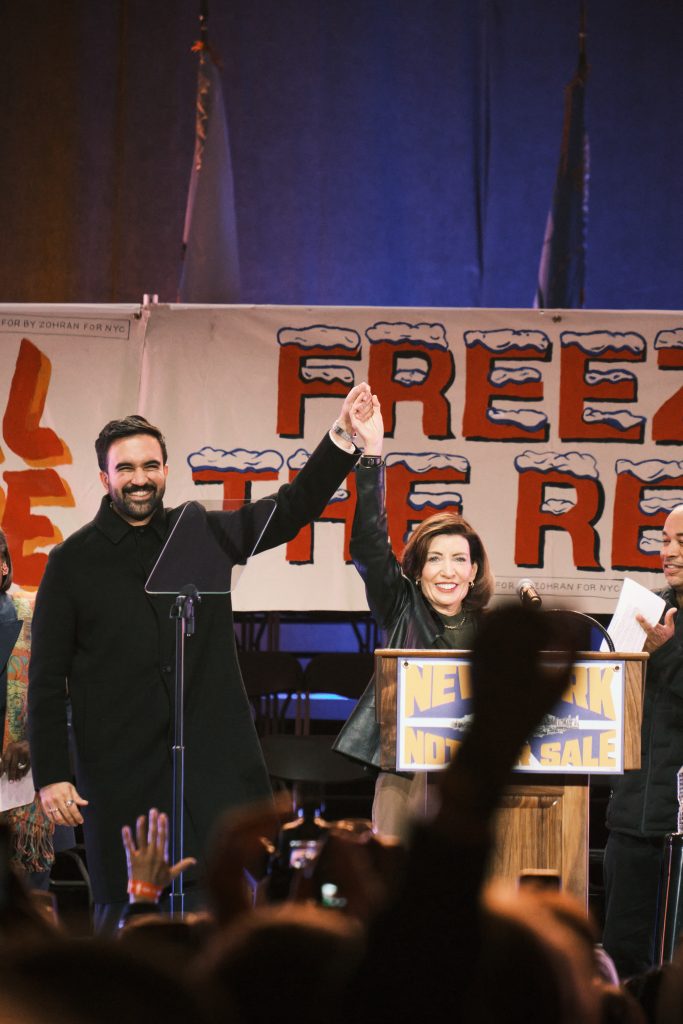
“New York is not for sale,” Democratic mayoral nominee Zohran Mamdani declared to a roaring crowd at Forest Hills Stadium on October 27, capping a weekend of early voting with a rally that drew an estimated 13,000 supporters. The Queens lawmaker headlined the event alongside U.S. Sen. Bernie Sanders and U.S. Rep. Alexandria Ocasio-Cortez, emphasizing a platform of free buses, universal childcare, and a citywide rent freeze. With Election Day less than a week away, Mamdani called on volunteers to sustain the grassroots energy that has defined his campaign. Over three hours, political, labor, and religious leaders rallied behind Mamdani’s message of economic justice and working-class power.

Union and socialist leaders opened the event, linking their workplace struggles to Mamdani’s platform. A longtime 32BJ member highlighted years of fighting under-resourced public institutions and praised the union’s support for Mamdani’s vision of a “people’s university.” Security officer Clarissa Baines drew attention to poverty wages, noting that the city’s low-wage security officers earn an average of $40,000 a year. Healthcare and education workers emphasized similar challenges, with one noting that the affordability crisis is harming patients and another praising Mamdani’s plan for a Department of Community Safety, highlighting the need for alternatives to traditional policing in mental health emergencies.

Other unions expressed concerns for fairness and dignity in their workplaces. Leaders warned of executives cutting hours for educators to protect their own power, denounced corporate greed, and called for a mayor who would take on entrenched economic interests. SEIU President April Verrett closed the segment with a call to action, emphasizing that Mamdani “knows how to fight, and he doesn’t just fight, he wins.”

State Senator Julia Salazar and Assembly Member Claire Valdez positioned Mamdani within the city’s growing socialist movement. Valdez declared, “They think if they can set enough money on fire, they’ll win—but we know the truth that New York is not for sale.”

New York City Comptroller and former mayoral candidate Brad Lander then addressed the crowd with humor and conviction, introducing himself as “your second choice in the primary” before giving full-throated support for Mamdani. Lander praised the coalition Mamdani is building, calling it proof that politics can be “a team sport for building the New York of our dreams.” He contrasted Mamdani’s grassroots approach with the “sour, selfish ego trip of Cuomo or Adams or Trump,” drawing cheers when he said, “We had to send that corrupt, abusive bully, Andrew Cuomo back to the suburbs.”

Lander also spoke directly to Jewish and Muslim New Yorkers, condemning Islamophobia and political exploitation of religious divisions. “Jews and Muslims will not be divided against each other,” he said. “Our safety, our freedom, our thriving, is bound up together.” Linking that to global justice, he asserted, “Israelis will not be free and safe until Palestinians are free and safe,” demanding “the end to the genocide in Gaza.” Lander recalled his arrest during immigration protests and credited Mamdani as “the first mayoral candidate to show up and demand my release,” before rallying the crowd: “It’s not Donald Trump versus Zohran Mamdani—it’s Donald Trump versus New York City… elect Mayor Zohran Mamdani to build the New York of our dreams.”

Governor Kathy Hochul followed, tying Mamdani’s campaign to a broader fight against Republican extremism. “Tonight, we are here for one reason… Do you want to elect Mamdani as the next mayor of New York?” she asked. Hochul warned that Donald Trump and Republicans were “taking a wrecking ball to our very values, our people, and our progress,” citing cuts to “food assistance for babies,” “money for seniors,” and “health care for New Yorkers.” She condemned their attacks on reproductive rights, unions, and immigrants, calling out “ICE agents flooding our streets… terrorizing innocent people.” Hochul concluded with a call to ongoing political engagement: “Take that energy, that passion, and take it into 2026 so that we can take back the House of Representatives, take the Senate, and take back our country.”

Rep. Alexandria Ocasio-Cortez returned to her home borough to thunderous applause, framing the mayoral race as part of a larger fight for democracy. “It is so good to be home… in Queens, New York, the world borough, the jewel of America,” she said. “We are a working people’s borough in a working people’s city, and all of that makes us a fascist’s worst nightmare.” Ocasio-Cortez warned that Mamdani faces national-level authoritarian threats, citing “an authoritarian, criminal presidency… and an eroded bygone political establishment.” She targeted former Gov. Cuomo directly: his “pursuit of power has blinded [him] from what that power is supposed to be used for… to aid and put the working people of America and New York City first.”

Ocasio-Cortez framed Mamdani’s campaign as a rebuke to the billionaire class, declaring, “Their greatest fear is an equitable, affordable and prosperous city for all.” She called for moral courage and solidarity: “We are not the crazy ones, New York City… it is not radical to demand affordable housing, a decent wage, the right to health care… it is basic and core humanity.” She invoked Mamdani’s platform of “child care, buses, rent and our rights” as an embodiment of that humanity, urging voters to “send a loud message to President Donald Trump that his authoritarianism is no good here.”

Vermont Sen. Bernie Sanders addressed the crowd with global stakes, framing the NYC mayoral race as a test of working-class power. “This is not a normal election,” Sanders said. “It takes place in a moment when we have a rigged economy with more income and wealth inequality than we have ever had in the history of our country.” He asked a central question: “Is it possible for ordinary people, for working-class people, to come together and defeat those oligarchs? You’re damn right we can.” Sanders criticized tax breaks for corporations and the wealthy under the Trump administration and said a Mamdani victory would signal that “this country belongs to us, not them.”

Defending policies critics call radical, Sanders outlined Mamdani’s agenda: rent freezes, expanded affordable housing, universal childcare, and free public transportation. “These ideas are not radical,” he said. “They are common sense and they are what the people of New York City want and need.” Sanders, a former mayor of Burlington, Vermont, noted the challenges of local governance but urged sustained engagement beyond election night: “When he is elected, your job is not over… Do everything you can to make him and his administration the best in the history of New York.” He closed with a warning not to be complacent: “Forget about the polls… None of us want to wake up the day after the election and find that we lost because our opponents outworked us.”

Mamdani concluded the rally by emphasizing the power of grassroots organizing and the inclusivity of his campaign. He recalled leading a hunger strike with Ocasio-Cortez in 2021 that won $450 million in debt relief for taxi drivers. “She was there with us on the picket line, on the phone after everyone else had gone home, and again in the primary of this election,” he said.

Highlighting the movement’s rapid growth, Mamdani said, “So many small donors chipped in that we had to ask you to stop donating. People started to learn how to pronounce my name,” he joked, drawing laughter, “and the billionaires got scared.” He called out Islamophobia and big-money efforts to label his campaign as radical. “Time and again, they have encouraged you to imagine less because they know a reimagined New York hurts their bottom line. We deserve a city government as ambitious as the working New Yorkers who make it the greatest city in the world,” he said.

He outlined his policy priorities for affordability and dignity: “We are going to freeze the rent for more than 2 million rent-stabilized tenants, build housing for everyone who needs it, eliminate the fare on every single bus line, and create universal childcare at no cost to parents.” Closing with a call to action, Mamdani urged supporters to continue mobilizing in the final days before Election Day. “If you have knocked a door, turn your flashlight on. If you have more to give, turn your flashlight on. Together, let us make a light bright enough to banish any darkness over these final nine days and the months and years that follow… On November 4, we set ourselves free.”

As he closed the evening, flanked by Sanders and Ocasio-Cortez, the three raised their arms in solidarity, symbolizing a united front for what Mamdani described as a movement for New Yorkers rather than billionaires.

Veteran Lawyer Susan Silverman Runs for Queens Civil Court

Silverman Brings 40 Years of Legal Experience to Bench Bid

MOHAMED FARGHALY

mfarghaly@queensledger.com

A lifelong Queens resident, Silverman grew up in Bayside, attending PS 154, PS 159, IS 25 and Bayside High School. After completing her undergraduate studies in psychology at the State University of New York at Binghamton in three years, she pursued a law degree at St. John’s University School of Law, following in her father’s footsteps. Since passing the bar in 1987, she has worked primarily in criminal defense, as well as in real estate, and family law including divorce and separation.

Silverman’s campaign for civil court judge is her first run for public office. She is running on the Republican and Conservative lines but emphasizes that political affiliation should not influence voters’ decisions. “I don’t think a judge should be politically based at all,” Silverman said. “A judge has to be impartial, fair, and unbiased, applying the law to the facts. I feel like  party lines should not be relevant for voters. I want people to vote because of me and what I can do for the county as a sitting judge.”

Throughout her career, Silverman has observed the court system closely, identifying both its strengths and weaknesses. “Having been in the courts all these years, I see what works and doesn’t work,” she said. She noted inefficiencies in scheduling and clerical processes that can slow the pace of justice, comparing the current system to outdated methods such as signing in on a clipboard. “Judges use screens in trial to reduce the reliance on passing around papers, but the overall experience of going to court is still clunky and drawn out. We need rapid justice, versus the wheels of justice just turning slowly.”

For Silverman, the most essential quality of a judge is the ability to listen. “A judge needs to listen to both sides. How do you find out who’s telling the truth? I want to get it right,” she said. Her approach is rooted in years of practice and observation, including interactions with colleagues, prosecutors, and judges throughout Queens County.

Silverman also highlighted her work with the supervised release program, which is equivalent to “pre-sentence probation”, which provides alternatives to cash bail for defendants who are reliable and pose no threat to public safety. She described the role of these programs in creating a more equitable system for defendants who cannot afford bail. “It’s just to secure they come back.  As a judge, I will use my extensive experience to assist me in deciphering who is reliable,” she said.

Her perspective on the evolution of law and justice is informed by her decades-long career. “A lawyer can’t know every statute. You have a book and you can look it up. Your understanding of how to apply the law to the facts, that’s what matters. Judges can be appealed, so you have to get it right,” she said. She described her own professional growth in understanding how to apply statutes fairly, balancing the rights of defendants with the demands of justice.

Silverman discussed her views on judicial efficiency. She suggested that court procedures could benefit from better scheduling and transparency, similar to how the Department of Motor Vehicles manages appointments. “If a judge knows that certain cases will be adjourned, they should knock out all the easy adjournments in the first half hour of the day. Attorneys should be able to see when their case is coming up so they can plan accordingly,” she said.

Despite the challenges she has observed in the legal system, Silverman remains optimistic about programs aimed at addressing social issues underlying criminal behavior. “There are many programs available — drug programs, mental health programs, veterans courts — but they don’t always work because people have serious issues. It’s a positive development, and I see the value in trying to provide alternatives to incarceration whenever possible,” she said.

Silverman describes her professional identity as one grounded in law, not politics. “I will do my best to make the right decision. I will be impartial, fair, and treat everyone the same. My goal is that people will receive a fair shake,” she said. Her approach is characterized by availability and responsiveness; colleagues describe her as someone who is always willing to help and cover cases when needed.

Her work has left lasting impressions on her, particularly cases where the right outcome was not immediately clear. Silverman has experience as an arbitrator in different forums including Queens Small Claims Court. She recounted cases where she wrestled with evaluating the truthfulness of parties and balancing the needs of justice with fairness. “Even after I walked away, I asked myself, ‘Did I do the right thing?’ That effort to get it right, that’s what matters,” she said.

As she campaigns across Queens County, Silverman continues to connect with voters at supermarkets, civic association meetings, and other community gatherings. She hopes to convey her decades of experience, her commitment to fairness, and her deep understanding of the local legal system. “People who meet me, they listen and they’re excited to connect. I want voters to choose me for what I can do for the county, not for my party line,” she said.

With nearly 40 years in law and a career rooted in service and fairness, Susan Silverman presents herself as a candidate focused on thoughtful, impartial justice for all residents of Queens County.

The Graves of Calvary Cemetery

In the shadow of the Kosciuszko Bridge, you’ll find more than greenspace and fun times—just across Newtown Creek, in Queens County, is the largest cemetery in New York City: Old Calvary Cemetery. More dead people than living people can be found in the city’s most populous borough; Calvary alone has nearly three million burials.

Calvary Cemetery has its own rich and fascinating backstory, tied firmly to the history of New York City’s impoverished Italian, Irish and German immigrants. Its age makes it a glorious showcase of some of the most beautifully carved tombstones and mausolea to be found in the state, alongside its large number of celebrities and notables interred there. Most interestingly, Google Maps doesn’t appear to know it exists.

In the words of local Newtown Creek historian Mitch Waxman, the tale of Old Calvary is one of perpetual change. When it was opened, most of the city skyline was comprised of tenements, church steeples, and the occasional courthouse dome; by the time it was filled, the Empire State Building was being built. The practice in the early 19th century was to bury the dead of Manhattan in local church graveyards, or even in the dirt floor of the basement of the deceased’s house. After a series of cholera outbreaks, the city began doubting the wisdom of this practice and mandated the creation of a series of rural cemeteries, “out in the country,” in Mr. Waxman’s words, which at the time meant Queens County.

Under the leadership of Archbishop John “Dagger John” Hughes, an old and venerable Dutch homestead called the Alsop farm in Queens was bought for the construction of Calvary Cemetery. An army of Irish laborers descended on site in 1845 and proceeded to level the ground, landscape the terrain, and install a vast sewer system draining into Newtown Creek. By July 1848 the cemetery was ready to receive its first burial, a washerwoman named Esther Ennis, who died, Mr. Waxman says, “Of a broken heart.” The following month, the site was officially consecrated by His Excellency. The graveyard takes its name from Mount Calvary, also known as Golgotha, the place of the skull, where Christ was crucified and where legend says Adam’s skull is buried. Millions of Catholic Italians, Germans, Irish and other ethnicities would be buried there in the coming years.

Numerous Catholic Civil War dead were interred in Calvary. In 1863, the city bought part of Calvary from the Archdiocese of New York for the construction of a monument honoring Civil War soldiers, later finished in 1866. Only a year later, the cemetery was filled. The archdiocese bought more land and expanded, forming Second, Third and Fourth Calvary Cemetery several blocks east of Calvary Cemetery, now called Old or First Calvary.

Over the years, many of the stones appear to have melted, and numerous statues of the Virgin, angels, and the Christ Child appear to have been warped. A copper refining plant once sat across Newtown Creek in Greenpoint, spewing fumes across the water that induced decay in the statues. The archdiocese ultimately sued the refining plant and won a case against them in the early 20th century. Today, Calvary is one of the most prestigious cemeteries in the city, with burials continuing in the other three sections.

Calvary contains the costliest real estate in Queens; one plot in Calvary can reportedly cost as much as $600,000. Some of the city’s most notable citizens rest in Old Calvary, among them Patrick Jerome “Battle-Axe” Gleason, the last mayor of Long Island City; three Robert F. Wagners of political fame; Steve Brodie, who supposedly jumped from the Brooklyn Bridge and survived; and many now-forgotten Tammany Hall bosses. Numerous other gangsters are buried in Calvary as well, such as the Artichoke King, Lupo the Wolf, Sonny Black, the Clutch Hand, and Joe Diamond.

Joe Masseria, the former head of the Genovese crime family whose death led to the formation of the Five Families, is also buried in Calvary. Fresh flowers are always placed on his grave; the identity of his mysterious mourner is unknown. Anthony Arillotta, former Genovese family capo, asked around but was unable to find any information right away. “The only thing I can offer is that it would be Joe’s family putting the flowers there,” Mr. Arillotta said. “No Mafia family would participate in that.”

Aside from the stones and mausolea, St. Calixtus’s Chapel sits on Old Calvary’s grounds. The chapel has a large mausoleum underneath for the interment of religious sisters and brothers, nuns, and priests, which was recently rediscovered through the efforts of Mr. Waxman. Mr. Waxman is the former Newtown Creek Alliance’s group historian (among his numerous other titles) and provided most of the historical background for this article.

St. Calixtus’s takes its name from Pope Saint Calixtus, patron saint of cemetery workers. Prior to becoming bishop of Rome, Calixtus founded and maintained a cemetery that later bore his name on Rome’s outskirts. He ultimately became pope around A.D. 218 and served for four years before he was lynched by a Roman mob around A.D. 222.

Among the cemetery’s most notable living inhabitants are red-tailed hawks, as well as flocks of migrating birds, which take advantage of the greenspace several times a year. The Audubon Society makes occasional forays into the graveyard to quantify and observe said birds. Coneys, the type of rabbit Coney Island takes its name from, are also frequently seen. Even in this place of death, life finds a way to thrive.

If you’re trying to get to Old Calvary Cemetery, don’t use Google Maps. Searching “Calvary Cemetery” directs you to Second Calvary Cemetery, the more modern addition, bordered by Third and Fourth Calvary Cemeteries. Old Calvary Cemetery is on Greenpoint Avenue and can be reached by taking the B24 to the Greenpoint Ave/Gale Av stop, right by the main gates. Another entrance is located at Laurel Hill Boulevard and Review Avenue. Old Calvary is open every day from 9:00 a.m. to 4:30 p.m. Mass for the souls of the dead is celebrated every Saturday at 10:00 a.m. in the St. Calixtus Chapel.

When you visit, remember to always follow all cemetery rules and regulations, cooperate with staff and other personnel, and remain respectful of the dead, mourners, and other visitors.

Community Voices Concerns at Local Middle Village Meeting

MOHAMED FARGHALY

mfarghaly@queensledger.com

Residents of Middle Village gathered at St. Margaret’s Church on October 21 for a meeting of the Middle Village Property Owners Association, addressing local development, safety concerns, and the upcoming city elections.

Paul Pogozelski, president of the association, opened the meeting by highlighting community issues, including opposition to a proposed lithium battery storage facility near PS 128, and outlining upcoming neighborhood events. Pogozelski also encouraged residents to join the association, noting membership benefits including a subscription to the Queens Ledger and participation in local cleanups.

The meeting featured several political figures. Walter Sanchez, chairman of Community Board 5, discussed the board’s newly approved budget priorities, explaining the process by which capital and expense budgets are ranked. He noted that recent prioritization emphasized field workers for water and sewer operations over increased police presence, reflecting the collective vote of board members. Sanchez encouraged residents to attend board meetings, held at Christ the King High School, to raise concerns about neighborhood quality of life.

Mayoral candidate Curtis Sliwa spoke about his personal connection to the neighborhood, recounting family visits to St. John’s Cemetery and emphasizing the importance of home ownership in residential neighborhoods, particularly in the outer boroughs. Sliwa warned residents of the potential risks posed by the “City of Yes” initiative and lithium battery storage facilities, citing dozens of fires at such warehouses nationwide. He urged voters to oppose the initiative on the ballot, arguing it would allow developers to bypass local oversight, zoning restrictions, and community input.

“The most dangerous part of it,” Sliwa said, “is these lithium ion battery warehouses. Forty-five fires around the country. No fire department has figured out a way to put these fires out. If there’s a fire here, the toxic air will affect everyone.” He encouraged residents to educate themselves and vote against the initiative to protect homes and neighborhoods.

Sliwa also addressed questions from the audience about auxiliary police protections, civil settlements, and local infrastructure projects, including the proposed IBX transit line.

City council candidate Alicia Vaichunas spoke next, emphasizing her work monitoring nightlife and addressing public disturbances such as drag racing. She highlighted her open-door policy for constituents and shared her personal phone number with attendees to facilitate direct communication. Vaichunas also encouraged residents to apply early for senior benefits and to address local Department of Buildings and Finance discrepancies.

Representatives from Senator Joseph Addabbo’s office provided updates on upcoming events, including a “Trick or Treat Street” program and the Java with Joe community forum on November 8 in Forest Hills. They also explained the IBX proposal in detail and offered guidance on pre-registration for residents wishing to provide input.

Marty Dolan, candidate for public advocate, spoke about the importance of city resources for youth and middle-class residents, outlining his vision for NYCHA and budget oversight. “Public advocate is supposed to make sure resources are spread properly across the city,” he said, emphasizing financial stewardship and the role of community boards in local governance.

The association’s board of directors includes Pogozelski as president, Giedre Rogozelski as secretary, Augie Trinchese as vice president, Joe Crifasi as director, Peter Mastrandea as sergeant-at-arms, and Christopher Tscherne as trustee.

The meeting concluded with discussion of ongoing community concerns, including opposition to additional lithium battery facilities near schools, flooding mitigation projects, and coordination with local law enforcement. Residents were encouraged to participate in civic matters and upcoming elections, with early voting beginning October 25 and running through November 2.

Vickie Paladino Wants to Be Your Voice

JACK DELANEY

jdelaney@queensledger.com

When you ask Vickie Paladino what she’s most proud of from her second term in the City Council, the answer comes quickly: “I was able to really be heard.”

The answer is apt. Paladino, the minority whip and a member of the right-leaning Common Sense Caucus who was elected in 2021 and again in 2023 to represent north- east Queens, has established a reputation as a conservative firebrand amid the legislative body’s sea of blue.

Now Paladino is running for a four-year term in District 19 against Democrat Ben Chou, in one of only a small set of competitive council races this November.

She won’t struggle with name recognition. Paladino’s opponents label her social media presence as divisive. But the Whitestone native’s supporters say she’s helping to voice their concerns, and at a roundtable with the Ledger she emphasized her eagerness to find common ground.

“I will work with anybody and everybody,” said Paladino. “Most definitely — it’s for the betterment of the city. That takes top priority for me always, what’s best for the people and what’s best for the city.”

Paladino first rose to prominence in 2017 after her husband filmed her upbraiding then-Mayor Bill de Blasio. Then, in 2019, she went viral again for confronting an alleged squatter in Whitestone, trading F-bombs as he blew smoke in her face.

Paladino hasn’t pulled her punches since becoming a lawmaker. In a video from last year that has racked up nearly nine million views, she criticized a housing advocate during a hearing on the City of Yes rezoning plan by intimating hat he was a transplant (“Where are you from?”)

More recently, Paladino sparked backlash in June for suggesting that mayoral candidate Zohran Mamdani should be deported. She also faced threats of legal action this summer after tweeting that the progressive politics of the girlfriend of slain Brooklyn activist Ryan Carson, who was fatally stabbed in 2023, were partially to blame for his death.

“I’ve never shied away from social media,” explained Paladino, who told City & State in January that her posts are a collaborative effort between herself and her son, Thomas Paladino Jr. “It was always a very big part of who I am.”

Yet the Queens rep’s online notoriety can sometimes overshadow her obvious love for her neighbor- hood, and her willingness to drill down on local issues.

“I set out with a very robust plan in 2021. I didn’t go into this blind, and I knew certain things needed to be fixed,” said Paladino. “In College Point, a $250 million infrastructure project was left to go barren, and I brought that back to life working with DDC, DEP, and DOT. I hang my hat on that.”

Paladino introduced six bills this session and sponsored 141, including legislation to increase the fine for repeated littering violations and provide more resources to fire- fighters.

Paladino’s current priority is public safety. “This summer was a rough go,” she said. “We had car jackings — unheard of. Home invasions, unheard of. We’ve had home theft. Squatters, I took care of that real quick. It’s not gone, but I’m all over that.”

Paladino also cited the tens of millions in funding she’s secured for schools in her district, and her campaign to deport undocumented migrants.

But the Republican candidate’s most consistent white whale has been the city’s push to build more housing. Though the City of Yes plan passed in 2024, she has joined other city council members in op- posing this year’s ballot propositions 2 through 4, which would fast-track some affordable housing projects by bypassing the council.

“What makes New York unique? You could go from the top of the Bronx, to downtown Man- hattan, to northeast Queens — you could be anywhere and see different things,” said Paladino. “It’s wonderful, and they want to take that away. What gives you the right to do that?”

Few city council members are likely to leap at the chance to side- line their own institution. Yet the stakes for Paladino are higher, she noted, because her district is one of the “Dirty Dozen,” a list of the twelve areas with the lowest permitting rate for affordable housing. If the ballot propositions pass, these neighborhoods would be targeted for a streamlined land use review process to induce more development — by hook or by crook.

Paladino has been a staunch opponent of large-scale development, which she characterizes as “impractical” and a blow to NYC in the long term. What version of the city would she like to see instead, then, thirty years from now?

“I want it to go back to being the cultural and economic capital of the world,” said Paladino. “I want people back in offices. I want to see stores hustling and bustling, I want to see Broadway alive. I want to see people punished for crimes. I want quality of life back. All you need is good leadership, and there’s not a single problem that cannot be solved.”

Fill the Form for Events, Advertisement or Business Listing