Workers at Gowanus Climbing Gym Rally for Health and Safety Committee

Ruby Kollar

news@queensledger.com

Earlier last week, workers at a climbing gym in Gowanus organized an event to promote a health and safety committee for their union. Staff from multiple locations, union workers and climbers wore red to show their support for the union.

Movement Gym workers at LIC and Gowanus locations have been unionized for almost a year — and now, they are fighting for a health and safety committee. Their unionization was initially sparked by the buyout of these locations by Movement. Two years ago, The Cliffs, a smaller franchise of climbing gyms, operated gyms in LIC, Gowanus, Harlem, Valhalla and one in Callowhill, Philadelphia. In late 2023 all five gyms were bought out and rebranded as Movement Gyms. This sudden change in management caused concern among the gym workers and talk of unionization grew.

The LIC gym unionized in early 2024, followed by the Gowanus location later that year. But there is still work to be done, union representatives noted. Michael Quiles, a coach at Movement LIC for three years, has experienced and worked through the buyout and union organization first hand. “We’re proposing a health and safety committee,” he said, “that can bring up certain issues in the gym in regards to air quality, rope fraying, things of that nature.” The union wants to address these issues with arbitration, while Movement rejects ideas for a third party opinion on problems the gyms may face. (The company did not respond to a request for comment.)

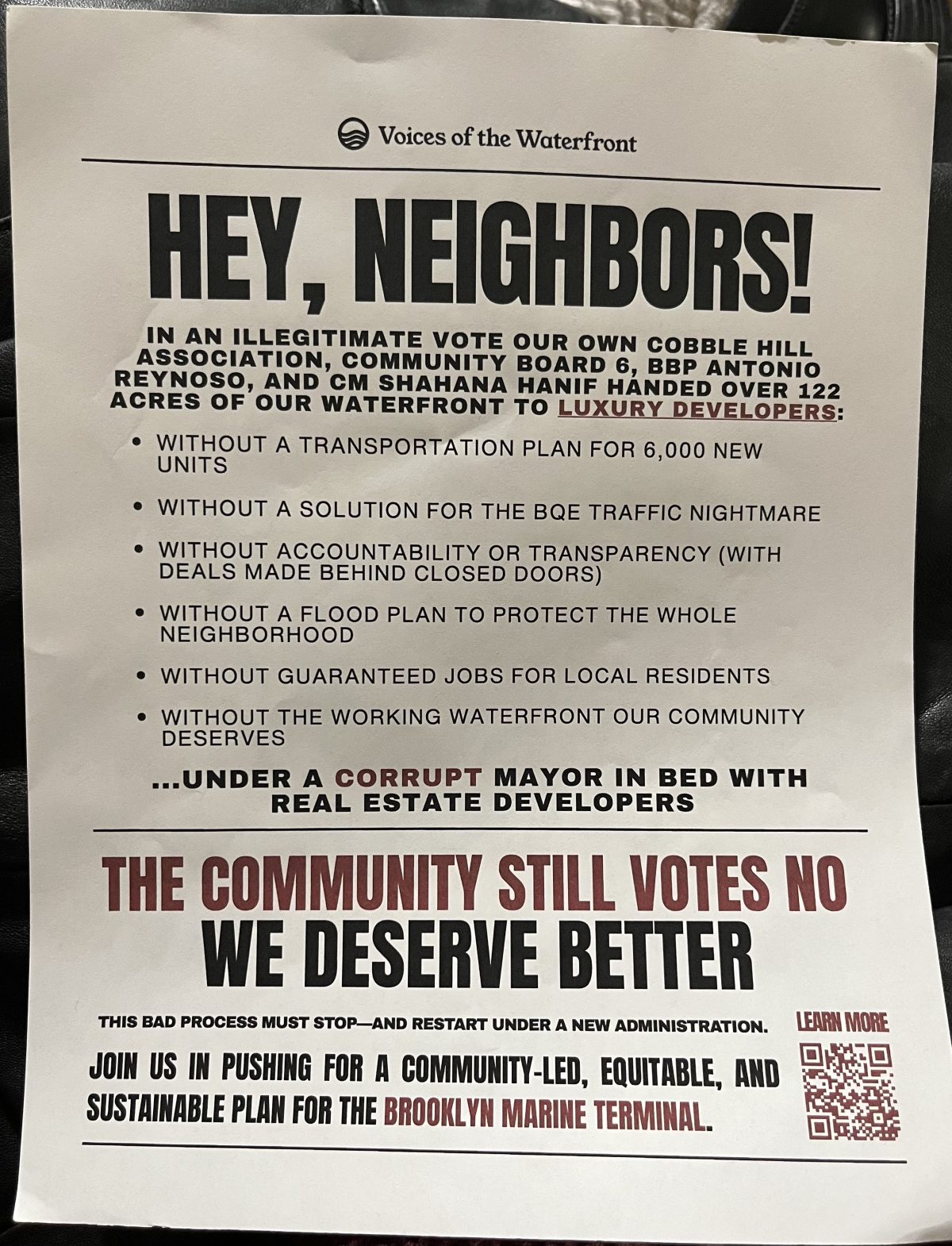
A flyer for the rally on July 7th.

In the northeast, Movement gyms see threats to health and safety in regards to cleanliness and equipment constantly, workers allege. At the Gowanus event, speakers outlined their concerns: mold on the staffroom’s ceiling, which poses a threat to respiratory health. Frayed ropes, which threaten the safety of climbers and staff. And most shockingly, water damage that has caused mushrooms to grow in some parts of the gym. 

“If I want to have a safe experience and a good experience climbing,” said Serenity Scattoni, who has climbed at Movement for the past three years, “I know that I need the workers and the facility to also mirror that and be safe and fair.”

Councilwoman Hanif joined union members at Movement Gowanus, a local climbing gym, as they called for better oversight. Photos via Instagram.

Movement Union workers want to build a safer community not only for themselves but the climbing community that occupy these gyms. City Councilwoman Shahana Hanif made an appearance at the event and demonstrated her support and admiration for the union. She expressed concern about the climbing ropes, equipment failure and lack of accountability of Movement management. She ended with a quick remark directed towards management: “They have been stalling, and it seems like they know how unions bust,” said Hanif, “but we know how to organize.” 

LIC and Gowanus are not alone in their campaign. Other Movement locations across the country have also unionized over the course of the past couple of years. Movement Crystal City in Virginia became the first climbing gym in the nation to unionize back in 2022. The gym was originally called Earth Treks and opened in 1997, before being acquired by Movement. When employees experienced the effects of the new corporate culture, including what they described as poor communication, they unionized. Then, two gyms in Chicago, who were also bought out by Movement, unionized after instructors were terminated with one week notice and little to no explanation. 

Competitors closer to home are following suit: After facing issues with pay and say in gym decisions, Vital locations in Williamsburg and Manhattan unionized in 2023. In May of this year, workers at Metrorock Bushwick petitioned the National Labor Rights Board for a union election. 

As Movement gyms grow, so does the climbing community. Today, climbing has become more mainstream, particularly since it became an olympic sport. And the climbing community is like no other in terms of support and togetherness. Whether you’re a new climber or an experienced one, the community is accepting and encouraging, which is why in many cases unions have support from customers and fellow climbers. 

Climbing is a community, that’s what it’s all about, it’s what it’s always been about,” said Alexa Zielinski, a routesetter, who designs climbing routes at Movement Gowanus, during last week’s event. “It’s not about profit. It’s not about private equity. It’s all the people that you see around you right now, so thank you all for being here.”

Employees have allegedly found mold and even mushrooms in the staff room.


JCAL Brings Family-Friendly Jazz and Riddim Festival to Queens

Courtesy JCAL

JCAL’s Downtown Jamaica Riddim and Jazz Festival Returns July 26

By MOHAMED FARGHALY
mfarghaly@queensledger.com

The Jamaica Center for Arts and Learning (JCAL) is set to light up Rufus King Park
once again with the return of the Downtown Jamaica Riddim and Jazz Festival, a
free, family-friendly celebration of music, community, and culture. The annual event
takes place Saturday, July 26 at 2 p.m. at 150-29 Jamaica Avenue in Queens.

Now in its third year, the festival has become a centerpiece of Southeast Queens’
summer arts calendar, drawing thousands to experience a day of genre-spanning
performances—from jazz and R&B to Latin rhythms and soul. This year’s
performers include Jaleel Shaw, Miki Yamanaka, Bartlett Contemporaries, and Steve
Oquendo, with music curated by Afro-Cuban percussionist Steven Kroon and Jazz
Gallery Artistic Director Rio Sakairi.

“Here we are, once again, ready to set Downtown Jamaica up with music,” said
Courtney Ffrench, JCAL’s Artistic Director.

The Riddim and Jazz Festival is a culmination of JCAL’s two signature music series:
Riddim Section, which explores sounds from across the African diaspora, and
Thursday Night Jazz, a showcase for emerging and established jazz artists.

“The music festival is called the Downtown Jamaica Riddim and Jazz
Festival—Riddim spelled R-I-D-D-I-M, a takeoff from ‘rhythm,’” explained Ffrench.
“Throughout the year, we have a Thursday Night Jazz series… and another music
series called Riddim Section. At the end of the year, we present the festival, which is
a combination of both music series into one day.”

Ffrench, who has been with JCAL for over a decade, noted how the festival has
outgrown its original indoor venue at the Jamaica Performing Arts Center. “It has
grown so much that we’ve moved it outdoors to the park at Rufus King… Last year
we featured Samara Joy, who’s a Grammy Award-winning artist. This year, we’re
featuring Jalil Shaw… Our reservation list is up to 2,500 persons.”

While the performances are free, JCAL has relied on a range of public and private
funding to support the event, including help from local Council Member Nantasha
Williams and foundations such as the Howard Gilman Foundation and the Hindu
American Foundation.

“Everything—you can’t do anything without some funding,” Ffrench said. “And then
of course, it wouldn’t happen without the community and the people who attend our
concerts throughout the year… They all come out to this festival and bring their
families with them.”

Attendees can expect a vibrant and relaxed atmosphere with food and merchandise
vendors, lawn seating, and music that transcends age and taste. “There are vendors
there selling different wares, Kool-Aid, selling hats, T-shirts and so on. So it’s a really
festive and fun affair… You don’t feel as if you need to be particularly knowledgeable
about music. It’s just a fun, fun happening.”

Ffrench emphasized the accessibility of the event, both culturally and financially.
“This festival coming up has Jalil Shaw, the Bartlett Contemporaries, [jazz pianist]
Yamanaka… A concert like this, let’s say at BRIC or somewhere in Brooklyn, you’re
talking about $45 to $65, whereas we are able to subsidize that—and it’s free.”

When asked what he hopes audiences walk away with, Ffrench didn’t hesitate: “That
you can actually get… great talent in your own backyard, that you don’t have to
travel to Manhattan, you don’t have to go into Brooklyn. You can stay right here in
Jamaica, Queens and get really good quality programming.”

The gates at Rufus King Park open at 12 p.m., with music running until 9 p.m.
Visitors are encouraged to bring lawn chairs, picnic blankets, and their entire
families.

Though the event is free, JCAL encourages continued community support through
donations and membership. “They can go to JCAL.org… You can donate to us there,
and give us a comment about what you like, what you didn’t like,” said Ffrench.
“Everything works from the ground up… The more membership we have, the more
we’re able to reach out to the community to get a sense of what it is they want to
see.”

For more information or to RSVP, visit www.jcal.org or call 718-658-7400.

It’s Time for a Third Party in New York

Robert Hornak

Robert Hornak is a professional political consultant who has previously served as the Deputy Director of the Republican Assembly Leader’s NYC office and as Executive Director of the Queens Republican Party. He can be reached at rahornak@gmail. com and @roberthornak on X.

Since the 2024 election, Demo- crats have been struggling to define – or redefine – their identity. The left has been blaming their loss of the White House and Congress on the establishment Democrats who have run the party, with many ups and downs, for decades. The es- tablishment is blaming the left for pushing the party out of the main- stream and losing moderate swing voters across the country.

While there is surely plenty of blame to go around, this debate has taken hold in NYC in a much more concrete way, in the form of the recent and very divisive prima- ry for mayor.

Novice assemblyman Zohran Mamdani shocked the establish- ment by defeating former governor Andrew Cuomo, a second genera- tion veteran politician, in a race for Mayor of NYC that was sup- posed to have been an easy win for Cuomo.

A recent poll conducted by Democratic Super PAC Unite the Country had disturbing news for their leadership as they grappled with increasing their appeal to voters in the upcoming midterm and presidential elections. Unfor- tunately for their party, the poll showed that Democrats were of- ten perceived as out of touch and weak by voters.

And this has led to a deep divide

among NY Democrats and some serious soul searching on what the future of their party will look like, and it’s possible that this divide may not be overcome. Traditional Democrats embrace America and the American dream, recognize the capitalist system and free mar- kets as the mechanism that made America great, support our ally Israel, and reject much of the left- wing agenda.

The left is pushing a polar op- posite agenda. They find America to be an evil force in the world, they want to tear down our cur- rent economic system, they op- pose Israel and are pushing a radi- cal woke agenda that destroys all our cultural norms and is anath- ema to most Americans.

As the left wing grows in power, especially if Mamdani should be- come the next mayor of America’s biggest and most important city, this could lead to an unresolvable impasse. So, what happens then?

A permanent split becomes increasingly likely. One faction could split off and create a new political party in NY. And that’s likely to be the traditionalists, who are already in constant fear of a primary challenge.

After Mamdani’s primary win the Democratic Socialists an- nounced primary challenges next year to several sitting pro-Israel

Democrats who endorsed Cuomo in the primary. And those incum- bents are not taking this lightly, as they shouldn’t after looking at Mamdani’s numbers in their dis- tricts.

The radicals are winning the in- ternal fight and are taking control of the Democratic Party. While some Democratic leaders are tak- ing a stand and denouncing Mam- dani, many more are falling in line and rolling out the red carpet for the Democratic candidate.

The formation of a new, cen- trist party may be coming soon. While some may, it’s unlikely that most of these democrats will join the Republican Party. The other option is to create their own par- ty and take control of their own destiny. Democrats outnumber Republicans in NYC by almost 6 to 1 and statewide by 2 to 1, with independent voters significantly outnumbering Republicans both in the city and state.

A new party could conceivably attract more than half of the ex- isting Democrats and attract many independents as well, making it the largest party by registration and still the strongest party in NYC, while outside the city we might see an almost even three-way split. The remaining Democratic Party would become an extension of the Working Families Party and could

be controlled by the DSA.
While there has been talk for

decades about the possibility of a new third party, that time may finally have come and NY could lead the way. This could be a vi- able end to the traditional two- party system. Will this happen? It’s getting more likely as time goes on.

Help Create A Permanent NYC Museum of Education

Marty Raskin holds Forest Hills HS circa 1950s teacher bowls & a sample of his button & hat collection.

Retired Teacher Marty Raskin Preserves Rare Public School Artifacts

 By Forest Hills Times/Queens Ledger Columnist Michael Perlman

“School days, school days; Dear old Golden Rule days; ‘Reading and ‘riting and ‘rithmetic; Taught to the tune of hick’ry stick…” are the lyrics of the historic song, “School Days,” performed by Albert Campbell in 1908, and composed by Gus Edwards and Will D. Cobb in 1907. That is the tune that emerges when stepping into retired NYC teacher Marty Raskin’s compact but significant space, devoted to NYC public school history and rare memorabilia, which dates as far back as the early 1800s.

On June 27, this columnist had the honor of visiting Raskin, a longtime collector, lecturer, and curator by passion. His collection is likely the largest and most diverse of its kind. Now a commendable effort is underway to develop a secure, temperature-controlled, and accessible spot for the P.S. Museum, but not without public feedback for a location within the five boroughs.

A portion of Marty Raskin’s rare public school collection.

Some local public schools are P.S. 175, P.S. 101, P.S. 144, P.S. 139, P.S. 174, P.S. 196, P.S. 220, P.S. 206, P.S. 303 (formerly P.S. 3 – The Little Red Schoolhouse), Stephen A. Halsey J.H.S. 157, Russell Sage J.H.S. 190, and Forest Hills High School. Behind the classical facades of these historic schools are many stories pertaining to their development, curriculums, and achievements, which await rediscovery. Whether local or citywide, artifacts from within can also bond generations of teachers, students, parents, and the greater public, as if the spirit of our ancestors walks alongside us, continuing to educate.

A revolutionary date was April 9, 1805, when the legislature passed “the Act to incorporate the (Free School) Society instituted in the city of New York, for the establishment of a free school for the education of poor children who do not belong to, or are not provided for by, any religious society.”

At 84 years young, Raskin, who was born and raised in Brooklyn, and is a 25-year Manhattan resident, is a visionary and an achiever. He began his schooling at P.S. 202 in East New York and later achieved two Masters degrees from Long Island University and CW Post. His teaching career originated at Canarsie High School in 1966, and he retired in 1989. This is where he taught business education and established work experience programs for special needs students. “I was the first member of my family to attend college. My brother is also a retired teacher, so we have it in our family,” said Raskin.

One must wonder about what motivates Raskin to pursue his unique interest. “I’ve always been a collector. In the 1970s, I taught a class, ‘The Business of Antiques,’ and for the term project, we did an antiques show.”

Pencil sharpeners & thermometers.

Between magazines, books, articles, and photos, as well as artifacts in the form of objects, Raskin estimates collecting over 1,000 museum-quality items. Among the earliest possessions are a textbook from 1807, a dunce chair from the early 1800s, and a treasure trove of memorabilia from the mid-1800s to the mid-1900s. He admits that it would prove challenging to pinpoint standout collectibles. “A collector loves everything, but the dunce chair is one, an electrical learning component is another, and my collection of New York City clocks that were in every single classroom. Any one of my things can be a highlight to me,” he said. The smallest collectibles are his large assemblage of academic and sports medals, and the largest items are a teachers’ learning desk from 1925, teachers’ reading chairs from the early 1900s, and a vintage principal’s bench. Certain larger collectibles are on permanent display at the United Federation of Teachers Headquarters at 52 Broadway in Manhattan.

Raskin’s vision is meritorious. “I want to donate the entire collection to set up a museum to honor the teachers and the teaching profession. I don’t want to break up the collection. The agreement would need to have a provision, where the person or persons that I designate to oversee the aim of the collection is followed. I am not looking to donate it, to be kept in some basement.”

Exhibit curated by David Edelman’s students.

His Electric Automatic Instructor, which was patented in June 1885, continues to be operational. A December 23, 1886 ad in the Buffalo Daily Courier read: “Greatest Novelty of the Age! For the holidays and all time, The Electric Automatic Instructor, One of the Most Wonderful Inventions of Modern Times. Something every family in the land should have. More knowledge and information can be obtained than from hundreds of dollars’ worth of books!” It was on exhibition and for sale only by F.S. Pease’s art department at 65 and 67 Main Street. This innovation benefited children and adults. A December 3, 1893 New York Press article referenced that it consisted of a set of large cards with questions and answers laid on a board over a small battery. “A steel pin is struck through the question on one side of the card. Another pin, fastened to a string connecting with a concealed battery, is run rapidly up and down the steel pins through the answers on the other side. A bell rings when the right pin is touched. It is very mysterious and delightful to a young mind, of course. This ‘toy’ costs $5. There is also an electric launch which runs for an hour for $22.50.”

Not all educational tools of yesteryear can be deemed fully beneficial. In America and Europe, the dunce chair was used along with a dunce cap, which a student wore to demonstrate intellectual inadequacy and punishment for misbehaving. It was especially popular during the Victorian era, but was phased out due to its potential for psychological impacts.

The Public School Museum concept is already branching out. “I am incredibly thankful to Marty Raskin, who has inspired my students and I to investigate our own school’s history, and helped kickstart our exhibition with items from his personal collection,” said 43-year-old David Edelman, a Forest Hills resident who teaches social studies at the historic Washington Irving Campus High School at 40 Irving Place in Manhattan. “It is gratifying that some of my students’ favorite lessons teach students about U.S. history and government through the lens of public schooling,” he continued. The on-site exhibition commemorates the history of student life, teaching, and learning in conjunction with the school. Edelman and his students hosted DOE administrators, members of City Council, and international students.

David Edelman holds circa 1953 Washington Irving HS student attire & Marty Raskin holds circa 1958 Richmond Hill HS cheerleader uniform.

Edelman values how enthusiastic his students are when it comes to examining turn-of-the- twentieth-century artifacts, articles, and photos from the Boys & Girls Youth Police squad program, with the generosity of Raskin’s collection. He explained, “These objects not only foster student engagement, but help students draw connections to contemporary issues related to policing and programs they have participated in, such as the modern NYPD Explorers Program.”

Edelman also utilized items illustrating the Open-Air Schools movement, which was intended to combat the Spanish Flu pandemic of 1918 to 1920. “This helped my students draw historical connections to their experiences during the Covid pandemic. They analyzed items from Marty’s collection, and many referenced them when they crafted proposals to New York City Council,” he said. A scavenger hunt is among the interactive events that Edelman coordinates, where his students take the lead and focus on the history of their school. He explained, “They pursue it collaboratively, such as when school groups from Germany visited, or when elementary and high school students participate. I may ask them to find three examples of civic engagement from the past, and reflect upon how it compares to what they accomplished in school. Also, to find examples of vocational training, and explain how it compares to what students are pursuing today.”

Edelman admires how Raskin is a people’s person, as much as a collector, who loves interacting with students and teachers across generational divides. “That’s also what is so amazing about his collection and school history. It establishes an ability to connect people, young and old, around their school-related experiences,” he said.

Edelman became aware of the collection around 12 years ago, and Raskin donated certain collectibles with an intent of benefiting his students. “David is one of the true educators who appreciates and understands what we are looking to do,” he said.

Raskin coordinated exhibitions and lectures at retirement communities, The City Reliquary Museum & Civic Organization, principals’ and teachers’ unions, and for the American Federation of Teachers in Pittsburgh and Boston. When an event focused on retired teachers, his passion for preservation unfolded before his eyes. “I brought out a Delaney book, and some teachers started crying and said, ‘I haven’t seen these in 40 years.’ This is why I want to preserve these artifacts.” A museumgoer would learn that this book, invented by Edward C. Delaney, features Delaney cards, which are placed in slots to keep track of grades and attendance, and consists of a seating layout.

Ornate bronze classroom Doorknob collection.

Another much admired collectible that attendees enjoy discussing are intricate bronze doorknobs from classrooms, which feature scrollwork and typography. A most popular model is oval and reads, “Public School ~ City of New York.”  This architectural hardware began appearing in schools around the early 1900s and was produced by Sargent and Corbin. Another model with the same design was produced for the City of Reading, and a Reading variation features a teacher and a student reading in front of a globe. Some knobs offer the unique overlay of typography in the form of school acronyms, such as for Girls’ High School in Brooklyn.

Every collectible bears the potential to communicate loads of stories. “I have a large amount of teacher files, which show what teachers went through, starting in 1920. It makes me very proud that I can follow teachers to see what it was like when they were doing their job,” said Raskin, who cited concerns and problems, such as what they may have experienced with their principal. “Nothing has changed,” he chuckled. “A lot of the same things that happened in the 1920s, are happening in the 2020s.”

Sample classroom necessities including inkwell supply.

Washington Irving H.S. issues an annual State of the Union report, where teachers from various departments include accomplishments and challenges. On a related note, Edelman came across a vintage civic department document, and shared a scenario that bonds the generations. It was addressed to Mabel Skinner, Chairman, Civics Department, Washington Irving H.S. on June 15, 1936: “My dear Miss, I thank you for letting me know by a letter how poor I was in Civics. Miss, I would like you to know that I came from Italy not so long ago and sometime till now I can’t understand some words. I will try my best to improve in my work. Thank you for your kind letter you gave me.” Edelman explained, “Challenges that students faced 100 years ago are the same, although the historical narrative is different. Students can learn American history through the eyes of students who were sitting in the very same seats, and discover their legacy.”

“I made influential people aware of my collection in my quest to find a permanent home,” said Raskin. A highlight was when Debbie Schaefer-Jacobs, Cultural and Community Life Curator of the Smithsonian’s National Museum of American History visited, and spent over 6 hours viewing his collection. He rehashed being told, “Marty, this collection belongs in New York City. There is nothing like this in the U.S.” He continued, “You have a museum for sex, chocolate, and transportation, but there is no large museum to honor education.”

Food from children’s and teacher’s cafeteria and home products.

“When I am not collecting, my joys in life are my grandchild, spending time at home, going to the gym, and traveling,” said Raskin. He offered advice to younger generations of collectors, who may have an interest in opening a museum or gallery. “Enjoy your quest. At some point, you may come to the realization that you want to go further with your collection, such as donating it. These are only things, and we own them for a small amount of time. As you get older, think of how you want to pass along your collection.”

A solid education entails teaching not only American and global history, but local history, which can most effectively be accomplished through preserving educational artifacts. By students and visitors observing and selectively touching objects and photos, a “living museum” comes to fruition. There is a deeper foundation than only reading a textbook or an e-book, but some schools have unfortunately discarded memorabilia. Raskin, who hopes to reverse the needless throwaway culture by preserving what remains, explained, “There’s so much good stuff that is still around. When Evander Childs High School in the Bronx closed, they shut the library. When they reopened it into five schools, they didn’t want anything that said ‘Evander Childs.’ They threw everything out. When I was at Jamaica High School, they said that they didn’t want to know about this stuff.”

Educational set, circa 1940s.

Typically, younger generations think “less is more,” according to Raskin. Edelman then stated, “When you show it to school-age students, they’re fascinated by it.” Raskin added, “Last year, I was invited to do a 100-year anniversary of a public school in Brooklyn, and when I showed the kids my writing instruments – inkwells and fountain pens, and how you work a telephone (antique model), they were fascinated.” Therefore, education is key.

Raskin, who owns over 60 albums of ephemera, shared a related account of the role that NYC public schools played during WWII. “On December 7, 1941, the night before President Franklin Delano Roosevelt made his speech (“Day of Infamy”) taking us into war, all NYC public high school principals were told that on the following morning at 9:00, bring your seniors down to the auditorium, and FDR will make a major announcement. At DeWitt Clinton High School in the Bronx, students came into the auditorium, and the principal spoke. There was a big radio (predating television) and FDR made a speech that we’re going to war. Then the back doors of the auditorium opened. In the lobby, recruitment stations were set up. Within the first three months, 400 students signed up.” His collection also documents the schools’ roles in fundraising and personal letters. At certain vocational schools, shops were retrofitted to produce necessities for wartime, and some schools were open 24 hours. “There was such a great feeling of nationalism,” he continued.

Left, 1849, All pieces appear in work written by pupils in the ward for public schools of the City of NY, as part of their exercises while pursuing their studies – Short stories & sonnets.

When the P.S. Museum materializes, various forms of interactivity will be part of the mission, consisting of not only the permanent collection, but exhibitions with guest-speaking opportunities. “When I prepare a packet to tell attendees about education, I use a model in Los Angeles, where they have a small museum of learning and teaching. They have speakers and classrooms where groups come into. It is multifaceted,” said Raskin.

To donate collectibles to Marty Raskin or suggest accessible and secure locations for the P.S. Museum, please email memorabuti@gmail.comdavidedelman@gmail.com, & mperlman@queensledger.com. Also, bookmark www.thepsmuseum.org for updates.

Ornate personalized school gifts.

Student at Brooklyn HS for Specialty Trades circa 1930s – 1940s, Vintage typewriter & Barrett adding machine from Brooklyn elementary school office.

1927 prom giveaway.

1940s school crossing guard, 1920s metal sign, mid-1800s dunce chair, & Electric Automatic Instructor.

Old-world bells & classroom.


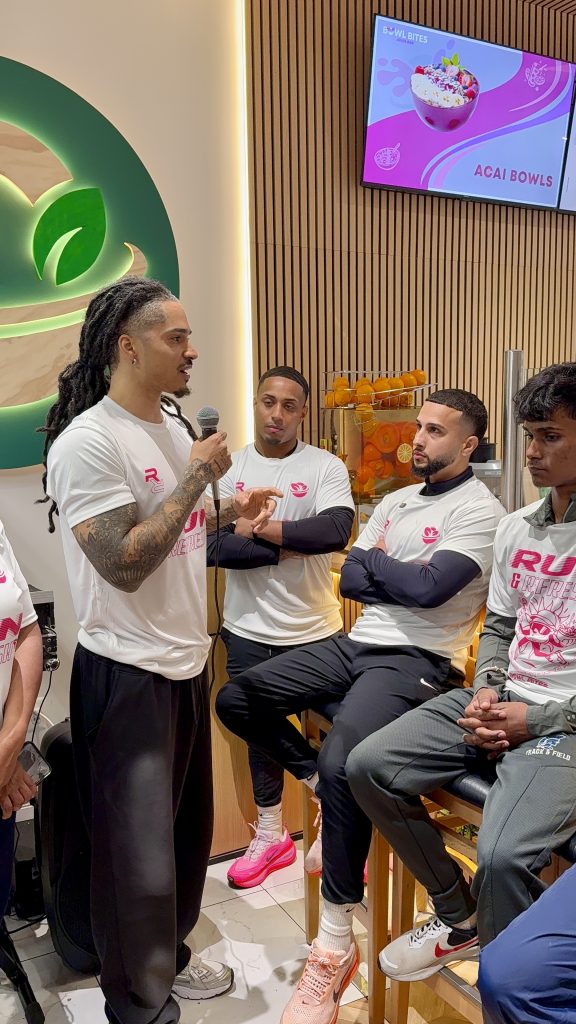
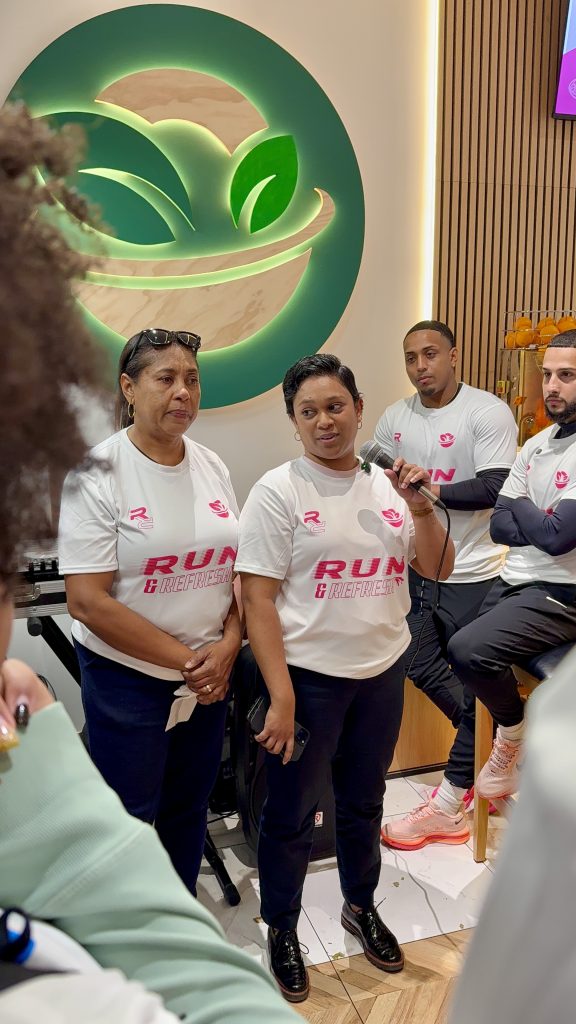
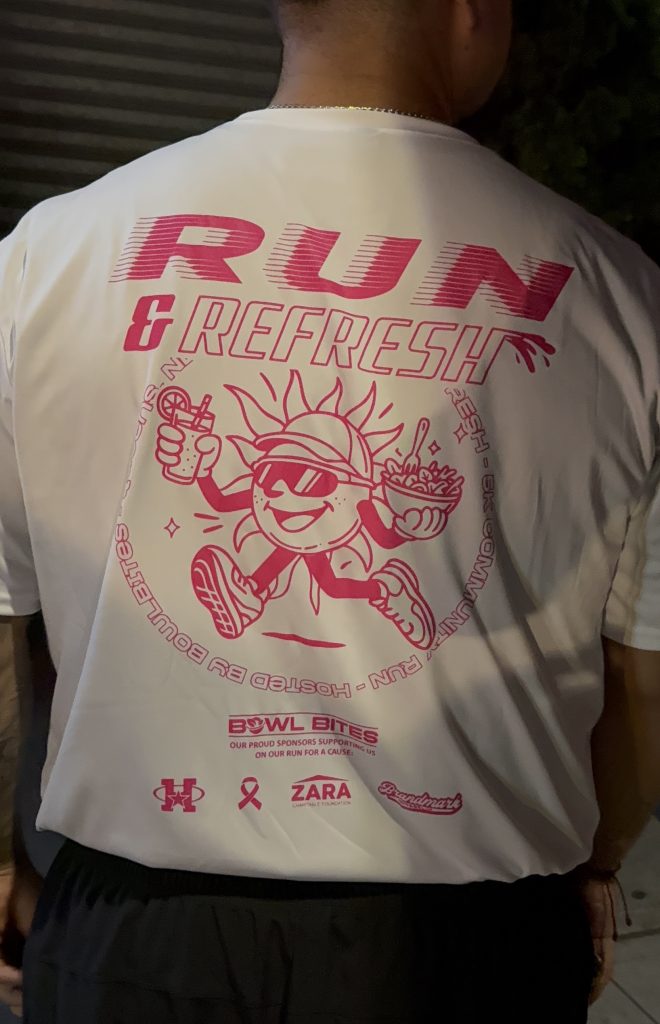
BowlBites Hosts Successful “Run & Refresh” 5K Event in Ozone Park

This past Saturday, BowlBites—Ozone Park’s vibrant new Caribbean fast-casual restaurant—hosted its first-ever Run & Refresh 5K, bringing together local runners, fitness enthusiasts, and food lovers for a morning of movement, motivation, and community celebration. The race, which started and ended at the BowlBites location on Liberty Avenue, attracted over 100 participants, uniting the neighborhood in a shared goal of promoting health, wellness, and togetherness.

The event was more than just a run—it was a full-on community experience. After the 5K, runners were treated to complimentary fresh fruit, smoothies, and signature BowlBites menu items. Nike gear and merchandise which was raffled off to participants – from running shoes to exclusive apparel, the raffle prizes added an extra layer of excitement and gratitude to the day.

“We are truly humbled by the turnout and the energy,” said co-owner Kevin. “BowlBites was built for this community, and to see people come out not just to eat, but to move and support one another—it means everything.”

Co-owner Amir echoed that sentiment: “We didn’t expect this kind of love so soon. From the runners to the volunteers to our local neighbors cheering us on—it just shows how strong Ozone Park really is.”

With upbeat music, water stations, and plenty of post-race celebration, the Run & Refresh event proved that fitness and food make the perfect pairing. The 5K looped through the heart of Ozone Park, offering both seasoned runners and first-timers a chance to experience their neighborhood from a new perspective.

“Living a healthy and active lifestyle isn’t just about the gym,” said BowlBites co-owner Esteban. “It’s about how we move, how we eat, and how we show up for one another. This event was about bringing all those pieces together.”

“I love what Bowl Bites is building here,” said Dwyane Banks, a Nike ambassador.  Bowl Bites is not just serving food; they’re serving a lifestyle.”

As runners cooled down with Lime Wash and Sorrel, one thing was clear: the Run & Refresh 5K was only the beginning. With more wellness events already in the works and a growing base of support, BowlBites is quickly becoming a neighborhood hub for culture, cuisine, and community-driven health.

“We can’t wait to do it again,” said Chef / Owner Michael Saroop. “Next time, we’re going even bigger.”

Stay tuned for future Run & Refresh events, and stop by BowlBites in Ozone Park to experience the flavor—and the movement—for yourself.

BowlBites is located at 102 – 16 Liberty Ave. in ozone Park Queens.

JJ: “Welcome to New York, Mike Brown”

It’s Now NBA Finals Or Bust…

By John Jastremski

Last week, the Knicks finally concluded their head coaching search and decided former Sacramento Kings head coach Mike Brown will be their guy.

My first reaction to the news was that as a Knicks fan, I felt uninspired.

Look, Mike Brown on paper fits the bill of the sort of coach you’d want leading your team.

There’s no sense of the unknown for a franchise that will have sky high expectations going into next season.

You know what you’re getting with Mike Brown.

He ran a tremendous offense in Sacramento that was as modern as it gets.

He’s taken a team to the NBA Finals before, albeit a team that had LeBron James, but an accomplishment none the less.

In addition, he seems like a tremendous guy. I expect he will do a fantastic job in handling the NY media and what comes with that.

So, you might ask. After what I just detailed, why is the hire uninspiring.

Well, it’s pretty simple to me.

After the Knicks fired Tom Thibodeau, I was expecting the sort of hire that would put me in a position where I feel the team clearly upgraded with their head coach.

No disrespect to Mike Brown, but I for one am not convinced the Knicks hired a better head coach than Thibs.

Thats why I cant share a feeling of elation and excitement when it comes to the hire.

However, the goal is pretty simple for Mike Brown next season.

It’s time to get the Knicks back to the NBA Finals for the first time since 1999.

Are those unfair expectations to a first year head coach?

In most circumstances, yes. Not with this current Knicks group.

The roster is there, the East is weak and if not now, then when.

Talk about walking into a pressure cooker!

You can listen to my podcast New York, New York on The Ringer Podcast Network every Tuesday & Friday on Spotify/Apple Podcasts. You can watch me nightly on Honda Sports Nite following Mets postgame on SNY.

Matt Freese Returns to NYC After Gold Cup Final Start

Noah Zimmerman

noah@queensledger.com

Matt Freese is making his return to New York City FC as they look ahead to their playoff push. (Photo: Noah Zimmerman, @n.z.media)

New York City FC goalkeeper Matt Freese is finally returning to the club following an impressive showing at the 2025 Gold Cup. The American shotstopper dazzled despite a loss to Mexico in the final, playing a big role in their path to the cup-deciding match.

In the quarterfinals, the tournament hosts were unable to fend off Costa Rica in regulation, conceding a 71st minute equalizer. In the resulting penalty shootout, it was Freese making a statement to send the Americans through to the semis.

The only penalty he didn’t get a hand to against Costa Rica came from his NYC teammate Alonso Martinez. The top scorer for the Boys in Blue winked at his ally-turned-foe before sending his shot down the middle.

Freese made stops on the second and fifth shots, getting a hand to the third and fourth. Legendary goalkeeper Keylor Navas answered with a save of his own on John Tolkin to extend the match.

By this point, Freese was in the zone. The whole stadium knew what was coming and sure enough he made a definitive stop with Damion Downs converting the winning kick for the US.

Against Gold Cup semifinal debutants Guatemala, Freese was able to see out an early 2-goal cushion. He made four saves, only allowing a goal in the 80th minute against an enthused opponent.

Freese was busy between the posts in the Cup Final against Mexico. He was able to stop 6 of the 8 shots on target, but couldnít do much on the two goals from Raul Jimenez and Edson Alvarez.

NYC’s goalkeeper will return for a pivotal stretch of the season. With 14 matches and the Leagues Cup remaining, Freese will look to help the Boys in Blue clinch a postseason berth and earn more silverware.

Liberty Open July With Win Over Los Angeles

Storm pick up 2nd win vs New York

The New York Liberty defeated the Los Angeles Sparks 89-79 at Barclays Center (Photo NY Liberty, Brandon Todd)

By Noah Zimmerman

noah@queensledger.com

The New York Liberty opened up their 8-game July homestand with a thriller against the LA Sparks. They picked up a  win to slow a troublesome skid that’s lasted since their first defeat of the season. Since their 9-0 start, New York lost five of seven and have been lackluster on both ends of the court without star center Jonquel Jones.

Making a long-awaited return to the Liberty bench was Leonie Fiebich. The German made her return from the EuroBasket tournament, providing immediate relief for a thin-stretched Liberty lineup. Fiebich put up strong numbers in Germany’s quarterfinal finish, and while she didn’t fill the stat sheet too much in her return she impacted both sides of the floor.

Leonie Fiebich made her return to the Liberty lineup after international duty with Germany. (Photo: Brandon Todd, NY Liberty)

For LA, former Liberty nemesis Kelsey Plum dazzled in her first game at the Barclays Center as a member of the Sparks. Plum previously won a ring on the Brooklyn floor with the Las Vegas Aces two seasons ago. The three-time All-star scored 7 of her 13 points in the opening quarter. 

There were a number of head-turning plays in the opening half, including a clutch one-footed three-pointer by Marine Johannes amid an expiring shot clock. New York’s French guard helped ensure a razor-thin 21-20 advantage after the 1st.

Johannes continued to impress in the second quarter with one of New York’s most impressive plays of the year. In transition Johannes queued up a perfect behind-the-back pass to Breanna Stewart, who scored a layup through contact and hit the resulting foul shot.

Kennedy Burke and Natasha Cloud helped add to the first half scoring with a pair of clutch threes, but LA remained on their heels. On the following possession, Stewart eyed a pull-up jumper that rimmed out. Had the shot gone down, the arena would have exploded. Instead, the visitors were able to fend off New York through one half, leading 41-37.

In what’s often been a troubling quarter for them, New York flipped a switch in the 3rd. The Liberty’s 11-0 run continued as they seized control, pumping up the sold-out crowd. After a tough bucket, Isabelle Harrison knocked down a free throw to knot the game at 53, and the Barclays Center finally erupted. 

The hosts shot an impressive 63% in the quarter, hitting five of their seven threes. They outscored the Sparks by 14 to seize a 69-59 edge entering the final stretch. Cloud led the charge with 11 points, with Ionescu adding 10. Both would finish with impressive 17-point second halves.

LA kept the game close near the end, but the Liberty ultimately picked up a much-needed 10-point win. Given the recent troubles and with Atlanta right on their heels, head coach Sandy Brondello identified Thursday’s matchup as a must-win.

Unfortunately the Liberty weren’t able to carry over their success for Sunday’s matchup with the Seattle Storm. While they were finally able to out-rebound their opponents in back-to-back games, the shots just weren’t falling for New York.

New York couldn’t keep their momentum as they fell to the Seattle Storm for the second time this year. (Photo: Brandon Todd, NY Liberty)

After leading at the break, the Liberty only scored 6 points in the 3rd quarter. They were outscored by 16, creating a deficit they wouldn’t be able to overcome in the final period.

“They came out and executed and we didn’t,” head coach Sandy Brondello said after the loss. “We had to get a little bit tougher and have more urgency.”

To make matters worse, Isabelle Harrison went down with a knee injury, making her questionable for Tuesday night’s matchup against the Aces. With the Liberty already missing Jones, a lack of frontcourt bodies could make matters even more difficult after a 3-6 span.

After Tuesday the Liberty have five more games in their homestand. On Sunday the 13 they take on the Atlanta Dream in a pivotal matchup for Eastern Conference positioning at 3pm. Then on Wednesday night, New York hosts the Indiana Fever at 7:30pm.

The stretch of games in Brooklyn concludes with another matchup with Indiana on July 22, the Mercury on Friday the 25, and a rematch with Los Angeles on July 26.

Political Whisperer: Mamdani Derangement Gripping NYC is Justified

By Robert Hornak

It’s official, Zohran Mamdani’s primary win is unnerving many in NYC and dividing Democrats into two very distinct camps. 

First are the Mamdani defenders. With Mamdani derangement syndrome appearing to overtake a majority of New Yorkers there is a sudden onslaught of opinion columns and social media posts aimed at trying to calm everyone down. 

They are spinning the story that Mamdani isn’t so bad. Sure, he’s said some negative things about Israel, but that’s just politics they claim. When confronted on his belief system he responded saying that he is opposed to hate crimes and would allocate additional funds to fighting them. Of course, that’s not a denial but it was enough for many of his defenders to hang their hat on. 

They are also claiming that all his proposals for free stuff are nothing new, they have either been done before or they’ve been campaigned on before but not enacted. While intended to be a ringing endorsement of the Mamdani agenda, claiming to be just more of the same failed policies that have brought NYC closer to the bad old days, and making this the city of exodus, driving out more people in search of a better life than anywhere else in the country, doesn’t seem like the best sales technique, but again, they need to say something to make him seem acceptable. 

De Blasio enacted three rent freezes in eight years, and that worked out so well we saw rents hit all-time highs. So why not double down and push for a four year freeze? That should make things even better. Free buses? Well we already have discounts for certain riders, that’s the same as free for everyone, isn’t it? 

Tax the rich? Well, that’s surely not a new one. But that is controlled by Albany, as even a new member of the Assembly should know. And, of course, that is the Democratic Party mantra, and they have successfully complicated the tax code to try to get more and more from the successful, with no amount ever seeming to be enough.

That leads to the argument that Mamdani may not fully align with traditional socialists, but rather adopts the label strategically. While he has made statements suggesting support for public control over certain industries—an idea rooted in socialist and even communist frameworks—that alone doesn’t necessarily make him a communist.

It’s easy to see how his rhetoric may come across as appealing or idealistic. But his critics argue that when a politician shares their worldview, it’s worth taking them at their word.

Concerns have also been raised about his positions on Israel. Critics point to his support for the BDS movement, which many believe unfairly singles out Israel. These decisions have drawn serious criticism and prompted questions about his broader worldview.

Proposals like free bus service, universal childcare, and rent freezes may not amount to full-fledged socialism, but critics argue they reflect a lack of fiscal planning and a limited roadmap for how to realistically move New York City forward. The cost of these initiatives remains largely unanswered, leaving doubts about their sustainability.

Then there’s the fact that Mamdani continues to embrace the label of “socialist,” and has publicly expressed views critical of extreme wealth, private property, and market capitalism. These ideas, while resonant with some progressive voters, are viewed by others as impractical or even concerning.

Some argue that dismissing Mamdani as merely holding controversial views on Israel or as a moderate progressive downplays the impacts of his rhetoric and policy positions. They believe his track record speaks for itself.

But he does have a warm smile and projects a youthful exuberance that many voters find attractive and they will ignore all the warning signs of the coming disaster for promises of free stuff delivered with a warm, engaging smile. Whether the enthusiasm is enough to outweigh skepticism about his policies remains to be seen.

Robert Hornak is a professional political consultant who has previously served as the Deputy Director of the Republican Assembly Leader’s NYC office and as Executive Director of the Queens Republican Party. He can be reached at rahornak@gmail.com and @roberthornak on X.

Coffee Pro Blends Culture, Craft, and Community in Astoria

Coffee Pro, a cozy halal café nestled at 23-33 Astoria Boulevard in Astoria, is more than just a place to grab your morning brew, it’s a destination rooted in passion, culture, and community.

Inspired by the journey of the coffee bean—from its beginnings in fertile lands to its transformation into the perfect roast—Coffee Pro blends the art of specialty coffee with the rich baking traditions of the Middle East, particularly Egypt.

Every detail of the café is designed to reflect this cultural fusion. The brand draws from the natural beauty of desert dunes, using them as a symbol of warmth, growth, and the timeless rituals of gathering and sharing coffee. The result is a space where every cup and pastry offers more than flavor, it offers a story.

Owner Mohamed’s dream was to create a place where people could come together through flavor and shared experiences. Today, that dream is growing, with plans to expand the brand through partnerships with others who share the same values.

“We invite you to become part of the Coffee Pro family, to bring this shared passion to your community and to create a space where people don’t just grab coffee, they stay for the story,” said Mohamed.

The menu features a selection of halal offerings, including aromatic coffee blends and baked goods such as their popular Iced Vienna Latte and Dubai Chocolate Croissant. “It’s important for us to represent our communities and make food more accessible to anyone who follows a halal based diet,” Manager Kuhloud adds, “we invite everyone to indulge in our culture through the art of pastries and coffee.” Customers are encouraged to stay, relax, and enjoy an atmosphere built on hospitality, not just convenience.

In a city filled with fast-paced coffee chains, Coffee Pro invites a slower, more intentional experience. It’s a place where tradition meets craft and where the community is always welcome.

Coffee Pro is open Monday through Friday from 7:00 a.m. to 7:30 p.m., and Saturday and Sunday from 7:00 a.m. to 8:30 p.m.


Fill the Form for Events, Advertisement or Business Listing