National Night Out Strengthens Forest Hills Ties

MOHAMED FARGHALY

mfarghaly@queensledger.com

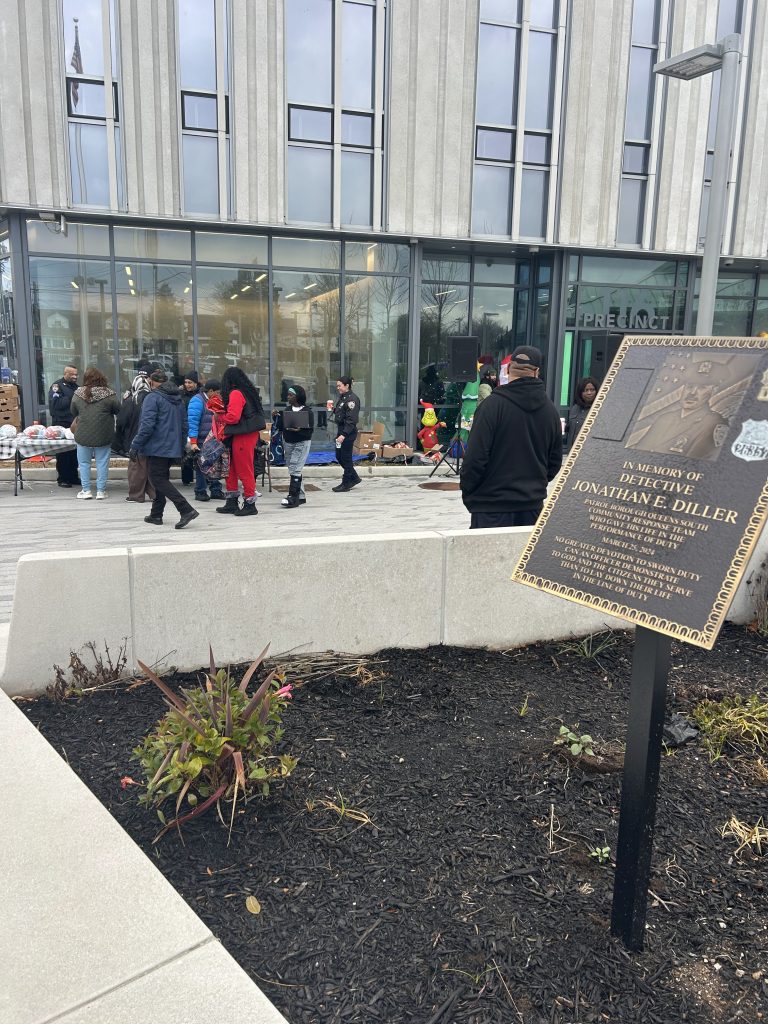
The 112th Precinct in Forest Hills welcomed hundreds of residents and local organizations for its annual National Night Out on Aug 5, a community gathering dedicated to strengthening the bond between police officers and the neighborhoods they serve. Observed nationwide on the first Tuesday of August, the event stands as a celebration of unity, safety, and partnership.

This year’s festivities offered something for everyone. Families enjoyed a lively atmosphere, with children entertained by a balloon artist and guests sampling food from popular local restaurants and clubs.

A highlight of the evening was the presentation of certificates of appreciation to local residents, businesses, and elected officials who have played a role in fostering neighborhood safety and cohesion. New York State Senator Joseph P. Addabbo Jr. was represented at the event, emphasizing the value of civic participation and presenting citations to community groups.

As one of many National Night Out celebrations held across the country, the gathering in Forest Hills reaffirmed its role as a trusted tradition—bringing neighbors together, promoting public safety, and strengthening ties between the NYPD and the community it serves.

Retro Fitness of Forest Hills to open new pickleball courts

On Monday, August 18th, Retro Fitness of Forest Hills will debut two new pickleball courts at a Grand Opening celebration style event.

The afternoon event, which will take place from 4 to 7 p.m. at Retro’s Forest Hills location (89-89 Union Tpke.,) is free and open to the public, including members and non-members.

Guests can enjoy pickleball in style with open play, all-level games led by Retro’s awesome instructor, and non-stop entertainment. Groove to beats from their live DJ, snap selfies and connect with special guest influencers, and treat your taste buds to our crowd-favorite Pickled Pizza.

Whether you’re a seasoned player or brand new to the game, this is your chance to be part of something exciting, energetic, and unique. The special event gives community members the opportunity to get moving while having fun and connecting with others.

“National Wellness Month is the perfect opportunity to celebrate our 24/7 approach to exercise, health, and fitness,” said chief brand officer of Retro Fitness, Kim Gouch. “We’re so excited to open our pickleball courts and get the whole community moving,” added Retro’s District Manager, Lisa Imbriale.

While you’re enjoying the good vibes and friendly competition, you’ll also have the chance to win exciting prizes during open play. Whether you’re go for the game, the music, the food, or just the fun atmosphere, there’s something for everyone. Grab your friends, bring the energy, and be part of Retro Fitness history.

Retro Fitness is open from 5 a.m. to 12 p.m. Monday through Friday, 7 a.m. to 9 p.m. on Saturday, and 7 a.m. to 7 p.m. on Sundays. To explore membership options at the Forest Hills club, visit their website or follow them @retrofitness.foresthills.

Political Whisperer: New York’s Threat to Re-Redraw Congressional Lines

By Robert Hornak

One of the great traditions of American politics is for both political parties to try their best to gerrymander the lines of the political districts in their states. There is nothing new about this or unique to either party. 

There has been recent attention brought to this process, sparked by two recent Supreme Court decisions. In 2019, the court ruled that issues related to partisan gerrymandering – the process where district lines are drawn to favor one party over the other – are “beyond the reach of the federal courts” changing how past voting rights cases, that advantaged democrats over republicans, would be considered by the court. 

Then in 2024, the SCOTUS ruled in favor of a South Carolina district that was challenged as an unconstitutional racial gerrymander. Writing for the majority, Justice Alito stated, “inferring bad faith based on the racial effects of a political gerrymander in a jurisdiction in which race and partisan preference are very closely correlated” would no longer be accepted as a basis for challenge by the court, recognizing the difference between political and racial gerrymandering.

Now there is talk about drawing new lines in certain red states where partisan gerrymandering in the past had been thwarted by the courts as being racially, not politically based. Texas is leading the charge, looking to redraw their congressional lines to increase partisan advantage, as democrats have already done in many states, looking to fight fire with fire. 

Democrats, naturally, are up in arms, screaming about how unethical this effort is, while trying to cover their Cheshire cat grin for having done it themselves so successfully in states like Illinois, California, and Massachusetts. 

But nowhere were they more blatant about this than in New York. In 2014, NY voters approved a referendum to make the redistricting process “a fair and readily transparent process by which to redraw the lines of state legislative and congressional districts” according to the NYC Independent Redistricting Commission. The newly created IRC would draw the lines of new districts with strict constitutional limitations on gerrymandering to advantage either political party. However, the legislature must approve the final maps, a legislature now dominated by democrats. 

Unlike Texas, the NY Constitution mandates that district lines be redrawn once and only once a decade. The IRC submitted their constitutionally required plan for redistricting for the 2022 elections, but they were not gerrymandered enough for the Democrats in Albany. 

Unable to get the 2/3 vote required to pass their own gerrymandered lines, the process was handed to the courts. A non-partisan expert was engaged and the court set the new lines. Lines that were generally seen as fair by just about everyone – except the Democrats in power who were highly displeased that Republicans gained three seats that election. 

So, committed to finding a better way to gerrymander within constitutional boundaries, Democrats pledged to draw new lines for the 2024 election. And they did. Republicans, who had 11 seats after the 2022 election but lost one in the special election to replace George Santos, went from 10 seats to 7 after 2024.

So now Texas is effectively doing what NY did just a year ago. But not to be outdone, NY Democrats are declaring themselves the masters of gerrymandering and telling Texas Republicans you ain’t seen nothing yet. 

While Democrats around the country yell foul and claim that Texas is violating the constitution (although without challenging Texas’ authority in court and with Texas creating three new majority Hispanic districts), NY Democrats are threatening action and pledging to once again redraw NY’s lines and gerrymander them even more with the explicit goal of eliminating five more NY Republicans. 

Democratic Senate Deputy Majority Leader Michael Gianaris said very bluntly, “We can come up with lines that comply with constitutional criteria that still accomplish our goal” just as they did in 2024. Only one thing stands in their way, the NYS Constitution. They need to change the state constitution to allow mid-decade redistricting. All this depends on a positive outcome for their referendum in a future election with an electorate that has already expressed their disapproval of partisan gerrymandering.

Robert Hornak is a veteran political consultant who has previously served as the Deputy Director of the Republican Assembly Leader’s NYC office and as Executive Director of the Queens Republican Party. He can be reached at rahornak@gmail.com and @roberthornak on X.

JJ: “Panic & Stress Is Contagious For NY Baseball in 2025”

By John Jastremski

I think it’s fair to say for a month plus, the narrative around NY Baseball and panic has been front and center around the New York Yankees. Totally fair, totally justified might I add… 

However, over the past month. The New York Mets have basically said to their crosstown rivals, “Hold my beer.”

The Mets were a team that at one point in the season was 20 plus games over .500 and basically found themselves in a dead heat with the Philadelphia Phillies for first place in the NL East. 

The past month around the Mets has changed that narrative quite significantly. The Mets have fallen on some very hard times as a team. They have lost 7 consecutive games entering Tuesday’s game against the Atlanta Braves. 

After the sweep at the hands of the Brewers, the Mets have stunningly lost 11 of their last 12 games and now cling to the 3rd Wild Card spot in the NL Playoff Picture and find themselves 6 games back of Philadelphia for first place in the NL East. 

The pressing question is how in the world has this happened? A couple of different reasons. 

The Mets cannot get any length out of their starting pitchers. For the past two months, their starters have averaged less than 5 innings a start. I don’t care if it’s the modern day game in 2025, that is 100 percent unacceptable. 

The Mets inability to get length out of their rotation has compromised their bullpen dramatically. 

The Mets also have seen their stars struggle mightily. Francisco Lindor was the conquering hero of the 2024 team. He has been dreadful for the past two months, where you have to wonder if indeed he is 100 percent right? 

Juan Soto falls under that microscope too. Yes, his numbers on the surface look solid, but much of the damage Soto has done was during a red hot month of June.

In the biggest of spots so far in 2025, Juan Soto has come up too small. Soto was the king of the moment a year ago for the Yankees. The Mets need him to meet the moment over the final two months of the season. 

The Mets schedule is very tricky after the next two weeks. It is imperative for the Mets to beat up on the Atlanta Braves, and yes I realize how weird it was typing that exact sentence. 

Yes, the Braves have been a thorn in the Mets side for years. However, the Braves are a hot mess in 2025. 

They are well under .500 and it’s been a lost season. Time to punish a team that wants to be put out of their misery. 

The Mets have time to get their season back on track, but if the stars don’t play like stars and the rotation doesn’t find a way to give them some length, the problems and the misery will continue.

You can listen to my podcast New York, New York on The Ringer Podcast Network on Spotify/Apple Podcasts every Tuesday & Friday. You can watch me on Honda Sports Nite following Mets postgame on SNY. 

Nets and Cam Thomas at Standstill Over New Contract

By Noah Zimmerman

noah@queensledger.com

The dust has largely settled across the NBA, but one big question still looms for the Brooklyn Nets. Young starlet Cam Thomas is due for his next contract, but a difference in valuation has led to a standstill.

The 23-year-old is reportedly seeking a deal worth well over $30M, hoping to outearn players like Immanuel Quickley, Jalen Green, and Tyler Herro. A lack of landing spots make a deal that large doubtful this offseason, as Thomas is increasingly likely to take the qualifying offer and seek a long-term deal as an unrestricted free agent after the 2025-26 season.

Thomas remains one of the best pure scorers from the 2021 draft, where he was selected with the 27th pick. Back in 2023-24, Thomas set a NBA record with three consecutive 40-point games before the age of 22. In November against the Knicks, he dropped 43 points at The Garden. It was his 9th career 40-point showing, a hallmark of his young career. 

His immense scoring ability has made him a fascinating player despite shortcomings on defense and ball movement. Despite injuries cutting his last season short, Thomas set career highs in points, assists, and rebounds per game.

If the Nets look beyond Thomas, there are a number of interesting Free Agents who could land in King’s County. Among them are former Thunder and Bulls guard Josh Giddey and Warriors forward Jonathan Kuminga, both drafted before Thomas in 2021.

Chicago and Golden State can’t match a contract offer in ranges either player is seeking, as Brooklyn is the only team in the league capable of offering a $30M deal to the restricted Free Agents.

Brooklyn holds the most cap space in the NBA entering the 2025-26 season, and are poised to lead the league again in 2026-27. Regardless how the offseason ends, it should be an interesting season in Brooklyn as the Nets continue to rebuild.

Alonso Passes Strawberry as Mets All-Time Home Run Leader

By Noah Zimmerman

noah@queensledger.com

There’s finally company atop the New York Mets all-time HR leaderboard. On Sunday, Pete Alonso launched home run #252 in orange and blue to draw level with the great Darryl Strawberry.

Straw’s swatted 335 homers over his career, with the first 252 as a Met. He was named Rookie of the Year in 1983 and made the All-Star Game in each of his next 7 seasons in Queens.

“The Polar Bear” had a similar start to his career, winning the 2019 NL ROY with a MLB record 53 homers as a first-year player. Alonso cleared the 40-HR mark in three different seasons, something Strawberry never did in his 17-year career (Strawberry hit 39 in 1988 and finished 2nd in MVP voting). Alonso was also recently named an All-Star for the 5th time in his career, coming up with a clutch 3-run homer in Atlanta last month.

Since Alonso first made the big league roster in 2019, he has led MLB with 679 RBI. Only Aaron Judge and Kyle Schwarber have hit more homers in that span, with 269 and 254 respectively.

As a consistent power and RBI threat, Alonso has cemented himself as a vital piece of the Mets lineup and will have rightfully earned the title of club HR leader the next time he clears the outfield wall.

Unfortunately the current season has taken a turn and Alonso’s next contract is still looming. Pete and the Mets agreed to a 2-year/$54M contract after lengthy negotiations last offseason, but it’s expected that Alonso will utilize his player option to test Free Agency once more.

Under his current contract, only Vladimir Guerrero Jr. is earning more at first base. Bryce Harper, Kris Bryant, and Freddie Freeman are all earning between $25M and $27M a year on long-term deals, painting a picture for Alonso’s contract hopes for his age 31 season and beyond.

Whether or not Alonso will be a Met for life is yet to be seen, but regardless he’s etched his name into New York baseball lore. 

Perhaps someday Alonso’s #20 will hang near #18 above the left field stands at Citi Field. For now, Alonso will look to help turn the current Mets season around as they hunt another playoff run.

Editor’s Note: This article was published on Tuesday afternoon before the Mets vs Braves game. Pete Alonso would go on to hit HR #253 and #254 to become the standalone franchise leader.

Medicaid on the Brink: Queens Pushes Back

Courtesy Congresswoman Grace Meng

Health Care or Handouts? Queens Faces a Reckoning

By MOHAMED FARGHALY

mfarghaly@queensledger.com

As federal lawmakers and local communities react to the sweeping Medicaid cuts signed into law through President Trump’s “One Big Beautiful Bill Act,” Queens Congresswoman Grace Meng has emerged as one of the loudest voices warning of the potential fallout. Speaking from her district — one of the most diverse and densely populated in the country — Meng painted a sobering picture of what’s at stake: deep reductions to Medicaid that could destabilize hospitals, shutter nursing homes, and force working families into financial crisis just to access basic care.

While the White House touts the bill’s tax breaks, Meng and her colleagues say the real story is about what’s being taken away — from seniors, low-income residents, and even middle-class families who rely on Medicaid-supported services to survive. Across Queens and the city at large, the concern is growing: this isn’t just a policy shift — it’s a direct threat to healthcare as millions of New Yorkers know it.

“A lot of these cuts are going towards Medicaid,” said Meng, who has represented parts of Queens in Congress since 2013. “I think people have misconceptions about Medicaid. They think it’s just like, you know, the federal government giving people a check, but it’s actually money that’s going to our hospitals. It’s money that goes to our community health centers, and everyone benefits from better health care.”

Meng said the new law represents the largest reduction in healthcare spending in U.S. history, cutting roughly $1 trillion from Medicaid over the next decade. She believes the consequences for New Yorkers will be significant.

“Our hospitals will get less money, our nursing homes will get less money, and our community health care centers will get less money,” she said. “Right now, we’re going to see a situation where the city and state is going to have to look for a lot of that money.”

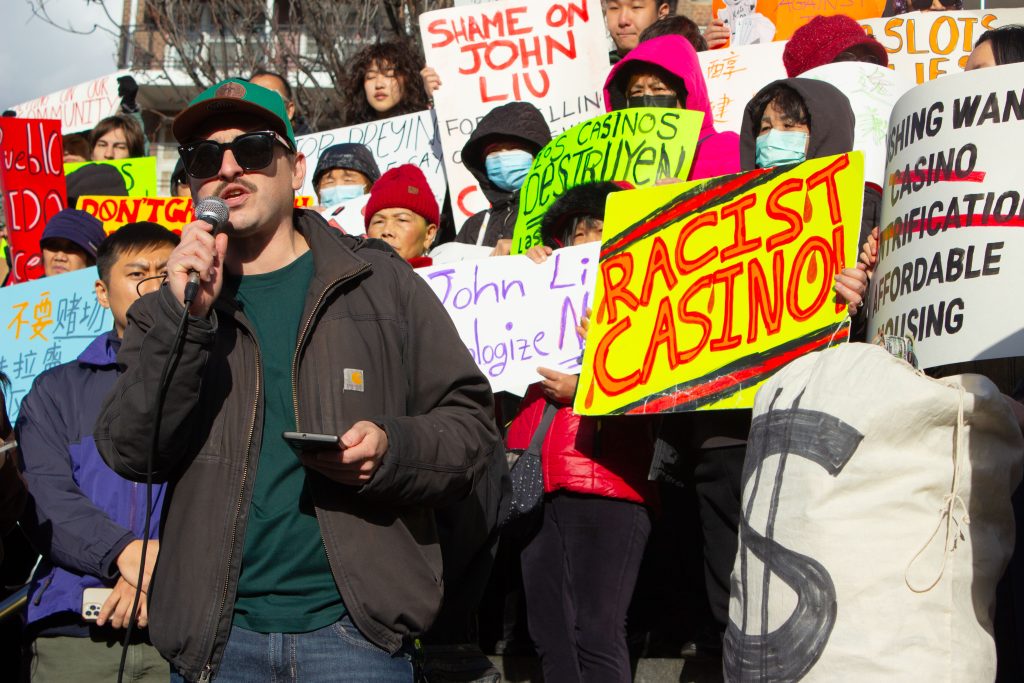
On July 30, Meng joined State Senator John Liu to host a roundtable at the Glow Cultural Center in Flushing, bringing together healthcare providers and advocates to discuss the anticipated fallout from the legislation. While the White House has promoted the bill’s tax cuts, Meng and Liu emphasized the deep cuts to programs like the Affordable Care Act, Medicaid, and SNAP, which they say will primarily hurt working-class families and the elderly.

“The Republican majority has called its budget legislation the big beautiful bill,” Meng said. “But I and many of my colleagues call it the big ugly bill because of the damage it will do”

State Senator Liu echoed Meng’s concerns, calling the legislation “a bad, ugly bill.”

“From vindictive cuts to Medicaid to SNAP benefits and other provisions we all pay for in federal taxes, this bad, ugly bill hurts an enormous number of people in our community and provides zero tax relief to 99% of Queens residents,” Liu said. “The Trump administration has taken from us with their left hand, and taken from us again with their right hand.”

Back in Washington, Meng said she has already heard concerns from local constituents, especially families with aging parents or children who rely on Medicaid-funded services.

“We’ve heard from people, for example, whose parents are in nursing homes,” Meng said. “About 60% of nursing home patients around the country rely on Medicaid. This is especially true in Queens and New York State. We know that there are nursing homes that could actually completely shut down, and we’ve heard concerns, you know, at least two in Queens that could completely shut down. We’re also hearing from moms who are taking care of kids who may have health issues and are unable to work and rely on the Medicaid money so that their kids could get health care,” she added. “They’re really scared because on a typical salary, middle income, salary in New York, that money is that that health care is really high cost and unaffordable, and they literally don’t know how they’re going to get their kids the care that they need.”

Analysts estimate the bill could lead to 1.5 million New Yorkers losing health insurance, threaten SNAP benefits for another million, and slash $8 billion from the state’s hospitals—some of the deepest cuts projected in Queens.

“This affects everyone, right?” Meng said. “People think, oh, it’s only going to help people who are low income. It’s going to affect people in nursing homes. You know, people in nursing homes, the families that send them there, they’re not all low income, they’re middle income. Some of them are high income. They depend on Medicaid to help cover the very expensive costs that nursing homes consist of.”

As efforts to safeguard affordable health care intensify across New York, members of the state’s congressional delegation are speaking out forcefully. On July 9, Protect Our Care New York hosted a press conference with Congressmen Joe Morelle and Ritchie Torres, Congresswoman Laura Gillen, and frontline health care worker Shayna Rinus to condemn the GOP’s vote to enact the most sweeping Medicaid cuts in American history

“Unlike the Affordable Care Act, which was aimed at making health care more accessible, this bill takes significant steps to rip health care away from those who need it the most, it is more than a policy failure,” Congressman Joe Morelle said. “It’s a moral failure. It’s a selling out of working families across the state of New York and across America, and the impacts of these cuts will still tear families apart and jeopardize the lives of our most vulnerable neighbors and and you ask yourself for what? What was the goal? What? What is the rationale for this?”

Courtesy Protect our Care New York

Congressman Ritchie Torres echoed the urgency, “It’s a catastrophe, I mean, 1.5 million New Yorkers at a minimum are going to lose health care.” Torres, who grew up relying on Medicaid, emphasized how critical the program is for everything from emergency care to long-term support for disabled and elderly Americans.

Congresswoman Laura Gillen shared stories from New York families she’s spoken to—parents of special needs children, caregivers of seniors, and struggling workers already squeezed by the cost of care. “We had a health care expense crisis before this bill, this is only going to exacerbate it and make it so much worse. But the important thing is, this is not only just about Medicaid recipients. This is also for all of us,” she said. “Health insurance companies came to my office and said, If the hospital and health care systems are going to pass on the cost to patients, which will be passed on to us, then we’re going to raise premiums, so even people with private health insurance are also going to be affected by this bill. It’s a terrible bill.”

Closing the event was Shayna Rinus, a patient care technician and mother of three children with autism. “When I first heard that Medicaid was up for funding cuts to filter out the waste, I was very confused and very scared as to what that meant. You know, I have three boys here. One of them has is in first grade with a reading level of a fourth grader, and he is so incredibly smart. He does math games for fun. He’s doing multiplications and fractions, and he’s only in the first grade. And so when I heard about these cuts to filter out the waste, I’m sitting here going, my child isn’t waste.”

Protect Our Care and the New York Congressional Delegation vowed continued resistance, pledging to amplify public awareness and push for legislative protections to undo the harm. As the speakers made clear: this fight isn’t over—not by a long shot.

Though not enrolled in Medicaid himself, Astoria resident and business owner Mike Cortez sees the issue as deeply personal. “For me, it’s just about being a human being,” he said. Cortez, now 35, recalled relying on Medicaid in his early twenties before finding financial stability. His wife, a speech pathologist with the Department of Education, works with children who depend on Medicaid for vital services. “People need help. They need support,” he said. “Taking away opportunities for those who really rely on it—it’s just inhumane.” Even from his current position of privilege, Cortez worries about what’s lost when access to care becomes a luxury. To him, Medicaid is more than a safety net; it’s a foundation for dignity, particularly in a place as diverse and demanding as New York City.

Cortez also pointed to the broader community impact, particularly in Queens, where growth and gentrification often coexist with deepening inequality. He acknowledged that parts of the proposed bill might benefit him as a bar owner—lower payroll taxes, for instance—but said the trade-offs aren’t worth it. “I prefer people that need help receive help,” he emphasized. Astoria may be booming, but surrounding neighborhoods still struggle, and he worries that Medicaid cuts will accelerate displacement and division. “If it’s not good for one, it’s not good for all,” Cortez said. To lawmakers, his message was clear: “Get your mind out of your pockets. Mind the gap. There’s an opportunity right now to help people—and we shouldn’t waste it.”

Another voice in this conversation is Steven Abraham, a long-time Rego Park resident who sees the issue through the eyes of a senior citizen. In Rego Park, 81-year-old Abraham has lived in the same apartment for over half a century. While he doesn’t qualify for Medicaid—his monthly income from Social Security and a pension places him just above the threshold—he relies on the Medicare Savings Program and extra help from the state to cover his Medicare Part B premiums and keep his prescription costs low. “In a way, it’s unfortunate, but in a way it’s fortunate,” Abraham said, reflecting on his in-between status. “If I qualified, I’d be getting more benefits—but I’d also be making a lot less.” Like many seniors, he feels caught in a system where the balance between financial independence and healthcare access is precarious, and he’s wary of how easily things could change.

Though the current Medicaid cuts don’t directly affect him—at least not yet—Abraham is cautious. He’s heard politicians claim seniors won’t be impacted, but he’s lived long enough to know that political promises often shift. “They say one thing, and something else happens,” he noted. Still, his focus remains largely personal. At 81, in relatively good health, he hopes to stay independent, but he’s aware of others in his community, especially those in nursing homes, who depend on Medicaid every day. If those services are reduced, he worries what the ripple effect could be—especially for those without his level of stability. “You never know,” he said. “Things change.”

In Bushwick, where Wyckoff Heights Medical Center serves as a lifeline for thousands, the stakes are even higher.

While New Yorkers across the city voiced concern about how federal Medicaid cuts could upend their daily lives, the pressure is mounting just as heavily on the hospitals that serve them. At a July 30 press conference held at Wyckoff Heights Medical Center in Bushwick, U.S. Rep. Nydia Velázquez joined hospital leaders and healthcare workers to sound the alarm over what they say is a looming crisis. The “Big Beautiful Bill,” recently signed into law by President Trump, includes sweeping health spending cuts that could result in 10.9 million Americans losing coverage, according to the Congressional Budget Office — and safety-net hospitals like Wyckoff are among the most vulnerable. With more than half of its patients insured through Medicaid and many more underinsured, Wyckoff already operates with thin margins. The coming cuts could force them to reduce services, lay off staff, or even close their doors.

Velázquez emphasized that these cuts won’t just hurt hospitals — they will destabilize entire neighborhoods. Brooklyn alone has nearly 3 million Medicaid enrollees, and in Velázquez’s district, around 45% of residents rely on the program. Healthcare leaders warned that without Medicaid, more patients will skip preventive care, which increases the likelihood of serious illness and emergency visits. That, in turn, strains hospitals further — even for those with private insurance. An analysis by New York hospital associations projected that Velázquez’s district could lose over 800 hospital jobs, while neighboring areas like U.S. Rep. Yvette Clarke’s district could see even more. As Velázquez made clear, this isn’t just a budget issue — it’s a question of equity, access, and survival for the communities most in need.

Courtesy Representative Nydia Velázquez

Glendale’s Shops at Atlas Park Sold to Ashkenazy

Courtesy the Shops at Atlas Park

Atlas Park Acquired in $750M Retail Push

Ashkenazy Acquisition Corporation has acquired The Shops at Atlas Park, an open-air shopping center in the Glendale neighborhood of Queens, New York, as part of a larger $750 million strategy to invest in and revitalize top-tier retail properties across the United States.

The private real estate firm, led by developer Ben Ashkenazy, purchased the 374,000-square-foot lifestyle center from California-based Macerich Co. and a partner. While the sale price was not disclosed, analysts at Evercore ISI previously estimated the property would sell for about $70 million. Macerich originally acquired the property in a foreclosure sale for $54 million in 2011.

Situated on 12 acres at the intersection of Cooper Avenue and 80th Street, The Shops at Atlas Park offers more than 1,400 parking spaces and is easily accessible from nearby thoroughfares including Woodhaven Boulevard, Metropolitan Avenue, and the Jackie Robinson Parkway. It is also served by public transit, making it a convenient destination for local shoppers.

The center is currently 97% leased and features a mix of national and regional tenants including TJMaxx, Foot Locker, HomeGoods, Regal Cinemas, New York Sports Club, and Corndogs by Mr. Cow. Its tenant mix and high occupancy make it one of the few open-air lifestyle centers in the borough, offering a distinct alternative to enclosed malls.

The acquisition was financed by ACORE Capital, which was selected after more than 15 lenders submitted competitive bids for the deal. The strong interest in financing underscores continued investor appetite for well-located retail assets with stable cash flow.

The Shops at Atlas Park carries a $65 million mortgage with a 9.5% interest rate that matures in 2026. Meanwhile, Macerich’s stock has fallen 15% since the beginning of the year. Despite this, the firm continues to own and operate other high-performing properties in New York City, including Queens Center in Elmhurst and Kings Plaza in Brooklyn.

Ashkenazy Acquisition, headquartered in New York, has a long history of acquiring, redeveloping, and managing marquee retail properties in major urban markets. Its current holdings include Bayside Marketplace in Miami, Shops at Rivercenter in San Antonio, The Shops at the Bravern in Seattle, Beverly Connection in Los Angeles, Cross County Mall in Yonkers, and Vernon Hills in Westchester County, among others.

With over 100 properties totaling more than 15 million square feet, Ashkenazy’s portfolio spans the United States, Canada, and the United Kingdom.

New Era Begins at QEDC with Ben Guttmann

Courtesy QEDC

Guttmann Aims to Be ‘Unfair Advantage’ for Queens Entrepreneurs

By MOHAMED FARGHALY

mfarghaly@queensledger.com

Ben Guttmann has been named the new Executive Director of the Queens Economic Development Corporation (QEDC), marking a generational leadership change at one of the borough’s most vital economic organizations. Guttmann succeeds longtime director Seth Bornstein, who stepped down after over four decades with QEDC, including 16 years as executive director.

“The world would be better off if it were more like Queens,” Guttmann declared in a message announcing his appointment. “Queens is the truest version of the American Dream. This is where you can be from anywhere and become anything.”

A Queens native who grew up in Long Island, Guttmann returns to lead an organization he’s long been connected to—first as a supporter, then as a board member, and now as its executive director.

“When I had my agency, we, years ago, we did some pro bono work with QEDC,” he said. “I’ve known Seth and the team for a long time. I’ve actually been a board member for about seven years.”

Guttmann co-founded the marketing agency Digital Natives Group, which he ran for a decade before selling it several years ago. “We had some really great clients, from the NFL to I Love New York to Grand Central,” he said. “It was a really fun journey.”

He has since worked as a consultant, written a book, and returned to his alma mater, Baruch College, as a marketing professor. That marketing expertise, Guttmann said, is already shaping his vision at QEDC.

“Part of my background is in marketing, right? So I ran a marketing agency for over a decade, and I teach marketing at Baruch,” he said. “I thought it was really important to help tell our story with a little bit more clarity.”

The story he wants to tell is one of a thriving, pluralistic borough. “Our mission is to make Queens thrive,” Guttmann wrote in his announcement. “But our real goal is to be the unfair advantage for why Queens thrives.”

Founded in 1977, QEDC supports entrepreneurs across the borough, offering everything from business counseling and educational workshops to incubators, reentry programs, and vendor markets. Its programs serve more than 3,000 individuals annually.

“You want to start a pizza place in Forest Hills, or a barber shop in Corona or, you know, a yoga studio in Jamaica,” Guttmann said. “You can call us up. You can talk to experts for free. You can get technical assistance. You can get access to resources that help you realize whatever your dream is.”

The organization is particularly focused on supporting immigrant, minority, and historically underserved entrepreneurs.

“That is absolutely our bread and butter of what we’re trying to do,” Guttmann said. “We work with community partners across the borough, in every corner, every neighborhood, to make sure that we’re capturing everybody who’s interested in thriving in Queens.”

Asked what success looks like in the coming years, Guttmann emphasized outreach and results.

“You know success is going to be that we continue to deliver the results that we’ve been delivering for a long time and to reach more and more people,” he said. “The product of Queens is too good. The opportunity here is too good for us to keep it a secret.”

“I’m grateful to my predecessor, Seth Bornstein, for the incredible legacy he leaves behind after more than 40 years with the organization,” said  Guttmann, reflecting on the leadership transition at the Queens Economic Development Corporation. Bornstein’s decades-long tenure included roles as both staff and board member, culminating in 16 years as executive director, during which he played a central role in expanding QEDC’s impact across the borough. Guttmann acknowledged the weight of following in those footsteps, noting that Bornstein’s institutional knowledge and deep ties to the community helped make QEDC a vital force for local entrepreneurs and neighborhood development.

Looking ahead, Guttmann says his team will continue to evolve with new branding, a refreshed website, and programs that reflect a rapidly changing city.

“We’re entering an environment where federal funding is no longer guaranteed,” he said. “It’s very important for us to be out there more to tell our story and to try to get as much support as possible.”

Despite these challenges, Guttmann says Queens is exactly the right place to build the future. “This is the kind of place that allows people to do things that, you know, that very few other places allow you to do.”

As he put it on day one to his team, “We want every other community to wish they had a group like ours.”

Student OMNY Cards Become Lifeline for NYC Kids One Year In

MOHAMED FARGHALY

mfarghaly@queensledger.com

As the 2024–2025 school year wraps up, New York City’s Student OMNY card program has become a daily staple for hundreds of thousands of students across the five boroughs — replacing the old MetroCards with a smarter, more flexible way to get around.

Launched last fall, the tap-to-ride Student OMNY cards give eligible students four free rides every day, any time of day, all year round — including weekends and summer breaks. That’s a big change from the MetroCard system, which restricted rides to school days and limited hours.

“I’m thrilled about the launch of student OMNY cards because expanding access to public transit means more and more students will have opportunities to explore our city and experience all that New York has to offer. I’m grateful to our partners at the MTA and across the city for making this possible for our students.” said New York City Public Schools Chancellor David C. Banks when the program debuted. Students have since been able to tap into those opportunities 24/7.

Distributed exclusively through schools, the Student OMNY cards have simplified commuting for students and their families. The cards can be used on subways, local and Select Bus Service routes, the Staten Island Railway, the Roosevelt Island Tram, and the Hudson Rail Link, with free transfers between modes.

“These expanded student OMNY cards are a gamechanger for families across New York City, particularly for working-class families that need just a little more help to afford our city — families where older siblings pick their younger brothers and sisters up from school, or where kids have after-school and summer jobs to help make ends meet,” said Mayor Eric Adams during the program’s announcement last year. “This builds on the work we’ve done to make our city more accessible, particularly for young people and low-income New Yorkers. From our subways, to our ferries, to our greenways, we’re making it easier and more affordable to get around New York City.”

Families have embraced the program’s year-round validity, which lets students travel freely during summer vacations or on weekends without worrying about card expiration.

With Student OMNY cards valid year-round, New York City kids now enjoy unprecedented freedom to explore, work, and stay connected during the summer months when school is out. The cards provide up to four free rides daily, removing transportation barriers for students attending summer jobs, internships, camps, or community programs. This accessibility not only supports youth employment and enrichment opportunities but also helps families save money during a time when transit needs often increase.

“We commend the Department of Education and the Metropolitan  Transit Authority for expanding the reach of this program to include nights, weekends, and a full  year of access including the summertime,” New York State Senator, Brian Kavanagh said. “This was a multi-year effort that began in 2019, when  the half-fare MetroCard was eliminated and replaced by full-fare MetroCards for students living  1-1.5 miles from their schools. There is no doubt that this will make a tremendous impact on  students and lift a significant financial burden from their families. “

NYC Public Schools has stressed that students must get their OMNY cards directly from their schools—the MTA does not distribute them. Cards are personal and should not be shared; misuse could lead to confiscation.

Students are also reminded to tap their cards every time they board to ensure accurate ridership tracking, which helps the MTA improve transit service.

If cards are lost or malfunctioning, schools are the first stop for replacements, with station agents and bus operators offering assistance on the spot if a card isn’t working.

The OMNY rollout builds on broader city efforts to make transportation affordable and accessible. The Fiscal Year 2025 budget expanded the “Fair Fares NYC” program and provided free summer MetroCards for youth employment participants.

“Since its founding, our Youth Council has been dedicated to expanding the number of hours during which students can use their MetroCards to commute to school, internships, sports and other school-related activities,” said New York State Assemblymember Harvey Epstein. “For far too many students, the status quo prevented the use of student MetroCards on nights and weekends, when many extracurriculars take place. In 2020, we ended the practice of charging half the fare for the 130,000 students living less than two miles from their schools making public transportation free for all students. Today’s announcement builds on that success by giving four taps per day, 24/7 for all students. This change in the student transportation policy is going to help hundreds of thousands of students and their families. I want to thank the MTA for making this happen and to our current and former Youth Council members: when you lead, you can make change in our world that helps millions of others.”

As the program settles in, officials say the Student OMNY card is more than a transit pass — it’s a tool helping students connect to education, work, and community.

“In this pivotal moment, New York City is not just updating a program but transforming the daily commutes of our students,” said New York State Senator Robert Jackson. “I applaud the collaboration of the mayor’s office, the Department of Education, and the MTA in enhancing access and ensuring no student is left behind. With the Student OMNY cards, every trip becomes a pathway to potential, embedding seamless travel into the fabric of our students’ academic experiences and broadening their horizons every day of the year.”

Fill the Form for Events, Advertisement or Business Listing