
Ridgewood Community Garden at the Center of Free Speech Legal Battle

Facing eviction from a beloved community garden after a neighbor complained about its values statement, gardeners have accused the City of discriminatory enforcement

COLE SINANIAN

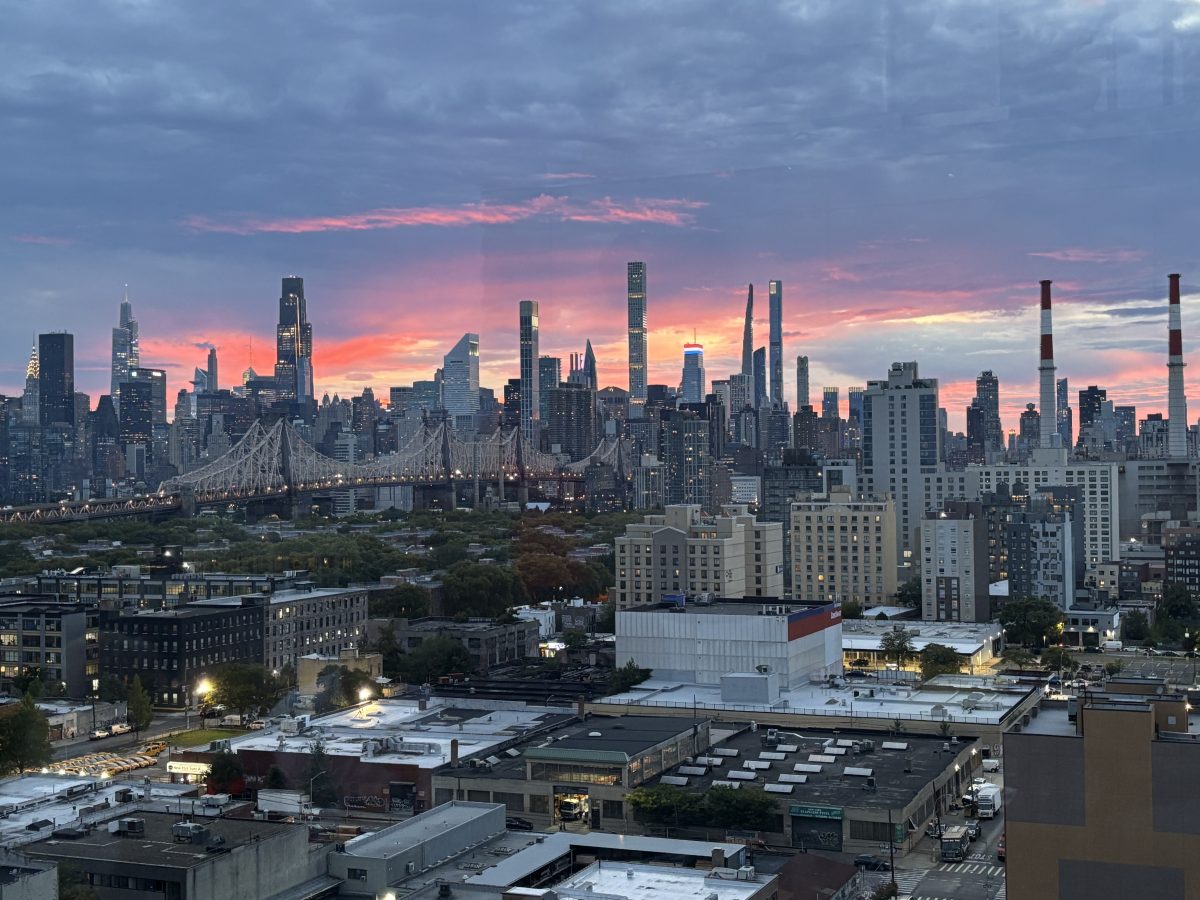
It’s 10am on a bright and breezy late-summer Sunday, harvest season at Jardin de Santa Cecilia Gentili, a community garden in Ridgewood, Queens. Originally named “Sunset Community Garden” due to the view atop its gently sloping hillside, from which the towers of Midtown can be seen bathed in gold at sunset, the garden is already buzzing. Stewards shovel compost and pick cherry tomatoes, bell peppers, purple basil, and other crops available to all members of the community. 

“Everyone is welcome here,” says Indalesio Tellez, one of the garden’s few dozen members. “We’ve just started harvesting,” Tellez calls in Spanish to a pair of women passersby pushing strollers. “You’re welcome to come by anytime to pick up some food!” A toddler with a dripping nose, accompanied by a young man wearing a gold Star of David around his neck, reaches giddily for a watering can that’s nearly his size. 

Many of the garden’s members hail from Ridgewood’s immigrant, trans and queer communities, and view it as a safe space in a world that’s often hostile to marginalized groups, says Tellez, whose family is from Mexico. 

Still, the garden is, first and foremost, a garden. A highly productive one. Piper Werle, who’s been a garden steward for the past year, doesn’t do much shopping for produce anymore. She’s proud to admit that most of her fruits and vegetables come from the garden, planted by either herself or one of her neighbors. In the past year, gardeners have processed nearly 7,000 pounds of kitchen scraps into compost and produced hundreds of pounds of fruits and vegetables, available to all community members. 

As a source of pride and community for Werle, Tellez, and dozens of other gardeners, it’s understandable, then, that when she found out the City was evicting the garden, Werle’s reaction was to burst into tears. 

It all began when a disgruntled neighbor reported the garden’s values statement — which urges garden members to interrupt “violent behavior or rhetoric that expresses all forms of hate,” including Zionism, anti-semitism, nationalism and transphobia” — to the City’s parks department as discriminatory. After a drawn-out negotiation and several inaccurate hit pieces from The New York Post, the City moved to terminate the garden’s license in May. 

In July, a New York County judge called the gardeners’ activities discriminatory — a claim that the gardeners and their lawyers vehemently deny. The garden’s legal team then brought the case to federal court and has since managed to delay eviction until October 3rd. But for Tellez, Werle and the other gardeners, this is about more than just keeping the garden open. The City’s efforts to close the space could set a troubling precedent, they say, where vibrant community spaces are vulnerable to closure at the request of a single well-connected neighbor.  

“The City claims to care about community-building, especially around community gardens,” Werle said. “But here is this vibrant, diverse community that’s been built to take care of the land and to feed ourselves, and it feels like they’re trying to tear it apart instead of offering even basic conflict resolution.”

The complaints

Sunset Community Garden sits behind Grover Cleveland High School track and field complex at the intersection of Onderdonk and Willoughby Avenues. According to Carlos Martinez, the director of NYC Parks’ Green Thumb program — which administers the City’s community gardens — the garden originated in funding awarded to the neighborhoods surrounding the Newton Creek Wastewater Treatment Plant.

The funding was secured in a lawsuit against the plant, after which the Ridgewood and Greenpoint communities,  guided by the NYC Parks Department, began a yearslong visioning process. Dozens of potential projects were identified, and over 500 people were involved in the discussions. By 2016, Green Thumb had secured $500,000 of funding for a community garden in Ridgewood. After a few more years of discussion between the community and the City, the location was settled and the garden opened in 2023.

A local woman named Christina Wilkinson, who is president of the Newtown Historical Society, was involved in the initial visioning process back in 2016, Martinez said in a recorded meeting with gardeners in April. Werle and Tellez joined the garden in 2023, although by then, Wilkinson was nowhere to be found.

Werle and Tellez said the gardeners decided to draft a series of community values after their first season working together as a way to facilitate collaboration among such a diverse group of people. This is a normal thing to do in communal land stewardship, Werle asserts, and the values were an enormous collaborative effort, the result of six months of surveys, virtual meetings, and in-person discussions among garden members.  As the final document — published in the summer of 2024 — notes in its introduction, it is a “living document,” meant to evolve and change as the garden does. Its tenets are a means of ensuring that all who use the garden feel welcome, Werle says.

“That’s why the agreements were made, because we want everyone to feel safe, so we can make decisions in the most productive and healthy ways possible,” she said. “Which is why it’s so ironic that it’s being touted as a tool of exclusion when it was meant to be a method of inclusion.”

The garden’s community values, written in Spanish and English, include a land acknowledgement and a statement of solidarity with oppressed people around the world, including in Palestine. The document ends with the “community agreements” that condemn and identify homophobia, transphobia, sexism, ableism, fatphobia, xenophobia, Zionism, anti-semitism, nationalism, and racism as forms of hate. The values, the gardeners assert, are not a litmus test but democratically agreed-upon epxression of shared values, and are not meant to exclude. 

In an affidavit, Jewish garden steward Marcy Ayres explains the sense of community she’s fostered at the garden: “I have never felt any anti-semitism from the garden members, and have only felt support and celebration of my identity and faith,” Ayres writes. “Members of the garden even came to a Passover Seder that I held with my family last year.” 

Wilkinson, who had been monitoring the garden’s social media although she was no longer involved, complained to the City in September 2024. According to Martinez in the April meeting, Wilkinson was submitting her complaints through New York City Councilmember Robert Holden, who is known for his pro-Israel stance and with whom Wilkinson has a close relationship.

“Christina Wilkinson has direct access to councilmember Holden, so that’s how we are getting these complaints,” Martinez said. “It’s coming from the top. Basically, we are trapped in the middle.”

When asked via email about the discrimination that spurred her complaint, Wilkinson wrote: “I pointed out that their community values statement was discriminatory and both Parks and a judge agreed with me. There’s nothing further to discuss.” Wilkinson declined to be interviewed for this article.

The Post article 

Shortly after submitting her complaints, Wilkinson spoke to The New York Post, and the conservative outlet launched an aggressive attack against the garden, attempting to paint the gardeners as antisemites. Wilkinson had previously appeared in a July 2024 Post article for her support of an initiative to buy headstones for fallen New York City police officers.

The Post’s September 21, 2024 article, which opens with the line “They’re planting hate,” brought immediate threats and harassment to the gardeners. On September 24, 2024, a group of six white men entered the garden and approached two gardeners. The men, who did not identify themselves, began interrogating the gardeners, who happened to be immigrants from Middle Eastern countries. 

The men asked how they got their keys to the space and whether they were “pro-Hamas.” Meanwhile, dozens of violent and racist comments began appearing in the Post article’s comment section:

“You know what I like?” read one. “Gasoline and matches. Great for removing weeds.” 

“Kilemall,” read another, using an intentional misspelling of “Kill them all” to avoid censors. The commenter continued: “And their families that support them and their terrorism.” 

“Table cloth heads and sarin gas go together,” wrote another. 

Quoted sources in the article include Wilkinson, who has not set foot in the garden in years, and an Israeli woman named Sarah Schraeter-Mowers, whose name neither Werle nor Tellez recognizes. The Post quotes Mayor Eric Adams in its most recent article, whose campaign to confront the “unprecedented rise in anti-semitism and anti-Jewish hate” has been criticized as a tool to silence constitutionally protected speech.

In a written statement, Niki Cross, one of the attorneys representing the gardeners, suggested the garden may be another victim of the mayor’s crackdown.

“The City is favoring the unjustified and baseless feelings of exclusion of someone it openly admits is a transphobe, and who is openly Zionist (that is, supportive of an explicitly discriminatory and genocidal state) precisely in order to actually exclude and punish anyone who expresses solidarity with oppressed peoples and to remove the trans people of color from the community they have carefully cultivated alongside allies,” Cross wrote. “This is what Mayor Adams means by ‘stamping out hate’—in fact he and the City are illegally stamping out dissent.”

In a text message sent to gardeners on April 23, NYC Green Thumb Assistant Director of Community Engagement Alex Muñoz, described the City’s enforcement as “unfair,” and appeared to refer to Wilkinson as a “transphobe.”

“I’m sorry for everything,” Muñoz wrote. “For the changing requirements, the unfair policies, for empowering a transphobe, and for not being there on the ground as soon as the Post article happened.”

The violations 

The violations that the City is enforcing as a result of Wilkinson’s complaints concern the community agreements and a small memorial for Cecilia Gentili, a prominent Argentinian-American trans-rights activist who lived near the garden. When Gentili passed away in February 2024, Tellez and other gardeners who had known her built a 3×3.5 feet tall memorial in the space’s far corner as a way to remember their neighbor.

In September 2024, the City notified the garden that the community agreements constituted an “ideological litmus test” that’s prohibited in NYC Parks’ public spaces.

A few months later, the City told gardeners the Gentili memorial violated NYC Parks’ policy about memorials. The gardeners responded with a clarification that it was in fact an art installation, not a memorial, and was thus subject to NYC Parks’ Arts and Antiquities guidelines. When garden members communicated that they wished for the installation to be permanent, the City suggested either moving the altar to a different space, or subjecting it to a formal approval process that would have it moved to a new space the following year, as large, permanent art installations are prohibited on City land. On May 5, 2025, the City sent the gardeners a termination notice, citing their continued failure to comply with NYC Parks’ public space rules.

The 3×3.5ft memorial for local trans-rights activist Cecilia Gentili is one of the violations cited in the City’s eviction notice.

Werle, Tellez, and the garden’s legal team, however, point out that small art installations are common throughout the city’s public gardens and are — by the City’s own admittance — rarely enforced. Furthermore, Green Thumb’s community garden handbook states only “large art installations” are subject to the written approval process, while gardeners say Green Thumb has not defined what constitutes “large.” 

We try to turn a blind eye,” Martinez said. “Because we know that you guys having art installations is part of the vibrancy of gardens, but when the powers reach out to us and say, ‘hey, you have illegal activity in the garden,’ unfortunately we need to act.”

On June 4th, the NY Supreme Court granted the garden a temporary restraining order halting immediate eviction, but in a July 18 hearing, NY County Supreme Court Judge Hasa Kingo sided against the gardeners, claiming that the garden’s community values violate the First Amendment.

The gardeners withdrew from the NY case and quickly re-filed in federal court, for which a preliminary injunction hearing has been scheduled for October 3. In a written statement directed at Kingo, garden attorney Jonathan Wallace wrote that the judge “completely misapprehends the First Amendment” by construing the community members who lease the garden as the state itself. Gardeners are no more subject to free speech law than would be private citizens leasing government-owned office space, Wallace writes.

The ‘gift that keeps on giving’

In subsequent press releases, the gardeners claim to have attempted to contact and dialogue with the City since the first notice was sent last September, but struggled to get any meaningful compromise. 

Gardeners attempted to meet directly with NYC Parks Department by contacting Public Advocate Jumaane Williams, Ridgewood City Council Member Jennifer Gutierrez, NY State Senator Julia Salazar, and NY State Assembly Member Claire Valdez. The Parks Department ignored requests, and Salazar, Valdez, and Gutierrez condemned Kingo’s statement in a July 24 letter:

“We are deeply troubled by accounts of racist and transphobic harassment against the members of Sunset Garden,” they wrote. “People in our community care and want to enjoy this space without fear or intimidation. We need to come together to ensure this garden remains a place of safety and inclusion, and we urge all parties to work toward that future.“

It is unclear exactly what would happen if the City successfully evicts the gardeners.

What will certainly be lost if the City locks the space in October — a critical time for garden care — are years worth of labor and hundreds of pounds of food. And as attorney Wallace notes in his condemnation of Kingo’s decision, successful eviction of the gardeners could lay the groundwork for similar outcomes in other community gardens. He described the legal precedent as potentially a “gift that keeps on giving,” likely to be cited for years to come “by litigants eager to suppress any criticism of Israel and to establish that trans people, people of color, and immigrants do not warrant the protection of our laws.”

The NYC Parks Department declined to comment through its press officer, Chris Clark, due to the ongoing litigation.

Forest Hills & Rego Park Historic Plaque Program Seeks Honorees

By Michael Perlman

At a time when historic yet not landmarked buildings are insensitively altered or thoughtlessly demolished, a new bronze plaque program was launched, known as the Forest Hills & Rego Park Historic Plaque Initiative. Rego-Forest Preservation Council partnered with Academy Engraving, Inc. in December 2021, with a vision of producing a trail of commemorative “Forest Hills Historic Site” and “Rego Park Historic Site” plaques. After submitting proposals and making presentations at board meetings, building managers, boards, and supers began expressing interest. Now buildings that have an interest can once again contact Rego-Forest Preservation Council, and sponsors are welcomed.

Between various preservation pursuits since the program’s founding, two buildings collaborated with the partnership. In June 2023, the façade of the Art Moderne meets Mid-Century Modern style Park Briar at 110-45 Queens Boulevard was the recipient of a bronze plaque, followed by a bronze plaque a few months later on the Tudor Medieval style Sutton Hall façade at 109-14 Ascan Avenue.

The Park Briar circa 1960s, Courtesy of Fisher Brothers

Originated by Rego-Forest Preservation Council, this program spotlights architecturally and culturally significant buildings by documenting their history and distinctive architecture on a plaque that is mounted on their façade. Architectural features are sampled and serve as a border and/or motif on a plaque to further celebrate its history. Additionally, vintage photos of the architect and the building are featured. In some cases, buildings may have lost their historic names, but can once again be appreciated, increasing the likelihood of restoring their regal name.

It is a belief that once property owners, boards, supers, and residents have an understanding of a site’s distinctive architectural characteristics and history, properties will be well-maintained and preserved by current stewards and future generations. Without historic buildings such as Sutton Hall and The Park Briar, the community would become a predictable “Anytown USA.”

Sutton Hall circa early 1930s, Courtesy of Rego-Forest Preservation Council.

Forest Hills was named in 1906 by Cord Meyer Development Company after “rolling hills” and its proximity to Forest Park, whereas Rego Park, an outgrowth, became official in 1923 by the Real Good Construction Company after their “REal GOod Homes” advertising slogan. Early to mid-20th century buildings grant a personalized experience for residents, newcomers, and visitors, with unique craftsmanship pertaining to styles that range from Tudor and (Georgian) Colonial to Art Deco. In addition to stately apartment buildings, religious sites, theaters, and commercial sites were designed by architects in partnership with builders who were often raised in Europe, and they were frequently built to last.

Academy Engraving at 271 Madison Avenue designs the Broadway League’s Tony Award, in addition to trophies, signs, and plaques throughout New York City from memorial tablets to NYC park name plaques. Notable clients include Baccarat, Lalique, Rolex, and Bulgari. “We are proud to be a sign, awards, and custom engraving vendor based in Manhattan,” said president Frank DiBella. The highly skillful firm, which is known for its passionate craft with diverse accomplishments throughout the five boroughs, was founded in 1991 by DiBella and Mili Garavaglia. Today, their top of the line achievements continue to be available at affordable rates.

“I feel it is extremely important to add a marker or plaque that explains the architectural significance and history of historic buildings. It definitely helps to stress the importance of preservation with the property owner and neighbors,” said DiBella.

Since DiBella’s youth in Gravesend, Brooklyn, he has admired and respected historic homes and buildings. He said, “It was always exciting to discover a home built in the late 1700s and realize how many families came and went, and that home was still there after all that time. My favorite was Lady Moody’s home at 27 Gravesend Neck Road, which was famous in the neighborhood. My friends and I were proud it was in our own backyard. We also had the Wyckoff Bennett Homestead, a very interesting place built before the Revolutionary War.”

Coming home to Sutton Hall offers a grand and charming experience. Built from 1929 to 1931 by El-Walt Realty Corp, it is a foremost example of urban planning with English Manor design, evident by Medieval wood doors with stained glass bearing knights and shields, a cupola, a slate pitched roof, a half-timber and brick facade, battlements, and inner and outer landscaped courts and recessed facades to maximize light, air, and neighborliness. Sutton was portrayed as “a revelation in modern living” in a 1932 edition of The New York Sun. The building was designed by Benjamin Braunstein, a Constantinople native and award-winning architect, who was trained at the Hebrew Technical Institute and at the Beaux Arts Society. He also designed several nearby buildings, such as the Holland House, Tilden Arms, and The Wakefield, Valeria Arms, Devon Hall, The Chatham, and the New Hampshire Apartments. Some of his significant achievements in Rego Park are Marion Court, Remo Hall, Jupiter Court, the Oxford-Cambridge Apartments group, and The Sterling.

Historic bronze plaques also enable the opportunity for unveiling ceremonies, where community residents can learn about the plaque production, a property’s history, and develop a new or renewed appreciation for architectural and artistic detail and form, as well as uncover the background of their architect and builder. There was no ceremony planned at Sutton Hall, but one was held beyond the exquisitely landscaped front pathways of The Park Briar on June 4, 2023 at 11:30 AM.

Park Briar Historic Site bronze plaque, Photo by Michael Perlman.

The Park Briar was the subject of a 1st prize award for its architectural and civic value in 1952 at a Queens Chamber of Commerce Building Awards Competition. That year’s “Queensborough” publication by the Chamber read, “Numerous angles of elevation in the 163-apartment structure afford maximum light and ventilation. An imposing marble entrance façade leads into a deftly-decorated lobby. Apartments ranging from 2 to 6 rooms contain exceptionally large picture windows, cross-ventilation throughout, and walk-in closets with lights.”

Today, one’s eye is drawn from the whimsical pathways to streamlined brickwork with floral motifs on curved and angular facades with large terraces, offering a striking appearance. An Art Deco lobby features rectangular columns, moldings, steps and a balcony with detailed brass railings, an illuminated geometric dome, and an ensemble of beige and brown terrazzo floors bearing a motif. Near the elevator is an Art Deco Capitol mail chute, a residential rarity. The Park Briar is a superb example of soundproof and fireproof reinforced concrete construction.

Tammy Jacobi, board president of the Park Briar opened the ceremony, and referenced this columnist among other distinguished guest speakers, such as Executive Director Jason Antos of the Queens Historical Society, President Tom Grech of the Queens Chamber of Commerce, and Executive Director Frampton Tolbert of the Historic Districts Council. Jacobi said, “We are gathered to celebrate the exciting, historical ceremony, unveiling the Park Briar plaque. It is such a pleasure to see so many honorable people participating in this event. I have been a longtime resident, and it has been my pride and joy, along with my fellow board members, maintaining and preserving this building.”

Guest of Honor Jamie Rose Fisher, great-granddaughter of Larry Fisher who co-founded Fisher Brothers, delivered an eloquent speech. Then she pulled a curtain to unveil the plaque, and the crowd cheered. She felt deeply honored and explained, “It fills my heart with immense pride to be a part of this momentous occasion. The Park Briar holds a significant place in the history of our family’s legacy. Built by the visionary founders of Fisher Brothers, Martin, Larry and Zachary, this architectural gem represents their exceptional hard work and unwavering commitment to world-class design.”

She felt privileged to have known her great-grandfather. “Although I was young when he passed away, his dedication and passion to our business continues to guide and motivate me to this day. Martin, Larry and Zachary possessed an extraordinary foresight that set them apart from their peers – most notably their continuous pursuit of excellence. The Park Briar exemplifies their visionary mindset, embodies the values they held dear and is a testament to their legacy, which has been carried forward through future generations of our family.”

From an expert in plaque production, Di Bella feels there is not much to say about cast bronze or etched bronze, since it is a pretty basic process. However, the quality generates a great impression and lasts a lifetime and beyond. In anticipation, he said, “You give me the wording, you choose a font and a border style from a catalog, we cast it, and six weeks later the tablet is done. But then you showed me images of the architectural features of these buildings and what made them so unique. It interests me, and I thought, ‘Why don’t we try to incorporate those features into some kind of decoration specific to that building?’ I’m glad I was able to create a tablet that would complement and enhance the building’s history and beautiful architecture. I look forward to more projects, and appreciate the knowledge that I gained.”

Readers of this column can express interest in sponsoring a commemorative and educational bronze plaque for their property, or donate to the Forest Hills & Rego Park Historic Plaque Initiative fund. Everyone from residential building owners to residents to commercial tenants can email mperlman@queensledger.com. Readers can also join https://www.facebook.com/groups/SaveRegoParkForestHillsQueens and visit www.academyengraving.com

Yankees to Host Mets on 25th Anniversary of 9/11

Noah Zimmerman

noah@queensledger.com

The Mets and Yankees will meet in the Bronx on the 25th anniversary of 9/11 next season, five years after doing so for the first timez.

With the 2026 MLB schedule released at the end of August, the 9/11 memorial game is one of the most eyecatching matchups of the year. The two New York teams will face off in a high-intensity series that will take place during the final stretch of next season’s playoff race.

The 2021 meeting was the first time both took the field together in New York. It was an emotional affair featuring hundreds of FDNY, NYPD, EMT, and Department of Sanitation workers, survivors of the attacks, and of course the first responder baseball caps worn every year by both the Mets and Yankees on the anniversary of the attacks. Both teams stepped onto the field to shake hands and exchange pleasantries before the first pitch.

The game itself was an electric one, featuring an early 5-0 Yankee lead, a daring Mets comeback, and late lead changes. Two 8th inning runs gave the Yankees a 8-7 win, an important victory as they went on to claim the final Wild Card spot in the AL.

Next year’s matchup will be the first in a three-game series at Yankee Stadium. The Citi Field edition of the Subway Series will take place from May 15 to the 17.

Mets Rookies Handed Trio of Losses

By Noah Zimmerman

Three Mets rookie pitchers faced consecutive defeats over the weekend as New York dropped the last two games in Cincinnati and the opener in Philadelphia. Still, Jonah Tong, Brandon Sproat, and Nolan McLean all showed prowess and potential in strong starts.

Tong only surrendered three hits in his second career game. Unfortunately all three were sent over the wall as the Reds scored four runs in the first four frames. The rest of the outing went smoothly for Tong, finishing with six strikeouts in six innings of work. He was handed the loss as the Mets fell 6-3.

The next day, Mets #5 prospect Brandon Sproat stepped onto the big league mound for the first time. Like McLean and Tong, the young righty made a strong impression in his debut. 

The 24-year-old threw five innings of no-hit baseball, only allowing one run via sacrifice fly. In the 6th Cincinnati finally got to Sproat, with three consecutive hits to go up 3-1. Sproat struck out the next two Reds batters to end his night with seven K’s, but it wasn’t enough to avoid the loss.

Nolan McLean dazzled in Detroit but was finally handed his first loss of the year in Philadelphia. In 5.1 innings, McLean only gave up one run on seven hits with five strike outs. He displayed more masterful control of the breaking ball and the composure to survive busy basepaths.

Unfortunately the Mets were blanked by Aaron Nola and the Phillies bullpen. McLean was tagged with the decision in a 1-0 loss. It was New York’s sixth loss in their last nine games, a troubling trend as the Wild Card race continues to tighten up.

Carlos Alcaraz, Aryna Sabalenka Win 2025 US Open

Noah Zimmerman

noah@queensledger.com

Carlos Alcaraz and  Aryna Sabalenka both won their second US Open titles over the weekend as the final Grand Slam tournament of the year came to a close.

Alcaraz defeated Jannik Sinner in their third major finals matchup of the year. He defeated the Italian at the French Open but suffered his first ever major final defeat at Wimbledon. The Spaniard won each of his first six US Open rounds in straight sets, the first to do so since Federer in 2015.

Sinner looked lethal in the opening game, but Alcaraz came back in stunning fashion and finished with a break point. Sinner was finally able to respond and win the third game but couldn’t fight off Alcaraz, who won the first set 6-2.

In the second set, Sinner clawed his way back with the help of a break point and some acrobatic plays to level the final with a 6-3 win. It was the only set he’d take and the only one faced by Alcaraz, who won the next two 6-1 and 6-4.

In his third championship point of the final, Alcaraz beat Sinner on the backhand. The two congratulated each other with a smile and warm words before Alcaraz went to salute the star-studded crowd.

In the women’s final, Sabalenka defended her 2024 win and #1 ranking in straight sets over Amanda Anisimova. It was the first time since Serena Williams in 2014 that a women’s singles player defended a US Open title.

The #8 ranked Anisimova fought bravely in the opening game to force three game points but couldn’t hold off Sabalenka. After going down 2-0 the American fought back with three straight games won before Sabalenka took the next four to claim the set 6-3.

Up 5-4 in the second set, Sabalenka missed an overhead shot that would have set up championship point. Anisimova won the next point to take the game and went on to take a 6-5 lead. Sabalenka answered 50-15 to force a tiebreak and avoid a third set.

The defending champion was fierce in the finale, taking a 6-1 tiebreak lead. Anisimova survived two championship break points, but on her third attempt Sabalenka secured US Open glory.

The finals were fitting finishes to a thrilling tournament in Queens and a fascinating Grand Slam circuit. Time will tell if either Alcaraz or Sabalenka can claim a third US Open title in 2026.

Commemorating Photographer & Author Icon Eugene L. Armbruster, The Preservationist Who Documented A Changing City

Eugene Armbruster, circa 1935.

By Michael Perlman

Eugene L. Armbruster is among the prolific photographers and historians, who captured an evolving Brooklyn and Long Island, which consisted of Queens. Today, the New York Public Library grants access to The Eugene L. Armbruster Collection of Long Island Photographic Views, consisting of an estimated 5,800 digitized images spanning 1890 to 1934, although he produced thousands more that await digitization and rediscovery, if they exist. Armbruster’s memory is resurrected through his writings and photography, featuring architecture, landscapes, and our ancestors.

Armbruster was born on August 31, 1865 in Baden-Baden, Germany. He immigrated to America in 1882 and would reside in a home that dually functioned as his office at 263 Eldert Street. His occupation consisted of cigar box production for the H. Henkel Cigar Box Manufacturing Company, which he held for four decades, but his true passion entailed discovering as much as he could about his new country. He was married to Julia Meury Armbruster, and they had a son named Eugene Jr, and a daughter, also by the name of Julia. He passed away in Bushwick in 1943.

Armbruster captured neighborhoods that were first being developed, such as Forest Hills (named 1906) and Rego Park (named 1923). He photographed some of the last known views of historic farmhouses, often prior to their demolition. Some featured outhouses and barns alongside fields with mature trees, unpaved narrow roads, and hills. Such residential properties dated back to the mid-19th century and remained into the 1920s or 1930s. He also witnessed the widening of Queens Boulevard, which featured homes with porches, among others at a higher elevation.

He never ceased to follow his heart. After rewarding himself with a camera, his quest began to visit the small towns on Long Island. He was not appeased by only seeing destinations of interest, so he would question the villagers, and acquired a greater feel. He documented historical centers and visited libraries, uncovering as many facts as he can, also regarding Brooklyn.

Armbruster was also a talented historic preservationist, author, and artist, whose one of many books is titled “Long Island: Its Early Days and Development,” published in 1914. Besides sharing detailed historical facts, he featured his two-score pen and ink illustrations, which vividly reproduced the spirit of long ago, in addition to including maps and portraits. Among his subjects were Sohquompuo, the Indians, Dutch and English claims, the political division of the Island, Long Island’s population at different periods, Long Island a century ago, the borough of Brooklyn, and towns, such as Bushwick and Williamsburgh (historic spelling), Newtown and Long Island City, Flushing and Jamaica, and Huntington and Babylon.

Woodhaven Blvd, SW corner of Metropolitan Ave, Erected by Henry Suydam Vanderveer in 1850 farther east on Metropolitan Ave & moved in 1880, Photo by Eugene Armbruster, Courtesy of NYPL

An ad in his book read, “‘The Eastern District of Brooklyn’ with forty-six pen and ink sketches by Eugene L. Armbruster. Size 5×7. Cloth binding. P.P. 205, with general index. Price, $2.00 postpaid. Order from Eugene L. Armbruster, 263 Eldert Street, Brooklyn, N.Y.” This referenced his first book, published in 1912. Furthermore, his pamphlets would also benefit banks among other businesses.

In late 1935, he told the Long Island Sunday Press, “I really don’t have enough time to do all the things I want to do, and the funny thing about it is I don’t get any pay for the work I do.” He was doubtful that he would live long enough to fulfill all of his ambitions, including publishing several more history books and further investigating his theory on languages. He cultivated his passions with only five hours of sleep daily.

The publication explained his dedication to the study of languages. It read, “He has made a research of 130 languages trying to find how and when words first came into use. He believes that all languages are akin to each other with the letters merely changed around. The reason for the change, he believes, is that people did not know how to spell the words correctly, and could only convey the meaning by expressions instead of by the written word.”

In September 1942, columnist Nino Lo Bello of the Ridgewood Times published a two-part series. Part one was titled “Eugene L. Armbruster Eats, Sleeps and Writes History.” Cumulatively, the series showed how he earned a spot among the world’s leading thinkers. When the Brooklyn Eagle featured a question box, Armbruster was recognized as the chief Long Island-Brooklyn consultant for its twenty-year duration. At 77, Armbruster was able to remember every little fact that he recorded in his many treatises. Lo Bello wrote, “His room is cluttered with notes, his bookcases are loaded with all sorts of history books, and his desk – yes, his desk… well! Armbruster has been using the same desk for over 50 years. He’s written all his monographs on it in unaffected longhand. Never uses a typewriter.” In an interview, Armbruster said, “Principally, my books are in the simplest language possible. I want anybody to understand them. I never use a polysyllabic word unless necessary. In the way, history becomes interesting.”

“He would self-publish all of his books and sell enough to supplement the cost of publication. He feels that his books, while not marketable to the masses, are important sources for future historians and consequently never attempts to sell more than a thousand,” read Lo Bello’s column.

In his home, he filed over 14,000 photos highlighting homestead scenes of Brooklyn and Long Island. The NYPL invested a huge sum to acquire a set of the films. Such works were a prized possession of national libraries and universities. At the time, his latest book, “Brooklyn’s Eastern District” (1942) was the result of 60 years of writing and consisted of 400 pages and ink sketches of homes. Readers were educated about land grants and early farms, the development of Williamsburgh, Bushwick, Greenpoint, Bedford, Wallabout and New Lots as distinct towns and villages. Early residents and their businesses and social activities were also explored.

66th Rd path in-foreground east from 102nd St with Jarvis Jackson farmhouse east of 108th St in-background Oct 1928 Photo by Eugene Armbruster Courtesy of NYPL.

In an interview, Armbruster said, “So you see what a fellow can do when he gets crazy over a subject. While writing one book, if I come across an item about a particular section – let’s say Coney Island – I immediately record that item on a sheet and file it in the Coney Island cabinet. Matter of fact, I once sold the New York Public Library a pile of original notes and manuscripts standing two feet high on data. I accommodated about the same from Battery Park to the Harlem River. My whole house, both downstairs and upstairs, is packed with published and unpublished manuscripts. I have closets full of notes, drawings and pictures.”

Between 1923 and 1935, Armbruster walked 21,000 miles throughout Long Island and Brooklyn, compiling data, and would also not leave his home without a pedometer. Upon returning home, he would enter his daily mileage into his diary. In 1923, he published a 54-page pamphlet, “Long Island Landmarks.” It showcased the town of Newtown, where Long Island City was carved, and was titled “Part 1” of nine. He would work his way east, as long as he would have public support. He was acclaimed for his thorough detail and patience. A total of 251 old “landmarks,” including houses and places of worship, were photographed and researched. At that time, there was no NYC Landmarks Preservation Commission, and there were fears that they would vanish due to heartless developers, although history repeats itself all too often today.

Eugene Armbruster home & office, 263 Eldert Street circa 1940. Tax photo.

Backtracking, in 1909, Armbruster wrote a letter to the editor of the Brooklyn Times, and advocated for the preservation of the endangered Old Bushwick Reformed Church on Conselyea Street and Humboldt Street, which had Dutch roots. It stood in the path of the proposed Bushwick Avenue extension. He referenced it as “the only connecting link in the Eastern District between the dim past and the present.” He then wrote, “Other cities carefully guard old landmarks and try to preserve them for the benefit of later generations,” and asked, “Why not spare this venerable structure and extend Bushwick Avenue through Woodpoint Road in a trifling curve around the church?”

The September 20, 1923 edition of The Brooklyn Standard Union stated, “Among the particularly interesting landmarks which Mr. Armbruster describes are the DeWitt Clinton house on the elevation west of the junction of Maspeth, Betts, Flushing and Maurice Avenues, headquarters of the British Gen. Warren during the Revolution, in which Gov. Clinton married Maria F. Corsa; old St. James started in 1735; the old Presbyterian church, east of Broadway, Elmhurst; the corner house south side of Queens Boulevard, near Grand Street, headquarters of the tories during the Revolution; the Capt. Dow Van Duyn farmhouse, west side of the Woodhaven Avenue, north of Metropolitan Avenue, confiscated by the State of New York after the Revolution, and the Jacob Blackwell stone house built in 1664 on the East River shore at Webster Avenue, Ravenswood, the whole a veritable mine of colonial and pre-Revolutionary information and tradition, translated into the present. Mr. Armbruster adds a complete and accurate bibliography of the authorities for his landmarks and issues his limited editions of 300 numbered copies in format, stock, and typography of rare good taste, a delight to the eye and a prize to the collector.”

If a reader of this column is a descendant of Eugene L. Armbruster or owns his photographic and written works, illustrations, negatives, or portraits of him, please email mperlman@queensledger.com to further preserve his legacy.

The Mayor’s race enters the homestretch

Robert Hornak

Robert Hornak is a veteran political consultant who has previously served as the Deputy Director of the Republican Assembly Leader’s NYC office and as Executive Director of the Queens Republican Party. He can be reached at rahornak@gmail. com and @roberthornak on X.

The passing of Labor Day marks the unofficial end of sum-mer and the beginning, so we are told, of when voters really start to pay attention to the upcoming election. NYC mayoral races are always interesting, but this year’s has people’s attention like no other, and not just in NYC but across the state and the country.

Zohran Mamdani, the 33-year old Queens Assemblyman with a socialist agenda has held a solid lead in all the polls since he won the Democratic Primary in June. Instead of the usual one-on-one race with a sacrificial Republican running as the loyal opposition, this time we have a wild multi-candidate race that includes former Governor Andrew Cuomo and the embattled current Mayor Eric Adams.

Both are running as independent candidates after Cuomo lost the primary and Adams, realizing his unpopularity with his own party, skipped the primary completely. Winning an uncontested primary was Republican candidate Curtis Sliwa and Independent candidates Jim Walden and Joseph Hernandez joined the race as well.

Polling in the race has been very steady all summer. Mamdani holds a solid lead in the high-30’s to mid-40’s. Cuomo has held a constant second place in the mid- 20’s, followed by Sliwa in a distant third in the low to mid-teens, and Adams limping along in fourth in the high single digits. Walden and Hernandez have yet to make an impact.

While all the leading candidates are seen as deeply flawed and unable to attract a majority of voters in this election, Mamdani and his radical agenda have turned the heads of many NYC voters, even within the Democratic Party. He is now essentially the leader of the Democratic Socialist movement that critiques capitalism and strongly opposes Israel.

Issues that the DSA has championed, and Mamdani either supports or refuses to disavow, include legalizing drugs and prostitution, ending Mayoral control of the school system, removing cops from schools, and pushing for universal rent control. This is in addition to his promises of free buses, free childcare, and a rent freeze on current regulated apartments.

Mamdani’s strong opposition to Israel, support for the Boycott, Divestment, and Sanctions (BDS) Movement, and pledge to arrest Israeli PM Netanyahu as a war criminal has some Jews concerned.

The calls for candidates to drop out and to circle around one opponent have been flying all summer. However, polls show that this would not be enough to beat Mamdani. When asked about their willingness to vote for each candidate, all three of the other higher-polling candidates have large numbers of voters who refuse to vote for each one. Not one can beat Mamdani in any head to head scenario, with Cuomo coming the closest, and both Adams and Sliwa not coming close.

Each of the other three has their own baggage they can’t seem to overcome, and none of them appears able to instill confidence in the voters that they are up to the job. Mamdani, with his pleasant demeanor, lighthearted attitude, and promises to make people’s lives happier and more affordable – regardless of his ability to actually deliver on any of his agenda – seems to have the trust of more voters than any of the others to run the city.

This is the power of positivity in a campaign. While all the other candidates are telling the voters how Mamdani won’t be good for them, Mamdani is telling the voters how he will be good for them, and they are believing him over the negative attacks.

But the simple fact remains, that if and until the voters start to doubt Mamdani’s ability and intentions, he will remain in the lead. His rainbows and puppy dogs approach to this election has hands down beaten the dour, doom and gloom campaigning of the other candidates.

Can Students Go Without Their Smartphones? New York Thinks So.

By Stella Raine Chu

On May 6, Governor Kathy Hochul announced a statewide restriction on smartphones in New York K-12 public schools. The policy makes New York the largest state to implement a ‘bell-to-bell’ ban, where unsanctioned smartphone use throughout the entire school day, including lunch and study hall periods, is strictly forbidden.

“I know our young people succeed when they’re learning and growing, not clicking and scrolling — and that’s why New York continues to lead the nation on protecting our kids in the digital age,” Hochul said in the announcement.

The new rule allows for schools to develop their own plans to store smartphones, with an allotted 13.5 million dollars in funding for storage solutions. Teachers, parents, and students are to be consulted in the makings of these rules. The policy also leaves room for exceptions for students with special or medical needs.

The ban, to be implemented in the upcoming school year, comes at a time where every student in the K-12 system is a ‘digital native,’ a term for those who grew up in the digital age of technology.

Schools across New York have already implemented their own solutions to disruptive smartphone use in classrooms. Many seem to have found their answers in Yondr, a neoprene phone-sized pouch secured with a lock that only a specialized magnet can open.

In the morning, when students enter the building, they are to put their phones away in the pouches, which are then locked by a school administrator. The students carry the pouch with them at all times, which are only unlocked at the end of the school day. The solution seems ideal—the school is not liable for phone storage, which is risky and expensive, and the students are still responsible for their phones without access to them—but it’s not foolproof.

“Kids are much smarter and more creative than anyone gives them credit for,” said Lily Wittrock, 31, who was a public school teacher in the Bronx for eight years.

She says that students will find any way around the pouch’s mechanisms, including smashing them until they break open, or using burner phones to seal away while they keep their real phone to use during the day. Online, neodymium magnets, the only ones strong enough to open the pouches, are bought by those desperate enough. The magnets, like contraband, are passed around the students as they take turns unlocking their phones.

Alexandra Tselepis teaching her students, 2018. Courtesy of Alexandra Tselepis.

“They’re the perfect addicts,” said Wittrock. A 2023 Pew Research Center study found that one in five teenagers say that they are on Youtube or TikTok ‘almost constantly,’ with about half of teens using Snapchat or Instagram daily.

While fears of smartphone addiction and its effects on adolescent mental health have plagued headlines for the past decade, a bigger problem is starting to emerge: students are falling behind.

Scores of teachers have taken to sites like Instagram and TikTok, filming in their cars with their heads in their hands, sometimes even in tears, that their elementary or middle school students cannot read or write at their expected grade level.

Alexandra Tselepis, 48, has been a teacher at Atlas High School, formerly Newcomers High School, in Long Island City for 20 years. She says that her students, some of which are learning English as a second language, will write their essays as if they were texting.

“The word ‘love’ is not spelled ‘L-U-V,’ and the word ‘you’ is not just the letter ‘U,” she said. She believes that students’ overreliance on tools like Google Translate and autocorrect have dulled their spelling and grammar skills in essay and composition writing.

“They don’t think for themselves critically,” she said. “They just go on Google, get two, three, four ideas and just put them on paper. Most of the time they don’t even read what they copy and they hand it in.”

A mix of students’ dependence on technology and the COVID-19 pandemic have slowed learning among students. In 2022, the National Assessment of Educational Progress (NAEP) found that only a third of the nation’s fourth graders performed at or above proficient reading levels expected of the age bracket. The same assessment found that even less eighth graders met that criteria.

The smartphone ban, while imperfect and certainly needs time to fully implement, might just be a step in the right direction—given that other problems in the classroom are resolved.

Tselepis says that, in her classroom, there are often issues with the technology, such as tablets, laptops and desktops, that the school provides the students. Teachers then have no choice but to let students use their phones to get through their lessons.

“So that’s when the problems come in, because you have to walk around and you have to see and monitor what the kids are doing,” she said. Time that could be used to teach the actual lesson then goes to ensuring that students aren’t scrolling social media or playing mobile games.

A teacher’s job becomes less about teaching and more about babysitting—at least that’s how Grace Foxen, 35, felt when she was a substitute teacher for a middle school in East Harlem. The school she subbed at used Yondr pouches, but did not inform her how they worked and that they needed to be unlocked at the end of the day.

“Students were fleeing,” she said. “They broke open the pouches and threw them at me and left the room. So I left. I wasn’t in tears, but I was almost in tears.”

Behavioral problems in students when it comes to their smartphones isn’t new. Tselepis says that she even saw students experience withdrawal symptoms from being away from their phones.

“They acted out—they’re very confrontational,” she said. “And it all went back to, ‘let me use my phone. Let me unpouch my phone. Give me five minutes.’”

Smartphone addiction means that students are no longer present in the classroom. Nothing is quite as stimulating as entertaining, short-form content at the click of a button. A math lesson scratched onto a chalkboard is nothing compared to an entire world at their fingertips.

While more seasoned teachers may be more cynical about the smartphone ban, believing that students will always find a way around the rules, those that come from a generation more familiar with technology, like millennials, aren’t so quick to give up.

“Kids are really able to access information in ways they’ve never been able to before,” said Wittrock. “So many kids find pockets of communities, when maybe their families at home aren’t supportive. They can just sort of dive into something and that sustains them.” Wittrock will be teaching at a new school in downtown Manhattan this upcoming fall, where she, along with tens of thousands of other public school teachers, will face the new policy—and the reactions that’ll come with it.

While the ban may face its fair share of resistance, Foxen, an art teacher, believes that it may open the door to something that’s been missing in classrooms for years.

“The opportunity to connect your body with your mind is such a gift,” she said. “And if we can tap into that, and having no phone supports that, I’m so excited to be present and feel that with them.”

Tselepis, with more experience and an evergrowing list of stories to tell, knows that, while the ban is well-intentioned, there needs to be enthusiastic participation from both teachers and parents. For the students themselves? They have to want the change—for the better.

“There’s nothing more beautiful than growing friendships and connections and relationships with people whom you can have a conversation with face to face, whom you can experience life with,” she said. “Looking at a screen might give you easy access and quick results, but in the long run, it’s only frying your brain.”

“Take living life. Not a screen.”

Advocates Urge Support for Immigrant Families as School Year Starts

MOHAMED FARGHALY

mfarghaly@queensledger.com

On the eve of a new school year, advocates and immigrant families stood together Wednesday on the steps of the Tweed Courthouse to stress one message: schools remain safe places for all children. Immigrant advocates and community leaders gathered to share critical back-to-school resources and legal information for immigrant families facing heightened fears of deportation.

The New York Immigration Coalition (NYIC), alongside education advocates and immigrant New Yorkers, convened the press conference on August 27 to provide families with tools to navigate enrollment, access resources, and understand their rights as the new school year begins September 4.

The event comes as the Trump administration has escalated deportation and detention actions in New York City, raising concerns among immigrant families about whether it is safe to send their children to school.

“In the recent months, the Trump administration has escalated its mass deportation agenda towards the city, and immigrant New Yorkers, including some of our students, have been detained and kidnapped before attending court hearings and following the law,” said Vladimir Tlali, Senior Policy Strategist at NYIC. “These attacks on New York City families have fueled fear within our communities. Parents are worried that enrolling their children could expose their families to risk, and are questioning whether it be safe to send their children to school.”

The sense of urgency was underscored last week, when a 6-year-old girl from Queens and her mother were detained by Immigration and Customs Enforcement during a routine check-in at 26 Federal Plaza in Manhattan. The child, a student at P.S. 89 in Elmhurst, was deported to Ecuador with her mother within days, marking the first known ICE arrest of a New York City child under the age of 18 during President Donald Trump’s renewed immigration crackdown. The girl’s 19-year-old brother was also taken into custody and remains detained at the Delaney Hall facility in Newark, New Jersey.

At Wednesday’s press conference, advocates said such cases highlight why immigrant families need clear, accessible information and support as schools reopen. Tlali said the coalition sought to make one message clear: “schools remain safe places for learning.”

During the event, organizers provided families with information about school registration and enrollment, as well as resources affirming that all children, regardless of immigration status, have the right to a free public education. NYIC also distributed “Know Your Rights” kits and family preparedness plans to help families understand what to do if confronted by law enforcement or faced with the possibility of detention or deportation.

“For the Know Your Rights resources, community members have information available to them related with different types of immigration and law enforcement agents like who is who is, border patrol, local police, as well as advice on how to navigate different spaces and situations that immigrants may encounter,” Tlali said.

The family preparedness kits provide tools for parents to plan ahead in case of separation, including designating who can care for children, who can collect paychecks, and how to secure passports. Both kits are available through NYIC’s website.

On its website, the New York Immigration Coalition hosts a wide range of resources for families, from Know Your Rights materials — including wallet cards, guides for interactions with immigration and customs officers, and role-playing exercises — to family preparedness tools like forms for designating childcare or handling financial responsibilities in the event of detention or deportation. The site also features policy guides and workplace protections, health and safety information such as Medicaid access, postpartum coverage and mental health resources, as well as financial literacy and small business guides. These materials, available in multiple languages, are designed to give immigrant New Yorkers clear, practical information to navigate everything from school enrollment to legal enforcement encounters.

Tlali also emphasized that immigrant families should know their rights when enrolling their children in school. “Students, regardless of their immigration status, have the right to attend free public schools in the city,” he said. “Families have the right to receive information in a language that they can understand, and schools cannot collect information on immigration status.”

City resources such as the Department of Education’s multilingual websites, Family Welcome Centers, and programs like Open Arms are also available to provide direct enrollment assistance, housing support, and legal referrals for newly arrived families.

Tlali underscored the importance of continued support from schools and communities as immigrant families navigate the school year. “Parents should not have to choose between their child’s safety and their child’s education,” he said.

Hochul Urged to Approve Bill on AANHPI History in Schools

Asian American Leaders Push Hochul to Sign Education Equity Bill

MOHAMED FARGHALY

mfarghaly@queensledger.com

As students across New York prepare to return to classrooms this week, Asian American leaders and advocates gathered on August 27  at the steps of Tweed Courthouse in Manhattan to celebrate the passage of the AANHPI Education Equity Act and call on Gov. Kathy Hochul to sign it into law.

The measure, approved by both chambers of the state legislature in June, would require the New York State Education Commissioner to conduct a statewide survey of school districts to determine how Asian American, Native Hawaiian and Pacific Islander (AANHPI) history is being taught. It also establishes the first-ever AANHPI History Advisory Committee to provide recommendations for integrating that history more fully into classrooms.

“This is a good step forward towards getting that curriculum passed in the state,” said Felicia Singh, director of policy and government relations at the Coalition for Asian American Children and Families (CACF). “It is hopefully going to get us the data we need to best inform our advocacy for curriculum, inclusive curriculum in schools. And we just really hope that the governor is going to sign it before the year ends.”

The R.E.A.C.H. Coalition — short for Representing and Empowering AANHPI Community History — organized Wednesday’s rally and press conference, joined by State Sen. John Liu, Assemblymember Grace Lee, educators, students and community leaders. Speakers framed the bill as a milestone for education equity, stressing the need for AANHPI students to see themselves reflected in classrooms and for all students to learn a fuller picture of American history.

Singh said the survey will provide “data informed policy, because the findings will provide the state with a clear picture of where curriculum gaps exist and how to address them effectively.” She added that the results would also help determine “what kinds of supports for teachers and schools are needed and where resources are lacking.”

Currently, advocates say New York classrooms often present AANHPI history narrowly, focusing on limited time periods such as the arrival of Chinese immigrants in the 19th century or Japanese incarceration during World War II, while leaving out many other communities and contributions. Singh pointed to the absence of Indo-Caribbean history as an example of how entire groups remain excluded.

“For example, Indo-Caribbean history is missing from the way we teach history in schools,” she said. “Indentured servitude was an important point in history after the emancipation of slavery that is not widely taught in schools, and I think it’s adding to a continuing history by integrating different communities’ histories within how we teach American history in particular.”

Advocates envision a curriculum where AANHPI histories are not taught in isolated lessons but are equitably integrated into how American history is taught overall. They argue that doing so would help combat stereotypes, expand cultural understanding and ensure that AANHPI students feel seen and represented.

The R.E.A.C.H. Coalition has been pressing for more than three years for an AANHPI curriculum in New York schools. Singh credited students, teachers and community organizations for building momentum. “Because of the momentum driven by community-based organizations, students, youth, community advocates, it made the Department of State, and the Chancellor Betty Rosa see and understand that this is an urgent need for the community,” she said.

“As our kids head back to school, we must ensure that what they learn reflects the true history of New York’s diverse AANHPI communities, which have shaped our state and nation for generations,” said State Senator John Liu, Chair of the Senate NYC Education Committee. “For too long, these stories have been absent from our classroom either by design or willful ignorance. This legislation ensures we take a clear-eyed look at what is being taught, and what’s not, so that all students can benefit from a more honest and complete understanding of our shared history.”

Singh acknowledged challenges in expanding curriculum. “I think the challenge is just getting curriculum in schools in general, no matter what the curriculum is, especially like race based or ethnic based curriculum, I think is the hardest, hardest fight,” she said. “There are a lot of different kinds of parameters. It’s like, how do we do it? What resources do we need? Do we have support from the state of education, the New York State Education Department, New York City DOE?.”

The AANHPI Education Equity Act is considered the first step in a multi-year approach. A related measure, S3334/A4638, would go further by creating an AANHPI curriculum aligned with state learning standards, though it has not yet advanced.

“Education is under attack in this country from the Trump administration and the far right. It is imperative that we strengthen and protect quality education here in New York State and include the histories of Asian Americans, Native Hawaiians, and Pacific Islanders in public education now. When our education reflects the rich histories and diverse contributions of the people in our state and beyond, we prepare our students to become stronger leaders. That is why the AANHPI Education Equity Bill must be signed without delay,” said Assembly Member Jessica González-Rojas.

If Hochul signs the bill, Singh said the coalition’s next priority will be ensuring that members of the advisory committee have strong backgrounds in teaching and AANHPI history. “Essentially, trying to see if we can nominate folks to the advisory committee or be able to be in close relationship with those who are appointed,” she said.

For Singh, the legislation marks progress after years of advocacy. “It’s also a tool too—it’s a multi process to get us to a place of getting AANHPI curriculum in schools across the state,” she said.

Fill the Form for Events, Advertisement or Business Listing