

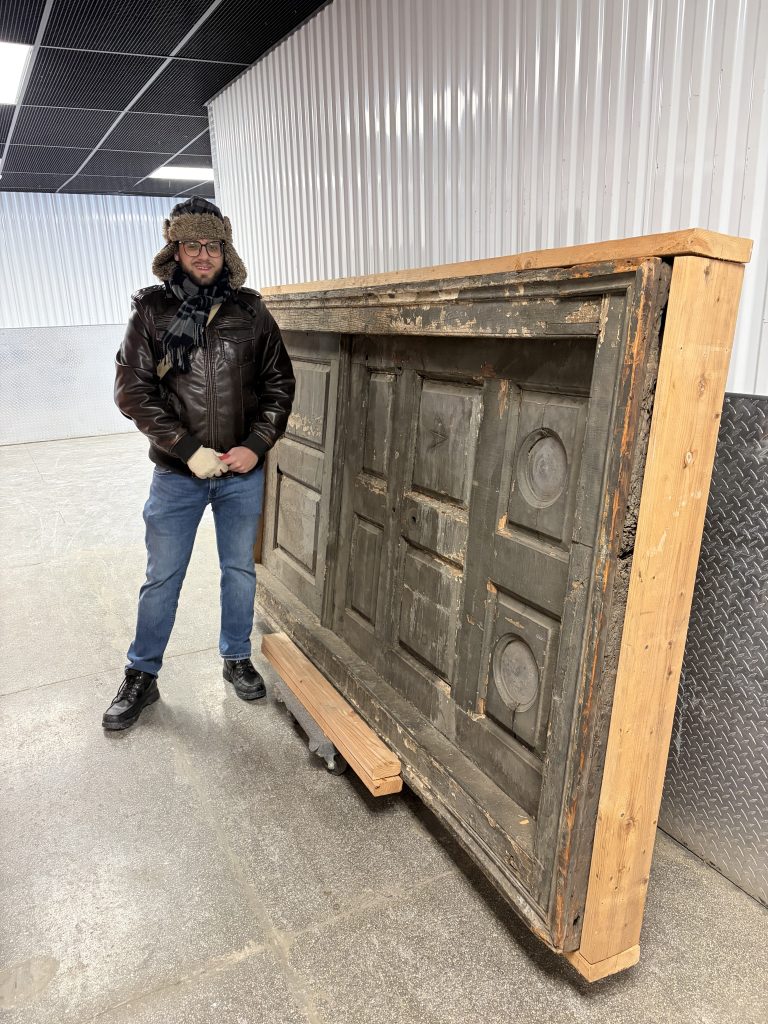
A 261-year-old Dutch-style door once belonged to one of Queens’ most prominent families. Now, after years hidden away, its troubled history will go on display.
BY ALAN ARICHAVALA
ASTORIA — Somewhere in Queens, a 261-year old Dutch-style door has sat in storage for nearly a decade. Once prominently displayed at the Greater Astoria Historical Society — where it was once seen by scores of locals, visitors, and students — it now lies beneath tarp, hidden from view.
At eight feet tall and five feet wide, weighing at least 400 pounds and hewn from pine, the door is undeniably imposing. Yet, it is not its impressive size that makes it remarkable, but the crude arrow carved into its wood and the story behind it.
In 1765, Colonel Jacob Blackwell commissioned a new door to be made for the entrance of his family’s stone house. The house stood near what is now the intersection of 37th Avenue and Vernon Boulevard, overlooking the East River. Since the 1680s, the Blackwells were one of Queens’ most prominent landowning families, their holdings encompassing Blackwell’s Island — -now Roosevelt Island — -as well as present-day Ravenswood, Queens.
By the 1770s, tensions between the colonies and Great Britain had reached a breaking point. In 1774, Blackwell joined other local leaders in forming the New York Provincial Congress, coordinating with other colonies for broader resistance to British rule. When war broke out in 1775, Colonel Blackwell mustered the Newtown Militia, which he had commanded in the prior French and Indian War.
In August 1776, the British Army landed a force of 20,000 soldiers in Gravesend Bay, Brooklyn. On August 27th, General William Howe led the British in an attack on General George Washington’s positions in what would become known as the Battle of Brooklyn, outflanking the Americans which led to a devastating defeat. Thankfully, Washington evacuated Brooklyn in the dead of night without the British noticing, but the damage had been done: 300 were killed, while 800 were left wounded, and 1,079 were captured or missing.
In the aftermath, British soldiers descended onto Queens, targeting suspected rebels and -looting homes, seizing property, and assaulting families. Washington and the Continental Army retreated into New Jersey but word of the wanton destruction occurring at the hands of the British led many men to return to New York to ensure their property were not confiscated and their families not hurt.
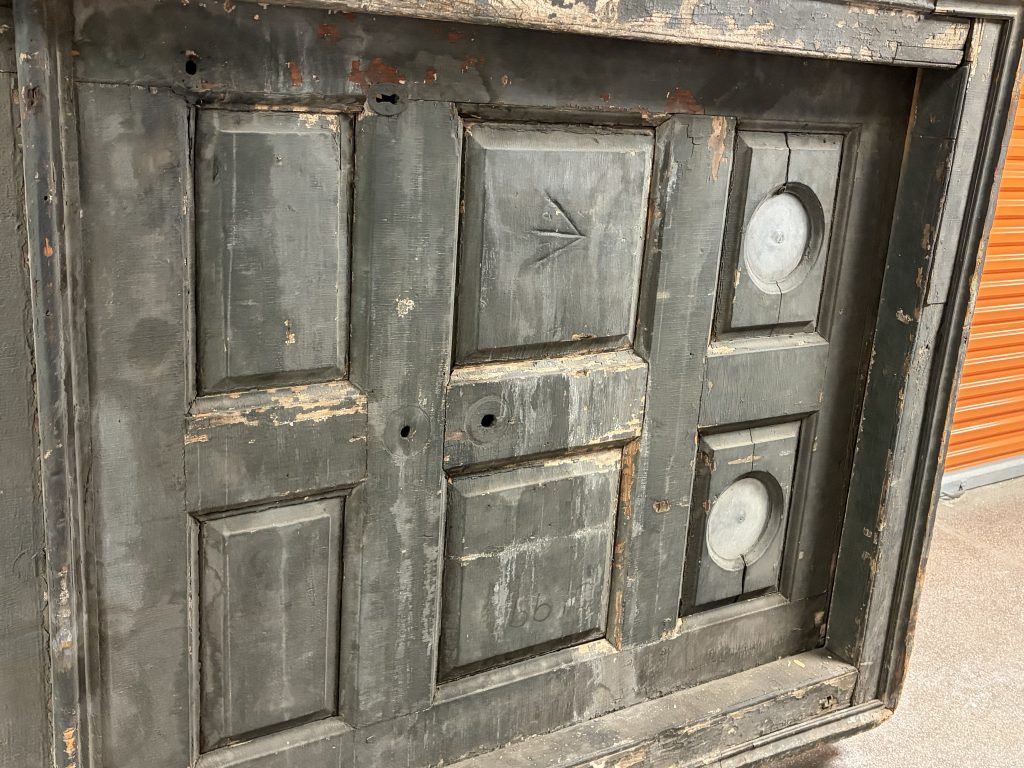
On November 30th, 1776, Admiral Richard Howe, brother of General Howe, issued a proclamation that allowed all Continental soldiers amnesty as long as they swore loyalty to the Crown. Blackwell and 4,000 men returned to New York and Blackwell was singled out by the British. Instead of amnesty, he was placed under house arrest by the British while an officer hacked the King’s Broad Arrow into the wood- a mark declaring the property forfeited to the Crown and its owner a traitor. The act was symbolic and deeply personal to the Blackwells’. For the next four years, Blackwell and his family faced abuse in the hands of British soldiers until Blackwell ultimately died of a heart attack on October 23rd, 1780, his health having broken under the strain. By the war’s end in 1783, the family were left deeply in debt for almost two decades. In 1787, Blackwell’s widow and sons, Jacob and James, sold their old family’s mansion, eventually building a new house on Blackwells’ Island in 1796.
The old Blackwell house had passed through a series of owners, including Colonel George Gibbs, the founder of Ravenswood. It would later serve as a schoolhouse and a picnic ground until it was ultimately abandoned in 1893. By 1901, the site was slated for demolition for the construction of the Ravenswood Gas Tanks. Miraculously, the door survived.
The door was saved by Queens’Parks Commissioner Walter Graeme Eliot, who removed its knocker out of fear that the door was bound to collapse. The knocker was eventually willed to the F.D.R Presidential Library, who has kept it ever since. The door eventually came into the possession of James Tisdale, a descendant of Colonel Jacob Blackwell. Tisdale would allegedly display the door in his lumber yard until 1951, when he finally donated it to the Brooklyn Museum. In 2005, the Greater Astoria Historical Society contacted the Brooklyn Museum seeking to acquire the door. The Greater Astoria Historical Society displayed it until the society lost its space at the Quinn Building in 2018, and since then, the door has remained in storage.
But now, the door will be displayed once again for the 250th anniversary of American independence, beginning in June, at the Advance Service Mizpah Masonic Lodge. Still bearing scars after 250 years, it serves as a testament to what a person will go through and how much they will sacrifice for the causes they believed in.