
What’s now a drab industrial zone was once an elegant, tree-lined thoroughfare for New York elite.
GEOFFREY COBB | gcobb91839@Aol.com
Author, “Greenpoint Brooklyn’s Forgotten Past
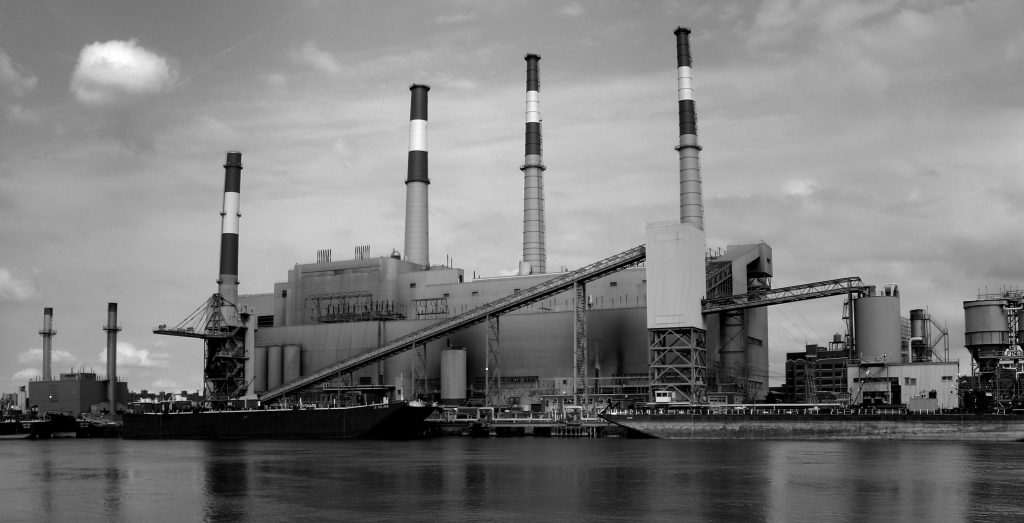
Queens has some very elegant areas, but sadly Ravenswood is not one of them, so I was shocked to learn that once Ravenswood was a kind of Beverly Hills of Queens, home to blue-bloods, generals and wealthy bankers and businessmen. Drab is perhaps a kind way of describing Ravenswood today. Vernon Boulevard, the area’s main drag, is overshadowed by the hulking Ravenswood Generating Station, a 2,480-megawatt power that stretches for blocks opposite Roosevelt Island, just across the bridge from the area. The massive power plant, also known as Big Allis, is an eyesore with its four huge smokestacks dwarfing the neighborhood. When the plant opened in 1963, it was a sensation, the only power plant in the world that could generate electricity for a million people, but it doomed Ravenswood to ugliness.
Once Ravenswood featured beautiful homes, but today it’s an area of block after block of uniform, dull housing projects. The Ravenswood Houses contain thirty-one buildings and over two thousand apartments, but they are dwarfed by the Queensbridge Houses, the largest public housing project in the United States, with almost 7,000 residents in 3,142 units. The massive Costco store hogs up much of the shoreline, blocking great views of the East River and the Manhattan skyline.
It’s hard to believe but Vernon Boulevard was once an elegant thoroughfare lined with huge shade trees and orchards. Crabs, fish, wildflowers, and strawberries thrived in this celebrated beauty spot. Colonel George Gibbs purchased the area’s waterfront property after the War of 1812, intending to develop homes for New York’s elite, but he died in 1833 without fully realizing his vision. In the 1840s, the waterfront views and bucolic countryside of Ravenswood attracted developers who built large estates, summer homes, yacht clubs, and docks along the shoreline. A local newspaper in 1852 reported, “Buildings are going up in every direction, and much taste is manifested by the owners in arranging and decorating their grounds.” Most of the area’s new residents were New York merchants enriched with the city’s growing fortunes, stimulated large by the construction of the Erie Canal. Bankers, lawyers, retired generals, doctors and scions of old Dutch families called the area home. Their homes were palatial mansions built on huge lots with lawns that sloped down to the East River shore. Each family had a boat that allowed it to sail across to Manhattan. A unique feature of the area was the public promenade. While lots were granted to the edge of the East River, a public walkway was carved into the properties so that neighbors could stroll the waterfront and enjoy the impressive views. The New York Herald hailed the area as a “suburban arcadia.”
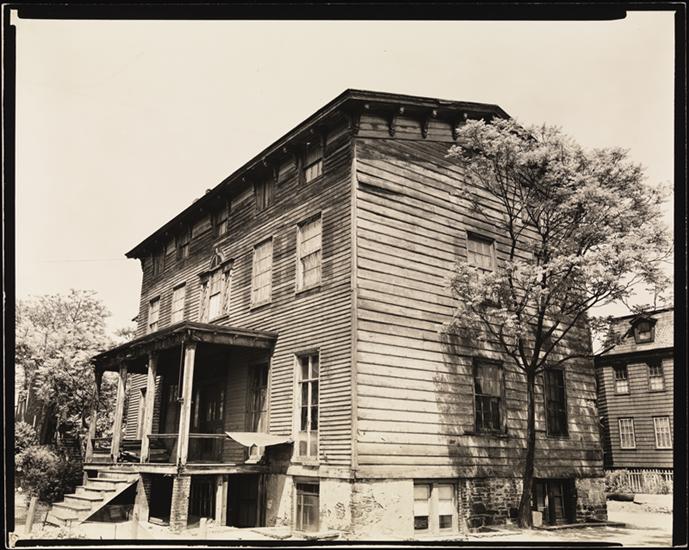
A March 18, 1894, New York Times article declared that twenty years ago, “no prettier spot could be found in the suburbs of New York.” It mentioned the Washington House where General George Washington supposedly stayed during the Revolutionary War. It also mentioned that James Fenimore Cooper, author of the famous novel, The Last of the Mohicans, was a frequent guest in the area and penned his “The Water Witch” there. One of the residents Charles Rogers, was a close friend of President Ulysses Grant. who also spent time on the Ravenswood shore, but the most unique house was the Bodine castle. In 1850 a French nobleman named Jean Bodine built a colossal turreted dark granite castle on the river. Legends say, when his daughter fell in love with a local worker, he banished them to the dungeon and soon abandoned them and Long Island City and returned to France.
So, what happened to this elite community? First, the isolated nature of the houses made them a target for thieves, who used the river to gain access to the secluded estates before robbing them. A rash of burglaries in the 1870s made the papers. In the 1880s, nearby Hunter’s Point began to industrialize, and soon huge clouds of black industrial smoke hovered over the estates and black soot soon stained the sides of the homes. Roosevelt Island began to develop as a quarantine and hospital island, blocking the gorgeous views of Manhattan the area’s homes once boasted. The rich soon left and their homes became rooming houses before industrial fires burned some of them to the ground. By the 1890s, the Times was lamenting the decline of this once elegant area. Twenty years later, Ravenswood became little more than a memory. The last vestige of its glorious past was the Bodine Castle, which improbably held out until 1966, when it was demolished to build a Con Edison substation.
One of the residents of Ravenswood was Dr. Thomas Rainey, whose estate became Rainey Park, one of the prettiest and most popular parks in the New York City park system. Visiting the park, it’s hard to imagine the grandeur and glory that was once Ravenswood.