
The Astoria-based community organizer and martial artist talks public safety and what her book, “Get Home Safe,” can teach us about building a better world.
BY COLE SINANIAN
cole@queensledger.com
JACKSON HEIGHTS — “What does safety feel like? What does a safe future feel like? What are we fighting towards?”
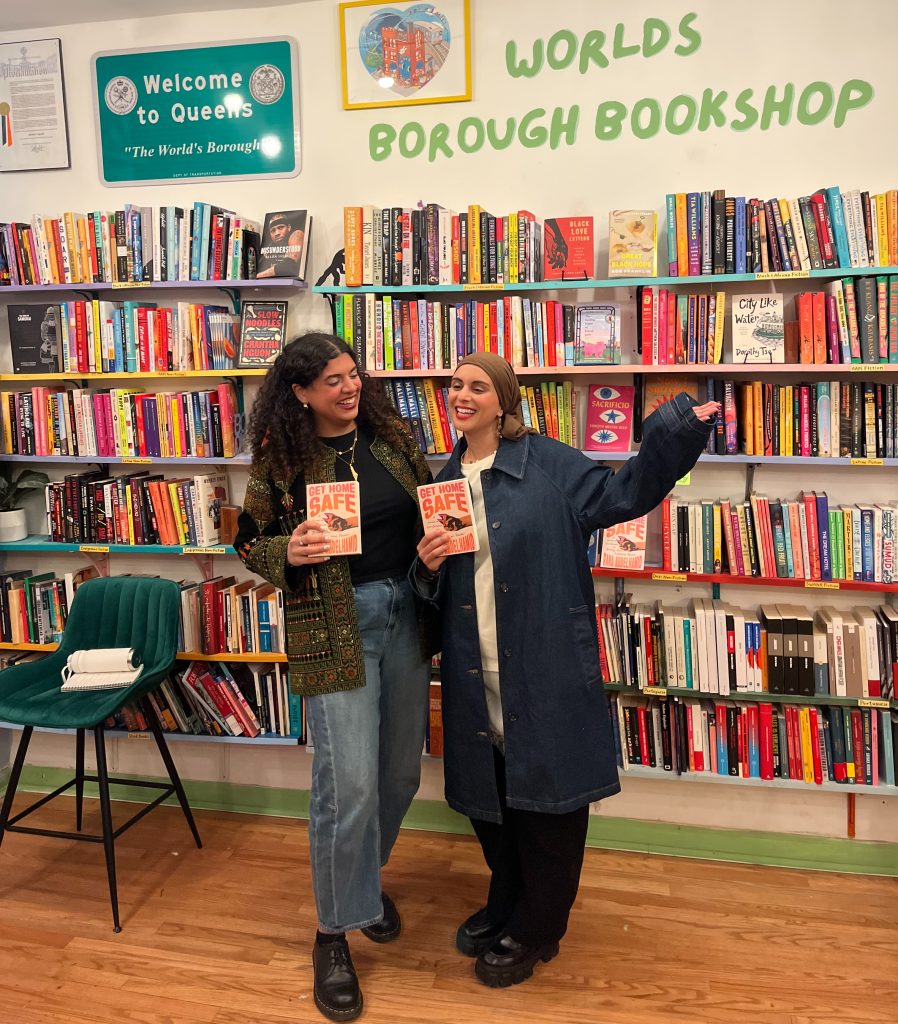
Creative producer and multimedia storyteller Daleelah Saleh poses the question to the two-dozen or so mostly women packed into The World’s Borough bookstore in Jackson Heights on April 2. Saleh is the founder of “Kaatiba,” an event series at the bookstore amplifying Muslim and SWANA (Southwest Asia and North Africa) stories. Seated across from her is Egyptian-American organizer, Shotokan Karate black-belt, former State Assembly candidate, and author Rana Abdelhamid, who’s here to discuss her book, “Get Home Safe.”
A young woman in a hijab seated toward the front offers a response to the question:
“To me, safety means a free and liberated Palestine, because if Palestine is free, that means all of us are free.”
“More specifically to New York City,” she continues, “I envision safety by not having to look behind my shoulder after every single block.”
A high-schooler from New Jersey chimes in next:
“I live in a small town, a predominantly white town, and I’ve grown up in a high school where it’s only really me and like maybe three other Arabs,” she said. “For me, it looks like me being able to have a community and feeling safe in it, not feeling judged.”
Part manifesto, part self-defense manual, Get Home Safe offers practical advice for women on deescalation techniques, situational awareness, basic defensive movements and, if absolutely necessary, how to evade an attacker with a defensive strike. But Abdelhamid, who’s spent years building solidarity among the mostly Muslim women who’ve come to her at Malikah — a self-defense nonprofit and mutual aid collective she founded in Astoria — takes the concept of safety a step further, deploying it to challenge the systems of power that make so many working-class women of color feel unsafe. “Safety is not a privilege,” Abdelhamid writes in the book’s introduction. “It is the ground upon which liberation is built.”
Abdelhamid grew up around Steinway Street, in the “Little Egypt” section of Astoria — a tight-knit, majority Muslim community. But it was also a traumatized one. Islamophobia was an ever-present threat in the aftermath of 9/11, while the NYPD increased its presence in the area, leaving many of its members feeling constantly surveilled.
She described how she wrote the book as if she were in conversation with her younger sister, sharing both her self-defense knowledge and her wisdom from a lifetime of navigating the world as a woman of color. For Abdelhamid, confronting the powers and institutions that endanger marginalized communities is part of what it means to “get home safe.”
“‘Get home safe’ is also ‘get home safe’ from state violence,” Abdelhamid said. “Get home safe from interpersonal violence. Get home safe from Islamophobic, gender-based violence, from sexual harassment, from cat calls in the street, like so many of us have experienced.”
In the book, Abdelhamid posits a “House of Safety” for understanding what a truly safe world could look like. Emotional safety is the house’s foundation. Survivors of violence must heal from their trauma before all else. “Without healing the house cannot stand,” she writes.
Physical safety and financial safety form the house’s walls. Financial security allows those vulnerable to violence the freedom to escape dangerous situations, while physical safety is found through bodily autonomy and self-defense techniques.
Political safety forms the house’s roof. Just as much as defensive strikes, safety means policies and structures that prevent violence from happening in the first place.
Through her experience running Malikah, Abdelhamid’s seen first-hand what happens when political safety is inadequate or nonexistent. If a street vendor, for example, is taken by ICE, their family may lose their only source of income and suffer food insecurity as a result, which — if they can’t pay rent — could quickly cascade into housing insecurity and even homelessness.
“Because everything, like economic healing, like emotional safety and physical safety, is all impacted by policy and politics,” Abdelhamid said.
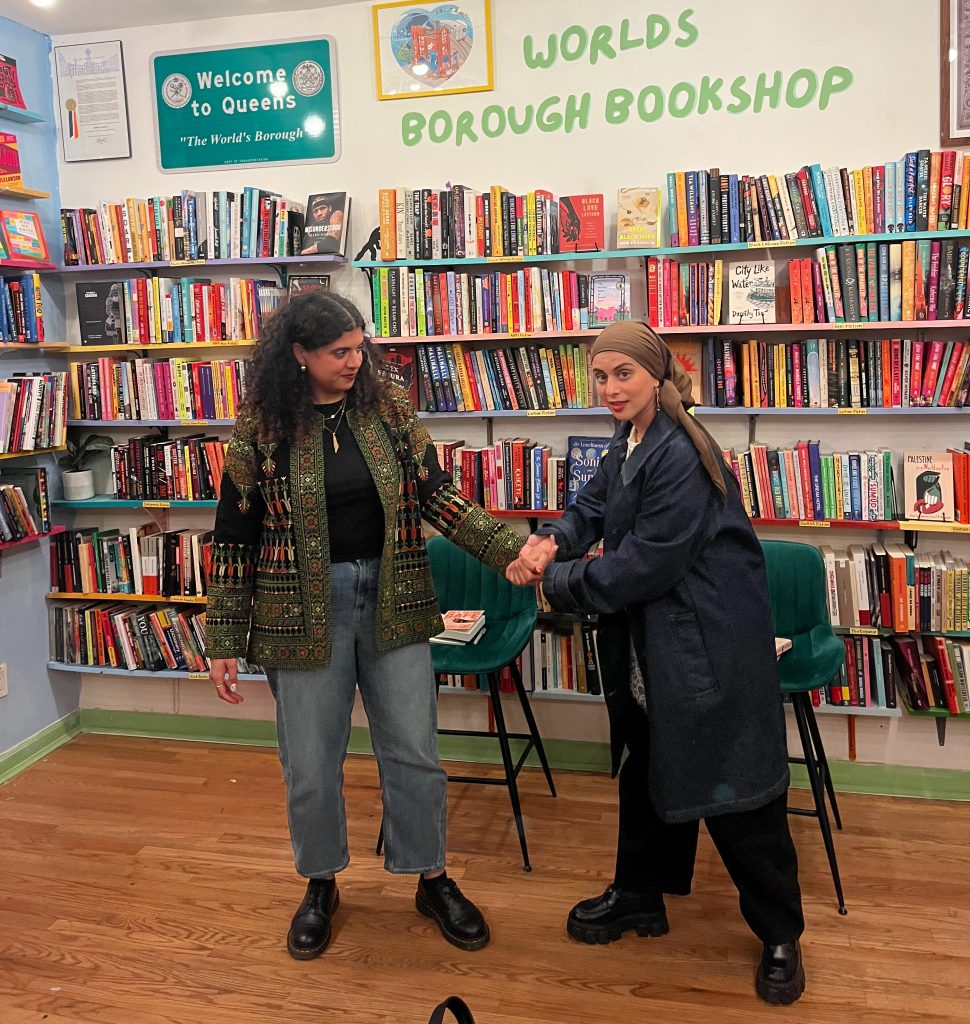
Towards the end of the discussion Thursday, Abdelhamid and Saleh demonstrated an important self-defense technique, then directed the audience to find a partner to practice the move. If an attacker grabs your arm, Abdelhamid explained, instead of pulling directly away it’s best to clasp your hands together and twist out of their grip, using your hips and the full force of your body’s gravity.
But the fight for a safer world, as Abdelhamid concludes in Get Home Safe, is “bigger than a fist.”
“I never want anyone to go out and have to use any of these techniques,” she said. And I believe that the only way we’re truly going to be safe is if the structures that are in place that keep our community so unsafe are dismantled through organizing.”