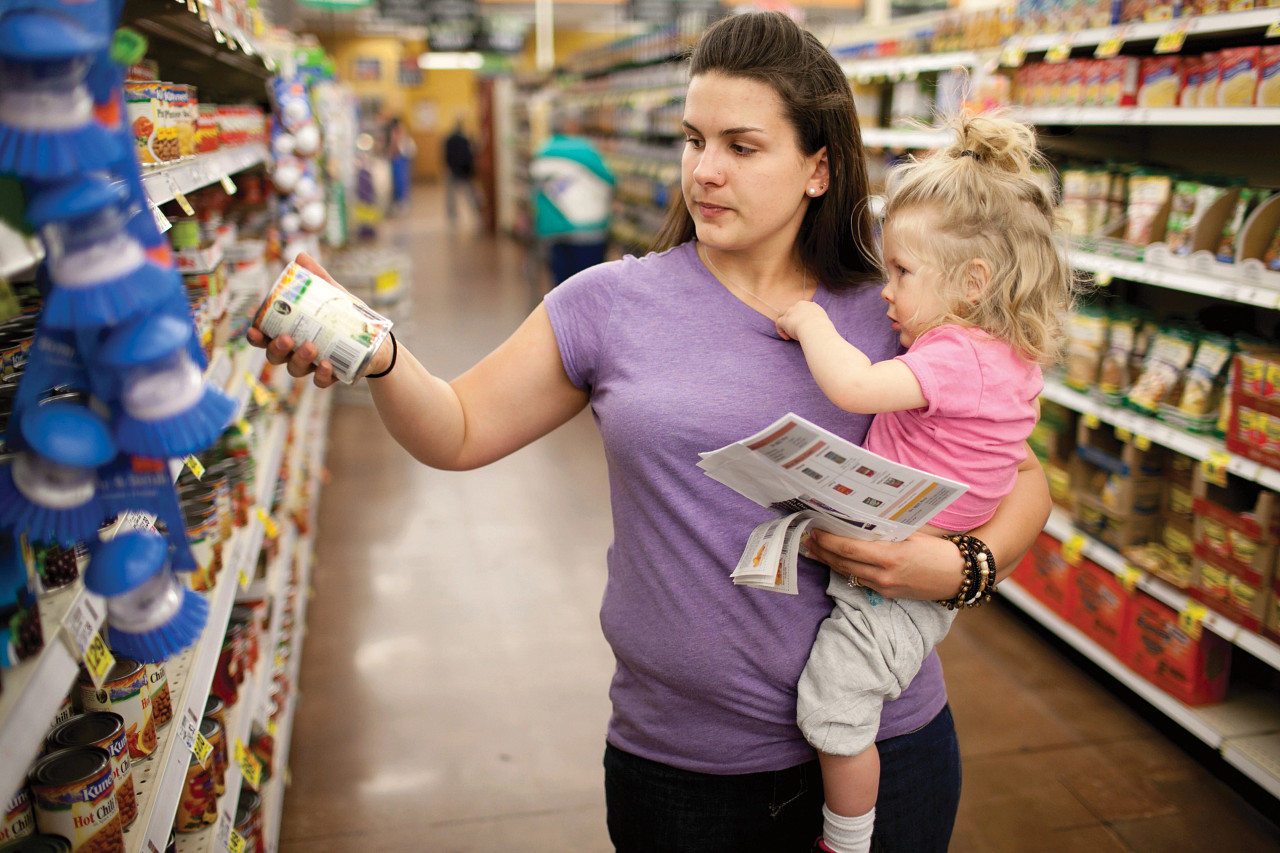



John Tully for No Kid Hungry.
Poll Shows Growing Food Insecurity Across Queens and Brooklyn
By MOHAMED FARGHALY
mfarghaly@queensledger.com
A growing number of New Yorkers are struggling to afford food as prices continue to climb, forcing many households to choose between groceries and basic expenses like rent, utilities, and transportation, according to a new poll commissioned by No Kid Hungry.
The survey, conducted in February by Aspect Strategic, found that 67 percent of New Yorkers said they had to choose between buying enough nutritious food and other household necessities over the past year. In Queens, the financial strain appeared particularly pronounced. Nearly two-thirds of residents, 65 percent, reported making those trade-offs, while 71 percent said their financial situation worsened due to rising food costs.
Advocates say the findings mirror what families are experiencing across New York City neighborhoods, including Queens and Brooklyn, where the rising price of groceries is colliding with already high housing and transportation costs.
“These findings make clear that families across New York are struggling to keep up with rising food costs and are making impossible choices between groceries and other basic needs,” said Rachel Sabella, director of No Kid Hungry New York. “No child should go hungry in our state. New Yorkers overwhelmingly agree that we need strong, effective food assistance programs and bipartisan action to ensure every child has the food they need to learn, grow and thrive.”
In Queens, 40 percent of residents said they have taken on more debt in the past year because of the cost of food. Citywide, the problem is even more widespread, with 52 percent of New York City residents reporting they accrued additional debt over the same period.
Sabella said the stories behind those numbers show how households are stretching their budgets in increasingly difficult ways.

“Two thirds of Queens families with children told us that they had to make difficult decisions. Do they pay their rent or do they buy food?” Sabella said. “These are unfathomable choices for families. It’s devastating that they’re faced with this right now.”
Across the city, many residents are cutting back on fresh and protein-rich foods because of the cost, opting instead for cheaper staples that can stretch further.
“I see people when they are at the register, and you can see they are waiting to see what the price of something is, and then sometimes they are putting it back on the shelf because of the cost,” Sabella said. “Especially hard are families telling us when it comes to protein and fresh produce and those healthy items.”
The survey also found that rising food prices are affecting more than just household finances. In New York City, 78 percent of residents said their financial health suffered due to food costs, while 60 percent reported impacts on their mental health and 54 percent said their physical health had been affected.
Families of color reported facing the greatest strain. Statewide, 87 percent of Black families and 84 percent of Latino families said they had to choose between buying nutritious food and paying for other basic needs.
Sabella said hunger often remains invisible in communities like Queens, where economic hardship can be hidden behind the appearance of stability.
“We often say that hunger hides in plain sight,” she said. “Three quarters of families in New York are making trade offs each day in order to afford food for their families. That’s somebody that lives next door, somebody whose child is in school with yours.”
The poll also found broad public support for federal food assistance programs. Sixty-two percent of New Yorkers said they oppose cuts to the Supplemental Nutrition Assistance Program, or SNAP, including 52 percent who strongly oppose them. In New York City, opposition to cuts to food assistance programs such as SNAP, WIC, and Summer EBT reached 77 percent.
Advocates say those programs are especially important as federal lawmakers debate the next federal farm bill, which determines funding levels and rules for SNAP.
“As the cost of food continues to rise, these programs are critical to helping families put food on the table,” Sabella said. “When we talk about SNAP, it supports families but it also supports the local economy.”
Local grocery stores and bodegas in neighborhoods across Queens and Brooklyn rely heavily on SNAP spending, she added, with some businesses reporting that as much as 70 percent of their monthly revenue comes from SNAP purchases.
For many residents, the financial pressure is already showing up in everyday decisions about how to pay for groceries. One Brooklyn resident who responded to the poll said they have begun relying more on credit cards to cover food costs while completing a college degree.
“As of six months ago I’ve started using more credit to pay for my food and meal purchases and have been alternating between two cards in order to have more time to pay them off,” the resident said. “Credit card debt is not ideal but at least I am able to feed myself to continue working full time as I earn my Bachelor’s degree.”
The poll surveyed 1,512 New Yorkers from Feb. 3 to Feb. 10 and has a margin of error of plus or minus 2.5 percentage points.
Despite the challenges highlighted in the findings, Sabella said the survey also shows widespread agreement among New Yorkers that hunger should be addressed collectively.
“More than 90 percent of respondents said solving child hunger should be a bipartisan solution,” she said. “New Yorkers don’t see this as a political issue. They see it as a moral issue.”