
JACK DELANEY
Jdelaney@queensledger.com
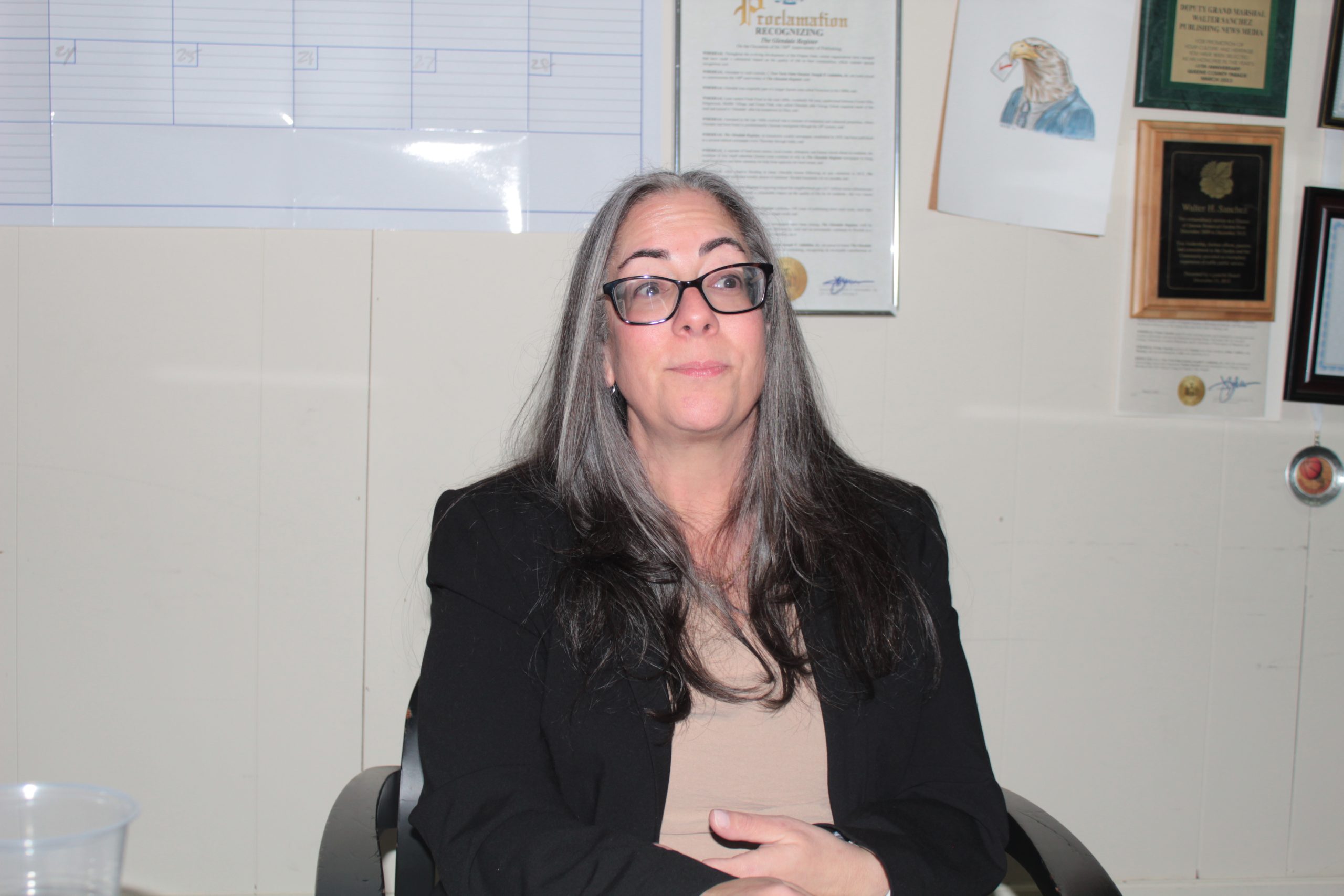
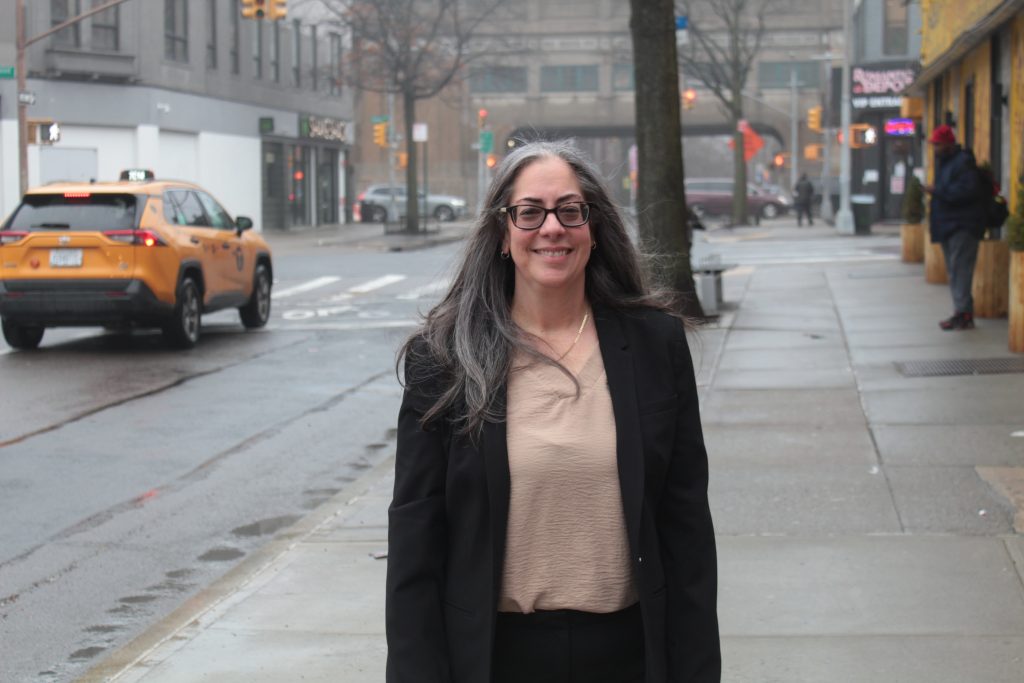
Michelle Ann McSweeney-Ortiz, a lifelong Queens resident and veteran lawyer, is vying for an open seat as a New York City Civil Court judge in the upcoming election on November 3, bringing broad experience in private practice and as a court attorney within the Queens County Supreme Court.
While McSweeney-Ortiz, who currently lives in Flushing with her husband and three kids, is running as a Democrat with the Queens party’s endorsement, she aims to serve as a nonpartisan arbiter who approaches every case with an even hand.
“Although you might not have any interest in the law, you never know if you’re going to be sued,” said McSweeney-Ortiz, in a recent roundtable with the Queens Ledger. “You want to make sure that the people who are listening to your case are being fair and impartial, and interpreting the law properly to make sure that you’re being heard.”
New York City’s civil court system comprises 120 elected judges, though more than half are often reassigned to other divisions — supreme, family, or criminal — due to high caseloads.
The civil court itself is split into three parts: General Civil covers cases where someone is seeking damages up to $50,000; Housing handles disputes between landlords and tenants; and Small Claims deals with small suits with damages up to $10,000.
This November, voters in southern Queens will see ballot lines for both county-wide and district-wide civil court judges. McSweeney is running within the 3rd Municipal Court District, which encompasses Howard Beach, Ozone Park, South Ozone Park, and slivers of several other neighborhoods like Richmond Hill, but the position is functionally the same as the county-wide seat.
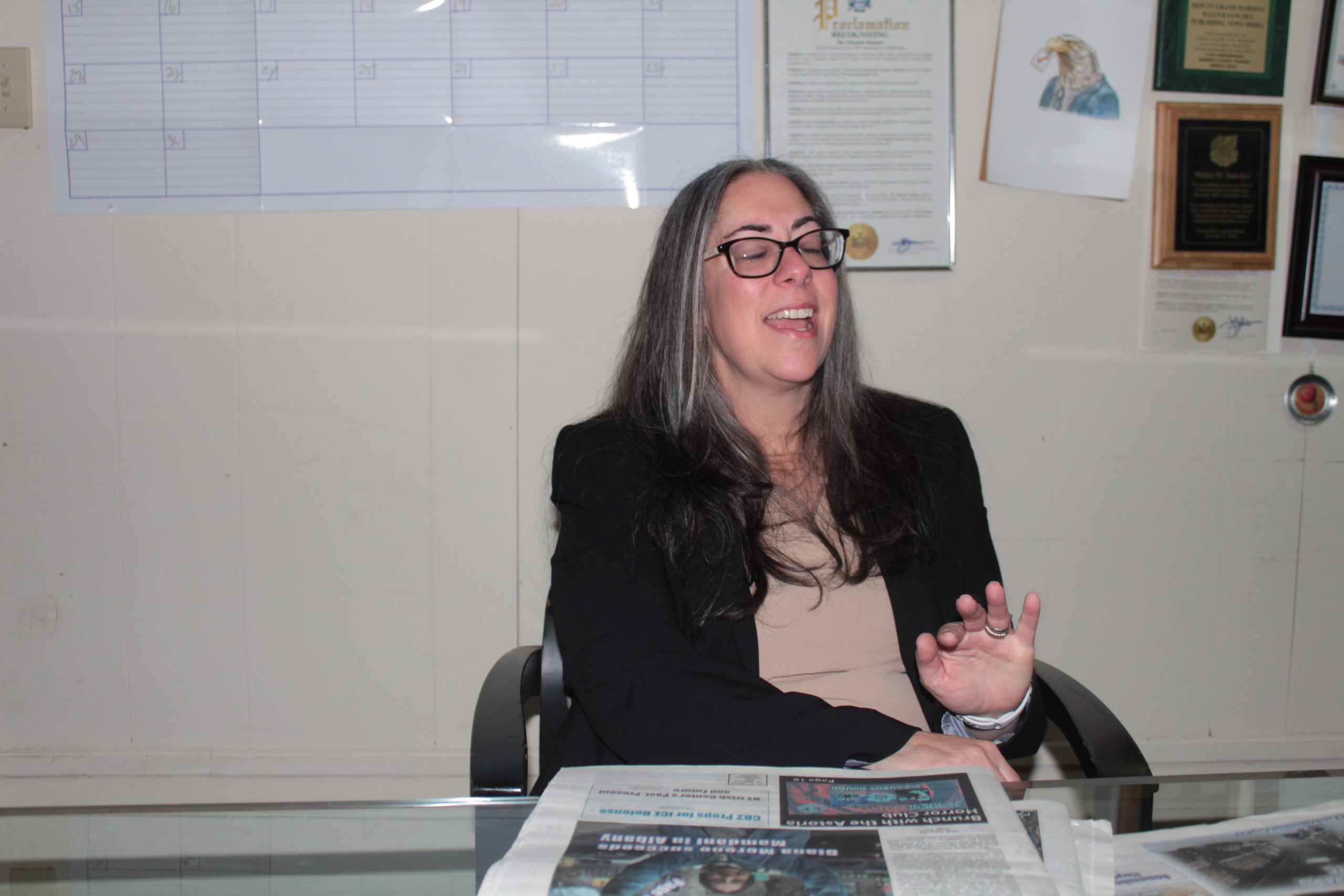
McSweeney-Ortiz knew she wanted to attend law school from a young age — “Too many episodes of ‘Law & Order’ and ‘L.A. Law,’” she reflected, laughing. “Even if the glamorous aspect of a TV show wasn’t realistic, the argumentation and the thought process of how you get from A to B did interest me.”
But McSweeney-Ortiz’s path to law involved first gaining a broader perspective. Born and raised in Woodside, she attended Mary Louis Academy and earned her undergrad degree from SUNY Albany, majoring in Spanish with a minor in business. She had planned to enter law school directly after graduating, but instead decided to take a break from academics, briefly working at a bank in the city.
When McSweeney-Ortiz enrolled in Queens College to continue her studies, it was with a new goal in mind: a master’s in education in Spanish, which she used to teach the language at Holy Cross High School for seven years.
Halfway through McSweeney’s tenure at Holy Cross, however, she decided to pursue her dream of law school and began taking night classes at St John’s. Degree in hand, she plunged headlong into a legal career, working at a private practice for 10 years before transitioning to serve as a court attorney, which she has done for the past decade.
“When you’re a private practitioner, you are very much an advocate, one way or the other,” she explained. “The biggest difference, I would say, between being that zealous advocate and being a judge is to really be open to listen. We all go into most situations with preconceived notions, and you have to take that off the table.”
Sometimes, McSweeney-Ortiz noted, neutrality involves understanding that the paperwork doesn’t tell the full story. In cases where one side lacks a competent advocate, that can mean eliciting more details to fill in the gaps; when the parties know each other, the root problem may not be the alleged infraction at hand — who threw what into someone else’s yard, for example — but a deeper grievance that goes back years.
“Part of this is utilizing the other facets that the court has. I don’t think enough cases are sent to mediation,” said McSweeney-Oritz, who worked as a mediator while in private practice. “[And] seeing the inner workings of what their issues are helps us recognize what cases are ripe for mediation, versus what cases will not settle.”
If elected in November, McSweeney-Ortiz would serve a 10-year term in the city’s civil court system. What keeps her motivated to tackle an endless, ever-growing thicket of thorny legal disputes?
“I love the people I work with, first and foremost,” said McSweeney-Ortiz, “but I think it’s really being able to sit and listen — I still feel like I learn something new almost every day.”