

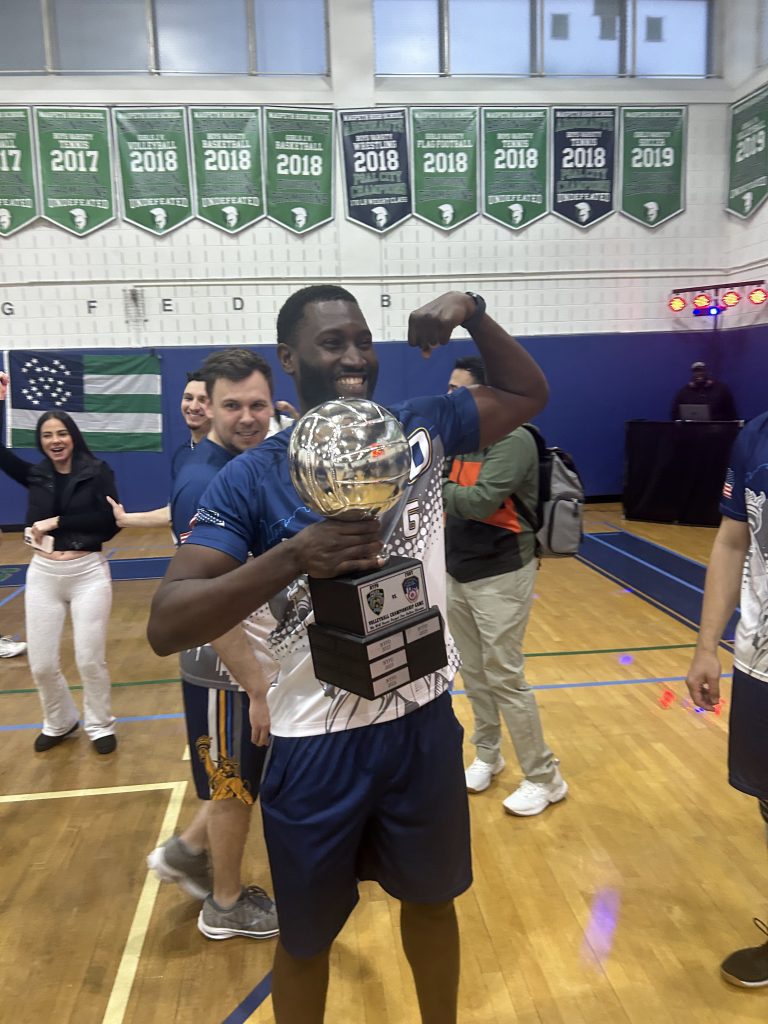
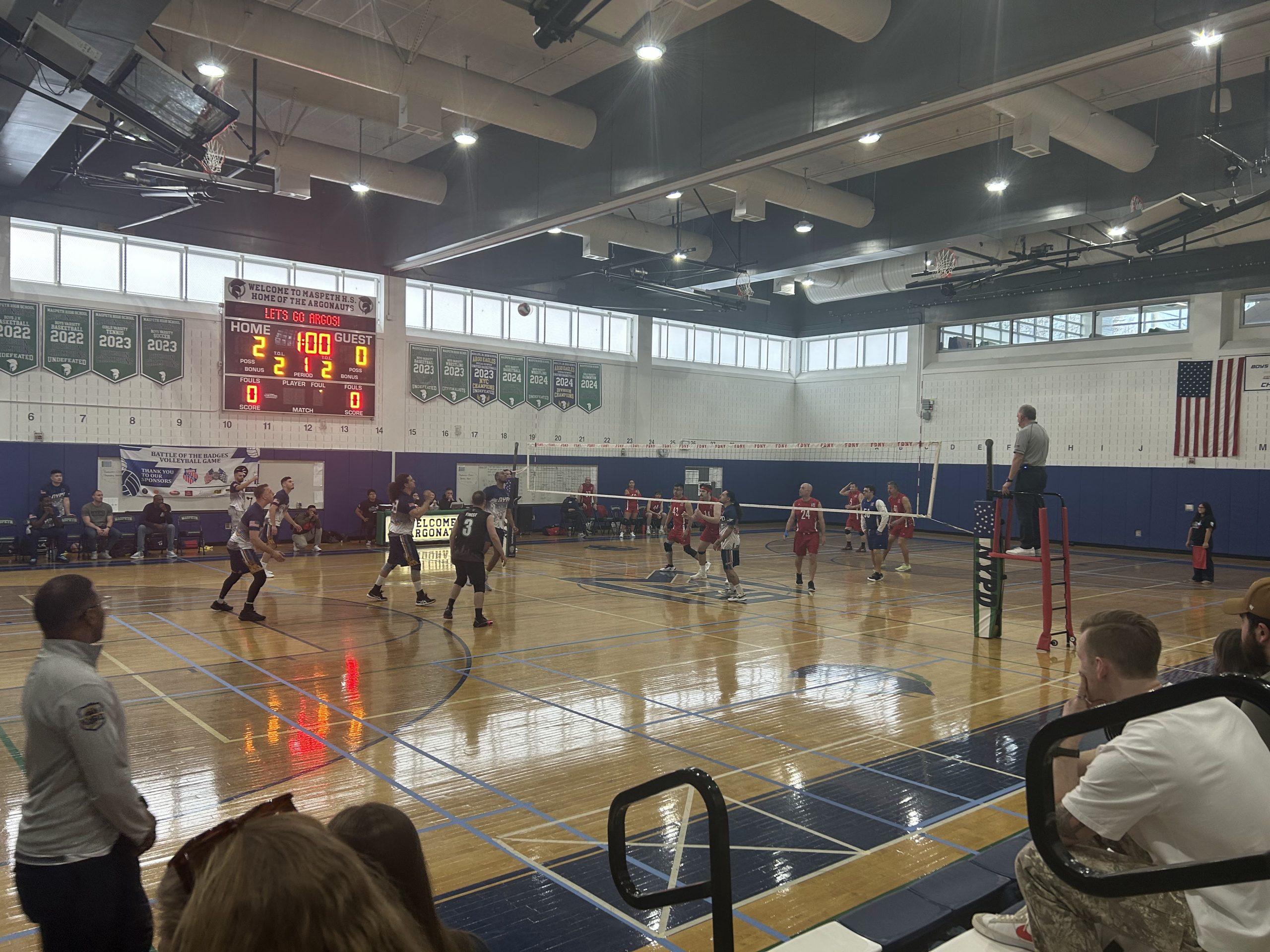
NYPD and FDNY players went head-to-head in a spirited volleyball match at Maspeth High School Gym, turning the Queens gym into a hub of energy, community pride, and friendly rivalry.
By Christian Spencer
The NYPD is the winner of the fifth annual Battle of the Badges against the FDNY that drew fans on Saturday, March 21.
Doors at the Maspeth High School Gym opened around 4 p.m. for a pregame ceremony honoring fallen first responders.
Supporters filled the gym with anticipation, cheering loudly as officers and firefighters competed while raffles, music, and refreshments added to the lively atmosphere.
Tickets suggested a $10 donation, with proceeds benefiting the FDNY Widows and Children’s Fund and the NYPD Police and Fire Widows and Orphans Fund.
Kresimir Mustac, a phys ed teacher and basketball coach who announced the event, offered a view from the scores table in the midst of the halftime of the game.
“I think it’s good. I’m watching the game from the scores table, so I got a really good… The view of what’s going on, right now, it’s a toss-up,” he said. “I think, honestly, I think the FDNY got a wild card player in their back pocket, and I think he’s showing out really in the next two sets. I think they’re going to win this one.”
“I think that’s the biggest thing. I think it’s about unity. I think it’s about bringing a community together for a good cause and great volleyball action,” Mustac said. “All the proceeds to this event go to the PBA Widows’ and Children’s Fund.”
The PBA Widows’ and Children’s Fund – specifically the FDNY Widows and Children’s Fund and the NYPD Police and Fire Widows and Orphans Fund – provides financial assistance and support to widows, widowers, and eligible dependents of police officers who have lost their lives in the line of duty.
FDNY coach and organizer Gerry Matacotta praised the day.
“I thought it was a great match. One of the best matches we’ve ever played with them. And it was an exciting match. And the event worked out 100 percent. We had Councilman [Bill] Wong here. We had the color guard. It was a great, great event for this community,” he said. “It’s a community event. The fans, everybody is one, and the backing of the police and fire departments is very important in a community. These guys work hard. They don’t get a lot of kudos, and this is one way of doing it, to make sure that they have a way to have fun and also that they see the community backing them up.”
Volleyball official Andrew Wilder Batiuk broke down the action. “FDNY won the first two sets,” he said. “The PD was in better shape and just outlasted the FDNY because you noticed they had a very deep bench, whereas FDNY only had three subs on the bench. So I think that was the difference.” On the meaning behind the event, Batiuk said.
“You can have competing services come together to actually compete in an athletic format. It’s a wonderful thing. It gets the community involved. And it’s a nice day of sports for just about anybody who wants to show up.” His observation captures the energy and excitement that resonates beyond the gym.
NYPD officer Malcolm Brissett-Ortiz, president of the NYPD volleyball team, pointed out why the tournament matters for morale.
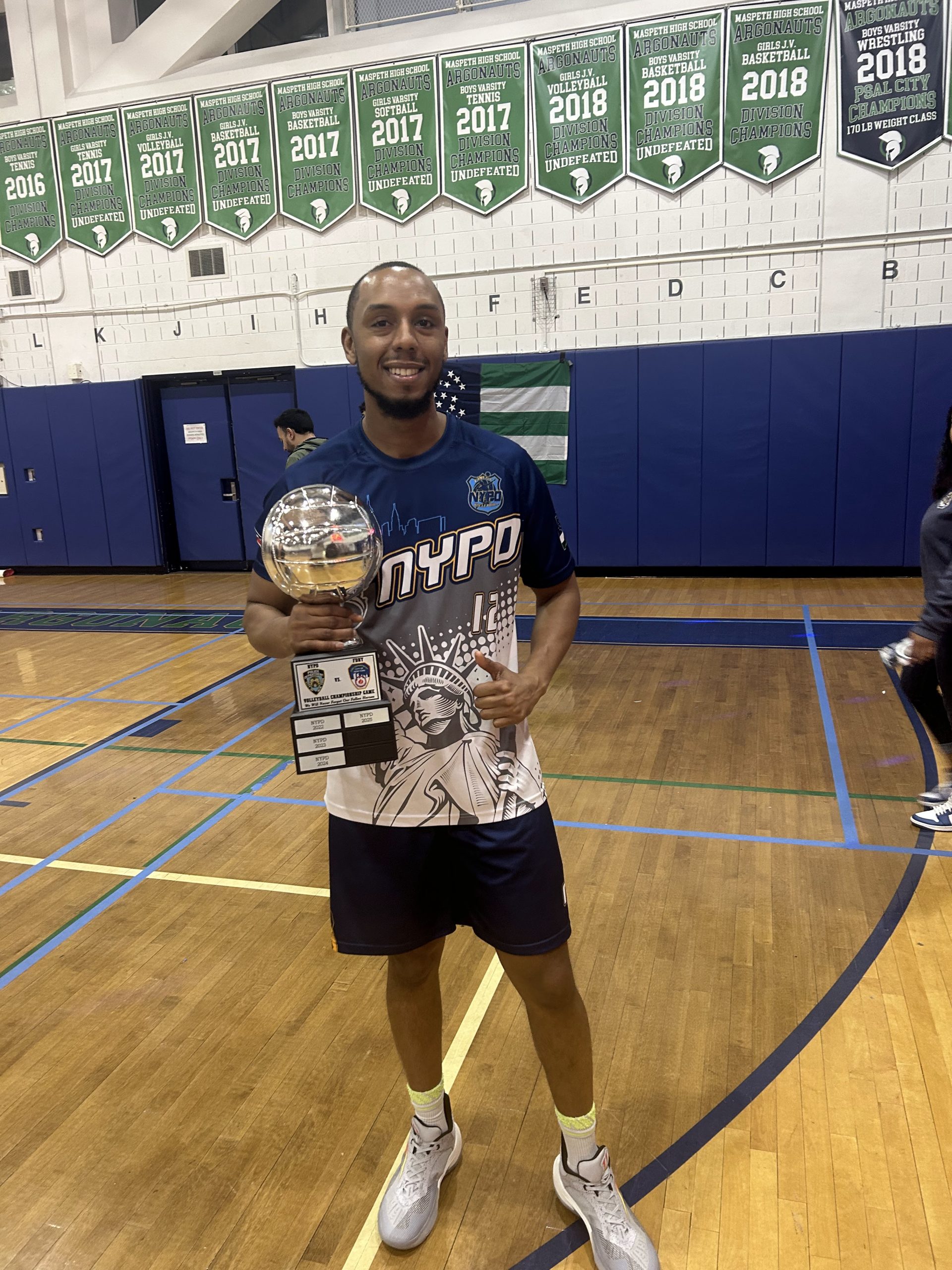
“Regardless of who wins and loses. We do, we host these games for the police and children. We started hosting this game for our fallen officers and first responders, I would say, from the FD, from the police department as well,” he said.
Ortiz continued, “That, at the end of the day, I want everybody to understand that outside of uniform, we are also people. We live within the community, we work in the community. We [are] here for them. So we just want to say that don’t just look at the uniform, also look at the person behind the uniform.”
As Queens Ledger previously reported, the NYPD is on a winning streak, having won the fourth annual event.
The promotion for the event was depicted as an epic showdown, a fight for New York as it were. FDNY on the blazing red left, with a firefighter holding an axe, and cool blue for NYPD on the right, with an officer holding a rifle. The colors were used to distinguish the opposing teams.
But as Ortiz put it, “Don’t just look at the uniform; also look at the person behind it.”