
 One Bag Per Person, Hours In Line, Zero At Checkout
By MOHAMED FARGHALY
mfarghaly@queensledger.com
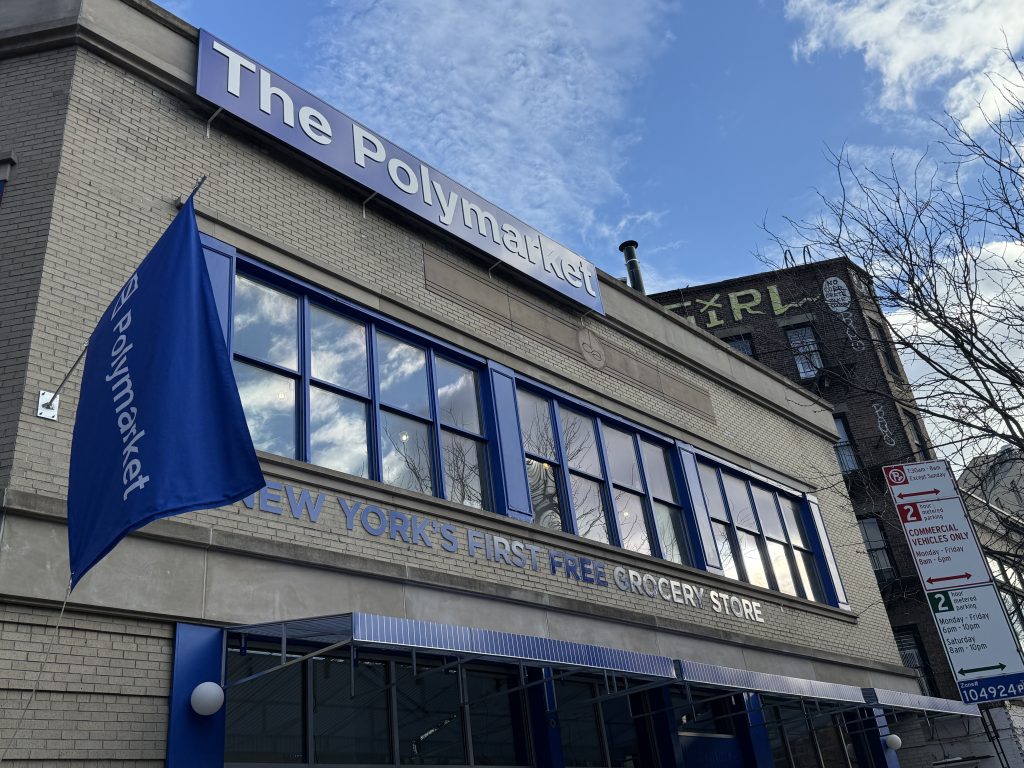
A line wrapped three city blocks in the West Village on Thursday as hundreds of New Yorkers waited hours for a chance to shop inside what organizers billed as the city’s first free grocery store, a two-day pop-up stocked with staples, produce and household goods funded by prediction market company Polymarket.
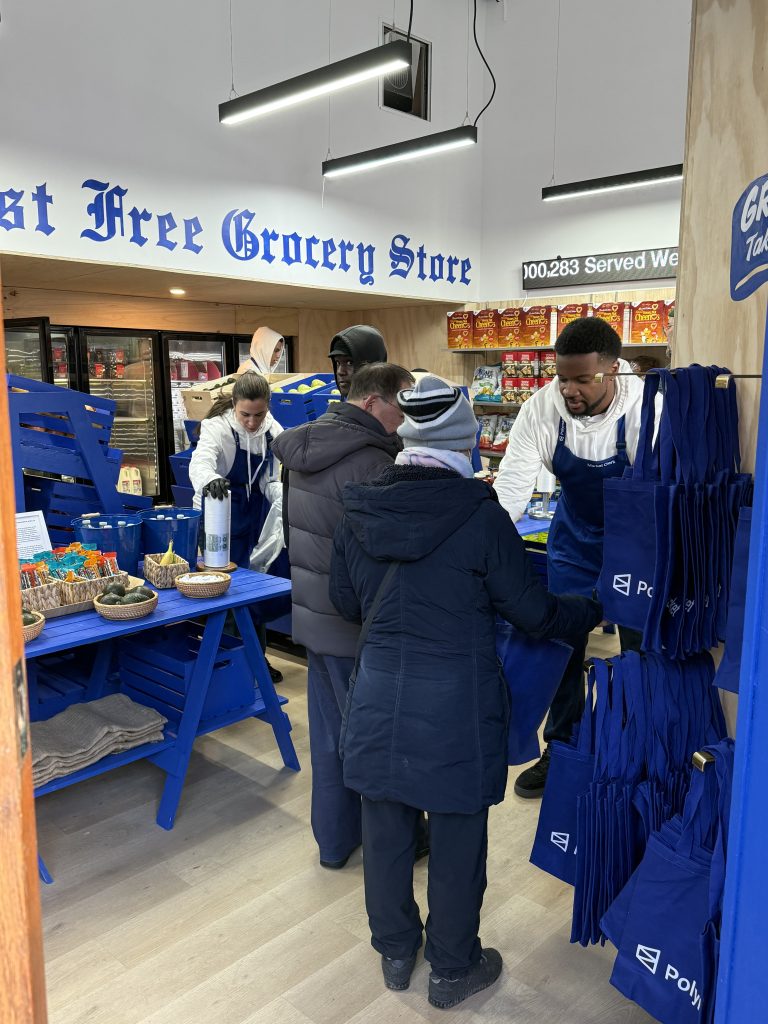
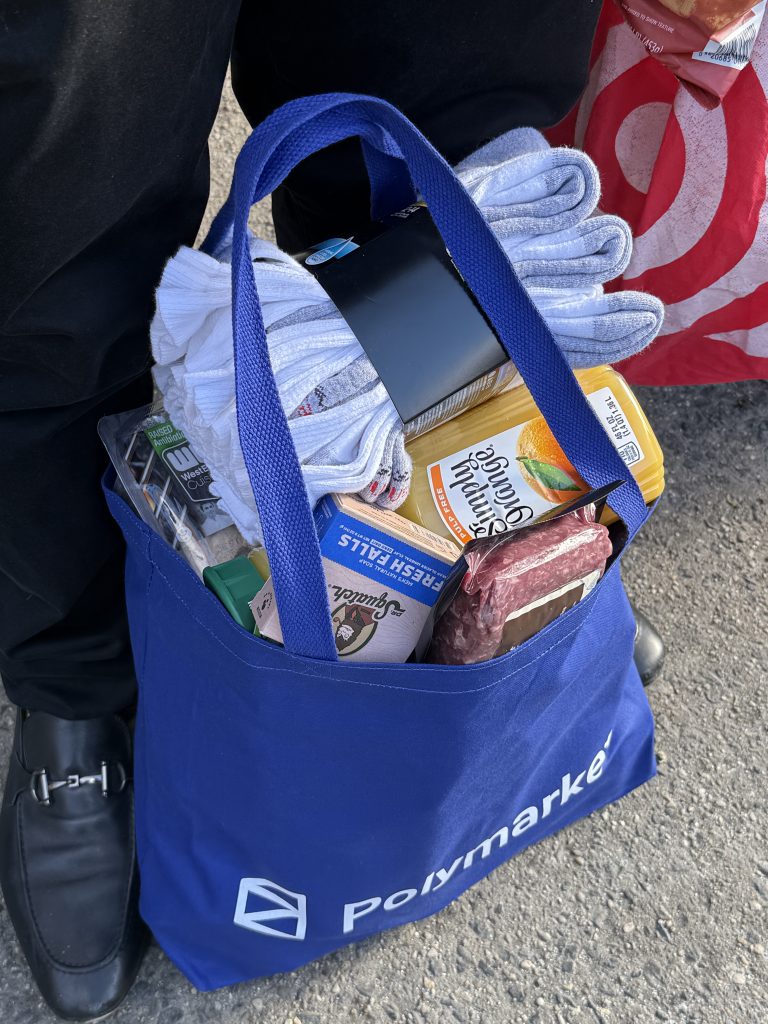
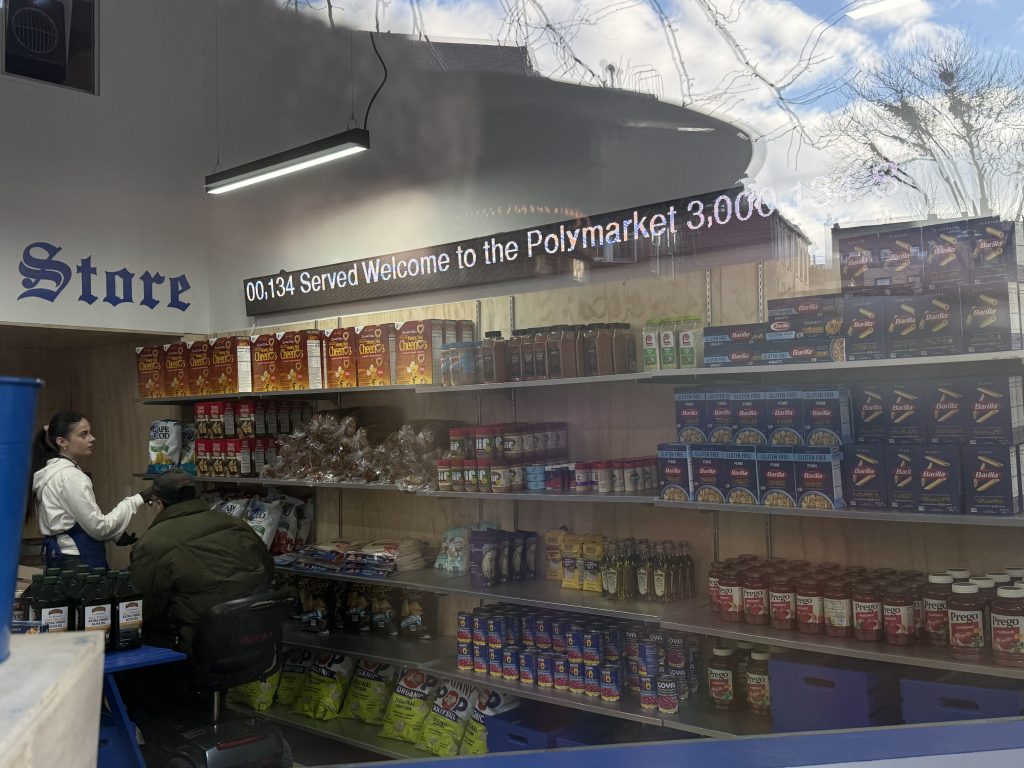
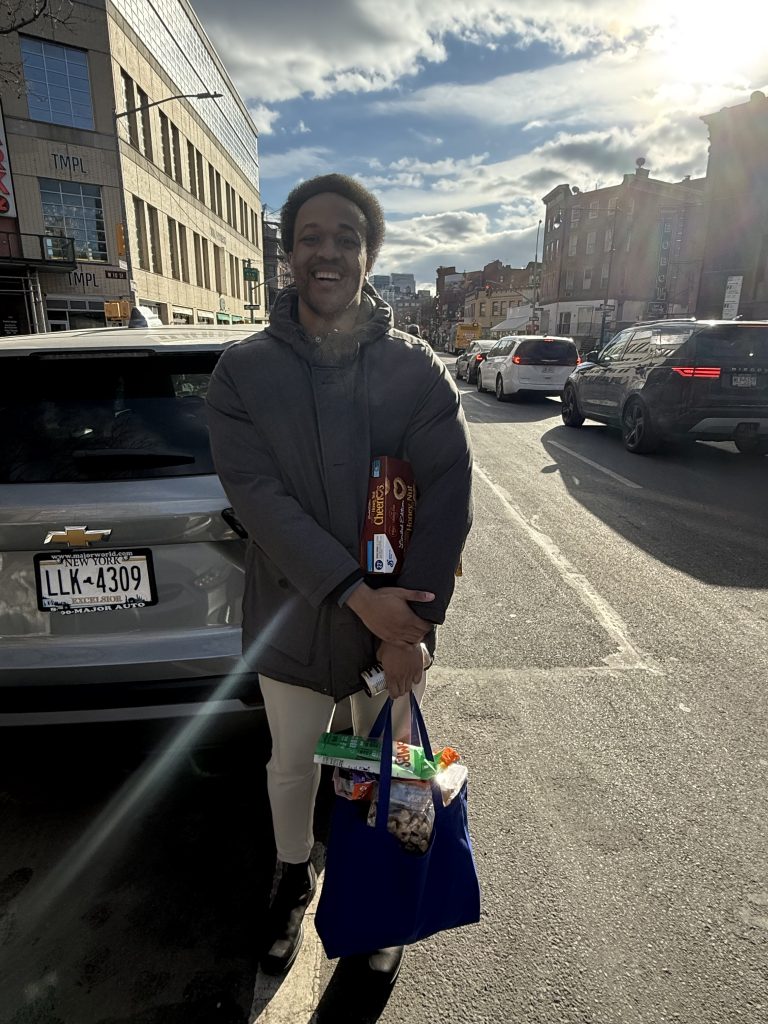
The temporary market at 137 Seventh Ave. South opened Feb. 12 for the weekend and immediately drew crowds, with some customers arriving as early as 10 a.m. for afternoon entry. Shoppers were allowed to fill one provided bag at no cost, with a limit of two per item. Inside, rows of fruit baskets, refrigerators filled with meat and eggs, and shelves stocked with rice, pasta, cereal, snacks and cleaning supplies resembled a standard neighborhood supermarket. Valentine’s Day flowers sat near the entrance. At checkout, there were no registers, only staff helping shoppers pack their bags and keep the line moving.
Organizers paired the promotion with a $1 million donation to Food Bank For New York City and said the combined effort is intended to help fund the equivalent of millions of meals. The pop-up was scheduled to run through Feb. 16 or while supplies last.
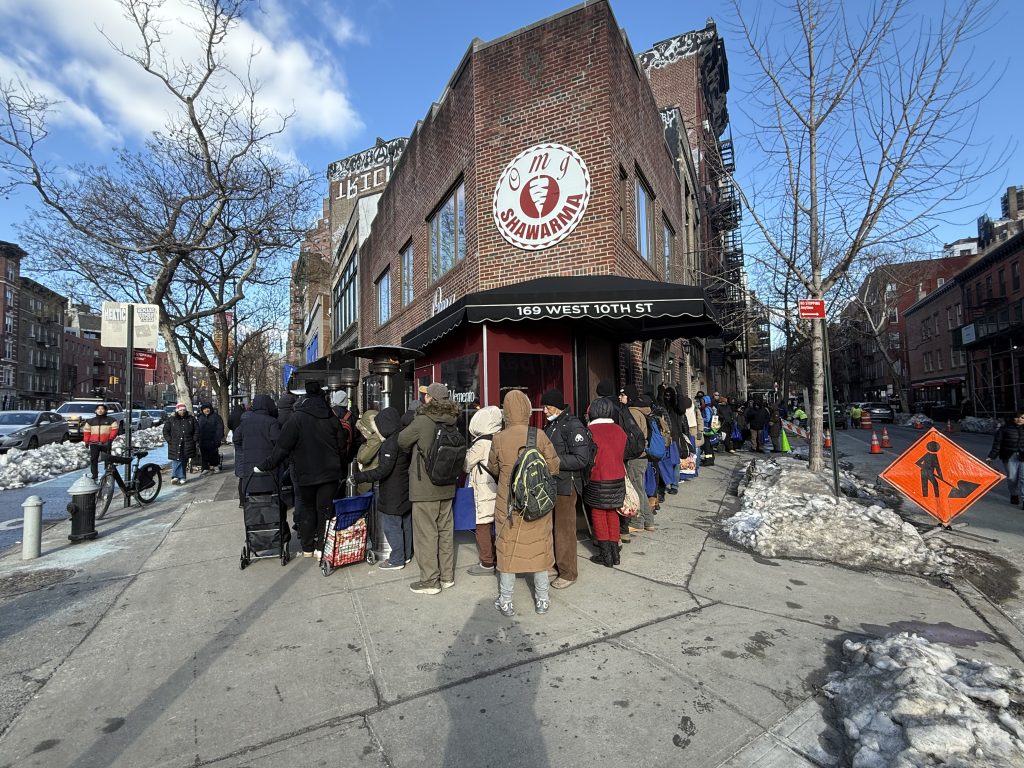
Jesus, who traveled from downtown Brooklyn after spotting the event in group chats that track free happenings across the city, said he came straight to the line after a job interview. He arrived shortly after noon and found the queue already snaking down the block.
“I’m already used to lines,” he said, noting he previously worked as a full-time reseller and often waited hours for limited releases. Inside, he described the setup as indistinguishable from a regular grocery store, stocked with vegetables, chicken, ground beef, eggs and paper goods. His bag filled quickly, leaving no room for produce he wanted to grab. Even so, he estimated the haul could stretch his food supply for weeks while fasting. “This is actually good for the community,” he said. “But we need it more often.”
For many in line, the event doubled as a small protest against rising grocery costs. Phast and Khy, two Brooklyn residents who regularly hunts for free events online, said they attended a similar grocery promotion by another company the previous week and were eager to take advantage of this one.
A typical weekly grocery run now costs at least $80, they said, an amount that buys only a handful of essentials. “That’s like a few items,” Phast said. “It’s insane.” They hoped the free bag would cover the basics, canned goods, cereal and other nonperishables — for at least part of the week.
Khy said they view the giveaway as helpful but temporary, reflecting a broader frustration with affordability in the city. “There’s people out there that really need this,” they said. “If we have excess resources, we should be able to give that to people.”
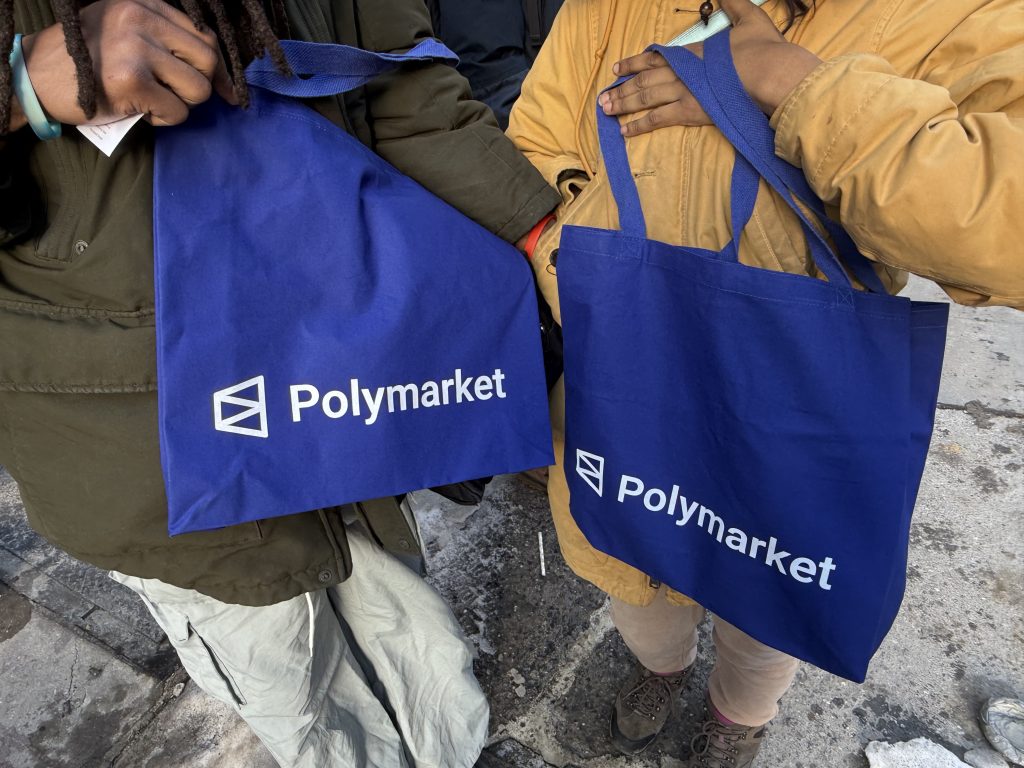
Mark, a Queens resident who said he took two trains to get to the West Village, shifted his tote bag from shoulder to shoulder as the line inched forward and said the wait felt worth it. He estimated he spends more than $100 a week on groceries for himself and his partner, a number that has crept up steadily over the past year. “Every time you go to the store, it’s another $10, another $20,” he said. “You start putting stuff back and doing math in your head.”
Mark said he doesn’t usually chase giveaways but made an exception after seeing the event mentioned on social media during his morning commute earlier that week. Even a single bag of food, he said, could free up cash for rent and transit this week. He called the promotion generous but also telling. “The fact that this line is this long in the middle of a workday says everything,” he said. “People are working, people are trying, and groceries are still too expensive.”
The effort follows a similar one-day grocery promotion earlier this month by rival prediction platform Kalshi, which allowed shoppers to take up to $50 worth of food from a Manhattan supermarket. Together, the back-to-back promotions have sparked online debate about tech companies using high-visibility giveaways as marketing tools, while also underscoring how quickly word spreads when essentials are offered for free.
Polymarket has faced criticism in the past for operating as an unregulated online prediction market, with some lawmakers and consumer advocates warning that its platform can encourage speculative betting on events without sufficient oversight.
Some shoppers acknowledged mixed feelings about a gambling company funding the event. Charles, a commercial litigation lawyer from the East Village who said he waited nearly four hours, described himself as personally opposed to gambling but appreciative of the immediate help.
“I don’t believe in it,” he said of betting platforms. “But what I do believe in is just getting the free groceries right now.”
Charles said the store felt like a scaled-down but generous supermarket, with frozen meals, cereal and even clothing items like socks available. He estimated his bag could last two to three weeks, largely because it included products he normally skips to save money. On an average month, he said, he spends $200 to $300 on groceries. “This has helped tremendously,” he said.
The pop-up arrives as New York officials debate broader solutions to food affordability and access. Mayor Zohran Mamdani has proposed city-run grocery stores that would operate with public support to keep prices near wholesale levels by reducing overhead costs, a plan that has drawn skepticism from critics across the political spectrum. Supporters argue the concept could address grocery deserts and stabilize prices in low-income neighborhoods.
Several shoppers said even if the Polymarket store is temporary, it highlights the scale of need.
By mid-afternoon, staff periodically paused entry to control crowds as the line continued to grow. Some shoppers left carrying frozen meals, cereal and canned goods; others said they simply wanted relief from a grocery bill that has become harder to manage each month. For a few hours, at least, the routine act of shopping felt less like a financial calculation and more like a rare break, a moment where necessity outweighed politics, branding and debate, and the only currency that mattered was getting through the line.