

Queens and City Representatives React to New Budget Plan
By MOHAMED FARGHALY
mfarghaly@queensledger.com
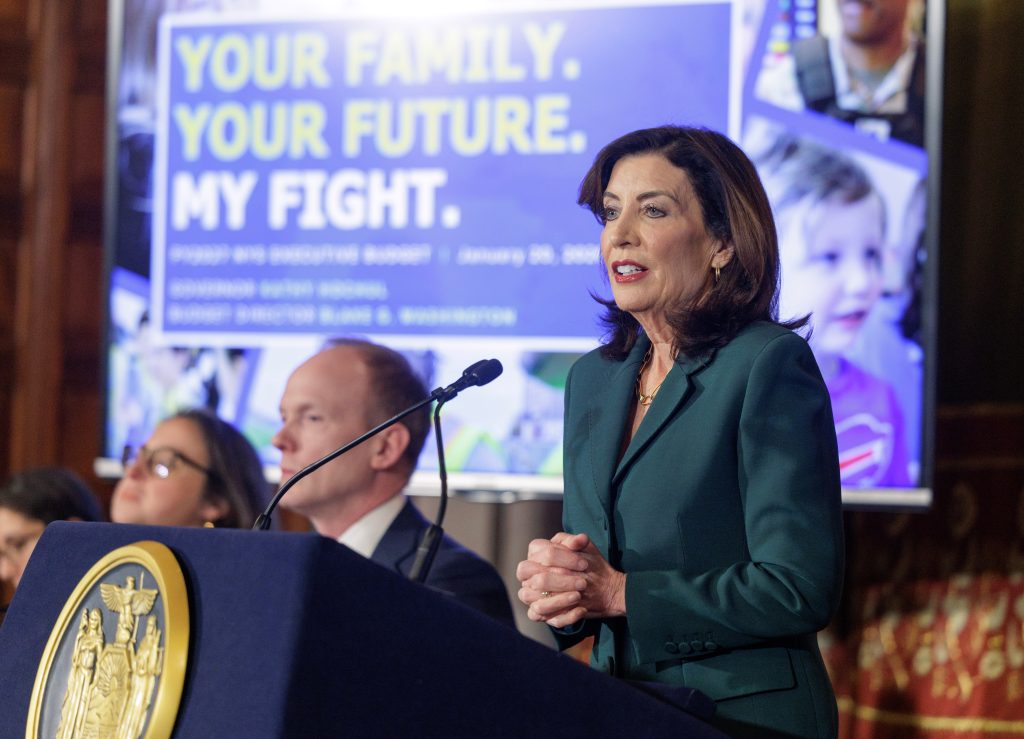
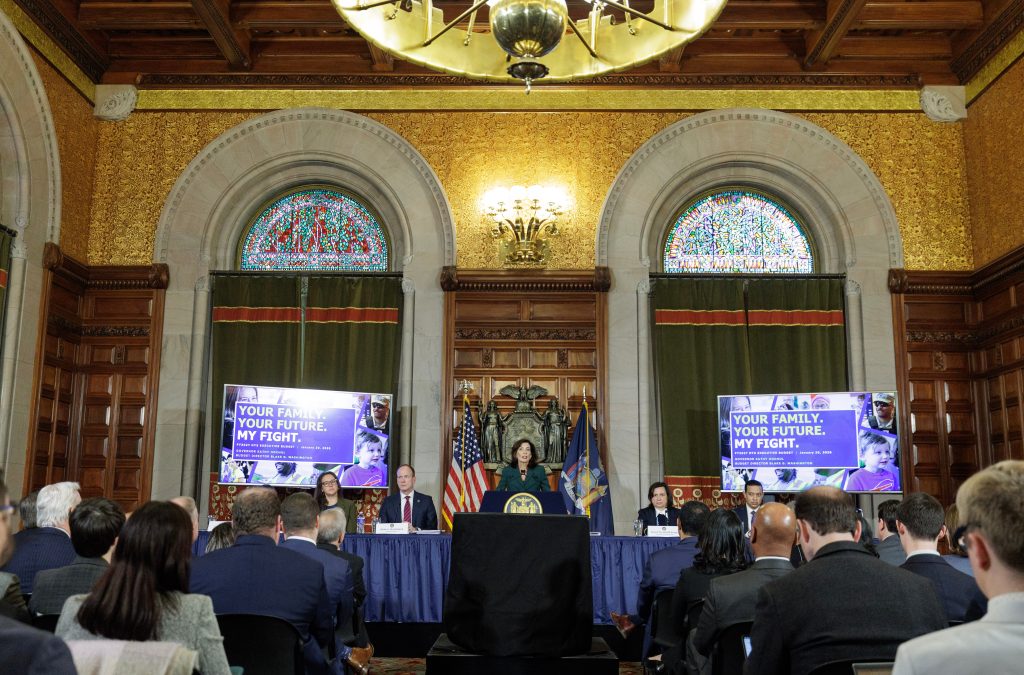
Gov. Kathy Hochul last week unveiled a $260 billion executive budget proposal that she said would make New York more affordable and safer, with major implications for New York City residents facing high housing costs, rising child care expenses and strained transit and public safety systems.
The Fiscal Year 2027 plan includes expanded child care funding, record education aid, billions for the Metropolitan Transportation Authority and new investments in housing, health care and food assistance — all without raising state income taxes, Hochul said.
The proposal comes as New York braces for possible federal funding cuts and economic uncertainty out of Washington. State officials say the budget preserves $14.6 billion in reserves and maintains New York’s AA+ credit rating, the strongest the state has held in more than 50 years.
For New York City families, the budget’s largest affordability push centers on child care. The plan allocates $500 million over two years to support the city’s 2-Care program and includes expanded child care vouchers aimed at reducing long waitlists that disproportionately affect low-income and working-class families.
Statewide, Hochul proposes $4.5 billion for child care and prekindergarten services, including $1.7 billion in new spending. City officials have long warned that child care costs rival rent for many families, forcing parents — particularly women — out of the workforce.
The budget also eliminates state income taxes on tipped wages, up to $25,000 a year, a move that would benefit tens of thousands of restaurant, hospitality and service workers concentrated in New York City. The change would take effect when residents file 2026 tax returns.
Additional measures target insurance and utility costs, with proposals to tighten oversight of insurers and pressure utilities to rein in rate hikes.
New York City public schools stand to benefit from what Hochul calls the highest level of state school aid in history. The budget includes $39.3 billion in total education funding and continues universal free school meals, which serve more than one million city students daily.
The plan also boosts universal prekindergarten funding and commits $395 million to sustain free breakfast and lunch programs. Advocates say those meals are a critical lifeline for families struggling with food insecurity.
For college students, the proposal maintains a tuition freeze at CUNY and SUNY four-year schools and expands free community college programs — a priority for city residents seeking workforce credentials without taking on debt.
Housing remains one of the city’s most pressing challenges, and Hochul’s budget builds on her $25 billion affordable housing plan, which aims to create or preserve 100,000 units statewide.
The proposal adds $250 million to accelerate affordable housing construction and includes funding for rental assistance, legal aid for homeowners facing foreclosure, and capital support for homeless housing programs. City officials say the investments are crucial as shelters remain overcrowded and rents continue to climb.
The budget also supports climate resilience for homeowners and investments to speed construction by reducing regulatory delays.
For daily commuters, the budget proposes $8.6 billion in operating aid for the MTA, helping stabilize subway, bus and commuter rail service. It also includes funding to redesign Jamaica Station and begin early planning for extending the Second Avenue subway along 125th Street in Harlem.
Public safety funding includes $77 million to continue a state-funded partnership with the NYPD that boosts police presence in subway stations and trains, along with $25 million to expand subway outreach teams that connect people in crisis with mental health care or shelter.
The budget protects Medicaid funding and directs new money to safety-net hospitals, many of which serve large numbers of uninsured and low-income patients in New York City. It also allocates funding to protect access to reproductive health care and expand mental health training in schools.
To address food insecurity, the plan increases support for food banks and emergency food providers and upgrades electronic benefit cards to combat fraud, a problem that has hit city residents particularly hard.
New York City and Queens officials offered a mix of praise and caution following Gov. Kathy Hochul’s release of her Fiscal Year 2027 executive budget, highlighting education funding, child care investments and concerns about long-term fiscal stability for the city.
State Sen. John Liu, who chairs the Senate Committee on New York City Education, said the proposal recognizes the threat posed by potential federal cuts but warned that city students could still lose out without changes to state aid formulas. “Governor Hochul’s executive budget reflects a clear understanding that New York will not be caught flat-footed amid Trump’s relentless federal cuts and ensuing fiscal turmoil,” Liu said, adding that “NYC schoolkids will continue to be shortchanged unless we fix this formula by updating the Regional Cost Index and fully accounting for our disproportionate number of unhoused and foster care students.”
Education leaders at the City University of New York welcomed the plan’s higher education investments. CUNY Chancellor Félix V. Matos Rodríguez said, “Gov. Hochul’s Fiscal Year 2027 executive budget stands to strengthen CUNY’s ability to provide an affordable, high-quality education to all New Yorkers and serve as a driver of upward mobility.” He pointed to tuition support, expanded free community college access and workforce programs, saying, “The 2027 executive budget reflects Governor Hochul’s deep commitment to public higher education.”
City Comptroller Mark Levine said the budget takes steps to protect New Yorkers amid federal uncertainty but stressed the city’s fragile financial outlook. “Governor Hochul’s executive budget balances investing in the programs that will address our affordability crisis while proactively protecting the essential social services that are being cut by the federal government,” Levine said. He also warned, “We are in a time of increased fiscal uncertainty in New York City,” citing projected multibillion-dollar budget deficits in the coming years.
Mayor Zohran Kwame Mamdani praised the state’s child care and early education funding while sharply criticizing City Hall’s fiscal management. “Governor Hochul’s budget makes meaningful investments that move us closer to an affordable and livable New York—especially through critical advancements in early childhood education,” Mamdani said, before adding, “The City, however, is not—and that is the direct result of Eric Adams’ gross fiscal mismanagement.”
Queens Council Member Phil Wong struck a more skeptical tone on government spending overall, saying, “We can’t tax and spend our way out of this crisis,” and calling for audits and a leaner city budget.
Housing advocates, meanwhile, applauded the proposal’s support for homeowners. Christie Peale of the Center for NYC Neighborhoods and Kristin Brown of the Empire Justice Center said full funding for the Homeowner Protection Program “helps keep New York affordable for thousands of homeowners statewide” and urged lawmakers to maintain the $40 million allocation as budget negotiations move forward.
Lawmakers are expected to negotiate changes to the proposal in the coming months before a final budget is adopted. For millions of New Yorkers in the city, the outcome could shape everything from child care access and subway service to rent stability and school funding in the year ahead.