
Courtesy Office of the Public Advocate
Public Advocate Warns Of Gambling Risks As Casinos Expand
By MOHAMED FARGHALY
mfarghaly@queensledger.com
As the Sweet 16 round of the NCAA men’s basketball tournament begins and Major League Baseball opens its season, Jumaane D. Williams on Thursday released a set of recommendations aimed at reducing potential harms tied to the rapid expansion of gambling in New York.
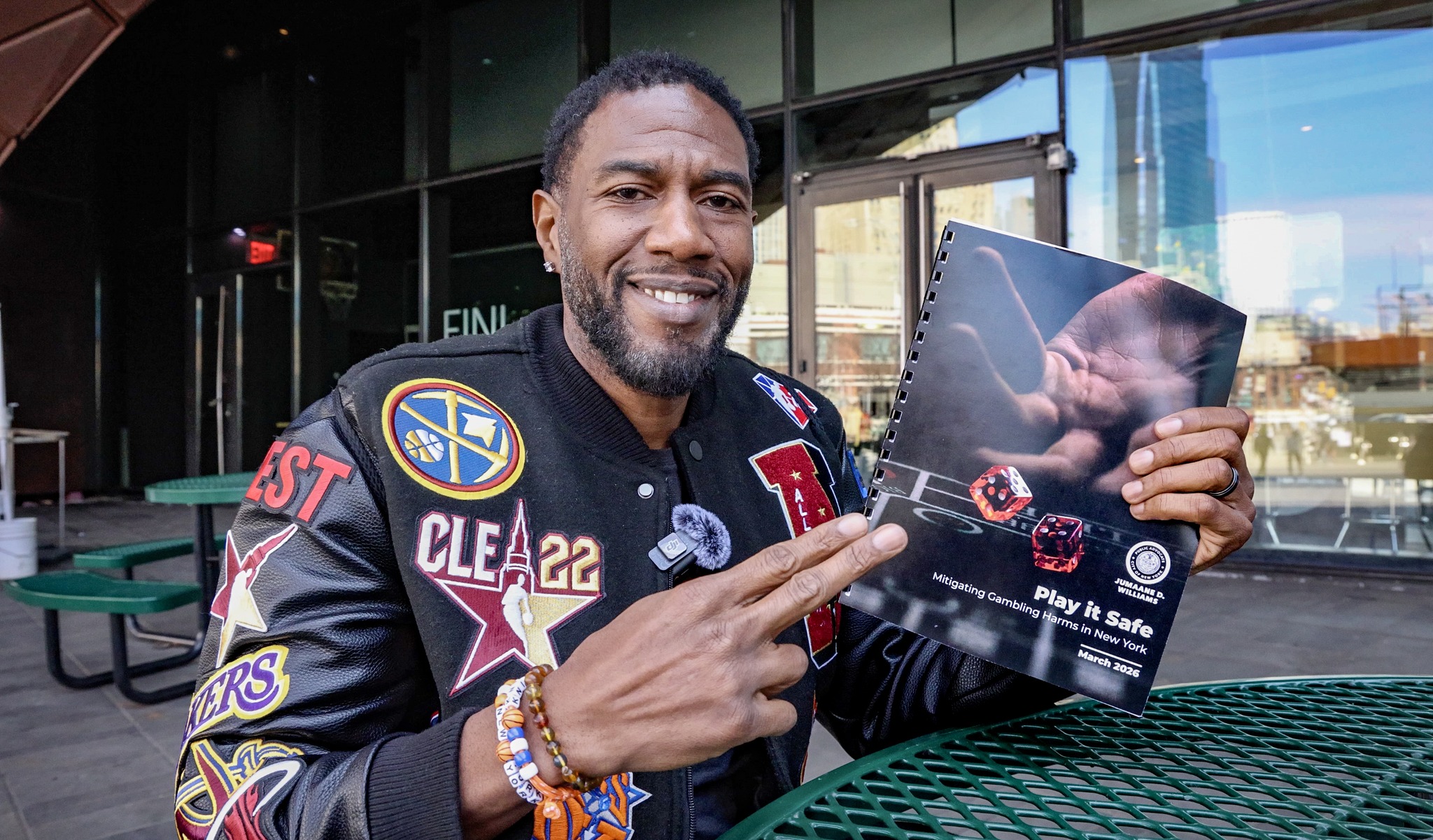
Williams, the New York City public advocate, unveiled what he called a “Suite of Sixteen,” a group of policy proposals outlined in a new report titled Play It Safe: Mitigating Gambling Harms in New York. The recommendations come as sports betting continues to surge online and as plans move forward for three new casinos in New York City following approvals earlier this year for projects in the Bronx and Queens.
About $3.3 billion is expected to be wagered legally on this year’s March Madness tournament, a 54 percent increase over the last three years, according to the report. Nationwide, more than $160 billion in bets were placed through legal sports betting in 2025. New York has become the national leader in online sports wagering over the past three years, driven in part by the spread of mobile sportsbooks that allow residents to place bets from their phones.
“With legalized sports betting sweeping the city and three new casinos coming to the five boroughs, we can’t gamble on the health of our neighbors and communities,” said New York City Public Advocate Jumaane D. Williams. “We have to be able to both welcome the incoming economic benefits from these activities and acknowledge the harms that often come with it. The city and state are making a big bet, and it’s their responsibility to minimize risk. When the chips are down, we have to step up.”
The report examines the potential effects of casinos and sports betting across several areas, including economic development, public safety and educational outcomes. It places particular focus on mental health and addiction risks tied to expanded access to gambling, arguing that state and city leaders should invest in prevention efforts and support services before additional casinos open.

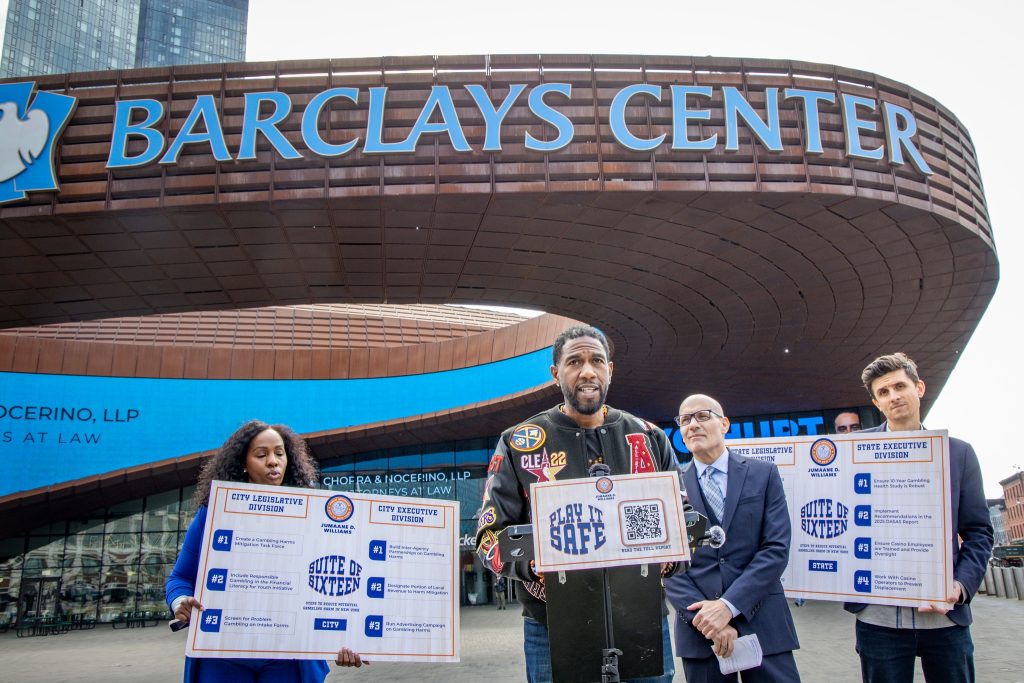
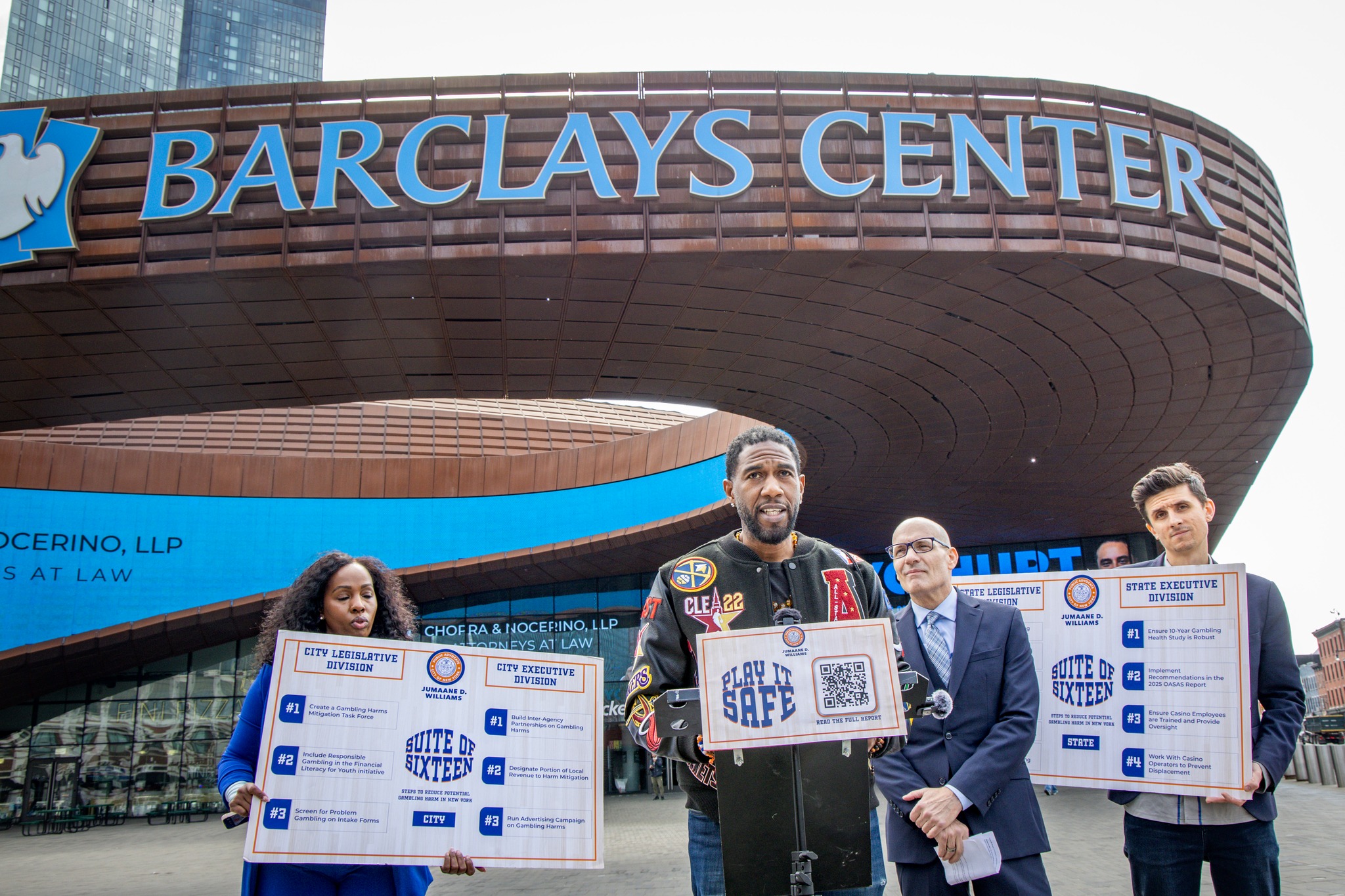
Among the recommendations directed at the city’s legislative branch are the creation of a Gambling Harms Mitigation Task Force, incorporating responsible gambling education into youth financial literacy initiatives and adding screening questions for problem gambling to intake forms used by city agencies.
The report also urges actions from the city’s executive branch, including building partnerships among agencies to address gambling-related harms, dedicating a portion of local revenue from gambling to prevention and treatment programs and launching public advertising campaigns highlighting the risks associated with gambling.
At the state level, the report calls on lawmakers to improve data reporting requirements for gambling operators and strengthen regulations aimed at reducing risks for consumers. It also recommends allocating a share of state gambling revenue to prevention and treatment services, separating gambling tax revenue from education funding, tightening restrictions on gambling advertisements and requiring doctors and pharmacists to share information with patients about gambling-related risks.
Additional recommendations aimed at the state executive branch include ensuring a planned 10-year study on the public health impacts of gambling is comprehensive, implementing recommendations from a 2025 report by the state’s Office of Addiction Services and Supports, requiring casinos to train employees to recognize signs of problem gambling and working with casino operators to prevent displacement of nearby residents.
New York currently imposes some of the highest gambling taxes in the country, including a 51 percent tax on corporate profits from sports betting and roughly 25 percent to 45 percent on casino profits, depending on the property. Supporters of casino development often describe the facilities as economic engines that generate jobs, tax revenue and licensing fees for host communities.
The report, however, argues that such benefits can sometimes be overstated, particularly in large metropolitan areas where casinos may draw spending away from other local businesses rather than generating entirely new economic activity.
It also highlights research suggesting that some casinos rely heavily on revenue from problem gamblers and that the expansion of legal sports betting and new casinos may worsen addiction and related mental health challenges.
The report says advertising restrictions could play a significant role in harm reduction, recommending limits on where and how gambling companies promote their services while increasing funding for public service announcements that highlight risks and provide information about help resources.
“If they choose, people can gamble,” said the Public Advocate. “The government can’t.”