
Prepping for Boating Season with the LIC Community Boathouse

BY COLE SINANIAN

cole@queensledger.com

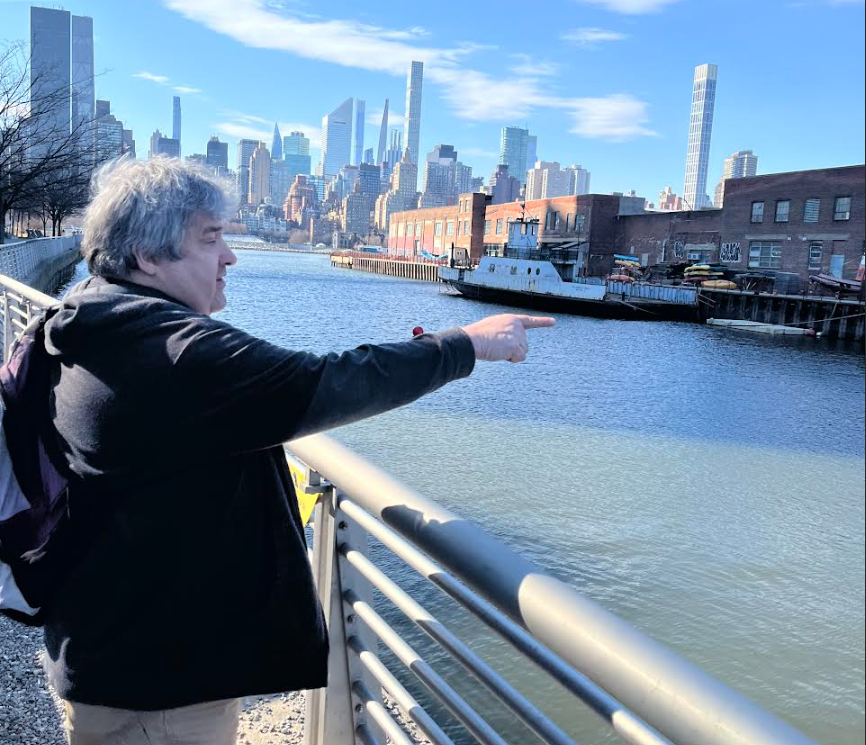
HUNTER’S POINT  — Floating in a quiet waterway next to the parking lot of the CultureLab LIC art space is a makeshift foam dock. Not far away, the rusty and slowly sinking Prudence Ferry bobs idly.

Legend has it a mastodon bone was found in the mucky bottom during the man-made canal’s initial excavation. Nowadays you’re more likely to find floating trash in these waters or, if you’re lucky, a decomposing foot.

“We found a foot in a sneaker,” said Scott Wolpow, a longtime volunteer with the Long Island City Community Boathouse. He was leading a cleanup by South Brother Island in the East River, when one of the volunteers spotted it.

“It was hard because the police had to come, but they have no boats really that can get to it,”  Wolpow said. “They had to go from a large boat to a smaller boat to basically an outboard boat.”

Wolpow spends much of his time during warm-weather months on a kayak in the East River, helping to lead guided tours and marine trash cleanups for boat-curious New Yorkers. The boathouse is located in a former meat-smoking facility at 46-01 5th St, and also serves as headquarters for rowing non-profit, East River C.R.E.W.  Open from May through November, the boathouse is operated by a team of roughly 35 regular  volunteers.

Constructed in 1868 for the then booming LIC oil-refinery business, the Anable Basin is one of just a handful of water entry points in the area. As with other nearby waterways like the Bushwick Inlet and Newtown Creek, the waters here have suffered decades of industrial use and pollution that’s made human interaction with them risky. But now, after successful environmental regulation has significantly cleaned up New York’s notoriously grimy waters, enthusiasts like Wolpow are helping others discover the beauty and peace that comes with gliding through the waves amid the skyscrapers of America’s most densely populated city.

Danika Durant first began volunteering with the Long Island City Community Boathouse back in 2011, and described the experience of being on the water as the kind of tranquility that’s hard to come by in big city life.

“It’s the closest thing to flying,” Durant says.  “It’s the Zen feeling. The city is all around you, but it’s so quiet and so peaceful. You’re in the city and you feel out of it at the same time.”

“At the height of the summer, on the hottest day, we do a Manhattan circumnavigation,” Wolpow added. “And it’s nighttime, you’re going down the Hudson, it’s 10-15 degrees cooler and it’s quiet. You have no idea you’re in New York City anymore.”

In addition to rowing classes provided by East River C.R.E.W., the boathouse team offers both kayak and canoe programming. Not unlike other NYC-based kayak groups — the Gowanus Dredgers and Kayak Staten Island, for example — a big part of the mission is to draw attention to the city’s waterways in an effort to preserve and conserve them.

“The other part of it is that we operate in areas that have the least amount of park space per capita in New York, and by allowing people to use the water, by being a way that they can safely interact with the water, it’s like we’re extending the park space,” Durant said.

The LIC Community Boathouse is hosting a volunteer meet and greet on April 10 at 7pm, and a “Friendraiser” party at CultureLab on April 28 at 6pm to help kick off the season. Wolpow adds that the team is always looking for new volunteers. To get involved, head to liccb.org.
Jessica González-Rojas Bid for Senate Driven by Local Needs

Jessica González-Rojas Eyes Senate Seat in District 13

By MOHAMED FARGHALY

mfarghaly@queensledger.com

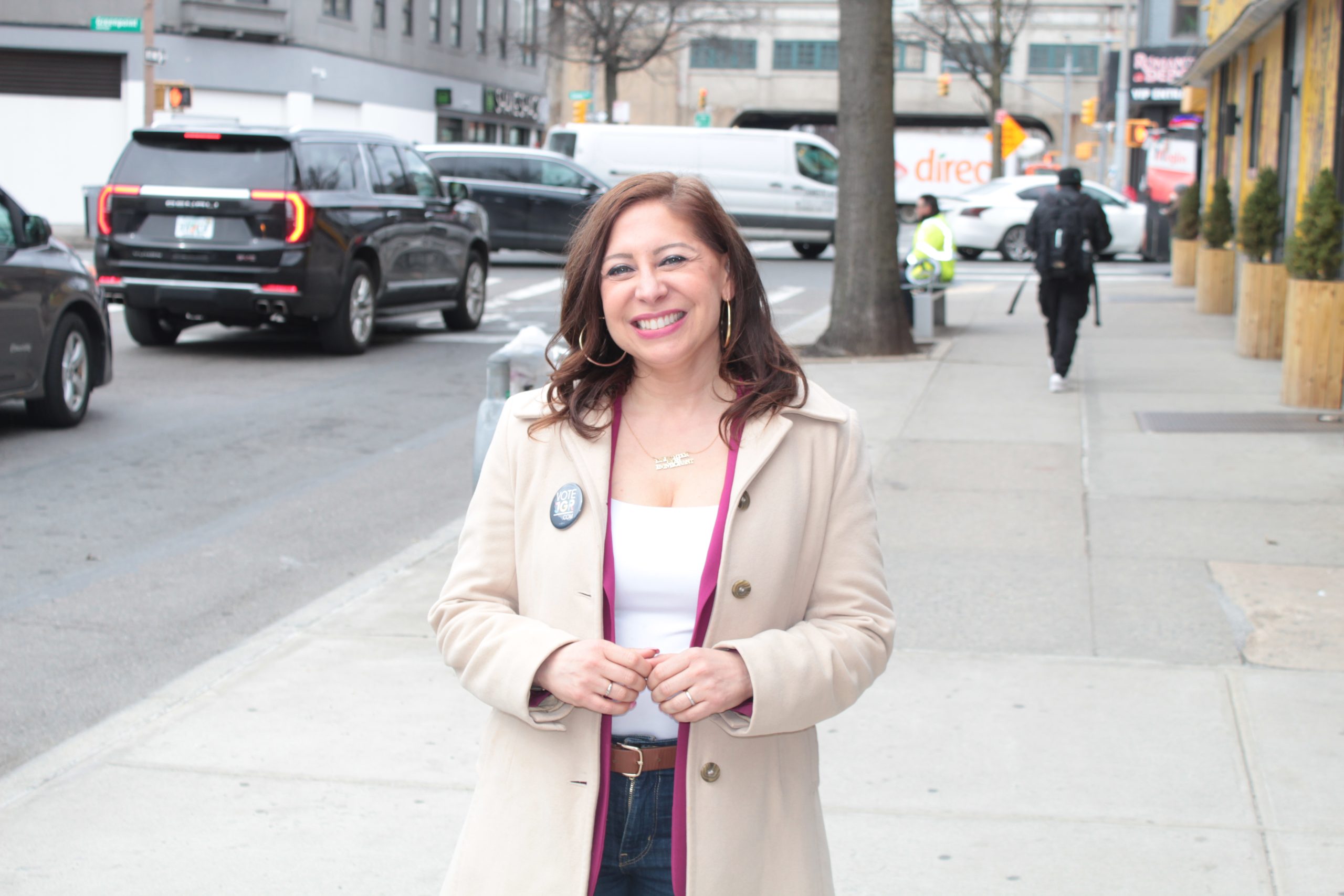
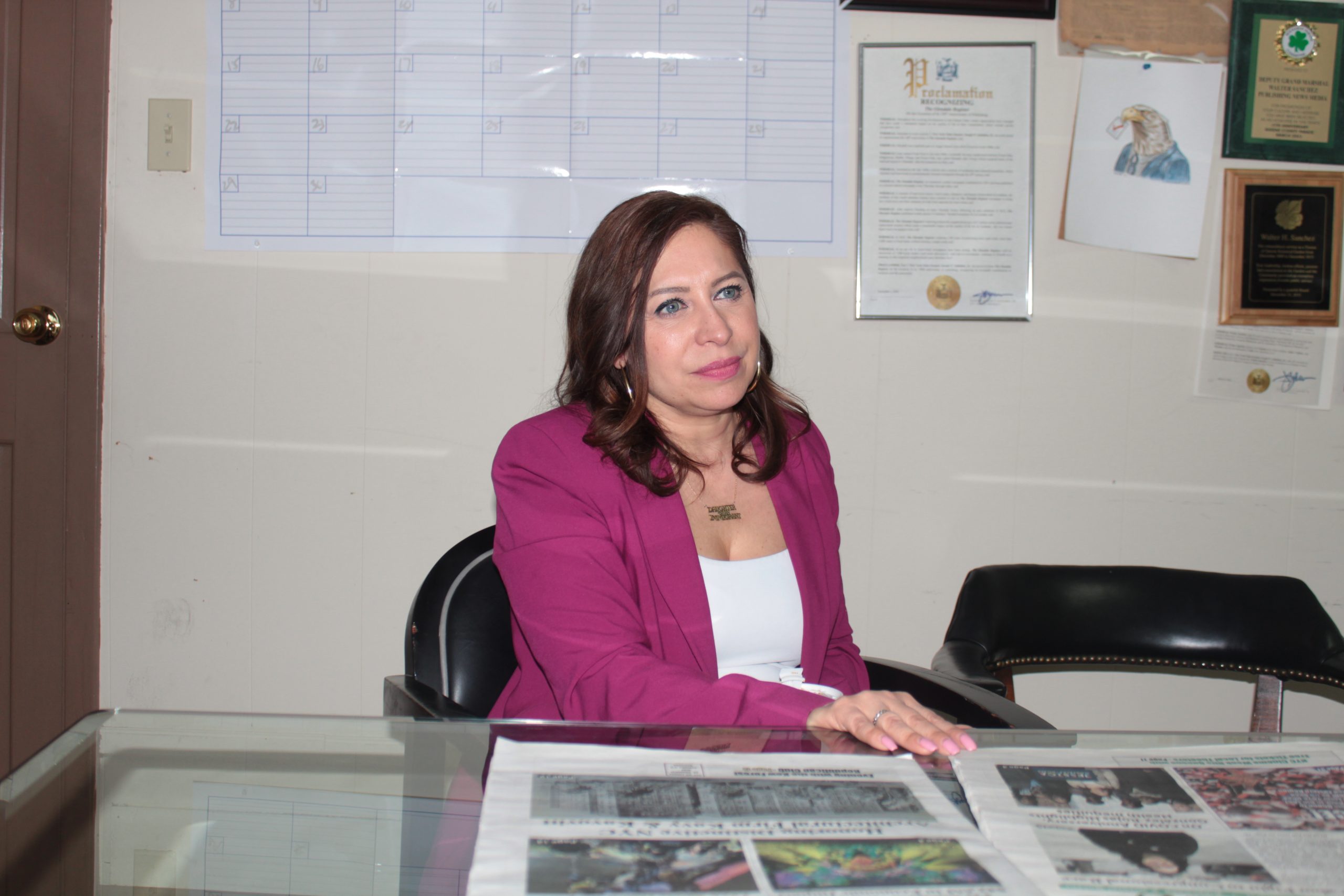
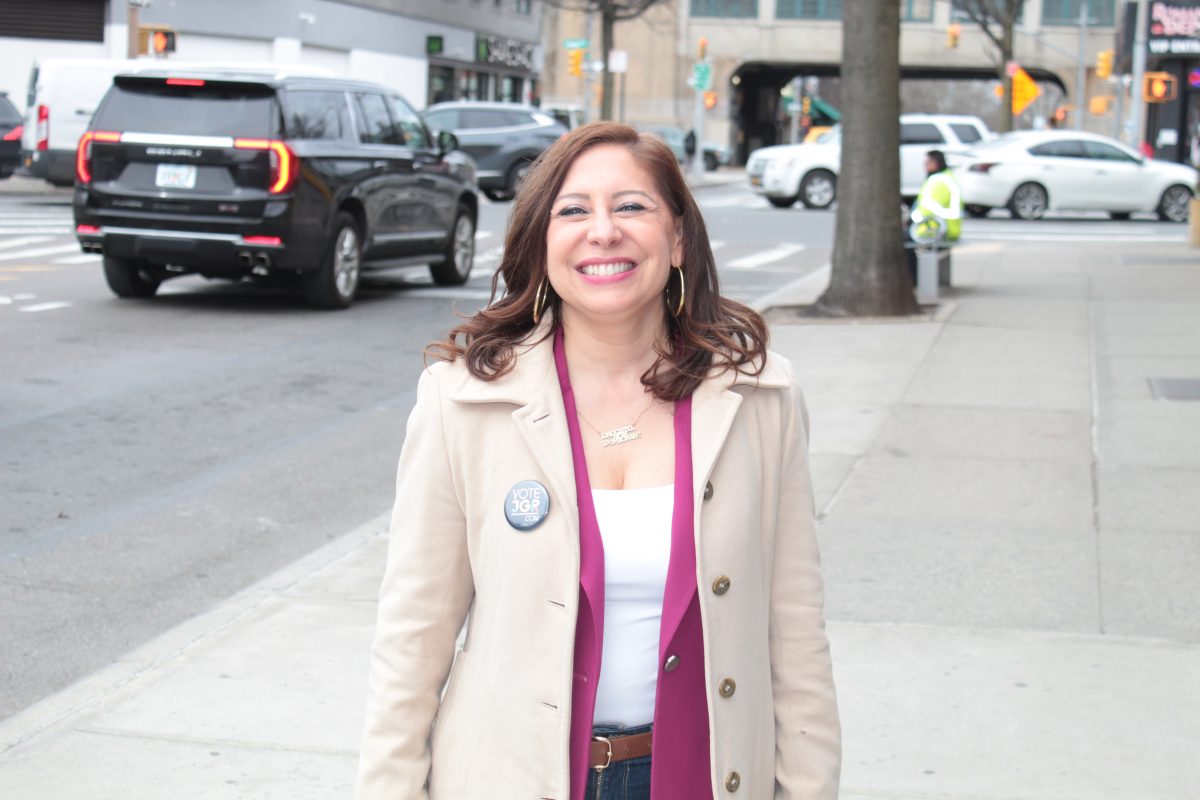
For nearly three decades, Jessica González-Rojas has walked the streets of Jackson Heights, meeting neighbors, listening to their concerns, and turning community struggles into legislative action. Now, she is aiming for the New York State Senate in District 13, driven by a vision of health justice, immigrant advocacy, and neighborhood transformation.

The daughter of a Paraguayan immigrant who arrived in the United States at 16, González-Rojas grew up in a working-class household, moving across Queens before settling in Jackson Heights in the late 90’s. Her father’s journey shaped her commitment to public service. “He came here to build a life,” she recalled. “That’s why I went to Boston University, and I studied international relations because of my immigration passion.”

Her first taste of community driven action occurred when her career path shifted and she interned with Congresswoman Nydia Velázquez. “I spent a few weeks in her DC office then her district office in Corona,” she said. “The difference between the offices being more engrained in the community, was keeping families together in immigration cases, working on the census, this was the shift in my trajectory.”

Her rise in politics accelerated in the wake of the 2018 midterms. Inspired by women of color such as Alexandria Ocasio-Cortez, González-Rojas joined a wave of candidates stepping up to represent their communities. In 2020, neighbors encouraged her to run for the State Assembly, where she quickly made her mark on health, education, and women’s issues.

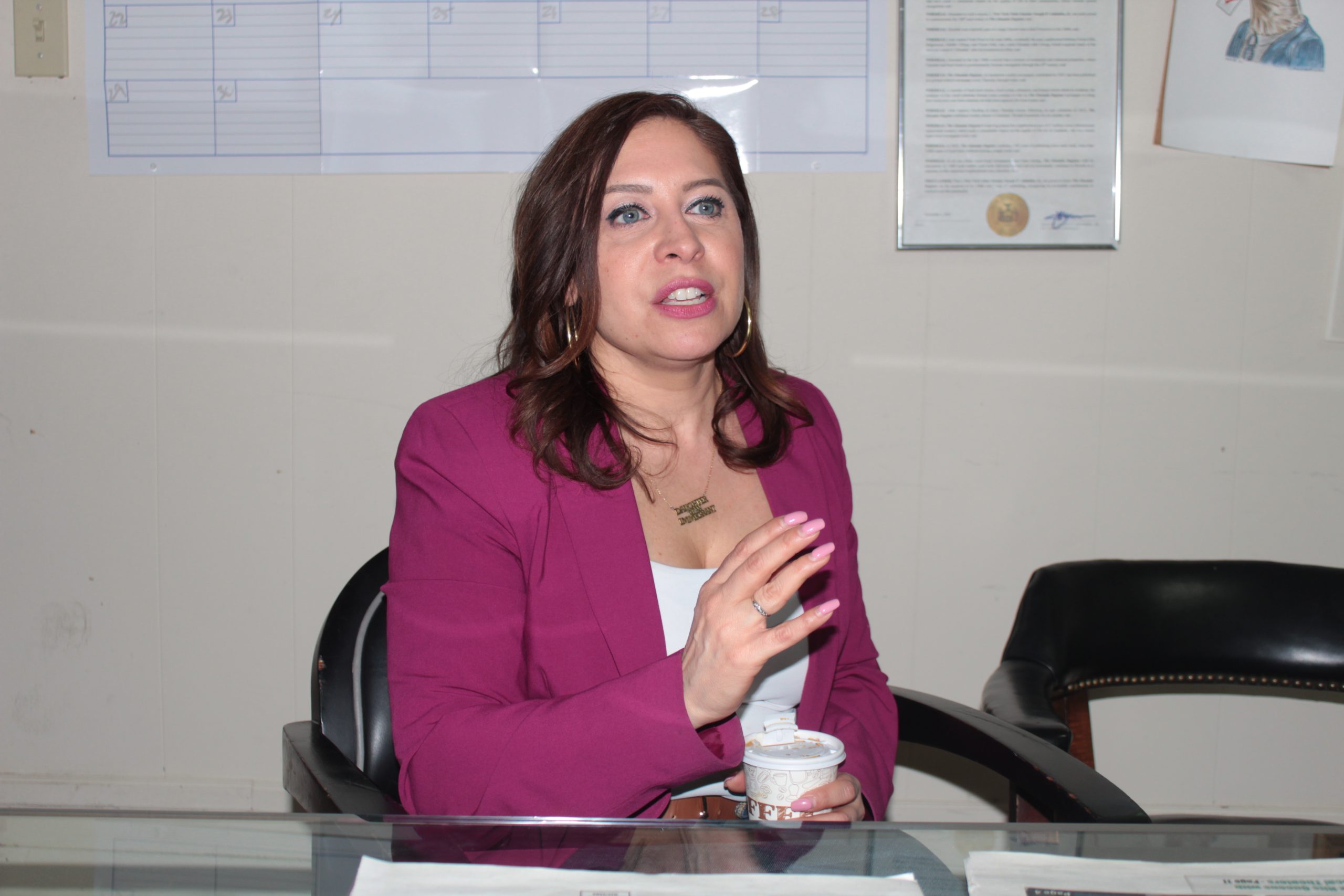
“I love talking to people,” she said. “Knocking on doors, meeting constituents, hearing their concerns, it’s meaningful to be entrusted with that and then pass policies that impact their lives.”

Among her legislative accomplishments as assemblywoman, González-Rojas cites universal school meals, the Reproductive Freedom Equity Fund, and initiatives expanding housing access and tenant protections. She has also fought for green space in Queens, with Travers Park holding a special place in her heart. “My son used to play there on the swings and slide.” she said. “Something I’ve fought for and kind of been committed to is building more green space in the area.”

González-Rojas has also led a women’s rights task force in the State Assembly since last year, collaborating with other women legislators to set both budget and policy priorities. The task force focuses on issues ranging from universal child care to workforce development, and González-Rojas hopes to continue this work in the Senate, including serving on a committee dedicated to women’s issues.

After several years in the Assembly, González-Rojas is seeking a Senate seat to gain greater influence over agency decisions and expand resources for her community. She said her goal is to secure funding for projects like a health center in East Elmhurst, emphasizing health justice as a core passion. “All of this access we don’t get in the Assembly,” she said, highlighting her desire to bring more resources and decision-making power to the neighborhoods she serves.

Her approach to contentious issues has been shaped by careful listening and deep research. On the proposed casino development in Queens, she said, “I did my job. I was on a listening tour, essentially, I spoke to neighbors across the district and went to the town halls. I met with the project team. I met with people who opposed it. I met with people who supported it, I didn’t vote on a casino. I voted on the land use bill, the property is really surrounded by highways.”

González-Rojas has identified Roosevelt Avenue as a priority area for safety and accessibility improvements. The corridor, she says, suffers from poor lighting, noise, and congestion around street vendors. She advocates for a three-pronged approach to address these problems: education, enforcement, and engineering. “When you brighten the area you expose it more; when it’s dark it becomes shadowy,” she said, noting that improving visibility can make the space safer for pedestrians while still respecting the needs of local businesses.

She has made mental health a central focus of her policy agenda. She hopes to serve on the Senate mental health committee and advocates for a workforce of social workers who are multilingual and representative of the communities they serve. She stresses the importance of fair pay and benefits for social workers, citing the challenges of the profession during post-pandemic crises. Her goal is to make social work a sustainable and respected career while improving services for youth and families facing mental health challenges. Visits to city and state prisons, including Rikers Island, have underscored the urgency of these reforms.

Health equity remains the centerpiece of her Senate campaign. González-Rojas recently outlined a five-point health plan on the COVID anniversary, focusing on preventive care, community resources, and reproductive equity. She hopes to expand her influence from the Assembly to the Senate, where she can advise on agency decisions and direct more resources to her neighborhood.

For González-Rojas, housing is a fundamental human right. She has fought for programs like the Housing Access Voucher Program, securing $50 million to help residents, including runaway youth, gain access to safe and affordable housing. She also emphasizes tenant protections as a critical component of her housing agenda, aiming to ensure stability for working-class families in Queens.

Beyond policy, González-Rojas celebrates the cultural and small-business fabric of Queens. Each month, she recognizes local establishments as an Assemblymember, including Himalayan Yak, a Nepalese restaurant that has become a community institution.

Looking ahead, González-Rojas wants her legacy to be tied to improving community health. She has championed projects like a local health center and a five-point health plan aimed at addressing inequities exposed by the pandemic. “Health is my life’s work in the intersection of all the things that impact health,” she said, “To be able to know that I contributed to improving the health outcomes of my neighbor is everything.”

QCP Honors Chefs and Community Leaders at Evening of Fine Food

Queens Food, Philanthropy Shine at QCP 30th Annual Gala

By MOHAMED FARGHALY

mfarghaly@queensledger.com

Queens Centers for Progress marked a major milestone on March 24 with its 30th Annual Evening of Fine Food, bringing together more than 550 attendees at Terrace on the Park. The signature culinary fundraiser raised $165,000 to support QCP’s programs and services for over 1,200 children and adults with developmental disabilities.

The event showcased the borough’s rich food scene, featuring dishes and beverages from dozens of local restaurants and purveyors, while celebrating Queens’ spirit of generosity and inclusion.

“This 30-year milestone is a testament to the strength of the Queens community and the unwavering support for the people we serve,” said Terri Ross, executive director of Queens Centers for Progress. “Because of the generosity of our attendees, sponsors, and restaurant partners, QCP can continue expanding opportunities for individuals with developmental disabilities to live with dignity, independence, and purpose.”

Queens Public Television’s Roslyn Nieves and PIX11 reporter Monica Morales, an eight-time Emmy Award winner, served as emcees, joined by special guest co-host and Queens foodie Rick Bedrosian. The evening was broadcast live on QPTV’s website, guiding guests through dining, networking, and celebration.

Elected officials in attendance included New York City Council Members James Gennaro and Shanel Thomas-Henry, along with representatives from the offices of Assembly Member David Weprin and Borough President Donovan Richards.

This year, QCP recognized its 2026 Chefs of the Year: Patricia Ornst of Delta Air Lines, Richard S. David of Con Edison, and Ben Guttmann of the Queens Economic Development Corporation. Each prepared a specialty dish reflecting their cultural or family traditions for guests to sample.

Ben Guttmann, who recently became executive director of QEDC, said, “It’s a real honor to be named one of the chefs of the year. They’re an incredible organization doing essential work in the community, and to be recognized alongside the other honorees is truly special.”

Guttmann described his work at QEDC as an extension of his connection to Queens. “I’ve loved it. It’s been a lot of fun. I live in Queens, I love Queens, and I’m grateful I get to work in and for this community every day,” he said. Under his leadership, the organization has launched new programs focused on access to capital, tourism tied to the World Cup, and partnerships with local entrepreneurs.

Richard David, who grew up in Jamaica, Queens after emigrating from Guyana, reflected on his lifelong commitment to community service. “I wake up every day really thankful and feeling blessed, and I’m so committed to everything that I do. I put my best foot forward, I work really hard and I want to achieve even more than I have achieved,” he said. David’s career spans nonprofit work, politics, and currently directing Queens Regional & Community Affairs at Con Edison, where he engages with local stakeholders on major energy projects.

Patricia Ornst, Delta’s managing director for New York State and local government affairs, emphasized the importance of trust in both business and community work. “There’s a real economic impact that we bring to Queens. But building off of that is important,” she said. Ornst has guided major aviation projects, including the $8 billion redevelopment of LaGuardia Airport, while supporting neighborhood investments, volunteer programs, and MWBE contracts.

QCP also presented the Claire Shulman “Spirit of Community” Award to Loycent Gordon, founder and owner of Neir’s Tavern in Woodhaven. Gordon, who emigrated from Jamaica at age 10 and served over two decades in the NYC Fire Department’s HAZMAT unit, has preserved one of Queens’ oldest bars while fostering community initiatives.

“It really is a huge, purpose-driven initiative. It’s too important to fail. That’s what’s in the back of my head, and that’s what keeps me going,” Gordon said. He credited his mother for inspiring his dedication: “She’s my role model. She made a sacrifice for me, and I have to make sure that her sacrifice is not in vain. I hope to never let her down.”

Queens Third Grade Students Become Published Authors

Queens Students Celebrate Published Book

By MOHAMED FARGHALY

mfarghaly@queensledger.com

Two Queens third graders are celebrating a milestone many adults only dream about. They are now published authors.

Students Malik and Valencia from P.S. 96 in Jamaica debuted their book, Robot Shark Finds a Friend, during a Student Book Launch on Feb. 28 as part of New York Edge’s Read Across New York Edge Week. The literacy celebration, which ran through March 6, highlights student creativity and storytelling through the organization’s Student Book Publishing Initiative.

The young authors participated in the event as both panelists and readers, sharing their imaginative story about Lucas, a character who is part shark, part robot and searching for friendship after crashing into the ocean and struggling to control his powers. They also signed copies of the book and met attendees during a giveaway following the presentation.

“My favorite part of the story is when Lucas finally finds friends,” Valencia said. “He meets a peacock who has talented musical cats, and he doesn’t feel alone anymore.”

Malik and Valencia said the idea for the story came together during an after-school activity when their teacher introduced the book project.

“One day our after-school teacher said we were going to make a book with a person on Zoom,” Malik said. “Then we made a book called Robot Shark Finds a Friend, and we made up the characters and the events.”

The students wrote and illustrated the book themselves as part of the publishing initiative, which guides children through the process of developing characters, creating illustrations and producing a finished story.

“We felt truly honored to see our book printed and published,” Valencia said. “We’re so proud and excited and can’t wait to hear other kids’ reactions as they read it.”

Clifford Benson, program director at the New York Edge site at P.S. 96, said the organization serves thousands of students across the city through after-school and summer programming.

“New York Edge is a nonprofit organization and one of the largest after-school programs in the five boroughs and Long Island,” Benson said. “We serve thousands of students in 136 schools from kindergarten through 12th grade, helping strengthen academic performance, health, wellness, self-confidence and leadership skills.”

Benson said the book project began when the students were in second grade and worked with a mentor to develop the story over the course of about a year.

During the writing process, the young authors had to learn how to collaborate and compromise.

“The hardest part of writing the story is when everyone wanted their ideas to be included,” Valencia said. “Miss Tracy came up with a spinning wheel, and that solved half the problem.”

At the launch event, Malik served as a panelist while Valencia read portions of the story aloud to the audience.

“I felt a little nervous at first, but it was really fun sharing the story with everyone,” Valencia said. “Signing autographs was the best part. I felt like a little famous star.”

Benson said watching the students present their work and celebrate with their families was a highlight.

“Seeing them and their families light up and have this opportunity was incredible,” he said. “Now I have students in third grade who are authors, and no one can take that away from them.”

Malik and Valencia say they are already thinking about their next project.

“Yes, we would love to write another book,” Valencia said. “Maybe an adventure or action story, and hopefully it could turn into a movie one day. I want to be one of the voice actors behind the character.”

According to program organizers, proceeds from future book sales will be reinvested into the Student Book Publishing Initiative to support more young writers.

For the young authors, the message of their story is simple.

“Don’t be scared to make friends,” Malik said. “You might not make friends right away, but if you get along, you can start to be friends.”


Is the NY Governors Race Over Before it Starts?

ROBERT HORNAK

FORMER EXECUTIVE DIRECTOR OF THE QUEENS REPUBLICAN PARTY

RAHORNAK@GMAIL.COM

Robert Hornak is a veteran political consultant who previously served as deputy director of the Republican assembly leader’s NYC office and as executive director of the Queens Republican Party. He can be reached at rahornak@gmail.com and @roberthornak on X.

California politicians have a great ability to turn a memorable phrase. Perhaps the one most often referenced is “Money is the mother’s milk of politics” and even while the person who first spoke it is relatively unmemorable, this phrase, uttered in 1966 by Jesse Unruh, then the Speaker of the California State Assembly, has become both one of the most memorable and prophetic.

It is true that campaigns do not run without money. Successful campaigns require many ingredients, but money is both a critical resource and a measure of the campaign and the candidate. In the final analysis, no matter how smart or likeable a candidate, if he or she can’t raise money they are not a viable candidate.

Money is now what might undermine the race for NY Governor. Due to a paperwork filing issue, the NYS Public Campaign Finance Board is considering declaring Republican candidate Bruce Blakeman ineligible for state matching funds. According to the regulations of the brand new matching funds program, “Participating candidates running jointly for Governor and Lieutenant Governor shall have one authorized committee. Such authorized committee shall be controlled by the candidate for Governor.

In other words, because they run as a team they are considered one entity for fundraising purposes and only eligible for one payout of matching funds. The regulations also stipulate that by Feb 23, 2026, the candidates “shall jointly submit an application/certification prescribed by the PCFB. Such application/certification shall be jointly filed by the deadline.”

And here is the technicality that could sink the campaign before it really begins.

Blakeman filed his certification when he first announced his candidacy. His running mate, upstate Sheriff Todd Hood, wasn’t picked to run until the beginning of the State Convention in early February. This was just before the (extremely early) filing deadline that same month, and the certification was apparently not amended to add Hood.

By comparison, the NYC matching funds program requires candidates to certify in May, a much more sensible deadline. Nothing has really happened by late February in any election cycle except the state conventions to nominate statewide candidates.

But the petition process had not even begun yet, which first starts for major party candidates at the end of February and is months away for independent candidates. Candidates can declare to run well after Feb

23, but they will be excluded from eligibility for public matching funds. This is one of the most curious aspects of the program, as it clearly benefits incumbents and other political insiders.

It seems the question now is will the PCFB rule that the campaign certified in a timely manor and can still amend its filing to include the later addition of Hood. There is no reason for them to decide otherwise, IF the PCFB wants to be seen as a fair, non-partisan operation that wants this program widely used and respected like the NYC program.

After all, Gov. Hochul is sitting on a war chest of over $20 million. Meanwhile, Blakeman is off to a slow start fundraising with just over $3 million raised so far, but of which only about $1 million raised from individual donors that would qualify for the match. The other $2 million was from committee transfers, including from the Nassau GOP, and not matchable. Ultimately, Blakeman can only receive a maximum of $3.5 million in matching funds.

Prediction outlets The Cook Political Report, Sabato’s Crystal Ball, and Race to the WH all rate this race as Solid Democrat and the poll aggregate has Hochul up by almost 18 points 51-33. The question for Hochul and her allies in Albany really is, this is democracy, so what are you afraid of?

Jesse Unruh less famously said “If you can’t eat their food, drink their booze, screw their women and then vote against them you’ve got no business being up here” talking about legislators dealing with lobbyists. But it could be just as good advice for the PCFB board members appointed by Hochul and the Democratic leadership.

BESS Hysteria: Councilmember Phil Wong Petitions City Agencies in Latest Energy Storage Facility Backlash

Patrick Stachniak

For close to a year now, some members of District 30 have been vocally against a battery energy storage system (BESS) that is being built on 69th Pl. in Middle Village across the street from PS/IS 128. Councilmember Phil Wong released a joint statement with several other Queens politicians and civic associations condemning its placement near the school and residences, and most recently sent a letter to Department of Buildings (DOB) Commissioner Ahmed Tigani to reassess the site’s environmental risk.

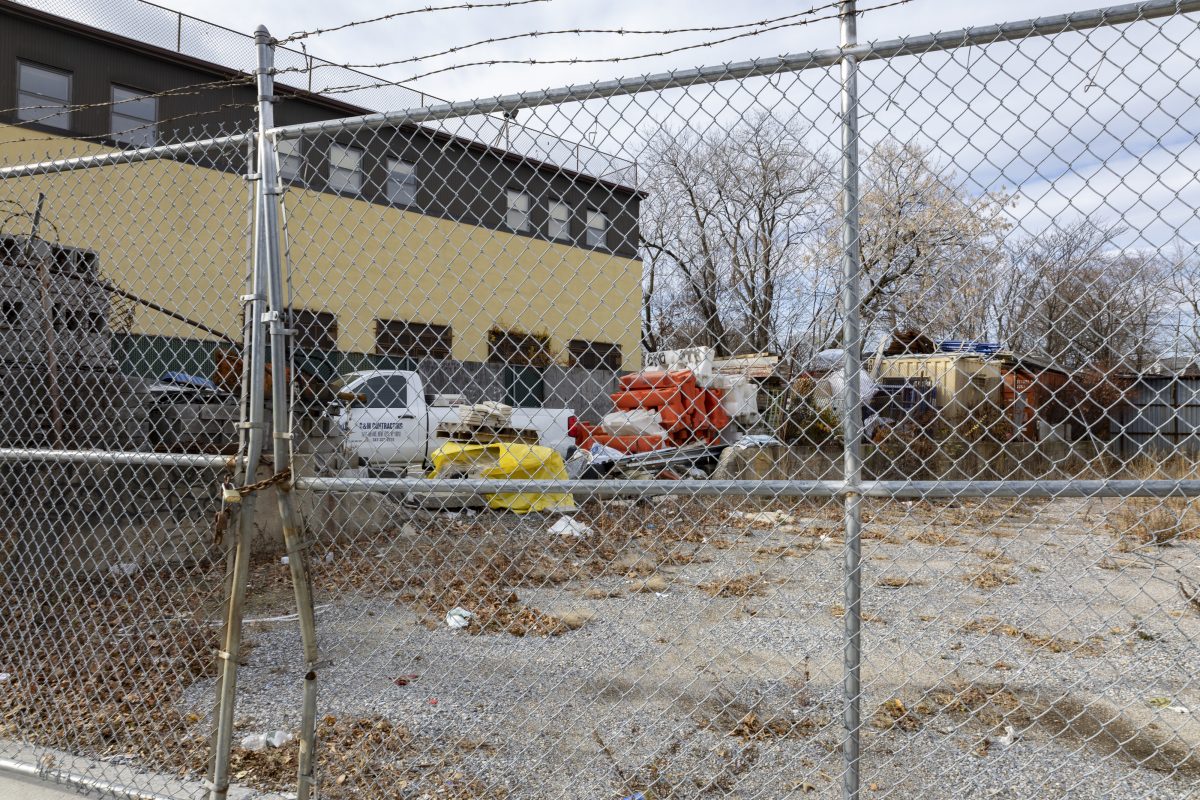
The site of the BESS on 69th Pl., currently being used as storage for a contractor.

A phase 1 Environmental Site Assessment (ESA) is performed for all new development projects and requires an inspection of the site, to look for potential contaminants, and documentation on its use. A phase two report requires sampling of the soil and surface/ground water for a full testing of hazardous substances.

Typically, a phase two inspection only occurs when the inspector notices potential contamination and is not required for the permitting process. All reports are done by private contractors licensed by the EPA, and are reviewed by the DOB. The ESA did not recommend NineDot’s site move forward with the second phase.

The DOB is still reviewing the application and has not yet responded to Wong’s letter.

Wong later questioned the Department of City Planning (DCP) on the placement of BESS near schools at the Council’s Land Use Committee hearing. Wong previously stated BESS has potential to “burn down whole neighborhoods.”

“They’re a really important tool to get our city to carbon neutrality… these systems require extensive, extensive oversight by FDNY and DOB,” said DCP Executive Director Edith Hsu-Chen, who stated BESS are “appropriate” to be installed near schools. “There’s been no fire incidents in New York City for a BESS. In fact, schools can benefit from BESS.”

In June 2025, 10,000 people lost power during the summer heatwave and one person died due to the exposure. NineDot’s BESS alleviates the risk of black outs and brownouts in a half-mile radius, including the school, meaning it could provide Middle Village residents a fully operational cooling center during such emergencies.

Some Middle Village residents question if the BESS would cost them more money by raising their home insurance, due to safety risks, and increasing energy bills. However, there is no documented case of a homeowner’s insurance being raised after a nearby BESS installation. And similar to New York’s plan, he large-scale investment Texas made on these systems saved consumers $750 million in just the summer of 2024.

“This flexible resource is both boosting the reliability of the grid and delivering cost savings for families and businesses.,” said Noah Roberts, VP of Energy Storage for American Clean Power (ACP). It has truly been a game changer for [Texas] and ERCOT’s ability to navigate moments of stress on the power grid.”

Texas invested in building about 30 gigawatts (GW) of solar and energy storage in 2024. Currently, New York City has around 10 GW of energy storage, about 36% of the State, despite Con Edison having the highest grid interconnection cost.

The Climate Act mandates 600 GW of energy storage needs to be built throughout the City by 2030 to keep up with demand as the City transitions from fossil fuels. Con Ed estimates that there will be around 4,000 individual BESS sites across all zoning districts. The alternative: building a multi-billion dollar substation and new high-voltage wires ratepayers would subsidize.

But if ratepayers are saving money, who is fronting the bill for this new infrastructure?

NineDot is. During a protest at the 69th Pl. site, Middle Village Residents Association President Paul Pogozelski raised concerns of private-equity firm Carlyle’s $100 million investment in NineDot. But a spokesperson from NineDot stated that investors have no say in day-to-day operations or site placement.

While NineDot does make a profit selling energy back to Con Ed during peak hours, the cost is cheaper than New York’s natural gas “peaker plants,” as transmission and distribution accounts for 10-15% of energy costs alone. The company also opted to join the Statewide Solar for All (S-SFA) program and estimates its new BESS projects will offer $60 million in energy credits for low-income New Yorkers over the next decade.

Projects enrolled in the S-SFA program contribute a percentage of revenue to a fund for EAP customers who also reside in a disadvantaged community and qualifying residents automatically receive the credit.

“It’s the gas that’s driving up our bills,” said Sane Energy Project Executive Director Kim Fraczek. “And that’s what is creating dangerous situations in our communities… We’re not having a real honest conversation about our energy future and this is all completely tied to affordability.”

Undocumented Women’s Fund Hosts Women’s Strike Fest

Alice Moreno

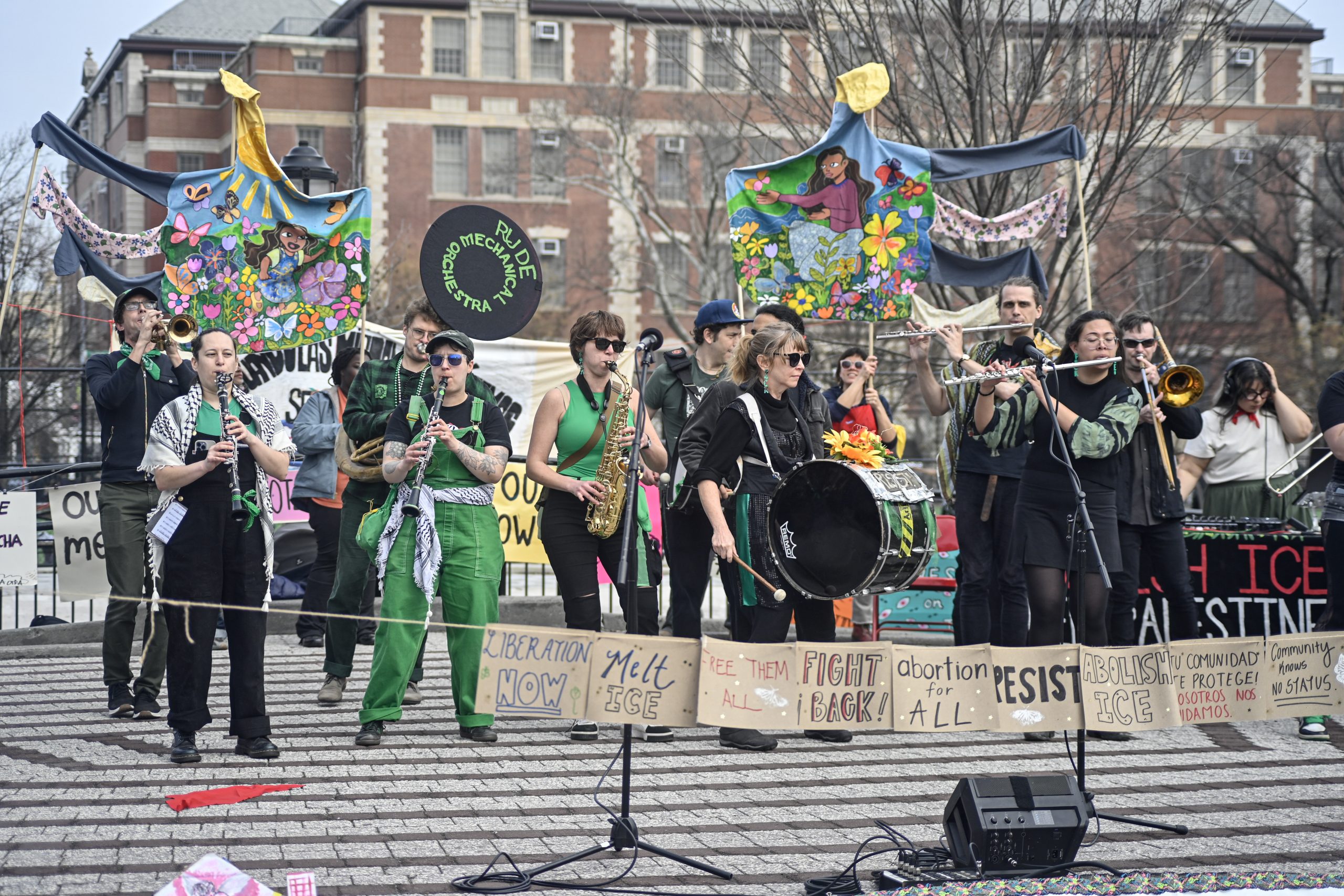
On March 8 — also known as International Women’s Day —  Undocumented Women’s Fund hosted the 10th annual Women’s Strike Fest. Held at Maria Hernandez Park in Bushwick, it included tables from various organizations and performances by artists such as Mariachi Nuevo Atardecer, Alt Tlachinolli, Rude Mechanical Orchestra, and “Thank God for Abortion.” Billed as a coalition event, organizations such as the Democratic Socialists of America (DSA) and Planned Parenthood of Greater New York (PPGNY) were also involved.

“We know that we’re living in really difficult, hard times. We’re seeing relentless attacks constantly,” said Michi Cardenas of PPGNY. “and we’re here today to say, despite the attacks, we’re still here. We’re still a community.”

The Women’s Strike Fest combines the power of protesting with arts and culture, with their slogan being, “Care beats hate. Our love melts ICE.” Each table had resources, pamphlets, and free items to help support the community. At the DSA table, red cards with information on what to do if ICE comes to your door, and whistles were given.

“Some of our members are volunteers for [the ICE response] hotline. So if there’s ever a case where someone sees ICE on the street, they can call this hotline,” said Felicia A. of DSA. “And we have community members come out, and then, if someone is detained, try to provide them some kind of legal support afterwards.”

At the New York City for Abortion Rights table, it was filled with items such as tampons, emergency contraceptives, stickers, zines, and buttons. They also included postcards in which one could write a positive message to abortion providers, who often receive hate mail.

Next to them was the Violence Prevention Program table, which had a variety of flyers ranging from mental health to eliminating myths about abuse. They had an interactive section, where guests could write notes, in support of women, on an underwear- and/or bra-shaped paper.

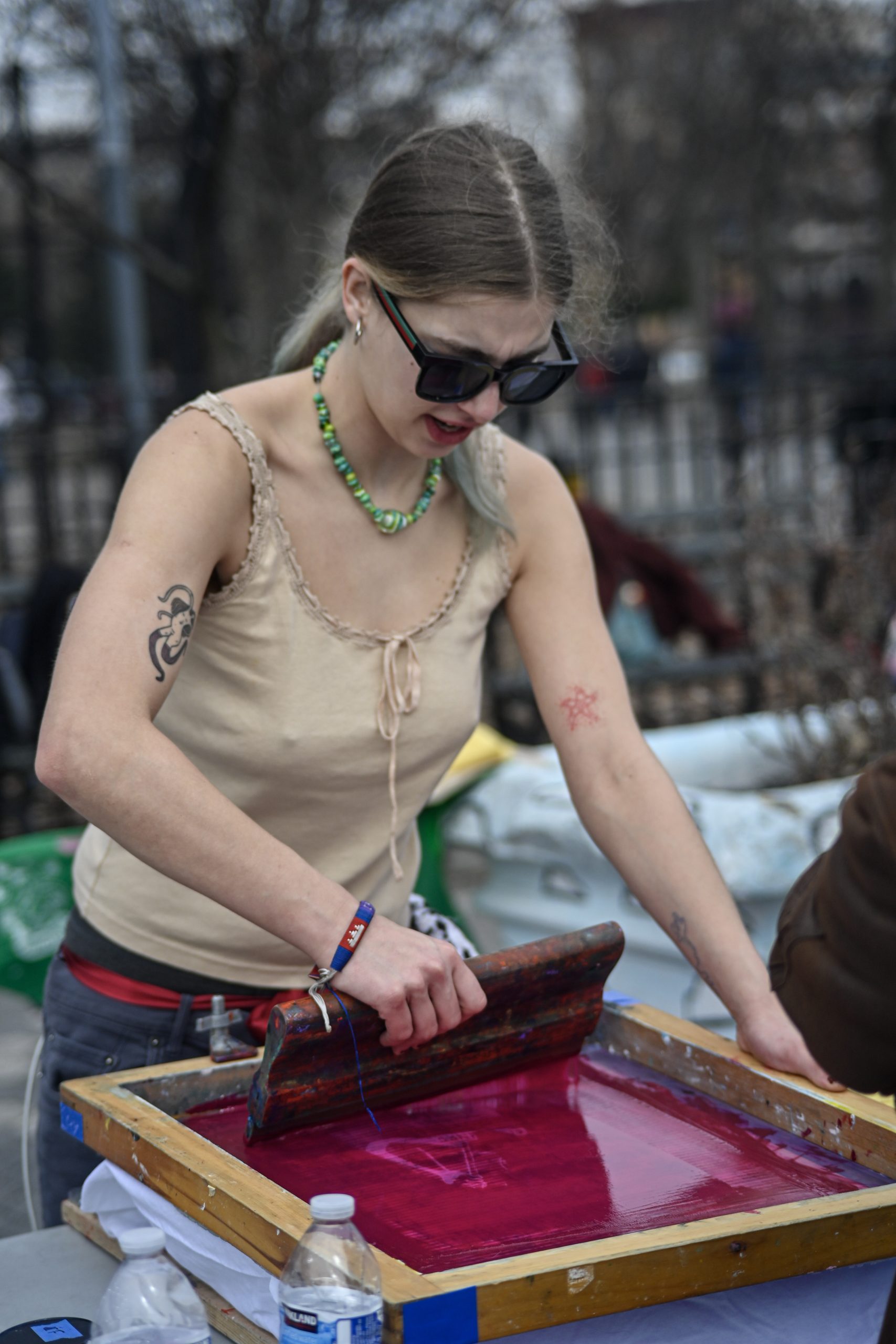
Guests were also able to hone in on their creative side, as they had tables for screenprinting on shirts, seedbomb making, and portrait sculpting.

The Undocumented Women’s Fund makes it their goal to support each other in a time of uncertainty. According to their Call of Action, “on this International Working Women’s Day we gather to demand an end to terror, warmongering, and institutionalized hatred; but, also, to celebrate resilience, diversity, solidarity, and empathy, as well as caring, lifegiving love. Our hearts, united, are reason enough to hope.”

Public Advocate Releases Plan To Address Gambling Harms In New York

Courtesy Office of the Public Advocate

Public Advocate Warns Of Gambling Risks As Casinos Expand

By MOHAMED FARGHALY

mfarghaly@queensledger.com

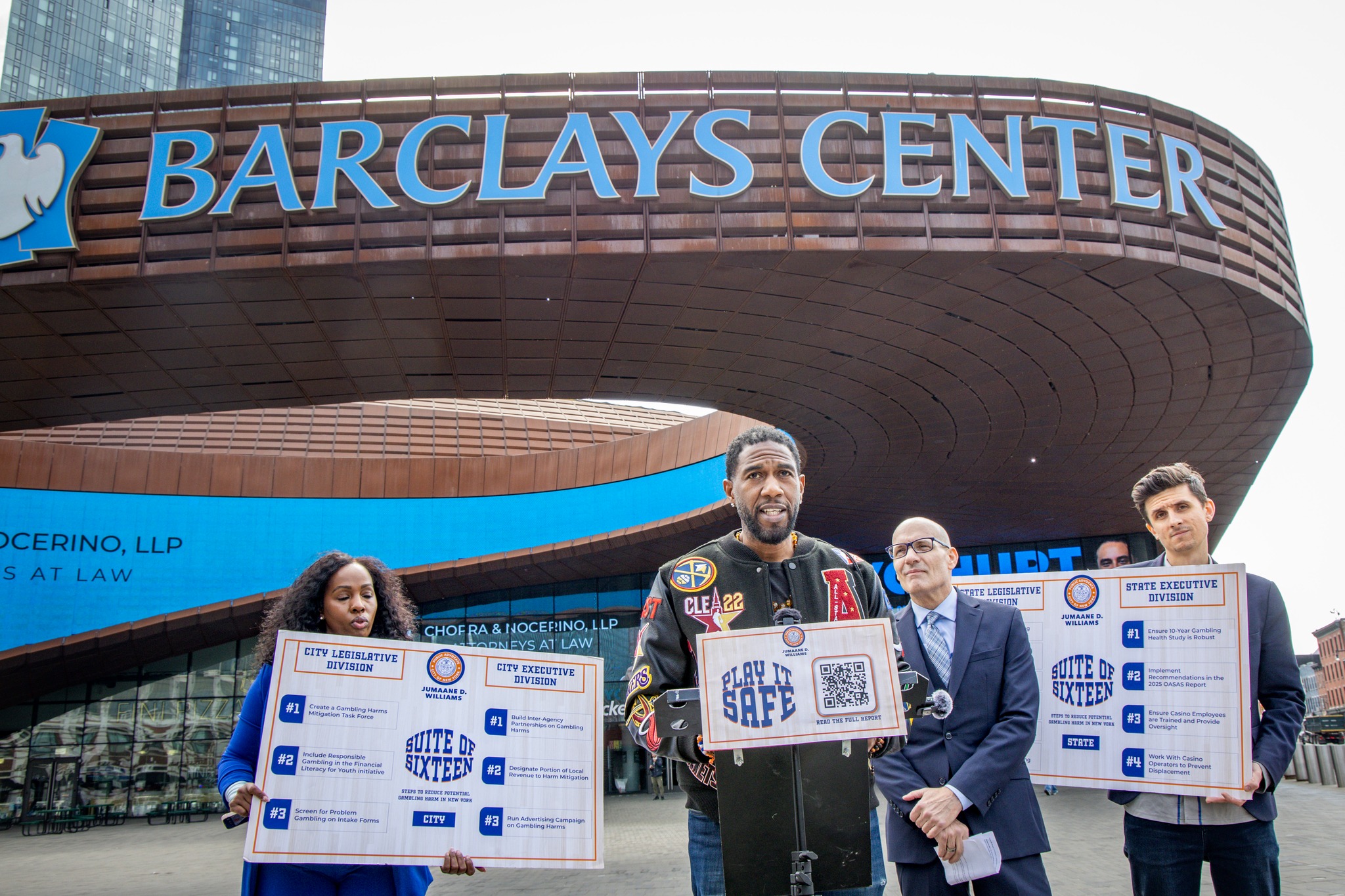
As the Sweet 16 round of the NCAA men’s basketball tournament begins and Major League Baseball opens its season, Jumaane D. Williams on Thursday released a set of recommendations aimed at reducing potential harms tied to the rapid expansion of gambling in New York.

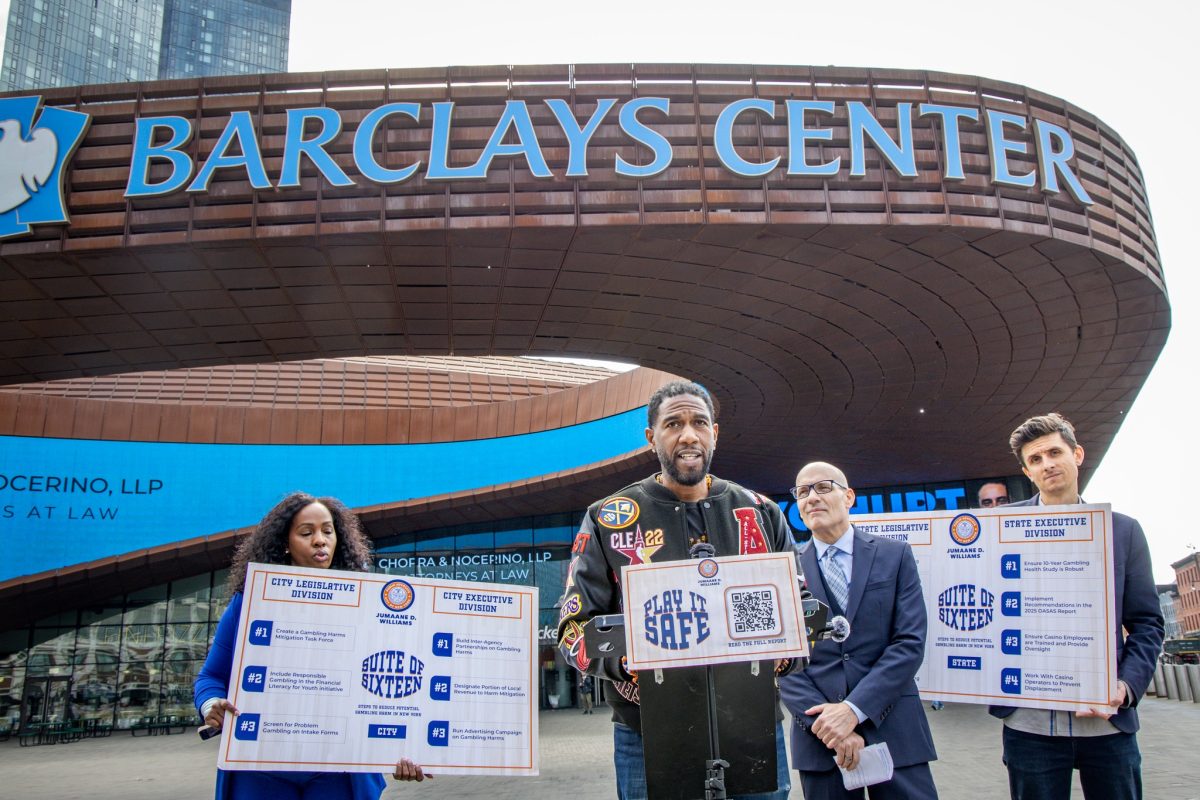
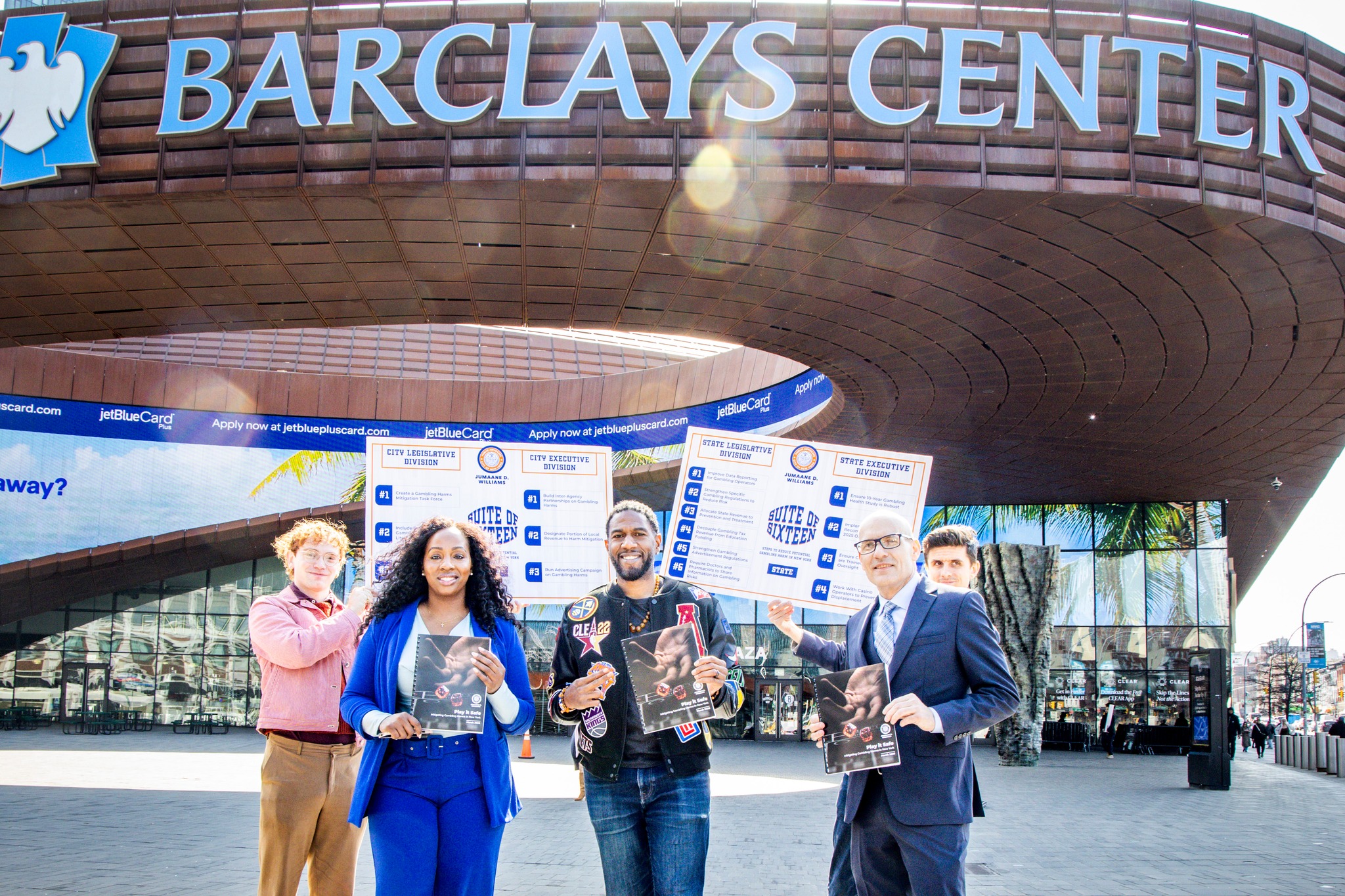
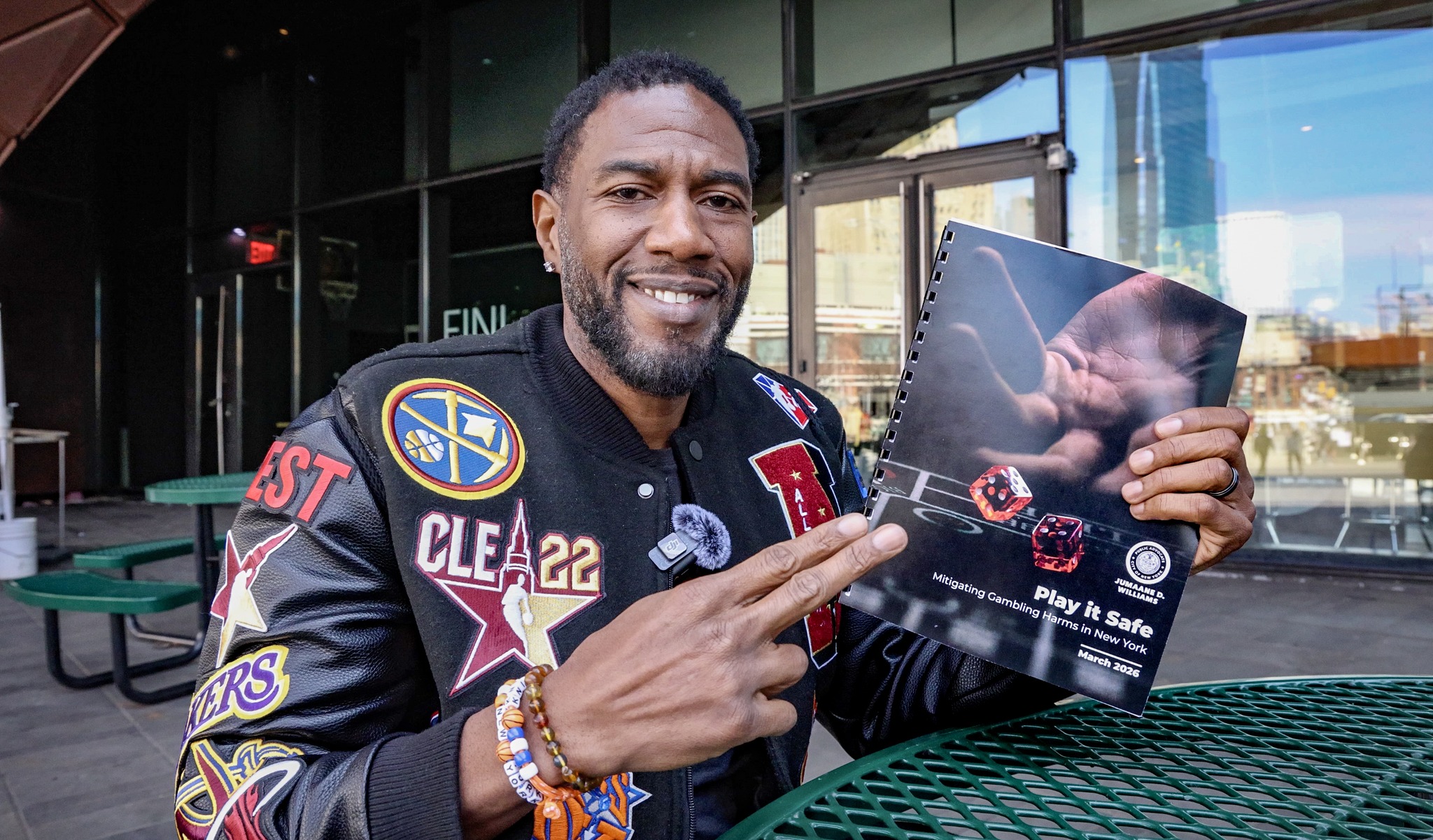
Williams, the New York City public advocate, unveiled what he called a “Suite of Sixteen,” a group of policy proposals outlined in a new report titled Play It Safe: Mitigating Gambling Harms in New York. The recommendations come as sports betting continues to surge online and as plans move forward for three new casinos in New York City following approvals earlier this year for projects in the Bronx and Queens.

About $3.3 billion is expected to be wagered legally on this year’s March Madness tournament, a 54 percent increase over the last three years, according to the report. Nationwide, more than $160 billion in bets were placed through legal sports betting in 2025. New York has become the national leader in online sports wagering over the past three years, driven in part by the spread of mobile sportsbooks that allow residents to place bets from their phones.

“With legalized sports betting sweeping the city and three new casinos coming to the five boroughs, we can’t gamble on the health of our neighbors and communities,” said New York City Public Advocate Jumaane D. Williams. “We have to be able to both welcome the incoming economic benefits from these activities and acknowledge the harms that often come with it. The city and state are making a big bet, and it’s their responsibility to minimize risk. When the chips are down, we have to step up.”

The report examines the potential effects of casinos and sports betting across several areas, including economic development, public safety and educational outcomes. It places particular focus on mental health and addiction risks tied to expanded access to gambling, arguing that state and city leaders should invest in prevention efforts and support services before additional casinos open.

Among the recommendations directed at the city’s legislative branch are the creation of a Gambling Harms Mitigation Task Force, incorporating responsible gambling education into youth financial literacy initiatives and adding screening questions for problem gambling to intake forms used by city agencies.

The report also urges actions from the city’s executive branch, including building partnerships among agencies to address gambling-related harms, dedicating a portion of local revenue from gambling to prevention and treatment programs and launching public advertising campaigns highlighting the risks associated with gambling.

At the state level, the report calls on lawmakers to improve data reporting requirements for gambling operators and strengthen regulations aimed at reducing risks for consumers. It also recommends allocating a share of state gambling revenue to prevention and treatment services, separating gambling tax revenue from education funding, tightening restrictions on gambling advertisements and requiring doctors and pharmacists to share information with patients about gambling-related risks.

Additional recommendations aimed at the state executive branch include ensuring a planned 10-year study on the public health impacts of gambling is comprehensive, implementing recommendations from a 2025 report by the state’s Office of Addiction Services and Supports, requiring casinos to train employees to recognize signs of problem gambling and working with casino operators to prevent displacement of nearby residents.

New York currently imposes some of the highest gambling taxes in the country, including a 51 percent tax on corporate profits from sports betting and roughly 25 percent to 45 percent on casino profits, depending on the property. Supporters of casino development often describe the facilities as economic engines that generate jobs, tax revenue and licensing fees for host communities.

The report, however, argues that such benefits can sometimes be overstated, particularly in large metropolitan areas where casinos may draw spending away from other local businesses rather than generating entirely new economic activity.

It also highlights research suggesting that some casinos rely heavily on revenue from problem gamblers and that the expansion of legal sports betting and new casinos may worsen addiction and related mental health challenges.

The report says advertising restrictions could play a significant role in harm reduction, recommending limits on where and how gambling companies promote their services while increasing funding for public service announcements that highlight risks and provide information about help resources.

“If they choose, people can gamble,” said the Public Advocate. “The government can’t.”

Fill the Form for Events, Advertisement or Business Listing