
Jessica González-Rojas Eyes District 13 Senate Seat

BY MOHAMED FARGHALY

mfarghaly@queensledger.com

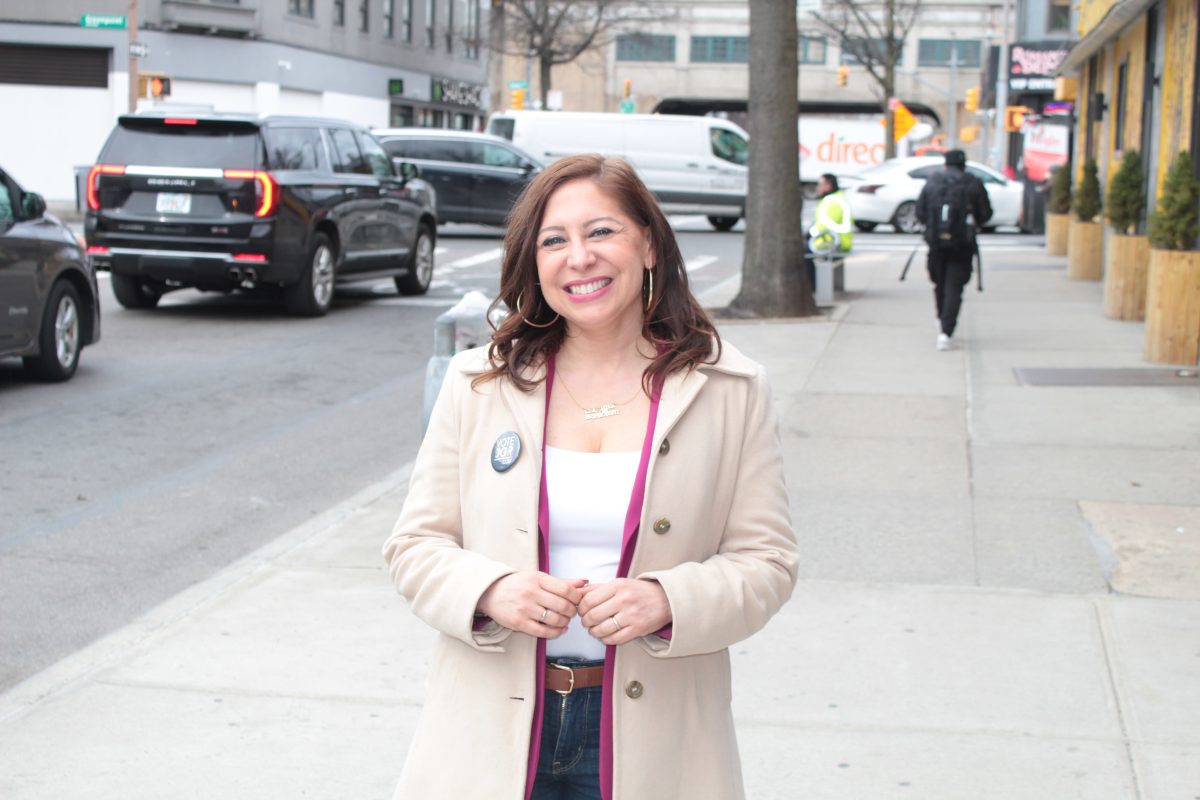
For nearly three decades, Jessica González-Rojas has walked the streets of Jackson Heights, meeting neighbors, listening to their concerns, and turning community struggles into legislative action. Now, she is aiming for the New York State Senate in District 13, driven by a vision of health justice, immigrant advocacy, and neighborhood transformation.

The daughter of a Paraguayan immigrant who arrived in the United States at 16, González-Rojas grew up in a working-class household, moving across Queens before settling in Jackson Heights in the late 90’s. Her father’s journey shaped her commitment to public service. “He came here to build a life,” she recalled. “That’s why I went to Boston University, and I studied international relations because of my immigration passion.”

Her first taste of community driven action occurred when her career path shifted and she interned with Congresswoman Nydia Velázquez. “I spent a few weeks in her DC office then her district office in Corona,” she said. “The difference between the offices being more ingrained in the community, was keeping families together in immigration cases, working on the census, this was the shift in my trajectory.”

Her rise in politics accelerated in the wake of the 2018 midterms. Inspired by women of color such as Alexandria Ocasio-Cortez, González-Rojas joined a wave of candidates stepping up to represent their communities. In 2020, neighbors encouraged her to run for the State Assembly, where she quickly made her mark on health, education, and women’s issues.

“I love talking to people,” she said. “Knocking on doors, meeting constituents, hearing their concerns, it’s meaningful to be entrusted with that and then pass policies that impact their lives.”

Among her legislative accomplishments as assemblywoman, González-Rojas cites universal school meals, the Reproductive Freedom Equity Fund, and initiatives expanding housing access and tenant protections. She has also fought for green space in Queens, with Travers Park holding a special place in her heart. “My son used to play there on the swings and slide.” she said. “Something I’ve fought for and kind of been committed to is building more green space in the area.”

González-Rojas has also led a women’s rights task force in the State Assembly since last year, collaborating with other women legislators to set both budget and policy priorities. The task force focuses on issues ranging from universal child care to workforce development, and González-Rojas hopes to continue this work in the Senate, including serving on a committee dedicated to women’s issues.
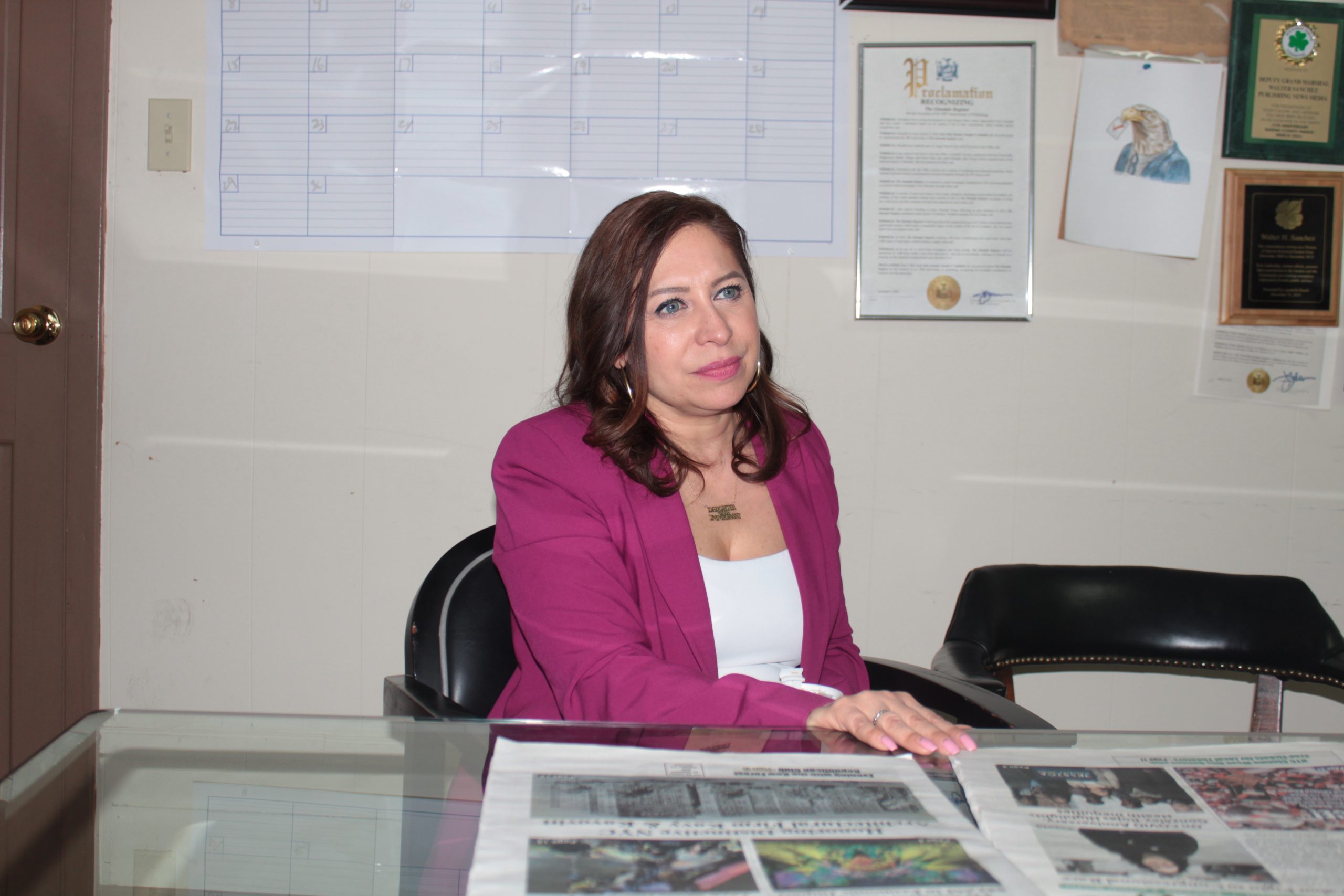
Jessica González-Rojas stopped by the Queens Ledger office last Friday. Photo by Mohamed Farghaly.

After several years in the Assembly, González-Rojas is seeking a Senate seat to gain greater influence over agency decisions and expand resources for her community. She said her goal is to secure funding for projects like a health center in Jackson Heights, emphasizing health justice as a core passion. “All of this access we don’t get in the Assembly,” she said, highlighting her desire to bring more resources and decision-making power to the neighborhoods she serves.

Her approach to contentious issues has been shaped by careful listening and deep research. On the proposed casino development in Queens, she said, “I did my job. I was on a listening tour, essentially, I spoke to neighbors across the district and went to the town halls. I met with the project team. I met with people who opposed it. I met with people who supported it, I didn’t vote on a casino. I voted on the land use bill, the property is really surrounded by highways.”

González-Rojas has identified Roosevelt Avenue as a priority area for safety and accessibility improvements. The corridor, she says, suffers from poor lighting, noise, and congestion around street vendors. She advocates for a three-pronged approach to address these problems: education, enforcement, and engineering. “When you brighten the area you expose it more; when it’s dark it becomes shadowy,” she said, noting that improving visibility can make the space safer for pedestrians while still respecting the needs of local businesses.

She has made mental health a central focus of her policy agenda. She hopes to serve on the Senate mental health committee and advocates for a workforce of social workers who are multilingual and representative of the communities they serve. She stresses the importance of fair pay and benefits for social workers, citing the challenges of the profession during post-pandemic crises. Her goal is to make social work a sustainable and respected career while improving services for youth and families facing mental health challenges. Visits to city and state prisons, including Rikers Island, have underscored the urgency of these reforms.

Health equity remains the centerpiece of her Senate campaign. González-Rojas recently outlined a five-point health plan on the COVID anniversary, focusing on preventive care, community resources, and reproductive equity. She hopes to expand her influence from the Assembly to the Senate, where she can advise on agency decisions and direct more resources to her neighborhood.

For González-Rojas, housing is a fundamental human right. She has fought for programs like the Housing Access Voucher Program, securing $50 million to help residents, including runaway youth, gain access to safe and affordable housing. She also emphasizes tenant protections as a critical component of her housing agenda, aiming to ensure stability for working-class families in Queens.

Beyond policy, González-Rojas celebrates the cultural and small-business fabric of Queens. Each month, she recognizes local establishments as an Assemblymember, including Himalayan Yak, a Nepalese restaurant that has become a community institution.

Looking ahead, González-Rojas wants her legacy to be tied to improving community health. She has championed projects like a local health center and a five-point health plan aimed at addressing inequities exposed by the pandemic.  “Health is my life’s work in the intersection of all the things that impact health,” she said, “To be able to know that I contributed to improving the health outcomes of my neighbor is everything.”
CM Won Calls for Better Digital Literacy at BetaNYC Conference

BY MIRANDA NEUBAUER 

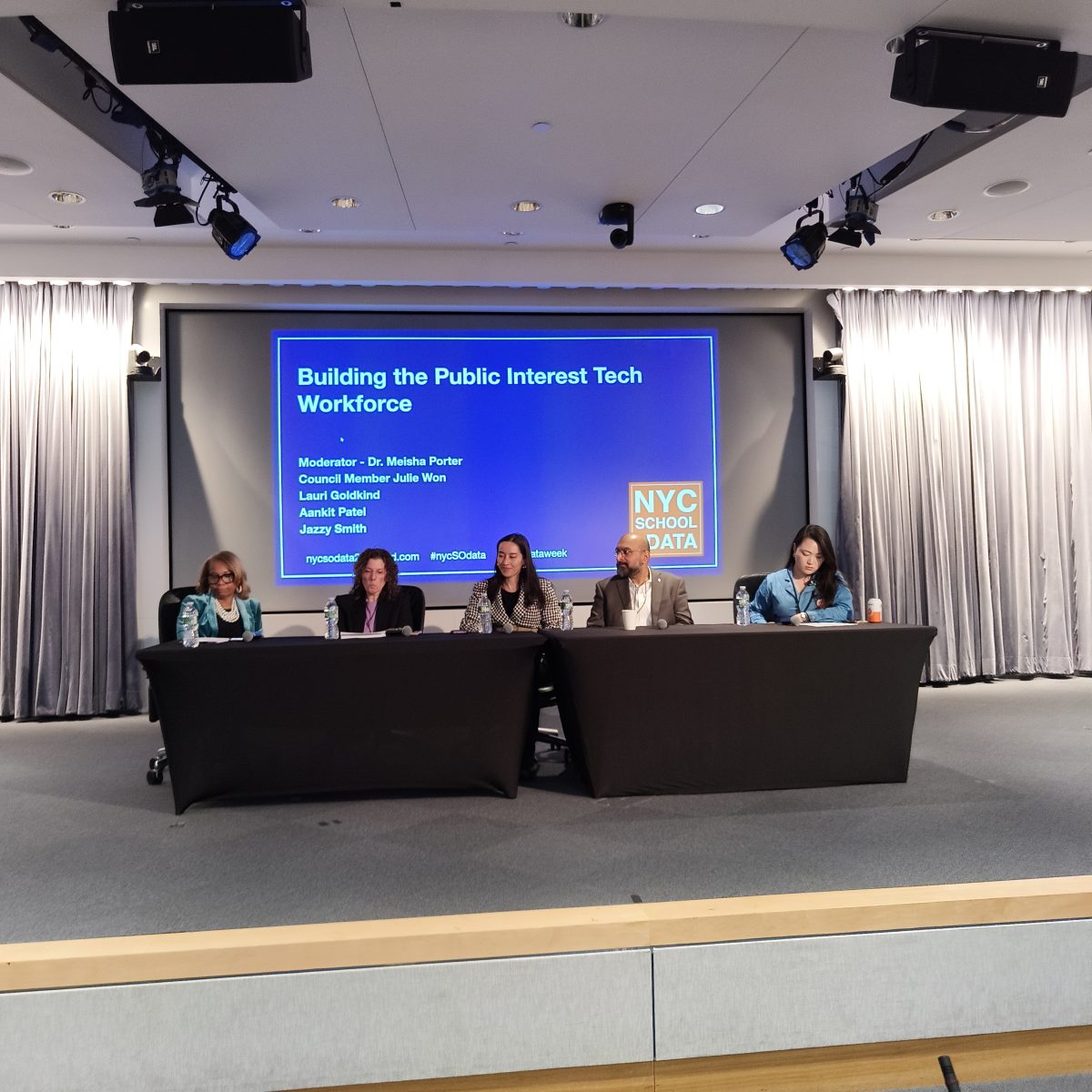
Councilmember and congressional candidate Julie Won called for the expansion of free internet offerings and stepped up AI training during a panel discussion as part of civic technology group BetaNYC’s School of Data at CUNY Law School in Long Island City on Saturday March 28th.

This year’s conference marked the conclusion of the tenth annual city-wide Open Data Week, a collaboration between BetaNYC and the City’s Technology and Data agencies that began in 2017 to celebrate the five year passage of the city’s landmark open data law in 2012. The two-day event saw its largest attendance yet with 688 attendees at the nearly fifty panels and discussions on Saturday and around 200 attendees at the “Unschool of Data” Unconference on Sunday, where participants could propose and vote on their own sessions, including some focused on Mayor Zohran Mamdani’s campaign promises of free buses and rent freezes.

During a panel on “Building the Public Interest Workforce,” Won recalled her own path to elected office as an unlikely one. When her technology service job was put on hold at the start of the COVID-19 epidemic, she got involved in organizing meal deliveries to public school students when schools switched to remote learning, driven by her own experience growing up as a public school student facing hunger at home on days off for federal holidays.

While making those deliveries, she witnessed elementary and middle school students outside LinkNYC kiosks for five to six hours a day because they could not afford Internet at home. Feeling enraged by what she had seen, she began calling every elected official, from Chuck Schumer down to her state senator and assemblymember.

“And when I looked at every single person’s platform, none of them had Wi-Fi or digital connectivity as part of their platform,” she said. “And I thought it was just outrageous because if the government is the one telling you to go to school online, get your telehealth online, get your government services online, go to work online, apply for a job online, yet we don’t have internet access for low-income New Yorkers. That’s criminal. It should be a utility just like heat, hot water, and electricity.”

“So that’s what catapulted me into the race without really the intention of winning,” she continued. “That wasn’t a goal for us. It was just how do we make Internet for All a platform for everybody who’s in office or running for office to get the conversation started.”

Six months after winning, she noted that every single NYCHA resident in her district got free Internet, cable TV and unlimited call and text, a program that three years later expanded city-wide as the Big Apple Connect program with an 80 percent adoption rate.

Won is chair of the newly formed Council Committee on Workforce Development, and is seeking to partner with technology training programs Per Scholas and Pursuit to develop an AI Corps modeled on Americorps to address an historical level of “job stagnation.” She also called for restoring free access to CUNY for New York residents, building on previous $10 million in funding for CUNY for students reentering higher education.

She said public schools couldn’t afford to wait to implement an AI curriculum until all existing teachers are trained. “If we wait that long, all those students will be too late and our workforce will be too late,” she said. “We just need to bring in a teacher who is already trained in that expertise to supplement the other teachers.”

The Secret History of the Miller Hotel

Now a toddler center, this LIC street corner was once a favorite gambling spot of the NYC elite. 

GEOFFREY COBB | gcobb91839@Aol.com

Author, “Greenpoint Brooklyn’s Forgotten Past

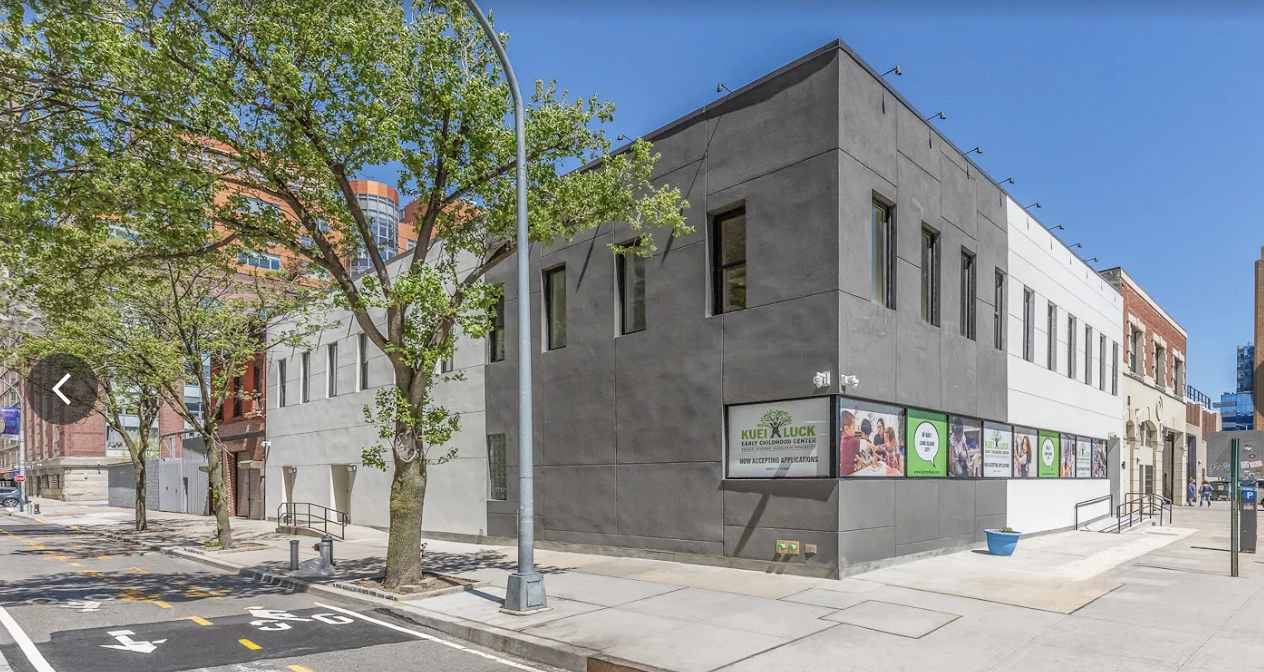
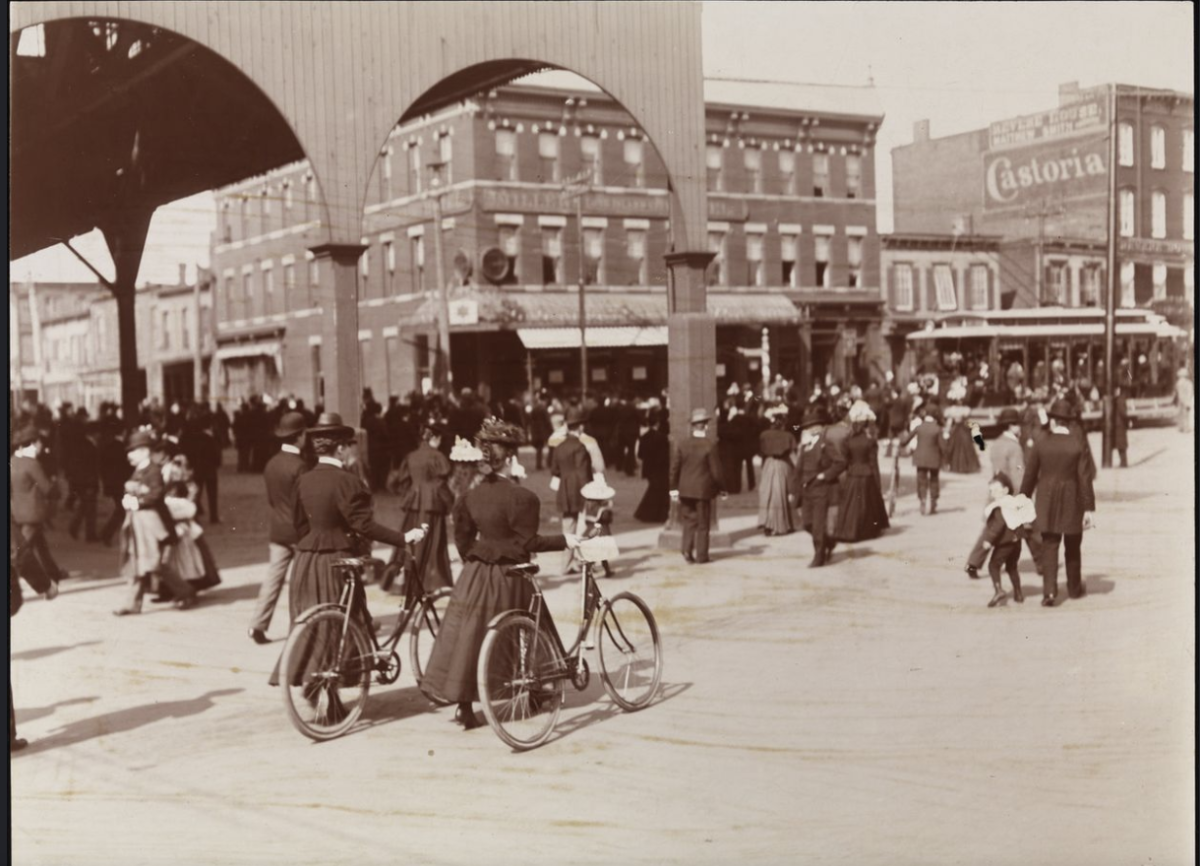
Today the innocuous Kuei Luck Early Childhood Center at 2-03 Borden Avenue in Long Island City occupies a squat, forgettable, gray building, where it teaches toddlers. The heavily renovated building, though, hides a colorful past. The site was once the legendary Miller’s Hotel. Until the construction of the Queensboro Bridge in 1909 and the Pennsylvania railroad tunnel the following year, it was the most popular bar in Queens and on all Long Island. The hotel bar was reputed to be the largest in New York City. The twenty bar tenders who worked the large horseshoe shaped mahogany bar there often served 300 customers, who stood six deep around the bar. The income of the hotel was frequently said to be a staggering $10,000 a day, at a time when $5,000 would have bought a large home in Brooklyn.

The owner of the bar was the affable and charming Tony Miller, a man who had run hotels in Manhattan and Bayside prior to taking control of the hotel in 1872. Miller had previously served on the New York City Council representing Manhattan, where he was known as the “Smiling Alderman.” He became a friend of all the major Democratic politicians in New York City, including Richard Croker, Senator Tim Sullivan and other leaders who were frequent visitors.

The hotel had a perfect location, situated directly across from the Long Island Railroad depot travelers exited before taking the Manhattan ferry. A generous soul known for his philanthropy, Miller made a fortune there, which allowed him to dress regally. He was often seen in a light-colored suit with a white tie, a hat like Buffalo Bill and diamonds in the buttonholes of his shirt.

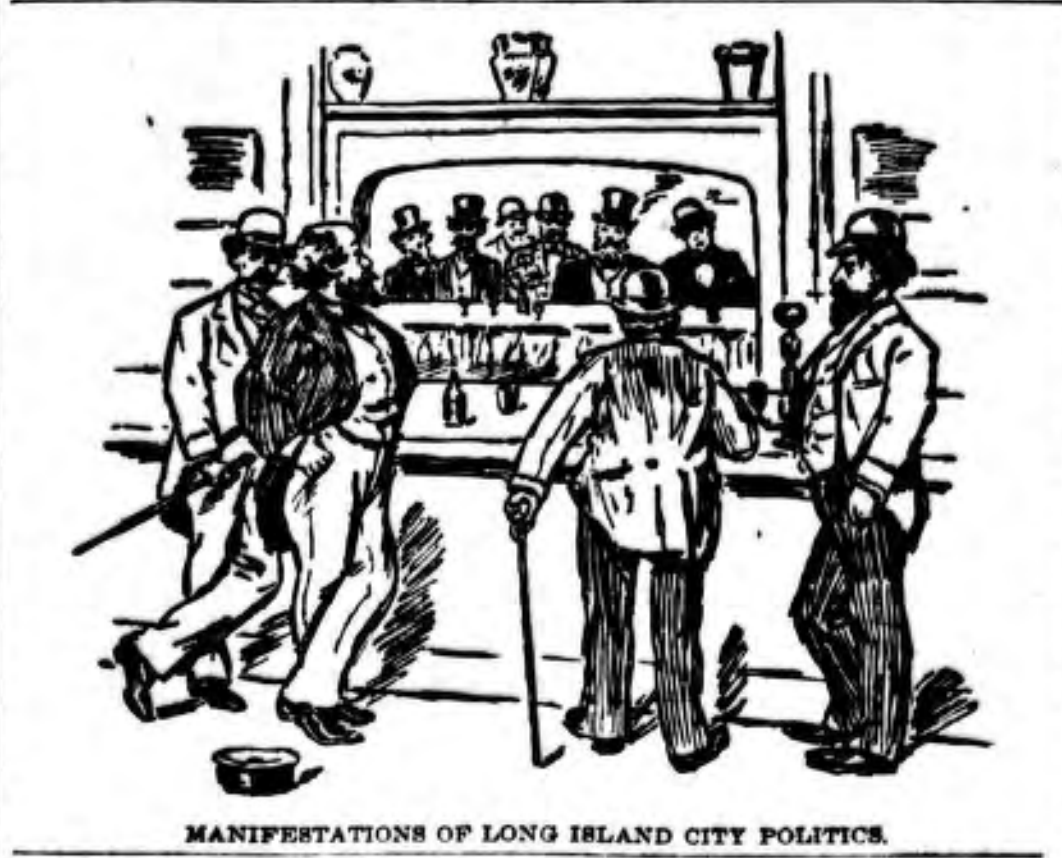
A cartoon drawing from the New York Tribune of the Miller Hotel’s bar. Photo via  Geoffrey Cobb. 

Celebrities frequented the place. In 1888, World Heavyweight champion John L. Sullivan returning from a friend’s funeral bought all the customers of the bar a drink, the first of Sullivan’s regular visits.  Millionaire “Diamond Jim” Brady and his girlfriend soprano Lillian Rusell were frequent guests there. Teddy Roosevelt visited Miller’s prior to embarking for Cuba with his Rough Riders, as well as ex-president Grover Cleveland, who was spotted drinking at the hotel bar.

The hotel was the place bar-none to gamble in New York City. The Las Vegas of its day, dozens of bookmakers frequented the bar. There was a 24/7 non-stop poker card game going on in a room in the back. In 1919, The New York Times reported, “Whenever the “lid” was clamped down in New York City or Brooklyn, the sporting fraternity went to Long Island City and made headquarters at Miller’s. At such times, poolrooms and gambling places were clustered thick about the place, and winnings were spent in the big, gay barroom.”  Famous politicians with massive gambling habits like Big Tim Sullivan, Tammany Boss Richard Croker and State Senator Patrick McCarren were regulars at the hotel.

The bar was for decades ground-zero of Queens politics. In 1888, The New York Press reported, “Long Island City exists on politics. Its politics plunge its inhabitants into a vortex of cursing, swearing and disorderly conduct.” It reported in a column on the hotel, “In Times of political excitement, the representatives of every political faction and party gather there.”

Long Island City was once an independent municipality run by Mayor Patrick “Battle Axe” Gleason, a six foot 280-pound terror with arms like a blacksmith, who lived for decades in the hotel. Gleason was embroiled in the politics and frequent violence of the hotel. In 1890, he assaulted Long Island Star journalist George Crowley there, breaking his nose. Sentenced to five days in jail and a $250 fine, he failed to learn his lesson. Later at the hotel, Gleason also threw a cup of coffee in State Senator Birdsall’s face and might have attacked him bodily had friends not restrained him.

Gleason’s attacks were not the only violence there. The New York Press reported, “The place has been the scene of scrimmages and shootings.”  In 1891, Long Island City’s Horse carriage line’s superintendent Alfred Moulton was shot in the back at the bar by a disgruntled car driver Moulton had fired. That same night, former Long Island City Police Commissioner William Williams, narrowly escaped death when a drunken former friend leveled a revolver at him but was subdued. The attacker then sat down and finished his drink before leaving.

The Kuei Luck Early Childhood Center on Borden Avenue in LIC was once one of New York’s most infamous political hangs. Photo via Google Maps.

In 1897, Miller died and the hotel began experiencing a slow, steady decline. In 1910, the Pennsylvania Railroad and the LIRR opened the East River tunnels, robbing the hotel of its ferry commuter clientele. The hotel finally closed in 1917, and the building was sold off in 1919, marking the end of an era.

The building was converted into a phonograph factory, and later became a warehouse. In 1975, a fire gutted the third floor, and the once elegant hotel became a dilapidated eyesore. In 1978, Anthony Mazzarella opened the Waterfront Crab house in the old hotel, which again attracted celebrities such as Paul Newman, Ed Asner and Maureen O’Hara. Hurricane Sandy badly damaged the crab house, and, after Mazzarella’s death, the restaurant closed in 2015. In 2020, the building was heavily altered when it became a preschool center.

A December 18, 1888, the New York Press article reported on the electric buzz the hotel created, describing Tony Miller’s hotel as “the hub of Long Island City” and “The most extra-ordinary hotel in the world.”  Looking at today’s drab building, it is hard to imagine the building’s rich past.

Fill the Form for Events, Advertisement or Business Listing