
Forest Hills Stadium Generates $42.5 Million in Economic Impact

Forest Hills Stadium generated $42.5 million in economic activity during its 2024 season, according to a new independent study commissioned by the venue. The report, conducted by Perch Advisors, analyzed 34 concerts and four nonconcert events and found the stadium contributed $2 million in tax revenue, $6.5 million in direct wages, $6.8 million in local expenditures, and $24.6 million in visitor spending.

The study highlights the stadium’s role as both a cultural anchor and economic driver in Queens. It directly supports more than 1,100 jobs, with 47% of seasonal staff coming from Queens and 16% from Forest Hills. The stadium provided $6.5 million in wages during the 2024 season and conducts an annual job fair to attract employees, many of whom are students, artists, older workers, or seeking part-time employment.

“Forest Hills Stadium is a cultural and artistic heartbeat of New York City and indisputably one of the best music venues in the entire country. But arguably the stadium’s most important contribution is the immense economic activity it generates in Forest Hills and beyond, as this study makes clear,” said Queens Borough President Donovan Richards Jr. “From hiring hundreds of Queens residents to attracting thousands of customers to Forest Hills’ shops, bars and restaurants, Forest Hills Stadium continues to deliver for The World’s Borough. I look forward to another successful concert season starting this spring.”

The report also found that 136 New York-based businesses benefit directly from the stadium’s operations. During the 2024 season, the venue spent $6,775,880 on local vendors and suppliers, including food and beverage providers, equipment rental companies, security and sanitation services, and professional services. Many of the concessions feature local restaurants such as Nick’s Bistro, 5 Burro, and Stacked Sandwich Shop. Nearly 79% of surrounding businesses surveyed said the stadium positively affects foot traffic, sales, and employment.

“We may not have a sustainable business in the future without the stadium. Overhead costs in this area are tremendous, we are one of the last small business restaurants left in the hood,” said a representative from Forest Hills Station House.

“I hire about 15 part-time employees during the course of the summer, all college/high school kids,” said Nick’s Bistro.

Local residents also make up the largest share of concert attendees. About 56% of ticket sales came from New York State, including 11% from Queens and 5.7% from Brooklyn. The stadium distributed $500,000 in complimentary community tickets in 2024 through giveaways and events such as National Night Out Against Crime.

Assemblyman Andrew Hevesi said, “Forest Hills is all about community, and Forest Hills Stadium is a cornerstone of the neighborhood we have worked hard to preserve and nurture. The stadium is a catalyst for local economic activity, generating tens of millions of dollars and supporting more than a thousand jobs. By prioritizing local hiring and lifting up small businesses, Forest Hills Stadium helps keep our community vibrant and thriving. We are looking forward to another successful year!”

In addition to supporting jobs and local businesses, Forest Hills Stadium contributed an estimated $2 million in sales tax revenue from in-stadium concessions and merchandise, funds that support city and state public services.

“Forest Hills Stadium is incredibly grateful for the opportunity to produce world class shows in the heart of Queens which contribute to both our neighborhood’s cultural vibrancy and economic vitality. This report showcases how the Stadium is not just an economic stimulus to our City and State but also to our friends and neighbors who operate local businesses and restaurants as well as those who make up our over 1,100 person staff. These dollars support real people with real families in our shared community. We look forward to the 2026 season and beyond!” said Jason Brandt, Forest Hills Stadium general manager.

For more information about Forest Hills Stadium and the 2026 season lineup, visit ForestHillsStadium.com.


New Adult Education Hub Opens At Queens Borough Hall

Queens Borough Hall Launches Adult Education Center

By MOHAMED FARGHALY

mfarghaly@queensledger.com

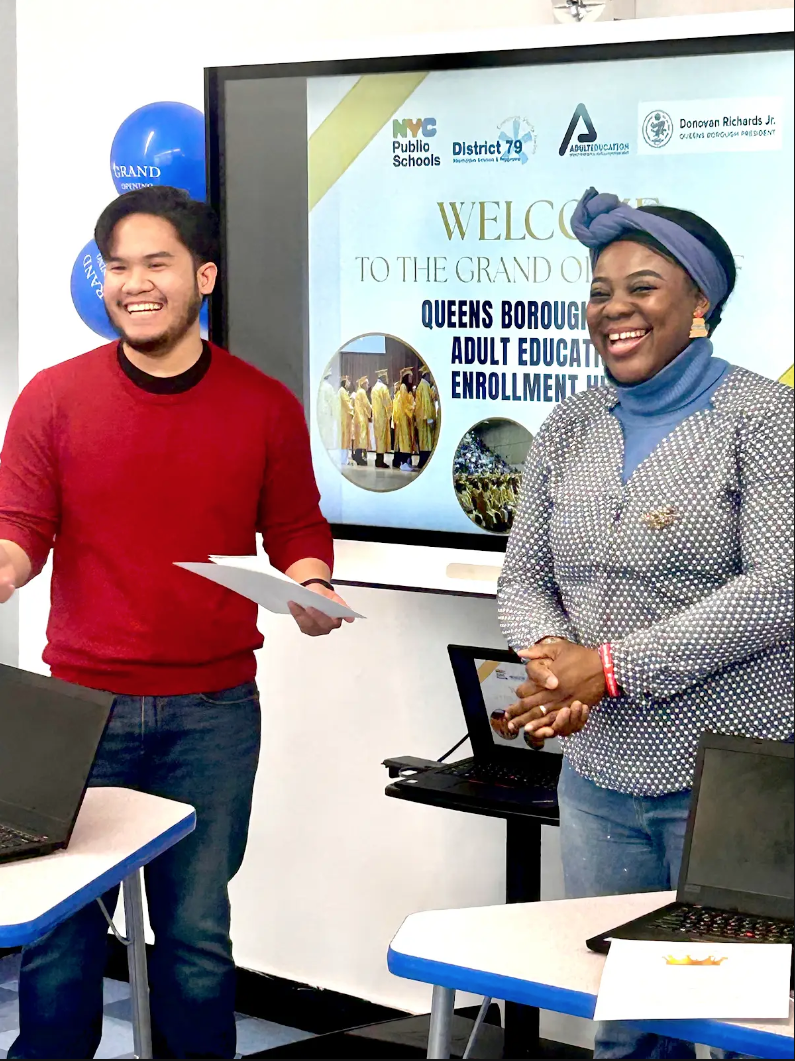
A new adult education hub opened at Queens Borough Hall last week, aiming to make it easier for residents across the borough to access free classes, career training and high school equivalency programs.

The ribbon-cutting ceremony on Feb. 26 brought together Donovan Richards, leadership from New York City Public Schools District 79 and adult education students to mark the launch of the centralized registration and resource center.

The new space is designed as a “one-stop” entry point for adults seeking educational opportunities, from English language courses to career training and high school equivalency preparation.

District 79 Superintendent Glenda Esperance said the initiative grew out of a partnership with the borough president’s office to simplify the process for adults trying to return to school.

“So we District 79 is comprised of 10 programs, one of which is adult education,” Esperance said. “Adult education services anyone 21 years and older across New York City. Actually, our oldest student is 86 years of age, and we offer English language learning classes, basic education classes, as well as college and career technical classes.”

Until now, adults in Queens typically had to travel to separate registration sites in Long Island City or Jamaica to enroll. The new location inside Borough Hall places those services in a central civic building that many residents already visit for other resources.

“The goal and the partnership with the Queens borough president was, how do we create something that’s centralized, that’s one-stop shopping for all of Queens,” Esperance said. “Now you don’t have to go out to Long Island City or you don’t have to go out to the Jamaica area. You can now come to Queens Borough Hall and sign up and learn more about the programs that we offer.”

The opening ceremony included a tour of the learning space and remarks from officials, along with appearances by students and principals from the district’s adult education sites. One student attending the event shared a personal milestone, bringing his recently earned diploma and explaining that he is now working toward enrolling in college.

District 79 serves more than 50,000 students each year through alternative education programs across the city, including GED preparation, career and technical education and services for multilingual learners.

Esperance said the new hub is meant to address one of the biggest barriers adult learners face: simply finding information and enrolling.

“I think the biggest hurdle that we were able to start addressing yesterday was just having access,” she said. “For many of our students going to sign up and having a space where they can learn information has been the most challenge for them.”

She recalled one student who arrived in New York from the Philippines only months ago and struggled to navigate the education system online.

“One of the students shared that when he first came over from the Philippines five months ago, it was an overwhelming experience,” Esperance said. “But he was thankful that he did find our program, because within five months he was able to get his GED, and now we’re still supporting him in going on to do college and career.”

The Borough Hall site is also located near the borough’s immigration services office, allowing visitors seeking other assistance to learn about educational opportunities in the same building.

District leaders hope the hub will initially serve at least 100 students between its opening and the spring, though they expect the number to grow as more residents learn about the service.

Esperance said the broader goal is to help adults rebuild educational pathways that may have been interrupted by life circumstances.

“At any given day we’ll have a new student enroll and we’ll have a student graduate,” she said. “What we always tell our students is that a moment doesn’t define your destiny, and whatever happened that led you here, D79 is the best stop to get you back on track and get you where you need to go.”

Over the next several years, district leaders say they hope the Borough Hall hub will expand beyond adult education into a broader information center for District 79’s many programs, including GED services for younger students, technical training, and programs that support parents returning to school.

“Our goal has been and continues to be, how do we identify the gaps and bridge those gaps so those students can leave with a certification or a diploma,” Esperance said.

District 79 leaders say the new location is one step toward making those opportunities more visible and accessible to communities across Queens.

Business Veteran Marty Dolan Enters Race to Replace AOC

By MOHAMED FARGHALY

mfarghaly@queensledger.com

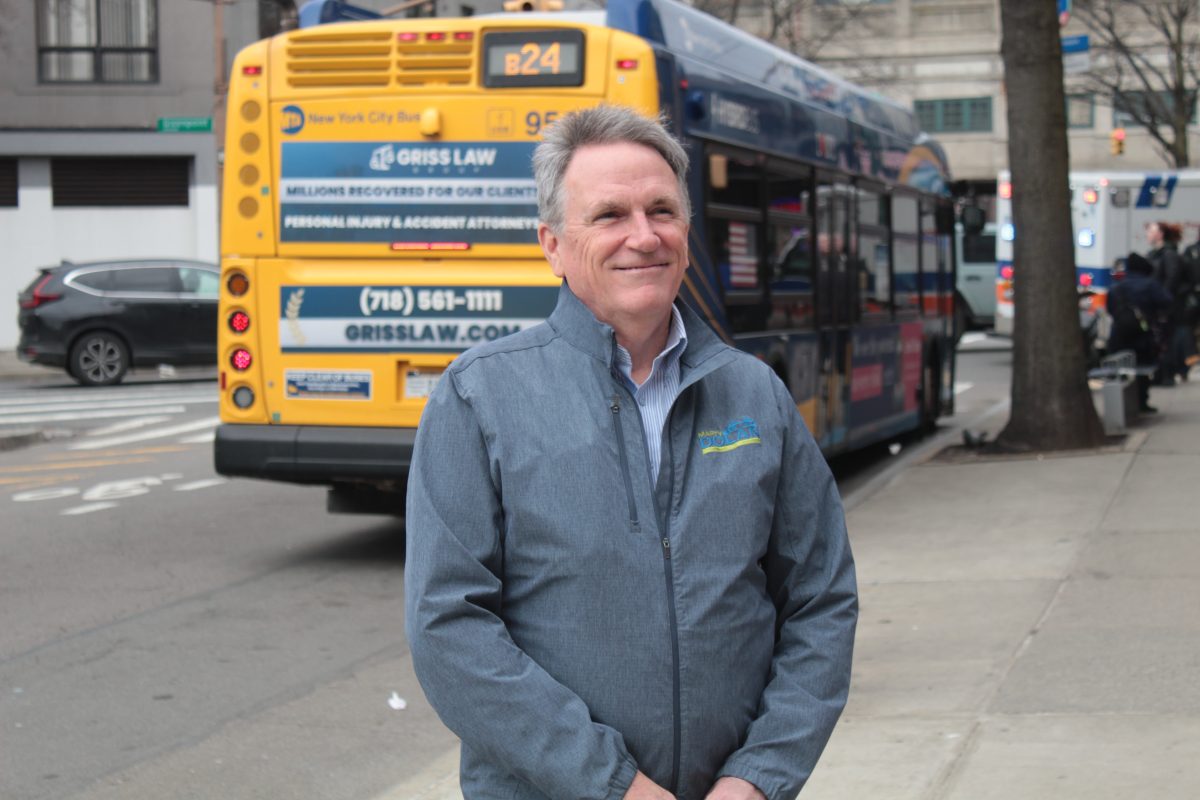
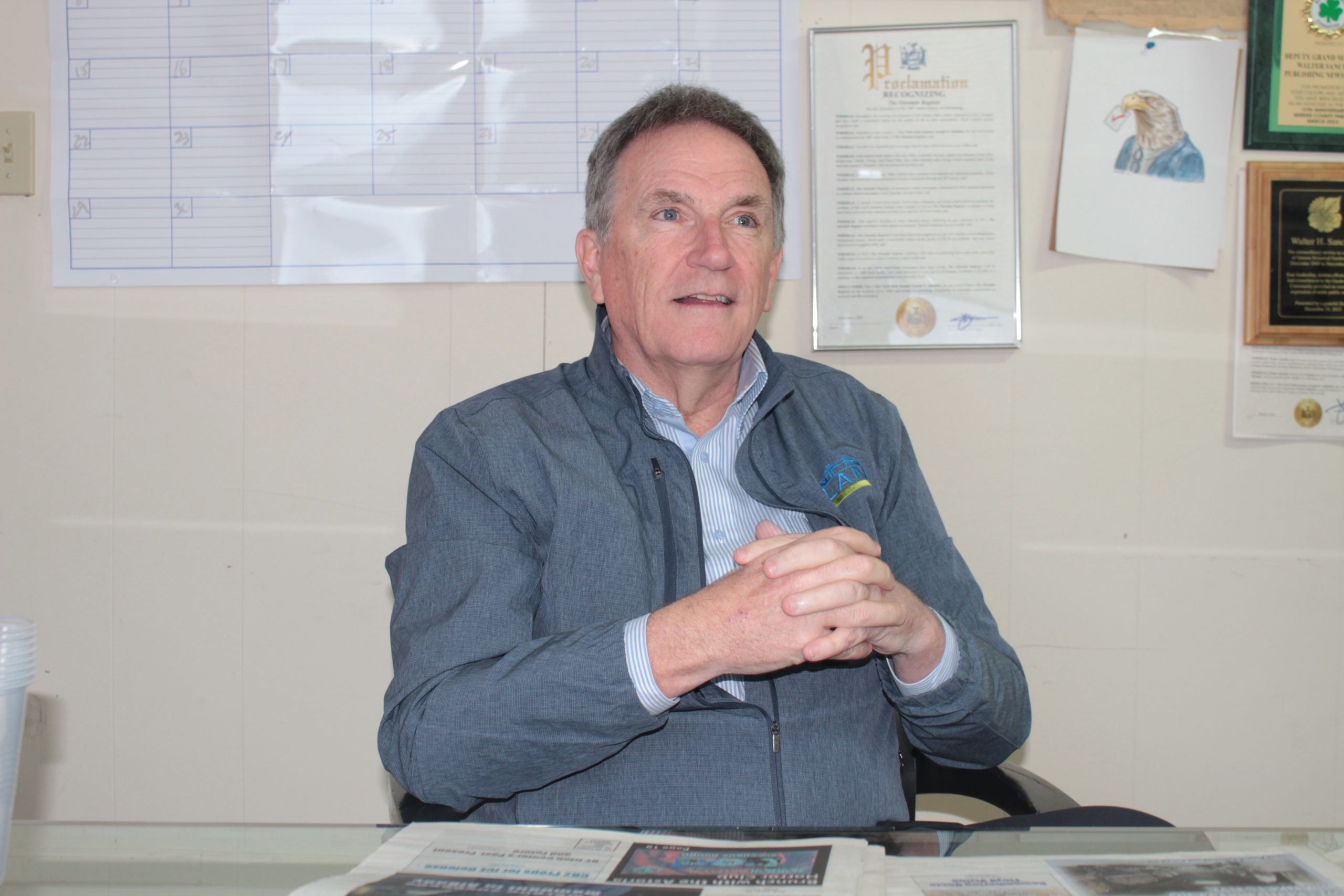
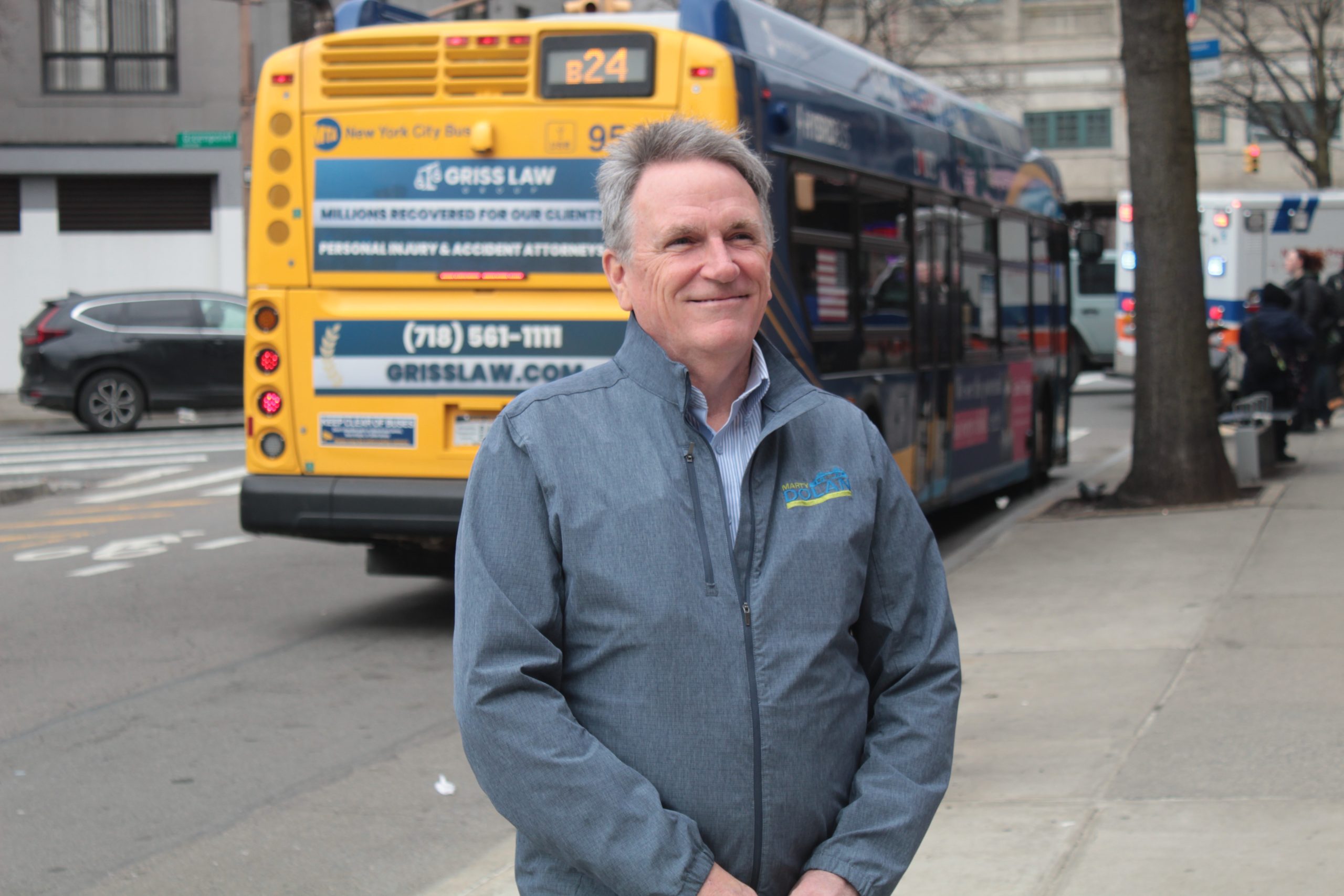
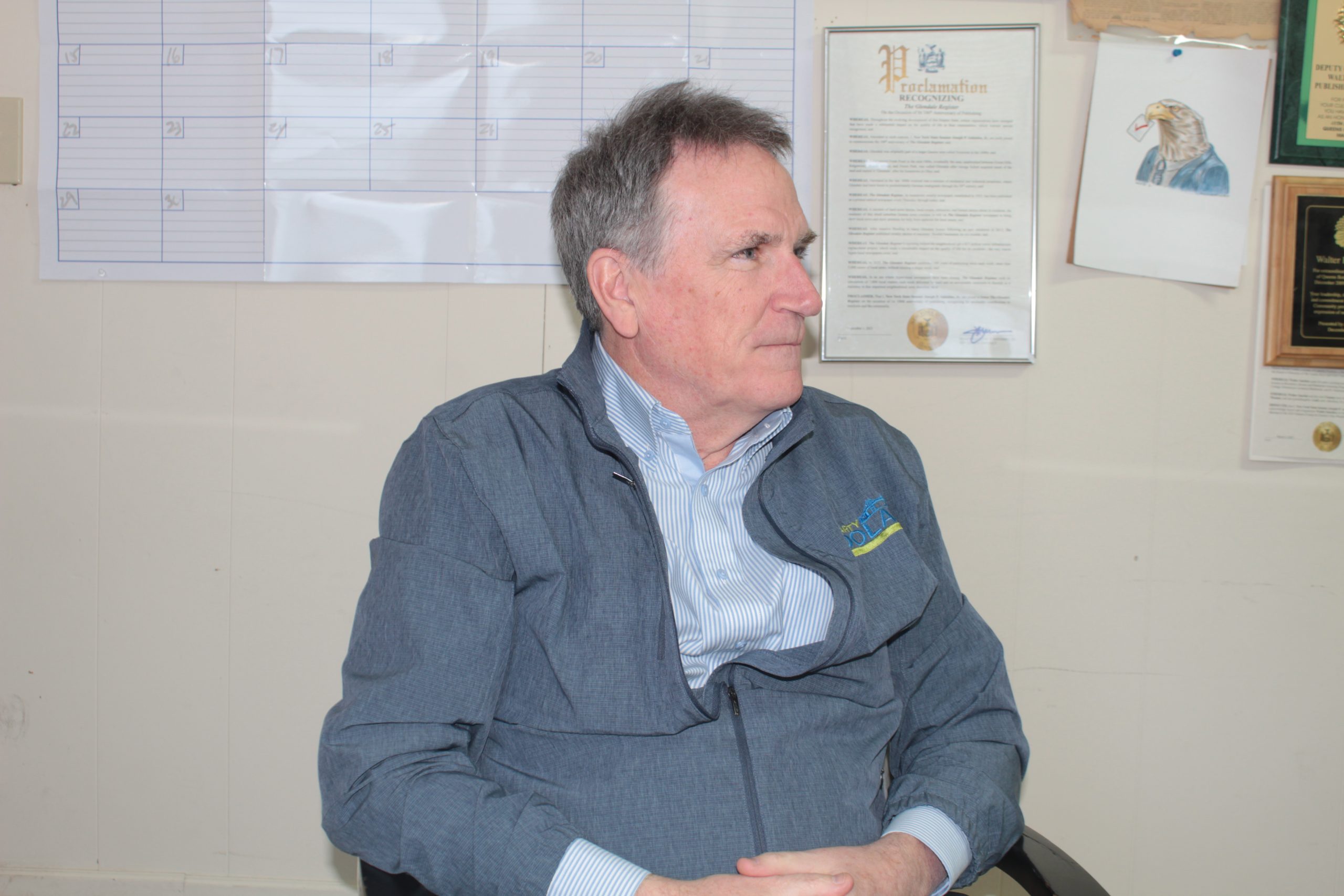
Marty Dolan, a veteran business consultant and perennial candidate, is making a bid for Congress, challenging Rep. Alexandria Ocasio-Cortez in New York’s 14th Congressional District. Dolan, who ran for public advocate in 2025 and fielded nine candidates under his Unity Party line, said his campaign is built on a vision of “teamwork, purpose and policy.”

With more than 40 years of experience as a “business doctor” across the U.S., U.K., Europe and Asia, Dolan says he brings a practical problem-solving approach to politics, one informed by decades navigating complex financial and corporate challenges. “Congress is 435 seats, but what you need is leadership and the ability to architect society,” he said. “You can’t just protest; you need a plan.”

Dolan traces his political interest to his teenage years. At 16, he worked as a driver for then-Mayor Peter Peyser of Irvington, New York. “When Bobby Kennedy was killed, our congressman became a senator, leaving an open seat,” Dolan recalled. “Peter became the congressman for Westchester, and I was there helping him get around. That’s when I realized politics wasn’t just about ideas—it’s about execution.”

He briefly interned in the state assembly in the late 1970s, during a period when New York went broke, writing his college thesis on the state’s fiscal collapse. By 21, Dolan was trading stocks, including early positions in Apple and Microsoft, and eventually landed on Wall Street alongside one of his brothers, who helped pioneer mortgage-backed securities. His early experiences shaped what he calls a “seed-investor” mentality: nurturing potential to grow strong, capable adults.

Central to Dolan’s platform are policies aimed at empowering young people financially and socially. He proposes Youth Fast Start Accounts, a form of 401(k) for children, with funds accrued from early earnings returned when they turn 25. “We need to start young, at 10 or 11,” he said. “It’s like planting a seed that can grow into something strong. The far left tells kids, ‘don’t worry, we’ll take care of you,’ but the best thing is giving them a good start.”

Dolan is critical of current progressive policies. Citing Quebec’s free childcare experiment, he said such programs “didn’t improve outcomes for kids” and argued that New York City schools are failing despite massive spending. “Half the kids can’t read, write or do math at grade level,” he said. “In Mississippi, they went from worst to fourth in the country in ten years by focusing on accountability and results.”

He also calls for reform in public housing. Dolan proposes giving residents ownership of apartments rather than perpetuating dependency. “You can’t grow a great 25-year-old in public housing if they’re starting behind. Give them a path to ownership, a sense of responsibility, and a stake in society,” he said.


Dolan reserves sharp criticism for Ocasio-Cortez and the district’s progressive wing. “AOC does not care about her district,” he said. “She focuses on protests, not policy. We’ve lost our purpose as a society.” He frames his campaign as a direct contrast: a focus on tangible outcomes rather than ideology.

He points to his grassroots strategy as key to his electoral hopes. “You don’t need a $20 million budget here. You need arms and legs on the ground,” Dolan said. He believes he can gain traction in parts of the Bronx, Throggs Neck, and Astoria, appealing to voters who feel underrepresented. “We’re not just talking to political scientists,” he said. “People want to know how affordability and crime are being addressed.”

Dolan’s campaign platform emphasizes four pillars:

Youth Fast Start Accounts: Early savings for children to empower future financial independence.
Family Tax Accounts: Incentives to help families save and invest.
Urban Renewal: Transforming underperforming public housing and revitalizing neighborhoods.
Policies, Not Protests: Focused governance rather than symbolic demonstrations.

He supports taxing billionaires only if it funds progressive investments that produce measurable results. “You can’t just take money to maintain people forever. Progress means growth, opportunity, and responsibility,” he said.

He describes his professional background as a series of problem-solving roles. For Dolan, the campaign is about more than politics—it’s about designing a society that cultivates capable citizens. “Our purpose should be to be a seed investor in people,” he said. “We plant the seeds, give them the tools, and let them grow.”

Reality Bites Hochul Where it Hurts Most

ROBERT HORNAK

FORMER EXECUTIVE DIRECTOR OF THE QUEENS REPUBLICAN PARTY

RAHORNAK@GMAIL.COM

Robert Hornak is a veteran political consultant who previously served as deputy director of the Republican assembly leader’s NYC office and as executive director of the Queens Republican Party. He can be reached at rahornak@gmail.com and @roberthornak on X.

It was just four short years ago that Kathy Hochul, just one year in from taking over as Governor from Andrew Cuomo, got on her high horse and told her Republican opponents, and by extension anyone who agreed with them on New York’s problems, to pack up and move to Florida.

“Just jump on a bus and head down to Florida where you belong. OK? Get out of town,” she said during her first campaign for a full term as NY’s governor. She also said, “We are fighting for democracy. We’re fighting to bring government back to the people and out of the hands of dictators.”

That’s not a very “democratic” way to view democracy. In fact, that “it’s my way or (literally) the highway” attitude is more closely associated with dictators than representative governments. At that time NYS was already facing an outmigration problem, and according to polling conducted then it was NY’s high taxes that were the main reason.

In the decade prior to this, NY lost 1 .5 million residents to lower tax states. In just the year of the pandemic, from July 2020 to July 2021, NY lost over 350,000 people. Outmigration is why NY’s congressional delegation is at its lowest level since just after becoming a state.

And in the years since Hochul issued her “hit the road” directive, New Yorkers have continued doing just that. Estimates for 2023 outmigration are as high as 200,000 and for 2024 census data puts it at twice that, over 400,000 people fleeing the state.

Hochul should be pleased that people listened to her. So much so that according to the 2025 United Van Lines 49th Annual Movers Study, New York

was #2 in the nation for people moving out. Only New Jersey, with its highest in the nation business taxes that Mayor Mamdani wants to copy, performed worse.

The problem that some Democrats in Albany are waking up to is that tax revenue has suffered badly compared to what they expected after their last “tax the rich” proposals took effect in January 2021. After taking in $80.4 billion for the fiscal year ending March 2021, revenue from state-imposed taxes and fees jumped to $118.5 billion for FY 2022.

Sounds like a big win, but “tax the rich” revenue the next two years fell to $108.6 billion for the following year and to $103.3 billion for the fiscal year ending March 2024. Meanwhile state spending has continued with explosive growth year after year, increasing from $173.0 billion for FY 2020 to $237 billion for FY 2025.

Now Hochul has woken up, or at least understands that the numbers just don’t add up. At a recent forum hosted by Politico, Hochul said, “Maybe the first step should be to go down to Palm Beach and see who we can bring back home because our tax base has been eroded.” She also added, “I have to look at the fact that we are in competition with other states who have less of a tax burden on their corporations and their individuals.”

Wow! That’s one way to admit you badly screwed the pooch. But Hochul’s idea of trying to drag former New Yorkers back just so that they can help fund what she admitted was incredibly generous social welfare spending isn’t very persuasive.

After all, as has been established, New York is not performing better than these other states for all the money it’s taxing and spending. In fact, it’s doing considerably worse in most regards, as the recent poverty report illustrated (see last week’s column).

Of course, this wouldn’t be politics if Hochul didn’t try to play CYA and blame those unpatriotic relocators who listened to her and moved, but selfishly failed to leave their money behind for NY to squander.

She actually appears to have trouble understanding why people she insults as not real New Yorkers and doesn’t appreciate at all would prefer to live in another state with not just much lower taxes, but lower cost of living, safer streets, a better quality of life and are actually appreciated for their contribution. Go figure.

You’re playing Brahms

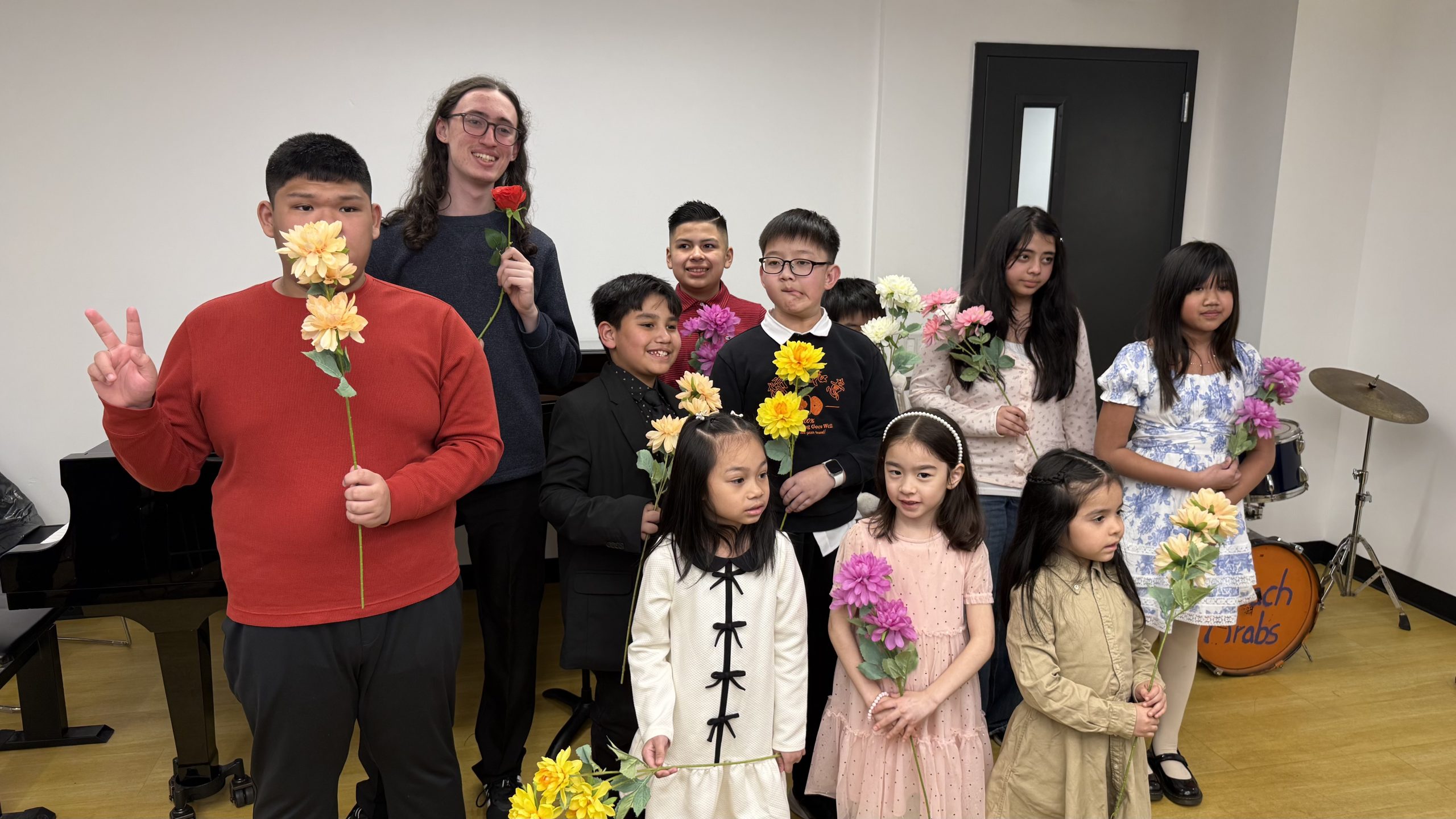
Pictured here: Andreane Eduave, Garbiel Knight, Tenzin Taglha, Leah Sanchez, Ziyou Lin, Nikita Bahakari, Isabella Arias, Ethan Ziv (2nd from left), Owen Laij, Halston Taalim and Brandon Guaman.

A musical recital last week for a school on Grand Avenue in Elmhurst brought out some classical pieces few dare to try. Johannes Brahms is one of the epic 19th century composers called “The Three Bs,” considered the cornerstone of classical music. Ludwig Van Beethoven and Johann Sebastian Bach are the other two, and most classical musicians choose to play either composer’s pieces at a recital where people actually populate the audience. Some would peck at the structural counterpoint of Bach music, and it would ‘move’ some, and the other 95% would play Beethoven. The melodic and symphony type structure is typically a crowd pleaser. Speak to a classical pianist and they would say that Brahms music is intense, with variations that a few might consider melodic, but for training purposes, there is no better composer to play. Today’s musicians might, however, consider Brahms music to be innovative, but the classical feel is unmistakable. But 17-year-old Ethan Ziv did just that on Friday evening at Pianopiano theatre on Manhattan’s West side.  “It’s a challenge like no other,” Ziv said,after the performance of Brahms’ Intermezzo In B Minor. The Sonder School of Music in Elmhurst is proud of all the recital participants.

Fill the Form for Events, Advertisement or Business Listing