
BY MOHAMED FARGHALY
mfarghaly@queensledger.com
The scent of home-cooked food drifted through the halls of the Masjid Islamic Unity & Cultural Center as families gathered shoulder to shoulder, waiting for sunset to break their Ramadan fast. Children leaned over railings to catch a glimpse of the evening’s guest while elders greeted one another warmly. On this night, the mosque at 31-33 12th St. welcomed a familiar visitor: Mayor Zohran Mamdani, returning to the Astoria neighborhood he once represented as a state assemblyman.
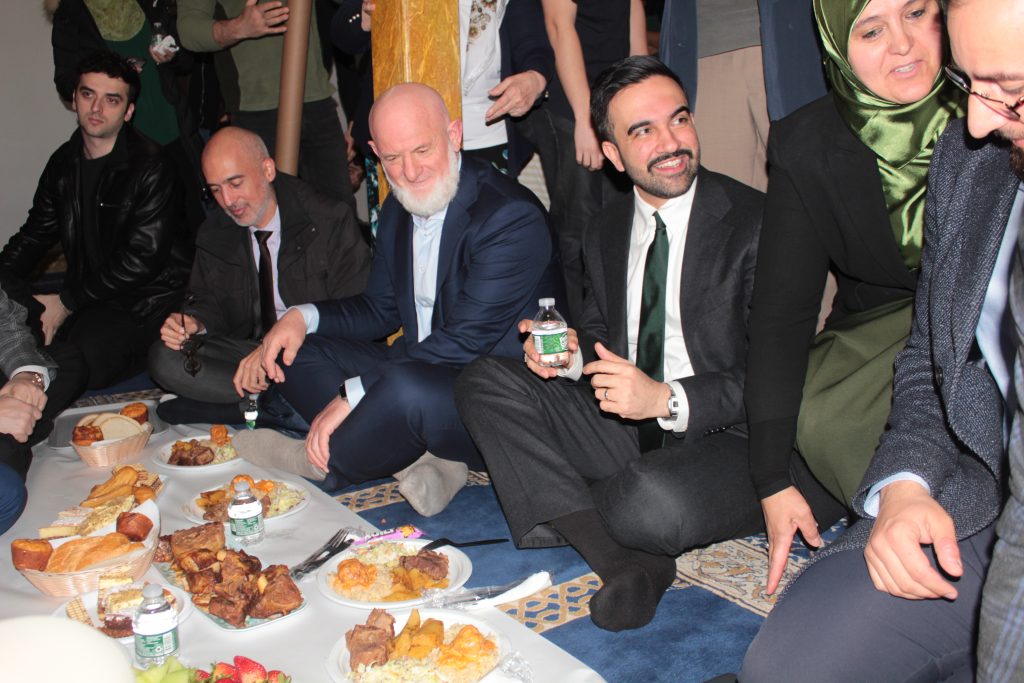
Mamdani, the city’s first Muslim mayor, joined dozens of Bosnian New Yorkers on March 17 for iftar, the nightly meal that ends the daily fast during the holy month of Ramadan. The visit felt less like a formal appearance and more like a reunion. Children gathered around him excitedly while longtime mosque members, affectionately called “uncles and aunties,” welcomed him with handshakes and embraces before the community prepared for maghrib prayer.
The evening opened with remarks from the mosque’s main imam, Kemal Bektesevic, who greeted Mamdani and spoke about the community’s hopes for the city and their connection to the mayor.
“Brother is someone who is close to the heart, someone you care about honestly,” Bektesevic said. “Not just because you are a brother, but because we truly hope you will make a change in this city and that we will feel the warmth of that change.”
Reflecting on the political journey that brought the mayor to their mosque, the imam shared a personal story about voting for the first time after encouragement from younger members of the community.
“I was raised in a way where I never went to a polling station,” Bektesevic said. “Then the youngsters in my community came to me and said, ‘Let’s do something.’ A friend and member of our community told me about you, and I said, ‘Okay, let’s try.’”
He said Mamdani’s campaign gave many in the community a sense of optimism.
“I’m not saying we have done a lot,” Bektesevic said. “But you gave us a very big hope that, Inshallah, we will see you succeed. That’s why I say: keep going straight and make us proud, and make proud all those who worked hard for you.”
Moments later, Mamdani stepped forward to address the congregation, greeting the crowd with a familiar Ramadan blessing.
“Ramadan Kareem, Ramadan Mubarak,” he said. “It is such a joy and a pleasure to be here, not just as your mayor, but as your brother.”
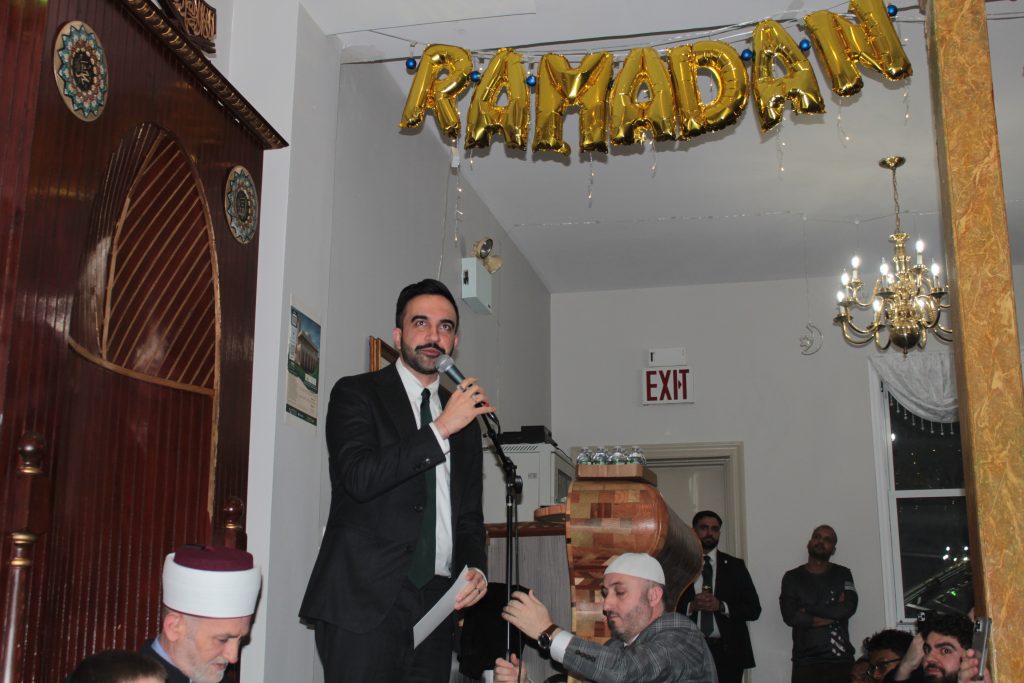
Mayor Mamdani visited the Masjid Islamic Unity and Cultural Center in Astoria to break his Ramadan fast last week. Photos by Mohamed Farghaly.
For Mamdani, the visit carried personal significance. Before becoming mayor, he represented Astoria and Long Island City in the state Assembly, and he recalled working with members of the mosque years earlier on community efforts to help neighbors in need.
“This is a return home for me,” Mamdani said. “Before I was your mayor, I was an assembly member for Astoria and Long Island City, and as I was just sitting here next to brother Ismail, he was showing me text messages that I sent him in 2019 and 2020 where I was asking him if he would sponsor some iftars that we would give to those in need in the neighborhood.”
The mayor thanked mosque leaders and the young people who recited prayers earlier in the evening, calling them reminders of the community’s future.
“Our youngsters who are here with their beautiful recitations remind us that the future is always what we are striving for,” Mamdani said.
He also reflected on the history many Bosnian families carry with them in New York, referencing those who fled war and genocide in the Balkans before rebuilding their lives in the city.
“Many in this community came here after a genocide, came here out of necessity to find a place of safety,” he said. “Hardship brought many Bosnians to New York City, yet I’m grateful for the ease that you have delivered to our city, in shaping our neighborhoods and shaping the very places that so many know as their home today.”
As the call to prayer approached, the room grew quieter. Dates and water were passed along tables as families prepared to break their fast together. Mamdani spoke about the meaning of Ramadan beyond abstaining from food and drink.
“Many people think of Ramadan solely as a time characterized by fasting from sunup to sundown,” he said. “But I look forward to Ramadan because of what it means in terms of reflection, recommitment and giving meaning to the things that we lose sight of.”
The mayor also thanked the congregation for participating in civic life, saying their engagement helped reshape the city’s political landscape.
“I would not stand before you as the mayor of this city if it wasn’t for every single New Yorker who told themselves that this would be the time they would participate,” Mamdani said. “You saw yourself in the city that is also your own. You saw yourself in its politics. You saw yourself in its future.”
As the fast was finally broken and the community moved for the meal, the evening blended faith, food and conversation. Plates filled with traditional dishes, children darted around the room and elders shared stories late into the night.
For Mamdani, the gathering served as both a celebration of Ramadan and a reminder of the neighborhood that helped shape his political journey.