
When Medicine Advances and Law Does Not, Families Pay the Price


Nine Years Shaping Culture At JFK T4
By MOHAMED FARGHALY
mfarghaly@queensledger.com
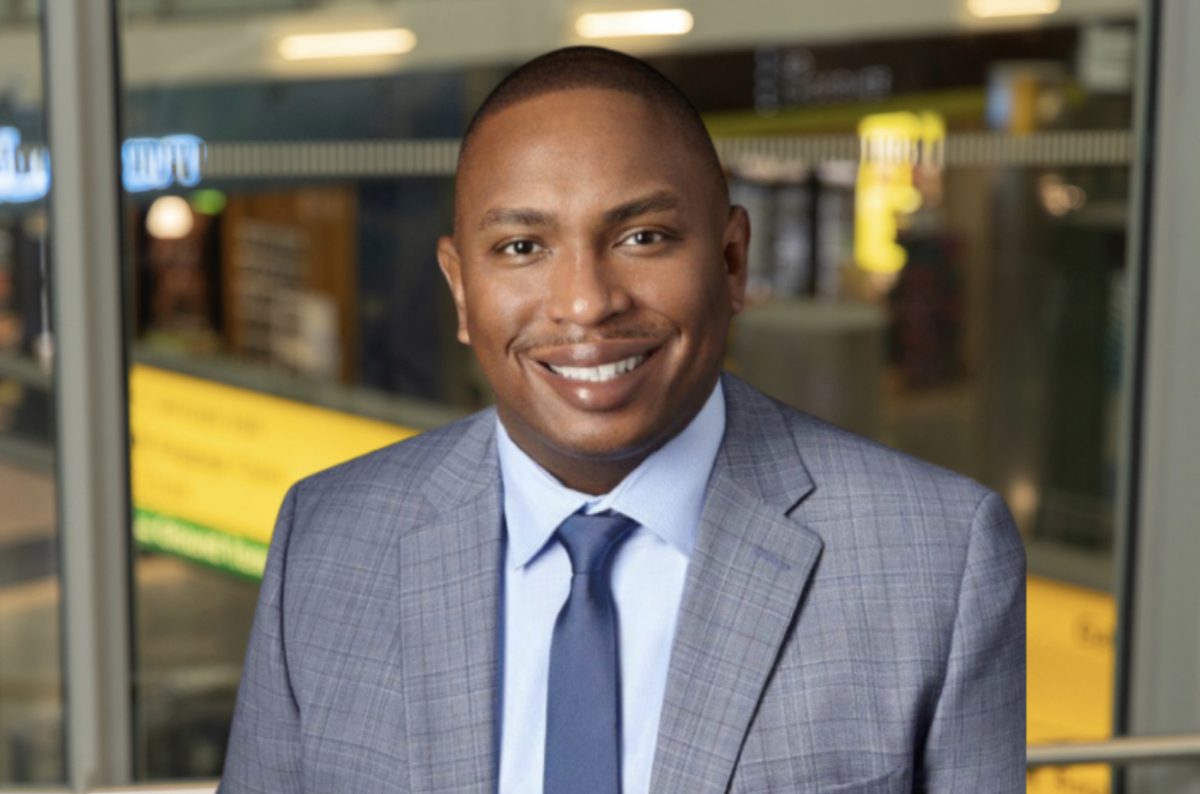
At the center of the constant motion inside John F. Kennedy International Airport, where rolling suitcases hum across polished floors and departure boards flicker through time zones, Vernon M. Taylor has spent nearly a decade focused on something less visible but just as critical: people.
Taylor, director of People Operations for JFKIAT, the company that operates Terminal 4, is marking his ninth year helping shape the workforce strategy behind one of the airport’s busiest hubs. “I was always told that working in the airport, one year in airports is like two years in real life,” he said with a laugh. “I really feel that way after nine years.”
Terminal 4 is in the midst of a sweeping $1.5 billion transformation designed to prepare for the future of air travel. As cranes rise and gates expand, Taylor has been working behind the scenes to build the infrastructure that cannot be seen in blueprints: succession plans, diversity metrics, compensation structures and career pipelines that stretch from middle school classrooms to executive offices.
When he arrived in 2017, he said, the company was at a crossroads. “When I first started at the company, back in 2017 there was no HR department. There was actually ran by legal,” he said. “Let’s just start with HR, so we could go ahead and teach the people what HR is.”
What began as a foundational effort to establish policies and procedures evolved into a broader reimagining of how people operations could drive growth. Taylor standardized job descriptions and compensation benchmarks, implemented succession planning for critical roles and introduced workforce diversity analytics to improve accountability. He also helped boost participation in the company’s employee engagement survey to roughly 90 percent, giving leadership clearer insight into workforce priorities.
The results have drawn recognition. JFKIAT has been named a Best Place to Work by Crain’s New York Business for six consecutive years, the only aviation company to earn that distinction during that period. It has also been recognized as a Best Place to Work in Aviation for two straight years.

Taylor sees those accolades as validation of a philosophy he repeats often: “I’m really big on aligning the people strategy with the long-term growth of the company.”
A Brooklyn resident who grew up immersed in city life, Taylor describes New York as “a tale of two cities,” shaped by both opportunity and inequity. Raised primarily by his grandparents, he learned early that discipline and purpose go hand in hand. “One of the things that they taught me is that if you’re always busy, you have no time to get in trouble,” he said. By his late teens, he was juggling school during the day and work at night, a pattern he continued through college and graduate school.
Before joining JFKIAT, Taylor held HR leadership roles in the transportation sector, including at subsidiaries of one of the world’s largest transit operators. “I really went from cars to buses to planes,” he said. “I’m really good at the transportation industry. I really get it. I think you really find some good salt of the earth people in transportation.”
That affinity for the industry shapes his approach at Terminal 4, where he also chairs the company’s diversity, equity, inclusion and belonging committee and leads 4GOOD, its philanthropic arm. Since 2022, the program has directed hundreds of thousands of dollars to local nonprofits and educational institutions across Queens.
“My family, on my dad’s side, is from Queens,” Taylor said. “I’m really passionate about giving back to the borough and about bridging the gap regarding job opportunities. I think there’s so many jobs at that airport that people in the community can really benefit from.”
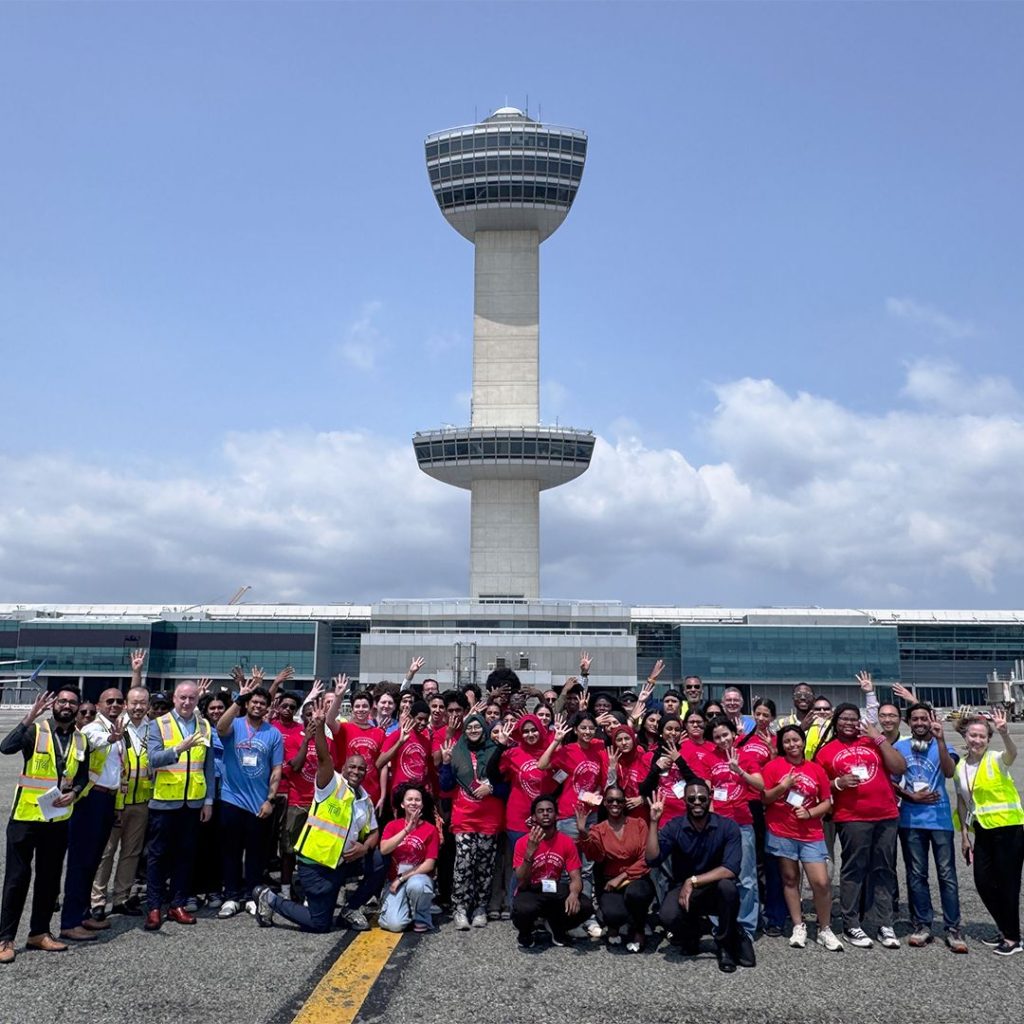
That belief has translated into action. Under Taylor’s leadership, JFKIAT has expanded aviation-based internships and partnerships with institutions including Vaughn College of Aeronautics and Technology and Farmingdale State College. The company also partners with local middle and high schools to introduce students to aviation careers early, creating what Taylor calls a pipeline that “doesn’t start at college. It starts around eighth grade.”
The company’s annual Juneteenth celebration and job fair, held in partnership with the Council for Airport Opportunity and business partners across the terminal, has connected more than 800 job seekers each year to employment pathways within the broader JFK ecosystem.

The hardest chapter of his tenure came during the COVID-19 pandemic, when the bustling terminal fell silent. “You can walk in the terminal and hear a pin drop,” he said, likening the scene to a frozen kingdom from fantasy television. “For a lot of HR people, I think covid was probably the most challenging time in your career.”
Taylor and his team focused on both physical and mental health, navigating shifting public health mandates while striving to retain staff. “It also taught me how resilient we can truly be as a people,” he said. “I think we really became more tight knit after covid.”
Now, as passenger volumes climb and additional terminals come online, Taylor is preparing for what he calls a coming “war on talent.” His response includes a renewed emphasis on career development, mentorship and a unifying customer service culture branded internally as the “T4 State of Mind,” designed to ensure that passengers experience one seamless terminal rather than a patchwork of separate companies.
He is also steering the organization into new territory with artificial intelligence. “I know some people are scared of it, but I think AI is here to go ahead and augment your job, not to take your job,” he said. The company is developing policies, governance standards and training to guide responsible use.
As Black History Month draws to a close, Taylor reflected on his role as one of the few Black executives within the JFK terminal system. “It’s great to actually be a young, Black executive and see that everyone here is diverse,” he said. “Queens is the melting pot of New York City.”
For Taylor, the transformation of Terminal 4 is about more than steel and glass. It is about creating a workplace that mirrors the borough it serves and opens doors to careers that might otherwise seem out of reach.
“I’m really looking forward to another long run and tenure, just really giving back not only to JFK Airport, but the people of Queens as a whole,” he said.


Running through Ramadan, a Marathon of Faith
By MOHAMED FARGHALY
mfarghaly@queensledger.com
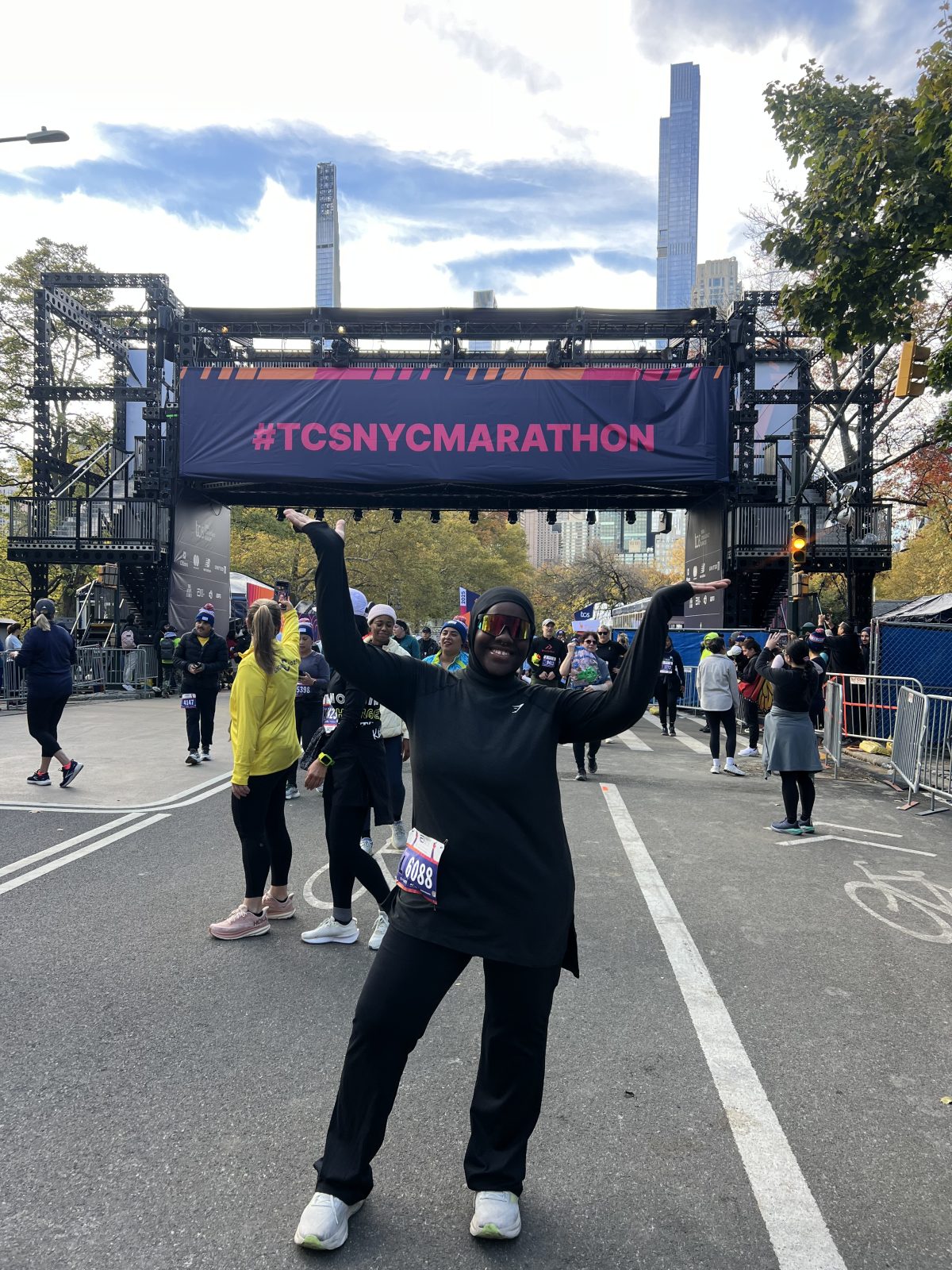
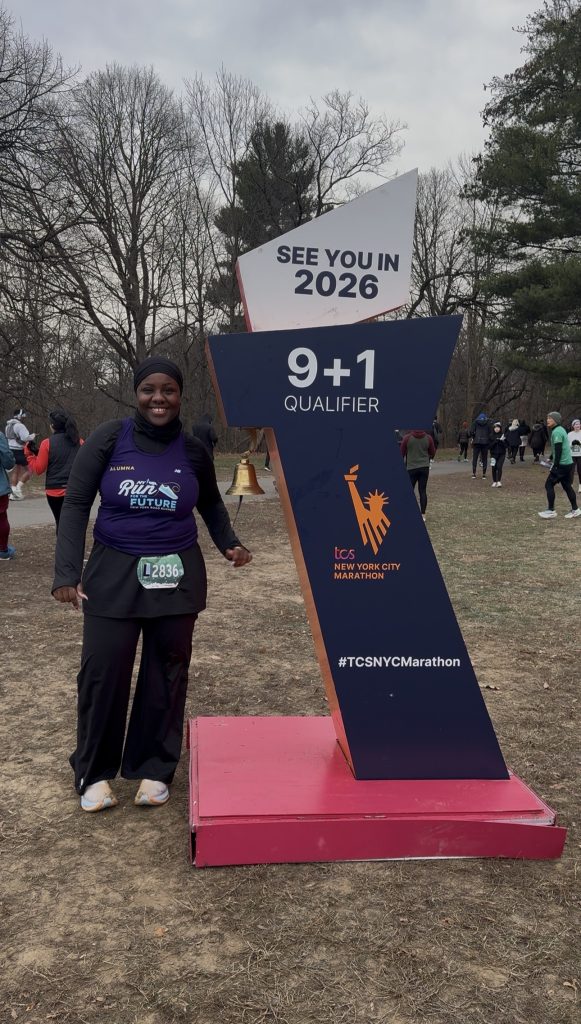
Before dawn during the holy month of Ramadan, Safiatu Diagana fills a large bottle with electrolytes and water, sipping steadily in the quiet hours before sunrise. The hydration has to last all day. By daylight, the Queens native is fasting. But she is also preparing to run 13.1 miles through New York City.
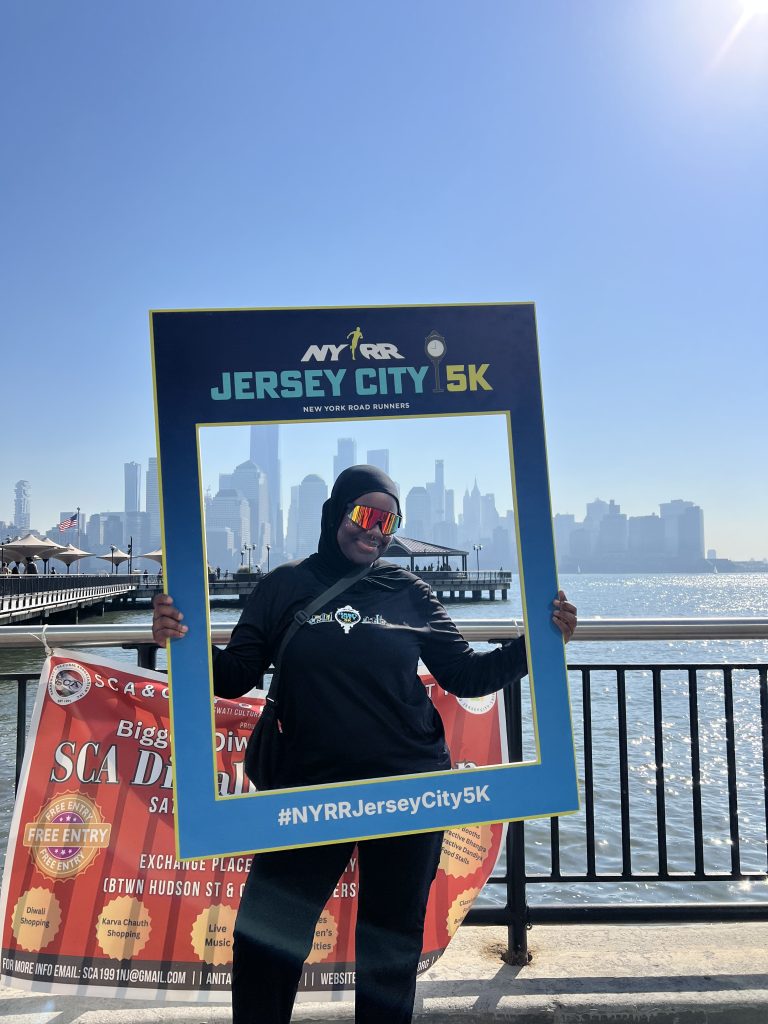
Later this week, Diagana will join thousands of runners at the starting line of the United Airlines NYC Half on March 15. The United Airlines NYC Half Marathon is produced by New York Road Runners. For the recent New York University graduate and postpartum nurse, the race marks her first half marathon. It also arrives in the middle of Ramadan, when Muslims abstain from food and water from sunrise to sunset.
For Diagana, the challenge is less about speed and more about showing up.
“I’m not trying to hit a PR or do this crazy marathon thing,” she said. “I just want to show up for myself and see what I’m capable of.”
Diagana grew up in Richmond Hill in Queens, the daughter of a low-income immigrant family. Sports were never central to her childhood. Aside from two years of high school volleyball, most physical activity came from simple routines encouraged by her parents, like walking in the park.
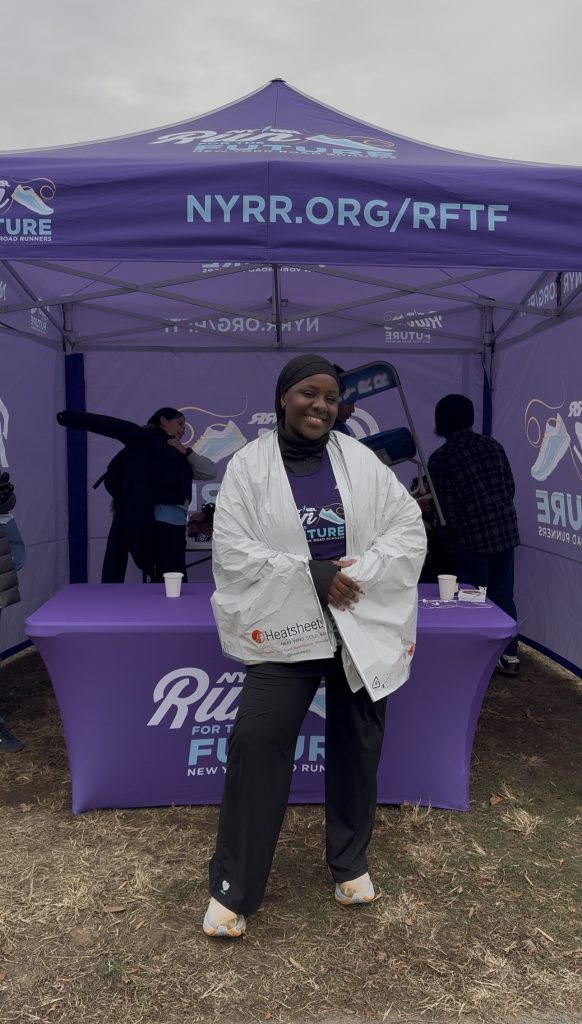
Running entered her life unexpectedly in 2018 through Run for the Future, a youth program aimed at bringing young women into the sport. At the time, Diagana was focused on academics and had never imagined herself as a runner.
“Running has just been something that I never saw myself honestly partaking in,” she said. “But learning more about my health and learning more through nursing school, it was a journey that I wanted to take.”
That journey has steadily grown from casual runs to organized races. Still, she remembers the moment the possibility first crossed her mind: watching runners glide through an unusually empty Times Square during the half marathon years ago.

Screenshot
“I saw people running in Times Square, and I’ve never seen Times Square that empty before,” she said. “I was like, how is this even happening?”
At the time, she could not picture herself among them. But months ago she signed up for the race, eager to test herself. Only later did she realize the date would fall during Ramadan.
Instead of backing out, she leaned into the challenge.
“You know what, I can put myself to the challenge,” she recalled thinking. “If it happens, it happens. If it doesn’t, it doesn’t. I just wanted to push myself.”
Training has looked different since the start of the fast. Before Ramadan, Diagana followed structured workouts through a running app designed for beginners preparing for a half marathon. Recently, though, she has slowed down, trading long runs for walks, stretching and careful hydration during the limited hours when she can drink.
“A key thing of fasting is not drinking water,” she said. “So during suhoor and after iftar, I have a 60-ounce water bottle with electrolytes, and I’m just sipping that the entire time. At the end of the day, I just want to be hydrated.”
She is also adjusting her expectations. Completing the race, even at a slower pace, will be enough.
“If it means doing a walk-run, if it means walking the entire time, that’s totally fine,” she said. “As long as I’m willing to complete it.”
The discipline required for distance running, she said, has mirrored the spiritual discipline of Ramadan itself. Nights spent standing through extended prayers have reinforced the same mindset she uses during long runs.
“If I can run for an hour or an hour and a half, I can definitely stay for 20 prayers,” she said with a laugh.
The connection between physical endurance and spiritual commitment has changed how she views both.
“If I put my mind to it, I can definitely get it done,” she said. “It’s just how bad do I want it.”

By day, Diagana works as a postpartum nurse in Manhattan, caring for new mothers and newborns. The job, she said, constantly reminds her how remarkable and fragile the human body can be.
“It’s so crazy how our bodies move and change,” she said. “Seeing a new baby every day, it just makes you grateful for your health.”
The work has also reinforced the value of perseverance, something she carries into her running.
“I feel like being in the healthcare world, you really start to see you have to be grateful for a lot of things that you take for granted,” she said.
For Diagana, crossing the finish line will mean more than finishing a race. Growing up, she rarely saw women who looked like her in endurance sports.
Now, she hopes someone else might.
“Sometimes you want to see representation,” she said. “But sometimes you have to be that representation.”
Among the tens of thousands of runners expected at the NYC Half, she knows she will be only one person in the crowd. But even one runner, she said, can make a difference.
“There’s going to be one person who sees a hijabi at the race and thinks, ‘She was able to run it. I can also do it,’” she said.
When Diagana finally reaches the finish line, her thoughts will turn to family and faith.
“The first thoughts are my family,” she said. “Even if they don’t understand why I’m waking up early to go run in Central Park, I’m doing it for them.”
And perhaps for someone else watching from the sidelines, seeing themselves in a runner for the first time.

Screenshot

Flushing Town Hall To Host Miles Davis Centennial Tribute
By MOHAMED FARGHALY
mfarghaly@queensledger.com
The legacy of Miles Davis will take center stage in Queens this month as some of the nation’s most celebrated jazz musicians gather for a special tribute marking what would have been the iconic bandleader’s 100th birthday.
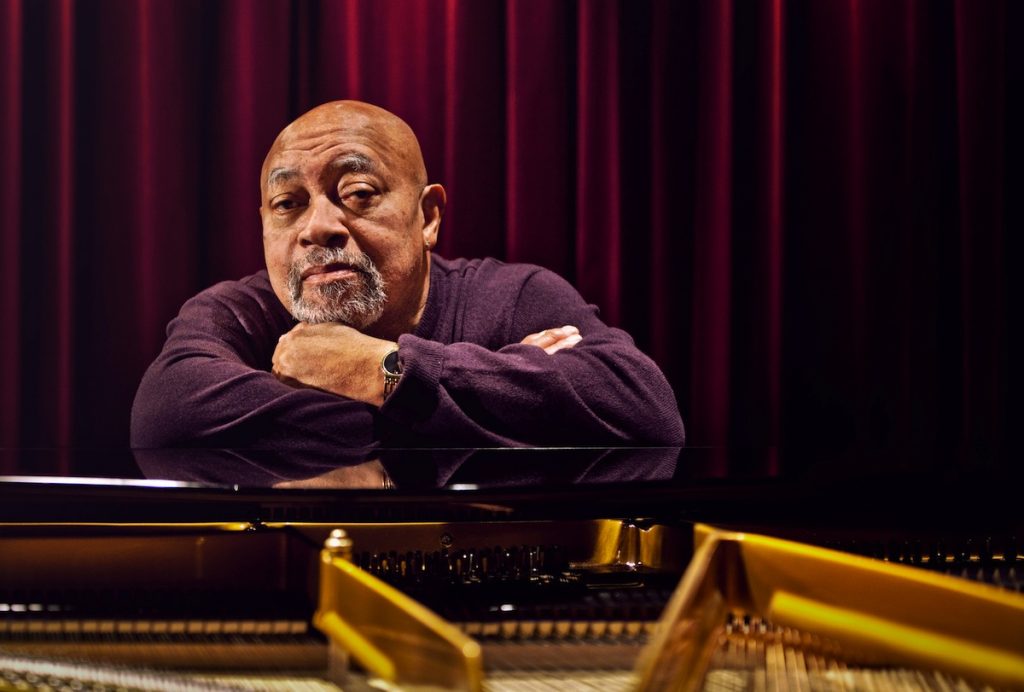
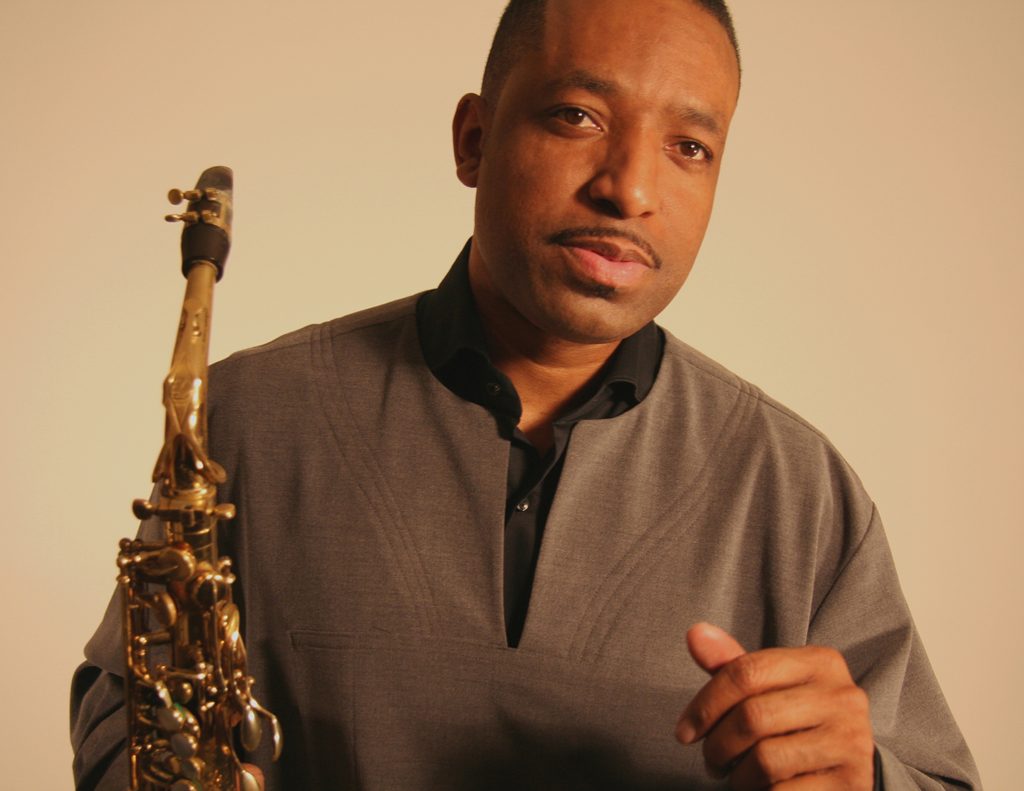
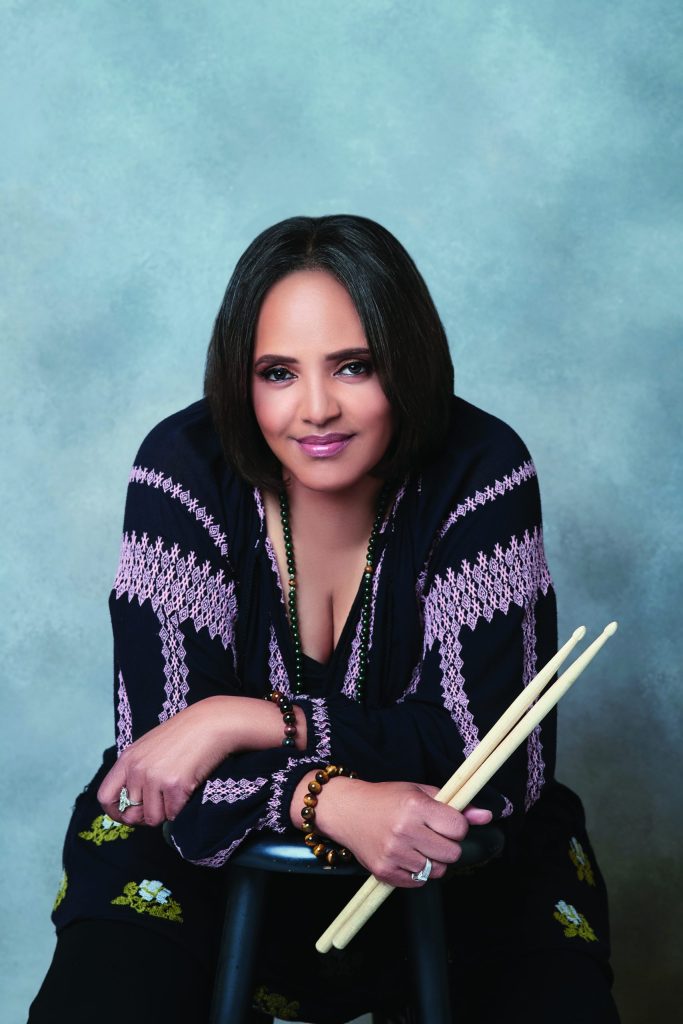
On March 20, Flushing Town Hall will host NEA Jazz Masters: A Tribute to Miles Davis at 100, a concert led by trumpet virtuoso Jimmy Owens, who famously played alongside Davis when he was just 15 years old. The performance will bring together four recipients of the nation’s highest honor in jazz, awarded by the National Endowment for the Arts, for an evening celebrating Davis’ enduring influence on the genre.
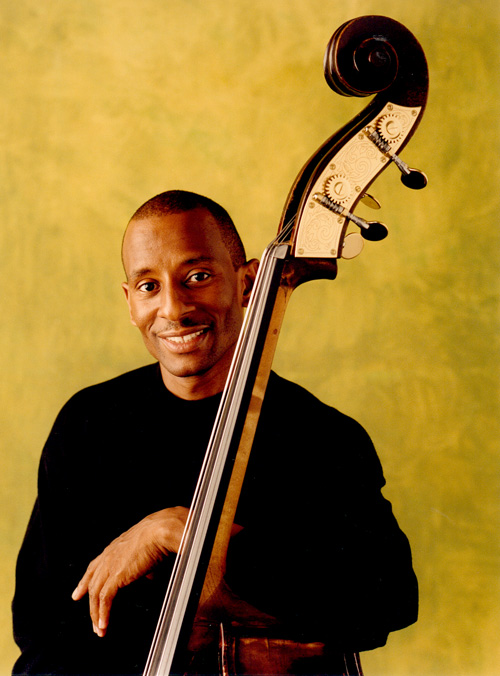
Owens will be joined by fellow NEA Jazz Masters Donald Harrison on alto saxophone, Kenny Barron on piano and Terri Lyne Carrington on drums, along with rising talents Michael Howell on guitar and Kenny Davis on bass. Together, the ensemble will revisit landmark works from Davis’ expansive catalog, which reshaped modern jazz and influenced generations of musicians worldwide.
“The concert tribute to Miles Davis is going to look at his early life and compositions, and compositions from his later performing life,” says NEA Jazz Master and concert leader Jimmy Owens. “Miles Davis set a pattern of creativity that affected all musicians. Many of the musicians who performed with him became established leaders in their own right after they left Miles Davis’ band.”
The concert continues a long-running tradition at Flushing Town Hall, which first launched its NEA Jazz Masters series in 2006 with performances by jazz legends including Jimmy Heath, Clark Terry and Billy Taylor. Over the years, the venue has welcomed an array of prominent artists whose work helped define the sound of jazz both in New York City and beyond.

“This is the centennial of Miles Davis’s birthday,” said Clyde Bullard, Flushing Town Hall’s jazz producer. “Miles Davis left many milestones that will forever be in the annals of music history.”
Bullard noted that Davis’ influence stretches across decades of music, from the landmark 1959 album Kind of Blue to his collaborations with arranger Gil Evans on projects such as Sketches of Spain.
“There’s so much music to cover because he gave that much volume to jazz history and music in general,” Bullard said. “The music that he created has become like a template for a lot of jazz ensembles.”
For Owens, the concert carries a personal resonance. As a teenager, he had the rare chance to perform with Davis at Harlem’s famed Smalls Paradise, an experience that shaped his musical path. Revisiting Davis’ work decades later, Bullard said, makes the tribute especially meaningful for the veteran trumpeter.
“For Jimmy Owens, this is like heaven to be able to recreate the music of one of his greatest influences,” Bullard said.
Bullard added that bringing together legendary Jazz Masters with younger musicians reflects the broader mission of the series.
“We’re continuing a legacy,” he said. “We set a standard that whatever show we do is of world-class quality, and this show will be exactly that.”

The concert begins at 8 p.m. at Flushing Town Hall, with tickets available in advance through the venue’s website. Organizers say audiences can expect a dynamic live interpretation of Davis’ music, honoring a figure widely regarded as one of the most influential artists in jazz history. For more information and to purchase tickets for the 8 PM performance, visit www.flushingtownhall.org.
“We are thrilled to welcome the NEA Jazz Masters concert back to Flushing Town Hall and to Queens, where jazz has such a deep and meaningful history,” says Ellen Kodadek, Executive and Artistic Director of Flushing Town Hall. “This concert is always a highlight of our season, and we are deeply grateful to Jimmy Owens for our longtime partnership and for bringing so much musical talent together on our stage. It is an honor to present these outstanding artists and to share this special evening with our community.”

ROBERT HORNAK
FORMER EXECUTIVE DIRECTOR OF THE QUEENS REPUBLICAN PARTY
RAHORNAK@GMAIL.COM
Robert Hornak is a veteran political consultant who previously served as deputy director of the Republican assembly leader’s NYC office and as executive director of the Queens Republican Party. He can be reached at rahornak@gmail.com and @roberthornak on X.
There is one basic belief that has been axiomatic in American politics, best expressed in the statement, “I may not believe in what you have to say, but I will fight to the death to protect your right to say it.” Until now.
This simple concept has united people from across the political spectrum who share a love for America, its constitutional principles, and the foundation upon which our society has been built.
But that most basic constitutional principle has been under attack in recent years by a leftwing movement that has picked a line to draw on what they call hate speech. And, it just so happens that line falls around the groups that make up their main interest groups.
This was illustrated perfectly when, early after Vickie Paladino was elected to the City Council (full disclosure I was her 2021 campaign manager), she had her first collision with the City Council’s speech police. In a number of social media posts she objected to what was be- ing called “Drag Queen Story Hour” where local drag queens were being brought into settings with young children to perform their show while also reading books to the children.
Paladino called this out as not being appropriate for children, calling it a form of grooming. For this transgression, she was sanctioned by being kicked off the Council’s Committee on Mental health. A scathing punishment, no doubt.
Well, to paraphrase Ronald Reagan, there she goes again. Now Paladino has posted on her social media – her personal social media – about a percieved conflict between Islamic fundamentalists and Western Judeo- Christian culture. That line that democrats drew is now completely encircling the Muslim community, and any mention of Muslim extremism is labeled as Islamophobic.
In fact, it’s gotten so crazy that now any discussion about the actual growing incidents of hate crimes that target NYC’s Jewish residents is preceded by warnings and instruction about Islamophobia.
Paladino’s posts were referred to the Council Ethics Committee for action. A report was issued, charging her with “disorderly conduct” and citing a number of Paladino’s – again personal – social media posts. These included a post on Dec 14, 2025, in response to a post on the recent massacre of Jews at Bondi Beach, where Paladino said we need to take the threat of global jihad seriously and need to consider a process to denaturalize and deport Muslims before we have another 9/11.
And on Feb 17, 2026 “Affiliation with a terrorist group sure seems like a prerequisite for employment with Zohran’s administration” in response to a post pointing out that Mayor Mamdani’s “new Chief Immigration Officer, Faiza Ali, previously worked for Muslim Brotherhood- linked CAIR” and asked, “Are all of Zohran Mamdani’s appointees connected to terrorist organizations?”
The Council is demanding a response from Paladino, while it prepares to decide how to sanction her. That include anything from sanction, to removal of her remaining committee assignments, a fine, and potentially expulsion from the Council.
Paladino’s response – a lawsuit warning the Council not to sanction her for availing herself of her first amendment right to comment on po- litical issues in the public square.
Of course, the Council is trying to call this as a case of discrimination or harassment in the workplace. They know they are on this ground and this is protected political speech, but some in the Council are demanding action against Paladino for daring to give voice to what some of her constituents believe.
But this was not said “in the workplace” and does not single out any individual nor does it make any threat of violence. And this assumes that Paladino, is an employee of the Council rather than an elected official accountable to the people who elected her and who she serves in her district.
This is a attempt to silence speech that the majority in the Council doesn’t like. It makes them uncomfortable to have these ideas discussed openly, but as every American who cherishes our most fundamental freedoms that make America the country it is, the answer to speech you don’t like is always more free speech.

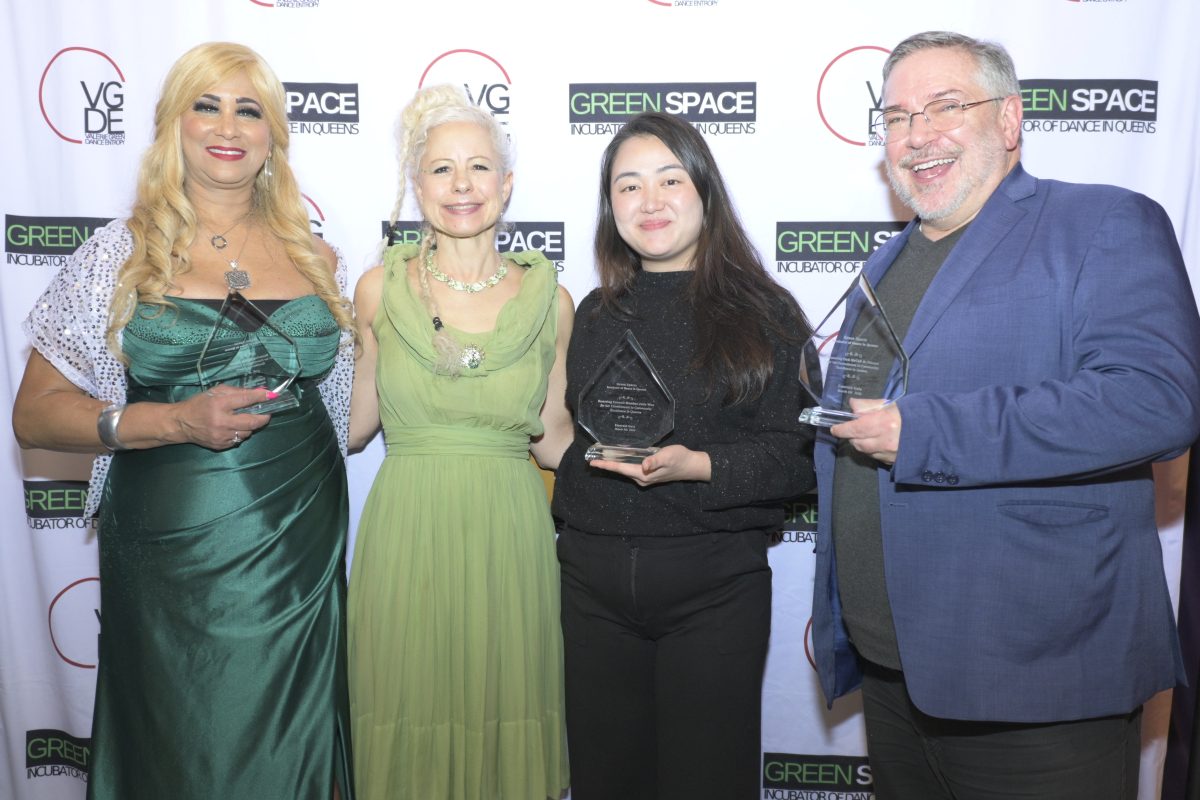
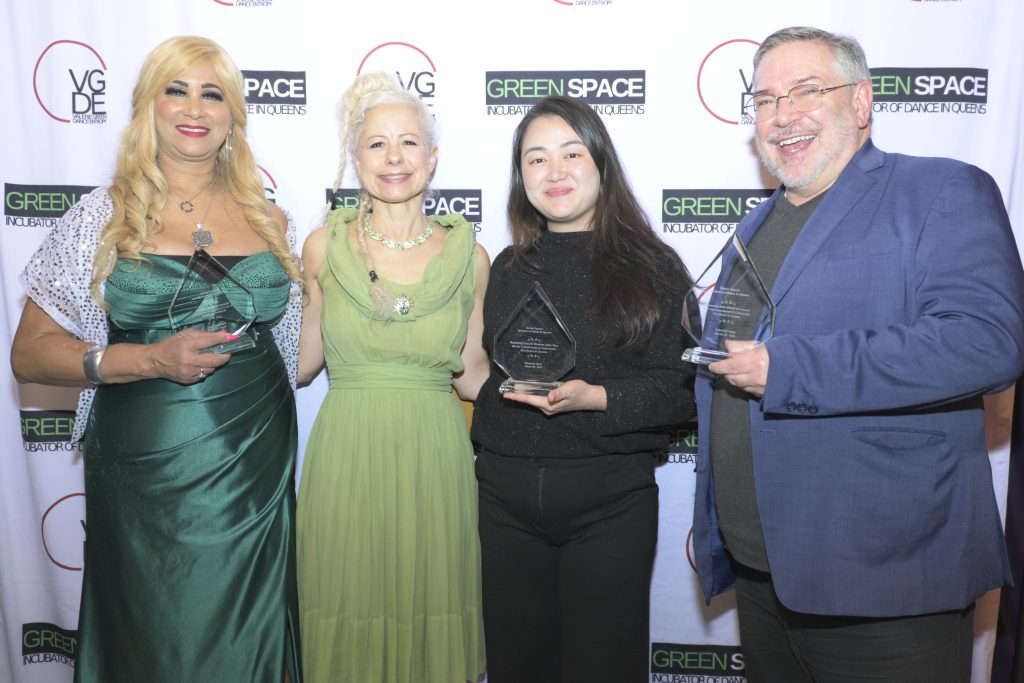
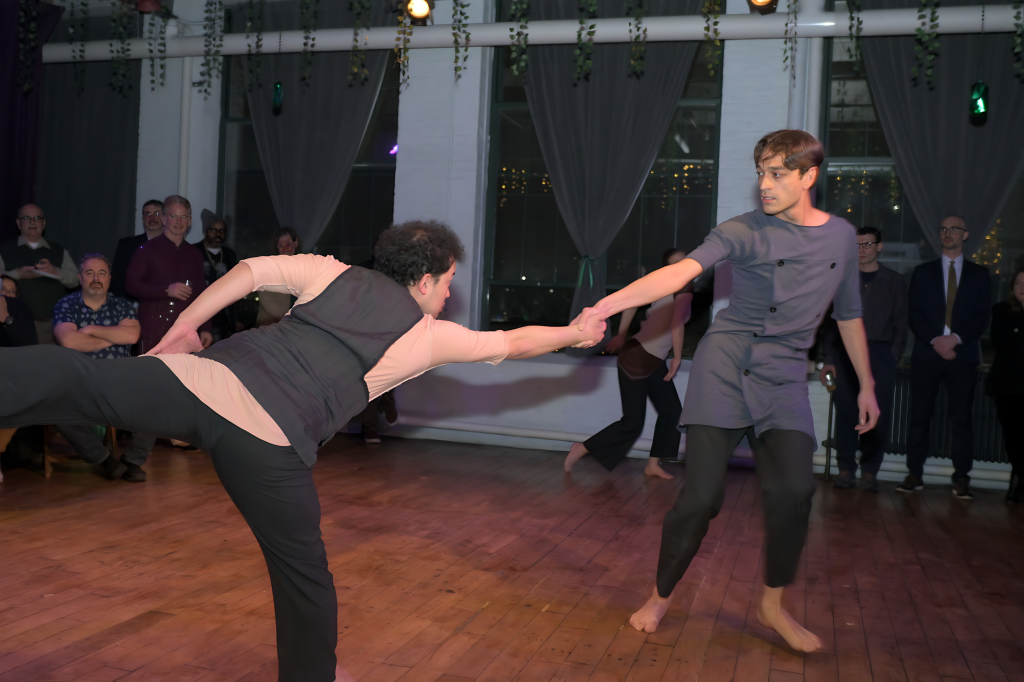
Dance Entropy celebrated two decades of nurturing dance in Queens during its Emerald Gala on March 5, honoring three community leaders whose work has helped strengthen arts, civic life and neighborhood engagement across the borough.
Held to mark the 20th anniversary of Green Space, the Long Island City studio founded by Dance Entropy, the gala brought together artists, supporters and community members for an evening of live music, dance performances, food and a paddle raise supporting the organization’s performance, education and outreach programs.
The event recognized Julie Won, Dirk McCall de Palomá and Roslyn Nieves for their contributions to the Queens community.
Won, who represents District 26 covering Long Island City, Sunnyside, Astoria and Woodside, was honored for her advocacy on behalf of diverse neighborhoods in western Queens. She immigrated to New York City with her family at age eight and became the first woman and immigrant elected to represent the district. Since taking office, she has focused on issues of equity, affordability and community sustainability.
McCall de Palomá, executive director of the Sunnyside Shines Business Improvement District, was recognized for a career spanning more than three decades in government, nonprofit leadership and political activism. His work has included leadership roles at Gay Men’s Health Crisis and the Bronx Community Pride Center, as well as long-standing involvement with the Stonewall Democratic Club of New York City.
Nieves, a television host, producer and director, was honored for her extensive media work spotlighting community stories throughout Queens. After two decades with the NYPD, she transitioned into media and community development at Queens Public Television, producing hundreds of hyperlocal programs covering nonprofits, civic events and cultural celebrations.