
Localizing History

Queens teens wants to bring their Asian American heritage into the K-12 curriculum with the Localized History Project. 

BY SIDDARTHA HARMALKAR

When Guinevere recalls walking along Liberty Avenue with her grandfather, she smells roasted spices and hears bhajans playing.

”It was really beautiful because I felt all the life and culture there,” she said.

Although family memories like Guinevere’s are common throughout South Ozone Park, which hosts one of the largest Indo-Caribbean communities in the world, South Asian and Indo-Caribbean public school students usually don’t see their experiences represented in history classes.

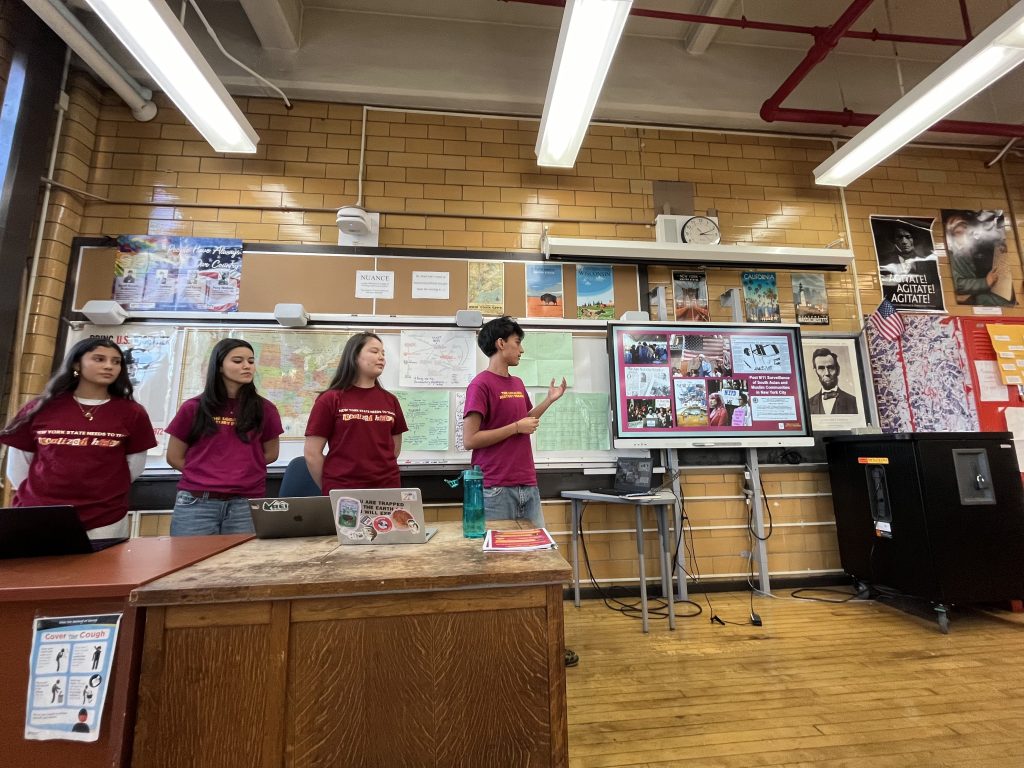
As a youth researcher for the Local History Project (LHP), Guinevere hopes to change that by showing educators how students like her can play a more active role in their classrooms. Last Tuesday, she presented takeaways from her research along with three other LHP researchers at a professional development event for NYC public school educators.

“I learned a lot about what it means to be Indo-Trinidadian and the journey and history behind it,” said Guinevere, who is a junior at Brooklyn Technical High School.

Founded and directed by former high school history teacher Shreya Sunderram, the Localized History Project is housed at the Asian American/Asian Research Institute at CUNY and aims to integrate local stories of Asian American, Pacific Islander, and Native Hawaiian New Yorkers into public K-12 classrooms. Sunderram founded the project after her experience as a teacher led her to recognize the importance of spaces for Asian American history and culture, particularly after seeing the rise of violence against Asian American elders during the pandemic.

“Young people are deeply capable, extremely interesting, super curious drivers of change,” Sunderram said.

Their website, https://localizedhistoryproject.org/, features interactive exhibits from students across the city.

Students with the Localized History Project present at Brooklyn Technical High School. Photo via Shreya Sunderram.

For Guinevere, the project has deepened her relationship with her grandparents, she said. She now loves to ask her grandfather about his life experiences, and it brings her joy to see how much he loves to share.  She’s also become more aware of the power of music and oral histories, which history textbooks often overlook.

“I just want people to understand how important music is,” said Guinevere, explaining that music holds memory. She fondly remembers playing Bollywood music for her mom and seeing her immediately recognize the artists, even without understanding the words.

At the training session, students explained how they dove into the complexities of resistance and joy that shaped the migration of their families and the fabric of their neighborhoods – from Filipino nurses’ activism in Woodside to South Asian domestic worker struggles in Jackson Heights.

Clarissa, a senior at Brooklyn Technical High School, is LHP’s youth co-director. “To come from a borough where there’s such a prominent presence of Asian American strength and resilience and joy is a really guiding foundation,” said Clarissa, who grew up in Jackson Heights and Sunnyside.

“I think the history classroom is not just a space to memorize years in which things happened,” she said, adding that her research gave her confidence in the idea that her identities and lineages are worth being written and spoken about. “The point is to have an education that challenges the way you see the world, makes you think about the structures you navigate, and really instills in you this hope and desire to become a change maker,” Clarissa said.

The project goes beyond studying the past, said Ana Serna, Assistant Director of Community Organizing at LHP. “Several of our youth describe the Localized History Project as their political home insofar as they’re able to root themselves in histories of solidarity and shared struggle,” she said.

Serna, who grew up in Long Island City, was a labor organizer and a community archivist in Woodside.

She now leverages her experience to connect LHP’s youth researchers with local researchers and organizers, such as Filipino nurses in Woodside who took part in the recent nurses strike.

Last June, the New York City Council’s Educational Equity Action Plan funded LHP to create the first NYC Council-funded Asian American studies program for K-12 public schools.

So far, through their funding, the Localized History Project has been able to reach 130 educators, 88 schools, and 39 council districts, said Sunderram. They hope to have 50 exhibits documenting localized NYC Asian American history by June 2026.

Alex Ho, who teaches Asian American History and Chinese Culture and History at the Borough of Manhattan Community College, said that attending the student-led professional development workshop was transformative.

“When you’re an educator, you feel like you’re responsible for a few stages of learning and it’s not easy to let go of the right and wrong kind of rote memorization,” he said. “It’s really powerful to see good exploratory learning.”

The researchers’ focus on the nuances of gender, labor, and migration from the perspective of their own family histories were particularly significant, said Ho. “It’s a great model for educators.”
A Queens For All: David Orkin’s Pitch For AD38

The socialist attorney and Assembly District 38 candidate wants to bring Queens’ marginalized workers into the political conversation. 

BY COLE SINANIAN

cole@queensledger.com 

While volunteering at a community center in Nogales, Mexico in his twenties, now 34-year-old immigrant and workers’ rights attorney David Orkin was moved by the words he saw displayed on a mural:

 “Junto hacemos el camino al andar,” the mural read. Spanish for “together we make the road by walking,” the phrase evokes Latin American liberation theology, a doctrine that emphasizes the emancipation of poor and oppressed peoples as a primary objective of governance. 

“It’s where the people who are most affected by the systems of oppression need to be the people who are brought into the center of political organizing,” Orkin said. The words capture the values that underpin his work as a lawyer, labor organizer, and perhaps soon-to-be politician— the 34-year-old democratic socialist is running for NY State Assembly District 38, where he hopes to both bring the working class immigrants in his district into the political conversation, and to clear a legislative path to the passage of Mayor Zohran Mamdani’s Tax the Rich agenda, which needs broad state-level support if it is to fund the new mayor’s promised affordability programs. 

Orkin’s district is expansive and diverse, spanning Ridgewood, Glendale, Woodhaven, Richmond Hill, and Ozone Park, and has been held by centrist Democrat and noted Eric Adams ally Jenifer Rajkumar since 2021, who ran unchallenged in the past two elections. But Orkin’s promise of a different kind of politics, one that’s uncompromising in its adherence to humanitarian values and centers the sorts of marginalized people often used as political pawns, is gaining appeal in the immigrant-heavy, largely working class district. 

“He is willing to be actually held accountable and co-govern with the people who are really impacted in the district,” said Simran Thind, an organizer with DRUM Beats, a nonprofit that organizes working class South Asian and Indo-Caribbean New Yorkers. “And you can’t really say the same for his opponent.” 

Making the Road 

The relationships between state violence, migration, surveillance and worker’s justice form the nucleus of Orkin’s worldview. It began to take shape as a child while crossing the increasingly militarized border between San Diego and Tijuana with his mother, a Mexico City-born Jewish woman who grew up in Tijuana and later emigrated to the US, eventually finding her way to Maryland’s Washington DC suburbs, where Orkin was raised. These cross-border trips and the fear they induced in him spurred a lifelong interest in international migration, which he studied as an undergrad at Vassar College in Poughkeepsie. 

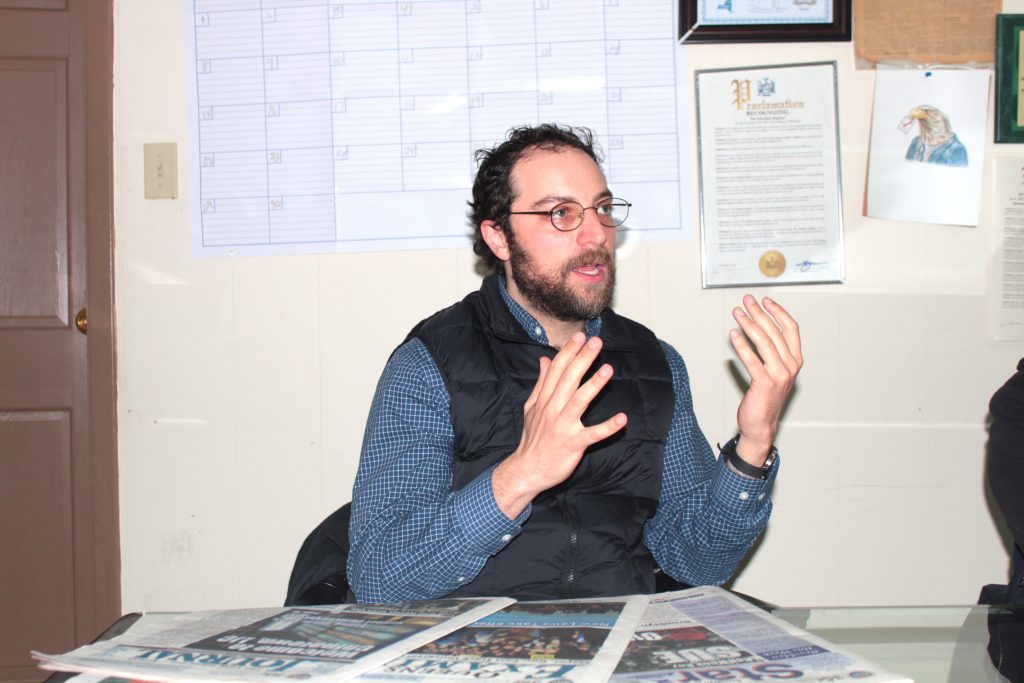
It was during a college study trip that Orkin first traveled to the Arizona borderlands and was struck by both the scale of migrant suffering and the US political establishment’s failure to address it. In 2013, Orkin returned to the region, where he worked in migrant detention centers with a group called Mariposas Sin Fronteras (Queers Without Borders). During an interview at the Queens Ledger’s Sunnyside office, Orkin recounted changing the bandages of a migrant man who had given his life savings to a coyote (guide) to take him across the border, only to be abandoned in the desert where he was forced to walk for so long his feet were raw and stripped of their skin. Then there was the 18-year-old Arizona boy whose mother was detained at the same time he was attempting to access in-state college tuition, which he was denied due to his immigration status, despite having lived his entire life in Arizona. 

Having grown up in a conservative Jewish household, Orkin’s rejection of Zionism and unwavering support for Palestinian liberation are now central to his politics. He saw how the same military technologies used by the Israeli government to terrorize and divide Palestinians are used to do the same to migrants in the US borderlands. While living in Arizona Orkin founded the Tucson chapter of Jewish Voice for Peace, and has since been unapologetic in his support for Palestine. 

“Even though I’m Jewish, I’ve spent my entire adult life acting in solidarity with Palestine,” Orkin said. “And when I say that in front of a group of people in the district, I see them realizing the kind of person that I am. I’m a person with principles who shares their values.” 

Orkin earned a law degree from CUNY in 2022 and began working as an attorney with Make the Road NY shortly after. As an attorney, Orkin represented workers in precarious situations whose immigration status makes them vulnerable to exploitation and wage theft— people like delivery drivers and construction workers who lack the kinds of legal protections afforded to their documented peers. For Orkin, practicing law means far more than just representing his clients in court. Just as the law can be a tool for social justice, Orkin said, it can also be a tool for oppression.

“I became an attorney to develop an extremely tangible set of skills to support worker organizing, and I’m going into office to do that exact thing, of developing more tools, gaining more power to leverage worker organizing,” he said.

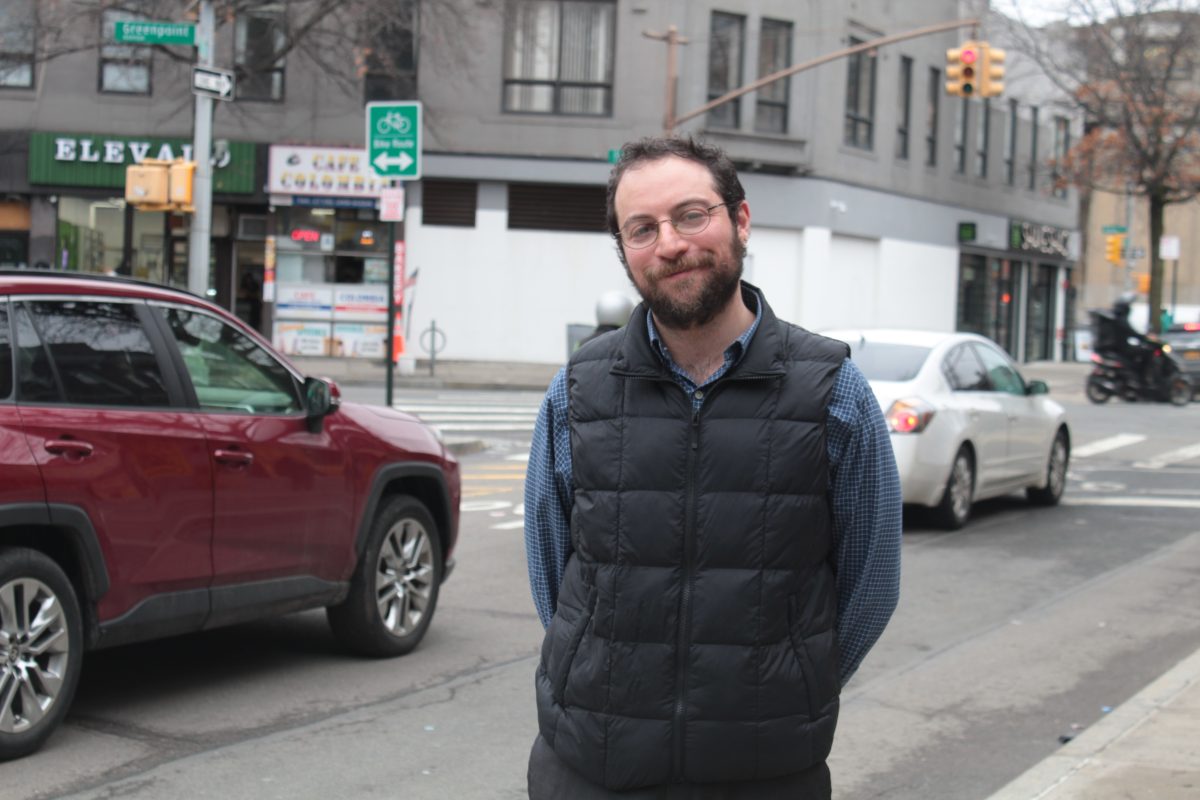
David Orkin stopped by the Queens Ledger’s Sunnyside office on March 6 to discuss his vision for District 38.

Working Class Queens

Orkin’s lived in Ridgewood since 2019, and characterized his district as “the core of the working class” in Queens, a culturally vibrant and diverse corner of the city that’s full of immigrant workers who need an advocate in Albany. 

In neighborhoods like Ozone Park, South Asians make up as much as 20% or more of the population. South Asians also make up a high percentage of the city’s delivery driver workforce, which has much to gain from the kinds of worker protections Orkin has devoted his career to securing. 

“These are people who are working 16 hours a day driving Uber and Lyft,” Orkin said. “And there isn’t a single person in the state legislature, let alone our representative, who says you should not have to work 16 hours a day to make a living.” 

While Rajkumar — who’s gone unchallenged in the past two elections — has been criticized for cozying up to former mayor Eric Adams in what some have perceived as political opportunism, Orkin’s supporters see in him a fighter for the working class and a strong ally to the broader democratic socialist movement. 

Besides DRUM Beats, Orkin’s received endorsements from the NYC-DSA, the New York Working Families Party, Make the Road, and several NYC democratic socialist electeds. 

“It’s very clear that this campaign is not a campaign just to get David elected,” Thind said. “We’re using this campaign to make sure that our immigrant neighbors know their rights, to make sure that we keep workers protected. That is very different from other candidates” 

As far as his legislative priorities, Orkin would immediately sign on to New York For All, a bill that would boost immigrant protections in New York State, as well as introduce legislation to protect delivery drivers and other app-based workers exploitation. 

He’s also a strong supporter of the Build Public Renewables Act, a bill that would empower the New York Power Authority to build state-owned renewable energy infrastructure and require that it provide exclusively renewable energy to customers. This kind of legislation, while expensive to implement effectively, would ultimately lower utility costs for New York residents and small business owners alike, Orkin said. 

Socialists in office are betting on funding these programs by raising income taxes on the wealthy and corporations. But to any high earners in the district who may be worrying that the socialists are coming to take their riches, Orkin says fear not: 

“This is the least we can do,” he said. “I promise from the bottom of my heart to all the rich people reading this— you will still be rich.” 

Fill the Form for Events, Advertisement or Business Listing