
Elmhurst’s Surgical Chief Earns Trailblazer Honor
By MOHAMED FARGHALY
mfarghaly@queensledger.com
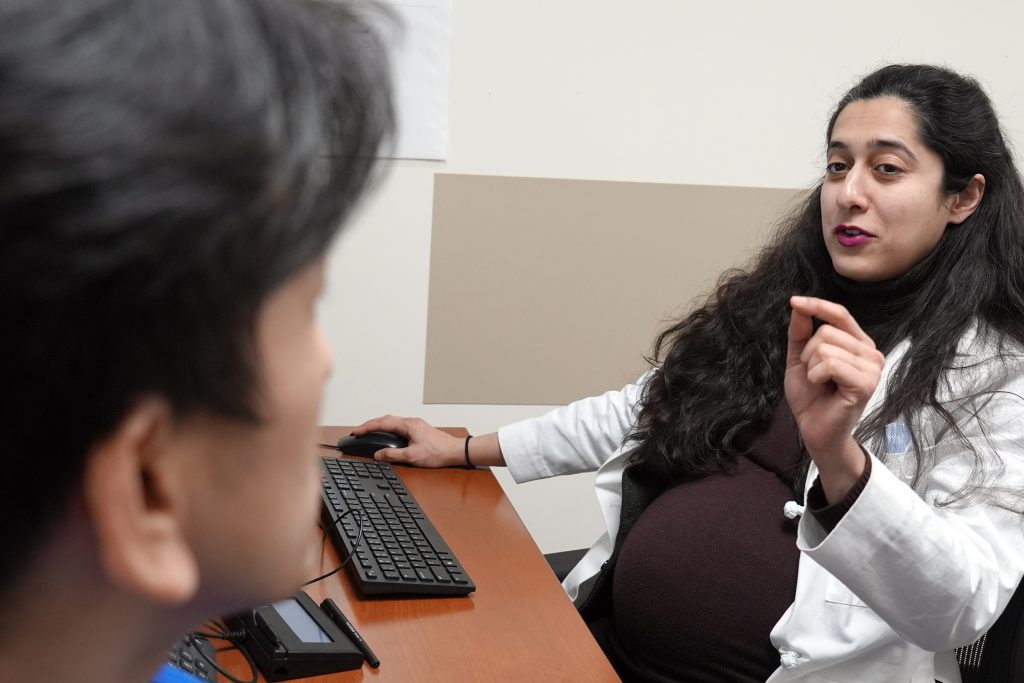
When Dr. Maryam Akbari looks at NYC Health + Hospitals/Elmhurst, she sees more than a workplace. She sees a public hospital that has long served as a backbone for Queens and a place where specialized surgical care can grow alongside the needs of one of the country’s most diverse communities.
Akbari, the hospital’s director of oral and maxillofacial surgery, was recently named to City & State New York’s 2026 “Trailblazers in Health Care” list, which highlights influential figures shaping health policy and care across the state. The annual list recognizes elected officials, executives and advocates whose work is driving change in the sector.
“I’m proud to stand alongside colleagues who are driving meaningful change and ensuring that patient-centered, equitable care remains at the heart of everything we do,” Akbari said. “City & State Health Care Trailblazer recognition underscores the importance of innovation, collaboration, and compassion in health care.”
For Akbari, the recognition is also an opportunity to spotlight Elmhurst Hospital itself. “I’m just thankful to have the opportunity to brag about Elmhurst Hospital,” she said, noting that the facility “has been the backbone of the community” and showed up “big time during COVID times.”
Akbari grew up in Tehran, Iran, and immigrated to the United States about two decades ago after her family completed a long green card process. She arrived just as she was finishing high school and pursued all of her higher education in the U.S., earning an undergraduate degree in Indiana, a dental degree and a master of public health from the University of Pennsylvania, and a medical degree in Louisiana before completing her residency at Mount Sinai.
Her specialty — oral and maxillofacial surgery — blends dentistry and medicine. “It’s a mouthful for most people,” she said. “So most people say OMS.”
During college, Akbari explored research, business and liberal arts courses before settling on dentistry and surgery. What drew her in, she said, was the ability to use technical skill to immediately improve someone’s life. “It was the immediate satisfaction of somebody comes in with a problem, and you could really use technical skills to resolve their problem,” she said.
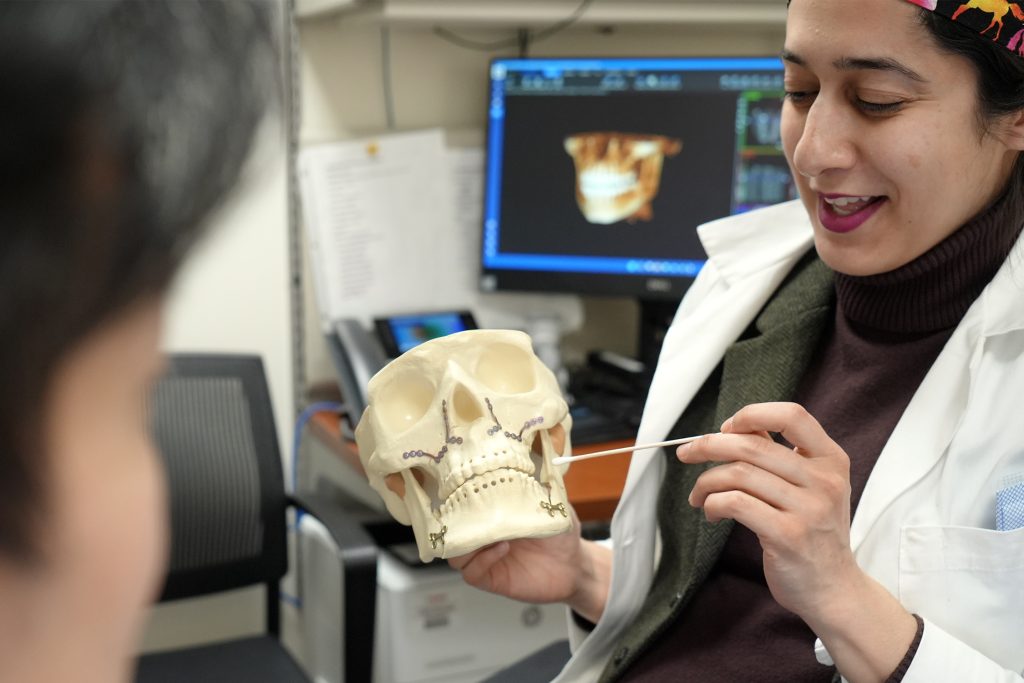
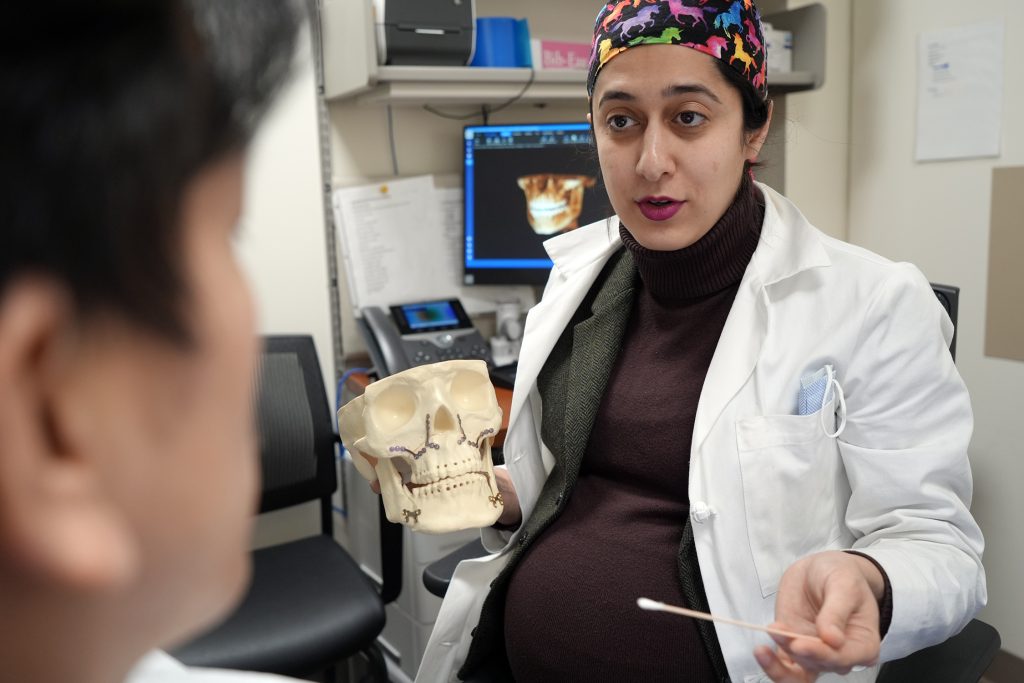
Today, her role at Elmhurst is both administrative and clinical. As director of the service, she helps determine which surgical capabilities the hospital can offer and works with other departments to make those plans a reality, while still spending time in the operating room.
“The ultimate goal of physicians is to provide more services for more patients,” she said, emphasizing that outcomes should be felt directly by the community.
Over the past year, Akbari has led a modernization effort inside a clinic she said needed major upgrades. The department has added updated radiographic technology and is expanding reconstruction services that were previously unavailable to many patients. Elmhurst now offers bone grafting and implant dentistry, giving residents options to restore chewing function and confidence after tooth loss.
“We’re offering bone grafting and implant dentistry, which at least gives the patients the option of restoring and reconstructing their mouth,” she said.
She has also helped build new specialty programs. Working with Elmhurst’s Pride Clinic, Akbari is part of a team offering gender-affirming surgical care, focusing on facial procedures while coordinating with other providers to support transgender patients. The hospital has expanded complex jaw and craniofacial surgeries through the hiring of specially trained orthodontists and surgeons, establishing Elmhurst as a growing hub for cases that require multidisciplinary expertise.
On Tuesdays, Akbari shifts fully into surgical mode, performing jaw, temporomandibular joint and gender-affirming procedures. TMJ conditions can cause chronic pain and dysfunction in the jaw joint, and specialized surgery is often limited in public hospital settings.
Despite the technical complexity of her work, Akbari says the most rewarding part of her job is the patients.
“The most rewarding part of my job is working with Queens community,” she said. “They are so kind and they’re so generous.” Even when asked for feedback on improvements, she said patients often respond with gratitude. “I don’t want to take their kindness for granted.”
The challenges, she said, are familiar to anyone trying to change a large system. Progress rarely moves as quickly as she would like. “The change is never fast enough,” Akbari said. Achieving long-term goals requires breaking projects into smaller steps and maintaining focus despite unexpected hurdles.
As for the Trailblazers recognition, Akbari downplays the personal spotlight and frames it as validation of community-level work. “Change happens in small scales,” she said. “And the change has to be community driven, based on the needs of the community.”
Looking ahead, her priorities center on making care easier to navigate. She hopes to create a more seamless workflow for patients seeking craniofacial, jaw and gender-affirming surgeries, ensuring that from the moment they walk through the door to the completion of treatment, the experience feels coordinated and supportive.
“I want the patients to have a seamless experience from the time they get to the door to when they leave satisfied,” she said.
For Akbari, the honor carries less pressure than purpose. It is, she said, a reminder to keep building a system that reflects the community it serves — one surgery, one upgrade and one patient at a time.