
Community Rallies Against Proposed Energy Facility

Residents Push Back On Battery Site Near P.S. 128

By MOHAMED FARGHALY

mfarghaly@queensledger.com

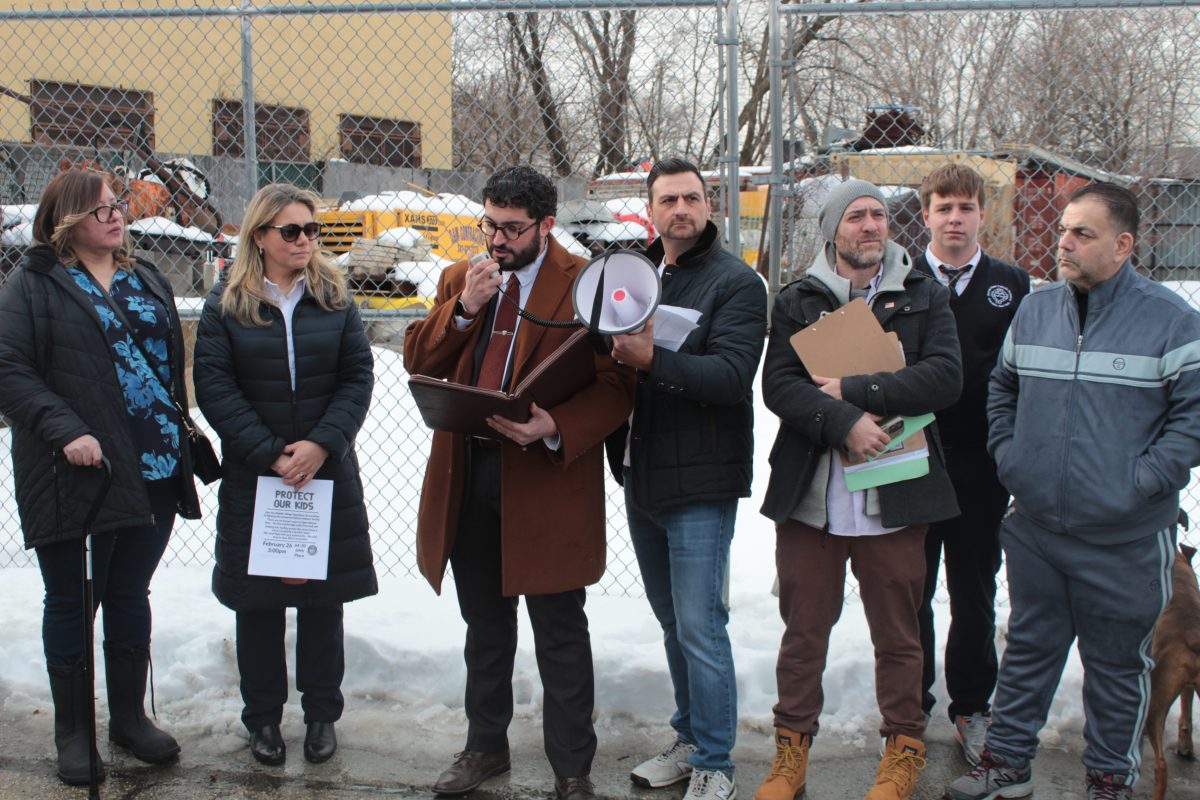
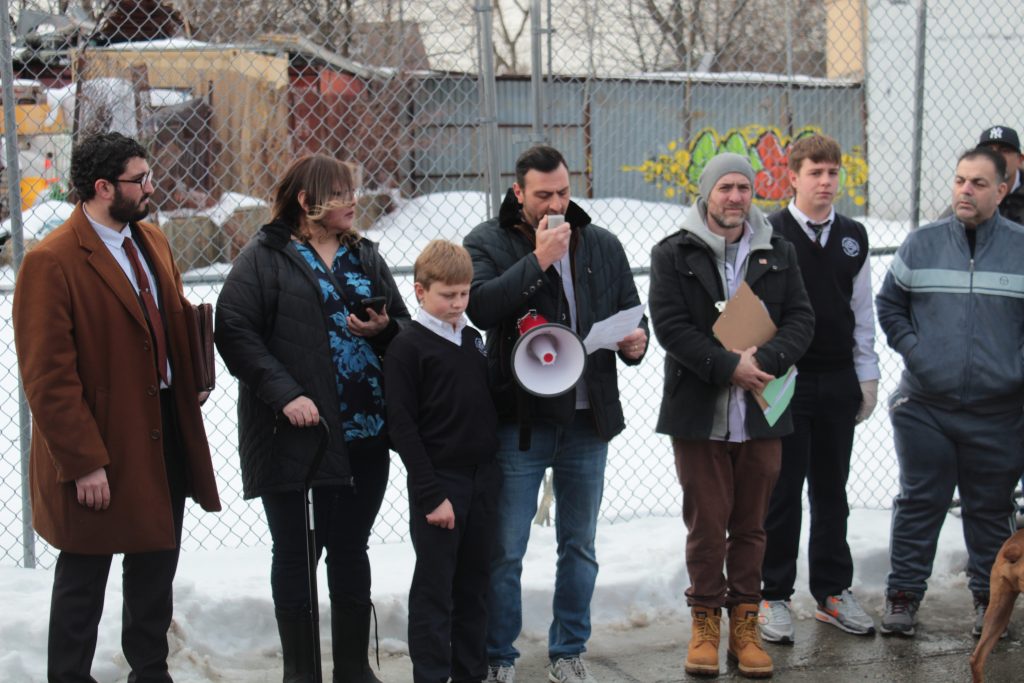
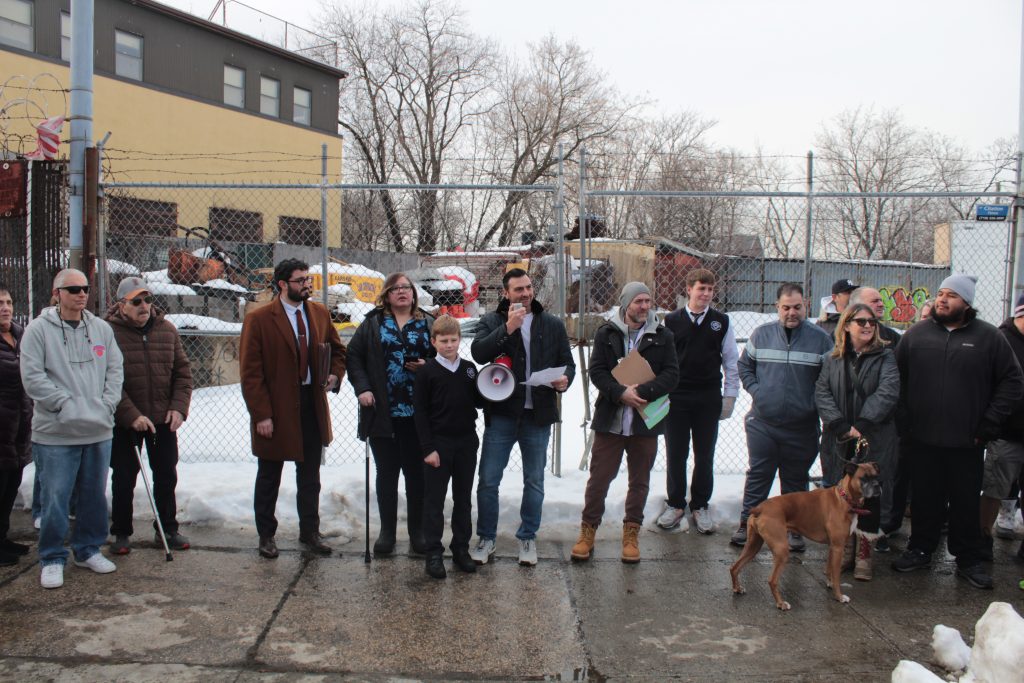
With chants of “Protect our kids” echoing down 69th Place, residents and local lawmakers gathered Feb. 26 to denounce plans for a lithium-ion battery storage facility proposed for 64-30 69th Place, a site directly across from P.S. 128 and just steps from a daycare, preschool and animal hospital.

Organized by the Middle Village Property Owners and Residents Association, the protest drew families, elected officials and community advocates who argued that the proposed site is inappropriate for a dense residential neighborhood.

NineDot Energy, a Brooklyn-based clean energy company founded in 2019, began the process last April to build the facility. The company has developed similar shipping container-style battery storage sites across the five boroughs. According to government data, there are 83 such facilities citywide, including 20 in Queens.

The New York State Energy Research and Development Authority says battery energy storage systems capture and hold energy for later use, strengthening the state’s renewable energy grid. But residents raised concerns about safety, noise and transparency, pointing to a battery fire in Warwick, New York, that burned for more than three days in December.

Paul Pogozelski, president of the Middle Village Property Owners and Residents Association and a father of three, opened the rally by thanking attendees and police for issuing a sound permit.

“Let me be clear, we are not against clean energy,” Pogozelski said. “We are against the placing of a lithium battery storage facility in the middle of our residential neighborhood directly across from the school.”

He emphasized that Middle Village is home to “families, seniors and small businesses,” not heavy industry.

“NineDot Energy says this project is safe,” he said. “Fine, then let’s prove it.”

Pogozelski formally invited NineDot to attend an upcoming association meeting to provide “a full public presentation and answer questions, not pre-screened, but for both leadership and residents, because our community deserves real answers.”

He posed a series of concerns: Who would be responsible for emergency response and long-term environmental impacts if a fire broke out? Who would remove and dispose of batteries at the end of their life cycle? If the company were to go under, would there be a reserve fund for removal? Who would pay for property damage?

“These facilities have fans that run all day and transformers,” he said. “This is going to be a noise complaint from all the neighbors that live right there. It’s going to be a hindrance to our children as well.”

He also criticized what he described as a lack of outreach.

“While permits were being filed and plans were advancing, our community was told nothing, no public meetings, no notice, no transparency,” Pogozelski said. “That is not representation, that is silence.”
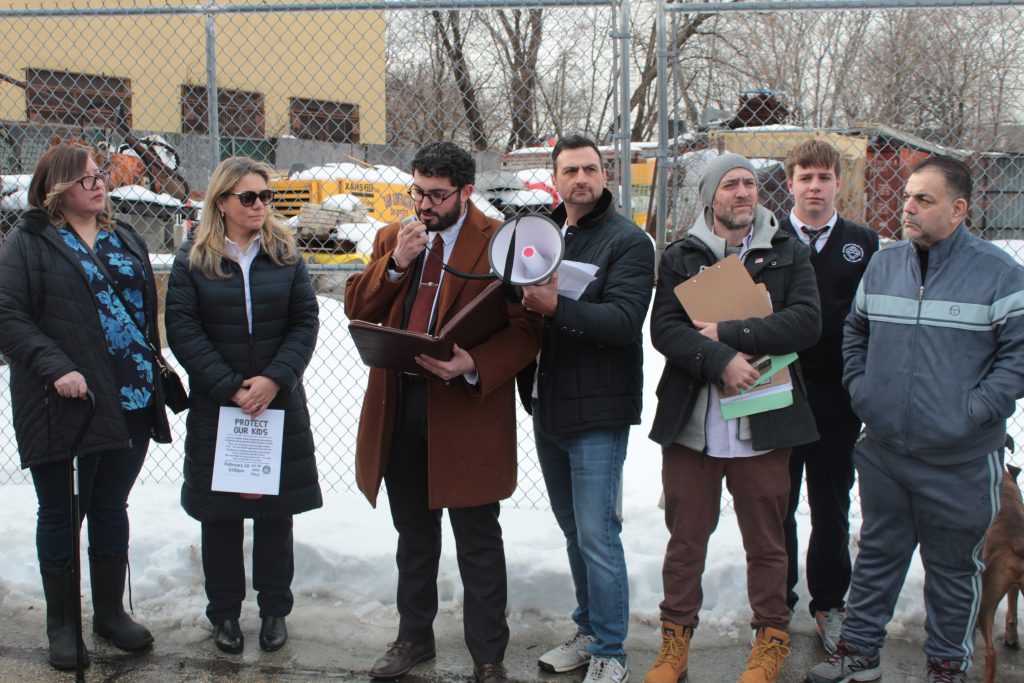
Raimondo Graziano, chief of staff to State Sen. Joseph Addabbo Jr., said the opposition is focused on location, not the technology itself.

“We are here today because location matters,” Graziano said. “We are opposed to the siting of this facility directly across from P.S. 128.”

He noted that proposed battery storage systems must meet strict safety standards and receive FDNY approval.

“This is not about questioning the legitimacy of the technology. It is not about using charged language, and it is not about opposing clean energy,” Graziano said. “It is about siting.”

Battery storage, he added, is part of the state’s broader energy strategy. “We need reliable power. We need a modern grid. But that does not mean every proposed location is appropriate.”

Placement adjacent to a school community, he said, should face a particularly high threshold.

“Parents deserve to feel comfortable. Educators deserve clarity. Residents deserve meaningful input before major infrastructure is placed in their immediate environment,” Graziano said. “This is not the right location.”

Council Member Phil Wong echoed that message, framing the rally as a direct appeal to city officials and the company.

“We’re here to deliver a really simple message that we don’t want a lithium ion battery plant here. We don’t want it. It’s that simple,” Wong said.

He criticized what he described as limited public disclosure under the city’s zoning and permitting processes.

“They don’t have to tell us anything if they have the permits,” Wong said. “So why are we here? Because we don’t want it.”

Wong cited the presence of P.S. 128, a nearby annex where teachers are trained, a pre-K center and an animal hospital.

“All it takes is one incident to burn down this whole neighborhood,” he said. “FDNY cannot even put them out. They just let them burn.”

Wong said he has met with federal, state and local officials, including members of Congress and the borough president, and that a joint statement opposing the site was issued. He added that a constituent has proposed purchasing the lot from NineDot at “dollar for dollar,” and that alternative vacant sites near the Brooklyn-Queens border have been offered.

“So far, they’re in good faith,” Wong said of the company. “They are negotiating. They’re still talking.”

For some parents and local community members, the issue is personal.

Rick Saleh, who attended the rally with his daughter, said he learned about the project only a week earlier.

“My kids literally go to school across the street,” Saleh said. “How something that could affect kids so bad is being slid underneath the carpet without nobody knowing about it, this should have never even been a thought in anybody’s idea, whether it’s the people that are buying the property to build it or the people that are approving them to do it.”

Cynthia Stubbs, a Maspeth resident who works as a tax preparer and could not attend because of work, said she was struck by what she viewed as a lack of school representation. “I thought that was very strange,” she said, referring to the absence of school officials despite the project’s proximity to P.S. 128. Stubbs said she does not believe the facility belongs “in such a residential neighborhood” and has sought more information about potential alternate sites mentioned by Council Member Phil Wong. After calling his office to request a list of proposed alternatives, she said she was told the request would be passed along. “I don’t think they’re going to make that list available,” she said. “I don’t think they want to be that transparent.”

Linda Lena, a longtime Middle Village homeowner who owns two properties and helped her son purchase a home near the proposed site, said her concerns are both personal and practical. “I’m really concerned,” she said, noting the location directly across from a school. A teacher herself, Lena questioned why no school officials appeared at the rally and said she contacted the school seeking clarity on its position. “There’s something going on,” she said, adding that she has encouraged others to email administrators.

As the rally concluded, organizers repeated their central demand: move the facility to a more industrial area and provide greater transparency.
From Tehran To Queens, A Surgeon Redefines Care

Elmhurst’s Surgical Chief Earns Trailblazer Honor

By MOHAMED FARGHALY

mfarghaly@queensledger.com

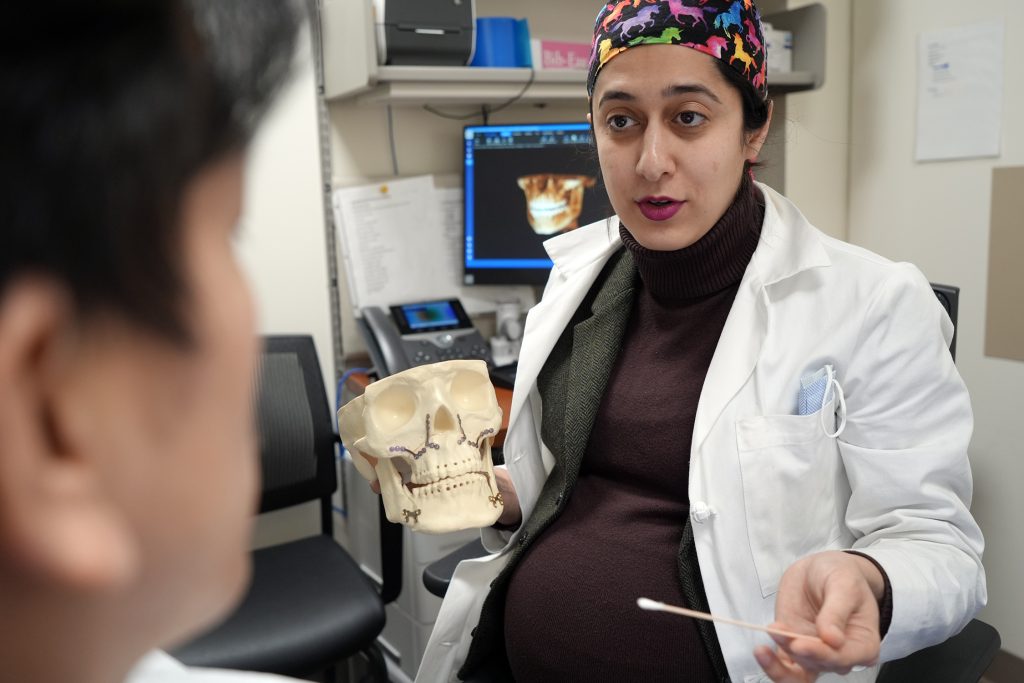
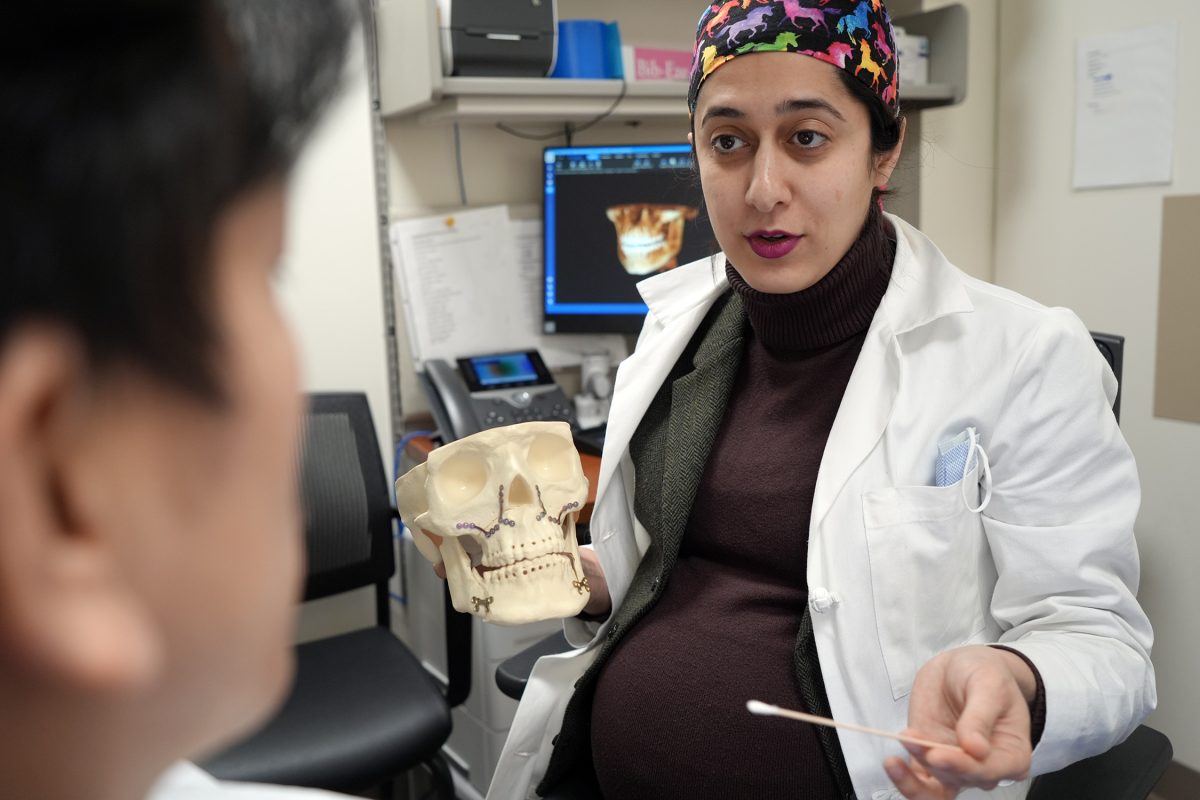
When Dr. Maryam Akbari looks at NYC Health + Hospitals/Elmhurst, she sees more than a workplace. She sees a public hospital that has long served as a backbone for Queens and a place where specialized surgical care can grow alongside the needs of one of the country’s most diverse communities.

Akbari, the hospital’s director of oral and maxillofacial surgery, was recently named to City & State New York’s 2026 “Trailblazers in Health Care” list, which highlights influential figures shaping health policy and care across the state. The annual list recognizes elected officials, executives and advocates whose work is driving change in the sector.

“I’m proud to stand alongside colleagues who are driving meaningful change and ensuring that patient-centered, equitable care remains at the heart of everything we do,” Akbari said. “City & State Health Care Trailblazer recognition underscores the importance of innovation, collaboration, and compassion in health care.”

For Akbari, the recognition is also an opportunity to spotlight Elmhurst Hospital itself. “I’m just thankful to have the opportunity to brag about Elmhurst Hospital,” she said, noting that the facility “has been the backbone of the community” and showed up “big time during COVID times.”

Akbari grew up in Tehran, Iran, and immigrated to the United States about two decades ago after her family completed a long green card process. She arrived just as she was finishing high school and pursued all of her higher education in the U.S., earning an undergraduate degree in Indiana, a dental degree and a master of public health from the University of Pennsylvania, and a medical degree in Louisiana before completing her residency at Mount Sinai.

Her specialty — oral and maxillofacial surgery — blends dentistry and medicine. “It’s a mouthful for most people,” she said. “So most people say OMS.”

During college, Akbari explored research, business and liberal arts courses before settling on dentistry and surgery. What drew her in, she said, was the ability to use technical skill to immediately improve someone’s life. “It was the immediate satisfaction of somebody comes in with a problem, and you could really use technical skills to resolve their problem,” she said.

Today, her role at Elmhurst is both administrative and clinical. As director of the service, she helps determine which surgical capabilities the hospital can offer and works with other departments to make those plans a reality, while still spending time in the operating room.

“The ultimate goal of physicians is to provide more services for more patients,” she said, emphasizing that outcomes should be felt directly by the community.

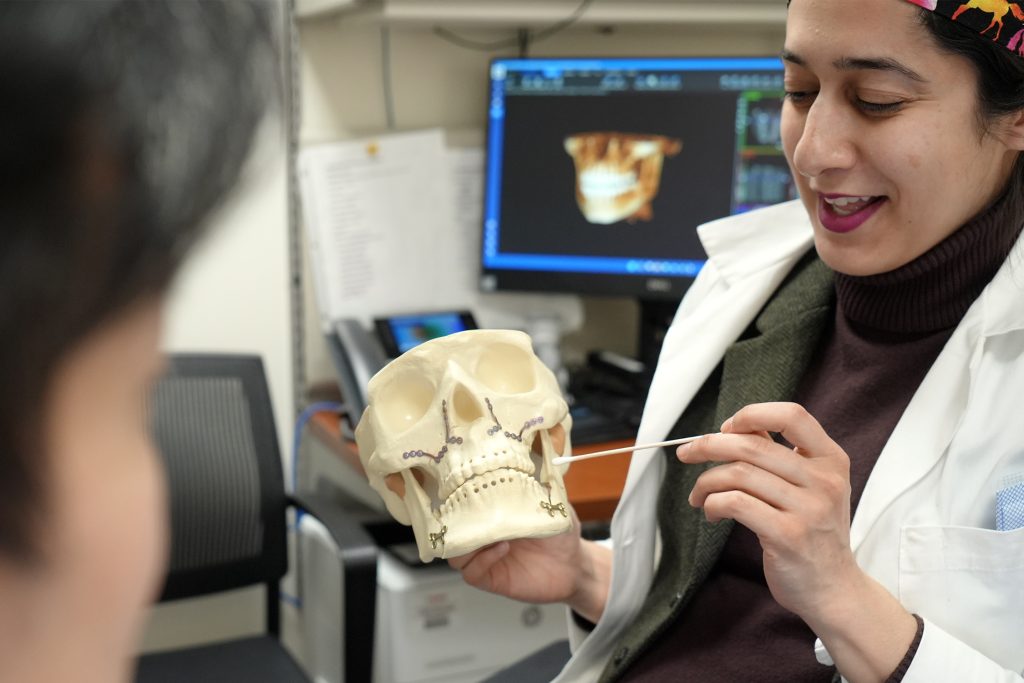
Over the past year, Akbari has led a modernization effort inside a clinic she said needed major upgrades. The department has added updated radiographic technology and is expanding reconstruction services that were previously unavailable to many patients. Elmhurst now offers bone grafting and implant dentistry, giving residents options to restore chewing function and confidence after tooth loss.

“We’re offering bone grafting and implant dentistry, which at least gives the patients the option of restoring and reconstructing their mouth,” she said.

She has also helped build new specialty programs. Working with Elmhurst’s Pride Clinic, Akbari is part of a team offering gender-affirming surgical care, focusing on facial procedures while coordinating with other providers to support transgender patients. The hospital has expanded complex jaw and craniofacial surgeries through the hiring of specially trained orthodontists and surgeons, establishing Elmhurst as a growing hub for cases that require multidisciplinary expertise.

On Tuesdays, Akbari shifts fully into surgical mode, performing jaw, temporomandibular joint and gender-affirming procedures. TMJ conditions can cause chronic pain and dysfunction in the jaw joint, and specialized surgery is often limited in public hospital settings.

Despite the technical complexity of her work, Akbari says the most rewarding part of her job is the patients.

“The most rewarding part of my job is working with Queens community,” she said. “They are so kind and they’re so generous.” Even when asked for feedback on improvements, she said patients often respond with gratitude. “I don’t want to take their kindness for granted.”

The challenges, she said, are familiar to anyone trying to change a large system. Progress rarely moves as quickly as she would like. “The change is never fast enough,” Akbari said. Achieving long-term goals requires breaking projects into smaller steps and maintaining focus despite unexpected hurdles.

As for the Trailblazers recognition, Akbari downplays the personal spotlight and frames it as validation of community-level work. “Change happens in small scales,” she said. “And the change has to be community driven, based on the needs of the community.”

Looking ahead, her priorities center on making care easier to navigate. She hopes to create a more seamless workflow for patients seeking craniofacial, jaw and gender-affirming surgeries, ensuring that from the moment they walk through the door to the completion of treatment, the experience feels coordinated and supportive.

“I want the patients to have a seamless experience from the time they get to the door to when they leave satisfied,” she said.

For Akbari, the honor carries less pressure than purpose. It is, she said, a reminder to keep building a system that reflects the community it serves — one surgery, one upgrade and one patient at a time.

The Green Agenda Collides with Affordability Promises

ROBERT HORNAK

FORMER EXECUTIVE DIRECTOR OF THE QUEENS REPUBLICAN PARTY

RAHORNAK@GMAIL.COM

Robert Hornak is a veteran political consultant who previously served as deputy director of the Republican assembly leader’s NYC office and as executive director of the Queens Republican Party. He can be reached at rahornak@gmail.com and @roberthornak on X.

There’s no other way to say it, there are many people who are obsessed with CO2 and how much humans are emitting.

This obsession ignores the fact that over the last 20 years, CO2 emissions in the U.S. have decreased by at least 20%. After a significant shift from coal to “cleaner” natural gas, CO2 emissions decreased from their high in 2007 of 6.1 billion metric tons to 4.7 billion metric tons in 2024. This was the target established in the 1997 Kyoto Protocol, 5% below the 1990 level of 5 BMT.

Natural gas is now the top source of electricity in the U.S. giving us 43% of our energy with coal dropping to 16%, in large part due to the lower cost of natural gas. So, energy costs should be either holding steady or even dropping, but they aren’t.

This is thanks to the Democrats obsession with further reducing CO2 and by primarily doing that relying on wind power, which is now fourth in our supply of energy at 10%. Wind power is dramatically driving up the cost of energy in NY, and will continue to make the cost exponentially worse over time. NY is focused primarily on offshore wind, which is estimated to be 2.6 times the cost of onshore wind and 3.4 times the cost of natural gas.

Estimates by green power pronents are raising alarm bells in NY. The New York State Energy Research and Development Authority recently sent a memo to Gov. Hochul that coming increases in electricity cost will be crushing for NY families, predicting $3,500 a year in additional cost per home annually. Some predict it could be as high as $4,000.

So according to best estimates that’s almost an additional $300 a month in electricity cost, for every single family. Heads are exploding among people promising affordability for New Yorkers. This undermines their entire agenda.

It’s so bad that Hochul’s state budget director recently said the Climate Leadership and Community Protection Act (CLCPA) was “well intentioned” but that changes will be needed, calling his estimate of an additional $3,000 for NY’s families “unacceptable.” Well, isn’t that a relief?

The CLCPA was the law passed in 2019 that mandated NY to change how the state’s energy is produced. It set the target at 70% of all electricity to come from “renewables” by 2030, and for all energy produced carbon free by 2040.

Never missing an opportunity to undermine their own objectives, NY lost over 9% of it’s renewable production when Indian Point was closed in 2021 (nuclear still provides 18.6%). That was mostly replaced with natural gas, not wind or solar, which still only make up approximately 4% and 3% of NY’s energy, respectively.

Realizing their horrendous miscalculation, Hochul is now indicating she will move forward with her proposal to increase nuclear energy production in NY. But they are still wedded to their costly offshore wind plans.

In a recent decision, they managed to convince a judge to put five offshore wind projects back online after the Trump administration recognized this plan for what it is – a losing proposition for NY rate payers.

This seemingly schizophrenic approach is a desperate attempt to satisfy both the green ideologues and families across the state grappling with ever increasing costs, driven by bad public policy.

And this doesn’t take into account the changing digital landscape, with AI, crypto, and the growing digital economy on the verge of radically transforming our society, and transforming how we use energy.

NY needs to take this seriously and focus on the three sources that reliably and efficiently provide 72% of all the states power – natural gas, nuclear and hydro- power. Wind power is ideologically driven expensive folly that the people can no longer afford to indulge.

Riders Alliance Demands Fair Fares

Miranda Neubauer

News@Queensledger.com

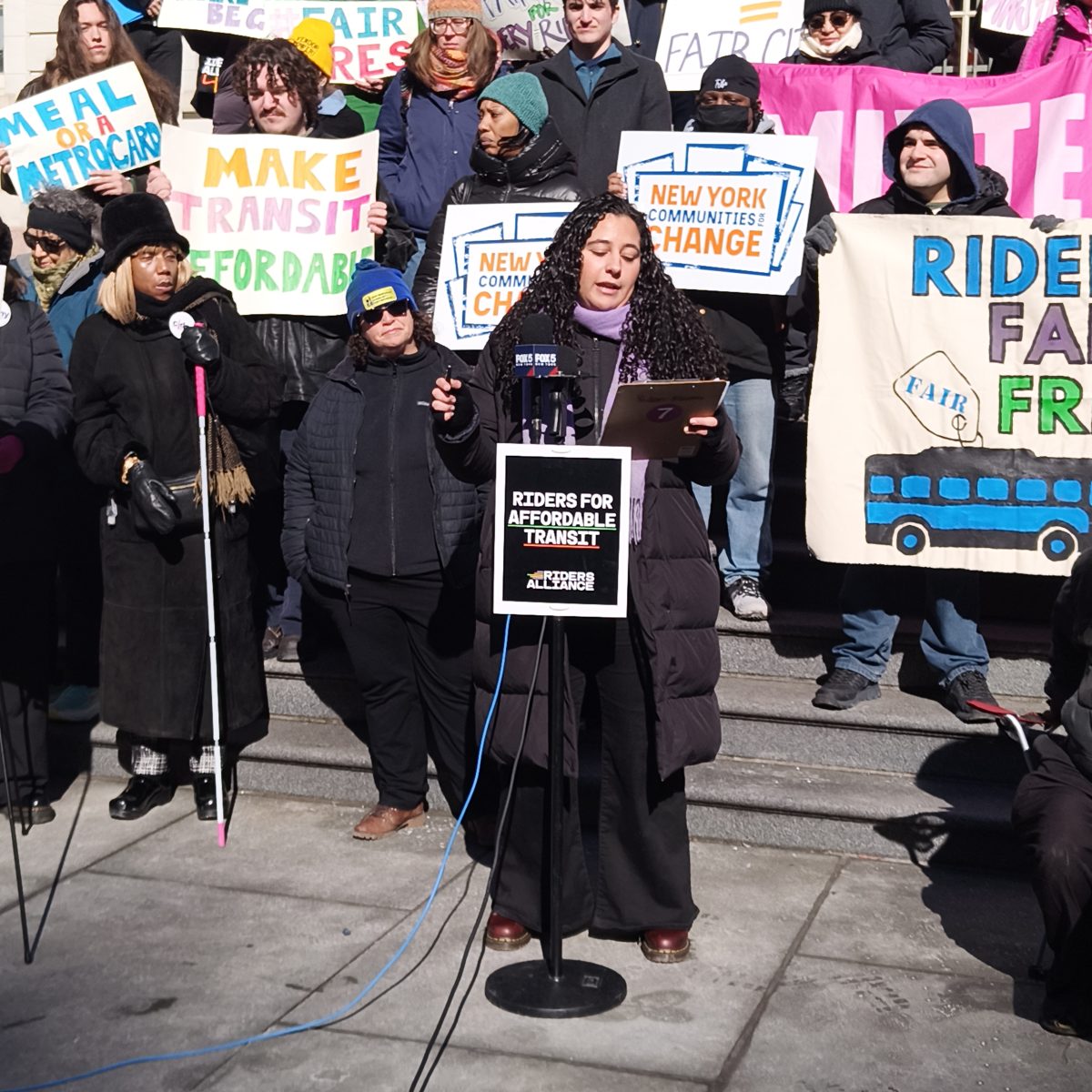
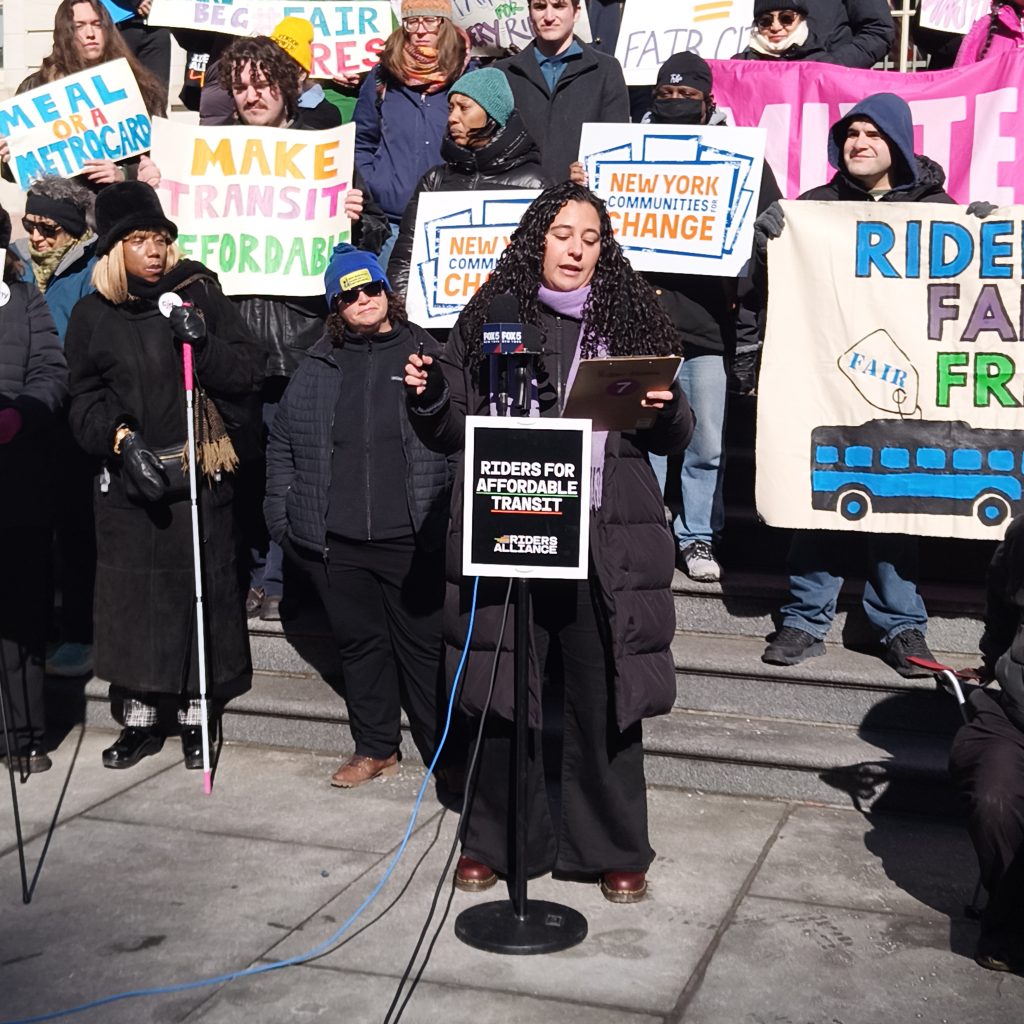
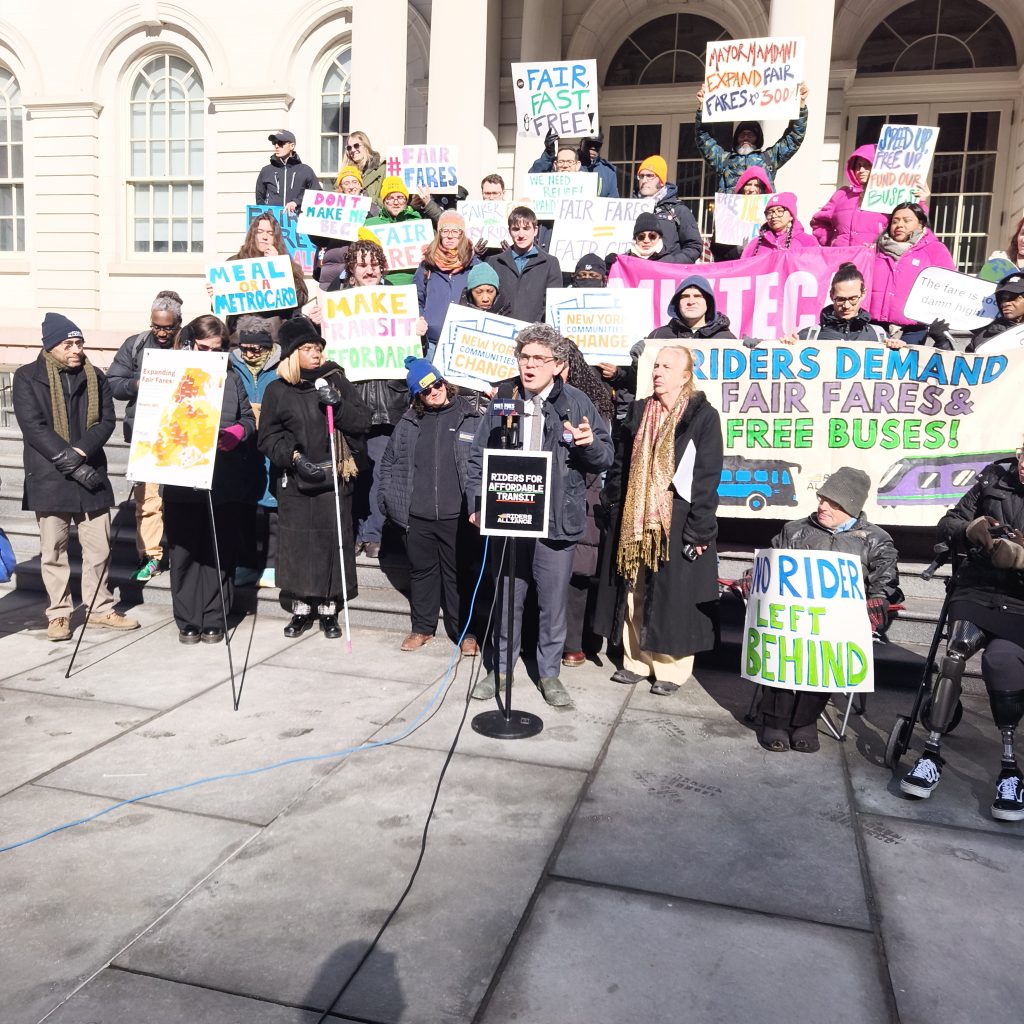
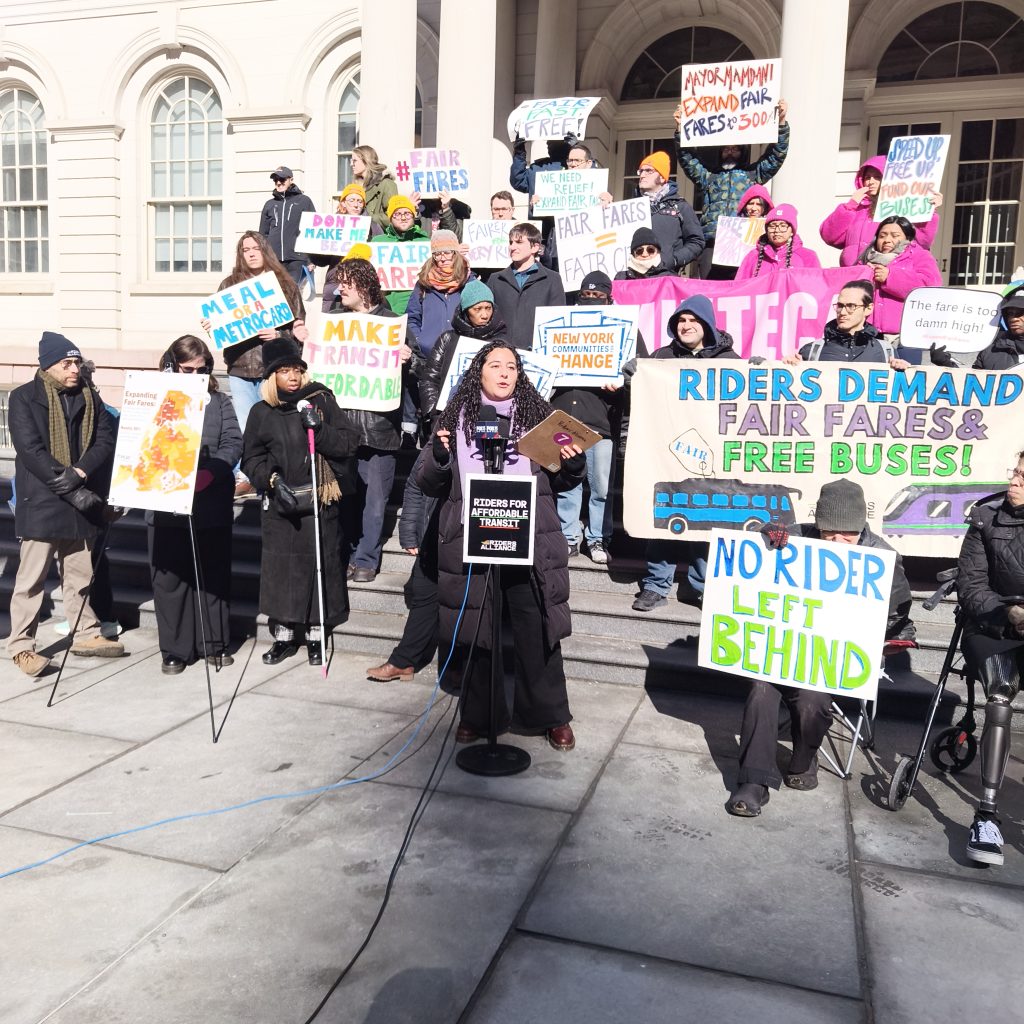
A new coalition led by transit advocacy group Riders Alliance gathered in front of City Hall on Wednesday February 4th demanding an expansion of and easier access to the Fair Fares program, which offers a 50 percent transit fare reduction . The advocates had gathered on the occasion of Transit Equity Day in memory of Rosa Parks and especially emphasized how better transit access overall was crucial for immigrants and people with disabilities. 

In 2025, eligibility for the program was expanded from 120 percent of the federal poverty level to 145 percent through $20 million in city funding. The advocates are calling for an expansion to New Yorkers at or below 150 percent or 300 percent of the federal poverty level. 

“We are looking to make sure that New Yorkers who are above minimum wage … folks who are working full-time, part-time, qualify,” said Dana Dennis, a senior organizer for Riders Aliance. 

“Currently, many New Yorkers qualify for the Fair Fares program but don’t know about it and coud greatly benefit,” said Reginald Thomas Brown, a chair person of the board of social advocacy group Vocal NY, who said he had paid the full fare before realizing he would be eligible because of a disability.

Brown also called for automatic enrollment for eligible customers. He recalled how he had to go down to the MTA customer service center on Stone Street in Lower Manhattan in connection with the switchover to OMNY. 

City Council member Gale Brewer said automatic enrollment wouldn’t take too much technology. “Private sector folks are always finding ways to enroll you in things you don’t want to be enrolled in, so why can’t we be enrolled in something we want to be enrolled in?” she asked, adding that she had also found it difficult just to sign up for the senior OMNY card. She also called for more advertising of the program, especially in buses.. 

“Paris has twice the number of bus riders than New York City. We should be competing with all world capitals to get more people on the bus,” said new Manhattan Borough President Brad Hoylman-Sigal.“

Kara Gurl, planning and advocacy manager for the Permanent Citizens Advisory Committee to the MTA, said 30 percent of New Yorkers would benefit under an expansion to up to 300 percent of the poverty level. “That’s over one million more riders than are eligible today.” She pointed to a report that PCAC co-released with other groups in December, which found that in 37 of 51 Council Districts over 25 percent of their residents would be eligible under such an expansion. “That’s more than enough to decide an election.” 

“One of the big issues that the administration said is we are going to make government more efficient. This is the way to make it more efficient,” said Hildalyn Colon, Chief Operations and Strategic Officer at New Immigrant Community Empowerment.

 “Just yesterday morning, before I even opened the doors…,a lady came to me and asked for assistance in applying for Fair Fares,” said Vianey Romero, director of programs at Mizteca, an immigrant support non-profit in Sunset Park. “She mentioned how it was challenging and overwhelming for her to pay the fare. She had to walk from her house to Mizteca instead of taking the bus and subway to seek assistance,” Romero said. “Free buses, expanded Fair Fares and faster bus service would immediately change their lives. It would reduce the need for fare enforcement and allow people to move throughout the city without fear of punishment for being poor.”

Sharon McLennon, executive director of Center for Independence of the Disabled, pointed to the need for changes to the Acess-A-Ride program, with its requirements for pre-registration a day before, payment of the full-fare and long, inconvenient trip routes. “That is not a fair, equitable service,” she said. “So as you demand a Fair Fare increase, we demand free Access-A-Ride for all users, because … one day you may not be able to take a bus or a train,” she said, and cited the installation of new elevators in some stations as a result of years long advocacy and lawsuits.

“If less than one percent of the city budget can fund free buses and can move us toward free subways for those who need it the most, then the real question is not whether we can do this, it why we haven’t done it already,” said Kashif Hussein from the Public Advocate’s Office.

Councilmember Lincoln Restler said Mamdani’s campaign call for fast and free buses was a direct result of the initial advocacy for Fair Fares over five years ago from groups like the Riders Alliance. “Because of the success of Fair Fares, we have been building and building to a point where we just elected a mayor who is demanding that we make our transit more affordable, more accessible and faster for all of us.”

Middle Village residents continue to weigh in on rezoning low density plot to develop 7-story building

Mrinali Dhembla

News@Queensledger.com

Residents and members of community board five gathered at the cafeteria of Christ the King High School on Metropolitan Ave for their monthly board meeting Wednesday evening. 

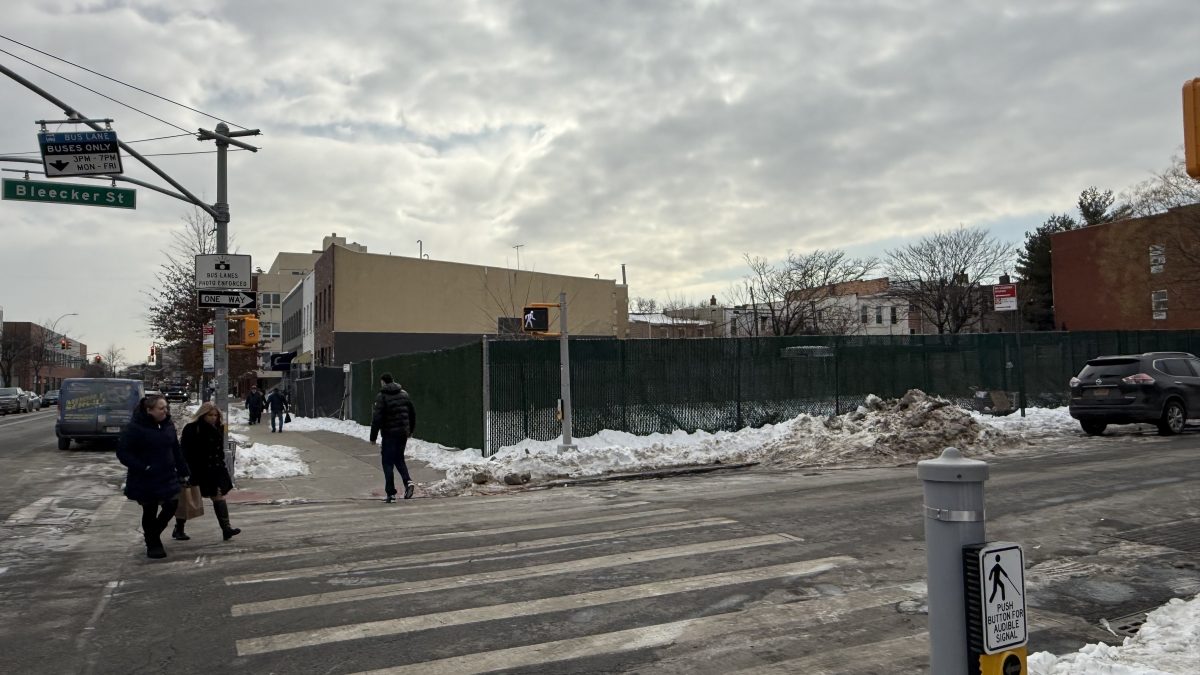
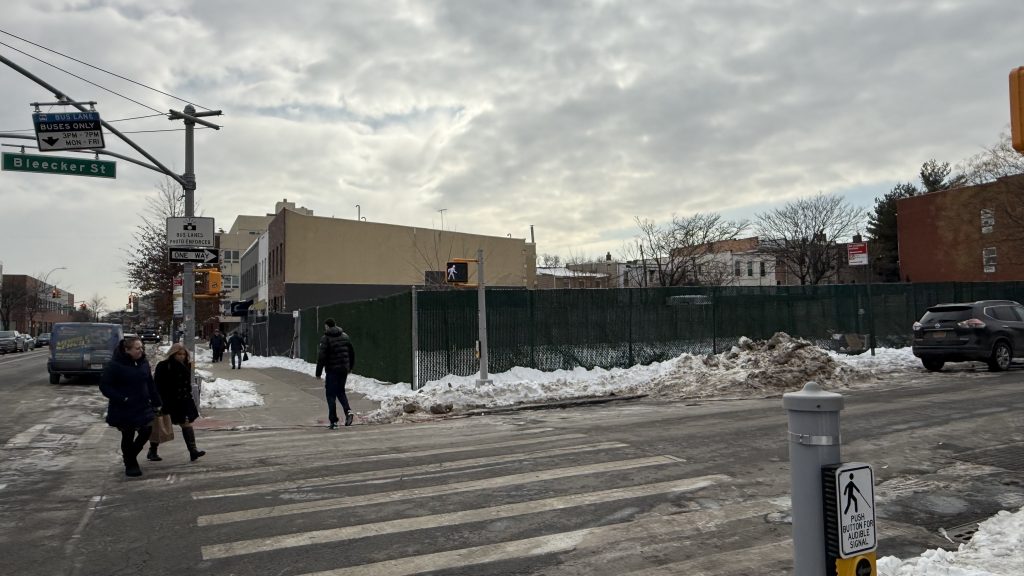
Top of the agenda was a presentation from Adam Rothkrug, the zoning counsel for Rosa’s Pizzeria on Metropolitan Ave that wants to develop a seven-story, 54-unit property, with 19 parking spots on an empty lot on Fresh Pond Road between Bleecker and Menahan Streets. 

“We think it is a beautifully designed building in an appropriate corner location, opposite a manufacturing unit,” Rothkrug told the Queens Ledger, adding that his team would be open to discussing allowing community use of the property. “If Ridgewood is looking to have some affordable housing, this is an appropriate location.” 

The owners of the property plan to designate 7,000 square-feet for commercial use, and 13 to 16 units will be permanently affordable under New York City’s Mandatory Inclusionary Housing rules, which require certain developers to set aside a certain percentage of affordable units in a new development. 

“The city is looking at districts in the city that have produced the least amount of affordable units, and community board five falls within that,” Rothkrug said, noting that there will be no studios planned in the project, which is unusual.

To go ahead with the project, the empty plot on Fresh Pond Road will need to be rezoned from current lower-density R5b district with a commercial overlay to an R6a, which will allow the said project to be the highest-density and tallest building — 73 feet — on the block. 

“One of my key recommendations was that the parking space is inadequate,” said Councilman Phil Wong. “I also recommended that the building be shorter.”

Some residents think the new project will jack up rent prices, and highlighted that the proposed application sets aside affordable units in the project at 60 percent and 80 percent of area median income, which would fix the monthly price of a one-bedroom at $1,800 and $2,500 respectively. 

“I am scared that this rezoning does not reflect the incomes in this neighborhood. When one property gets upzoned, others follow,” Middle Village resident Ezra Kohn, who also testified at the meeting, told the Queens Ledger. “These prices are out of reach for neighborhood residents, especially those who live in rent-stabilized apartments.”

The project was proposed to the community board nearly four years ago, and was certified in January of this year. This issue will be turned over to the land use committee now, which will vote on it next month. 

Representatives of Outreach Development Corp.— an organization that provides behavioral health services and drug-and-alcohol abuse treatment — that has had a working relationship with the community for a while, highlighted its outreach training institutes, certified community behavioral health clinics and inpatient facility for teens (aged 12 to 18) in Ridgewood. 

The clinic provides same-day, or next-day crisis support for adults and teens, and families regardless of income levels and health insurance status. In addition, it has psychiatry services, music therapy and gym to help teens in recovery. 

“If you’re interested at all, we can come on-site to partner schools, wherever else that you might work, to help connect folks to care,” said a representative from the corp., adding that on the request of the board, the organization will also assist in providing Narcan-training and Narcan-kits to the community. 

Councilman Phil Wong addressed the issue of the construction of NineDot’s lithium battery plant proposed at 64-30 69th Place, directly across from PS/IS 128, which has sparked community outrage. He said the negotiations with NineDot were still ongoing, and that he had proposed a new site for the plant.

“We all know when there is a fire, FDNY will just stand there and wait for the fire to put out,” Councilman Wong said, echoing the concerns of the residents . “There is no way to put out lithium ion fires.”

The next monthly community board meeting will take place on Wednesday, March 11th at 7:30 p.m. 

Fill the Form for Events, Advertisement or Business Listing