
NYC Mayor Warns: Tax the Rich or Burden Working Families
By MOHAMED FARGHALY
mfarghaly@queensledger.com
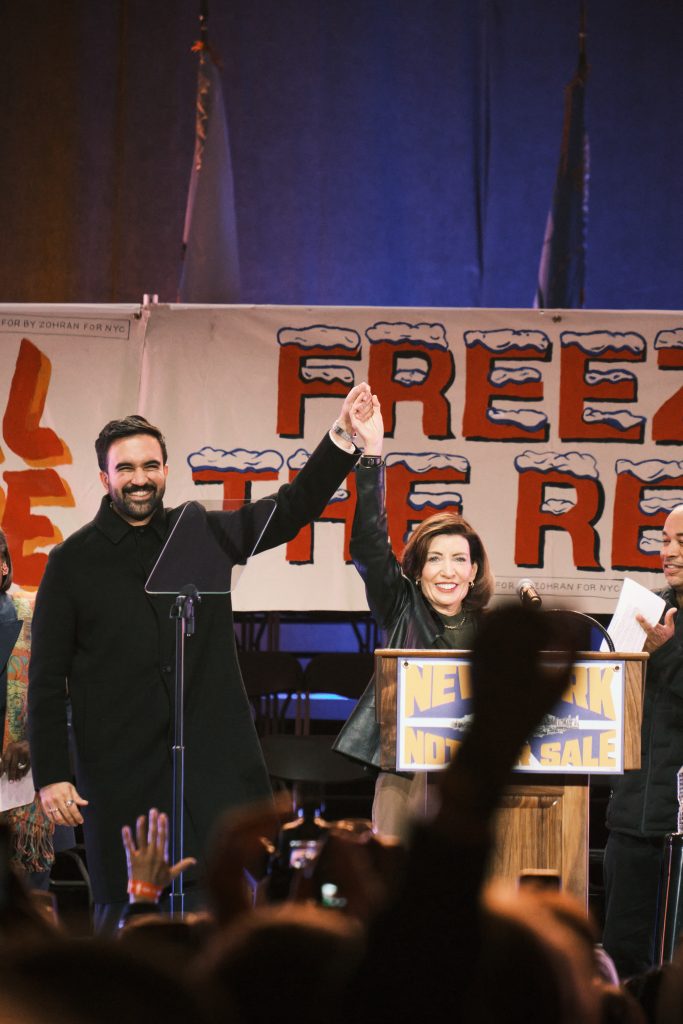
New York City Mayor Zohran Mamdani is threatening to raise property taxes if Gov. Kathy Hochul does not approve a tax hike on high earners and profitable corporations, escalating a fiscal standoff between City Hall and Albany.
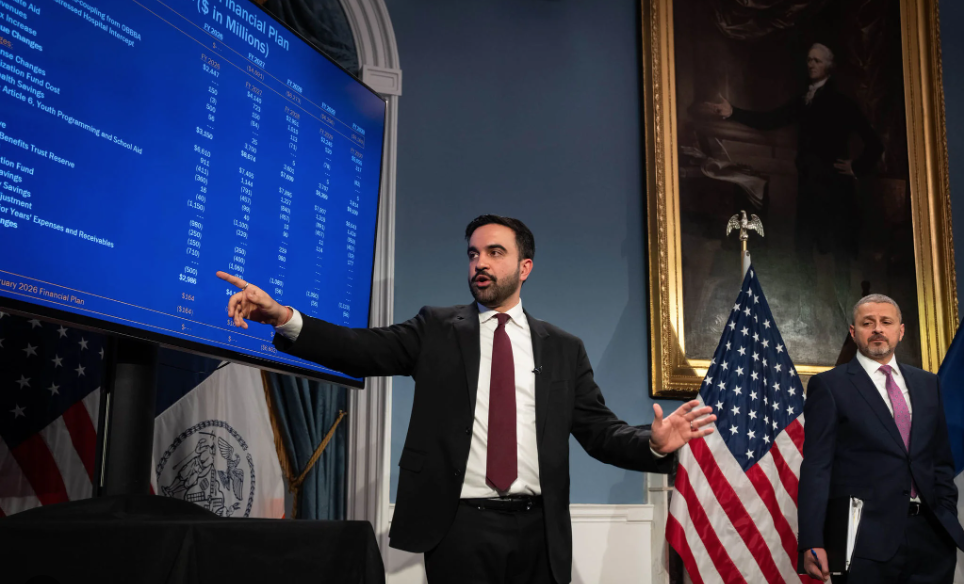
In his $127 billion preliminary budget for fiscal year 2027, Mamdani framed the city’s finances as a crisis inherited from the prior administration and presented what he described as two clear paths forward: raise taxes on the wealthy with state approval, or increase property taxes and draw down reserves.
“There are two paths to bridge the city’s inherited budget gap. The first path is the most sustainable and fairest: raising taxes on the wealthiest and corporations, and ending the drain by fixing the imbalance between what the City provides the State and what we receive in return,” said Mayor Zohran Kwame Mamdani. “If we do not go down the first path, the City will be forced to go down a second, more harmful path of property taxes and raiding our reserves — weakening our long-term fiscal footing and placing the onus for resolving this crisis on the backs of working and middle-class New Yorkers. We do not want to have to turn to such drastic measures to balance our budget. But, faced with no other choice, we will be forced to.”
Mamdani said the projected two-year budget gap now stands at $5.4 billion, down from an earlier estimate of roughly $12 billion. The administration credited $1.77 billion in savings initiatives, $7.3 billion in revised revenue projections and $1.5 billion in additional state support.
Absent new revenue authority, the budget assumes a 9.5 percent property tax rate increase, projected to generate $3.7 billion in fiscal year 2027. It also calls for using $980 million from the Rainy Day Fund and $229 million from the Retiree Health Benefit Trust to meet the city’s legal requirement to balance the budget. Adjusting the property tax rate is one of the few tools available to a mayor, and it has not been done since former Mayor Michael Bloomberg was in office.
Most of the roughly $9 billion increase over the current budget fills underbudgeted essential services such as rental assistance, shelter operations and special education. The plan includes $576 million in new targeted spending, including snow removal, additional attorneys and expanded food assistance.
The proposal drew swift criticism from local officials.
Queens Borough President Donovan Richards Jr. called the proposed increase unacceptable.
“As I told Mayor Mamdani this afternoon, a property tax hike upwards of 9.5 percent, as considered, is a nonstarter. Under no circumstance should we consider balancing our budget on the backs of working-class New Yorkers, especially seniors on fixed incomes and public sector workers who keep our city running,” said Borough President RICHARDS.
Christie Peale, CEO and Executive Director of the Center for NYC Neighborhoods, warned of displacement.
“New York City’s working-class homeowners are the foundation of strong, vibrant neighborhoods across New York. … We must not balance the budget by accelerating the displacement of long-time New Yorkers with increased property taxes. We hope to work with the Administration to strengthen and expand homeownership for working-class New Yorkers.”
City Comptroller Mark Levine said the financial picture is severe but cautioned against relying on property taxes and reserves.
“Our city is under the greatest fiscal strain since the Great Recession, despite a strong economy and record revenues from Wall Street. We are legally required to balance our budget, but it will not be easy.”
“To rely on a property tax increase and a significant draw-down of reserves to close our gap would have dire consequences.”
City Council Speaker Julie Menin and Finance Chair Linda Lee signaled resistance in a joint statement.
“At a time when New Yorkers are already grappling with an affordability crisis, dipping into rainy day reserves and proposing significant property tax increases should not be on the table whatsoever.”
Public Advocate Jumaane D. Williams framed the debate as a choice between taxing the wealthy and burdening working families.
“Someone has to pay for the gaps left behind by the gross mismanagement of the previous administration – and the governor can decide who. Either the wealthiest New Yorkers can pay their fair share, or working class New Yorkers will see their costs raised and possibly services cut.”
Council Member Phil Wong also rejected the proposal.
“Any proposal to raise property taxes by nearly 10 percent is a nonstarter for the hardworking families I represent and for me.”
As budget hearings approach, the fight now shifts to Albany, where Hochul has drawn a line against raising income and corporate taxes. Whether state leaders reconsider or the city moves forward with a property tax increase could define the coming fiscal year for millions of New Yorkers.