

Housing Advocate Samantha Kattan Enters District 37 Contest
By MOHAMED FARGHALY
mfarghaly@queensledger.com
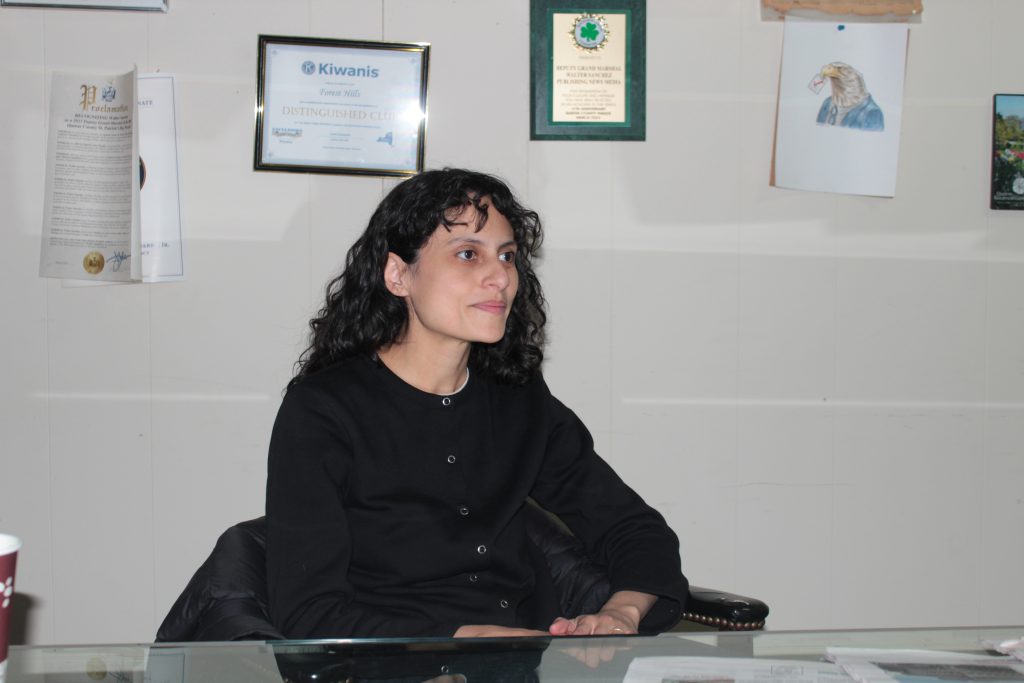
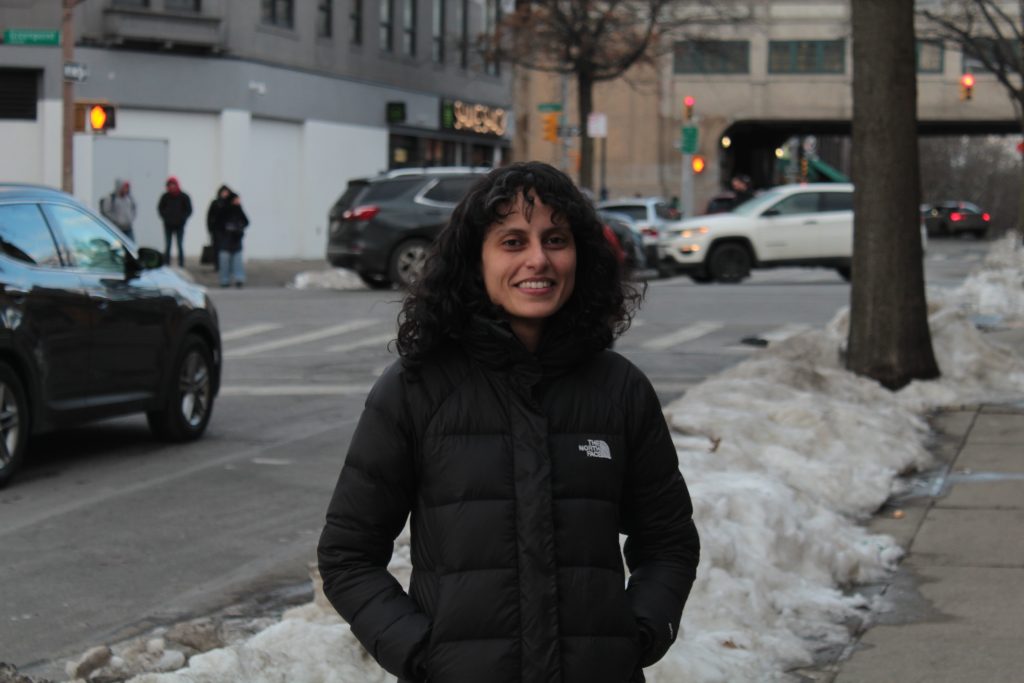
Samantha Kattan says the first political education she received came from watching her hometown transform. Growing up in Austin, Texas, she saw a once under-the-radar city rapidly gentrify and swell in population, reshaping neighborhoods and pricing out residents. That experience pushed her toward urban planning and, eventually, tenant organizing in New York, work that now anchors her campaign for the seat currently held by Assemblymember Claire Valdez in District 37.
Kattan, who has lived in New York for more than a decade, is running as a Democratic Socialist with a platform centered on housing justice, universal child care and expanded social services. She argues her years knocking on doors as a tenant organizer prepared her for Albany more than traditional political pathways.
“There’s more tenants than landlords,” Kattan said. “When people know their rights and figure out smart strategy together, we actually have a lot of power as tenants. The tenant movement is in a very strong place right now.”
Kattan studied urban planning at University of Texas at Austin, drawn to questions about how cities grow and who benefits. But she left graduate school wanting to push for change from outside government.
After moving to Brooklyn in 2014, she helped co-found tenant associations and neighborhood groups, including a Brownsville and East New York coalition called HOPE — Housing Organizers for People Empowerment. The work often began simply: gaining access to a building, knocking on doors and asking residents about leaks, heat outages or landlord disputes.
She said she was struck by how often strangers welcomed organizers inside.
“People are very grateful that there’s someone at their door asking them about this,” she said. “They’ll say, ‘Yes, actually, let me show you what’s going on with my ceiling.’”
Kattan later worked with limited-equity housing cooperatives, a model she sees as a blueprint for long-term affordability. When those co-ops function well, she said, they preserve community in neighborhoods that would otherwise turn over rapidly.
“You can compare a rental building in a gentrifying neighborhood that’s next door to one that’s been a co-op for decades,” she said. “They look identical from the outside, but one has been able to cultivate this long-term community.”
She supports policies that would expand alternative ownership models and tenant opportunities to purchase buildings. She also backs a rent freeze for stabilized units, dismissing landlord arguments that it would simply push up market-rate rents.
“Landlords are already charging as much rent as they can,” she said. “We need to question why we believe that housing needs to be so profitable. It’s rooted in the idea that housing should be extremely profitable for a small number of people.”
Kattan lives in Ridgewood, where she has spent about six years, after earlier years in Brooklyn. She works for the Urban Homesteading Assistance Board, where she previously directed organizing and now handles contracts and administration.
Her campaign priorities expanded after the birth of her daughter, now 14 months old. She is calling for permanent funding for universal child care and longer guaranteed parental leave in New York, saying temporary commitments leave families uncertain.
“When people are planning their futures and whether to have kids, it’s good to know that whatever is in place now is going to be there in a few years,” she said.
Her own child care currently relies on help from her mother, who lives nearby. Kattan pairs her push for child care with calls to raise taxes on corporations and the wealthy to fund social housing and family programs.
She is also campaigning on immigrant protections, backing the New York for All Act, which would limit cooperation between local law enforcement and federal immigration authorities, and the MELT Act, which would bar masked immigration agents from interacting with civilians. Both proposals are aimed at curbing the reach of U.S. Immigration and Customs Enforcement.
Kattan says she would run her district office less as a traditional constituent service shop and more as a hub for civic organizing. She envisions interactive budget town halls structured like workshops, where residents work in small groups to identify priorities and strategies.
“I love the idea of structuring those in a way that are more interactive,” she said. “I want people to say ‘I’m an active part of this process too. What do I want to see in the budget, and how can I get involved?”
She said housing clinics in her office would include support for tenants who want to form associations, linking individual complaints to collective action.
Kattan has been endorsed by Valdez, whom she met through neighborhood organizing and the Democratic Socialists of America. She describes her campaign as part of a broader socialist slate focused on coordinated strategy in Albany.
Something planners taught her, she said, is how deeply issues overlap.
“Housing intersects with racial justice and immigration issues and environmental issues,” she said. “You really get a sense for that when you study planning.”
District 37 stretches from Long Island City through Sunnyside, Ridgewood and parts of Maspeth encompassing renters, co-op owners and working-class homeowners. Kattan says her experience helping co-op residents navigate taxes and insurance gives her credibility beyond tenant organizing.
She has criticized proposals to place casinos on public land in Queens, calling them a missed opportunity for community-oriented development, though she acknowledges supporters point to job creation. By contrast, she supports expanding public transit and is broadly in favor of the proposed Interborough Express rail link connecting Queens and Brooklyn.
She is also wary of large lithium battery storage facilities proposed in residential areas and said safety concerns should be taken seriously as lawmakers debate siting rules.
Outside policy, Kattan points to the everyday spaces that anchor her neighborhood life. She and her husband frequent Mount Everest Deli for chicken tikka masala and chai, visit a favorite pupusa spot on Fresh Pond Road and spend time at the bookstore cafés Topos, local gathering places run by friends.
As a new mother, she said she is frustrated by the shortage of small parks and green space in Ridgewood and wants to expand family-friendly public areas.
“I want my legacy to be social housing,” she said, before adding another goal: “More little parks within the neighborhood that have grass. More community spaces. Family-oriented public spaces.”
Kattan has been active in advocacy since arriving in New York, traveling to Albany as a tenant organizer and joining electoral work with DSA in 2017. She previously declined suggestions to run for office. Motherhood changed her calculus.
“It changed my idea of what I’m capable of and what kind of role I want to play in the world,” she said. “I’m feeling more ready to take on these fights in a different way.”
She frames her candidacy as an extension of organizing rather than a departure from it.
“My experience as a housing organizer roots me in issues people feel all over the district,” Kattan said. “I approach this work like an organizer. I’m running very proudly as part of a slate that has a strong strategy for passing legislation that’s going to improve the lives of working-class New Yorkers.”