Maspeth Federal Hosts Youth Financial Literacy Workshop


Children Learn Saving Basics at Maspeth Federal Event

By MOHAMED FARGHALY

mfarghaly@queensledger.com

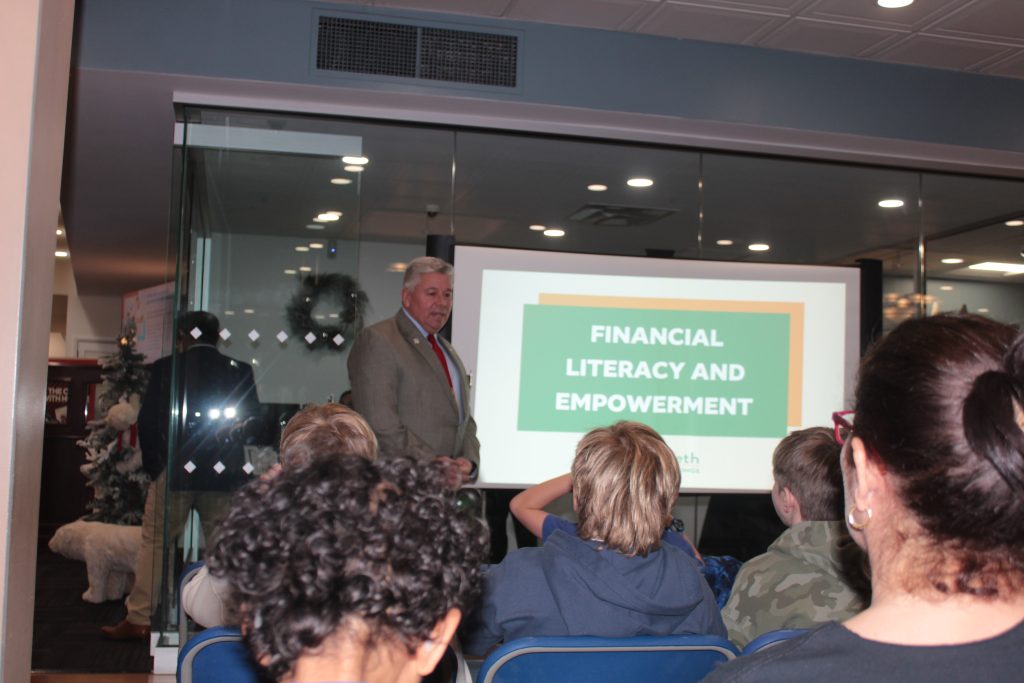
Maspeth Federal Savings hosted a financial literacy workshop on January 13, aimed at teaching children and their families the basics of saving, budgeting and making smart money decisions, using interactive lessons designed to engage students at an early age.

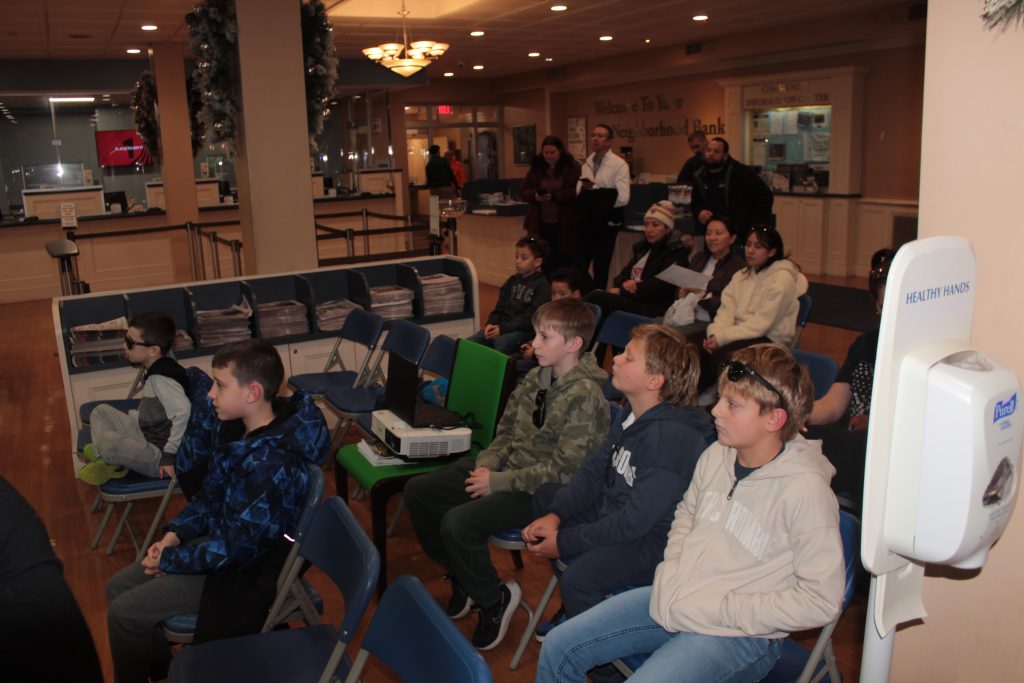
The event, held at the bank’s Maspeth location, brought together children ages 7 to 11 and their parents for a hands-on seminar that blended storytelling, critical thinking and teamwork. Bank staff guided students through a “secret agent” themed activity in which participants were tasked with helping a character named Sammy make better financial choices.

“Our goal is to teach people how to save money,” said Thomas Rudzewick, president and CEO of Maspeth Federal Savings, as he welcomed families and young learners.

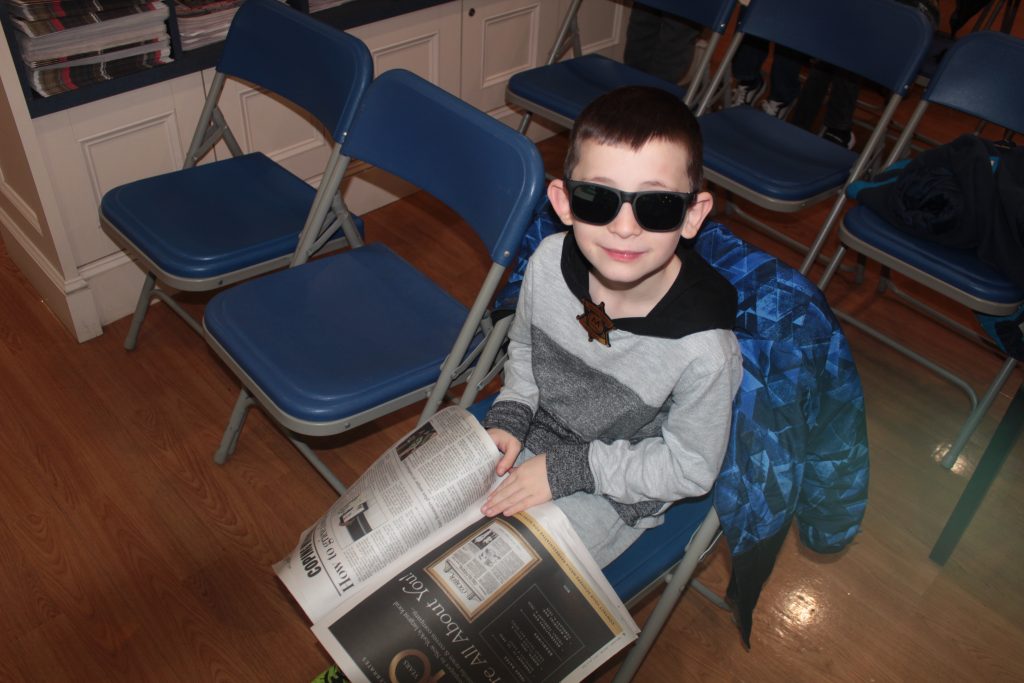
During the program, children became “Maspeth Federal Savings Agents,” using badges and role-playing to identify financial mistakes made by Sammy, a squirrel who wants to buy a $200 video game console. As the story unfolded, students were encouraged to call out poor decisions such as spending too much on candy, failing to keep money in a safe place, and giving up on long-term savings goals too quickly.

Jamie Lynn, a member of the bank’s retail team, led the lesson and explained key concepts in simple terms, including goal setting, patience and tracking spending. “Savings takes time, smart choices and patience,” she told the group, reinforcing the idea that even small amounts of money can add up over time.

Children actively participated by answering questions, raising their hands to point out mistakes, and discussing how Sammy could correct his behavior. Lessons emphasized the importance of keeping money in secure places like a piggy bank or bank account, resisting impulse purchases and staying committed to financial goals.

Parents, meanwhile, had the opportunity to speak with Maspeth Federal Savings staff about products and services designed for young savers, including youth accounts that grow with children as they get older. Bank representatives said these tools are intended to help families build healthy financial habits early and promote long-term financial independence.

The event concluded with a recap of the key lessons learned, including setting clear goals, budgeting and tracking spending. Children were rewarded with applause for their participation and later had the chance to meet the bank’s mascot, Sam the Savings Squirrel, and take photos.

Born in the District, Built by the Community: Brian Romero for District 34 

Lifelong Queens Story: Brian Romero Seeks Assembly Seat

By MOHAMED FARGHALY

mfarghaly@queensledger.com

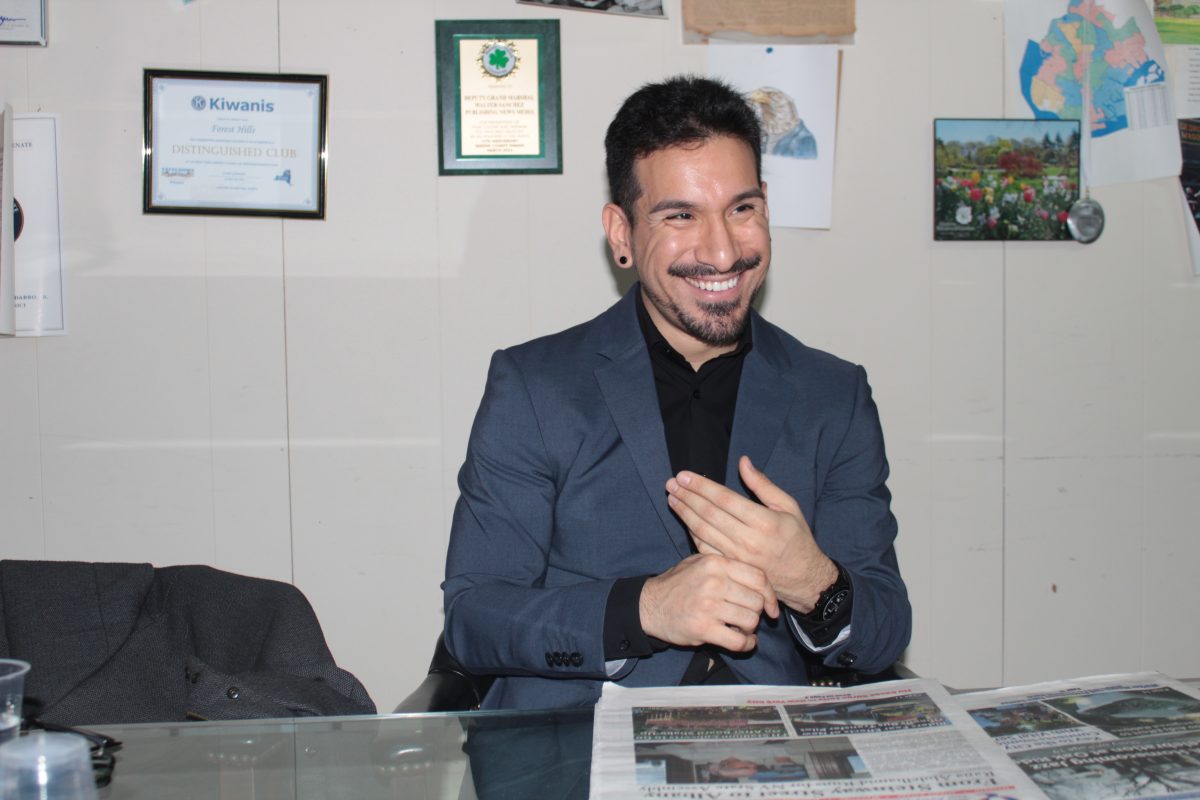
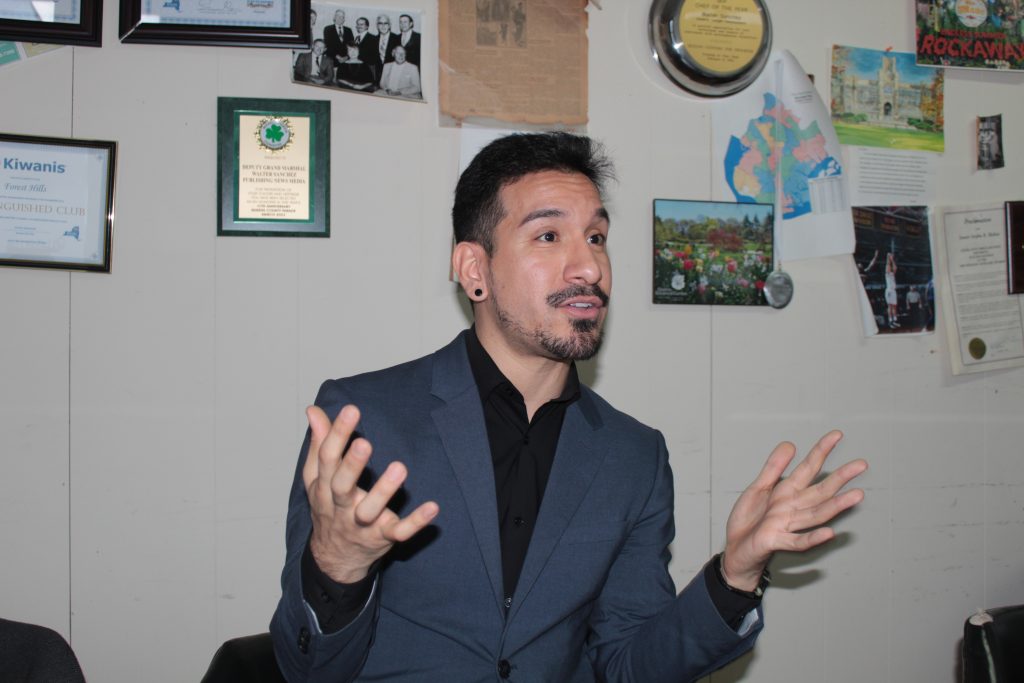
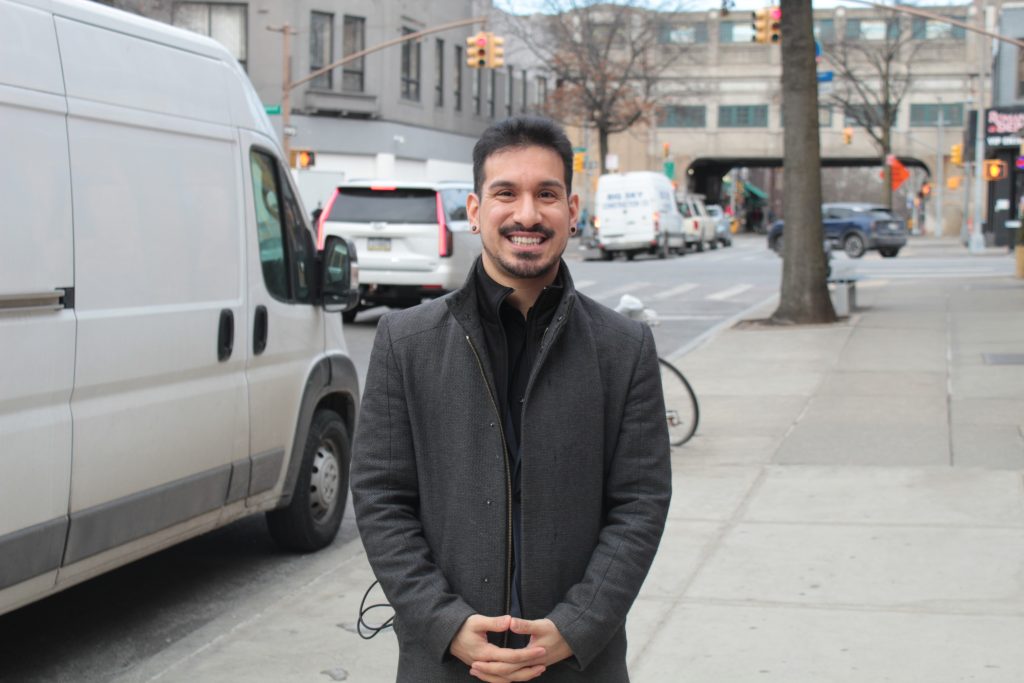
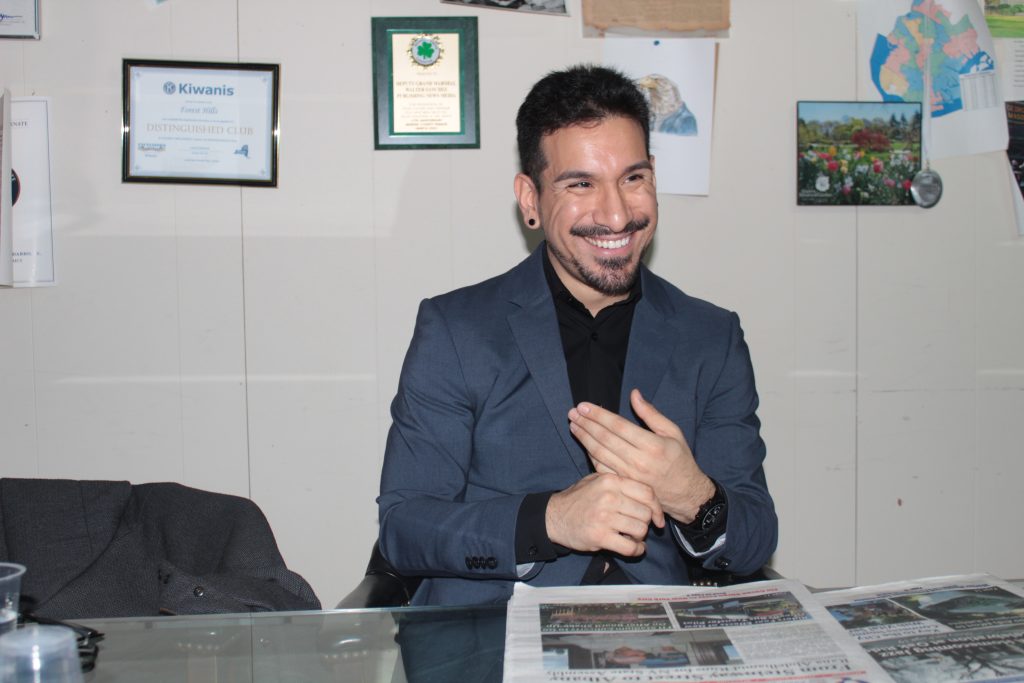
Brian Romero grew up in a flood-prone basement apartment in East Elmhurst, later couch-surfed through homelessness, and spent years working as a social worker and activist in western Queens. Now, the former chief of staff to Assemblymember Jessica González-Rojas is running to succeed her in Assembly District 34, the same neighborhoods that shaped his politics and his life.

Assembly District 34 stretches across parts of East Elmhurst, Jackson Heights, Woodside, Corona and Astoria.

Romero says his candidacy is rooted less in ambition than in lived experience, growing up poor, housing insecure and surrounded by the same pressures facing many families in western Queens today.

“I’ve lived in four of the neighborhoods of this district,” Romero said. “These neighborhoods are very personal to me.”

Romero is the son of Colombian immigrants who arrived in the United States on work visas. His father came first, followed by his mother and older sister; Romero and his identical twin brother were born in New York. The family lived in a basement apartment in East Elmhurst that was not up to code and flooded frequently, an experience Romero says shaped his views on housing and public safety.

“It flooded often,” he said. “We often had to put things above the ground. There were things we couldn’t have on the floor, because we were like, ‘That’s going to be ruined.’ And we had very little.”

When Romero was seven, his family unraveled. His father struggled with alcoholism and was abusive, leading Romero’s mother to leave with three children. She worked multiple jobs but could not keep up with the cost of rent. Eventually, the family became homeless.

Romero spent about a year sleeping on his aunt’s couch. His siblings were separated, staying with relatives and family friends while their mother worked to put the family back together.

“She tried,” Romero said. “Two jobs, three jobs. That’s why all the after-school programs were really important.”

The family eventually resettled in Astoria, chasing cheaper rents — a familiar story for many immigrant and working-class families in Queens. Romero attended I.S. 141, later enrolling at the Academy of American Studies, a Long Island City high school. Unsure of his future, he gravitated toward social work after a conversation with a priest who later became his godfather.

“He said, ‘Maybe you should consider social work. Sounds like you want to help people,’” Romero recalled.

Romero began his higher education at Borough of Manhattan Community College before transferring to John Jay College of Criminal Justice and later Hunter College, earning all of his degrees through the City University of New York. At BMCC, he joined an LGBTQ committee and became politically active, inspired in part by seeing openly gay men, including Danny Dromm and Jimmy Van Bramer, successfully run for office in Queens.

“It was the first time I thought, ‘Wow, people like that can actually win,’” he said.
That activism led to an internship with then-Councilmember Ydanis Rodríguez in 2018 and 2019, where Romero worked on legislation and budget issues while still an undergraduate. But he remained torn between politics and social work, ultimately choosing to pursue the latter.

After graduating, Romero worked in outpatient mental health clinics, including on the Lower East Side, before completing an internship at Rikers Island. The experience was deeply personal: Romero’s twin brother had been incarcerated at age 16, and Romero saw echoes of his family’s trauma in the young men he worked with.

“It wasn’t an easy job,” he said. “But there was something about being closer to those young men and being able to listen and be there for them.”

Romero later provided psychotherapy to young Black and brown men in the city’s juvenile detention system and worked extensively with immigrant communities, LGBTQ New Yorkers and people living with HIV. But he grew increasingly frustrated by the limits of clinical work.

“There’s gotta be something more I can do for them,” Romero said, describing patients who lost care due to insurance cuts, immigration status or poverty. “No matter how much I trained, the system kept failing them.”

That frustration pushed Romero back toward policy. He became a policy manager at the nonprofit GMHC, where he was forced to quickly learn the mechanics of city, state and federal advocacy. During the COVID-19 pandemic, he helped build coalitions around healthcare access, criminal justice reform and the early “tax the rich” movement aimed at stabilizing nonprofits as funding evaporated.

It was during this period that Romero met González-Rojas, who was then running to unseat longtime Assemblymember Michael DenDekker. After she won, she asked Romero to become her chief of staff.

He hesitated, wary of elected office and determined not to abandon activism. Romero made his conditions clear, including continuing to participate in protests, even risking arrest.

“She said, ‘You’re an activist. I’m an activist too,’” Romero recalled. “She told me, ‘I would never stop you from being an activist.’”

Romero stayed for four and a half years. As chief of staff, he helped González-Rojas build relationships across ideological and regional lines in Albany, encouraging her to meet with more than 40 legislators during her first year. He points to the successful campaign for universal school meals as his proudest legislative accomplishment.

“I would not have been nourished as a kid were it not for free breakfast,” Romero said.

Those experiences now inform his pitch to voters. Romero describes himself as “all three”, an activist, a community board member and a legislative staffer — arguing that his background gives him a rare understanding of how policy affects people on the ground.
On public safety, Romero rejects a narrow law-and-order framing, arguing instead that safety is inseparable from affordability.

“I don’t distinguish community safety from the larger questions about affordability,” he said. “When the rent is as high as it is and people can’t afford housing, that is an unsafe situation.”

He supports expanding mental health services, school-based health clinics and access to care for undocumented immigrants, and argues that police are often tasked with problems they are not trained to solve.

“We cannot separate safety from affordability,” Romero said.

Romero has also staked out opposition to the planned casino development in Queens, while acknowledging the appeal of union jobs and new housing.

“I think our community absolutely deserves jobs and affordable housing,” he said. “I just wish we lived in a city and state where we didn’t rely on Steve Cohen to give us all these things.”

If elected, Romero says his priorities would center on three areas: making the wealthy “pay their fair share” to fund public services, protecting immigrant communities through measures like the New York for All Act and access to legal representation, and advancing an affordability agenda that includes social housing, a livable wage and universal childcare.

“No one should have to go through what I did as a kid,” Romero said. “We are treating individuals as disposable when we have such incredible wealth in this state.”
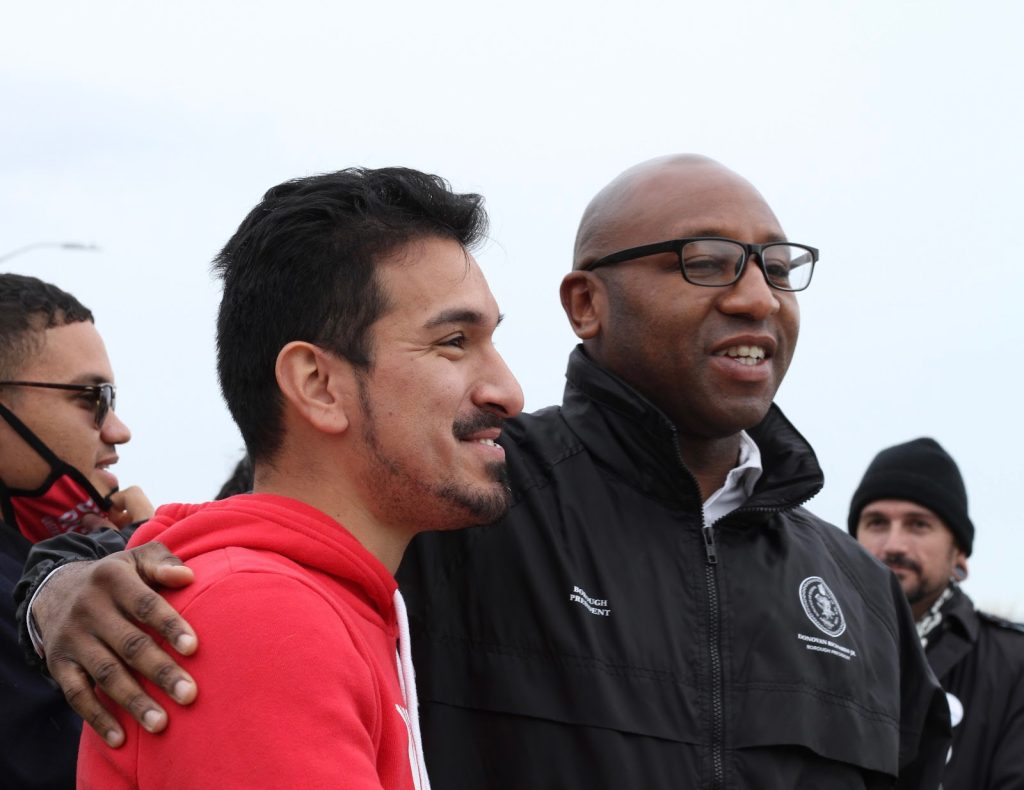
Romero has drawn endorsements from Rep. Nydia Velázquez, Queens Borough President Donovan Richards, González-Rojas, Assemblymember Catalina Cruz, the Working Families Party and City Councilmember Julie Won.

Asked what success would look like after four years in office, Romero returned to the sense of solidarity he witnessed during the pandemic.

“A successful District 34 is one where we all show up for each other,” he said. “Because our livelihoods are connected.”


Democrats Claim Incompetence at Redistricting

Robert Hornak

Robert Hornak is a veteran political consultant who has previously served as the Deputy Director of the Republican Assembly Leader’s NYC office and as Executive Director of the Queens Republican Party. He can be reached at rahornak@gmail. com and @roberthornak on X.

Last week, Judge Jeffrey Pearlman, a Hochul appointee who previously served as Hochul’s Special Counsel as well as her Chief of Staff while she was Lt. Governor, threw out the lines of the 11th Congressional District, represented by NYC’s only Republican House member, Nicole Malliotakis.

The suit, filed by Democrat election law firm Elias Law Group on be- half of four registered New York City voters, claims that the 11th District was drawn, by the Democratic Party, in a way that disenfranchises Black and Hispanic voters. This would actually be the Democrats THIRD attempt at redrawing NY’s congressional lines since the 2020 census.

Drawing politically gerrymandered district lines was made much harder in NY due to a voter referendum passed in 2014 designed to curtail exactly what the Democrats have desperately been trying to do since 2022. The referendum empowered the Independent Redistricting Commission to draw lines once – and only once – every ten years that do not create advantage for either political party.

In other words, NY’s majority of Democrat voters believe that elections should be fair, without the political leadership in control trying to rig the process. This wasn’t really an issue for decades when control of the state legislature was split and both sides had to agree and compromise on the new

lines. But since Democrats took control of both legislatives houses in 2019, they have sought every possible way to undermine the will of the voters of their state.

In 2022, they refused to pass the lines the IRC submitted, and went ahead with their own, constitutionally negligent, redistricting plan. Lawsuits were naturally filed, forcing the state Supreme Court to step in and appoint a special master to handle the once- in-a-decade redrawing of districts in a way that met constitutional requirements. In the 2022 election, after the state lost one seat due to declining population, Republicans performed well with the new, non-partisan lines and picked up three seats, leaving Democrats with a 15-11 majority after an election where the Republican candidate for governor pulled approximately 45% of the vote.

But Democrats were beside them- selves seeing Republicans get their fair share of the state’s congressional seats and brought a lawsuit to redraw the lines once again for the 2024 election. They claimed that by once-in-a decade the state constitution meant once each decade – by the legislature. They argued the court-drawn lines were only meant to be temporary.

A Democrat judge agreed with this argument and gave Albany Democrats another chance. They redrew the lines and after taking back the 3rd district in a special election earlier in 2024, Democrats were able to flip back another three seats in the 2024 General Election. The balance was now 19-7.

Now NY Democrats are trying once again, flouting the will of the voters and the intent of the state constitution, to get yet another attempt to gerrymander the state’s congressional lines. And on the most specious argument – once again.

The lawsuits claims that the growing Black and Hispanic population of Staten Island was disenfranchised by the Democrats who drew the district previously, and therefore, the Republican in office, who is mixed Hispanic and Greek, should have her lines redrawn to include lower Manhattan instead of areas of south Brooklyn that are just across the water and most contiguous to Staten Island.

They claim this would better represent the Island, with its demographics at 56% white and nearly 30% Black and Hispanic, according to the suit. However, if you look at the Statistical Atlas of the US, the demographics of the Island are 62.6% White, 17% His- panic, 10.3% Black, and 8% Asian. For the entire 11th CD it’s 61.6% White, 15.6% Hispanic, 7.5% Black, and 13.3% Asian.

Yes, the percent of Black and His- panic voters did drop slightly, but so did White voters in favor of Asian voters who gained significantly. However,the alleged remedy, cutting out the Asian and Hispanic neighborhoods in Brooklyn and replacing them with lower Manhattan, draws in an area also known for its significant population of Asians and Hispanics, but who are seen as more liberal and reliable Democrat voters.

This is exactly what NY voters tried to prevent in their 2014 referendum and hopefully the appeal will overturn a very bad decision by a very partisan judge.

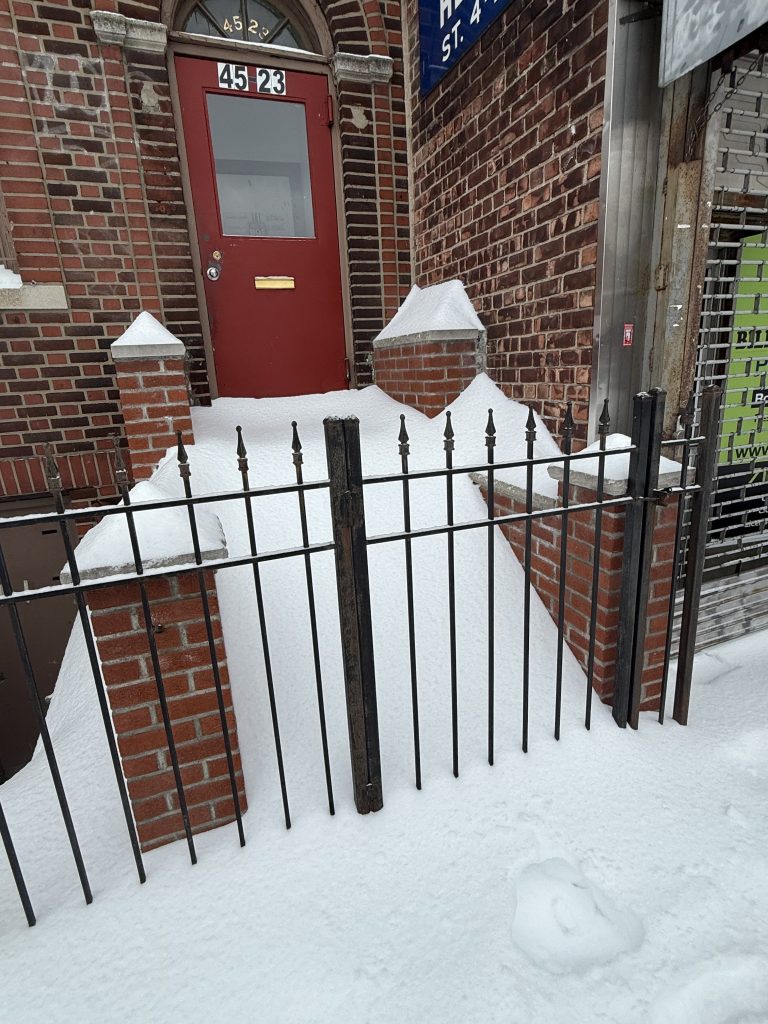
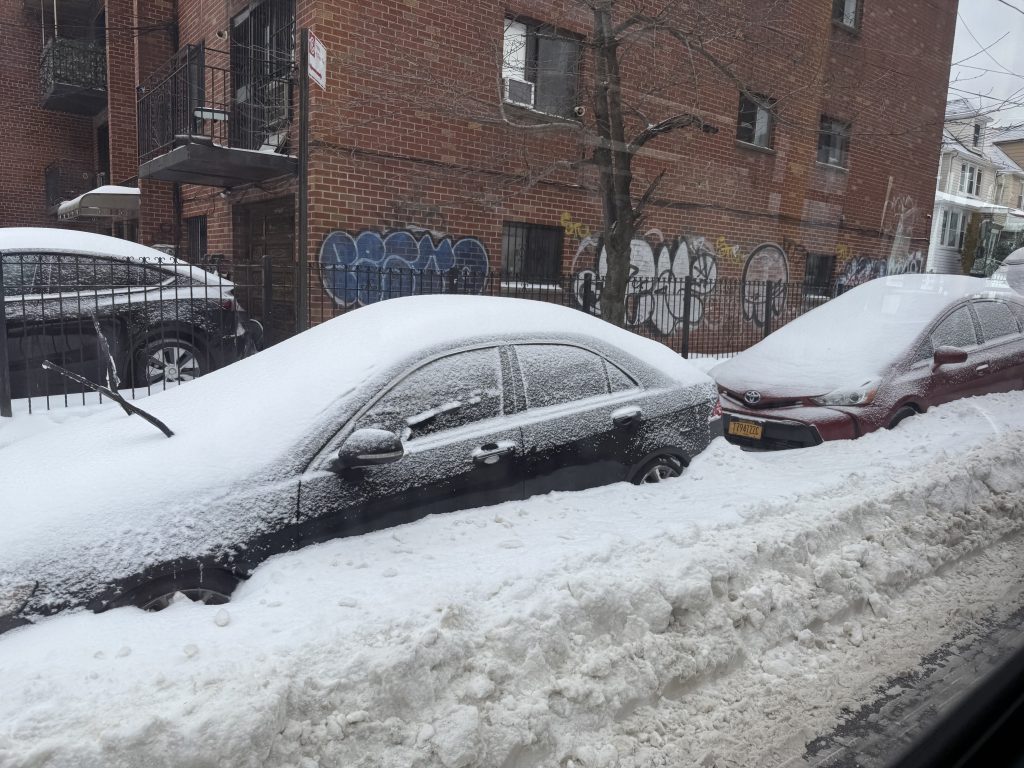
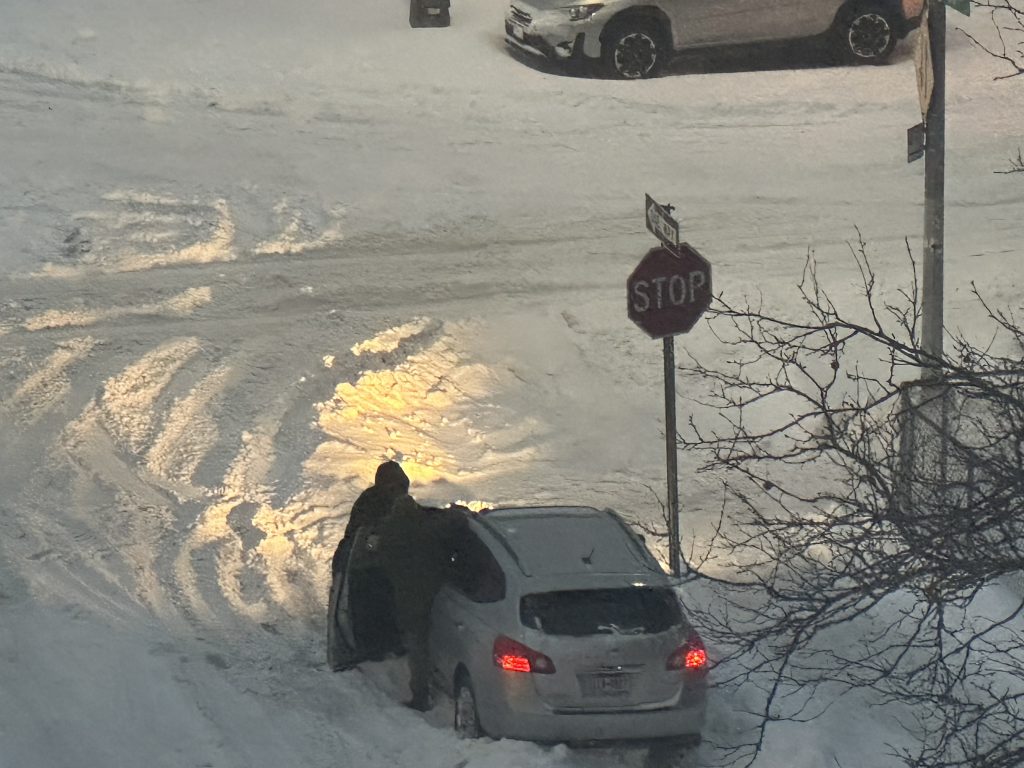
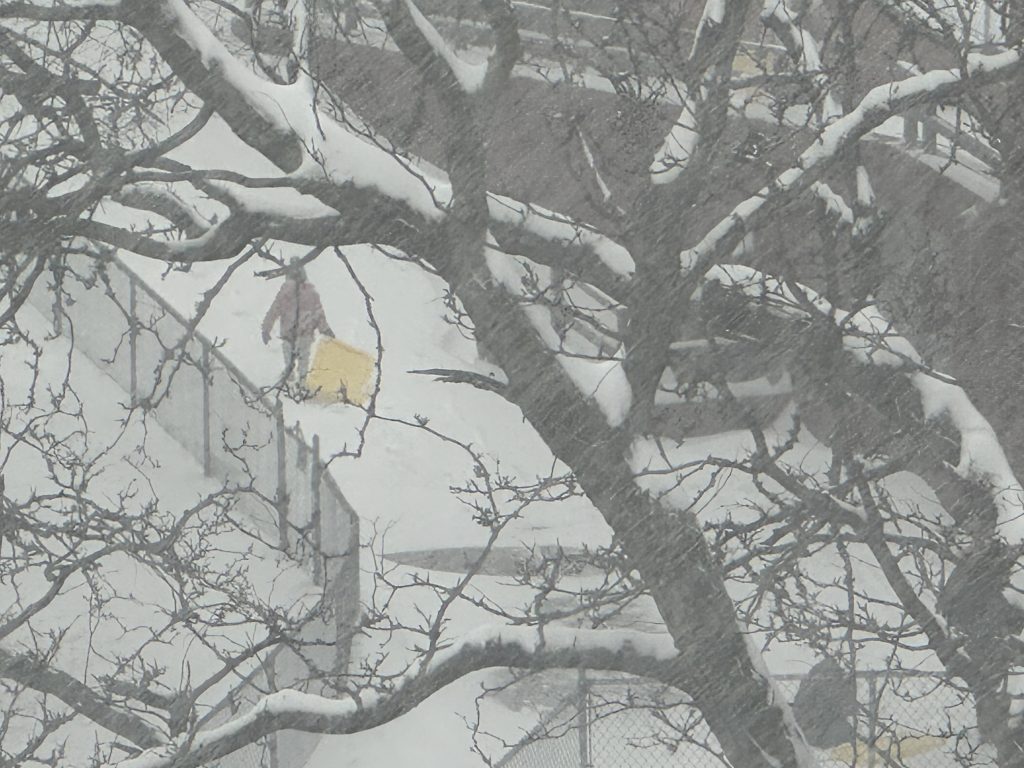
More Than a Foot of Snow Slams New York City

By MOHAMED FARGHALY

mfarghaly@queensledger.com

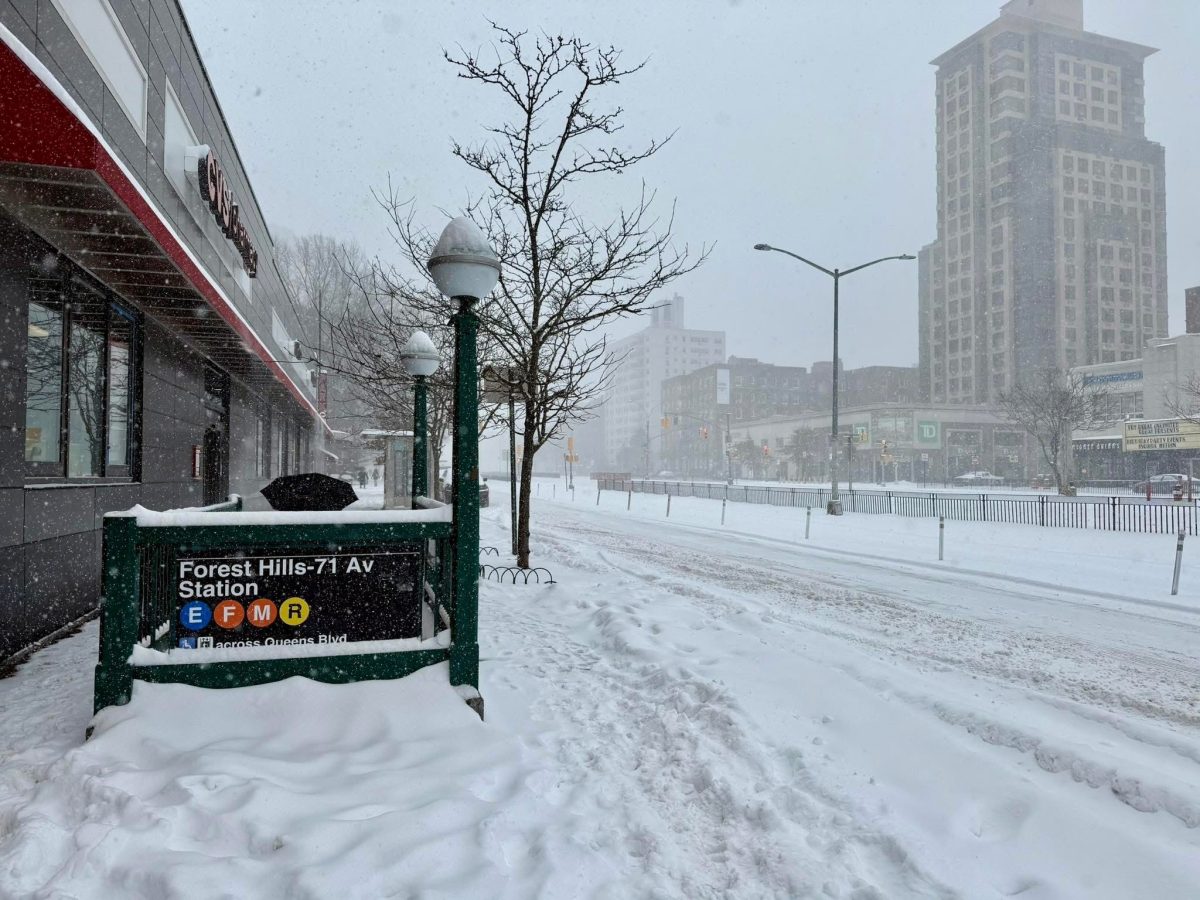
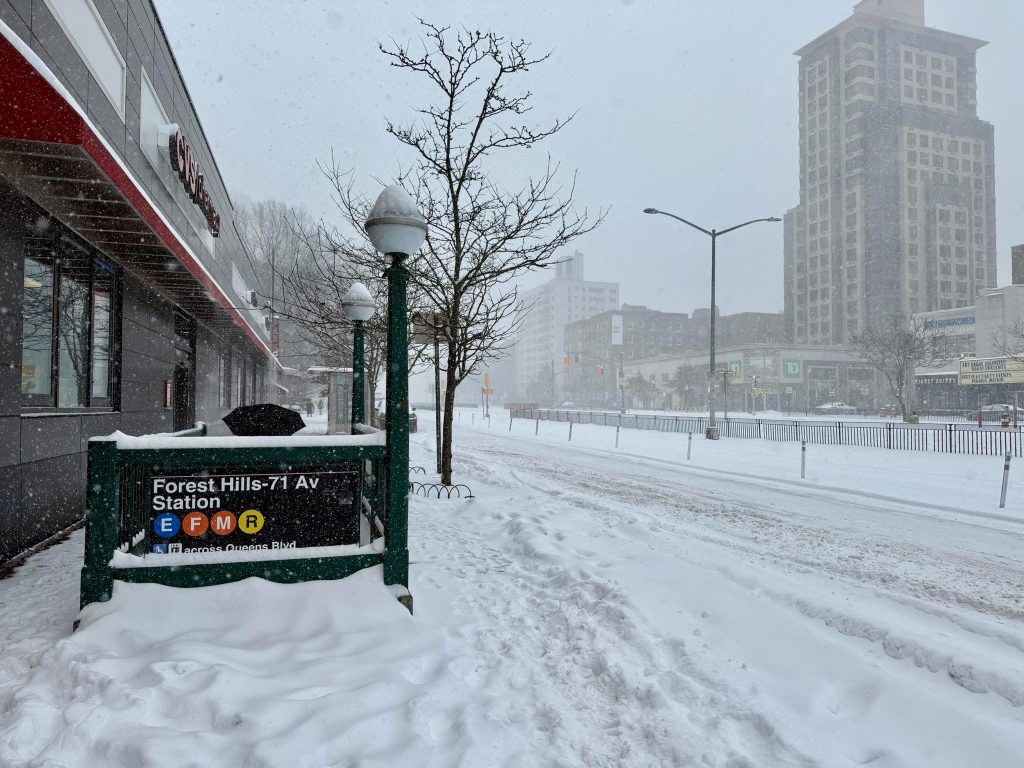
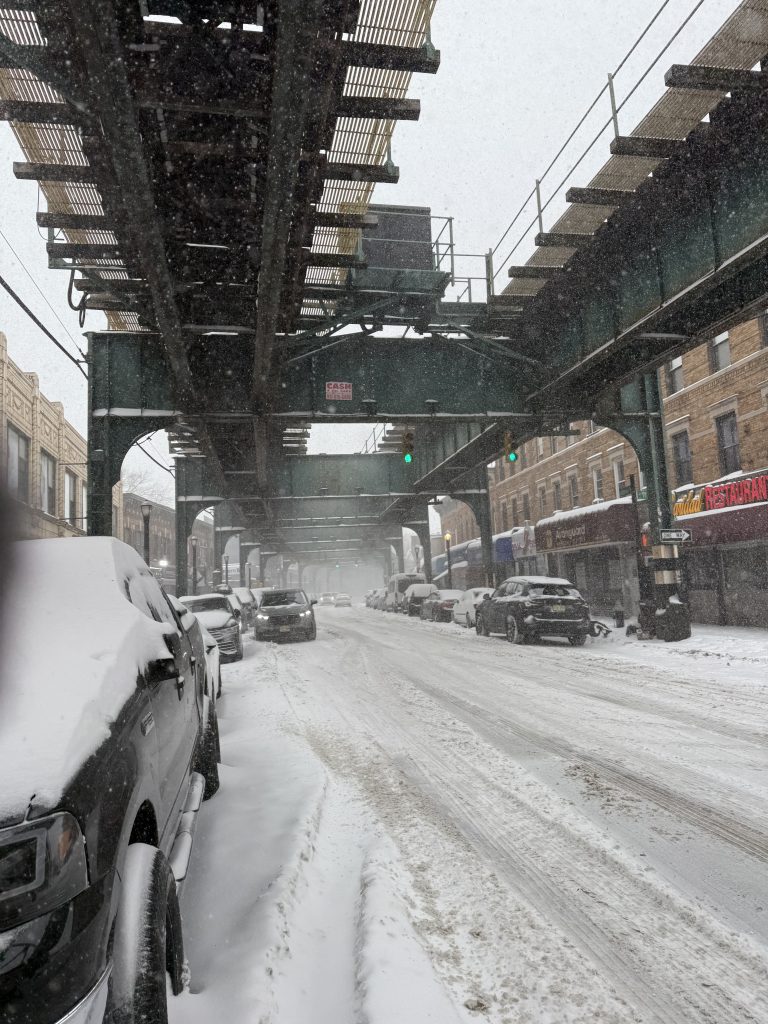
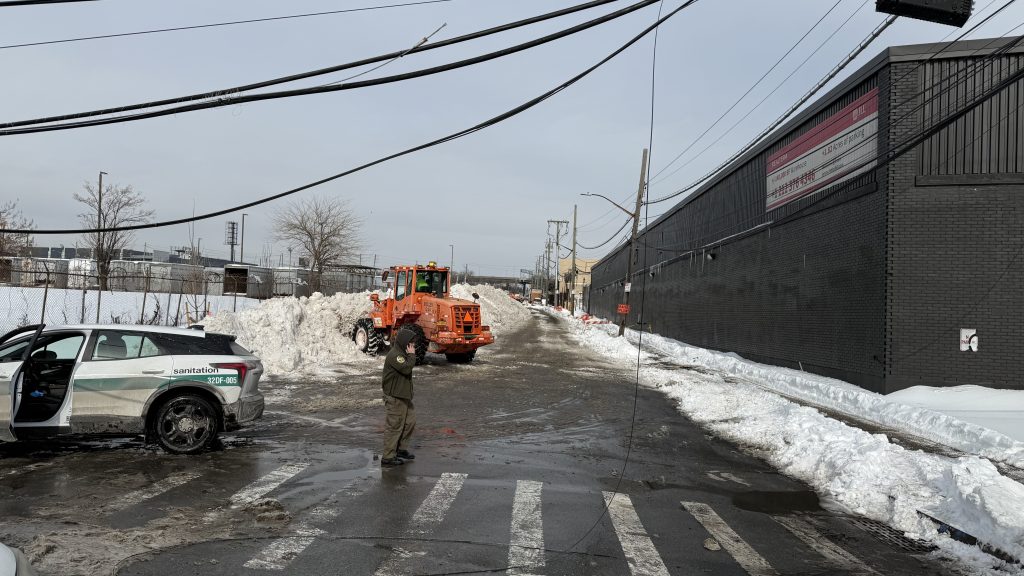
A powerful winter storm that pummeled New York City over the weekend dumped more than a foot of snow in several neighborhoods, snarled transportation across the region and marked the city’s most significant snowfall in years, according to weather officials.

Snowfall totals varied widely across the five boroughs, with the heaviest accumulations reported in upper Manhattan and parts of the Bronx. The National Weather Service recorded nearly 15 inches of snow in Washington Heights, the highest total reported within the city.

Central Park measured more than 11 inches of snow and sleet, breaking a daily snowfall record and marking the first time the city has seen more than a foot of snow since February 2021. Parts of the Hudson Valley recorded more than 18 inches.

Queens also saw significant accumulation, with 11.1 inches reported in Whitestone and 11 inches in Howard Beach. John F. Kennedy International Airport recorded 10.3 inches of snow, while LaGuardia Airport measured 9.7 inches.

The storm, named Winter Storm Fern by meteorologists, brought air travel to a standstill at times. LaGuardia Airport was forced to shut down for several hours as blowing snow and near-zero visibility left planes surrounded by large drifts. Flight delays and cancellations rippled through the region.

Mass transit systems struggled to recover as well. New Jersey Transit suspended all service during the height of the storm and resumed limited operations days later. The Metropolitan Transportation Authority adjusted subway, bus and commuter rail service as crews worked through icy conditions and extreme cold.

Roadways across the region were hazardous, with heavy, wet snow contributing to numerous accidents and prolonged delays. City officials urged residents to avoid unnecessary travel and to use caution while shoveling, warning that the weight of the snow posed a risk for injuries and heart strain.

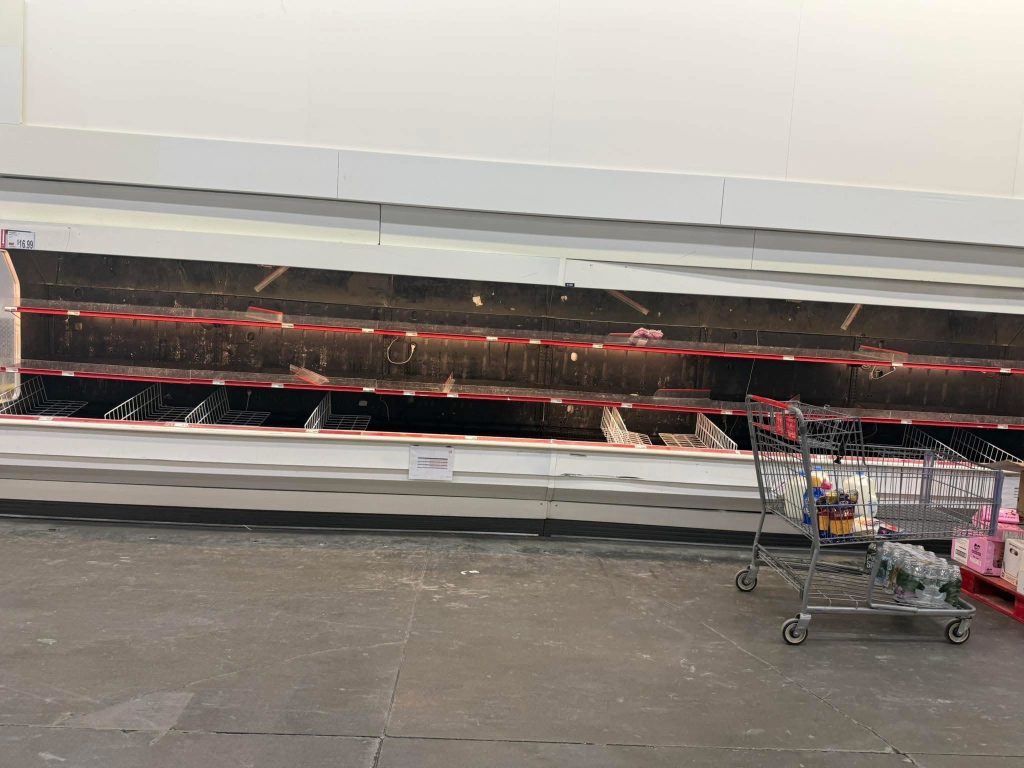
As the winter storm approached, New York City residents flocked to grocery stores across the boroughs, frantically stocking up on essentials. Shoppers filled carts with milk, bread, eggs, bottled water, and other staples, often buying far more than usual in anticipation of being snowed in. The rush left many neighborhood markets stripped bare, with empty shelves and limited supplies, creating a scene of chaos as city dwellers prepared for what would become one of the biggest snowstorms in years.

Schools across the region closed, with many districts canceling classes outright. New York City public schools shifted to virtual learning during the storm.

Food delivery services, including DoorDash and Grubhub, temporarily suspended operations in New York City as conditions worsened, resuming service once travel became safer.

Mayor Zohran Mamdani ordered New York City public schools to shift to remote learning Monday as the powerful winter storm blanketed the city, a move officials said proved largely successful. The remote day applied primarily to K–8 students, while high school students and some middle school grades were already off for a scheduled professional development day. Mamdani and Schools Counselor Samuels both joined virtual classrooms Monday morning, with the chancellor saying students were able to log in quickly and begin lessons without major disruptions. Mamdani acknowledged some students’ disappointment at missing a traditional snow day but said state requirements for 180 instructional days left little flexibility.

While snowfall tapered off early in the week, frigid temperatures lingered, raising concerns about icy roads and sidewalks. Warming centers remained open across the region as officials warned of dangerously cold wind chills.

Meteorologists said the storm was one for the history books, ranking among the most impactful winter weather events the New York City area has experienced in recent years, and forecasters are already monitoring the potential for another winter system in the days ahead.

More Photos Around Queens: 

Local Representatives Weigh in on Hochul’s New Budget 

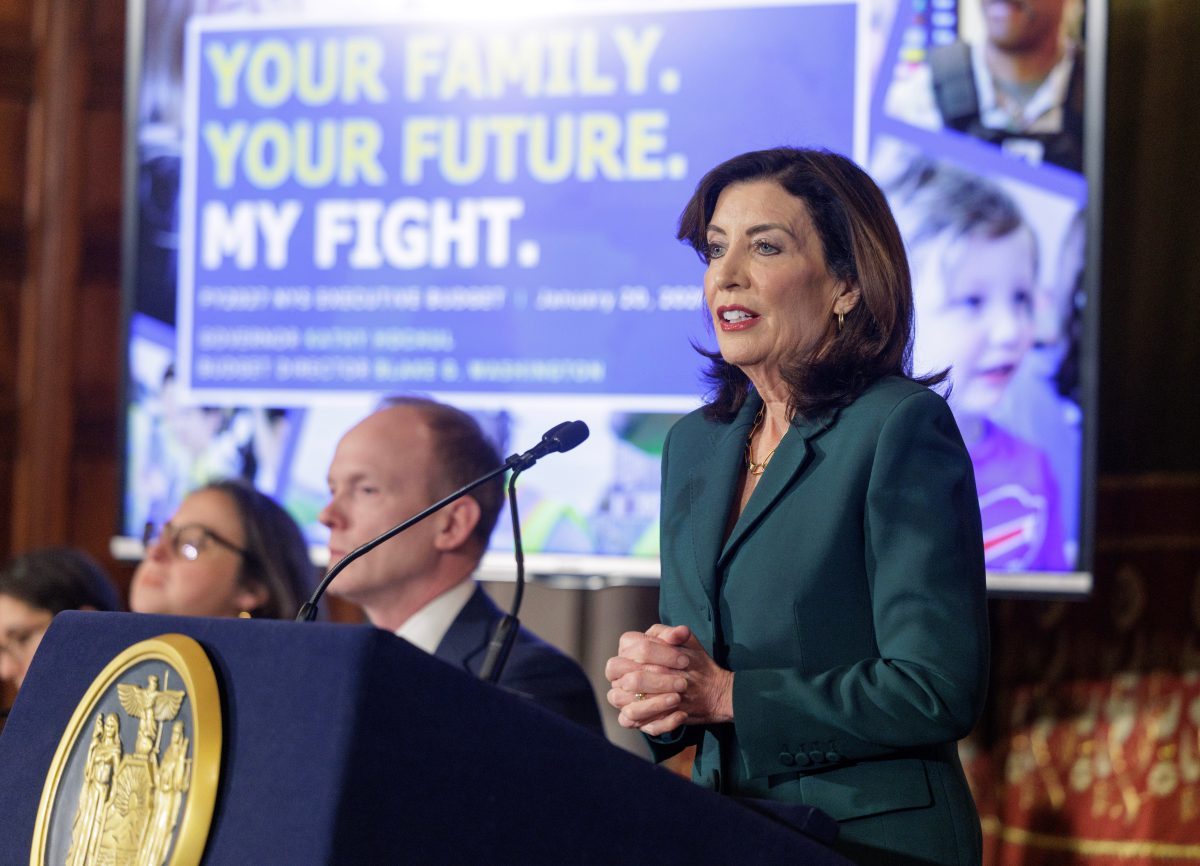
January 20, 2026 – Albany, NY – Governor Kathy Hochul presents the FY 2027 Executive Budget. (Mike Groll/Office of Governor Kathy Hochul)

Queens and City Representatives React to New Budget Plan 

By MOHAMED FARGHALY

mfarghaly@queensledger.com

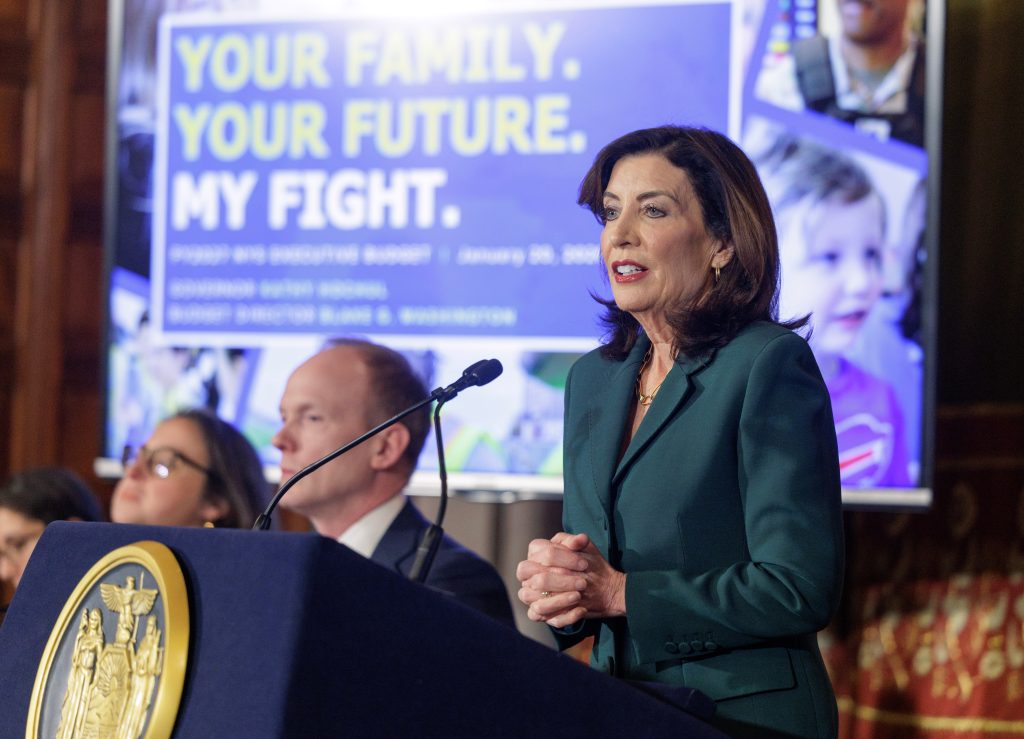
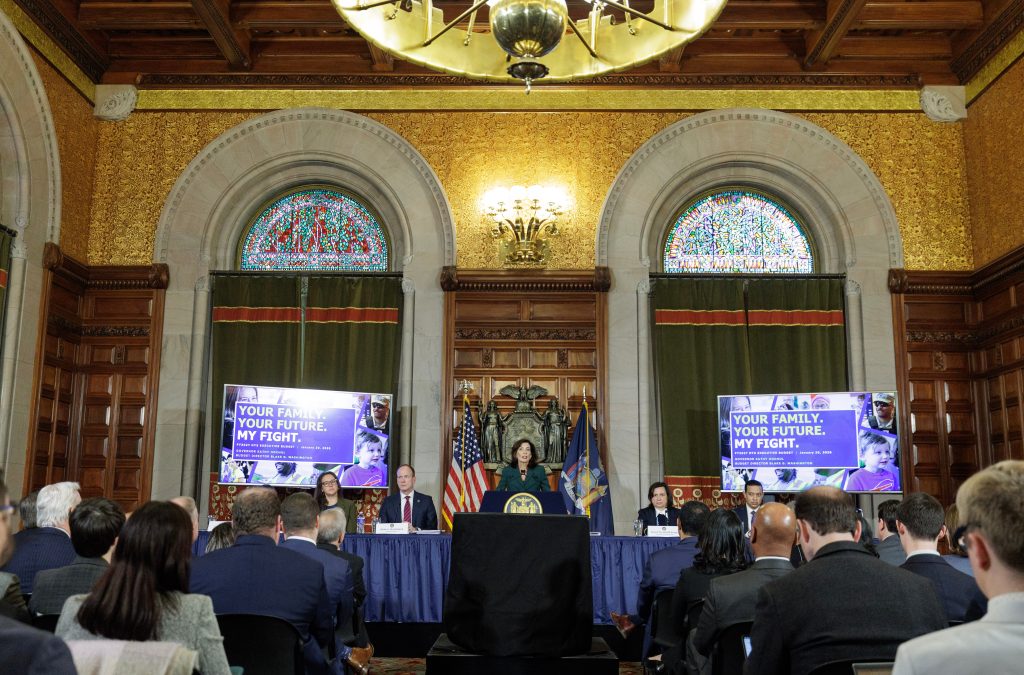
Gov. Kathy Hochul last week unveiled a $260 billion executive budget proposal that she said would make New York more affordable and safer, with major implications for New York City residents facing high housing costs, rising child care expenses and strained transit and public safety systems.

The Fiscal Year 2027 plan includes expanded child care funding, record education aid, billions for the Metropolitan Transportation Authority and new investments in housing, health care and food assistance — all without raising state income taxes, Hochul said.

The proposal comes as New York braces for possible federal funding cuts and economic uncertainty out of Washington. State officials say the budget preserves $14.6 billion in reserves and maintains New York’s AA+ credit rating, the strongest the state has held in more than 50 years.

For New York City families, the budget’s largest affordability push centers on child care. The plan allocates $500 million over two years to support the city’s 2-Care program and includes expanded child care vouchers aimed at reducing long waitlists that disproportionately affect low-income and working-class families.

Statewide, Hochul proposes $4.5 billion for child care and prekindergarten services, including $1.7 billion in new spending. City officials have long warned that child care costs rival rent for many families, forcing parents — particularly women — out of the workforce.

The budget also eliminates state income taxes on tipped wages, up to $25,000 a year, a move that would benefit tens of thousands of restaurant, hospitality and service workers concentrated in New York City. The change would take effect when residents file 2026 tax returns.

Additional measures target insurance and utility costs, with proposals to tighten oversight of insurers and pressure utilities to rein in rate hikes.

New York City public schools stand to benefit from what Hochul calls the highest level of state school aid in history. The budget includes $39.3 billion in total education funding and continues universal free school meals, which serve more than one million city students daily.

The plan also boosts universal prekindergarten funding and commits $395 million to sustain free breakfast and lunch programs. Advocates say those meals are a critical lifeline for families struggling with food insecurity.

For college students, the proposal maintains a tuition freeze at CUNY and SUNY four-year schools and expands free community college programs — a priority for city residents seeking workforce credentials without taking on debt.

January 20, 2026 – Albany, NY – Governor Kathy Hochul presents the FY 2027 Executive Budget. (Mike Groll/Office of Governor Kathy Hochul)

Housing remains one of the city’s most pressing challenges, and Hochul’s budget builds on her $25 billion affordable housing plan, which aims to create or preserve 100,000 units statewide.

The proposal adds $250 million to accelerate affordable housing construction and includes funding for rental assistance, legal aid for homeowners facing foreclosure, and capital support for homeless housing programs. City officials say the investments are crucial as shelters remain overcrowded and rents continue to climb.

The budget also supports climate resilience for homeowners and investments to speed construction by reducing regulatory delays.

For daily commuters, the budget proposes $8.6 billion in operating aid for the MTA, helping stabilize subway, bus and commuter rail service. It also includes funding to redesign Jamaica Station and begin early planning for extending the Second Avenue subway along 125th Street in Harlem.

Public safety funding includes $77 million to continue a state-funded partnership with the NYPD that boosts police presence in subway stations and trains, along with $25 million to expand subway outreach teams that connect people in crisis with mental health care or shelter.

The budget protects Medicaid funding and directs new money to safety-net hospitals, many of which serve large numbers of uninsured and low-income patients in New York City. It also allocates funding to protect access to reproductive health care and expand mental health training in schools.

To address food insecurity, the plan increases support for food banks and emergency food providers and upgrades electronic benefit cards to combat fraud, a problem that has hit city residents particularly hard.

New York City and Queens officials offered a mix of praise and caution following Gov. Kathy Hochul’s release of her Fiscal Year 2027 executive budget, highlighting education funding, child care investments and concerns about long-term fiscal stability for the city.

State Sen. John Liu, who chairs the Senate Committee on New York City Education, said the proposal recognizes the threat posed by potential federal cuts but warned that city students could still lose out without changes to state aid formulas. “Governor Hochul’s executive budget reflects a clear understanding that New York will not be caught flat-footed amid Trump’s relentless federal cuts and ensuing fiscal turmoil,” Liu said, adding that “NYC schoolkids will continue to be shortchanged unless we fix this formula by updating the Regional Cost Index and fully accounting for our disproportionate number of unhoused and foster care students.”

Education leaders at the City University of New York welcomed the plan’s higher education investments. CUNY Chancellor Félix V. Matos Rodríguez said, “Gov. Hochul’s Fiscal Year 2027 executive budget stands to strengthen CUNY’s ability to provide an affordable, high-quality education to all New Yorkers and serve as a driver of upward mobility.” He pointed to tuition support, expanded free community college access and workforce programs, saying, “The 2027 executive budget reflects Governor Hochul’s deep commitment to public higher education.”

City Comptroller Mark Levine said the budget takes steps to protect New Yorkers amid federal uncertainty but stressed the city’s fragile financial outlook. “Governor Hochul’s executive budget balances investing in the programs that will address our affordability crisis while proactively protecting the essential social services that are being cut by the federal government,” Levine said. He also warned, “We are in a time of increased fiscal uncertainty in New York City,” citing projected multibillion-dollar budget deficits in the coming years.

Mayor Zohran Kwame Mamdani praised the state’s child care and early education funding while sharply criticizing City Hall’s fiscal management. “Governor Hochul’s budget makes meaningful investments that move us closer to an affordable and livable New York—especially through critical advancements in early childhood education,” Mamdani said, before adding, “The City, however, is not—and that is the direct result of Eric Adams’ gross fiscal mismanagement.”

Queens Council Member Phil Wong struck a more skeptical tone on government spending overall, saying, “We can’t tax and spend our way out of this crisis,” and calling for audits and a leaner city budget.

Housing advocates, meanwhile, applauded the proposal’s support for homeowners. Christie Peale of the Center for NYC Neighborhoods and Kristin Brown of the Empire Justice Center said full funding for the Homeowner Protection Program “helps keep New York affordable for thousands of homeowners statewide” and urged lawmakers to maintain the $40 million allocation as budget negotiations move forward.

Lawmakers are expected to negotiate changes to the proposal in the coming months before a final budget is adopted. For millions of New Yorkers in the city, the outcome could shape everything from child care access and subway service to rent stability and school funding in the year ahead.

Breaking NYC Traffic Laws Just Got Costlier

Courtesy NYC.Gov

Traffic Violations to Carry More Points in New York

By MOHAMED FARGHALY

mfarghaly@queensledger.com

New York drivers will face tougher penalties for traffic violations beginning in February 2026, as the state rolls out an updated DMV points system aimed at improving road safety.

Under the new rules, a driver’s license can be suspended after accumulating 10 points within a 24-month period. Currently, drivers face suspension after receiving 11 points over an 18-month span. State officials say the change lowers the threshold for suspension while extending the time window in which points are counted.

Several common traffic violations will also carry higher point penalties. Speeding up to 10 miles per hour over the limit will increase from three points to four. Using a handheld cellphone while driving will rise from five points to six, while reckless driving will jump from five points to eight.

In addition, violations that previously did not add points to a driver’s record will now do so. Driving with broken taillights or malfunctioning headlights will result in one point each, and making an illegal U-turn will add two points.

The state says the updated system is designed to hold drivers accountable for risky behavior and encourage safer driving habits. By increasing point values and expanding the list of violations that carry penalties, officials aim to reduce distracted driving, speeding, and other actions linked to traffic injuries and fatalities.

Transportation safety advocates have long pushed for stricter enforcement tools, arguing that small violations often contribute to more serious crashes when left unaddressed. State officials say the new framework reflects that concern by ensuring repeated or careless behavior is identified earlier.

While the changes do not increase fines directly, accumulating points can lead to higher insurance costs and, ultimately, license suspension. Drivers who reach the new 10-point threshold within two years may lose their driving privileges for a set period.

The updated points system applies statewide and will affect both new and existing drivers once it takes effect in 2026. The DMV is expected to conduct public outreach ahead of the rollout to inform motorists of the changes.

For New York drivers, the message is clear: routine violations may now carry greater consequences, and points can add up faster than before.

Middle Village Grant Used to Promote Resources for Small Businesses

Maryam Rahaman

News@queensledger.com

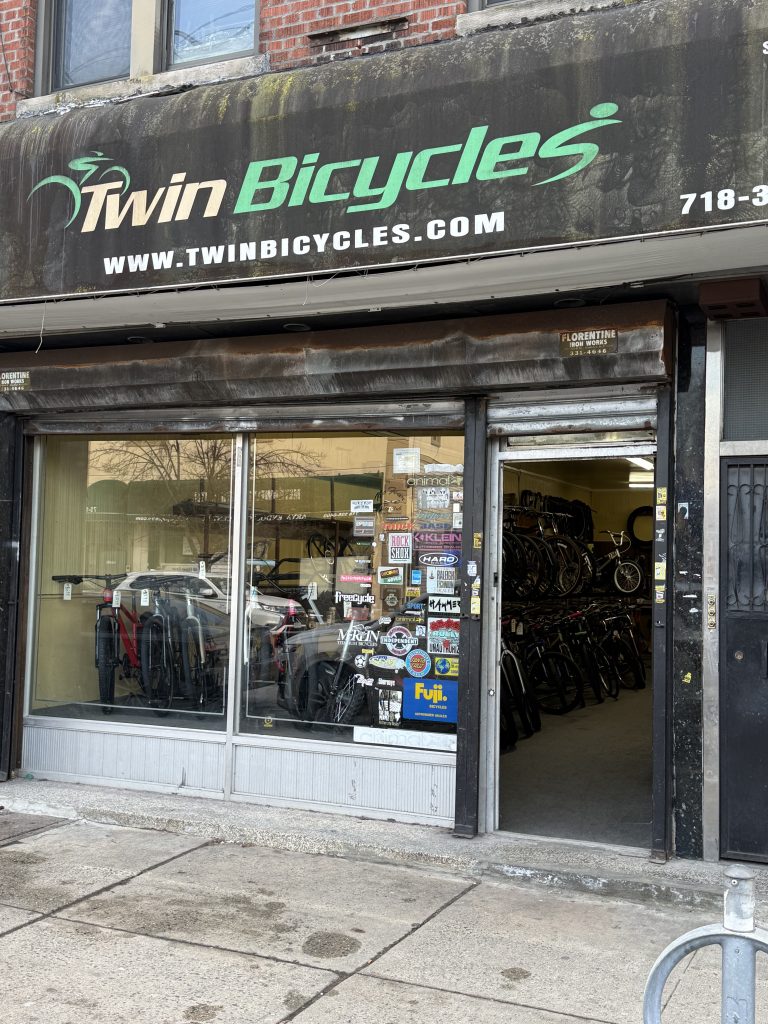
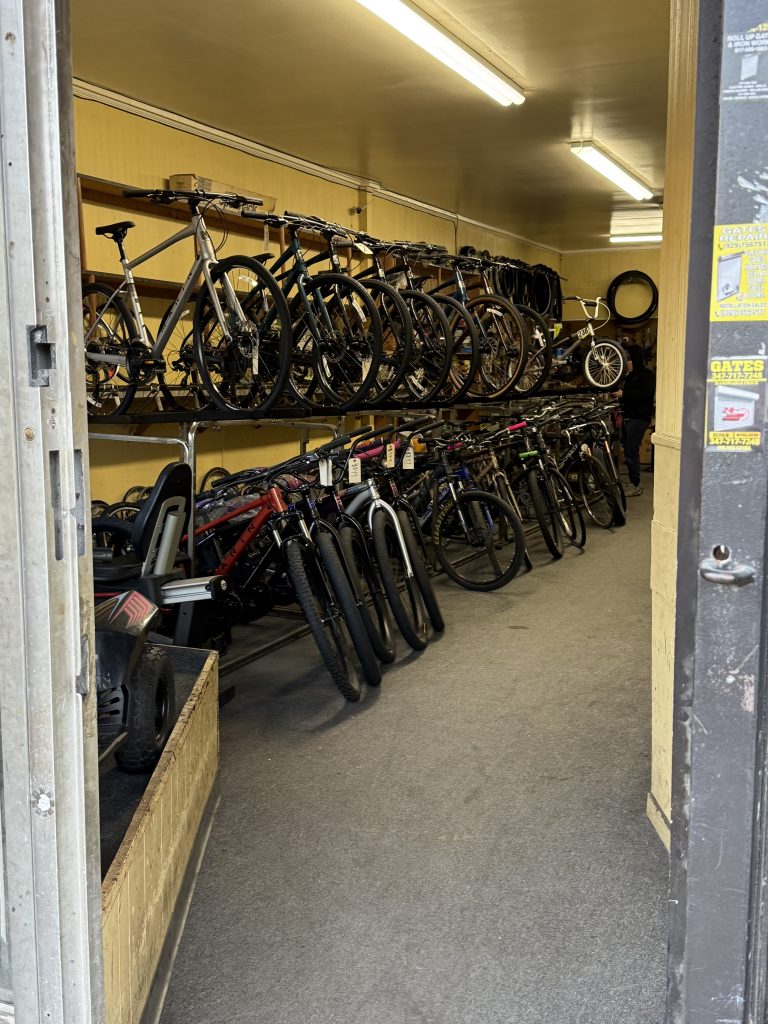
Metropolitan Avenue in Middle Village between 73rd Place and 80th Streets is one of the most narrow business strips in Queens. “Double park here,” says Sal Crifasi, one of its best known ‘home-grown’ business leader, “…. and it’s not pretty.” The heart of the the four block main business zone is sprinkled with mainstay popular spots like the Metro Diner, Village Chemist, Twin Bike Shop and Joe’s Bakery. It’s even home to a cannabis dispensary, with a second on the way. This main business district in Middle Village has particular physical limitations, including little parking and scarce public transportation, but the combination of the ‘business type’ mix and the neighborhood demand made Middle Village ripe for a merchant organizing grant from the New York City Department of Small Business Services. The Queens Chamber of Commerce received the grant and is in charge of allocating it. Typical grants of this type, according to Small Business Services, are intended to perform extensive studies of business districts, engage business leaders and civic leaders in the community and help build a strategic plan to help them thrive. Key outcomes of the study could be funding for merchant associations, installation of new lighting, safety improvements and economic development. Borough Chambers of Commerce throughout the City typically get grants like this and they eventually lead to greater support to enhance the district. There are very few business districts like Middle Village, where 95% or more of the customers drive or walk to their shopping. That might necessitate a different strategy than most.

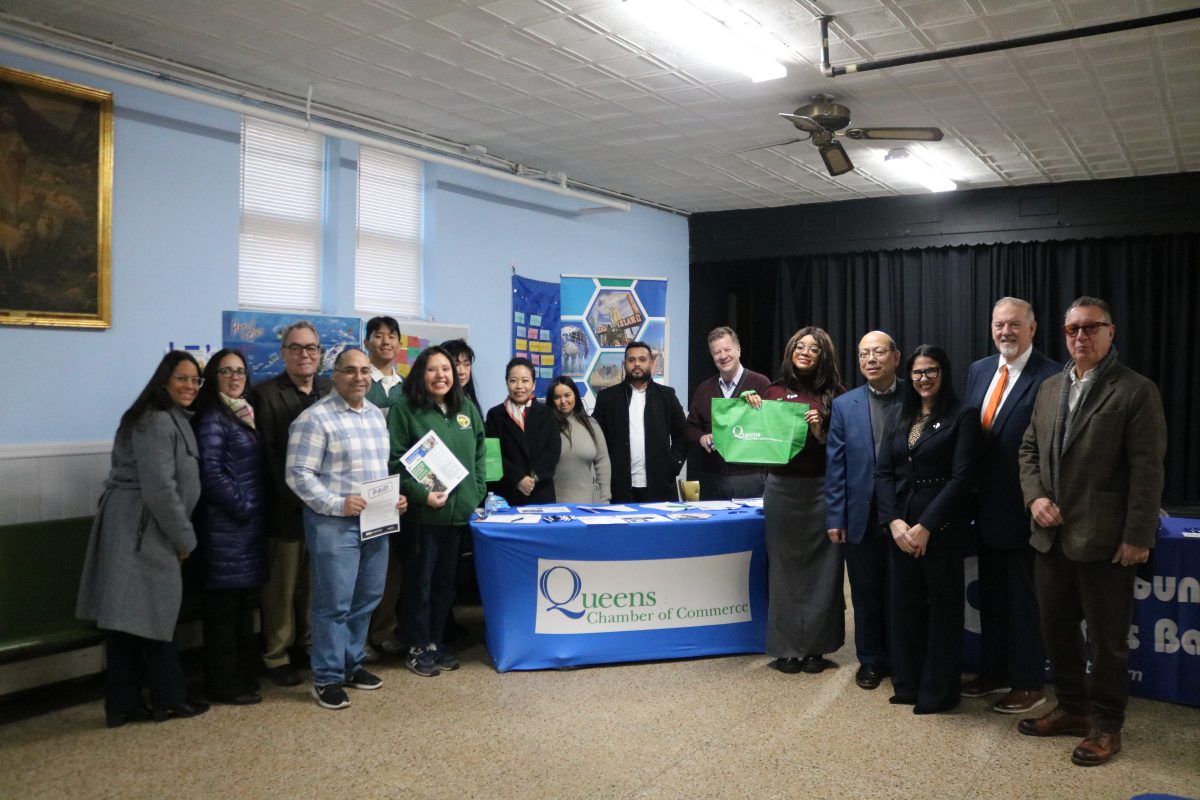
 Last Thursday, the Chamber held a small business resources fair at the Community United Methodist Church Hall. In addition to an appearance from Councilmember Phil Wong, representatives from city agencies and local organizations offered a chance for business owners to learn about resources available to them. A few prospective and current business owners were in attendance. But one community member expressed concern about the lack of attendance and use of the grant money. Paul Pogozelski, president of the Middle Village Residents Association, also recently voiced such concern at a Community Board 5 meeting. In a previous email to the Queens Chamber of Commerce, Pogozelski questioned the use of the grant, he says, the majority of which was being used for administrative costs.

“This raises serious questions about whether the allocation aligns with the intent of the grant,” Pogozelski wrote. “The limited support flowing to our local shop owners is troubling and suggests that the QCC may not be fully attuned to the needs and priorities of small businesses in our district.”

 Queens Chamber of Commerce president Thomas Grech stressed that the organization closely follows regulations surrounding grant usage. “We follow the rules and regulations as put forth by SBS, and we follow it to the letter and the spirit,” Grech said. “I’ve been doing this for 10 years. The chamber has been doing it for 25 or 30.”  Grech also said that the fair was the first time he met Pogozelski and that he had not previously heard any feedback from him.

 Pogozelski’s email also stated that “events organized under this grant have been poorly promoted, inconsistently attended, and inadequately executed.” He called upon the Queens Chamber of Commerce and elected officials to come to an in-person meeting to discuss how the grant could better serve small businesses in the area.

 The email also states that the grant has not been used to put into place recommendations a previous Queens Chamber of Commerce survey recommended. Last fall, 45 Middle Village merchants were surveyed on what meeting times were best for events and what areas of focus the grant should go toward. Nearly half the responses cited a lack of parking and transit in the area as their main concern. High marketing costs and safety, given recent break-ins, were also shared concerns among respondents.

 The survey included recommendations for how the grant could address these issues, such as improving access to parking, increasing police presence along the avenue, conducting street cleanings, and offering marketing workshops to reduce costs. Pogozelski emphasized that allocating funds towards these solutions would have addressed concerns that small businesses directly voiced.

 Pogozelski had written a letter in support of Middle Village receiving the grant, at the request of the Queens Chamber of Commerce. 

 The grant began in July 2025. An initial event was held. Pogozelski didn’t attend until a second event was held at Halloween. According to him, the event only had a few tables and some candy. It missed the “wow factor” that he felt would’ve drawn more community members to the event.

 “I really wasn’t so involved in this until I’d seen that Halloween event,” Pogozelski said. “And that’s when I started asking questions.”

 Grech said that he fields many calls the chamber receives and has not heard a complaint about the grant yet. “Anybody that has a question about how we and where we go out and do our work, they’re always welcome to call,” he said. 

 A consistent issue with increasing turnout has been that small business owners cannot leave their shops unmanned in order to attend these events. Half of survey respondents reported that they are not available for meetings at any point of the day.

“There’s a number of different fronts,” Grech said. “We do Zooms when necessary, because people cannot leave their places. We do in person fairs, like we just did, because people can’t leave their block or their avenue to go into Manhattan.”

 According to Vicky Ferreira, strategic program manager at Queens Chamber of Commerce, “people came all the way from Astoria” to access resources within the borough.

 The next event the grant will fund is a luncheon for small business owners in the area, held at Metro Diner. After that, a parade and road closure is scheduled for April.

 The grant will end in July of this year. Pogozelski looks forward to seeing improvements in how it is used before then.

 “If anything we can do to help these small businesses that they could actually thrive in our neighborhood, that’s really what our objective should have been all along.” Pogozelski said. “Let’s hope that, even though maybe it started off rocky, that it’ll end in a good manner. 

What to Do in the First 72 Hours After a Car Crash in Queens NY

Contributed By: Dan Rose

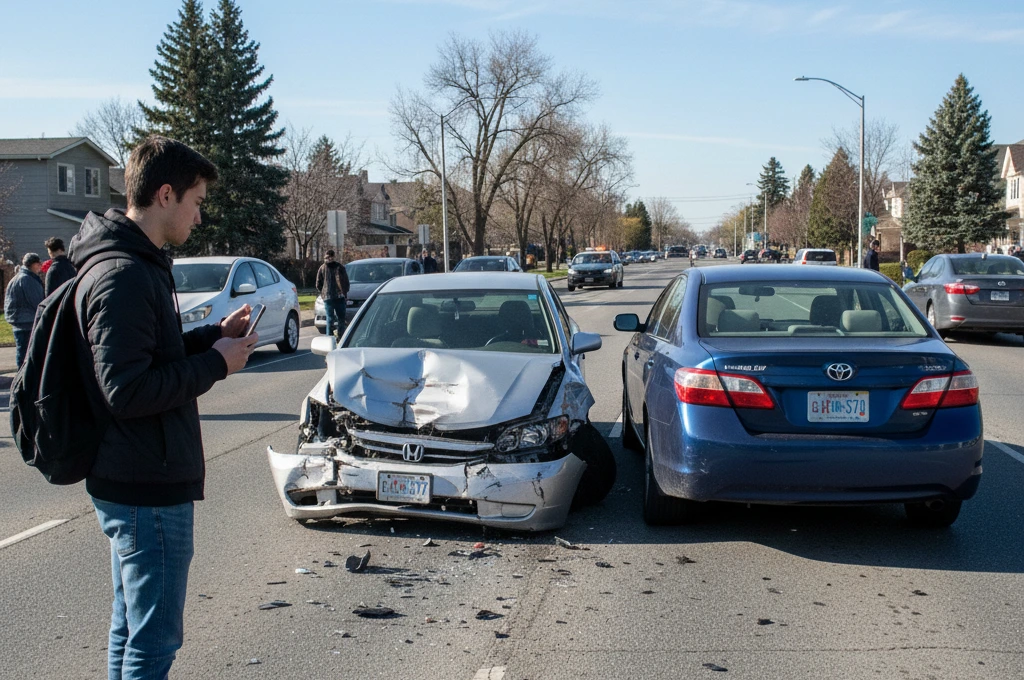
Most people don’t realize that the clock starts ticking the moment a car accident happens in New York. As a personal injury attorney, I’ve watched clients unknowingly sabotage their own claims simply because they didn’t understand the deadlines baked into our state’s insurance laws. The decisions you make in the first three days often determine whether your claim succeeds or fails months down the road.

New York’s no-fault insurance system promises quick access to medical coverage and lost wage benefits, but that promise comes with strings attached. Miss a deadline, skip a form, or say the wrong thing to an insurance adjuster, and you could forfeit benefits you desperately need. Understanding these time-sensitive requirements isn’t optional. It’s the foundation of protecting yourself after a collision.

Why New York’s 30-Day No-Fault Deadline Changes Everything

Here’s the rule that surprises most accident victims: you must file an application for no-fault benefits with your insurance company within 30 days of the accident. This is a very strict deadline with few exceptions. That form, known as the NF-2 Application for Motor Vehicle No-Fault Benefits, triggers your right to have medical bills paid and lost wages reimbursed up to $50,000.

If you miss this deadline, your claim could be denied, even if the crash was not your fault. I’ve seen it happen to people who assumed their insurance company would automatically know about the accident, or who waited for the other driver’s insurer to contact them first. Neither assumption works in New York.

Your own insurance company pays your initial benefits regardless of fault. That’s the trade-off our no-fault system makes: in exchange for this guaranteed coverage, your right to sue the at-fault driver is limited unless you suffer a “serious injury” as defined by New York law.

The practical steps look like this:

  • Immediate Notification: Contact your insurance company within 24 to 48 hours of the accident, even if you feel fine initially.
  • Form Completion: Request and complete the NF-2 form with comprehensive details about how the accident occurred and any injuries you’ve noticed.
  • Proof of Filing: Send the form by certified mail with return receipt requested to preserve proof of timely filing.

The 10-Day DMV Reporting Requirement Most Drivers Overlook

Beyond your insurance company, New York law requires you to notify the Department of Motor Vehicles directly. You must file a report with DMV within 10 days of the event. The failure to report an accident is a criminal offense (misdemeanor) and can mean the suspension or revocation of your driver license.

This requirement kicks in whenever an accident involves a fatality, personal injury, or property damage exceeding $1,000 to any one person. Given how quickly repair costs add up after even minor fender benders, most accidents trigger this obligation.

The form you need is the MV-104, Report of Motor Vehicle Accident. You can download it from the DMV website or pick one up at any motor vehicle office. When you report a crash or incident to your insurance company, it does not mean your legal obligation is finished. These are two separate requirements, and completing one doesn’t satisfy the other.

What to Do at the Accident Scene

The evidence you gather in those first chaotic minutes becomes the backbone of your claim. I tell every client the same thing: your smartphone is your best tool for protecting yourself.

First, ensure safety. Check yourself and any passengers for injuries. If you cannot move your vehicle, or if medical assistance is needed, dial 911 and follow the operator’s instructions. Then, if possible, document everything systematically.

  • Photograph Everything: Capture vehicle damage from multiple angles, skid marks, traffic signs, weather conditions, and any visible injuries.
  • Exchange Information: By law, an insurance I.D. card must be carried in every vehicle licensed in New York State. These cards can be your source for that information.
  • Identify Witnesses: Get names and phone numbers from anyone who saw what happened.
  • Request Police Presence: You must call the police when anyone is injured, a driver appears intoxicated, a driver flees the scene, or property damage seems substantial.

The Medical Treatment Timeline That Insurers Actually Care About

Insurance adjusters pay close attention to when you first sought medical care after an accident. A gap of even a few days gives them ammunition to argue that your injuries weren’t serious or weren’t caused by the collision. For claims involving neck and back injuries, this documentation becomes especially critical.

Seek medical evaluation within 24 to 48 hours, even if your symptoms seem minor. Whiplash, soft tissue damage, and certain internal injuries often don’t manifest immediately. Having a medical professional document your condition close to the accident date creates a clear link between the collision and your symptoms.

Once you begin treatment, inform every provider that this is a motor vehicle accident claim. Be certain to tell them all bills should be submitted to the no-fault insurance carrier. Provide the insurance company name, claim number as well as the adjuster’s name. Healthcare providers must submit their bills within 45 days of treatment, or your no-fault insurer may refuse payment.

  • Consistency Matters: Follow your doctor’s treatment plan completely. Skipping appointments or abandoning physical therapy gives insurers grounds to question injury severity.
  • Document Everything: Keep copies of all medical records, prescriptions, and referrals.
  • Lost Wage Claims: The NF-6 and NF-7 forms must be submitted within 90 days after the work loss was first incurred.

What Never to Say After an Accident

Refer all persons making claims against you to your insurance company directly. Make no payments, or promises to pay to any claimant. Further, do not make any admissions of fault, as these admissions may possibly be used against you in a later proceeding.

This advice sounds simple but proves surprisingly difficult to follow in practice. After an accident, people naturally want to apologize, explain themselves, or speculate about what went wrong. Every one of those impulses can damage your claim.

Stick to exchanging required information. Describe the facts of what happened without characterizing fault. If the other driver’s insurance company contacts you directly, you’re under no obligation to provide a recorded statement before consulting with an attorney. Adjusters are skilled at asking questions that elicit damaging responses.

When Your Injuries May Exceed No-Fault Coverage

New York’s $50,000 no-fault cap sounds substantial until you start adding up ambulance rides, emergency room visits, imaging studies, specialist consultations, and physical therapy sessions. Serious injuries burn through that coverage quickly.

More importantly, no-fault insurance doesn’t compensate you for pain and suffering at all. To pursue those damages against the at-fault driver, your injuries must meet New York’s “serious injury threshold” under Insurance Law Section 5102(d). This includes fractures, significant disfigurement, permanent limitations, or a condition that prevents you from performing substantially all of your daily activities for at least 90 days during the first 180 days after the accident.

Understanding whether your injuries qualify requires legal analysis beyond what most accident victims can assess on their own. An experienced car accident attorney can evaluate your medical records, identify qualifying conditions, and advise whether pursuing a claim beyond no-fault makes sense for your situation.

The Statute of Limitations Provides a Longer Runway

While the first 72 hours matter enormously for immediate deadlines, you have more time to decide about litigation. The New York car accident statute of limitations for filing a claim is typically three years from the date of the incident. However, certain exceptions apply for accidents involving government vehicles or minors.

Don’t mistake this longer timeline for permission to delay. Evidence deteriorates, witnesses forget details, and medical records become harder to connect to the accident as time passes. The three-year window exists as a backstop, not a recommended timeline.


Contributed By: Dan Rose, A Senior Local Business Guide Specializing In Personal Injury Law Resources

Have you been injured in an accident and want to get all the compensation you deserve?
Don’t navigate New York’s complex insurance laws alone.
Contact Ribowsky Law at https://mrinjurylawyerny.com for a free consultation to understand your options and protect your rights.

Get Directions Below!

Ribowsky Law Queens, 109-12 Jamaica Ave, Richmond Hill, NY 11418, 718-659-5333

Fill the Form for Events, Advertisement or Business Listing