
GEOFFREY COBB
Author, “Greenpoint Brooklyn’s Forgotten Past”
gcobb91839@Aol.com
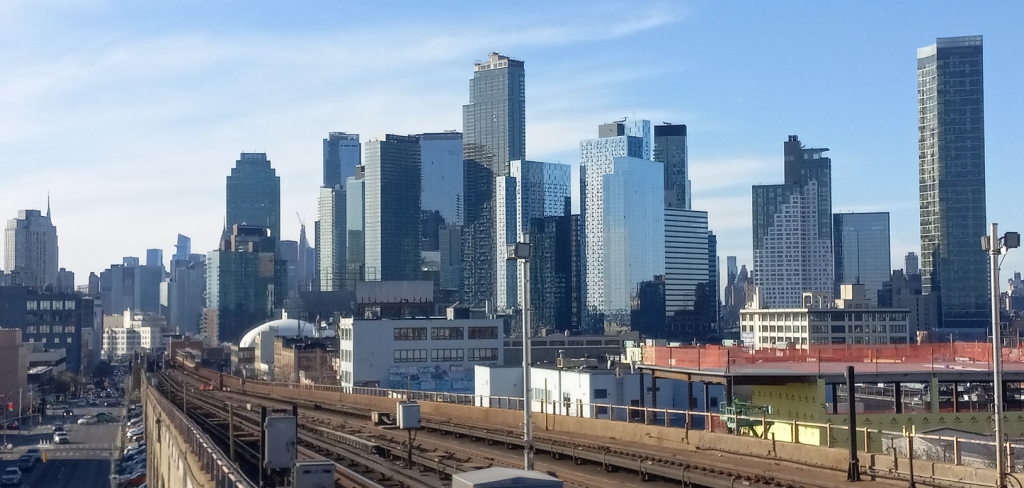
A famous quote is written on the memorial to the great London architect Sir Christopher Wren, “If you seek his monument, look around you,” and the quote also applies to Michael Degnon in Long Island City. Though a forgotten figure today, Degnon built many of the industrial buildings that still characterize the area.
His legacy goes far beyond Long Island City. Degnon’s construction projects helped shape New York City. Degnon was born of Irish parents on a farm in Geneva, Ohio, in 1857. His father died when he was just a child leaving his widowed mother to run the farm. Farm work helped Degnon develop into a powerful man who stood six-foot-four with broad shoulders. He came of age as America needed massive construction projects to link the nation by rails and became a contractor, successfully completing several big jobs in different States. By age twenty-five Degnon had become a millionaire.
Degnon formed a construction company in 1896 and arrived in New York City the following year. The city needed massive infrastructure projects and Degnon proved to be an engineering problem solver. In 1897, bridge builder Buck Lefferts hired Degnon’s firm to build the pneumatic caissons under the East River and towers and anchorages on the Brooklyn side of the Williamsburg Bridge.
A New York Times article on November 6, 1904, heaped praise on Degnon, saluting not only his engineering prowess, but also his amazing personality, noting Degnon’s equanimity in solving complex logistical and engineering problems and noted that his staff was devoted to him. The reporter also claimed Degenon’s capacity for work was unlimited, but that it was” no greater than his good temper, his tact, and his genial manners.” He also possessed an uncanny ability to
calculate the cost of massive building projects almost precisely.
No sub-contractor built more of the Manhattan subway system than Degnon. His firm won contracts, totaling millions of
dollars in 1904, the equivalent of billions today. His firm built the tunnels and lines that connected Manhattan and the Bronx as well as much of today’s #1 train. Degnon’s most difficult Subway tasks were the excavations under Park Row, where he had to ensure that four above ground trolley tracks could continue to run, even as the earth was scooped and the tunnel built beneath them. Building the City Hall loop also necessitated burrowing under the foundations of the old Times Building and bisecting several Post Office vaults. His firm also managed to dig through the quicksand where a
lake once existed around Canal Street. He skillfully managed to tunnel under 42nd Street, despite heavy traffic over excavations, boring through solid rock while not disturbing pipelines, elevated railroad supports, and sewers. He built what today are the New Jersey Path train lines into Manhattan and many of the tunnels serving Pennsylvania Station.
His greatest legacies are in Queens. His firm constructed the Steinway Tunnel under the East River from Sixtieth Street, Manhattan, to Long Island City and the elevated extension to the Bridge Plaza in Queens that allowed the #7 train line to be built. He also bought up wetlands between Corona and Flushing and filled in the swampy ground with ash, which eventually allowed the creation of Flushing Meadows Park, the largest park in the borough of Queens. A visionary, Degnon transformed Long Island City into a giant manufacturing hub where Corporations could set up factories and transport their goods to by railroad. His firm bought 362 building lots on six acres of swampy ground in and around Jackson Avenue where he would construct the massive Degnon Terminal, which allowed companies to either purchase or lease the land from the Degnon Realty & Terminal Improvement Company and build a factory.
He shrewdly completed the terminal’s first industrial structure in 1909, the same year the Queensboro Bridge opened and transformed the borough. The building became the now iconic Loose-Wiles Sunshine Biscuit Company, known as the “Thousand Window Bakery”, which allowed the floors to be flooded with sunlight. The building became the largest factory of its kind in the United States. The biscuit company manufactured their trademark Sunshine Biscuits here, as well as Krispy Saltines, Hydrox Cookies (which would become Oreos) and the world-famous Animal Crackers. The plant closed in 1965 and stands today as LaGuardia Community College. The terminal was located near the massive Sunnyside rail yard of the Long Island Railroad. In 1913 the terminal became linked by rail to the yard through Degnon’s construction of a private rail system known as the “Montauk Cut-Off.” The huge factory complex and its perfect transportation infrastructure enticed some of the largest American manufacturers to set up shop in Long Island City, soon transforming the area into one of the largest industrial areas in the United States. Some of the Terminal’s early clients included the Packard Automobile Company, American Ever Ready Battery Company, and American Chicle Company. Degnon decided to build an elegant mansion.
In 1910 he purchased sixteen acres in Jamaica Estates, the future childhood home of President Donald Trump. He built the estate’s sewer and utilities systems before building a grand residence that he donated to the Passionist fathers
shortly before his death in 1925. Few men in the history of New York City left a greater architectural legacy than he did.