
Courtesy Freepik
Trump Doubles Travel Ban List, With Major Implications for NYC
By MOHAMED FARGHALY
mfarghaly@queensledger.com
A sweeping expansion of President Donald Trump’s travel ban is expected to have an outsized impact on New York City, particularly in Queens, home to some of the nation’s largest immigrant communities from the affected countries.
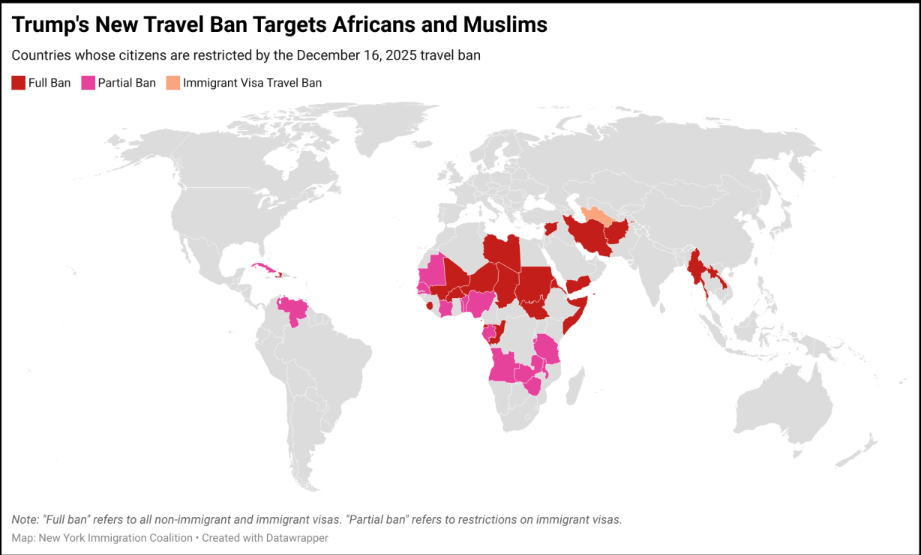
Under a presidential proclamation signed last week, the Trump administration will impose full or partial travel restrictions on nationals from 39 countries and people traveling on Palestinian Authority–issued documents, doubling the scope of a ban announced earlier this year. The restrictions take effect Jan. 1, 2026, and apply to travelers seeking to visit, immigrate to or reunite with family members in the United States.
Advocates estimate that about 420,000 New Yorkers come from countries now subject to the ban, according to the New York Immigration Coalition. Many live in Queens neighborhoods such as Astoria, Jamaica, Woodside and Ozone Park, where families often rely on travel for work, education and reunification.
“This discriminatory proclamation, the largest race- and religion-based ban on immigration in contemporary U.S. history, continues the Trump Administration’s unjust assault on immigrant communities. By expanding the Travel Ban, the administration is slamming the door on vulnerable people in a way that is certain to cause widespread harm, including prolonged family separation. Students will be denied from pursuing their education, workers will be blocked from contributing to the economy, and families will be forced to remain separated across borders,” said Murad Awawdeh, President and CEO, New York Immigration Coalition.
The proclamation bars entry for most travelers from Burkina Faso, Laos, Mali, Niger, Sierra Leone, South Sudan, Syria and Palestine for those who do not already hold valid U.S. visas. An additional 15 countries, including Nigeria, Senegal, Gambia, Ivory Coast and Tanzania, face partial restrictions that limit access to tourist, business and family-based visas.
The administration said the restrictions are necessary because of what it described as unreliable civil documents, weak vetting systems, visa overstay rates and national security concerns in the affected countries. It also cited a recent shooting involving an Afghan national as part of its justification for tightening immigration controls.
People who already hold valid visas, lawful permanent residents, diplomats, athletes and individuals deemed to be traveling in the U.S. interest are exempt. Still, immigration advocates say the changes will disrupt families and create uncertainty even for those with legal status.
“This proclamation will separate families and destabilize communities that are deeply rooted in New York,” the New York Immigration Coalition said in a statement, calling the ban discriminatory and disproportionately targeted at African and Muslim-majority countries.
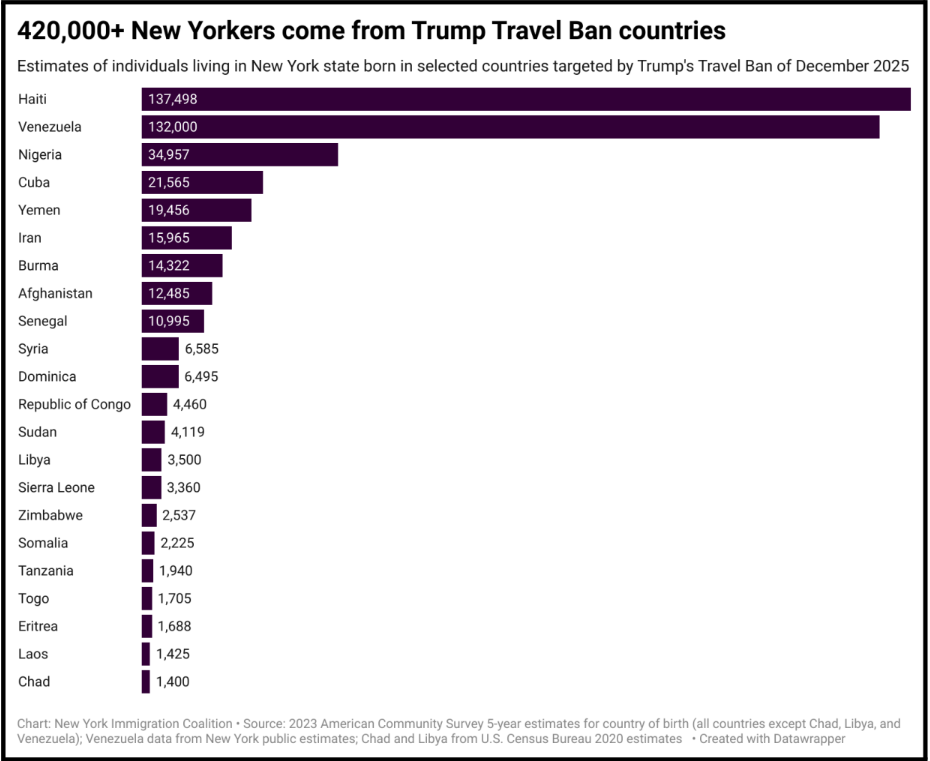
Queens is particularly vulnerable because of its high concentration of residents from countries now affected. New Yorkers from Haiti, Yemen, Togo and Venezuela already represent some of the largest such populations in the United States, and community leaders say the expanded ban will further strain households that rely on relatives abroad for caregiving, financial support and emotional ties.
The new restrictions also eliminate several humanitarian and family-based exemptions that existed under earlier versions of the travel ban, including exceptions for immediate relatives of U.S. citizens and some refugee and special immigrant visa applicants, according to advocates.
The ban applies to anyone outside the United States when it goes into effect and limits visa renewals and extensions, raising concerns that New Yorkers could become stranded abroad or unable to bring relatives to the city.
“The Trump Administration’s expanded travel ban advances his quest to shut down any pathway to citizenship for Black and Brown immigrants. This policy further isolates the United States and deprives our nation of the expertise, culture, and humanity that immigrants bring. We must continue to resist policies rooted in fear and fight for our families, our freedoms, and our future,” said Diana Konaté, Deputy Executive Director of Policy & Advocacy, African Communities Together.
Critics say the policy revives one of the most controversial immigration measures of Trump’s first term and expands it to one of the largest race- and religion-concentrated mobility restrictions in modern U.S. history. The affected countries represent more than 1 billion people, roughly one-eighth of the global population.
The administration said it could revise the list of countries in the future, depending on whether governments improve cooperation with U.S. immigration authorities. For now, immigrant advocates warn that New York’s diverse neighborhoods, particularly in Queens, are likely to feel the effects first and most acutely.
“This expanded travel ban is a discriminatory policy that treats entire nations as suspect and deepens the othering of Muslim, African, and immigrant communities. At Muslim Community Network, roughly 75% of our staff have family members who will be directly affected, and our clients and allies across New York will feel the harm through separation, delayed reunification, lost study and work opportunities, and anxiety for thousands of New Yorkers. New York’s future depends on people being able to move, learn, contribute, and live with their loved ones, not on blanket restrictions that punish families for their passports,” said Husein Yatabarry, Executive Director, Muslim Community Network.