

Community Organizer Rana Abdelhamid Seeks Astoria Assembly Seat

MOHAMED FARGHALY
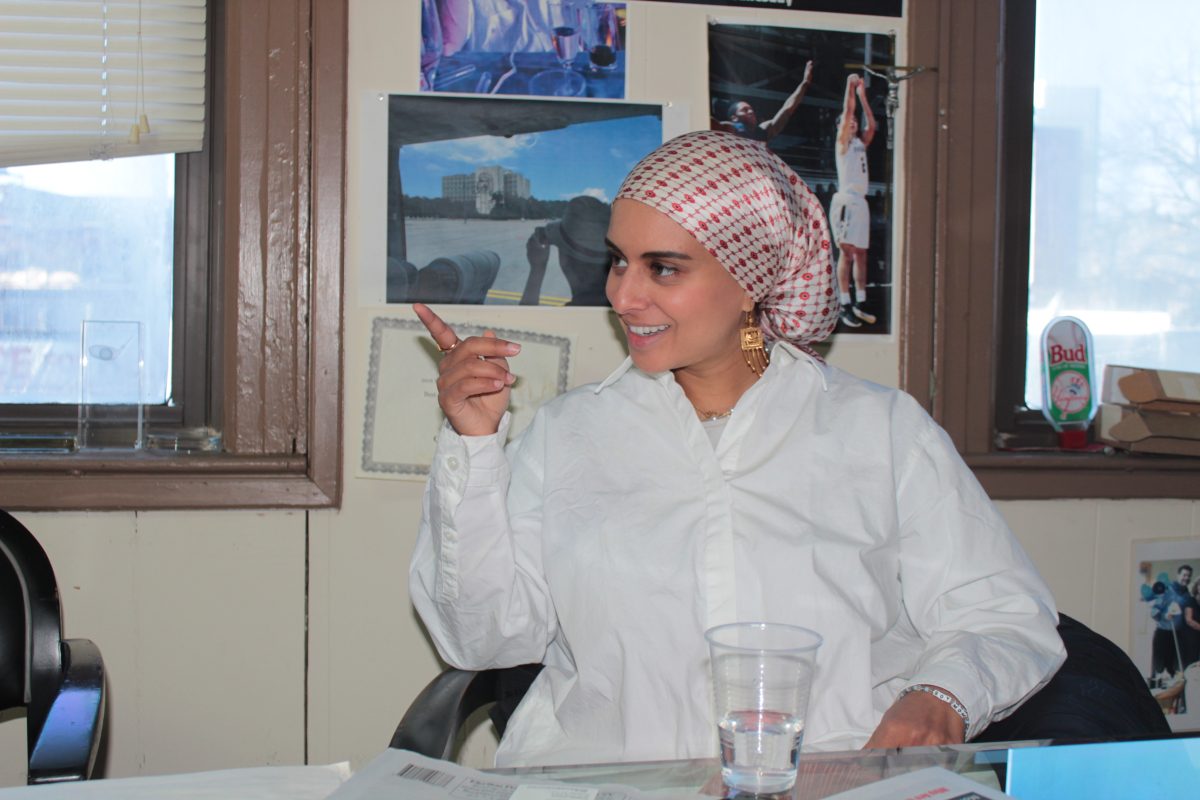
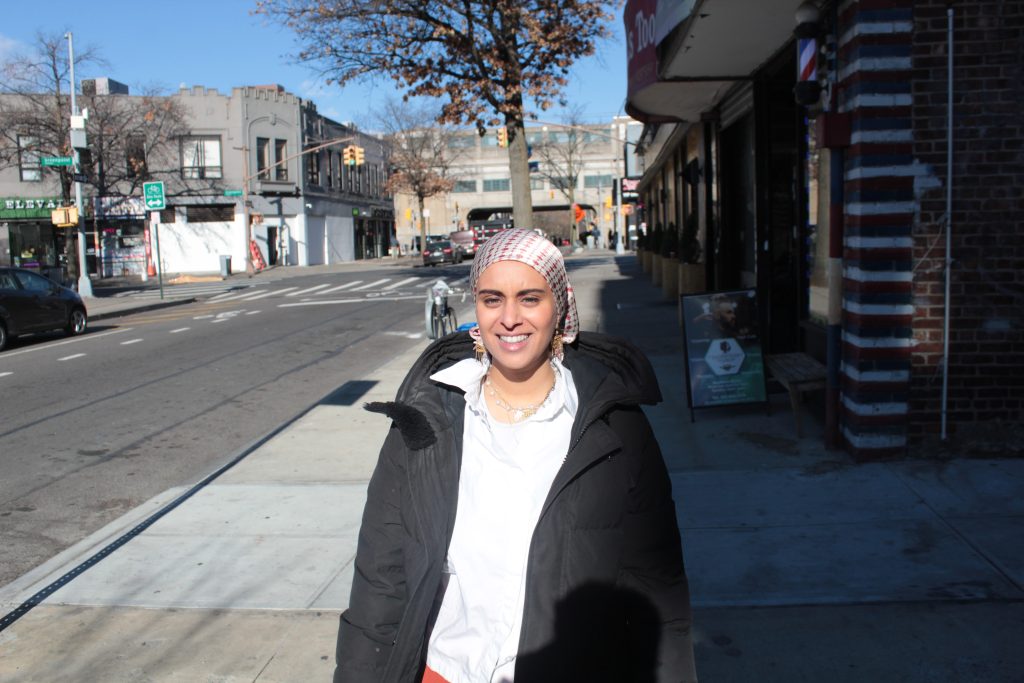
On Steinway Street, where bustling halal restaurants sit alongside vacant storefronts, Rana Abdelhamid has spent nearly two decades organizing, teaching self-defense and showing up when neighbors needed help. For Abdelhamid, safety in Astoria has always meant more than policing, it has meant housing, food and a community that looks out for one another. Now, the 32-year-old Astoria native is running for New York State Assembly District 36, seeking to bring that vision to Albany.
Abdelhamid, a Townsend Harris High School graduate who went on to attend Middlebury College in Vermont, grew up working class in Queens, watching her father operate a small butcher shop on Broadway and 42nd Street. She said those early experiences shaped her understanding of economic insecurity and the pressures facing small businesses and immigrant families.
“I love the community that raised me,” Abdelhamid said. “And right now, as a new mom, I think deeply about whether people can actually stay here and raise their families.”
Abdelhamid said her path into organizing began as a teenager after surviving a hate-based attack, when a man tried to pull off her hijab. Trained in karate, she defended herself and later began teaching self-defense to girls in her neighborhood. That work evolved over the past 17 years into Malikah, a nonprofit organization she founded and currently leads as executive director. The organization operates a storefront mutual aid hub on Steinway Street, providing support to residents facing housing insecurity, domestic violence and food access challenges. Programs include the Queens Mutual Aid Fund, the Astoria Halal Fridge and widely attended food festivals such as the Night Market, aimed at supporting local businesses along Steinway Street.
People in the neighborhood, Abdelhamid said, have given her an informal nickname.
“People have developed this nickname for me,” she said. “They call me ‘the mayor of Queens,’ because when someone needs help, we show up.” She said that presence goes beyond crisis response, emphasizing joy and cultural connection through food tours, festivals and neighborhood history walks centered on Astoria’s “Little Egypt” corridor.
Over the past several years, Abdelhamid said running a storefront has brought her face to face with what she describes as growing affordability pressures and fear among immigrant communities.
“I’ve been confronted with the realities and challenges of affordability and fear for safety for immigrant communities,” she said, noting her work with asylum seekers who came to Malikah “in their most dire state.”
If elected, Abdelhamid said she would step down from her role at Malikah. Her legislative priorities include housing, tenant protections and long-term neighborhood stability. The district includes Queensbridge Houses, Ravenswood Houses and Astoria Houses, the largest concentration of public housing in North America.
“Bringing funding to public housing is critical,” she said, while also emphasizing the need for fully funded legal representation for tenants navigating housing court. Abdelhamid also pointed to homeownership pathways, community land trusts and cooperative housing models as long-term solutions.
She said community ownership is key. “Space is a luxury in this city,” Abdelhamid said. “It shouldn’t be so difficult for our community to have it.”
Abdelhamid also said she is deeply concerned about small business survival in Astoria, pointing to high commercial rents and a growing number of vacant storefronts.
“As someone who runs a storefront, I know how difficult it is to sustain a business if there’s a rent spike,” she said, adding that long-term sustainability must be part of Albany’s approach.
Abdelhamid also pointed to her role in helping pass the Middle Eastern and North African data disaggregation bill earlier this year as an example of how she works with lawmakers to deliver concrete results. She helped build a coalition of community groups and advocates that pushed the legislation forward, working closely with local representatives to address long-standing gaps in how MENA communities are counted in state data. Abdelhamid said the bill was critical to ensuring those communities are no longer rendered invisible in policy decisions around health care, education and economic resources.
She has worked closely with several local and state officials, including Assemblymember Zohran Mamdani, the district’s current representative and New York City’s mayor-elect, whom she said she has collaborated with extensively through mutual aid work. She also cited State Sen. Michael Gianaris, who helped advance the Middle Eastern and North African data disaggregation bill earlier this year, New York Comptroller Brad Lander has served as a political mentor and Assemblymember Jessica González-Rojas, whose work on food insecurity she said resonated with her own experience growing up.
“Children shouldn’t have to worry about paying for their meals,” Abdelhamid said.
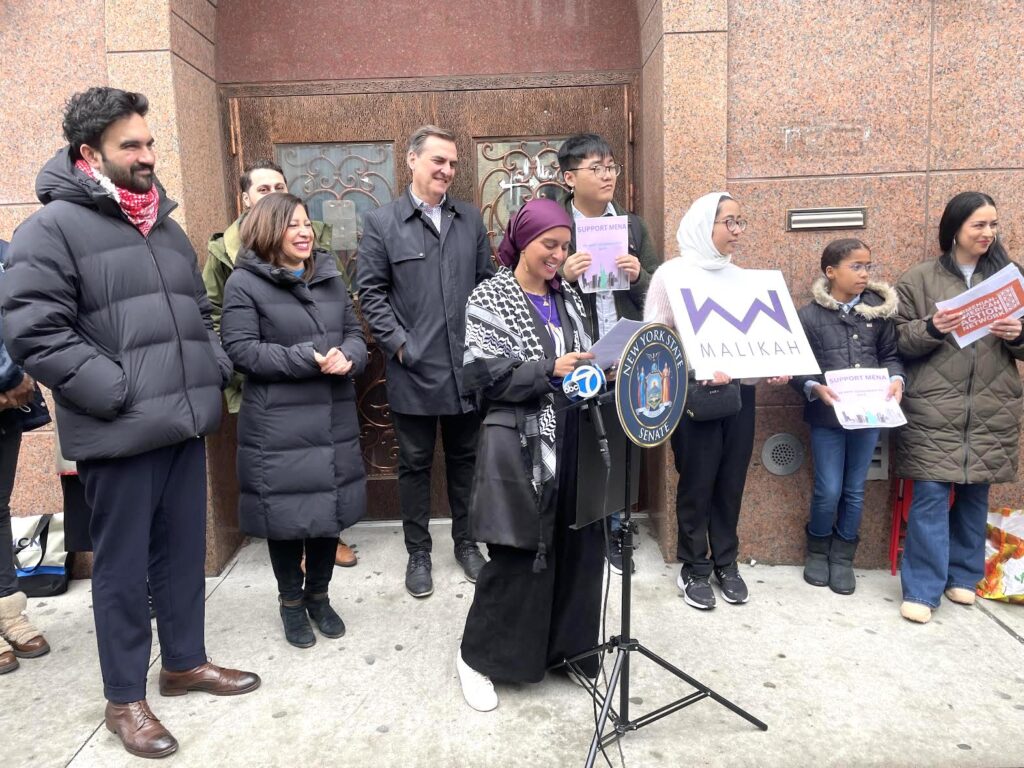
Her advocacy has also extended to immigration issues. She said she was recently in court following an incident in which a local Astoria resident was detained by Immigration and Customs Enforcement after being transferred from another agency.
“We could be at the forefront of protecting our communities and be an example for the rest of the country,” Abdelhamid said, adding that she believes the NYPD should not collaborate with ICE.
Abdelhamid previously worked at Google, focusing on social impact and diversity initiatives within the tech industry. She said that experience informs her views on data protection and representation.
She ran for Congress in 2021, but redistricting removed her neighborhood from the district before the election.
She said the experience reinforced her belief that voters want leaders rooted in lived experience.
“What I learned is that people are hungry for a different kind of leadership,” she said. “My community, as a North African community, is excited for that leadership.”
As a new mother of a five-month-old, Abdelhamid said child care affordability has become deeply personal. She cited average monthly child care costs in Astoria of roughly $2,000 for one child and expressed support for free child care, while emphasizing fair pay for workers.
“In order for us to have a good and effective child care system, we have to take care of the people offering the care,” she said, noting that many child care workers in her community are underpaid and face discrimination. On housing development, Abdelhamid said she supports building more housing but insists affordability and accessibility must be central.
“I’m not someone who’s opposed to building housing fundamentally,” she said. “We just haven’t built enough that’s actually affordable.”
Politically, Abdelhamid is a member of the Democratic Socialists of America but said her campaign is not driven by factional identity.
“My political home is more expansive than that,” she said. “This isn’t a race about ideologies or factions. It’s a race about a place I’m embedded in and that I love.”
Reflecting on Astoria’s transformation, Abdelhamid described a neighborhood shaped by growth spilling over from Long Island City, while worrying about what may be lost.
“It’s such a strong and vibrant community,” she said. “A place where you feed each other and watch over one another’s kids. I have this fear and anxiety that this sense of community and connectivity is fading.”