
Forest Hills Stadium Concerts May Continue as Lawsuit Faces Exit
By MOHAMED FARGHALY
mfarghaly@queensledger.com
A slate of seven candidates is poised to reshape the Forest Hills Gardens Corporation after last week’s board election, signaling what residents say is the likely end of the costly years-long lawsuit targeting the West Side Tennis Club and its concert operations.
The newly elected members, who ran as part of an organized alternate slate, will now hold a seven-member majority on the 15-seat board. Their victory marks the most significant change in Gardens governance in recent years, signaling that months of escalating litigation over the stadium’s operations may soon be resolved. The election outcome follows nearly three years of internal strife that intensified after several incumbents moved to limit the number of stadium events and pursued lawsuits that have already cost the corporation hundreds of thousands of dollars in legal fees. Homeowners increasingly questioned the financial toll of the dispute, prompting a push among residents for new leadership ahead of this month’s vote.
The results, certified midday Monday, confirmed that the alternate “Forest Hills Gardens Stand Up” slate secured control of the seven open board seats, giving the group an effective majority on the board beginning Jan. 1. Supporters of the slate said the vote reflected growing concern among homeowners over the cost of prolonged litigation and a desire to redirect resources toward neighborhood services rather than legal fees.
The newly elected board members have signaled plans to move quickly to settle the lawsuit involving Forest Hills Stadium, reduce the number of concerts while negotiating increased compensation for the Gardens, and restore coordination with the NYPD for event security. The group has also outlined broader priorities, including enhanced public safety measures, upgraded security infrastructure and improvements to shared spaces, as it seeks to stabilize governance and repair strained relations within the community following months of internal division.
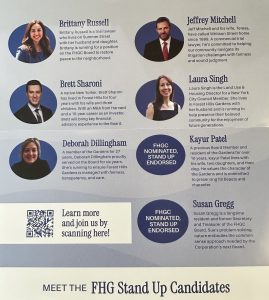
The seven newly elected board members bring a mix of legal, financial and civic experience to the Forest Hills Gardens Corporation. Brittany Russell, a trial lawyer who lives on Summer Street with her husband and daughter, said she ran to help restore stability and reduce conflict within the neighborhood. Jeffrey Mitchell, a commercial trial lawyer and former board member who has lived on Whitson Street since 1999, previously chaired the corporation’s legal committee and has been a vocal advocate for resolving disputes through negotiation rather than extended litigation.
The incoming board also includes Brett Sharoni, a Forest Hills resident with an MBA from Harvard and more than a decade of experience as an investor; Deborah Dillingham, a Gardens resident of 27 years who previously served six years on the board; Laura Singh, the land use and housing director for a New York City Council member; Kayur Patel, a former board member and longtime resident; and Susan Gregg, a former secretary and treasurer of the corporation. Collectively, the group has emphasized fiscal oversight, transparency and a renewed focus on neighborhood priorities as it prepares to assume its roles in January.
With a majority secured, members of the coalition are expected to drop the existing lawsuit and pursue a settlement, according to source’s familiar with the group’s plans.
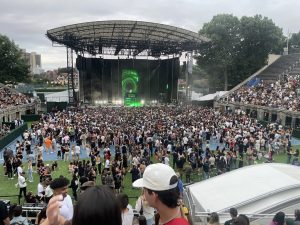
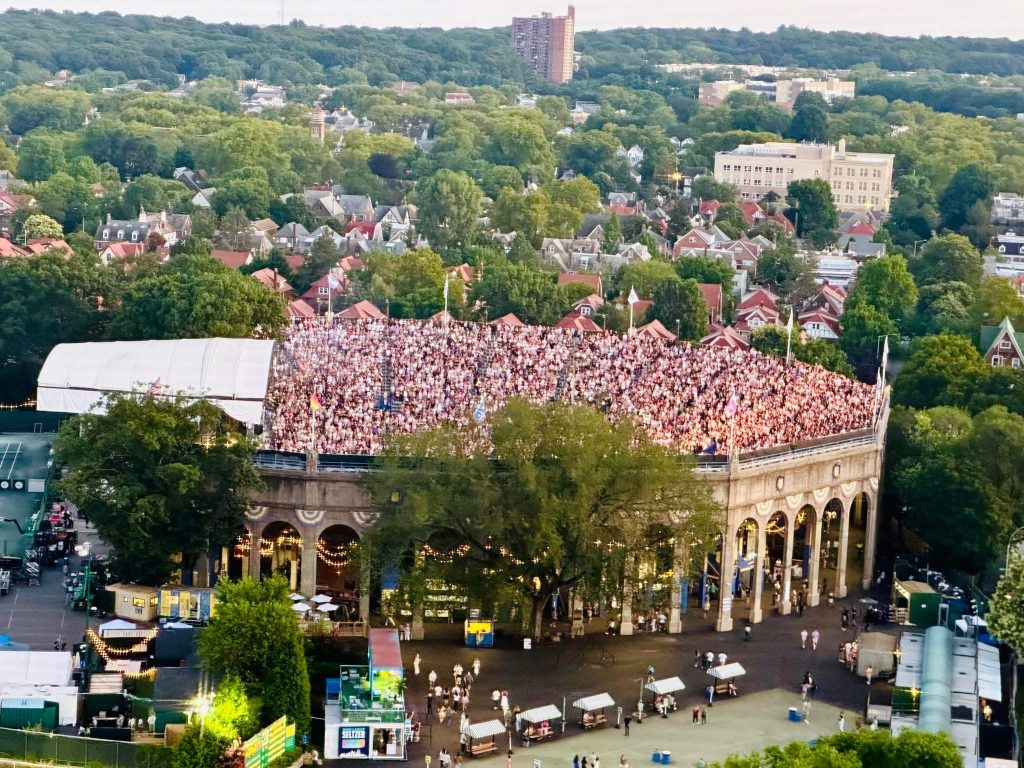
Forest Hills Stadium, built in 1923 as part of the West Side Tennis Club grounds, has long been one of New York City’s most storied performance and sporting venues. Originally constructed as a horseshoe-shaped tennis arena, it served as the longtime home of the U.S. National Championships—now the U.S. Open—until the tournament moved to Flushing Meadows in 1978. Over the decades, the stadium became equally known for its concerts, hosting landmark performances by artists such as The Beatles, Barbra Streisand and Jimi Hendrix.
After years of limited use and deferred maintenance, the stadium underwent a major revival beginning in the mid-2010s, when a partnership between the West Side Tennis Club and an independent concert operator restored the aging structure and reintroduced large-scale events. New seating, improved acoustics, structural repairs and enhanced crowd-management systems helped transform the venue into a modern, open-air concert site while preserving its historic character. The renewed programming brought significant foot traffic and local economic activity to Forest Hills, making the stadium a cultural anchor once again—and a point of debate within the surrounding Gardens community.
The alternate slate campaigned on a platform of fiscal restraint, transparent governance and a willingness to negotiate with the stadium’s operators rather than continuing in court.
Forest Hills Gardens Corporation, which oversees zoning, maintenance and architectural review within the landmarked private community, has long played an indirect but influential role in the stadium’s viability. While the stadium is owned by the West Side Tennis Club, the corporation has approval authority over certain uses that affect neighborhood character and quality-of-life standards. That authority has been at the center of the dispute, as the previous board sought to curtail the number of concerts permitted annually.
Stadium supporters argue that events have boosted the local economy and helped fund major renovations at the century-old venue, while opponents raised concerns over crowd size, noise and traffic. Despite the disagreements, a majority of homeowners have expressed a desire for compromise rather than continued litigation, which became a driving force behind this year’s election.
With a new majority now seated, residents expect swift action aimed at reducing legal expenses and stabilizing relations between the Gardens, the West Side Tennis Club and the stadium’s management team. The outcome also offers clarity for concert operators, who had awaited the election results before finalizing future programming.
A negotiated resolution between the new board and stadium representatives would likely allow concerts to continue under updated guidelines, putting an end to a dispute that has divided the community and overshadowed other priorities.