
Queens Chamber of Commerce Honors local business leaders at annual awards dinner 

By COLE SINANIAN 

news@queensledger.com

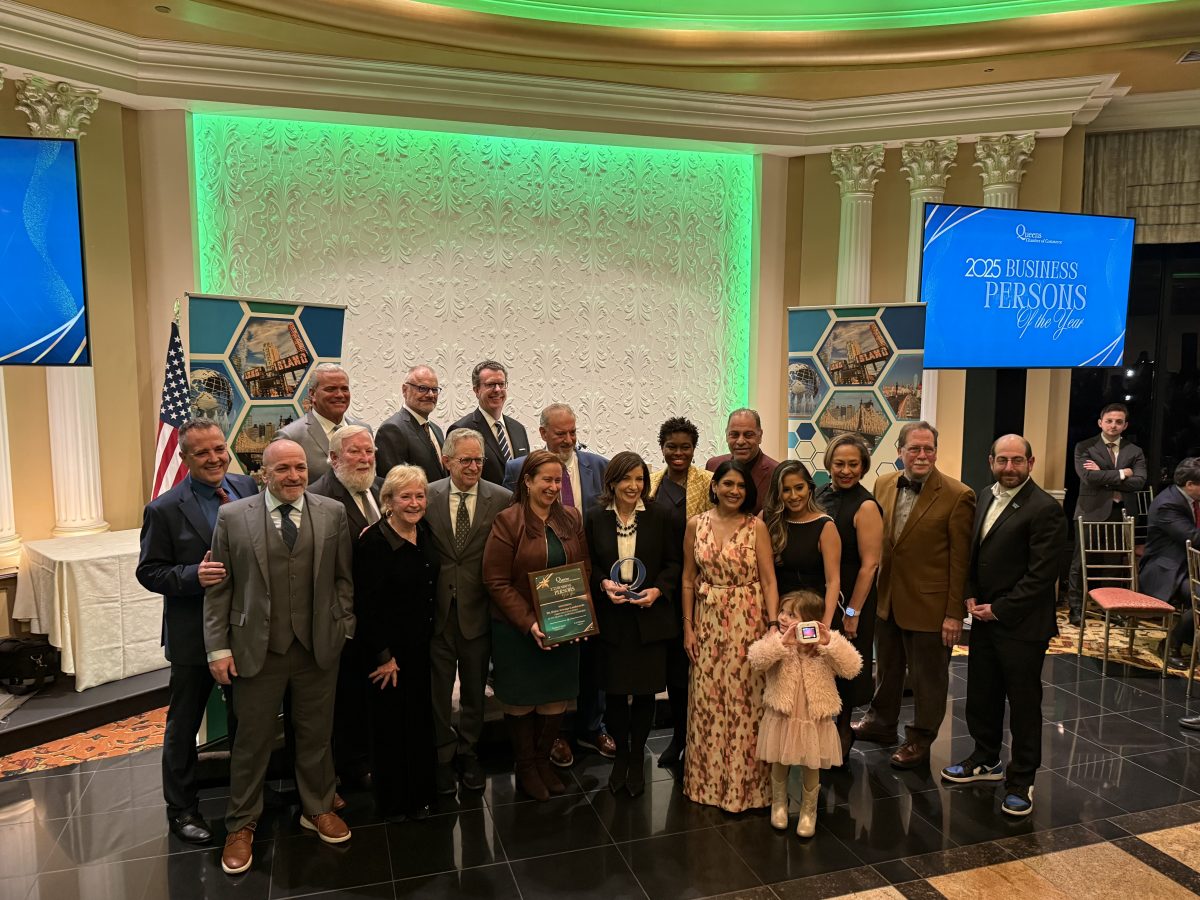
Hundreds gathered at Flushing Meadows Corona Park on December 3rd to honor Queens’ best and brightest business leaders for the Queens Chamber of Commerce’s annual Queens Business Persons of the Year Awards Dinner. 

Governor Kathy Hochul addressed the crowd, as did Queens Borough President Donovan Richards Jr., both praising the seven leaders honored for their service to the borough and their  commitment to the betterment of the community. The leaders honored at the ceremony are Cheryl McKissack Daniel, Larry Zogby, Bob and Maureen Shoule, Dr. Helen Arteaga, Kenneth Koenig, and Richard Grebinger. 

“I’m thrilled that the Queens Chamber of Commerce is honoring an outstanding group of local leaders who have contributed so much to our borough’s prosperity and vitality,” Richards said. “They have truly gone above and beyond in showing their commitment to the betterment of our community.” 

“Bringing people together to honor leaders like Cheryl, Larry, Bob and Maureen, Dr. Arteaga, Kenneth, and Richard is one of the best parts of what we do,” said Tom Grech, President and CEO of the Queens Chamber of Commerce. 

Dr. Helen Arteaga Landaverde — CEO, NYC Health + Hospitals/Elmhurst

When she took the helm of the NYC Health + Hospitals Elmhurst branch in 2021, Dr. Helen Arteaga made headlines as the first Latina to lead the hospital, which is a Level 1 Trauma Center. Since she took over, the hospital has grown into one of the nation’s best, with US News and World Report naming it as the area’s “best regional hospital. She’s brought tens  of millions in public funding to the facility, notably securing $27.5 million in state money for a new women’s pavilion and a pediatric intensive care unit. She holds degrees from New York University, Columbia University, and in 2025 was honored in City and State New York’s Queens Power 100 list. 

Cheryl McKissack Daniel — President and CEO of McKissack & McKissack 

As leader of the country’s oldest minority and woman-owned design and construction firm, Cheryl McKissack Daniel’s story is one of family, triumph over hardship, and Black excellence in America. Her book, “The Black Family Who built America,” traces her family’s 230-year legacy from enslavement all the way to the design of some of the city’s most iconic buildings, including the New Terminal One at JFK International Airport, the LaGuardia Airport’s Central Terminal Building Redevelopment, the Coney Island Hospital Campus Renovation, and Columbia University’s Manhattanville expansion, among others. McKissack and her family’s work is a testament to the often overlooked but nevertheless essential contribution of Black families’ to America’s built environment. 

Bob and Maureen Shoule

As the team behind the Jamaica Customs Brokerage and Freight Forwarding company, J.W. Hampton Jr & Co., the Shoules helm a 160-year-old company that’s adapted quickly to serving importers and exporters in the ever-changing landscape of international trade. With their sons, Bobby and Michael, Bob and Maureen Shoule form the heart of a multi-generational company that’s earned a reputation for efficiency, integrity, and reliability.
Injecting the Christmas Spirit into Our Politics

Robert Hornak

Robert Hornak is a veteran political consultant who has previously served as the Deputy Directvor of the Republican Assembly Leader’s NYC office and as Executive Director of the Queens Republican Party. He can be reached at rahornak@gmail. com and @roberthornak on X.

In the modern Christmas classic Scrooged, a retelling of the Charles Dickens story A Christmas Carol, Bill Murray plays jaded TV executive Frank Cross, the Scrooge character who is shown the emptiness of his life by the ghosts of Christmas past and present, and by the ghost of Christmas future how it will end if he doesn’t wake up.

In the final scene, Frank Cross has his epiphany on the set of a live TV production of A Christmas Carol. His speech was about how the Christmas spirit doesn’t need to be only once a year, that we can hang on to that special feeling all year long.

Cross makes his highly emotional plea proclaiming, “It’s Christmas Eve! It’s… it’s the one night of the year when we all act a little nicer, we… we smile a little easier, we share a little more… for a couple of hours out of the whole year we are the people that we always hoped we would be.”

Being who we always hoped to be is a worthy goal for our political discourse now also. American politics has never been for the sensitive. We should admit that at the start, so as to not be under any illusion that things were never like this before.

It was reported that while serving in Washington’s cabinet things were so bad between Jefferson and Hamilton, they could not be in a room together without fighting. This carried over into 1800, our first competitive presidential election where the sides were forming along ideological lines. Personal insults and false accusation were commonplace. And, just like today, the lies and accusations were driven by purely political differences.

The Federalists, led by Hamilton, represented mostly urban interests and the desire for a strong central government. The Republicans were led by Jefferson and Madison, represented mostly rural interests, and fought for a more decentralized government and emphasis on individual rights.

What the founders didn’t have, or any of the generations of political leaders since then, was social media. Today we are bombarded daily with a flow of negative comments, name calling, and even death wishes, for our elected leaders on both sides.

We are learning how the constant barrage of social media is negatively influencing our youth, leading to the highest levels of depression and anxiety ever. But the effect has been the same on our politics and it’s getting worse over time. And it’s leading to atmosphere where violence is now considered a viable option by many when advocacy doesn’t work.

Our experiment in self-rule was a novel concept in the 1700’s. The world was run by kings and clergy prior to the American revolution. The idea that people could choose their own leaders was, well, revolutionary.

But it only works if we all agree that we engage in civil discourse, and even spirited and sometimes aggressive debate, but once the people speak, which they do every November, we all come together, work together, and keep this experiment going for the next generation.

And while everyone thinks it’s only the other side, it’s everyone. Just like it was both Jefferson and Hamilton. Who started it is irrelevant, blame the founders. But the extreme rhetoric magnified by social media has become toxic. Hating anyone for their politics is something we all can stop doing. Calling people Hitler (literally one of the worst mass murderers in history) is also something each of us can promise to stop. Spreading those messages on social media is something we all must do.

We are in a new era of politics, unchartered territory in people’s ability to amplify their most base feelings. Our foreign adversaries will certainly be exploiting that to drive division in our country. There is no reason we need to as well. Wanting higher or lower taxes or spending should not be a reason to hate anyone.

It’s the holiday season, so let’s embrace that belief in good will toward man and make our resolution to be the people that we always hoped we would be and disagree without being disagreeable.

Queens Muralist Brings Hope to Public Spaces

Woodhaven Artist Champions Healing Through Art

By MOHAMED FARGHALY

mfarghaly@queensledger.com

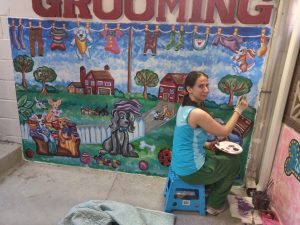
For Deborah Camp, art has never been a hobby. It has been a lifeline, a career and a calling tied deeply to the Queens neighborhoods where she grew up. A lifelong Woodhaven resident, Camp traces her creative roots through generations of artists in her family — her mother, grandmother and great-grandfather.

“I was surrounded in this artistic environment,” she said. “I started painting and drawing when I was three years old, and I used to scribble all over the walls. Now I make a joke to my mom that I was just practicing to be a mural artist.”

Today, Camp works full-time as a muralist and art instructor, using her illustrations, writing and community partnerships to promote mental health and resilience. The work is personal, she says, shaped by the years she spent as a teen trying to cope with severe bullying.

“Escaping into the world of art and drawing my own characters and making up stories made me feel better,” Camp said. “I was able to cope with all of the trauma through art. Now I use that to help children heal and show that you can become resilient and strong by tapping into your gifts.”

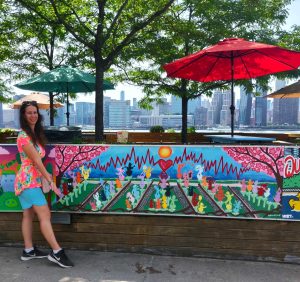
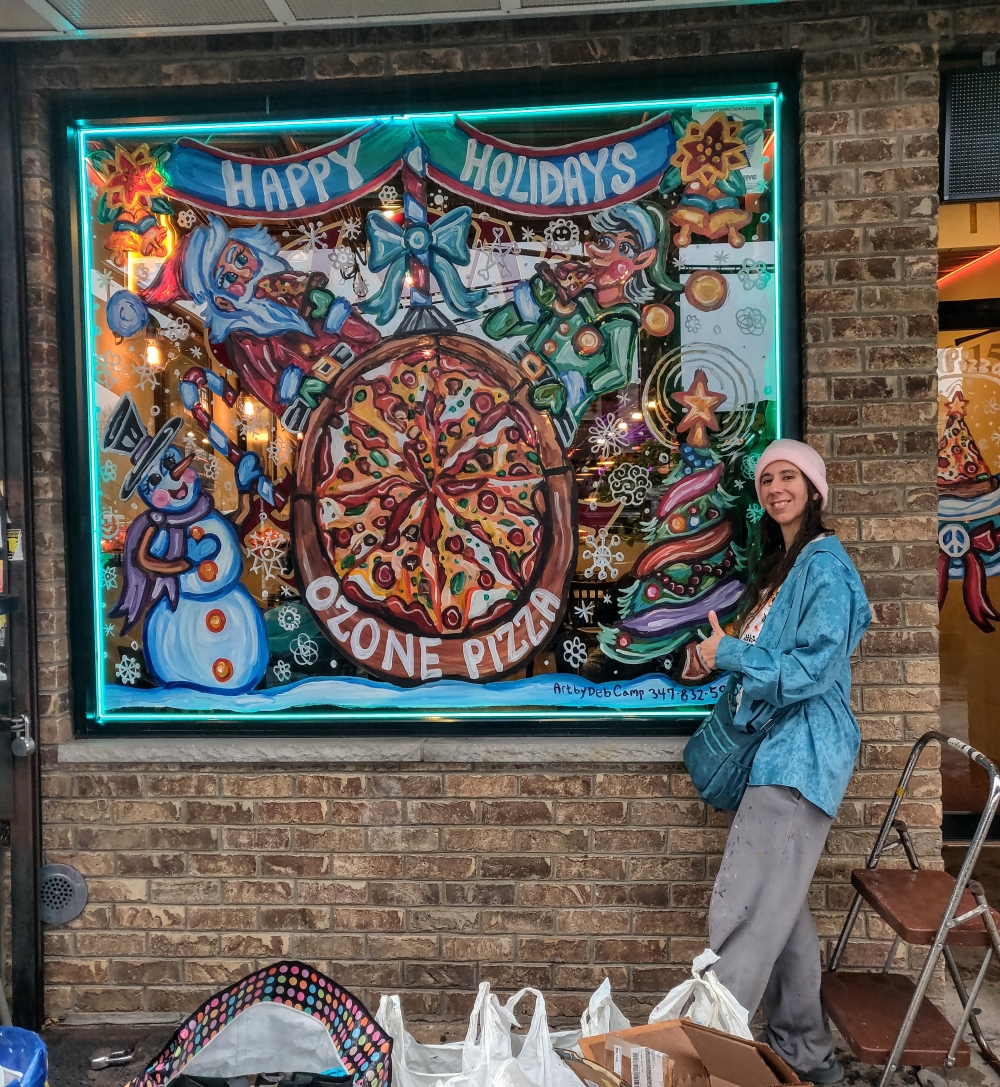
Her murals appear on storefront windows and walls across Queens, and she teaches art through workshops, school programs and library classes. She has partnered with local organizations to spread messages of hope, most notably at Elmhurst Hospital, where she painted a wall mural and pillar murals for the suicide prevention unit for youth.


“That one I’m most proud of,” she said. “I was severely bullied as a teen, and to know that my work is inspiring children going through something similar is a full-circle moment. They can see messages of hope and uplifting illustrations. That’s why I do what I do — to champion mental health.”

Camp studied fine arts at Queens College, always knowing she wanted to turn her passion into a profession. Over the past decade she has painted more than 350 windows and walls, a journey that she says began by accident. In 2011, while looking for art gigs on Craigslist, she found a prep shop seeking a window artist.

“I never painted a window before, but they picked my concept because they believed in me,” she said. “Since then, I’ve had more and more clients reaching out. I love what I do, and I’m going to keep going to see where it leads me.”

Most of her projects remain rooted in the borough. She recently partnered with PS 209 in Whitestone to run the CASA art program, creating curriculum that blended Queens history and hands-on creativity. She has taught at the Woodhaven branch of the Queens Public Library, collaborated with the Woodhaven Business Improvement District and worked with American Airlines at JFK Airport to paint morale-boosting window art for employees.

“I would say about 95% of my work is in the Queens community, because I strongly believe that Queens should support Queens,” she said.

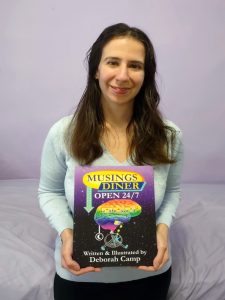
Camp is also an author. In 2023, she self-published Musings: Diner Open 24/7, a book combining 20 years of artwork and poetry centered on overcoming fear and personal obstacles. She hopes it inspires adults and children facing challenges similar to those she once did.

“If nobody will publish my work, why don’t I do it myself?” she said. “I want people to see my story and be inspired that they can do what they believe in. If they have a drive and passion for it, they can get it — but they have to work hard for it.”

Her next major project represents a milestone for Forest Hills. Camp recently received approval from the New York City Parks Department to paint six murals in McDonald Park on Queens Boulevard, scheduled for spring 2026.

“This is the first time in 95 years that a wall mural will be painted there,” she said. “I’m very excited about it.”

Early fundraising is underway, supported by individual donations through her GoFundMe, a business sponsorship from Ridgewood Savings Bank’s Forest Hills branch and a grant from the New York City Grassroots Green Fund. The effort is backed by fiscal sponsor Woodhaven Mural Project, a 501(c)(3) nonprofit. Camp plans a grand unveiling event with local performers, music and monthly children’s art workshops in the park.

Her creative process, she says, always begins with a sketch and a soundtrack. She draws in pencil and marker while listening to music that helps shape the concept, then moves to color drafts and final painting with brushes and window paints. Projects can take anywhere from hours to days.

“I feel like any piece should tell a story,” she said. “When the viewer can see a part of themselves in it or feel something emotionally, that’s how you know it’s a successful piece.”

For aspiring artists, Camp’s message is emphatic: persistence matters more than anything.

“Never give up,” she said. “If you find your artistic style, develop it. Find what you keep going back to, that’s the thing you were meant to do. And ask yourself why you want to be an artist. If you can answer that, it will lead you where you need to go.”

Support Deborah Camp’s upcoming Forest Hills mural project and help bring art and hope to the community by donating at tinyurl.com/debcampforesthills.

Camp encourages local organizations and businesses interested in window or mural art to reach out. She can be contacted at deborahcamp@hotmail.com, and her work appears on Instagram at artsbydebcamp.

Queens Leaders Rally for Lower Energy Bills

Advocates Urge Hochul to Act on Soaring Utility Costs

By MOHAMED FARGHALY

mfarghaly@queensledger.com

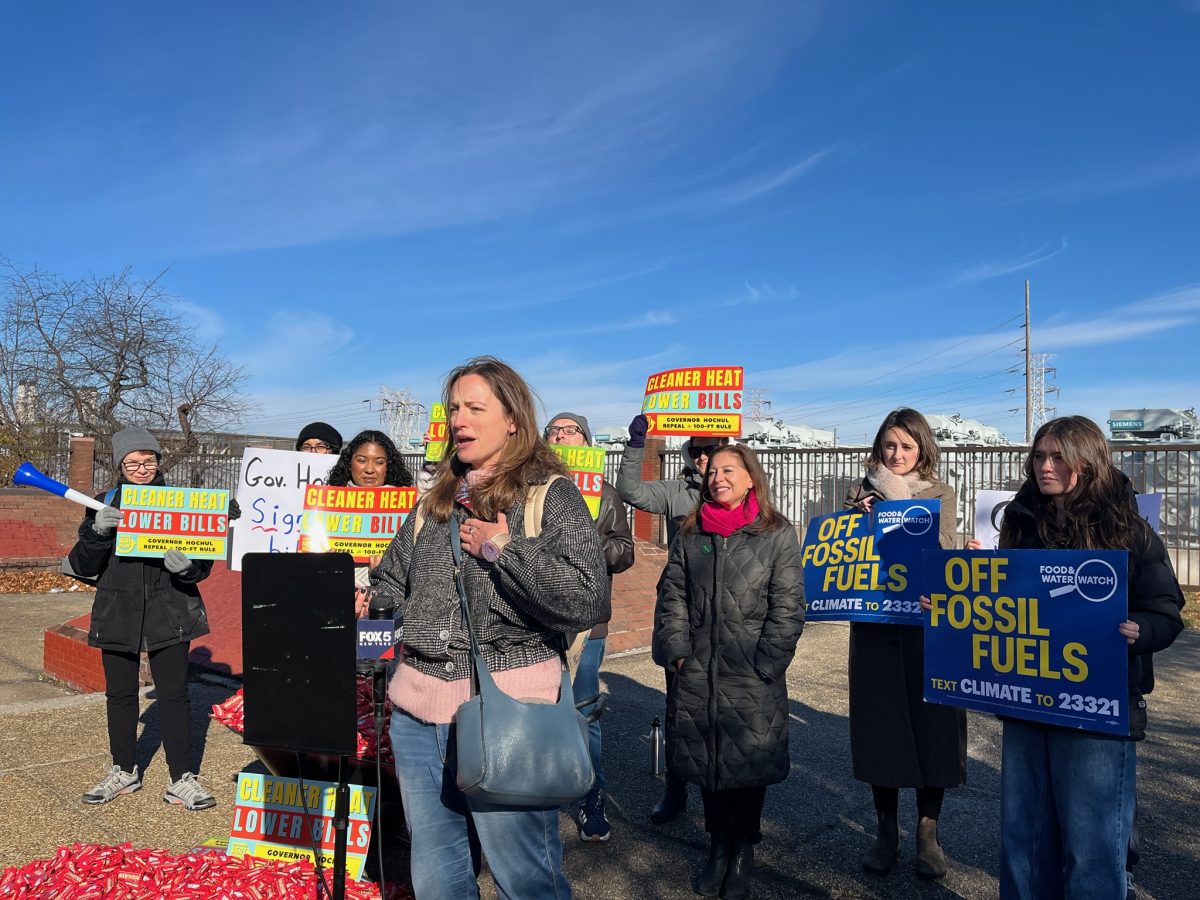
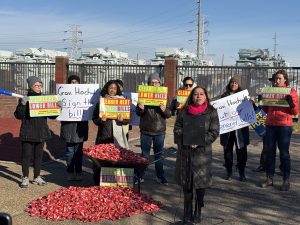
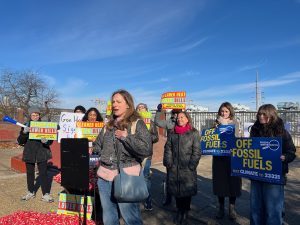
Queens lawmakers and climate advocates gathered outside Con Edison’s Astoria plant on Dec. 3, urging Gov. Kathy Hochul to sign legislation that would repeal New York’s “100-foot rule,” a decades-old subsidy they say burdens ratepayers with hundreds of millions of dollars in unnecessary gas infrastructure costs.

The event was part of a coordinated statewide campaign led by the Renewable Heat Now coalition and more than 20 partner organizations pushing for a transition to cleaner, more affordable home heating. Advocates held similar rallies this fall in Kingston, Westchester, Rochester and Brooklyn, making the Queens stop one of the final pushes before the governor’s year-end signing deadline.

Organizers say the 100-foot rule forces all gas customers to subsidize new gas line extensions for any building located within 100 feet of a main. That cost, they argue, contributes directly to rising delivery charges on gas bills, even for residents who use little energy or live in small apartments. State regulators estimate the rule adds nearly $600 million to customers’ bills each year.

“New Yorkers, especially the working families and immigrant communities I represent are being squeezed by an outrageous cost-of-living crisis. With energy bills climbing higher and higher, our neighbors need relief as soon as possible. Repealing the 100-foot rule is a commonsense fix that can deliver immediate support and protect families by repealing the requirement for ratepayers to subsidize fossil fuel infrastructure expansion. I urge Governor Hochul to finish the job and sign this bill before the year ends so we can bring meaningful, much-needed relief to communities across our state,” said Assemblymember Jessica González-Rojas, who helped anchor the Queens event.
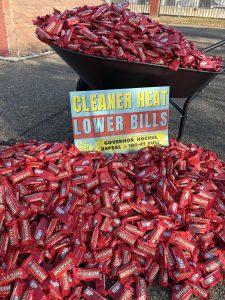
González-Rojas has been one of the coalition’s most active supporters, and organizers built the Astoria appearance around her participation. The rally also featured a wheelbarrow filled with 5,810 “100 Grand” candy bars, a visual symbol of the $581 million they say New Yorkers could save if the repeal becomes law.

The 100-foot rule repeal passed both houses of the Legislature in June with broad margins. It represents a piece of a larger bill, the New York Heat Act, which climate groups have been trying to advance for more than three years.

Lisa Marshall, an organizer with Renewable Heat Now and a member of New Yorkers for Clean Power, said the coalition is racing the clock to keep pressure on the governor. “For the past few years, we’ve been trying to pass the bill called the New York heat act, and which is with enact reforms that would mean cleaner heat and lower bills for all New Yorkers,” she said. “At the end of the legislative session in June, one of the big pieces of the New York heat Act passed through the legislature, not the whole bill. The piece that passed the legislature is called the repeal of the 100 foot rule.”

Marshall said advocates have spent months holding regional press conferences, gathering thousands of postcards and meeting with legislators. “We’ve been doing press conferences all over the state. We have 1000s and 1000s of postcards people have signed asking the governor to sign the bill,” she said.

During the Astoria rally, supporters emphasized that even Con Edison has endorsed ending the mandate. In a statement last week, the utility said, “Con Edison recognizes the need to advance the clean energy future, and we support the legislative repeal of the 100-foot rule entitlement.”

Marshall said the support reflects shifting priorities among some utilities. “I think they are interested in really building out their electric service side, and being part of building electrification,” she said.

But she noted that not all utilities share that view. “Yes, national grids pretty opposed because they see an opportunity to make a lot of money on Long Island, where a lot of people are still on oil, by extending the gas system to those people who are on oil and propane,” Marshall said. She added that utilities profit from infrastructure expansion rather than fuel sales, giving them incentives to extend gas lines even as the state tries to reduce fossil fuel use.

Queens advocates said their borough’s rising bills and economic pressures make the reform especially urgent. Many cited recent rate increases from both Con Edison and National Grid. Marshall said residents often misunderstand why bills climb annually. “It’s not because people are using more gas. It’s because the utilities are just getting away with murder raising these bills,” she said.

Advocates argue the rule is outdated and inequitable, pointing to states like California, Colorado, Connecticut and Maryland that have already ended similar subsidies. They believe repealing the rule in New York would slow future rate hikes by removing a major cost driver, even if it does not immediately lower bills.

“New Yorkers are being squeezed by rising costs, and working families deserve real relief wherever we can deliver it. Repealing the 100-foot rule is the most basic step lawmakers can take to discourage new, outdated fossil-fuel infrastructure while lowering energy bills and accelerating our fight against climate change. The Legislature has done its part. Now the governor must sign the bill,” said Assembly member Claire Valdez.

With the governor yet to indicate when she will act, the coalition says it plans to hold what it calls its final press conference of the year in Albany on Thursday, where members will deliver postcards urging her to sign the bill. Marshall said advocates remain hopeful but are prepared to continue pushing. “I don’t know what to say if she doesn’t sign it. I guess we’re just gonna have to keep on fighting,” she said.

She added that the repeal aligns with Hochul’s stated goals on affordability. “It’s a little baffling that she hasn’t signed it, if I’m being honest,” Marshall said. “This bill just makes a lot of common sense for her to go ahead and sign and start providing, you know, a step towards energy bill relief for New Yorkers.”

For many of the Queens residents and organizers gathered in Astoria, the message to the governor was simple: ending the rule would protect families facing another winter of rising costs.

Community Gathers for Festive Tree Lighting 

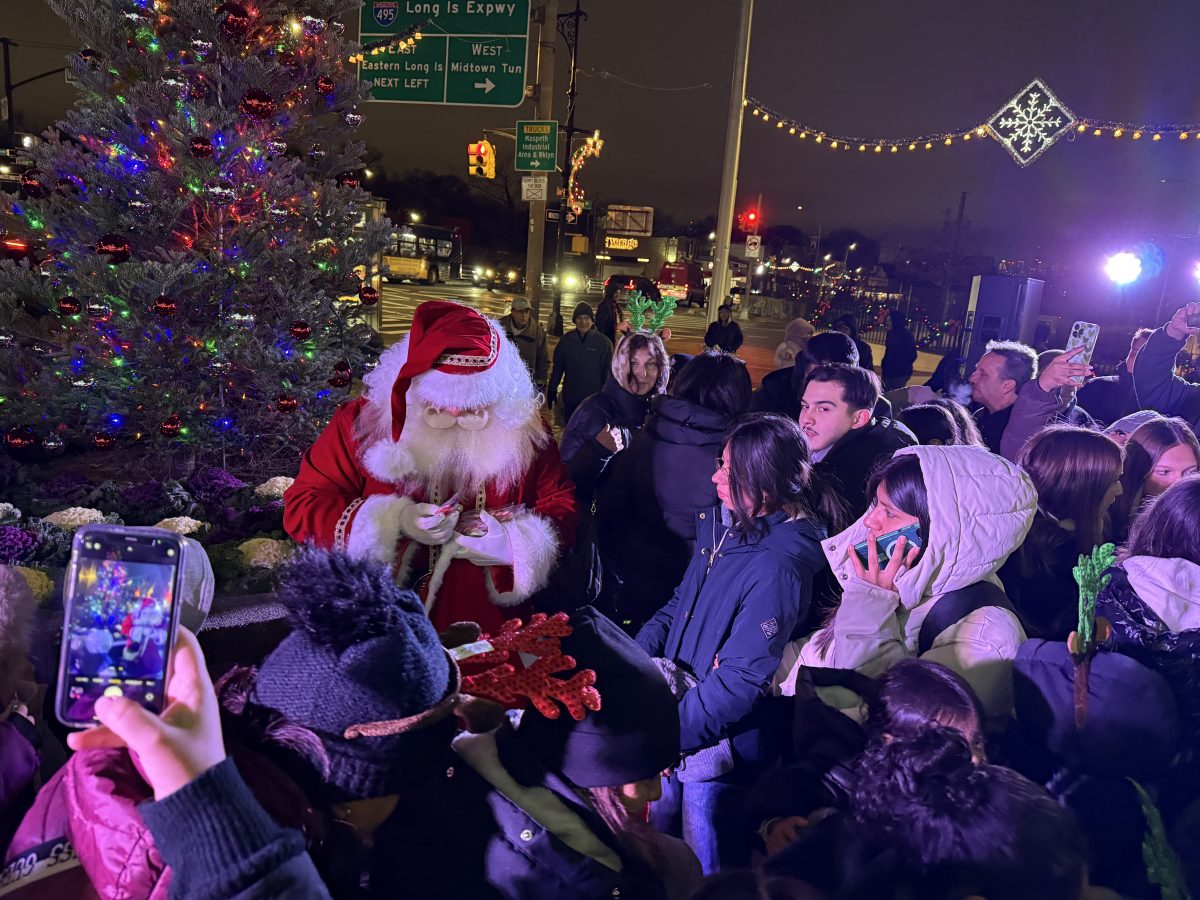
The Middle Village community marked the start of the holiday season with its annual Christmas Tree Lighting Ceremony, held on December 5 and sponsored by the Middle Village Chamber of Commerce, the Queens Chamber of Commerce and the Middle Village Property Owners. Families crowded the gathering space as lights, decorations and the anticipation of Santa’s arrival set the tone for a festive evening.

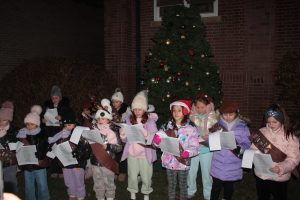
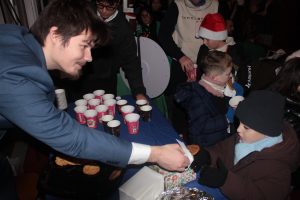
Girl Scouts from Troops 4395, 4620, 4734 and 4618 of Trinity–St. Andrew’s Church in Maspeth, along with Troop 4733 from Our Lady of Hope and Troop 4641 from PS 49, opened the program with a set of classic Christmas songs. Their renditions of seasonal staples like “Frosty the Snowman” and “Santa Claus Is Coming to Town” drew cheers from parents and neighbors before the scouts celebrated their own reward, hot chocolate and cookies waiting inside.

After the music, families lined up for free photos with Santa as volunteers handed out small gifts to children. With treats, carols and a brightly lit tree marking the finale, organizers said the community-focused celebration offered a warm start to Middle Village’s holiday season.

Maspeth Annual Tree Lighting

“The Rockefeller Center tree might have the height, but we have the heart,” said David Daraio, president of Maspeth Chamber of Commerce. Hundreds of people gathered around the square for the yearly tree lighting ceremony Friday, December 5th, signaling the holiday season in Maspeth. One longtime resident of Grand Avenue told us “… while not much has changed, the cheers for Santa arriving on a fire truck with sirens and horns blasting never gets old.” The Maspeth Chamber of Commerce put on the ceremony, which included the St. Stan’s Players (pictured here) who sang carols along with local dancers. Daraio, who is also the COO of Maspeth federal, said, “… this is our moment to shine.”


Glendale’s Sacred Heart Fundraiser

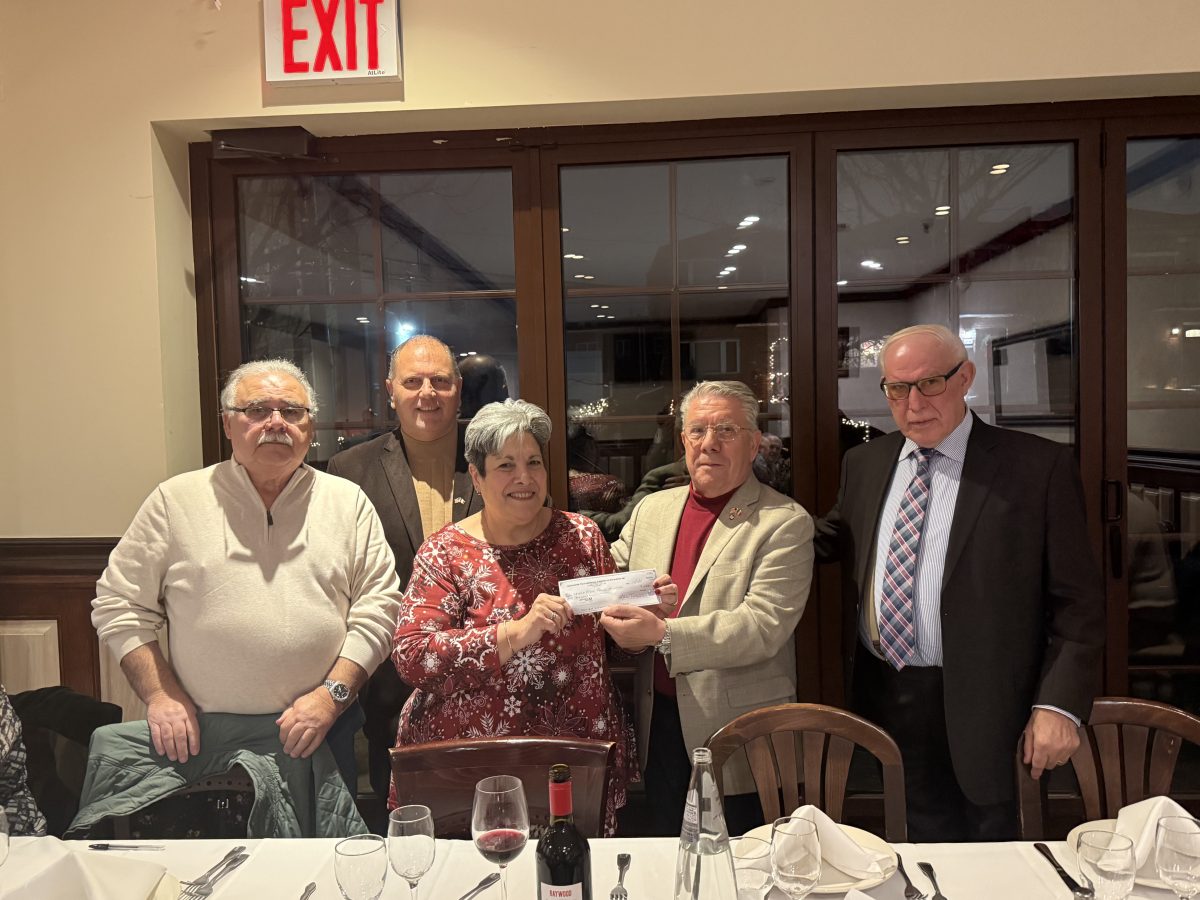
Nancy Baer from Glendale’s Sacred Heart Food Pantry & parish ministries. received donations totaling $3,000 on Tuesday night, December 2nd. Nancy thanked the group and posed for a picture with members of the group at Villa Erasmo during an event with Associazione Culturale Italiana di NY and Federazione Italo-Americana de Bk/Queens.

Fare Inspectors, Line Swaps and OMNY: What Riders Need to Know

New Year Brings Tap-and-Ride, Fare Enforcement Upgrades

By MOHAMED FARGHALY

mfarghaly@queensledger.com

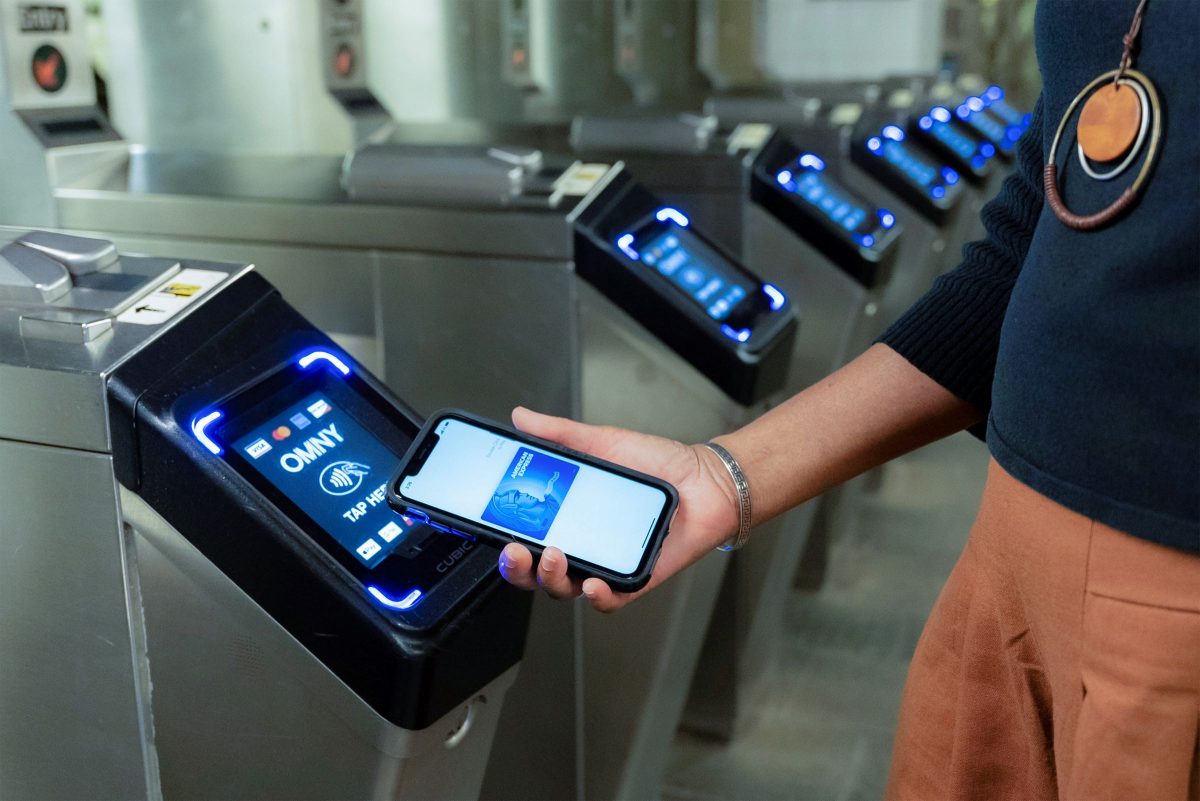
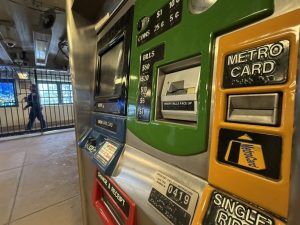
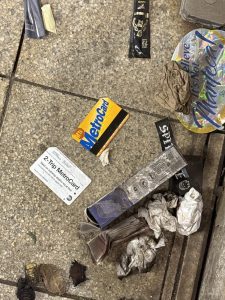
After more than 30 years, New York City’s iconic MetroCard will no longer be sold beginning Jan. 1, 2026, as the Metropolitan Transportation Authority completes its transition to the contactless OMNY payment system. Riders will still be able to use existing MetroCards for travel for a limited period, but all new purchases and reloads will shift to OMNY, a tap-and-go technology designed to streamline fare payment and modernize the city’s transit system.

The move reflects a broader effort by the MTA to reduce operational costs, improve convenience, and tackle long-standing challenges like fare evasion. OMNY — which stands for One Metro New York — allows commuters to pay fares directly at subway turnstiles or on buses using smartphones, contactless credit and debit cards, or OMNY-specific cards. The system includes fare-capping, automatically providing free rides once weekly spending thresholds are reached, saving millions of dollars annually for frequent riders.

More than 93% of commuters already use OMNY or tap-and-pay technology, leaving roughly 7% of riders still relying on MetroCards. For those remaining, the MTA is urging an early transition to avoid disruptions. Existing MetroCards will remain valid for travel through 2026, and any remaining balances can be transferred to OMNY cards at Customer Service Centers, Mobile Sales Vans, or designated locations in Lower Manhattan for up to two years after the MetroCard’s expiration.

The transition also targets fare evasion, a persistent problem that cost the agency $918 million last year. Unpaid subway and bus fares totaled 174 million rides, enough to fund 180 new subway cars, 630 new buses, or 36 miles of new train signals. On average, 330 riders jumped subway turnstiles every minute last year, highlighting the scale of the problem.

To combat unpaid fares, the MTA plans to roll out a European-style fare inspection system aboard city buses, replacing NYPD enforcement with civilian fare inspectors. These inspectors will carry handheld devices capable of verifying OMNY, credit card, or mobile payments on the spot, issuing tickets and fines instantly for those who have not paid. The initiative builds on existing EAGLE Teams, which have conducted inspections on Select Bus Service and high-evasion stops, raising compliance by 7% at targeted locations. The new model would make this style of enforcement standard across regular bus service, providing a consistent approach while reducing the need for police involvement.

OMNY’s implementation is also expected to enhance the rider experience in other ways. The MTA plans upgrades that will allow commuters to view balance information and ride history directly at turnstile taps. Additionally, starting in early 2026, some subway lines will see changes aimed at improving travel times. Notably, the F and M lines in Queens will swap routes to provide faster service for local riders.

The OMNY system has been gradually rolled out since 2019, and its adoption has accelerated rapidly. By late 2025, vending machines will be available at all 472 subway stations, allowing riders to purchase and reload OMNY cards at stations and retail partner locations across the city. MetroCard sales at retail outlets will end before the close of 2025, and the MTA has emphasized that support will continue for riders transitioning to the new system.

The financial impact of the transition is significant. The agency expects to save at least $20 million annually by eliminating MetroCard production, vending machine maintenance, and cash collection costs. OMNY also opens the door for future enhancements, including potential loyalty programs, promotions, and discounted fares that leverage the digital infrastructure.

The shift to OMNY is designed to increase equity and accessibility across the transit system. Reduced-fare riders, Fair Fares participants, Access-a-Ride users, and students all have access to the tap-and-go system, ensuring that all New Yorkers can benefit from the modernization. Fare-capping and simplified payment methods remove the need for advance purchase of weekly or monthly passes, offering flexibility and convenience to tourists, occasional riders, and daily commuters alike.

While some nostalgic aspects of the MetroCard era will disappear, including limited-edition collectible cards honoring pop culture and sports icons, the transition represents a step toward a fully digital, streamlined, and more efficient transit system. By mid-2026, OMNY is expected to be fully implemented across all subway and bus lines, completing the city’s move to a tap-and-go future.

For New Yorkers, the changes mean an adjustment period, but the MTA has stressed that the process will be gradual and supported. Riders are encouraged to switch to OMNY early, explore fare-capping benefits, and familiarize themselves with new inspection procedures, which prioritize verification and compliance over traditional enforcement. The full transition marks the end of an era for the MetroCard and the beginning of a more modern, technology-driven chapter in New York City transit.

Fill the Form for Events, Advertisement or Business Listing