
Queens Theatre Welcomes New Executive Director

Julia del Palacio Takes the Helm at Queens Theatre

MOHAMED FARGHALY

mfarghaly@queensledger.com

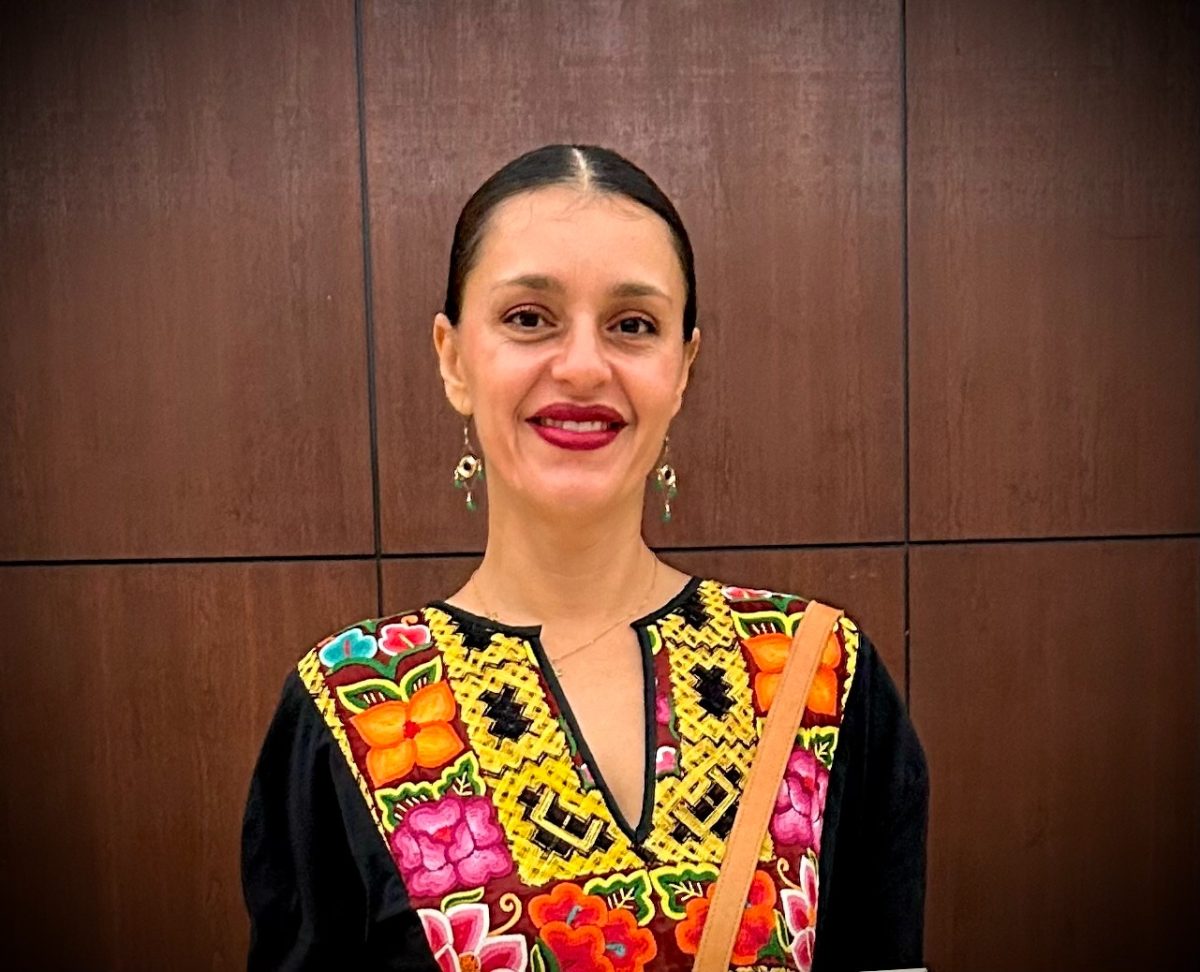
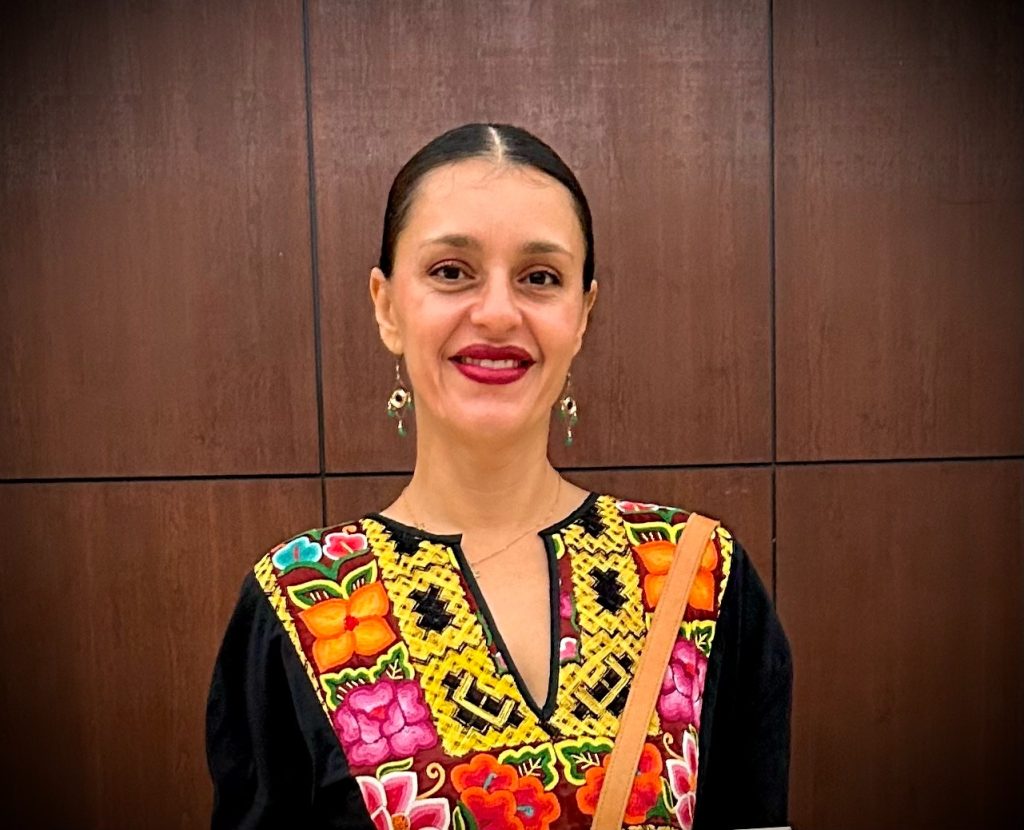
Queens Theatre has named cultural leader, educator and arts strategist Julia del Palacio, Ph.D., as its new executive director, marking a new chapter for one of the borough’s most recognizable performing arts institutions.

Del Palacio, who has spent more than 15 years working in arts administration, higher education and community cultural development, succeeds longtime leader Taryn Sacramone. Sacramone, who served in the role since 2013, helped expand Queens Theatre’s accessibility and program development, including the nationally recognized Theatre For All initiative, which supports the inclusion of artists with disabilities.

For del Palacio, the new role reflects a continuation of a life and career dedicated to the arts. Born and raised in Mexico City, she moved to New York in 2005 to pursue graduate study and ultimately earned her Ph.D. in Latin American History from Columbia University. Throughout her academic career, she continued dancing, performing, and working within artistic communities.

“I’m actually a historian by training, but I’ve also been a dancer my whole life,” she said. “When I graduated with my Ph.D., I decided I wanted a career in arts administration that would let me combine the strategic thinking and writing skills I developed as a historian with the artistry side of my life, which is a huge passion of mine.”

She joined the Kupferberg Center for the Arts at Queens College, where she most recently served as Associate Dean of the School of Arts and Director of Strategic Partnerships and Development. In that role, she helped design educational and professional development programs, grew global partnerships, expanded student pipelines and helped secure more than $1.4 million in annual contributed income.

Now, as she transitions into leading Queens Theatre, del Palacio says the move “just felt natural.”

“I love Queens so much, and I think Queens Theatre is such an important institution for the borough,” she said.

Del Palacio’s connection to Queens Theatre goes back almost two decades, when she first performed there as a Mexican folk dancer with her ensemble Radio Jarocho. The memory resurfaced during her job interview.

“They asked if I had ever been in the theater, and I said, ‘Are you kidding me?’ I’ve been backstage, I’ve been in the green room, I’ve been on the stage, and I’ve been there as an audience member,” she said. “It was a full-circle moment.”

Founded in its current form in 1989 and located on the grounds of the World’s Fair in Flushing Meadows–Corona Park, Queens Theatre presents dance, theater, family programming and community engagement events, as well as educational programs across schools and senior centers. Its mission centers on accessibility and serving Queens, one of the most diverse counties in the nation.

Del Palacio says her first responsibility as executive director is ensuring stability and sustainability, starting with funding.

“Expectation number one is to have a fiscally sustainable organization,” she said. “Fundraising is number one, and I love being out there meeting new potential funders, creating new networks, and building collaborations.”

She praised her predecessor Sacramone’s work to expand accessibility, including services such as ASL interpretation, audio description and training opportunities for artists with disabilities.

“She really made the theater more inclusive of everyone who wants to participate in the arts,” del Palacio said. Her goal is not just to maintain that work, but to widen the theater’s reach—literally.

“If you can’t come to Queens Theatre, we’ll take Queens Theatre to you,” she said, describing her desire to partner with neighborhood organizations and bring programming directly into Queens communities.

Del Palacio believes her dual identity as artist and administrator will shape her leadership.

“I have a unique set of skills,” she said. “I know how artists think. I’ve worked with so many of them. One of the tenets of the theater has been artist advocacy, supporting emerging artists and giving them the space and resources to create new works.”

Queens Theatre’s upcoming seasons reflect that philosophy. The organization is preparing a “homegrown and worldwide” 2025–26 slate that highlights artists who developed work locally and have gone on to national platforms. One example is Chicken and Biscuits, a production that began at Queens Theatre before ultimately reaching Broadway. The original cast returns this month for a staged reading paired with a VIP event featuring soul food.

Also on the calendar is a December holiday program from the renowned Parsons Dance company.

Del Palacio says she believes this is a significant moment not just for the theater, but for Queens more broadly.

“Queens is having a moment,” she said. “People are more and more interested in Queens—Queens food, visiting Queens. I think a great new year of Queens Theatre is coming up, and I’m excited about that.”


Rally in Flushing Opposes Citi Field Casino

MOHAMED FARGHALY

mfarghaly@queensledger.com

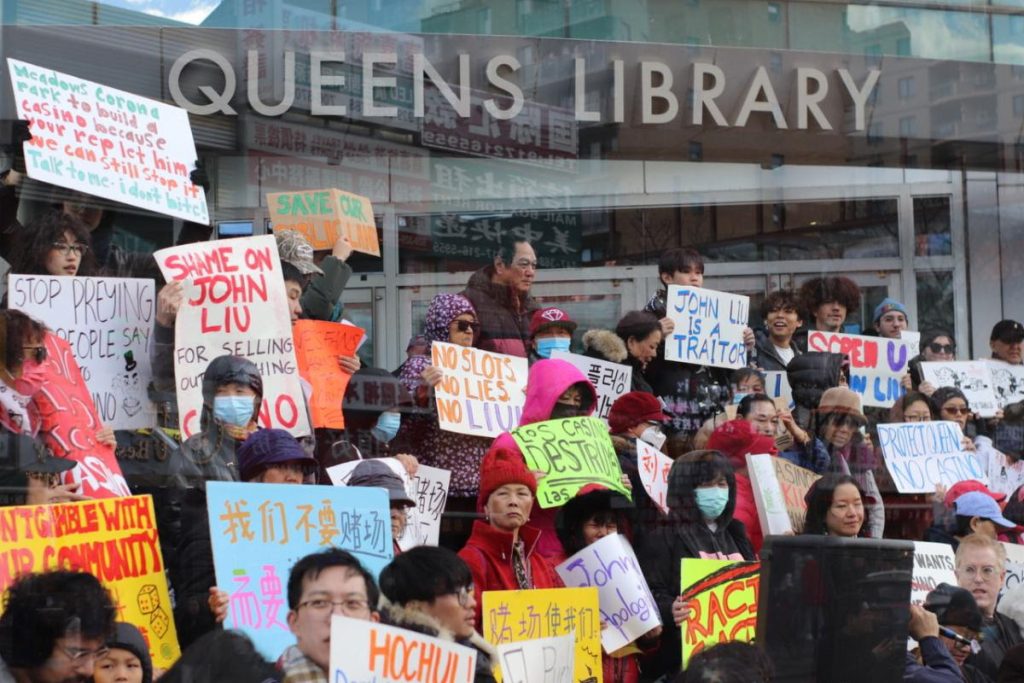
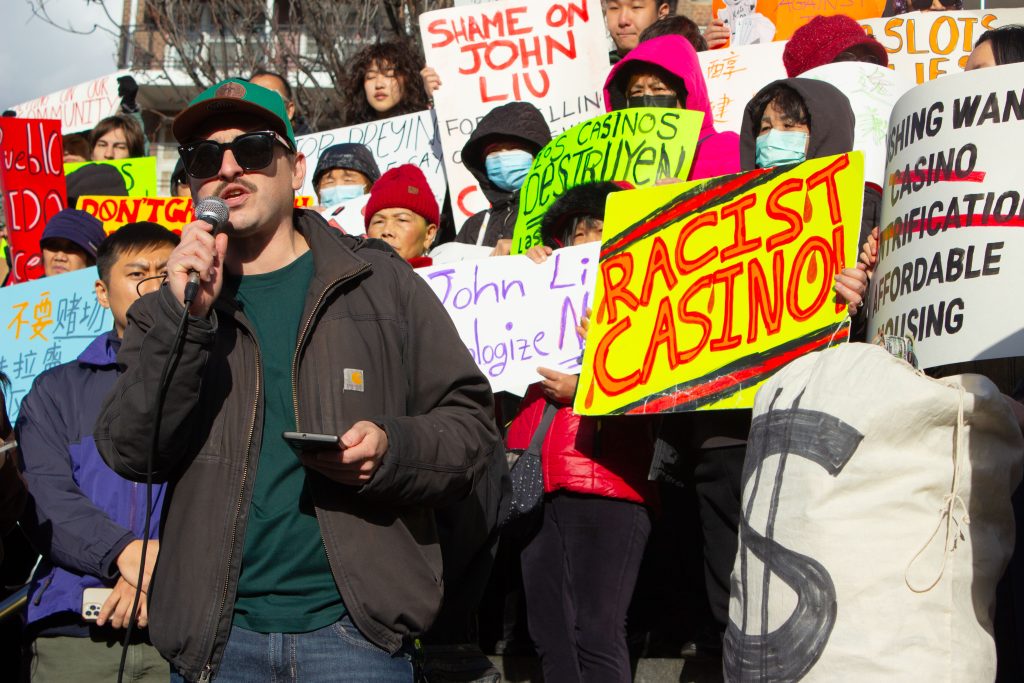
Nearly a thousand Queens residents rallied in Flushing on Nov. 16 to demand State Sen. John Liu reverse course and oppose billionaire Steve Cohen’s $8 billion Metropolitan Park casino proposal, saying the project threatens working-class immigrant communities and has moved forward without meaningful public input.

The protest, held outside the Queens Public Library on Main Street, drew residents from Flushing, Corona, Jackson Heights, College Point, Elmhurst and Jamaica, many of whom said they were stunned to see their own senator support legislation enabling Cohen to pursue a casino on 78 acres of public parkland surrounding Citi Field. The proposed development is one of several downstate casino applications currently under review in New York.

Organizers said Liu’s move could put Flushing “at the epicenter of three casinos in a 14-mile radius,” fueling gambling addiction, displacement and economic harm. “We want to make it perfectly clear that Senator Liu lied when he said we want this casino. We do not! And he is not fit to represent us,” emcees told the crowd as the rally opened.

The project, backed by Cohen and the New York Mets, has been pitched as an economic boost that would create 23,000 union jobs and add 25 acres of public green space. But many residents said they first learned of the casino plan only months ago, and organizers argue the official outreach process was designed to limit participation.

Fulton Hou, one of the rally’s lead organizers, said that in months of canvassing across the neighborhood, most residents had “not even heard of the project, let alone been involved in the process of giving their feedback.” He pointed to recent exit polling conducted by the MinKwon Center and the Asian American Legal Defense and Education Fund showing that “over 80% were not aware of the process or got a chance to weigh in.”

Hou said community advisory hearings held in September were scheduled at “horrible hours” for working families. “Out of all the casino applicants, this one had the least opportunity for people to speak,” he said.

Speakers at the rally included longtime residents, tenant leaders, faith leaders and people who said their families had been harmed by gambling. Hou noted that the concerns extend well beyond moral or cultural objections. “There are issues about public safety, traffic and congestion, environmental harms. The area itself is on a flood plain,” he said. Organizers also cited research suggesting casinos may create job losses in nearby commercial corridors despite economic gains for the facilities themselves.

Many speakers warned that the surrounding communities, largely working-class, immigrant neighborhoods are particularly vulnerable to gambling addiction. Organizers pointed to studies showing that casino clusters can heighten financial instability in areas like Flushing and Corona, where residents already face high economic pressure and limited access to support services.

“My husband and my three sons all fell into gambling. Gambling has destroyed my family, and many families like mine,” Bao Jin Qiu, Flushing resident and retired home care worker said. “This is about our whole community. Yet Liu dared to claim that he represented us to support the casino. John Liu, if you don’t right your wrong, you should NOT be our representative!”

Liu has previously spoken in support of the Metropolitan Park plan, arguing it would revitalize underused land around Citi Field. But Hou and others said the senator had undermined community sentiment and the stance of State Sen. Jessica Ramos, who represents the district containing most of the proposed site and has opposed the casino. “He went against her and against the interest of the community,” Hou said. “At least we want him to acknowledge and apologize for it.”

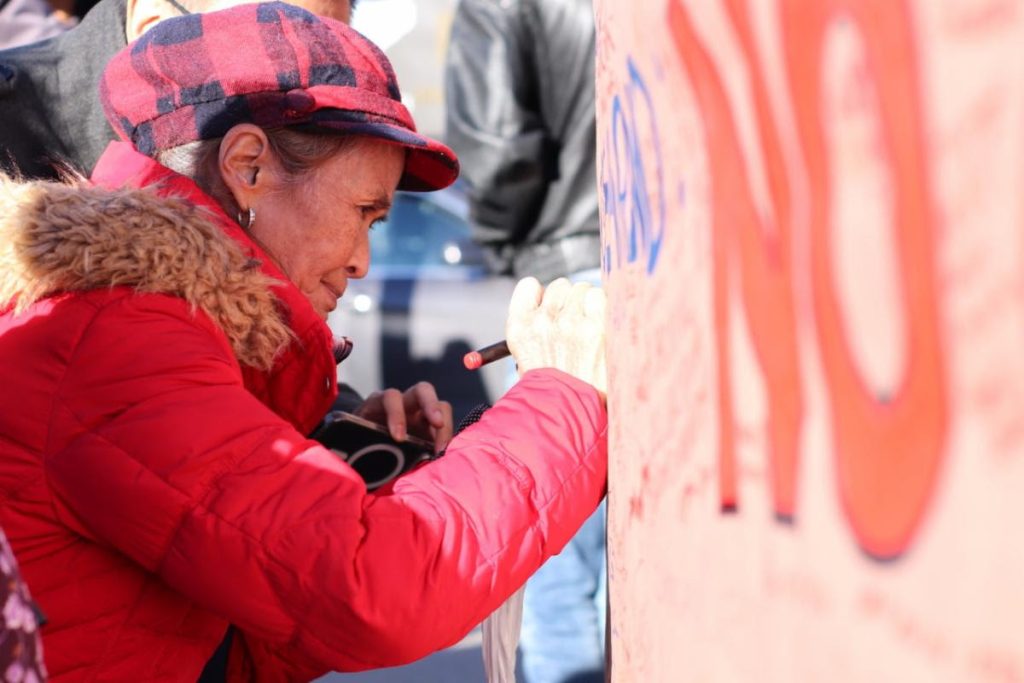
Organizers say they are also pushing Gov. Kathy Hochul and the state Gaming Facility Location Board to reject the application. At the rally’s close, attendees signed a large poster addressed to Liu, Hochul and the gaming commission demanding no casino. The poster will be delivered during the licensing board’s public process, which is expected to conclude by the end of December.

Two faith leaders, Pastor Dave Smith from Queens Christian Alliance Church and Imam Benyahya from Muslim Center of New York also joined the community in opposition to the casino. Pastor Smith, said “Here we are anti-casino, we are against something. But it’s also important to say we are for something. We are for families. We are for children. We are for young people. We are here because those are the people we need to reach out and care for.”

Hou said the coalition of neighborhood groups plans to continue phone-banking, canvassing and picketing until a final decision is made. While some residents have expressed interest in the jobs promised, he said most change their mind once they learn about potential long-term impacts. “The regular working person does not know about this project or has not had a chance to weigh in,” he said.

“All New Yorkers,” organizers said, “are encouraged to contact Governor Hochul and the Gaming Commission, and to continue spreading awareness about Senator Liu’s betrayal to the community.”

DenDekker Retirement Roast

Mike DenDekker, the Jackson Heights, East Elmhurst Assembly representative from 2009 through 2021, went back to his Msgr. McClancy High School roots Thursday for what had to be described as a ‘roasting’ retirement send-off. “Public service is his life,” said McClancy president Mick Melito, who was also a student when DenDekker was there.

Sixty-five year old Dendekker worked for the department of sanitation, OEM, the city council and then was elected to the State Assembly. Known as one of the most ‘down to earth guys’ the Assembly has ever seen, DenDekker was surrounded by nearly 100 colleagues Thursday night at the Brother Robert Connolly Patio at Msgr. McClancy High School.

 “A great public servant goes into work every day for his constituents. That’s Michael,” said State Senator Jessica Ramos.

Zaglada pushes the limits for Maspeth playwright

It’s rare that emotions about a subject in history can swing so wildly during a theatre production. Maspeth’s own Richard Vetere’s off-Broadway play Zaglada tugged on heart strings to sold-out audiences, gasping in deep thought throughout the play. The production ended its two-week run last week at the American Actors Theatre on West 54th Street.

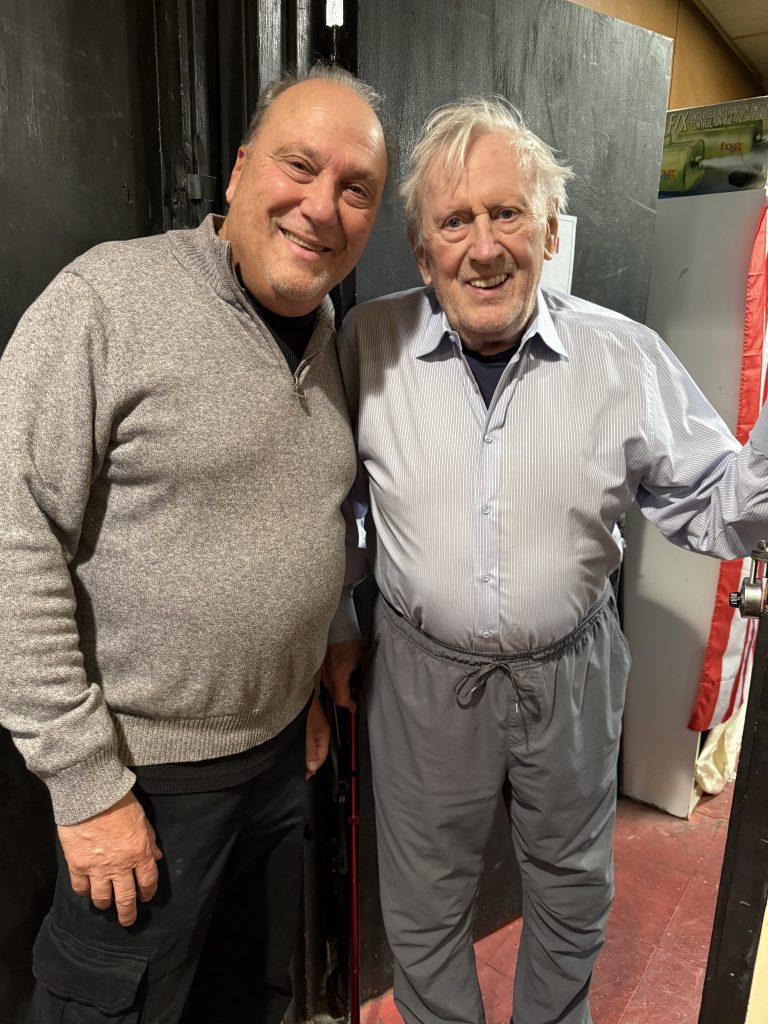
Going into the play, we’ve all had opinions after all we have heard about the concentration camps and those who guarded and/or lived with those imprisoned. A complicated issue for sure, but Vetere is no stranger when it comes to his courage in writing of such issues. Vetere and his cast, which included veteran 86-year-old Len Cariou, Salvatore Inzerillo, Maja Wampuszyc and Jes Washington put on inspiring performances. Pictured here is Maspeth’s own playwright Richard Vetere with Cariou.

Pickleball Courts, Flooding, and IBX Among Topics at Local Meeting

MOHAMED FARGHALY

mfarghaly@queensledger.com

Residents of Middle Village gathered at Trinity Lutheran Church on November 20 for the monthly meeting of the Middle Village Residents Association, discussing local concerns ranging from flood mitigation to proposed IBX transit stops in the area.

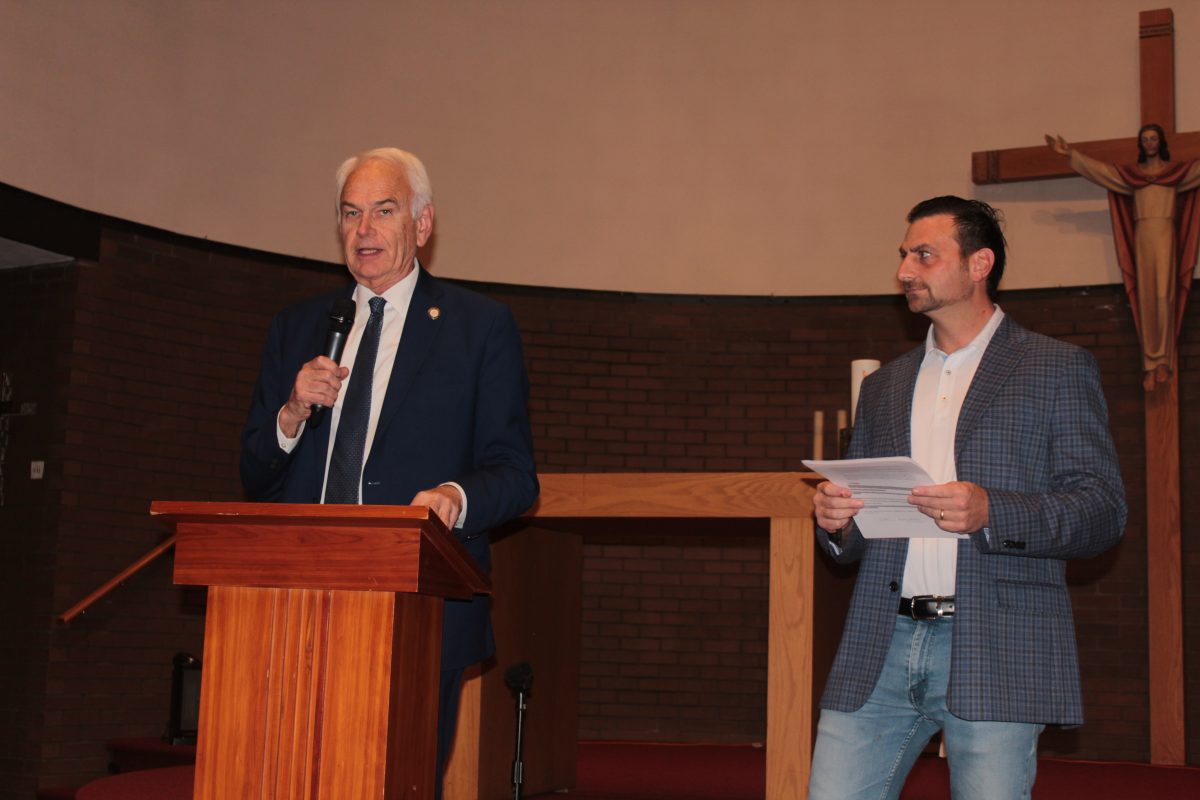
Paul Pogozelski, president of the association, opened the meeting by welcoming residents and updating the community on proposed improvements to Juniper Valley Park. He introduced plans for new pickleball courts, explaining that the additions would provide more recreational opportunities for residents of all ages while ensuring the park’s summer concert series remains intact. Pogozelski emphasized the community-focused approach, saying the courts would complement, not replace, existing activities. He also encouraged residents to participate in ongoing discussions about park development and other local initiatives.

Councilman Robert Holden followed with remarks on the IBX transit project and its potential impact on Middle Village. He expressed strong concerns about the expedited land use process, which he said relies on a three-person board making housing decisions without broader community input. “We’re like a small town in a big city,” Holden said. “The process is bypassing us, and the neighborhood doesn’t get a real voice in these decisions.” He warned that the IBX stop could strain local infrastructure, increase traffic, and fundamentally alter the character of the area. Holden called for more careful planning and greater resident involvement before any project moves forward.

Newly elected Councilman Phil Wong took the stage later in the meeting, thanking residents who supported his campaign and pledging continuity in city services. Wong invited current council office staff members to remain on board and said training for council staff would begin soon.

Adam, a representative from Congresswoman Grace Meng’s office, updated residents on upcoming events and congressional work in Washington. He addressed community concerns about flood mitigation, noise pollution, and aircraft noise. Meng’s office plans to send a letter to the IBX team requesting attention to environmental and safety concerns.

John, from the office of Senator Joseph Addabbo, discussed the state’s ongoing IBX survey, encouraging residents to submit responses online or in person. “If Everyone’s against it, let them know, and hopefully that will carry some weight,” John said.

Pogozelski emphasized that residents needed to complete the survey and reach out to their elected officials, warning that about 250 homes could theoretically be removed from Maspeth under the current IBX proposal. John also highlighted available rain barrels at Addabbo’s office for residents seeking flood mitigation assistance and reminded the community about the Self Help service, which provides medical transportation for those in need at 718-429-3636.

During the meeting, a community member raised concerns about ongoing fraud affecting elderly residents in the neighborhood, particularly involving stolen or “washed” checks from local post office mailboxes. The issue, which has persisted for years, includes mail being intercepted and altered before reaching recipients, leaving victims without their expected funds. A representative from Congresswoman Grace Meng’s office was mentioned as having limited involvement, often referring complaints to other agencies, leaving residents feeling the issue is largely unaddressed. Meeting participants highlighted that the problem extends beyond the elderly, affecting residents broadly, and stressed the need for federal action and accountability to prevent further financial harm.

The meeting also touched on staffing changes in the council office. Pogozelski asked whether Alicia Vaichunas, a former council opponent, would join Wong’s team, though Vaichunas said the decision would be announced soon.

Closing the meeting, Walter Sanchez, chairman of Community Board 5, announced that applications for board membership would be available in the first week of December. Sanchez encouraged residents to get involved in local decision-making, noting the importance of community participation in shaping neighborhood priorities.

Thanksgiving Meals and Your Heart, An Expert’s Advice

Courtesy Freepik

MOHAMED FARGHALY

mfarghaly@queensledger.com

For many, Thanksgiving is a time for family, celebration, and a feast of traditional dishes. But for patients with heart disease, the holiday can bring hidden risks alongside the pumpkin pie. Dr. Inna Bukharovich, a cardiovascular specialist at NYC Health + Hospitals/Kings County, said planning and moderation are key.

“So it’s very important for patients with heart disease to be meaningful of the diet they consume,” Bukharovich said. “Especially with high salt, fluid intake, calories — they definitely have to watch the intake: smaller portions, low salt, more fruits, vegetables, less carbohydrates and high sugar. Diet is what we kind of hope for for patients with heart disease.”

The holiday season, she added, can also disrupt routines. “Thanksgiving is a stressful time. Everybody wants to be with their families. They’re cooking, they’re celebrating. So they kind of forget about taking their meds, which is very important, also paying attention to exercise. For heart health, we recommend at least 30 minutes a day of walking and taking their medications on time.”

Bukharovich said the indulgent meals themselves can pose risks. “A lot of the meals for Thanksgiving taste good, but they’re very big meals, heavy on carbohydrates, have a lot of salt intake, and that’s what creates a problem, especially for patients with weak hearts, patients with heart failure, and patients with high blood pressure.”

She sees the consequences shortly after the holiday. “Usually a couple of days after Thanksgiving, we have a lot of patients who present with very elevated blood pressures, or patients with heart failure presenting fluid overloaded from all the intake of foods they had over the holidays. When you eat a lot of salty food, that keeps the water in your body, and that’s what creates problems for patients with weak hearts. Heart attacks also increase during the holiday time — it’s probably a combination of stress, medication noncompliance, and lack of following a regular diet and exercise.”

For those seeking healthier options without missing out on tradition, Bukharovich offered some practical swaps. “Lean turkey is good. You can always keep on the gravy, even though it tastes good. Less potatoes, mashed potatoes, pumpkin — more like salad without dressing, and less stuffing because that’s full of bread, salt, and high calories. Apples are good — maybe not apple pie, but just apples. Be meaningful of what people eat and substitute healthy versions for traditional Thanksgiving meals.”

She also stressed the importance of portion control. “Yes, usually small meals, like portion control, is more important for the heart. When you have a very heavy meal, all your blood gets diverted to the stomach. People with weak hearts, at risk for heart attack, kind of get this steal phenomenon where all the blood circulates to the stomach instead of the heart. Reducing that is very important. Alcohol can interfere with medications as well.”

Exercise, she said, can help mitigate holiday indulgences. “Thirty minutes a day of walking — it doesn’t have to be excessive, just at your own pace. Even walking in the lobby of your apartment building will provide positive benefits for the heart.”

Bukharovich also offered guidance for alcohol, a common holiday indulgence. “Red wine has antioxidants and is good for the heart, but no more than a glass a day. A lot of medications interfere with alcohol, since they’re processed by the liver. Patients need to discuss it with their doctor if their medication will interfere, because alcohol can increase medication levels to dangerous levels.”

She warned that holiday overeating and skipping doses can have serious consequences. “Prevention of heart disease and dangerous effects is much more important than dealing with the event itself. Holiday is a good time, but you have to eat in moderation, plan your food around your medications. Some medications, like blood thinners, interfere with green leafy vegetables. Patients need to be aware of what they can eat or not. Bananas and plantains, for example, are high in potassium and can interfere with heart failure medications.”

Signs that require urgent attention include shortness of breath, chest pain at rest, or unusually high blood pressure. “Never delay treatment just because it’s the holiday season,” Bukharovich said. “The hospital is open, doctors are here, and it’s very important to have it checked out in time.”

Family support can also make a difference. “Check on your family members: Did you remember to take your medications? Do you know what you can eat and what you cannot? Being aware helps families accommodate and provide different varieties of food during the holiday season.”

Ultimately, Bukharovich emphasized balance and connection. “It’s very important for patients to celebrate with their family. Mental health is a big part of overall patient health, and there’s a lot of connection between mental health and heart disease. Being around family, celebrating, creates positive effects — just be meaningful of your limitations and let your family help.”

Fill the Form for Events, Advertisement or Business Listing