
Golden Age Silent Film “Sentimental Tommy” Filmed in Forest Hills

Help Find A Long-Lost Silent Film, “Sentimental Tommy”

By Michael Perlman

Forest Hills and Rego Park have made the cut for films, television series, and plays, and achieved an impressive record on camera since its founding in the early twentieth century. Rewinding to what is likely one of our neighborhood’s earliest moments on camera, transpired in 1920.

That year, the rural steep hills along 66th Road (formerly Sample Street) between 102nd Street and 110th Street (formerly Colonial Avenue) grasped the attention of the landmarked Kaufman Astoria Studios (originally Astoria Studios), which erected a set depicting Thrums, a Scottish village for “Sentimental Tommy.” This nearly 80-minute acclaimed silent film was a drama, which was released on May 29, 1921, and screened in theaters including Brooklyn’s DeKalb Theatre and the Merrick Theatre, known as “Long Island’s Finest Theatre.”
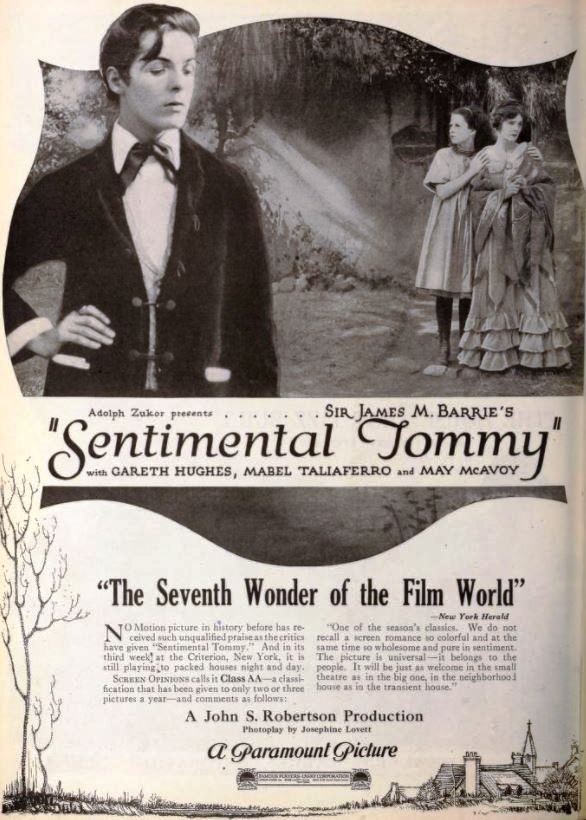
1921 ad

Residents of the village of Thrums ostracized Grizel and her mother, who was named “The Painted Lady.” Scottish-born Tommy Sandys was a needy boy with a rich imagination, who proves to Grizel that he loves her for who she is, and not on the basis of pity.

In the fall of 1919, the same Forest Hills spot accommodated a replica of a Civil War era American village for Augustus Thomas’ play, “The Copperhead.” Brooklyn architect Robert M. Haas of 101 Union Street, who served as Chair of the art and decoration department of the Famous Players-Lasky Corporation, designed both sets. This same forested hill, where children would tend to their sleds, was nicknamed “The Green Jungle.” In the mid-1960s, Birchwood Towers replaced a destination that was a trace of Forest Hills’ farming days.

The Silent Film Era spans 1894 to 1931. Today, “Sentimental Tommy,” a significant film of the era, is believed to be lost. Either it is concealed in a dusty archive and forgotten about, or may be a complete loss as a result of the unstable nitrate film base that was typically used. Currently, stills of the film survive. Approximately 75 percent of silent films have been lost, according to the Library of Congress. That would account for an estimated 2,749 that exist in a complete form out of an estimated 10,919 American silent films. There is hope, since some silent films that were believed to be lost forever, were rediscovered. Such is the case for the 1915 film “The Heart of Lincoln” starring Francis Ford, which was classified as missing for over a century, but rediscovered this year by intern Dan Martin, who browsed boxes at the Historic Films Archive in Greenport, NY.
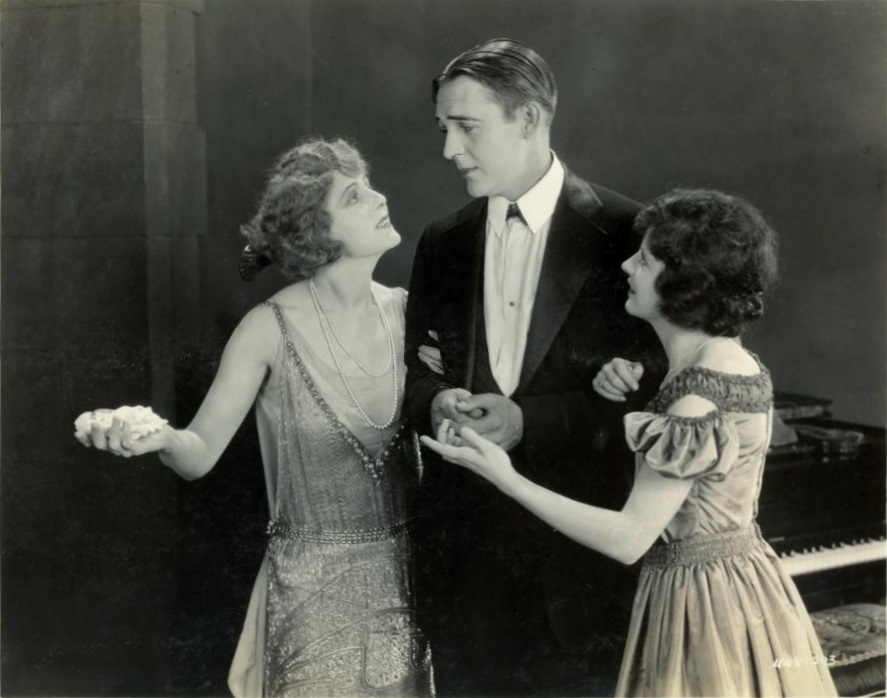
Sentimental Tommy still

“If a list were made of the best photoplays ever made, the (director) John S. Robertson production for Paramount of Sir James M. Barrie’s (renowned book) ‘Sentimental Tommy’ would undoubtedly be included,” read a 1921 edition of the Mount Vernon-based publication, The Daily Argus. “When this picture was shown yesterday at the Playhouse, there was not a sound to be heard, and at the close the audience broke into sincere applause.” It also references that Mr. Robertson, who would be remembered for his work, “Dr. Jekyll and Mr. Hyde” a year prior, produced “Sentimental Tommy” faithfully in respect for the author’s delightful touches. Gareth Hughes, who appeared as Tommy Sandys, was compared to a genuine “flesh and blood Barrie-esque character.” Actress May McAvoy, who appeared as the devoted and pitiful Grizel, was referenced as a great example for her emotional work. The cast of excellence included other major names, such as Mabel Taliaferro who portrayed Grizel’s mother, “The Painted Lady,” and George Fawcett, Harry Coleman, Leila Frost, Kempton Greene, Virginia Valli, Kate Davenport, and Alfred Kappeler.
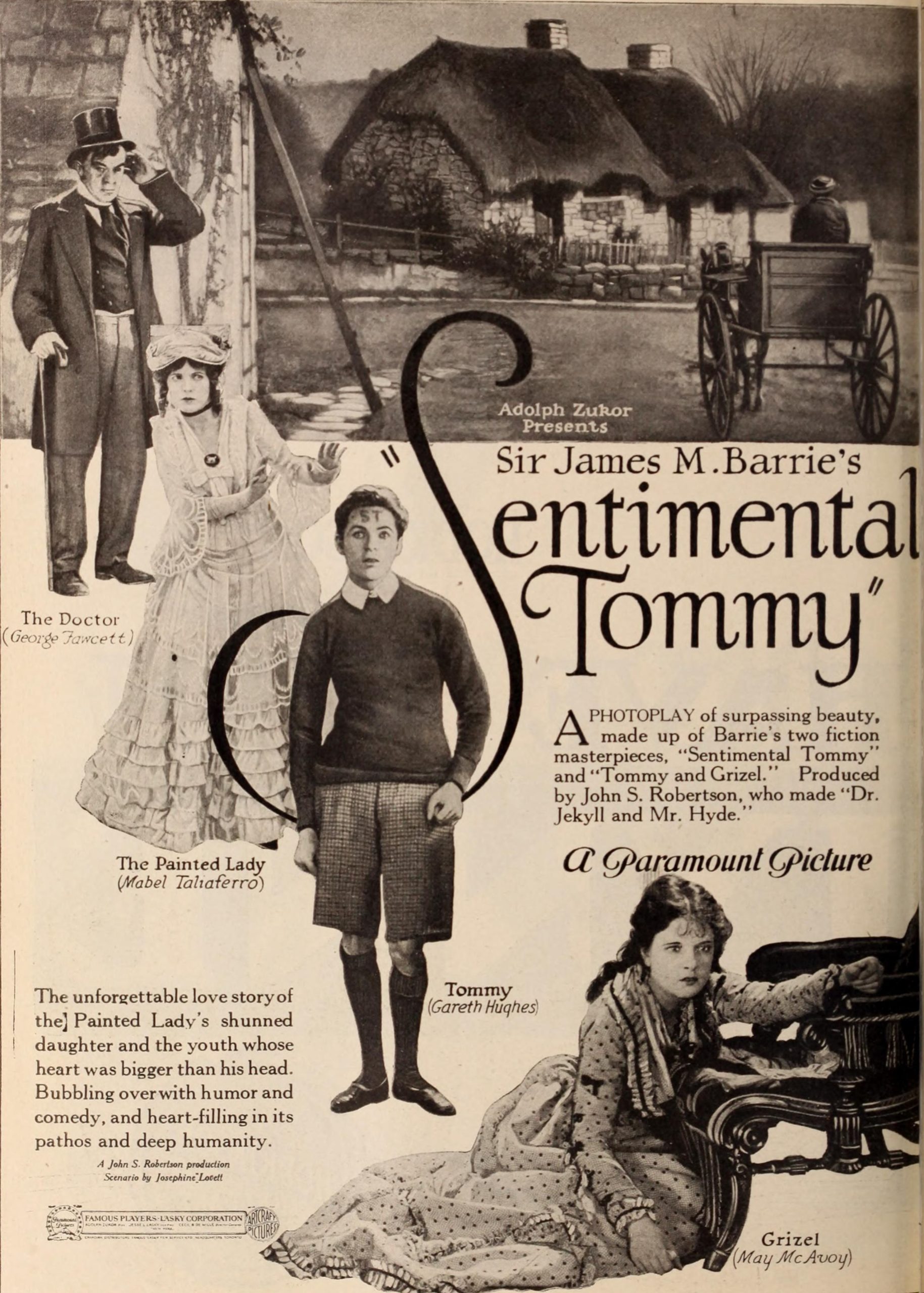
 

Sentimental Tommy ad Exhibitors Herald March 19, 1921

An April 19, 1921 edition of The Brooklyn Standard Union featured a review of the silent film, which was subject to an extended engagement at Manhattan’s Criterion Theatre in Times Square. It read, “Seldom has a photoplay which relied upon whimsy and refinement been developed with such delicacy and naive romance as ‘Sentimental Tommy.’ With rare artistry, the director, players, and scenarists, have kept the Barrie spell in all its lightness, thus making the story more gripping and realistic. The imagination is stirred, and the emotions are played upon with deft nuances, while the eye is intrigued through the charming and almost toy-like settings. Lovers of good literature are turning to the Criterion to see ‘Sentimental Tommy’ as they rarely turn to a photoplay.”

“An Architect in the Movies” was a headline of The Brooklyn Daily Eagle on October 17, 1920. In the spotlight was Robert M. Haas, who designed a faithful reproduction of the Scottish village. After Haas’ training at the Newark Technical School, Ohio Northern University, and University of Pennsylvania, he practiced with a firm consisting of architects. Among the achievements were the Presidential Palace of Cuba interior, and countrywide estates including Lillian B. Ryan’s in Bryn Mawr, Pennsylvania.
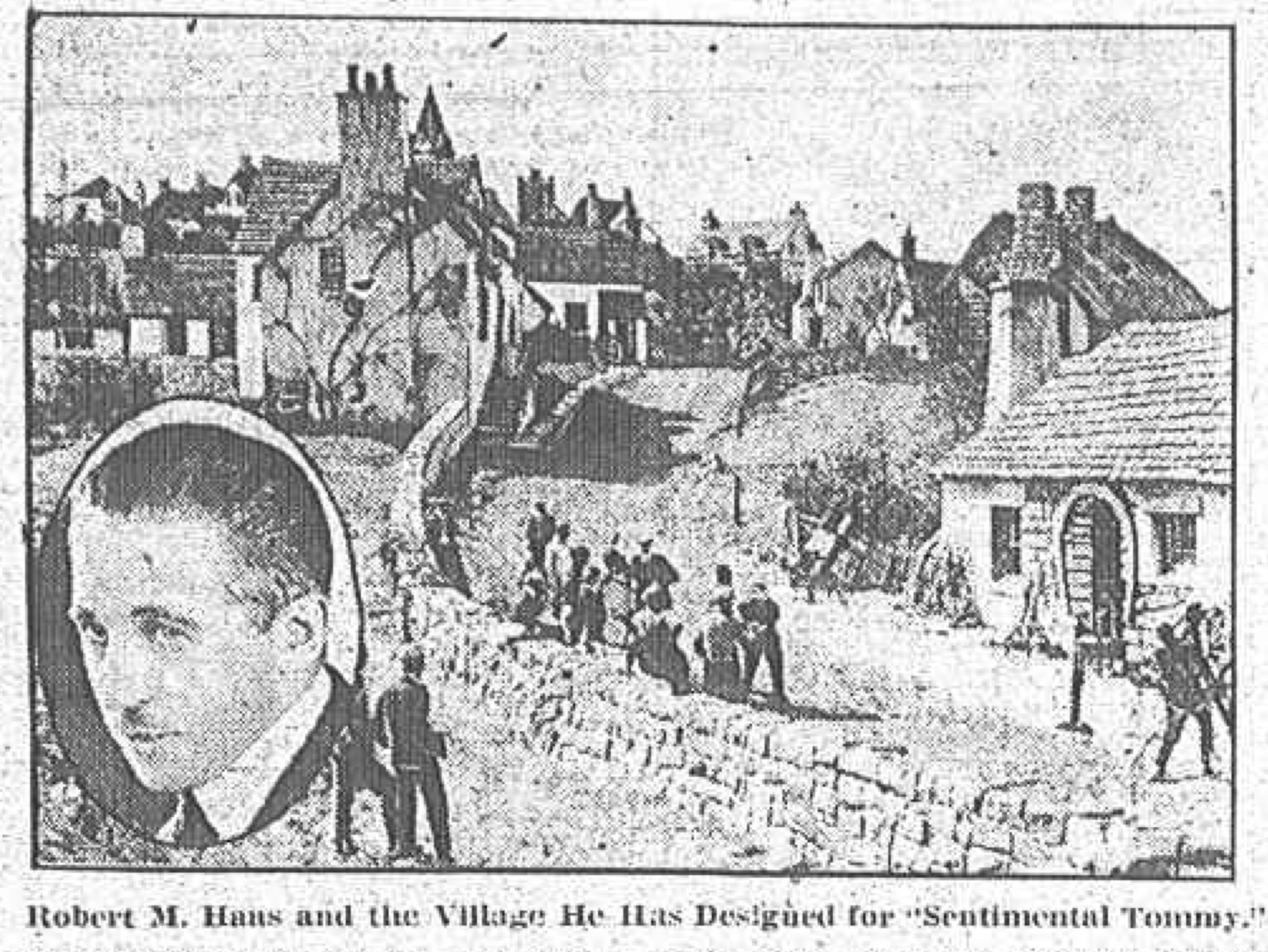
Sentimental Tommy set by architect Robert M Haas, insert, Brooklyn Daily Eagle, 1920

An excerpt read, “After he had completed the Allen place, Mr. Haas had a call from Mr. Allen one day, saying that he was leaving for Europe, and that he had a request from some motion picture people to take some exteriors on the estate. Would Mr. Haas take care of them? He would and did by calling around at the Famous Players’ studio to talk things over. The general manager showed him around the studio and asked him what he thought of some of the sets. From the architectural point of view, he didn’t think much of them, and told him so.” Haas responded to a request for producing improved sets, and abandoned his architectural work to develop a specialized field.

As the head of the art and decoration department of the Famous Players-Lasky Corporation, Haas conducted the business in the manner of a large architect’s office, with directors as his clients, and script was reviewed with him. “Each scene is considered in detail as to the style of architecture, the nationality of the setting, and the character of the actor. For the larger scenes, such as the building of entire villages, fantastic or elaborate sets, models are constructed to scale and arranged and rearranged until satisfactory. The settings are built by carpenters from blueprints developed from the rough sketches made in conference,” the publication continued.

The village of Thrums’ reproduction for “Sentimental Tommy” in 1920 in Forest Hills was highly regarded by experts on Scottish architecture and landscapes. The praise continued in 1921 with the reproduction of Thrums in the shadow of California hills for Barrie’s “The Little Minister.” “Nannie’s home, the manse, the town hall, and the auld licht kirk fairly breathe the air of Scotland,” read The Sunday Star of Washington D.C. on December 5, 1921.

Scottish novelist & playwright, Sir James Matthew Barrie (1860 – 1937) was born in Kirriemuir, Angus, Scotland and later relocated to 100 Bayswater Road in London, a home where he achieved many successes in the literary and theatrical world. One of his great creations was Peter Pan. His novel, “Sentimental Tommy,” was published initially in 1896, and another edition was available in 1920; both copyrighted through the notable Charles Scribner’s Sons of New York. The film is also based on J.M. Barrie’s novel, “Tommy and Grizel.”
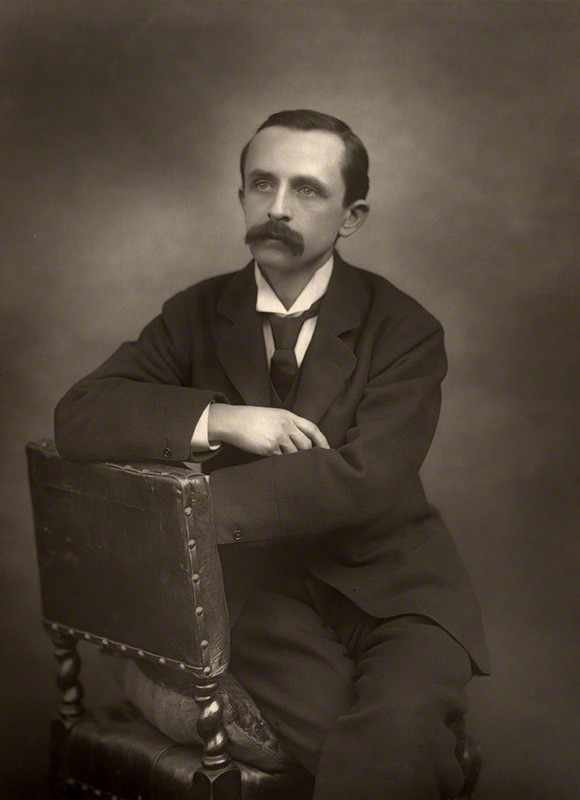
Novelist Playwright James Matthew Barrie in 1892 Photo by Herbert Rose Barraud

For leads on locating the long-lost silent film masterpiece and to volunteer, email mperlman@queensledger.com
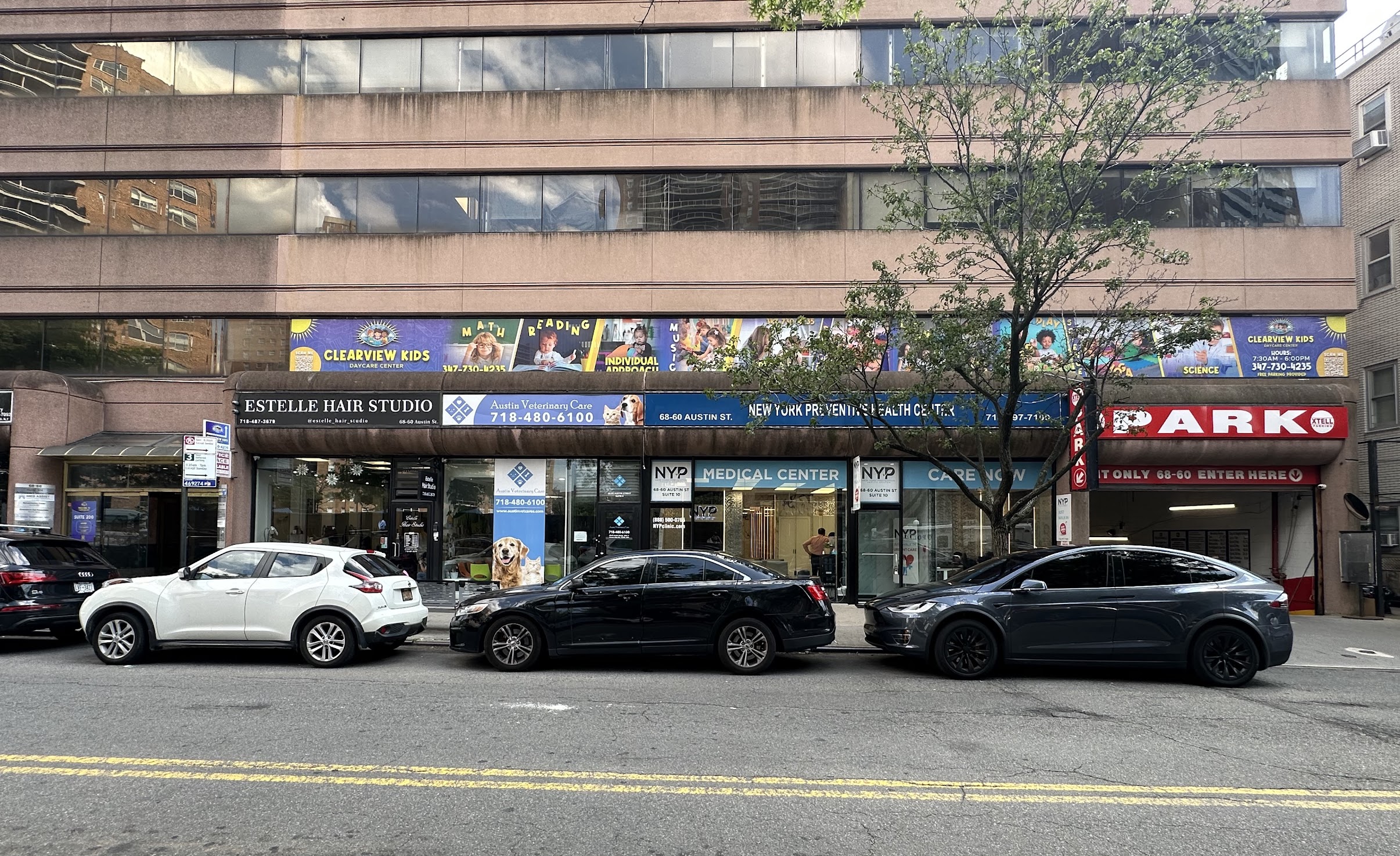
ClearView Kids Daycare Center Planting Roots in Forest Hills

A Dynamic Daycare Inspiring Young Minds

By Michael Perlman

It is essential to build a solid foundation in our earliest years, and in the forefront is ClearView Kids Daycare Center. Located in the heart of Forest Hills’ residential and commercial district at 68-60 Austin Street, Suite 200, this full-time weekday nursery to prep school center for children, ages 2 to 5, has been educating, motivating, and enriching young minds in distinctive ways since opening day on April 1, 2025.

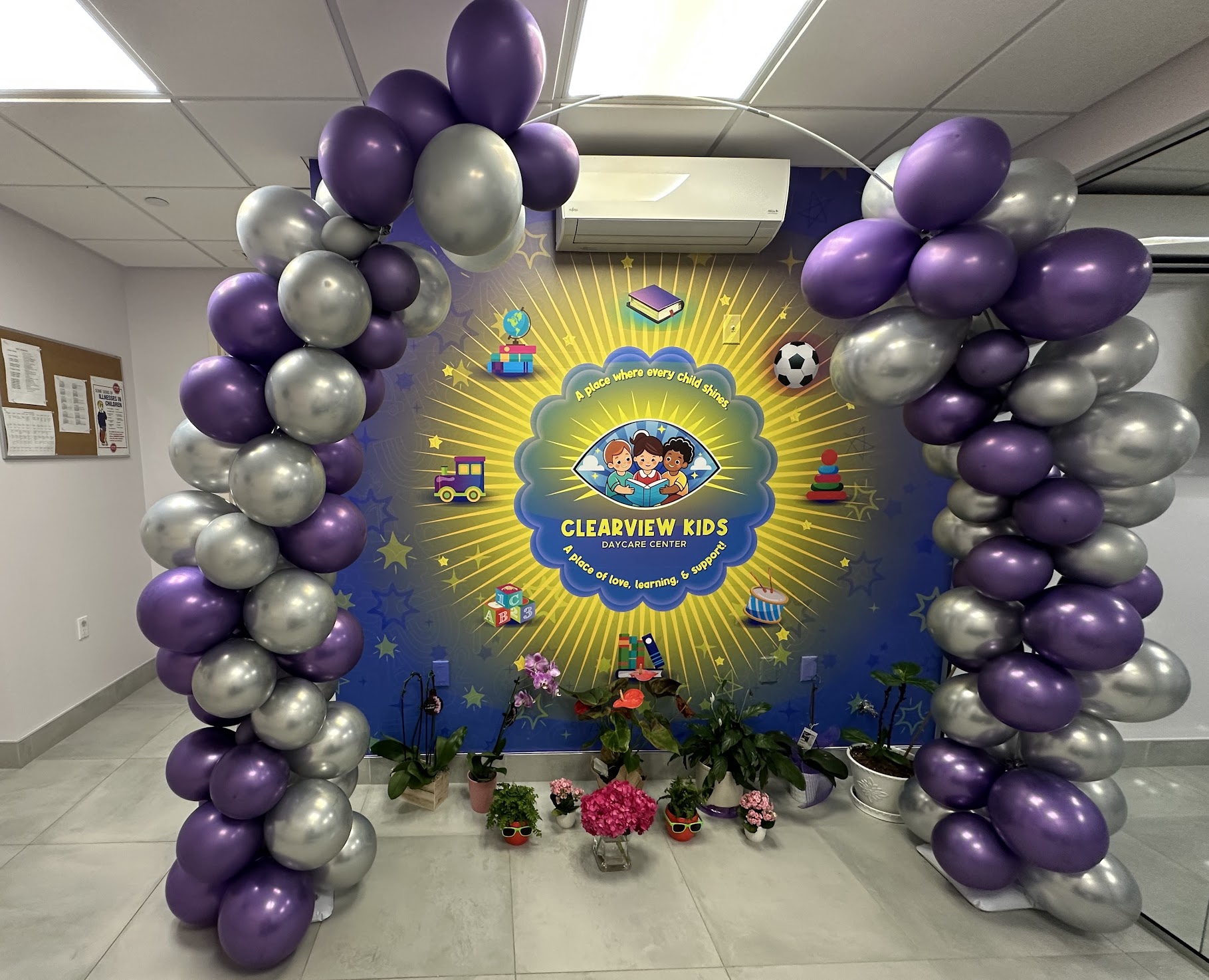
ClearView Kids Daycare, 68-60 Austin St, 2nd floor, Photo by Michael Perlman

Upon entering the daycare, warm smiles and a friendly demeanor light the way. A logo in the foyer reads, “A place where every child shines. A place of love, learning, & support.” A thought bubble features an eye with three children sharing a book, and lustrous rays extend into depictions of diverse activities. Personalized attention and a variety of group settings becomes apparent.

A welcoming space, Photo by Michael Perlman

Bianna Mazler, who achieved a Masters in Speech and Language Pathology, serves as ClearView Kids’ executive director. After immigrating from Uzbekistan, she settled in Rego Park, and currently resides in Kew Gardens.

Diana Mozner serves as the center’s educational director. She resides in Queens Village and formerly called Rego Park home. She achieved a Masters in Music in Turkmenistan, and locally, she achieved a Masters in Special Education from Touro College. She takes pride in being a licensed music and special education teacher.

ClearView Kids Daycare offers bright and spacious classrooms to teach and nurture up to 100 students, and enrollment currently remains open. Students are enrolled from Forest Hills, Rego Park, Kew Gardens, Fresh Meadows, and sections of Long Island, which indicates how students and their parents value the daycare’s vision and commitment to excellence. The curriculum blends diverse research-based approaches, tailored to developmental milestones and each child’s individual needs.

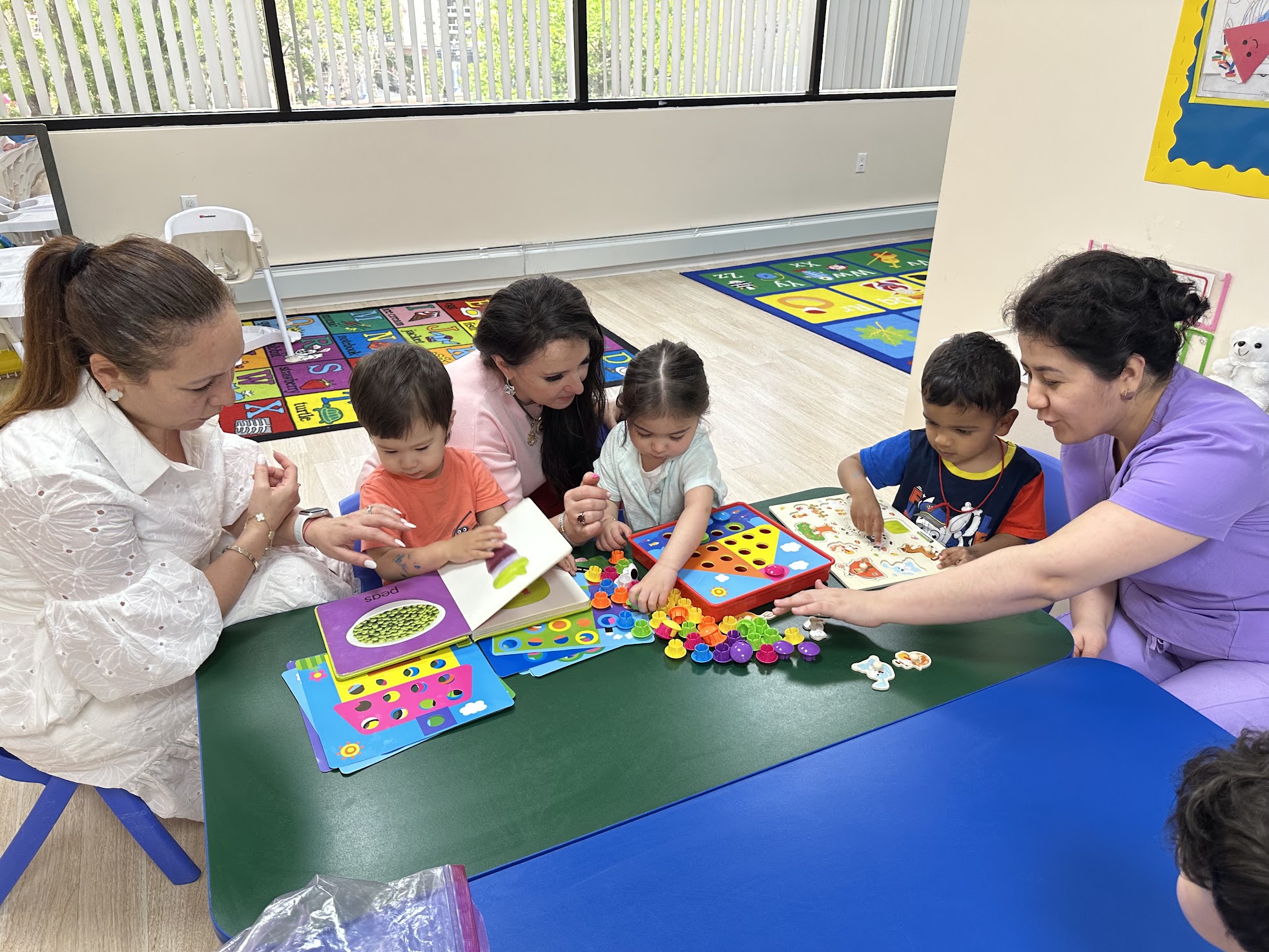
Developing bonds over interactive games, Photo by Michael Perlman

“In regard to education, we integrate various curriculums to deliver highest quality services. We make learning fun and meaningful,” explained Mozner. Mazler added, “Our children learn best through exploration and play, and we create an environment where those moments materialize daily.”

The highly skillful staff consists of teachers and teachers assistants, who achieved Bachelors and Masters degrees. Also ready to serve are chefs, who Mazler feels are “very kind and loving people,” which is their most important title. “We believe in teamwork. Everyone is valued, and it does not matter if you are cleaning, cooking, or a teacher. We are all one,” she said.

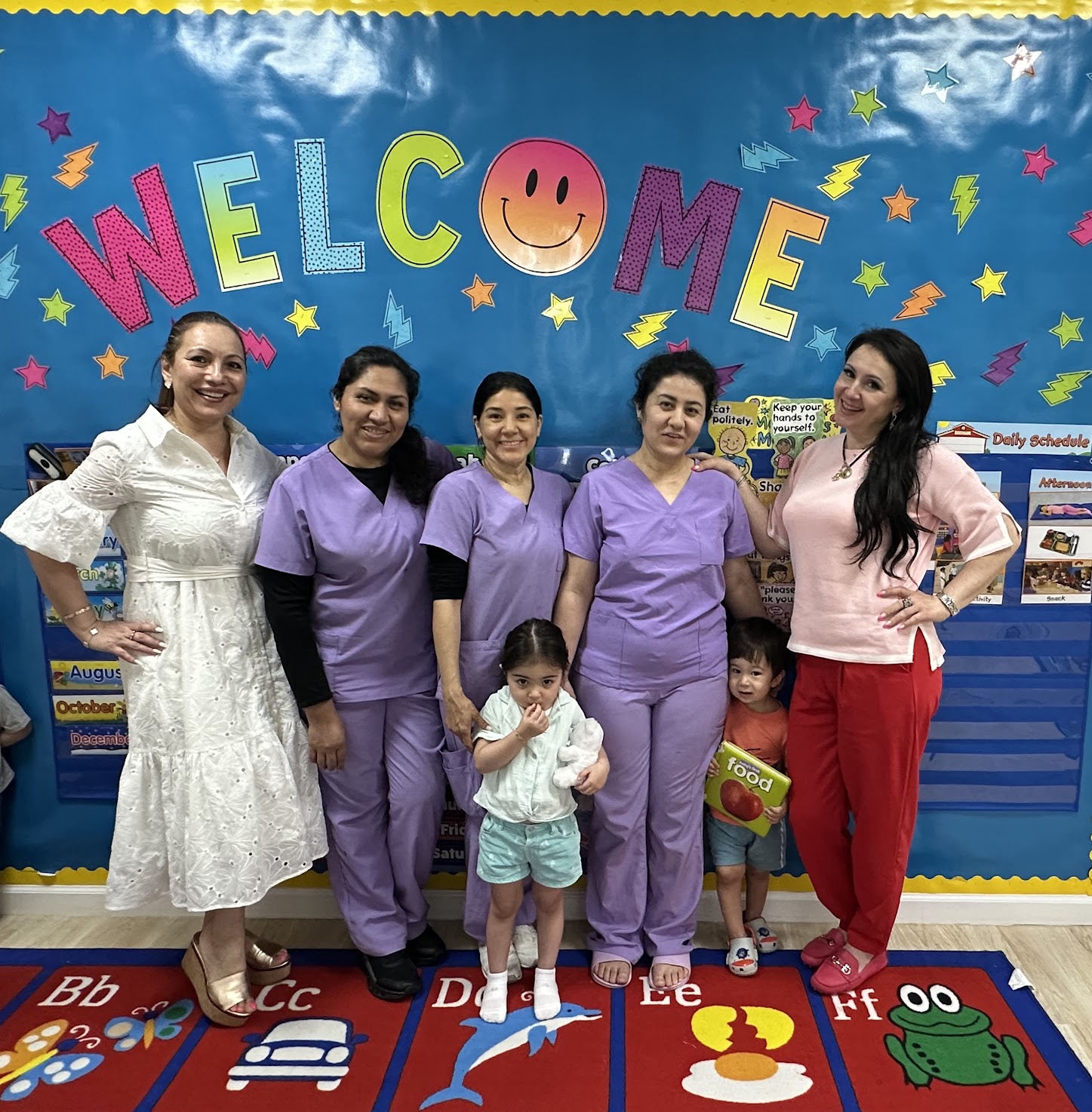
Owners, staff, & children welcome you, Photo by Michael Perlman

Mazler explained how their enduring friendship evolved into a thriving business partnership, after meeting approximately twenty years ago while working in the field. “Since Diana is a special education teacher and I’m a speech pathologist, we were providing homecare services for the same client. We quickly became friends, and then best friends. Over the years, we worked as a team, celebrated many successes, and realized we could achieve so much more together. That’s when we decided to open our own daycare, knowing we could make a greater impact in the lives of many children.” Their shared passion, mutual respect, and seamless collaboration, strengthened by two decades of experience in daycare center environments, remain the driving forces behind their success.

“Our mission is to provide the highest quality of care for children, to embrace inclusivity and diversity, and to nurture each child with love, guiding them toward a life built on compassion and support,” continued Mazler. She also shared the inspiration behind the center’s engaging name, “ClearView,” which was mutually selected. “As parents, we wanted to offer families a ‘clear view’ by being open, transparent, and deeply committed to the well-being of every child in our care. We want parents to know exactly what their child is learning and eating, while we provide a safe and positive environment. Simultaneously, we maintain a clear vision of how we conduct our work by helping children grow strong, confident, and ready to thrive.”

The Monday to Friday schedule, which runs from 7:30 AM to 6:00 PM, offers significantly more than a standard daycare routine. It is a day filled with opportunities for growth, learning, and joy. Children enjoy a rich variety of activities, including free play and library time, circle time, learning centers and small-group projects, indoor and outdoor play, gross motor activities, music and movement, art and sensory exploration, and storytime, among others.

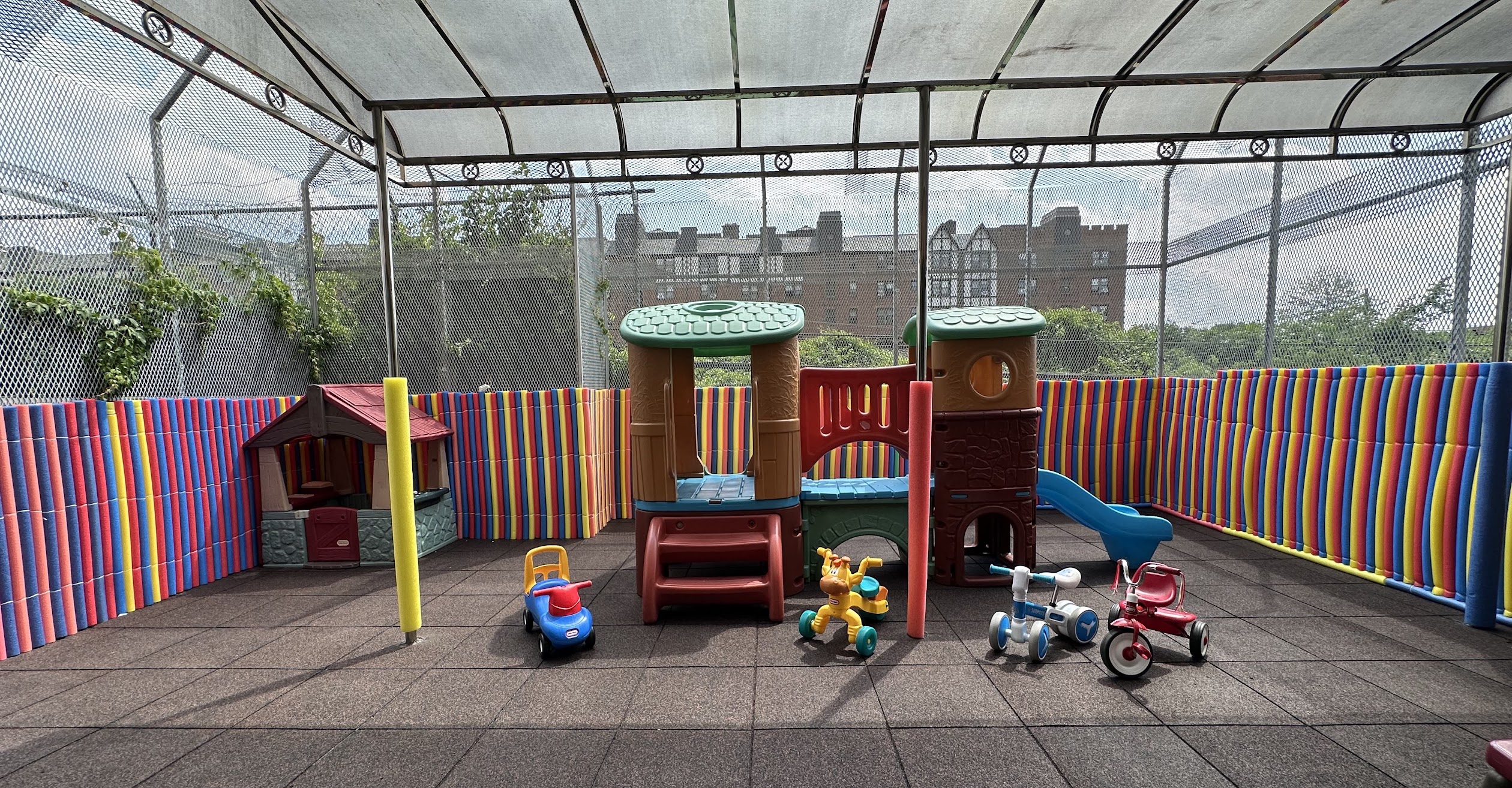
Outdoor play area, Photo by Michael Perlman

Mazler highlighted several qualities that distinguish their daycare apart from others. “We truly love children from the bottom of our heart, and that love is felt from the very moment that parents bring them through our doors,” she shared. The team also places great emphasis on helping children transition smoothly from their home to the daycare environment, which is an experience that can be stressful. With years of expertise, they apply gentle, preventative strategies to ease separation anxiety, and create a sense of comfort and security from day one.

Another standout is preparing three balanced meals and two nutritious snacks, consisting of high-quality ingredients in a kosher kitchen. Milk and eggs are among the organic products. They are committed to accommodating dietary needs, as well as diverse tastes, since healthy food should be delectable and suited to a child’s preferences. Breakfast, for example, may consist of oatmeal with fruits, eggs, and toast or French toast. Vegetarian and vegan options are also available. “We introduce our students to a variety of foods and textures, prepared in a healthy manner, and over time, they become curious and often end up loving them,” said Mazler.

“We offer music classes and sports once per week, and we have our students help prepare challah from scratch on Fridays in our weekly cooking class,” said Mozner. The hands-on approach not only engages their senses, but teaches practical skills that they can carry into their homes as they mature.

“By playing sports, children learn how to follow directions and develop motor skills,” said Mazler. The program offers judo and karate classes, which help children develop physical strength, coordination, balance, and self-discipline, while also building confidence and fostering respect for themselves and others. Another unique aspect is etiquette classes, where children acquire essential social skills, such as sharing, expressing gratitude, and showing respect.

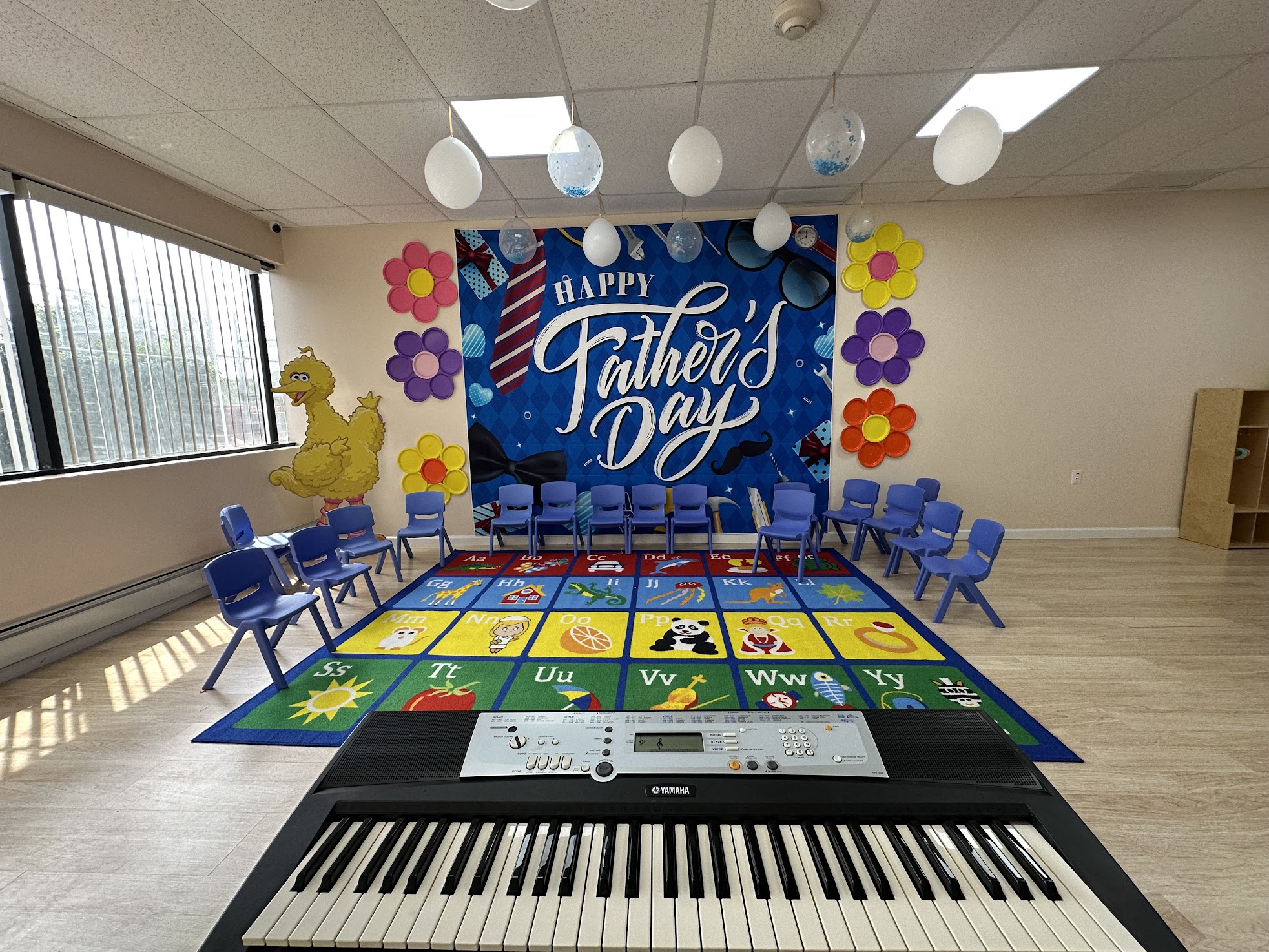
Students also participate in themed performances in conjunction with upcoming holidays, such as Mother’s Day and Father’s Day, which reinforces the traditions and values each season represents. Sensory integration therapy consists of exposing children to materials, including sand and water. This summer, shows are held weekly, which feature a range of subjects. Animals were in the spotlight of one show, and others featured interactive foam and paper as a source of entertainment. Water activities enable students to discover the properties of water, develop interpersonal cues and establish bonds, and enjoy the summer warmth in the center’s enclosed on-site playground.

Where creativity is key, Photo by Michael Perlman

Based on Mazler’s observations and feedback from parents, she shared a few of many reasons why co-owning a daycare is gratifying. “After a few months of operation, their children start following directions. They develop speech and language skills. They start interacting with other children and are more mature. They’re never hungry when they come home. Parents tell us ‘Thank you!’ We also hear how their children, even on weekends, are looking forward to visiting our daycare.”

“Kids feel the atmosphere. They feel it’s a home when they come to our daycare, since we all have positive energy,” said Mozner. “When they come here with their parents, they don’t want to leave, even if it is their first visit. They already feel loved. You don’t have to tell them ‘I love you.’ They know. We always recommend parents to take a tour and see for themselves, since only parents can feel if this is the right place for their child. Our daycare is education combined with positive energy and love.”

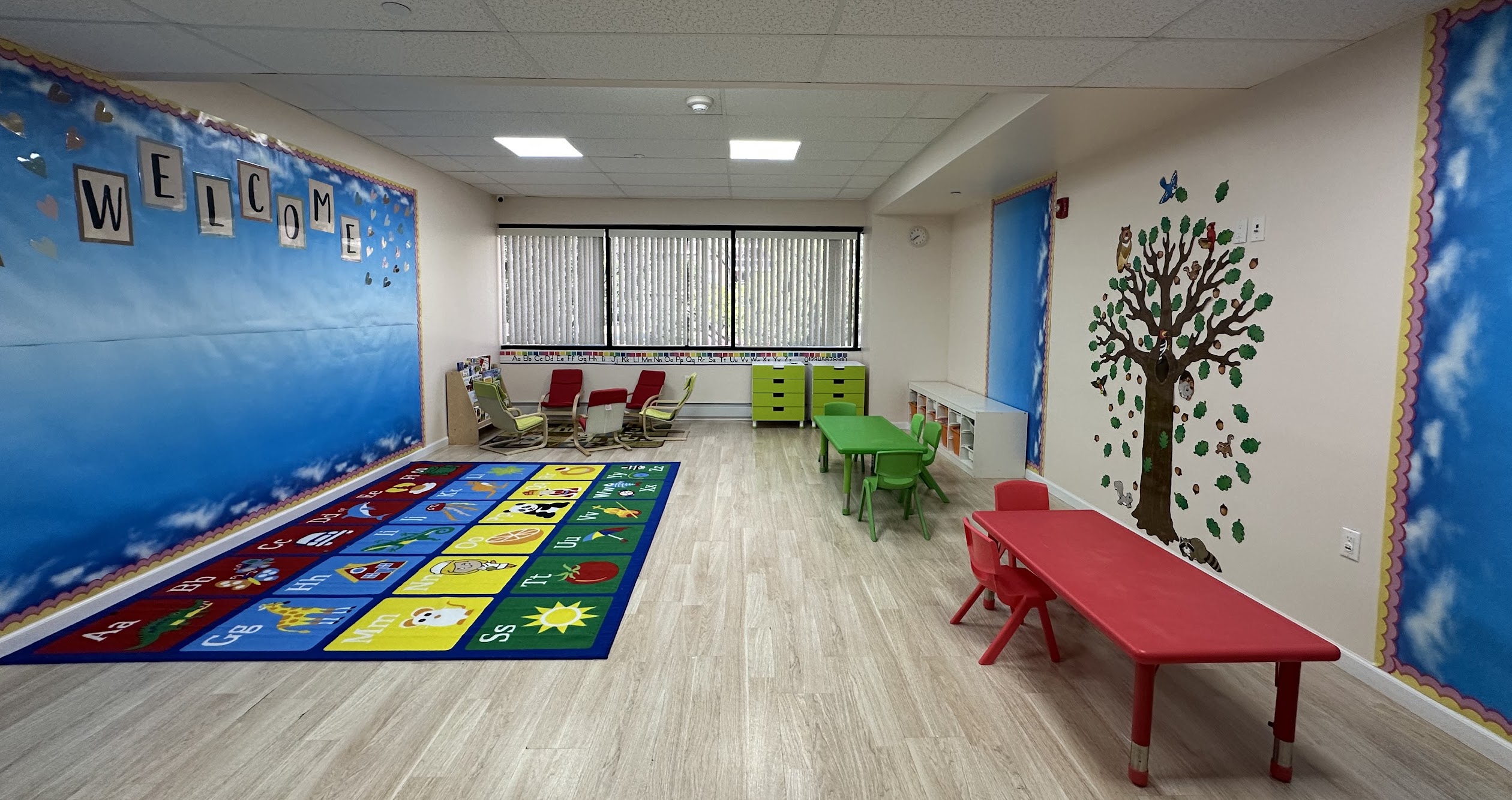
Colorful interactive spaces along with a Tree of Life, Photo by Michael Perlman

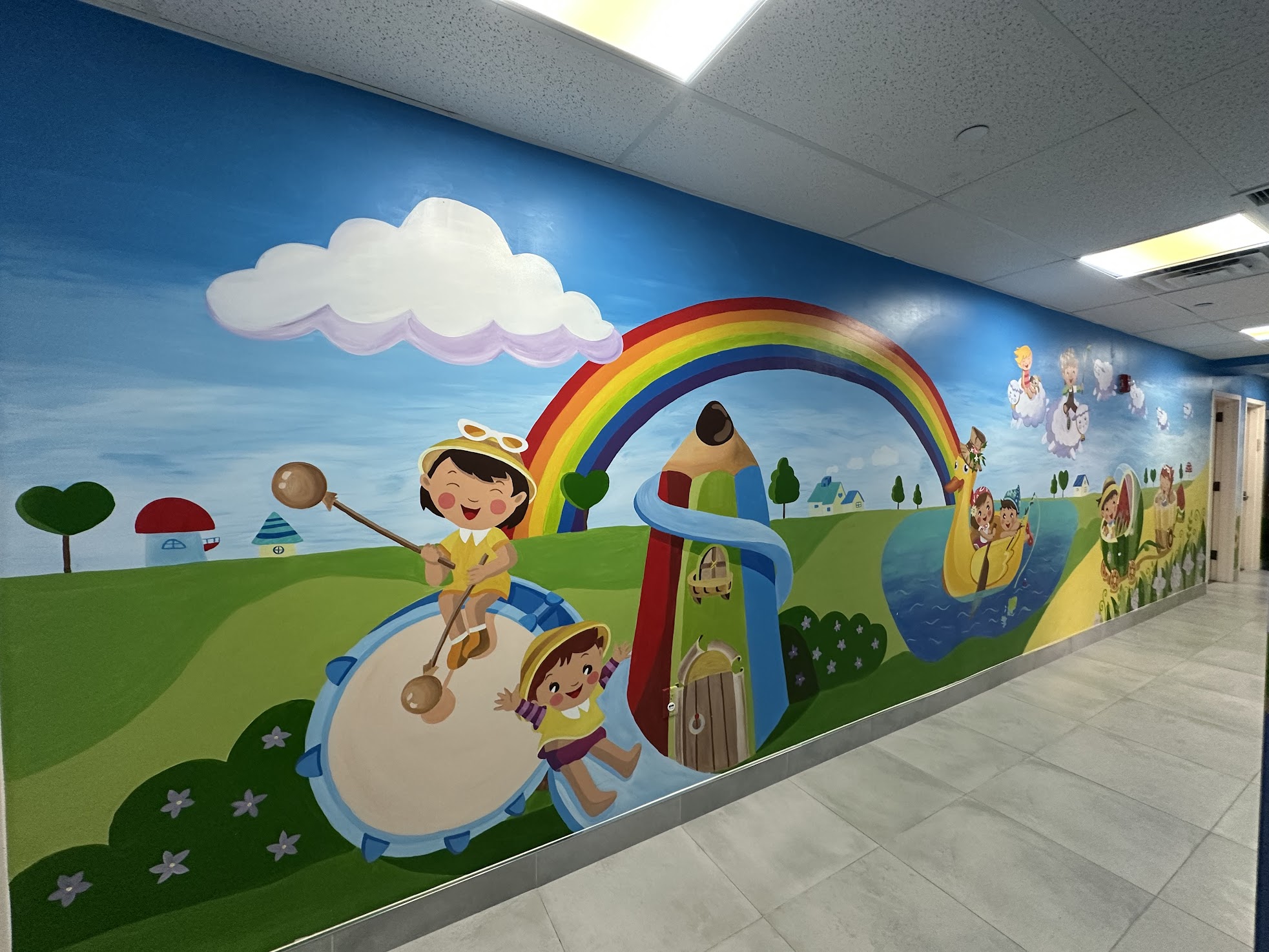
The layout and configuration of rooms with their purpose, lighting, and the whimsical and colorful huge murals lining the hallway also contribute to the daycare’s unique personality. Children are inspired to use their imagination. One of the murals features toddlers steering a rubber duckie alongside a rainbow, above a rainbow pencil-inspired house, and a toddler hitting a drum as another makes their way down a sliding pon. In a room, cutouts of Cookie Monster and Bert surround a miniature library, enabling a classic adventure. Another space features an interactive colorful growth wall, where children can learn to measure their height alongside a giraffe, monkeys, flowers, and insects.

Murals enable one’s imagination, Photo by Michael Perlman

The duo can also be regarded as artists from designing their center’s engaging logo and beyond. Mozner explained, “We conducted much research regarding what is good for kids, such as how the lights are supposed to be and what colors to use. We read lots of literature, but also applied our own imagination.”

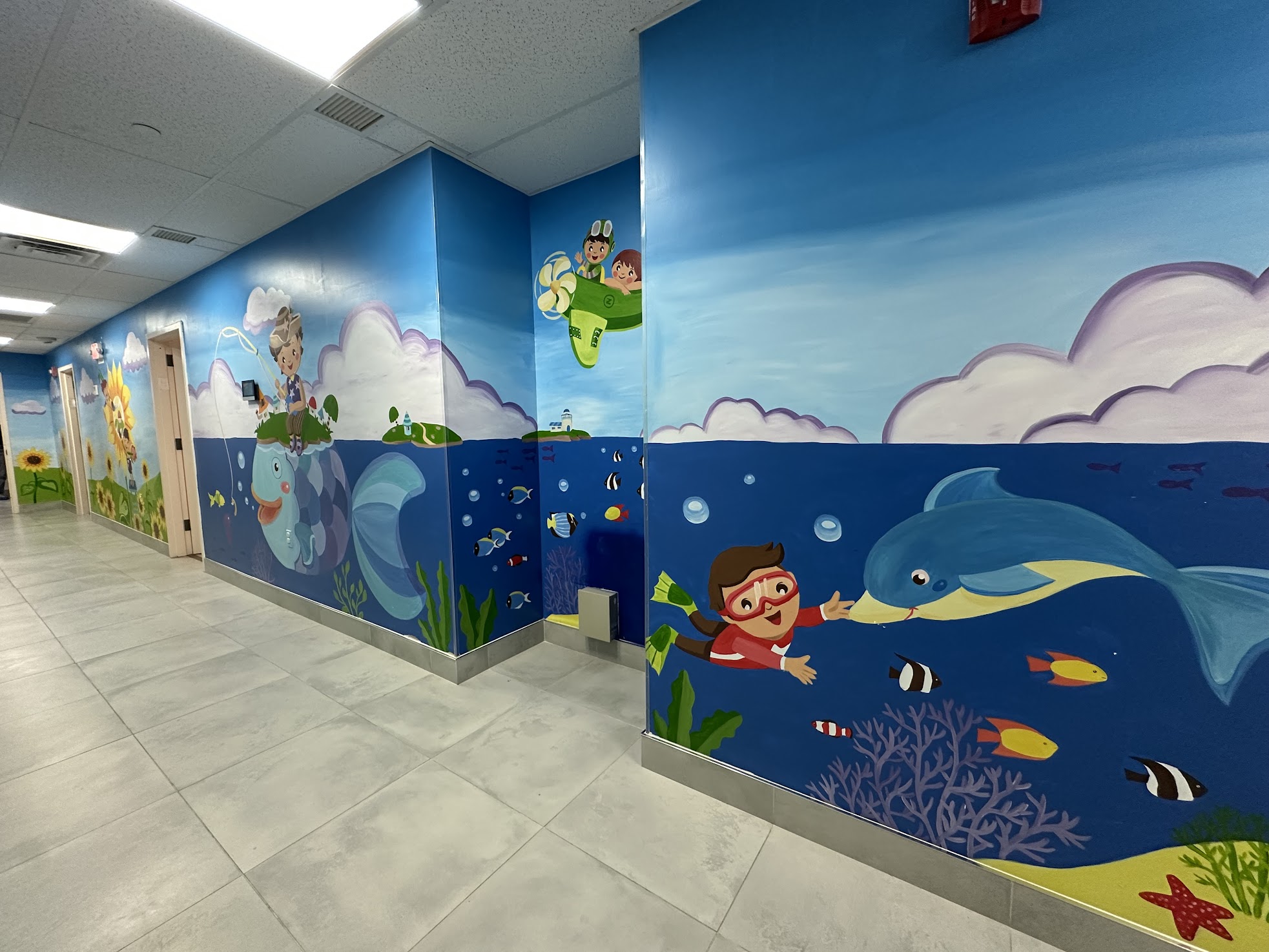
A journey begins at ClearView, Photo by Michael Perlman

ClearView Kids Daycare Center is partnering with the QUALITYstarsNY program, a rating and improvement system for early childhood programs, which provides support and resources throughout New York State.

To discover the magic at ClearView Kids, visit www.clearviewkids.com, call 347-730-4235, email Clearviewkidsinc@gmail.com, follow @clearview_kids_daycare_center_ on Instagram, and book a consultation and tour. Enrollment and a journey awaits!

Fine Dining Forest Hills Style with Restaurateur Paul Singh Aged, White Radish, & Daikon Sushi Bar Making Their Mark

By Michael Perlman

Forest Hills is much more tempting with its culinary delights, thanks to restaurateur Paul Singh, who represents the epitome of local fine dining. He is a people’s person, who greets patrons with a warm smile and a friendly demeanor, and is a cultural visionary, who owns three restaurants. Additionally, he is the CEO of Paul Hospitality Brands, which offers consulting services and is open to partnership opportunities to develop new brands built of excellence.

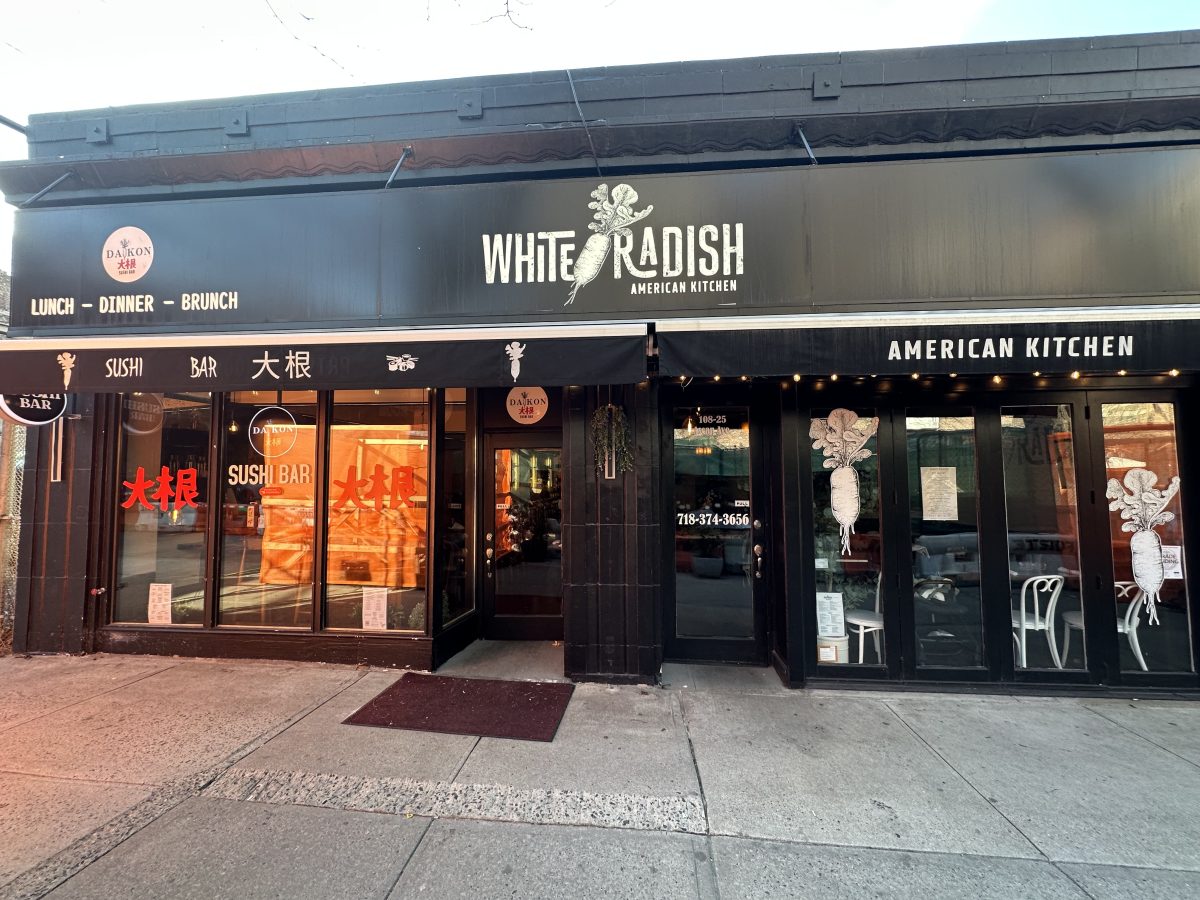
Singh’s restaurants reflect Forest Hills’ recent past achievements, and consist of Aged Steakhouse, established in 2009 at 107-02 70th Road, White Radish American Kitchen, opened in September 2020 at 108-25 Ascan Avenue, and Daikon Sushi Bar, opened in April 2024 at 108-23 Ascan Avenue.

As a restaurateur, achieving around the clock consistency is the only option. “My goal is to provide the best possible meats and produce, which is locally grown and new in market trends. My approach is to keep everything fresh, adding seasonal menus, and ensuring high quality meals and exceptional taste.” Menus are diverse and offer numerous options, and Singh always accommodates dietary preferences upon request.

Singh was raised in Chandigarh, India and graduated from Panjab University in 1997 with a degree in Hotel Management. His studies followed with a degree in Hospitality and Tourism in 1999 from UNSW Sydney in Australia. In 2001, he settled in New York. Since then, he helped open a number of restaurants, such as Amma on East 51st Street, Indus Valley on Broadway and 100th Street, and Nanking Indian & Chinese in New Hyde Park. He also helped owners expand their restaurants, such as Europan, formerly on 70th Road and Austin Street, Tawa Tandoor in Jackson Heights, Aged on the Upper West Side, and Village Prime Steakhouse on Bleecker Street.

Each name of his current businesses offers an intriguing story, which matches their unique ambiance. Aged is a reflection of aged wines, steaks, and a single malt collection, which achieved 25 at its peak. An Aged steak’s level of seasoning is not only a touch of sea salt, but admired as Singh’s secret. White Radish embodies a backyard “farm to table” concept. Daikon Sushi Bar, which leads into its neighboring restaurant, is a Japanese name for White Radish.

Singh’s restaurants embody a town center with a city spirit that meets a small-town vibe, as patrons and staff members mingle, and multi-generational patrons bond. Each restaurant also holds a special place in many hearts. “Many local organizations hold events. I have observed our regular customers meeting in my restaurants, dating, proposing, and getting married in the same place.”

The sense of place has been recognized in the production world, where the charming environment of Aged became the setting for an episode of “Law & Order” last year, and another visit by the production team is anticipated this year.

Singh pinpointed signature dishes, including personal favorites. “At Aged, they include crab cakes, ribeye and porterhouse steaks, and juicy burgers. We are well-known for brunch over the weekends. Some of our specialties at White Radish include beet salad, steak paninis, oxtail croquettes, baked oysters, octopus, duck two ways, and homemade desserts such as salted caramel budino and bread puddings. Our wide selection of wines and spirits are from all over the world. At Daikon Sushi Bar, besides our sushi, sashimi, and temaki are cool, and my favorite is the crispy salmon, crispy kataifi shrimp, and mixed seafood spread. Our traditional Japanese sushi bar has been an attraction, where we serve premium sake and sake cocktails.”

Teaming up with highly skillful chefs has long been a goal. He explained, “Our chef worked at Charlie Palmer Steak and Rothmann’s Steakhouse in Manhattan before joining White Radish. At Daikon Sushi Bar, our chef was born and raised in Italy. As a certified sushi chef, he studied in a Switzerland culinary school and has been a private chef for the president of Geneva. He is extremely skilled with his knowledge and knife skills, where he creates modern fusion sushi rolls with exotic flavors. His platinum-plated presentations are exquisite.”

When Singh was eight years old, he had a vision, adhered to and cultivated his passion, and would eventually achieve the American Dream. He reminisced, “I learned by very closely watching my grandmother cook. My father was an architect, all siblings and cousins are doctors or engineers, and I followed my instincts to my passion in the culinary industry.” He continued, “My family’s teachings included hard work, honest living, giving back, and providing social services.”

“We have recently redesigned Aged. In White Radish, we featured everything from wallpaper to old reclaimed farmhouse style beams and lighting fixtures. Even the floor plan was done by me, before it got into the hands of an architect to file with the Department of Buildings,” explained Singh.

Singh resided in Forest Hills from 2002 to 2009, and relocated to Oyster Bay in 2010. He is not only a businessman, but a family man, who is grateful for his 25-year marriage and their two sons. When asked if they will continue the restaurant and hospitality tradition, he responded, “Both will eventually come into the business.”

Singh has long felt inspired by his homeland’s master plan and architecture, a product of Swiss-French architect Le Corbusier, with his cousin Pierre Jeanneret, and architects including Jane Drew and Maxwell Fry. Singh, who was raised in a creative environment, got to the drawing board and designed his restaurants, which offer a distinctive ambiance, which adds to a memorable experience. When he is not at his restaurants, he loves playing sports, including golf, and has been a national-level ping pong player since his high school days.

Besides Singh’s grandmother, his culinary inspirations include chef and restaurateur David Burke, celebrity chef and restaurateur Bobby Flay, celebrity chef and author Anthony Bourdain, and Indian-American chef Floyd Cardoz, to name a few. “There are many more who inspire me after sharing their culinary journeys on a social platform. They became the inspiration for all new aspiring chefs worldwide,” said Singh.

Challenges are undoubtedly associated with the restaurant business, so a labor of love is imperative. “There is inflation, parking restrictions, and streets are dirty and not maintained as often by the city,” said Singh.

As a result of the expansion of the Long Island Railroad platforms and the creation of a new handicapped ramp, which would link Continental Avenue to Ascan Avenue, a temporary storage area with barricades was placed in front of both of Singh’s restaurants, in addition to adjacent storefronts. The business owners and the community are hoping to persuade the LIRR to remove the barricades, which compromises visibility and accessibility, and in turn reduces business, according to Singh among other parties. “Now there is less foot traffic and less business, and I am hoping that the LIRR will be a team player,” explained Singh. Outdoor seating has been a treat during the warmer months, but that seems unlikely in the foreseeable future.

Upon realizing the hardships, local patrons envision collaborating by lending their support, and began to discuss memories and the distinctive aspects of Singh’s restaurants. “The experience is extraordinary,” said this columnist’s mother, Linda Perlman. “One of my favorite meals is the crispy skin salmon with baby spinach, saffron oil, and creamed celery root, which resembles mashed potatoes, but is tastier. What an amazing dish that’s bustling with flavor and broiled to perfection at Aged!”

Stuart Morrison recalls being a patron since White Radish opened its doors during the pandemic. “This is a marvelous restaurant with many repeat customers. All of their dishes are expertly prepared with fresh ingredients. White Radish is great for a first date or a special date, or with anyone you want to impress, or just for being with friends and family. It’s a gem and right next door to Forest Hills Gardens.”

Along with a friend, Stella Derum recently enjoyed a very pleasant dinner at Daikon Sushi Bar. She explained, “We began with some cocktails, prepared with sake, vodka, and cucumber. It was very refreshing. We went on to enjoy edamame and a simple but delicious medley of sautéed veggies. All the rolls were very creative. The shrimp tempura and the mango rolls were both very good. Excellent service and a sushi chef taking pride in his creations, made for a very lovely, casual evening in our neighborhood.”

“While White Radish and its sushi sister restaurant are neighborhood gems, they are worth the trip from anywhere,” said Donna Albano. She and her guests always address the sushi chef as “Chef” and a true artist. “His creations are visibly artistic, and the flavor combinations he creates burst in your mouth. The real fun part of the restaurants is that you can order from the American and Japanese menus on either side, which is great when you’re out with a group of differing tastes. I urge everyone to stop by when they can, since we need to keep these fantastic restaurants as part of our Forest Hills scene.”

Aruna Raghavan and her family celebrated her birthday dinner a few years ago at Aged. “I enjoy trying different cuisines and enjoy its ambiance. We had plenty of tables to choose from, and it seemed to be a perfect place to have good conversation and family time. The restaurant was clean. I ordered stir-fry vegetable pasta, since I am vegetarian. I was not sure if it was on the menu, but they prepared it for me, and my family ordered meat-based cuisines from the menu. The pasta was delicious and freshly made, and my family enjoyed their meal too. The service was great.” Already making plans, she said, “I need to go back and relive the experience once again for my birthday coming up soon, but maybe at White Radish this time.”

It is also a family affair for Trisha Rivera, who admires White Radish for brunch after Sunday services. Her highlights are peach Bellini with crab benedict, and chocolate chip banana pudding, a perfect way to top off the evening. For Aged, they enjoy brunch or dinner. “We went for Valentine’s Day, and although it was extremely busy, even with reservations, the manager tried his best to make it a great experience,” said Rivera. She also values both restaurants’ rustic décor and much generosity of spirit. “This gives warmth to your dining experience and a nice touch to our neighborhood. Interesting displays in both spots are beautifully decorated. The staff is always welcoming, which is very much appreciated when outing with a toddler,” she continued.

West Palm Beach, Florida resident Natalya Dymova, who spent 24 years in Forest Hills, continues to have White Radish on her “to do” list, despite her move. She reminisced, “My aunt and cousin took me for dinner when I visited in November 2023. I loved that it was a calm place with great food, and very polite but not overbearing staff members. I love that the music wasn’t loud, as I was trying to catch up with my family.” In March 2024, her friend asked her to lunch, and Dymova specifically chose White Radish. “I just really wanted that four-cheese ravioli!”

She also admires Aged. “I visited for special occasions, and it was one of those places that I’d have to get the steak, since it’s always perfect. Aged is a lovely and classy place that I visited for special occasions and lunches. The staff was so understanding that we only had limited time, and they made sure we were well taken care of. Oh, and I love their Crème brûlée.”

Singh envisions a bright and delectable future for New Yorkers and visitors alike. “I tailored some of my brands with menus and ideas to open more locations with available funds. In a decade, I visualize working with the state to become part of a system to enforce and guide one’s hard-earned experiences to help other business owners to develop and not give up.”

NYRP Launches Free Tree Giveaway Season Parks Department To Expand Tree Canopy Planting Trees & Producing Art

By Michael Perlman

Throughout 2025, residents and city staffers will continue to restore the “forest” in Forest Hills, the “park” in Rego Park, and communities throughout the five boroughs by expanding and diversifying the tree canopy. The Parks Department and the New York Restoration Project (NYRP) nonprofit are among the organizations in full swing. Earth Day is on April 22, followed by National Love A Tree Day on May 16.

A number of opportunities exist for residents to improve the city’s landscape and cultivate one’s green thumb as a team. The dynamic NYRP was founded by Bette Midler in 1995, with an aim of partnering with residents to revitalize gardens, restore parks, plant trees, and promote urban agriculture. A thirty-year success story is also built on the annual free tree giveaway, which was launched in 2008 in conjunction with the MillionTreesNYC initiative, and continues beyond the city’s completion in 2015. This season’s annual tree giveaway events will be held at sites throughout the five boroughs on weekends from April 5 to May 4, thanks to neighborhood organization partners: https://www.nyrp.org/en/get-involved/tree-giveaways

A total of 3,500 native trees will be available. Eligible tree adopters are New York City residents, consisting of everyone from homeowners to building residents, supers, and property owners. Trees can be planted at apartment buildings, houses, community gardens or private gardens, community centers, schools, faith-based institutions, businesses, museums, and other properties, as long as consent is obtained.

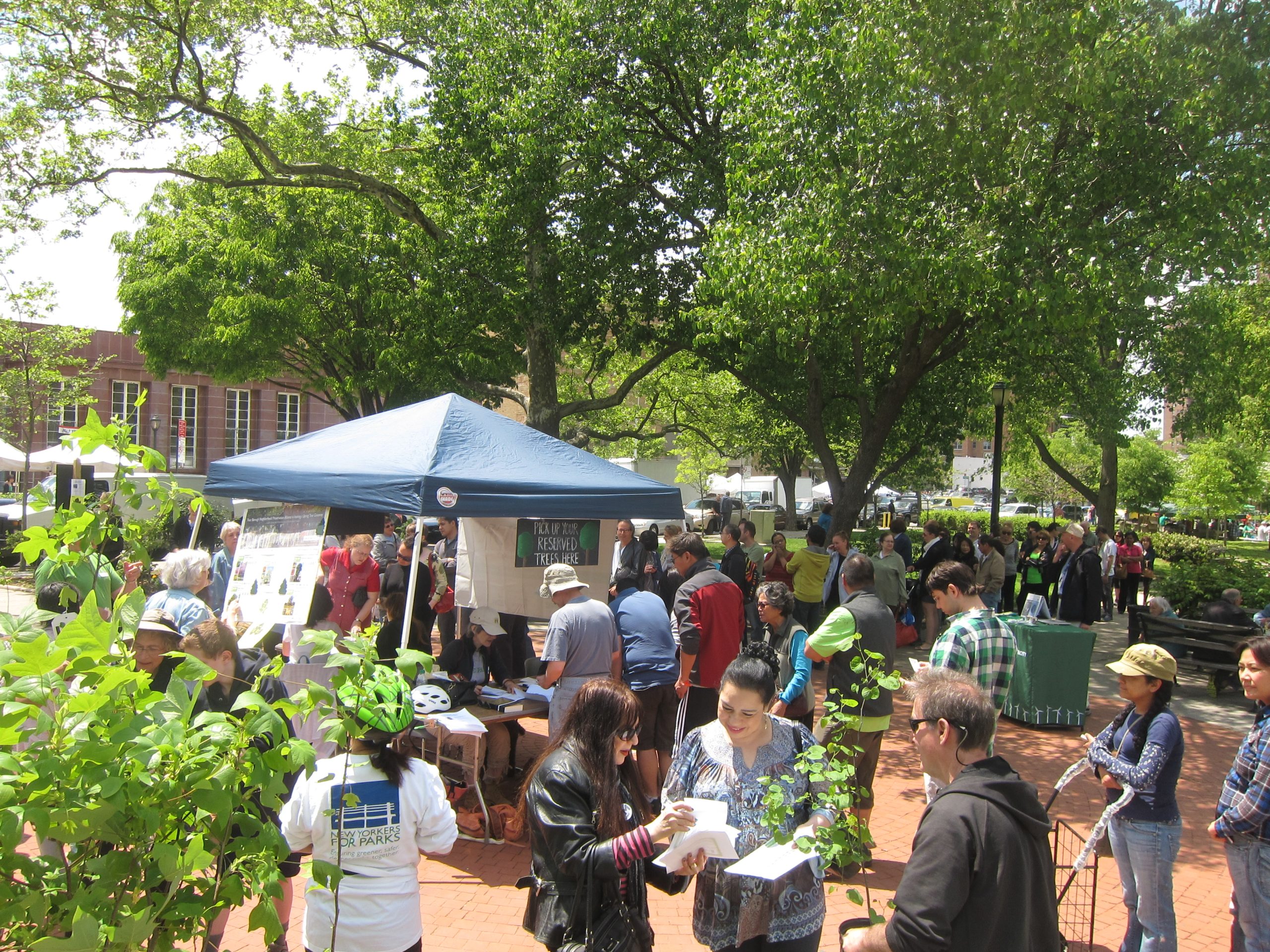
Forest Hills tree giveaway with NYRP.

Although online registration for certain events is full, it is likely that interested parties will still be able to acquire one or more trees. Trees are usually available for first-come, first-serve walk-ups during the second hour of each tree giveaway event. If advanced registration is noted online as full, NYRP recommends arriving at the beginning of an event to place your name on the waitlist.

NYRP’s tree species will offer diverse appearance alongside environmental benefits and improving property values. Event participants can acquire the following tree varieties:


Allegheny ServiceberryAmerican PersimmonAmerican PlumBald CypressBasswoodBeach PlumBlack CherryChestnut OakCommon NinebarkEastern RedbudFlowering DogwoodHazelnutNannyberryNorthern BayberryPawpawRiver BirchSilky DogwoodSilky Willow,Smooth AlderSpicebushSweetbay MagnoliaSycamoreTulip PoplarWashington Hawthorn, and Witchhazel

The Parks Department is also on a commendable mission. “With our contracts, in-house planting team, and Tree Time, we expect to plant between 7,000 to 9,000 trees along streets and in landscaped park areas in the spring planting season,” said Environment & Planning Communications Coordinator Julie Heffernan. Planting locations can be accessed on neighborhood tree planting maps through the Parks Department website at nyc.gov/parks/street-tree-planting

This spring, the Parks Department will not be planting trees in Forest Hills and Rego Park, but in the fall, a yet to be determined small quantity will be in store for both neighborhoods to fulfill councilmember-based allocations for the district. “These trees are expected to be planted on Metropolitan Avenue between Woodhaven Boulevard and Union Turnpike, and on Yellowstone Boulevard between Austin Street and Burns Street,” said Heffernan. Backtracking, between 2021 and 2023 in Forest Hills, 177 street trees were planted, and in spring 2024, 163 trees were planted, in addition to 91 trees last fall. In Rego Park, 44 street trees were planted between 2021 and 2023, and in spring 2024, 116 street trees were planted, along with 15 trees for last fall.

Heffernan explained the motivational factors behind the Parks Department’s planting pursuits. “Our tree planting team selects from over 130 different species, and individually assigns a tree for every planting site based on a number of criteria, including tree growing patterns, above-ground and below-ground growing space, and aesthetics. This year, we are planting a variety of Maples, Oaks, and Cherry trees throughout the city. Some unique species that you can expect to see include Spring-Chitalpa, Catalpa, Osage Orange, Heritage River Birch, Golden Rain trees, Persian Ironwood, and Eastern Redbud ‘Merlot.’”

In recent years, the most commonly planted species in Forest Hills were Sweetgum, Dawn Redwood, American Linden, Silver Linden, and Zelkova. As for Rego Park, it also held a spot for Zelkova, in addition to Snowbell, Flowering Cherry, and Gingko.

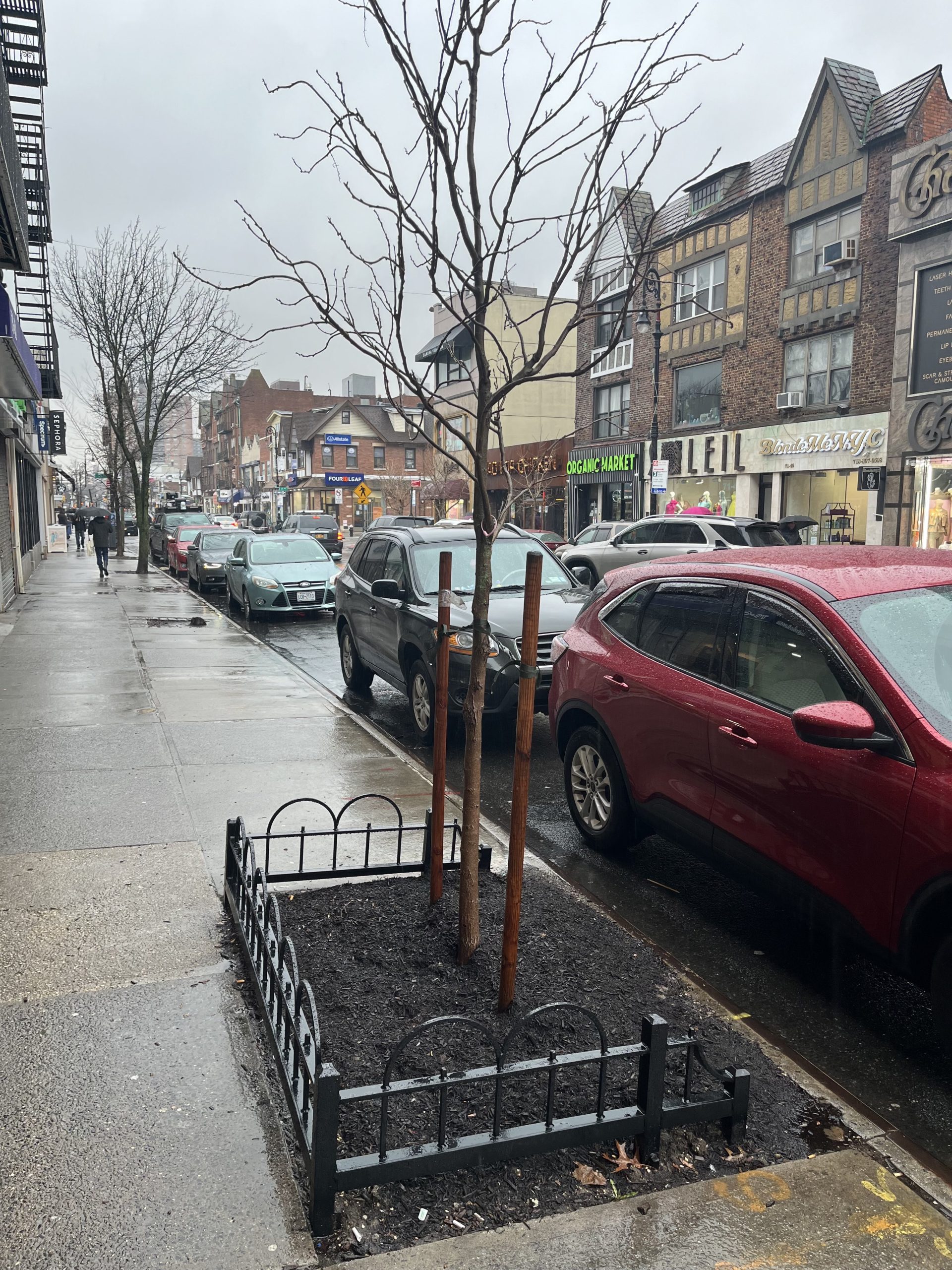
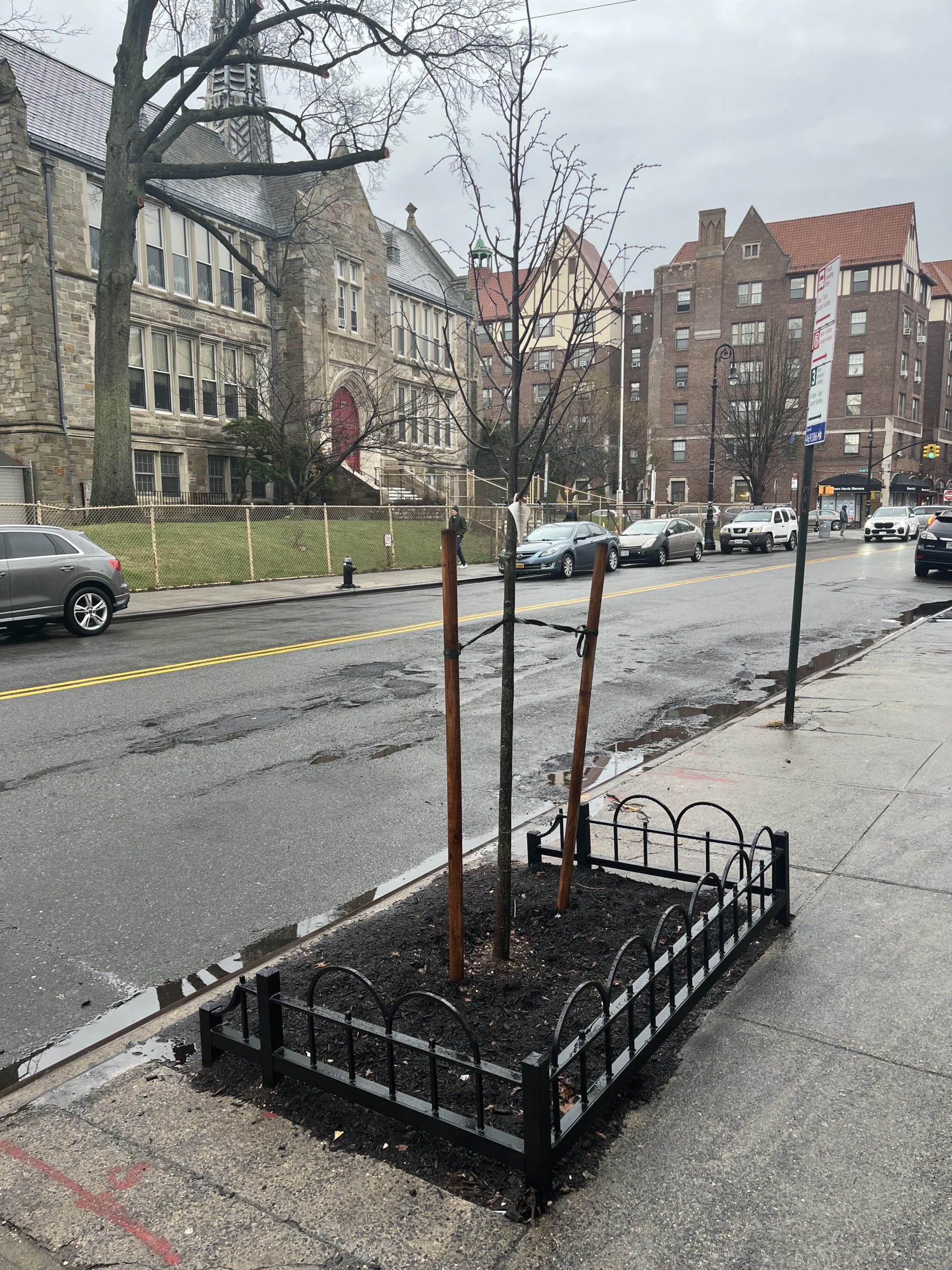
Historic buildings and trees with tree guards on Austin St.

New street trees are planted on a cyclical basis, which places the most heat-vulnerable neighborhoods in first priority. She explained, “Heat-vulnerable neighborhoods are determined and guided by the Department of Health and Mental Hygiene’s Heat Vulnerability Index (HVI).”

The benefits of planting trees at the curb and on lawns are immense. “An impressive array of environmental, social, and economic benefits improves New York City,” said Heffernan, who cited purifying and cooling the air and reducing stormwater runoff. Trees enhance public health and well-being, as well as grant a home to wildlife. “Trees shade buildings and conserve energy by reducing heating and cooling costs. Tree shade can mitigate an area’s Heat Vulnerability Index and block the sun’s harmful ultraviolet rays,” she continued.

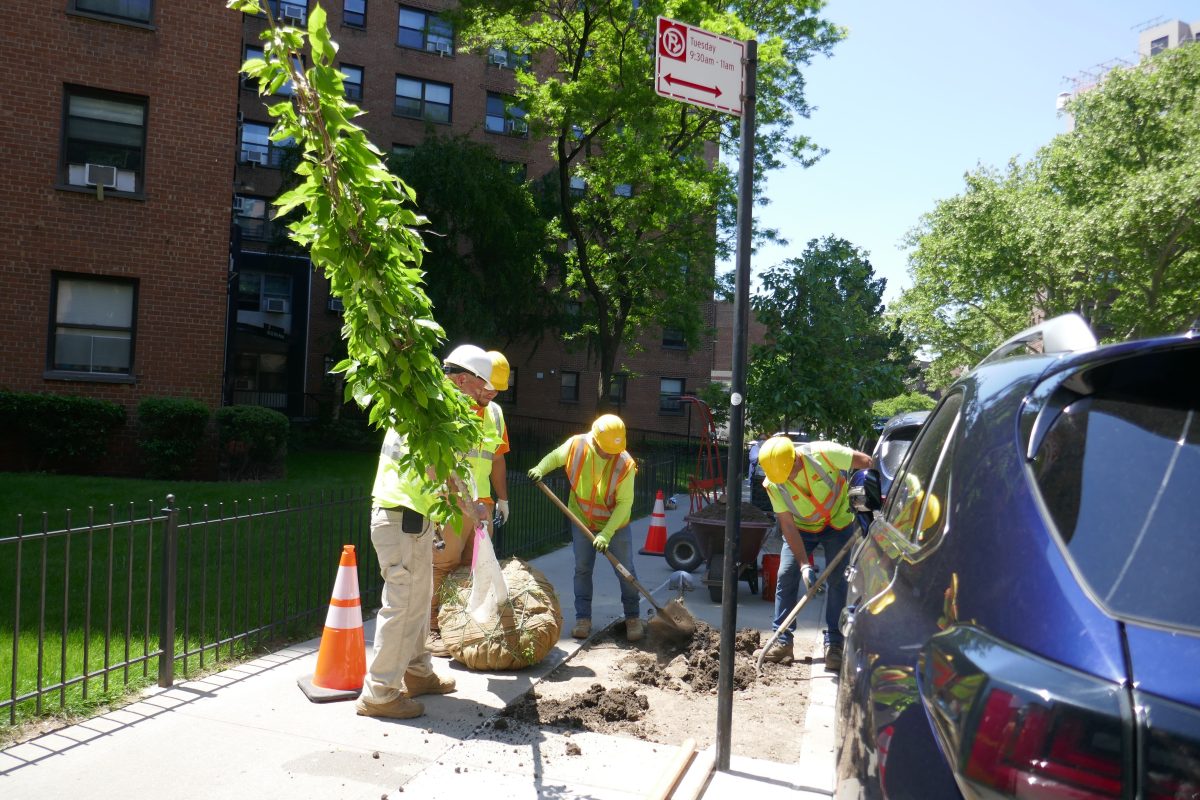
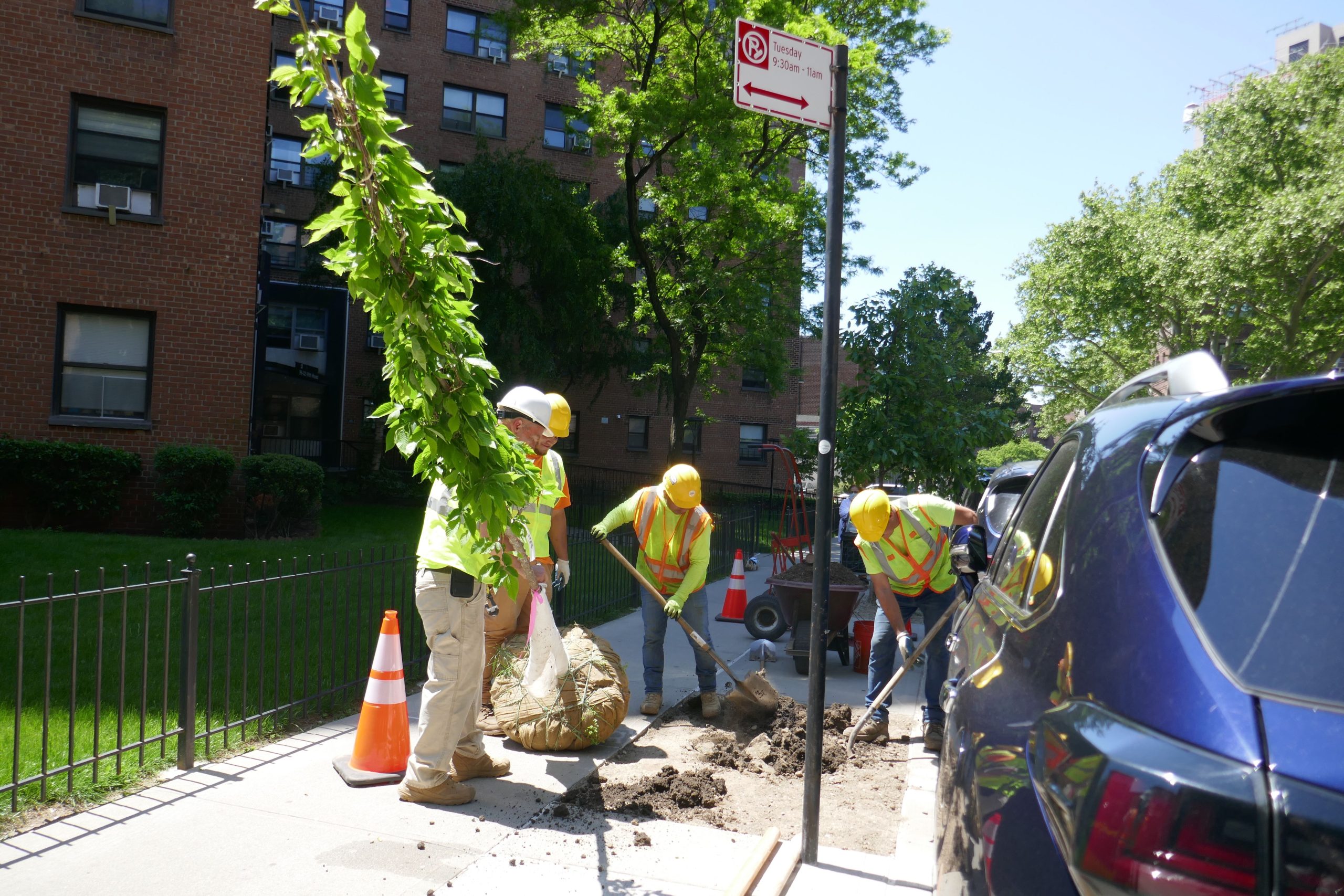
Planting American Hop-hornbeam Tree on 66th Rd.

Trees complement architecture and contribute to a picturesque setting with enhanced property values and mark a community’s history, where some monumental pillars date to the early 20th century. Personal relationships are initiated, as every tree will plant roots to stories that unfold over generations and bond community residents, and become the basis of educational opportunities, literature, and artwork. Some trees can be landmarked or feel like one. “Great neighborhoods have Great Trees,” according to the Parks Department, which has been accepting nominations for the Great Trees initiative: www.nycgovparks.org/facilities/great-trees/nominations

The Parks Department’s Stewardship Team offers dozens of street tree care events that are held citywide each year, and New Yorkers are encouraged to participate in these free educational opportunities: www.nycgovparks.org/reg/stewardship. The public can play a role in planting and pruning street trees, forest and wetland restoration, harvesting and propagating native seeds, and monitoring local wildlife.

To file maintenance requests, the public can call 311 or text 311692. In addition, the tree planting process, the installation of tree guards in a variety of styles, including custom designs, and requesting tree pit-related sidewalk repairs can be accelerated through Tree Time, a public-private partnership. Residents have the option of funding a project after visiting www.nycgovparks.org/trees/tree-care/ny-tree-trust or emailing TreeTime@parks.nyc.gov or calling 718-361-8101.

Historic buildings and trees with tree guards on Austin St.

From 2015 to 2016, the city’s third tree census was underway, where 2,241 volunteers mapped 666,134 street trees on 131,488 blocks, and the results can be analyzed: www.nycgovparks.org/trees/treescount.

On a related note, all city trees along with real-time stats, such as those that were serviced, can be found by exploring the NYC Street Tree Map: https://tree-map.nycgovparks.org. Unique facts include the top three park trees as London Plane, Pin Oak, and Honey Locust. As of today, 877,949 trees are on the map with 543 tree species, where London Plane consists of 83,788 mapped trees.  A recent tree care activity as of March 23 is noted, which reads, “The Ginkgo near 110-50 Queens Boulevard was weeded and was cleared of litter.” There are 67,467 activities reported, along with 16,297 trees favorited. Ecological benefits are featured, including 1,470,022 pounds of air pollutants removed, 774,938,711 kWh energy conserved, and 1,289,292,083 gallons of stormwater intercepted each year.

As of June 3, 2023, the Parks Department announced the highest quantity of trees planted over a six-year period, with greater than 13,154 street and park trees planted citywide, and a total of 14,900 that was anticipated by the end of the month. The full speed ahead rate was attributed to appointing additional M/WBE contractors. Also pinpointed was their goal to plant trees in heat vulnerable neighborhoods, with over 5,700 planted in fiscal year 2023. For Queens, that consisted of Elmhurst, Hunters Point, Sunnyside, Long Island City, Laurelton, South Ozone Park, St. Albans, Flushing, and Woodside. As a result of an additional $136 million allocated by the mayoral administration for the program, planting trees in every sustainable spot in HVI-4 and HVI-5 neighborhoods by 2026 was announced as a Parks Department goal.

News of the season’s tree giveaway events and street tree planting pursuits are not only inspiring taking out a shovel, but advocacy through art. Visual artist Susan Varo of My Works of Art, who has a history in Queens, proudly supports planting more trees and producing artwork. She explained, “Trees are very inspirational, since they become an integral part of the focus for many of my works. In my many journeys throughout my neighborhood, I search for trees with a certain aesthetic. I am impacted by what I see, and it becomes a part of what I include in my natural landscape paintings.”

She has long admired how tree planting is significant for people, animals, and the environment. “We all need these beautiful tall plants, as they are an essential part of our ecosystem. They sustain life, provide shelter to many living species and offer a canopy to wildlife. They also preserve the soil, produce oxygen, and provide food to many animals.”

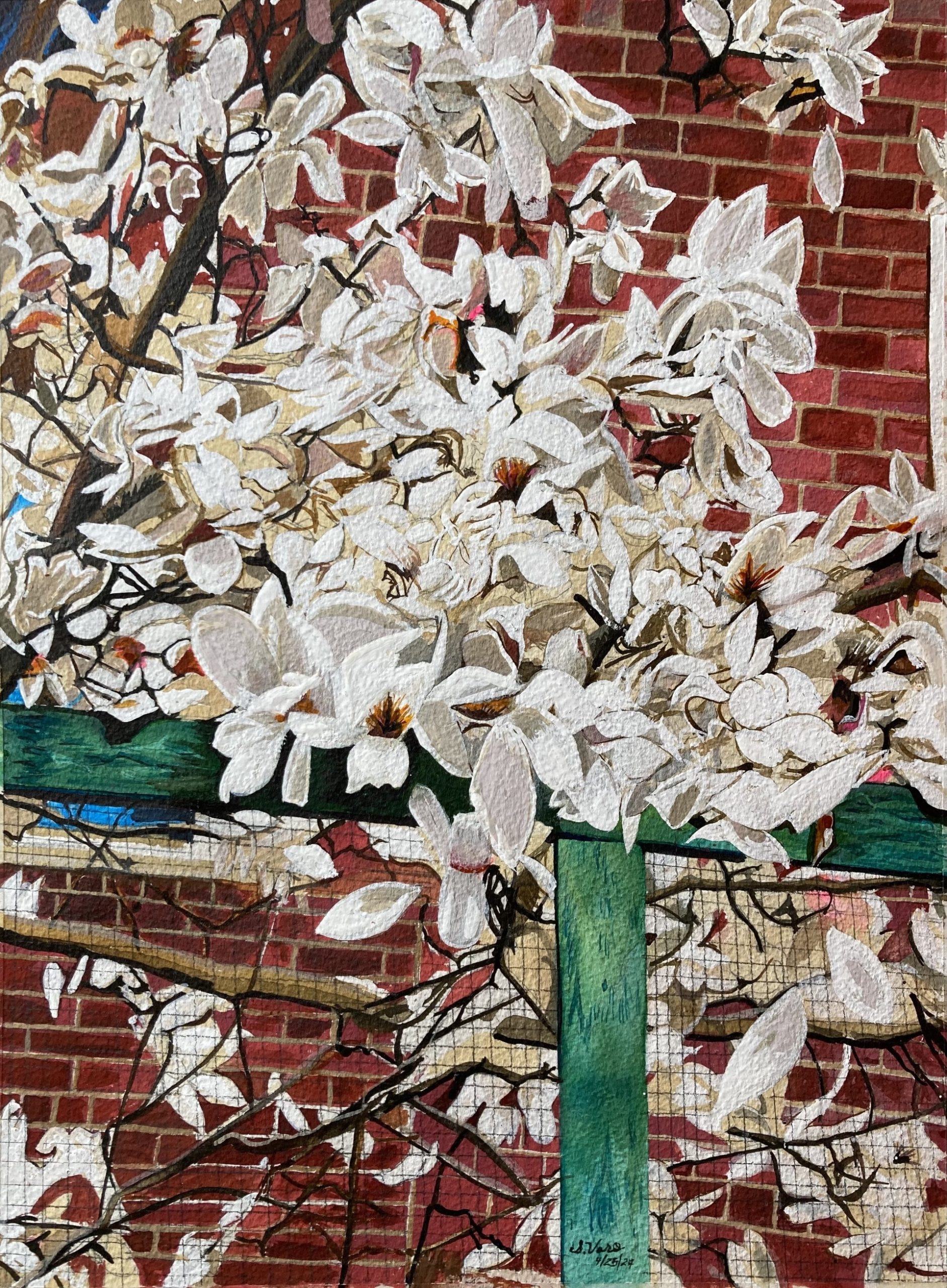
Park Briar Magnolia Tree by Susan Vara.

Varo’s painting, “Park Briar Magnolia Tree,” was inspired by her encounter with a Magnolia along the pathway of the historic apartment building at 110-45 Queens Boulevard, with its exquisitely landscaped frontage. She explained, “I was awestruck by its magnificent beauty, overflowing with stark white flowy petals. As there are many varieties of trees, the Magnolia evokes something special, along with the backdrop of a spring day. There is a certain magic when the wind blows off its petals, sending them dancing and spiraling down onto the ground. The entire area then becomes a breathtaking and picturesque-floral landscape. After studying the intricacies of this amazing plant and its petals, I immediately set out to create a watercolor painting to capture its momentary beauty.”

Varo has hopes that this season’s tree-planting initiatives will include more varieties of flowering trees, such as Magnolia, Dogwood, Crabapple, Hawthorn, Japanese Cherry, and Weeping Cherry.

Painting by Deborah Camp.

Woodhaven resident Deborah Camp, an artist, author, and humanitarian, is an avid window and wall muralist. She has high hopes that her painting will motivate a greener community and cityscape. She explained, “My work features a tree growing out of the nutrient rich soil of our planet with limbs spelling out ‘Forest Hills,’ as a tiny sprout manages to emerge from a seed to grow within the nest of petals to greet the dawning of spring, a time of renewal. The vibrant flowers and leaves blooming from the branches symbolize our diverse community, consisting of people inspiring one another with their innovative ideas as they work, play, and learn together. The tree of Forest Hills that was once upon a time a baby sprout has grown rich in history, culture, and the arts, as it blooms this spring, ready to delight all of our senses with fragrant sweet blossoms, cooling shade, oxygen, and beauty.”

The Eagles Fly Again at Forest Hills Stadium

By Michael Perlman | mperlman@queensledger.com
Every community has its mysteries, and one remains unsolved at the Stadium.

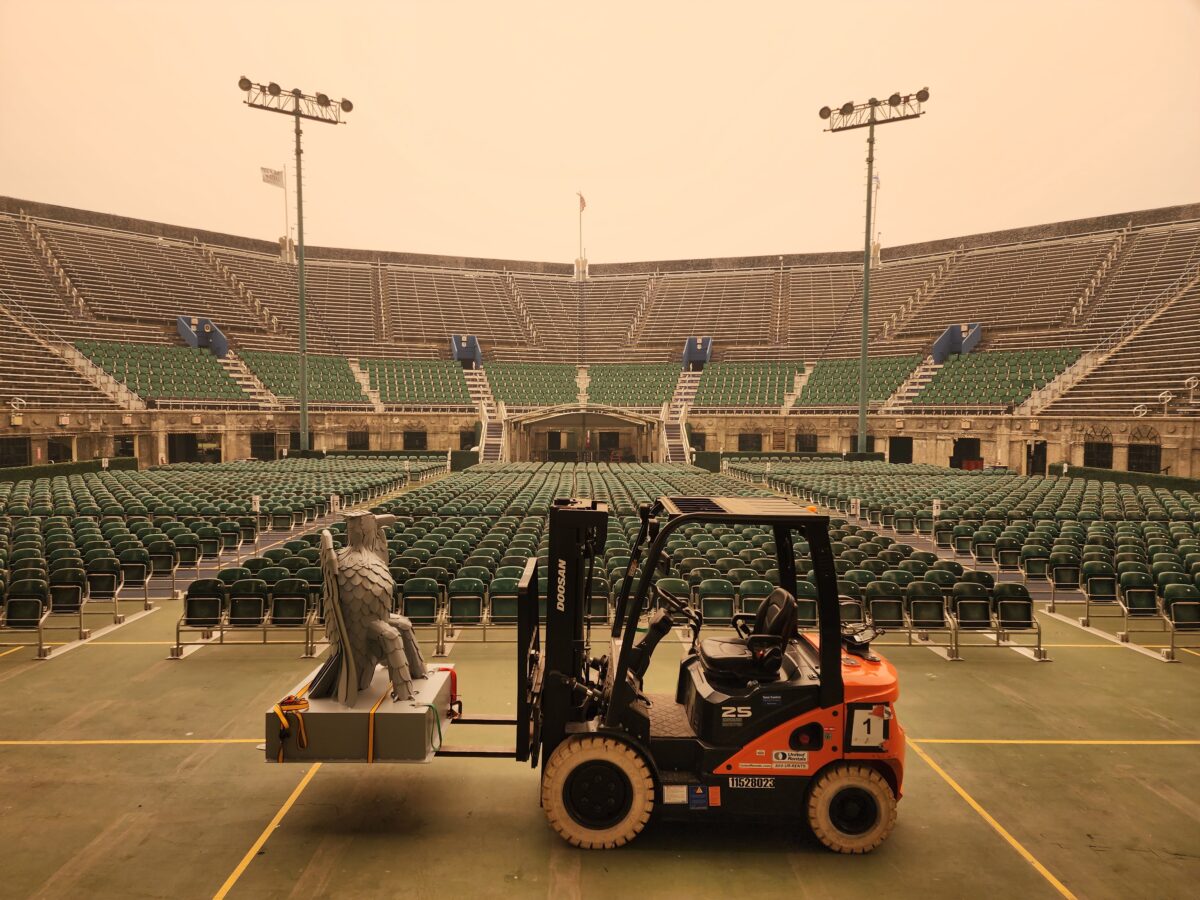
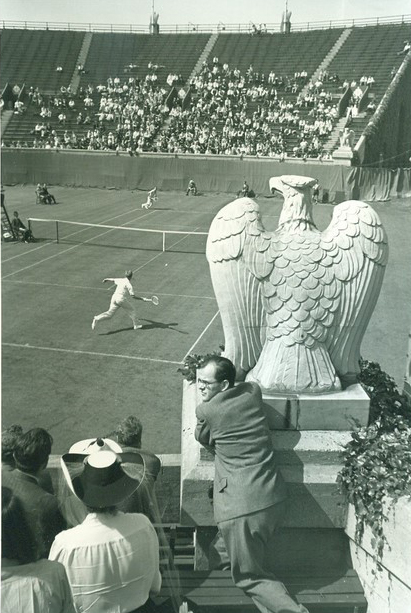
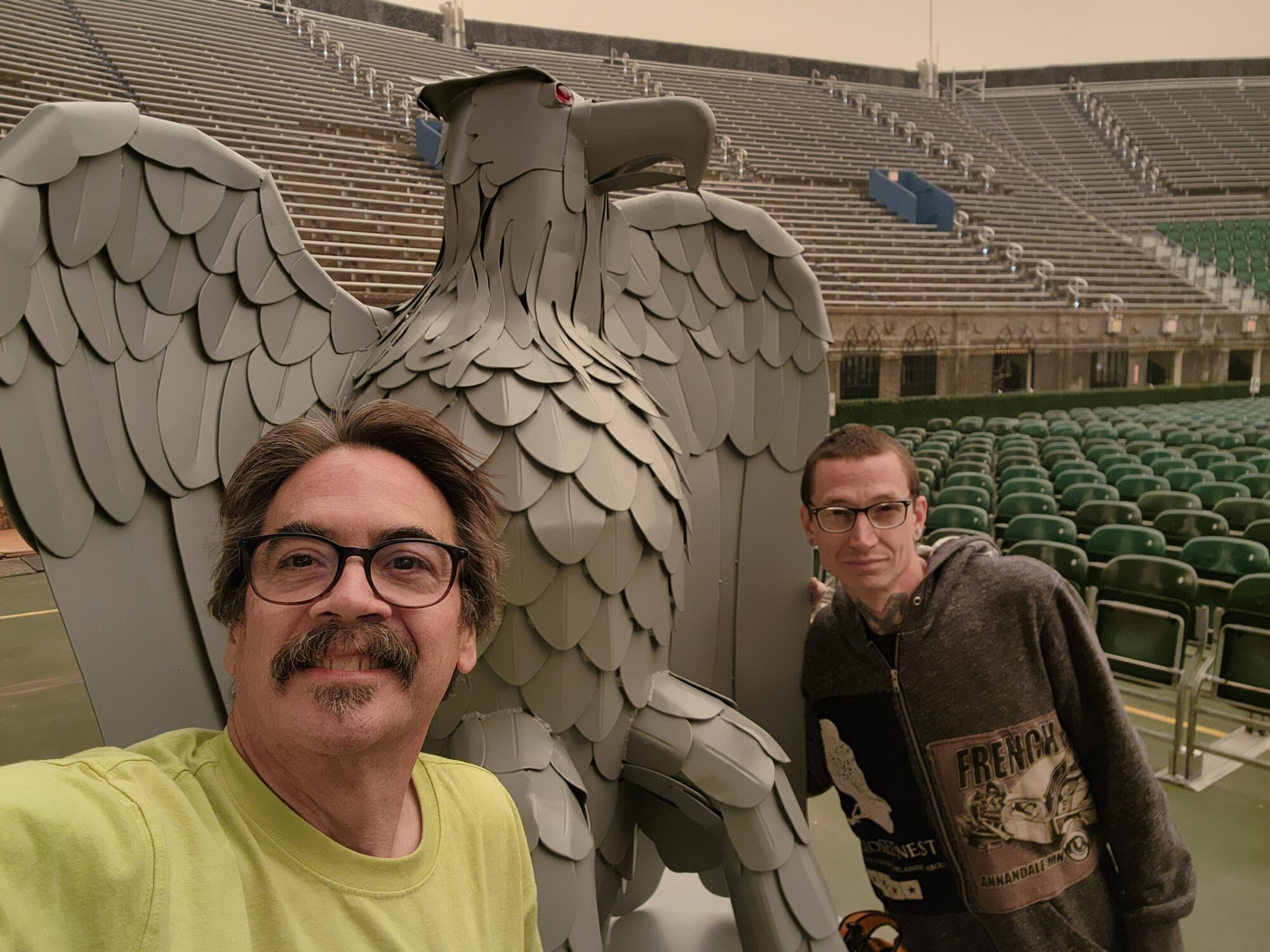
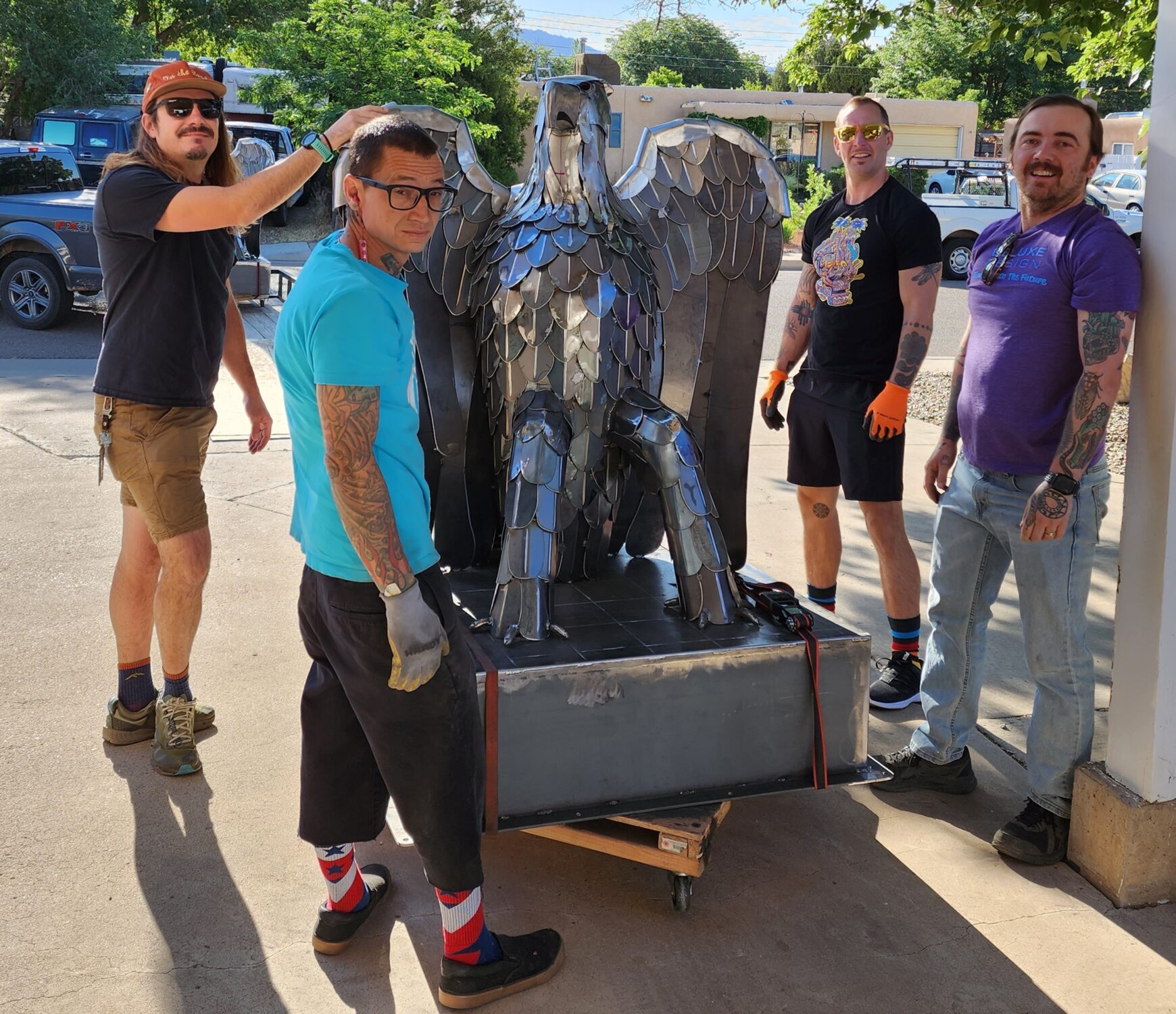
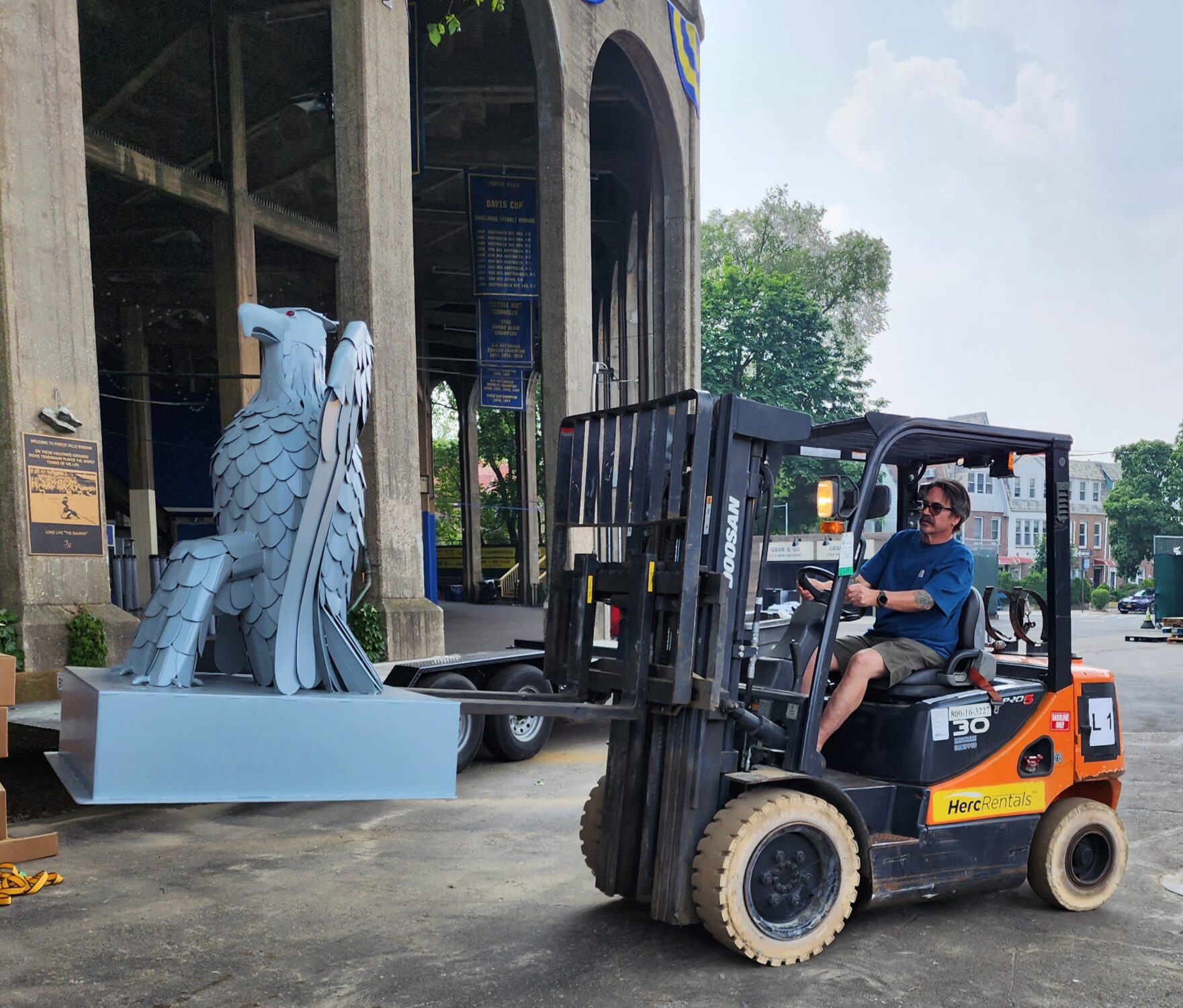
The two stone eagles that vanished at the base of the iconic Forest Hills Stadium seven decades ago have at last been closely replicated, but in steel with high-tech illumination, and made their way from Rio Rancho, New Mexico and installed.

One of two long-gone stone eagles & Bill Tilden, 1937, Courtesy of Michael Perlman.

The eagles traversed nine states in their 2,000-mile drive before arriving in New York: New Mexico (where they were built), Texas, Oklahoma, Missouri, Indiana, Ohio, West Virginia, Pennsylvania and New Jersey.

Some people may say that the eagles flew in just in time for this summer’s centennial festivities at what was America’s first tennis stadium, later co-adapted into a concert venue and revitalized in 2013.

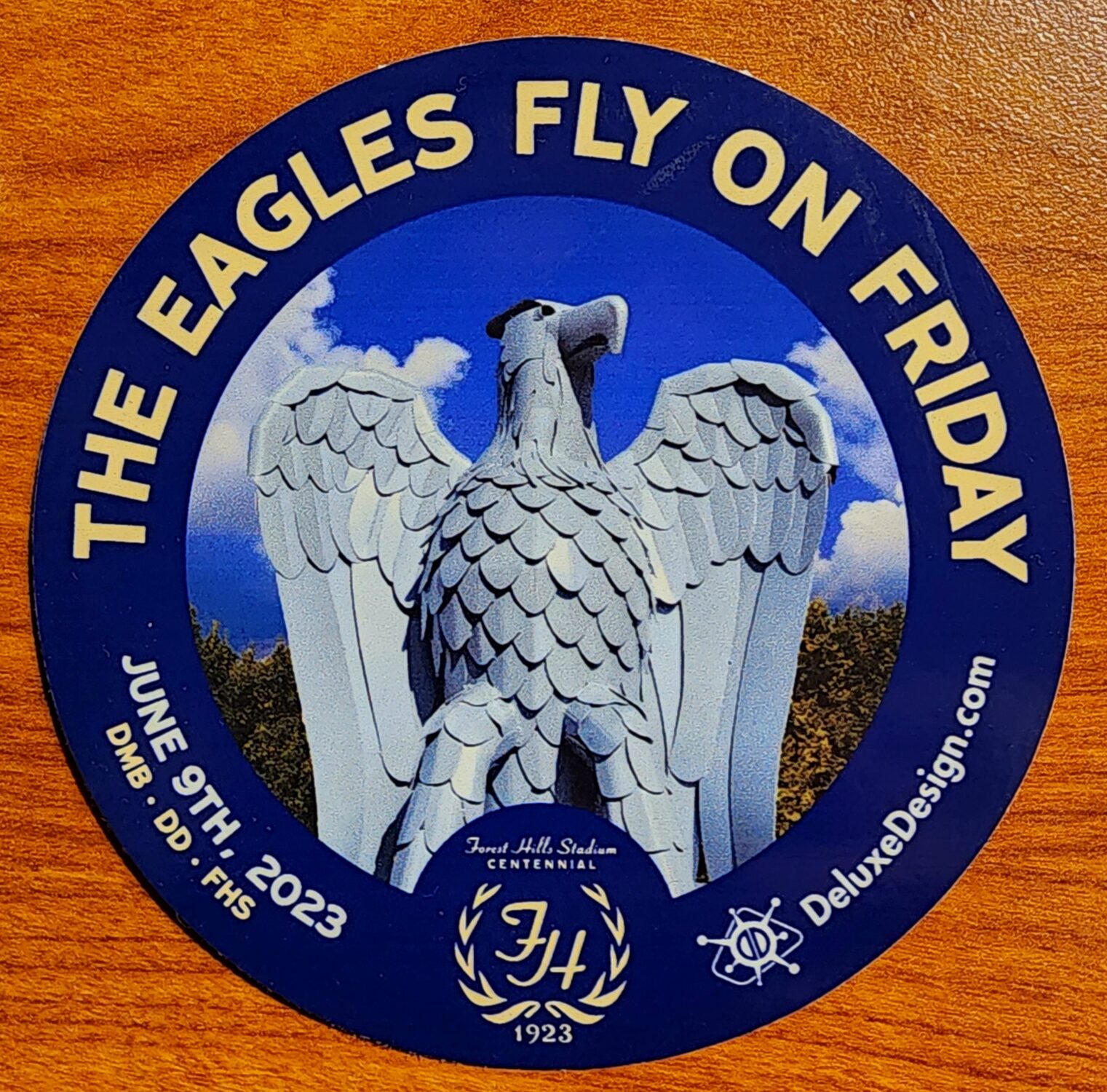
A sticker featuring an eagle sculpture and a centennial logo read “The Eagles Fly on Friday,” coincided with the unveiling of the two eagles on June 9 during the Dave Matthews Band concert. Their alternating colors formed a beat of their own, as a shoulder-to-shoulder audience danced the night away.

Eagles centennial sticker for Dave Matthews Band.


The archives at the West Side Tennis Club (WSTC) have been unable to determine why the original two stone eagles at far corners of the lower seat level were removed, or potentially where they were relocated to. 

“Several eagles that decorated the classic Penn Station and Grand Central Station were rediscovered over the years, and the Archives Council hopes that will materialize at the Stadium,” said WSTC Archives Committee co-chair Bea Hunt. “From documents in the recently acquired Bud Collins Tennis Library and photos in the archives, we have been able to determine that the eagles were removed following the 1951 National Championships and before the 1952 Championships.”

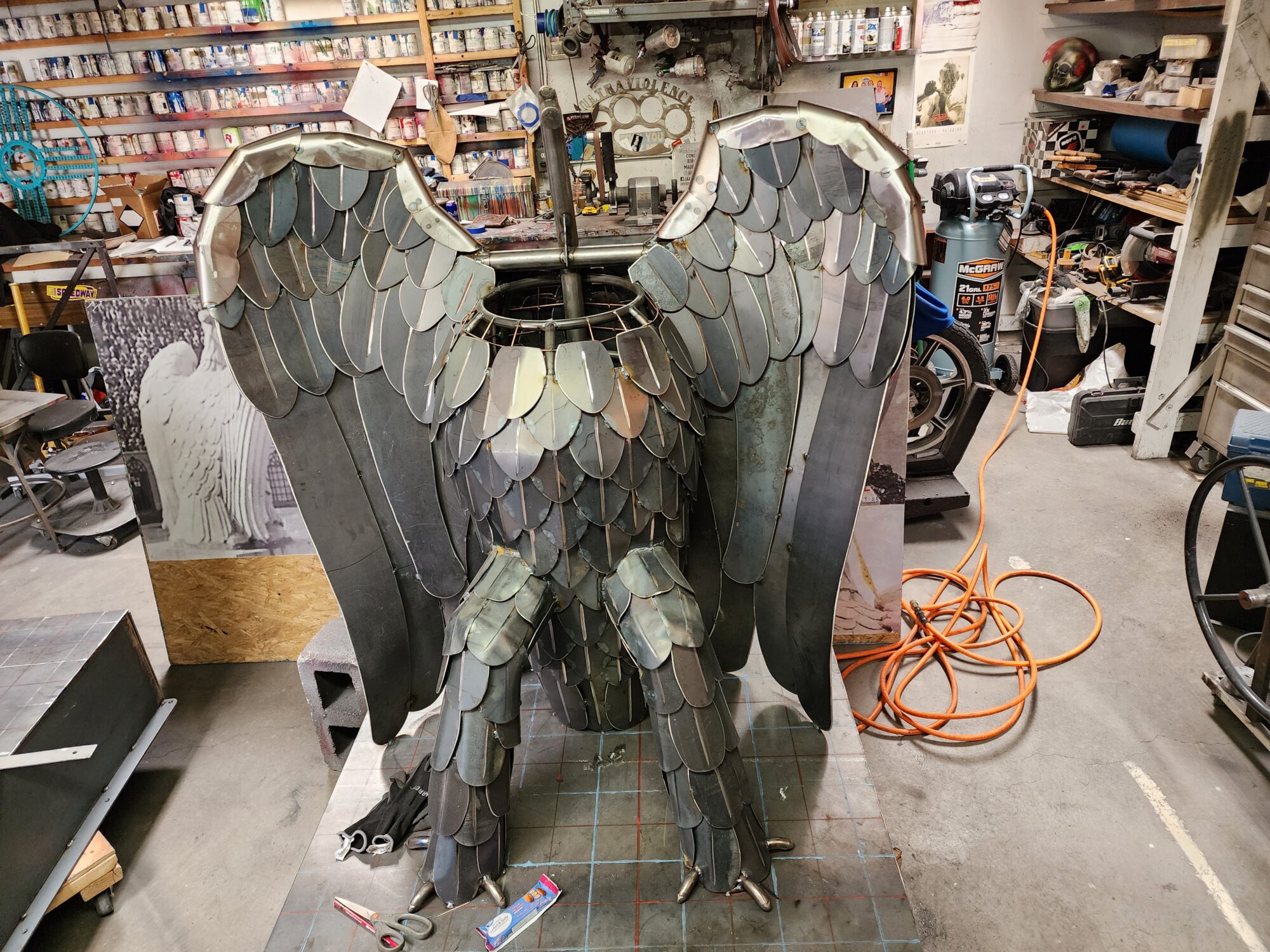
Behind the scenes, frame & feathers.

Some history buffs speculated that Alfred Hitchcock’s filming of “Strangers on a Train” during the 1950 Davis Cup cast a spell on them.

Some materials indicate that the stone eagles surrounding the upper perimeter of the Stadium are original from 1923. “One and possibly more eagles have been reconstructed over the years. The one we know of is from 1950, when Althea Gibson was playing,” said Hunt.

Additional research is underway, but as for the original stone eagles, if any longtime WSTC members or the public can pinpoint their whereabouts and reason for removal, the Archives Council is all ears: archives@thewestsidetennisclub.com

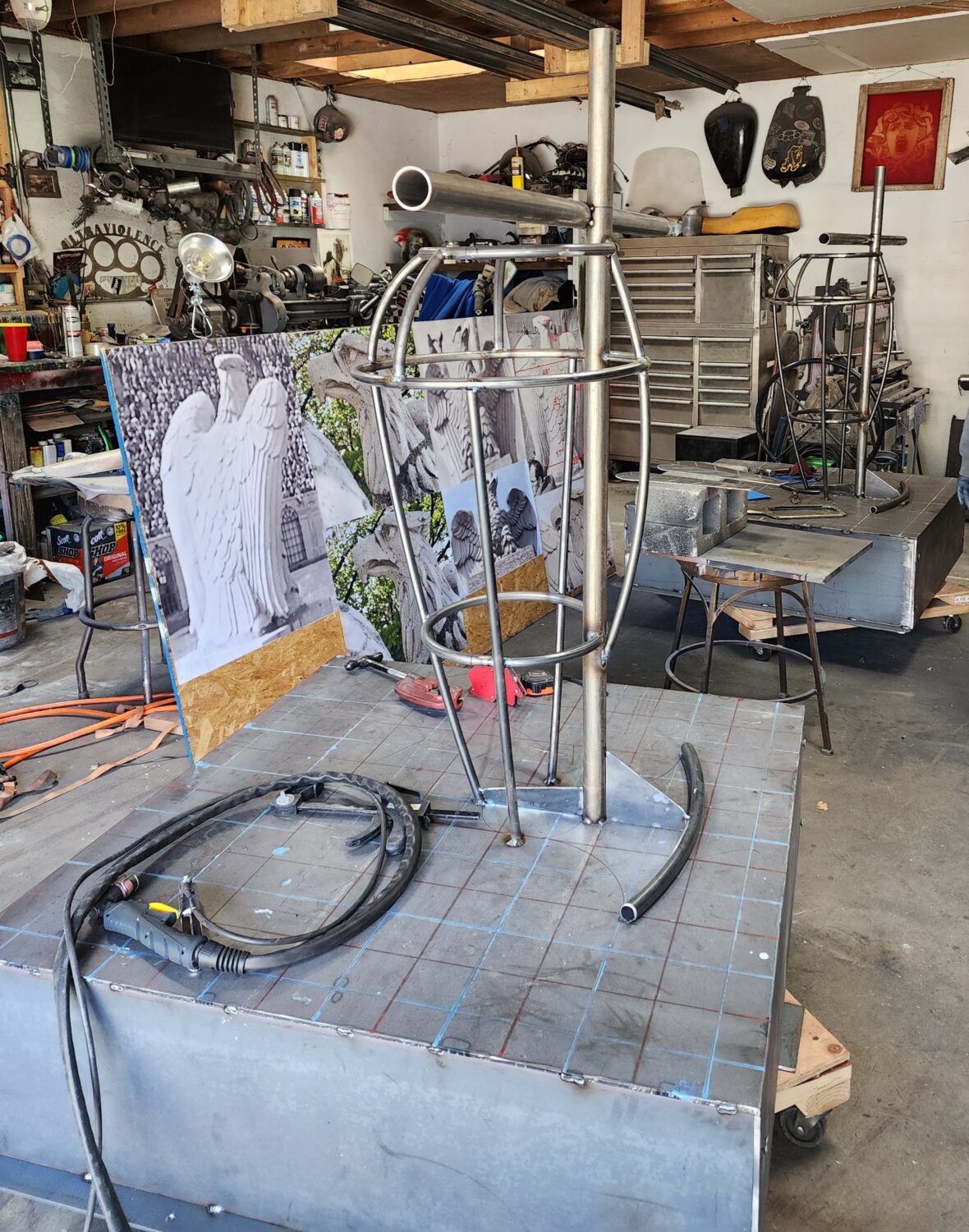
Erecting a frame alongside historic Eagle prints.

Now it’s time to step behind the scenes and embark on a journey of the nearly replicated two eagles, which are now designed in steel. Norman C. Ruth is Vice President of Deluxe Design, Inc, who collaborated with sculptor Jake Smith.

“The mystery behind the original eagles is fantastic,” said Ruth.

Since the first efforts were made to restore and reinvent Forest Hills Stadium as a viable concert venue, Deluxe Design has been on scene.

“Our firm alongside the Stadium team and creative director Bill Sullivan, pushed the envelope in exploring, designing, and manufacturing the branded signage. Now our involvement in the eagle project has truly been an honor that we hold close to us, and we choose to elevate every aspect of the project,” said Ruth.

Norm Ruth & Jake Smith

“I am honored and couldn’t be prouder that my work is part of the living history that is Forest Hills Stadium,” said Smith.

Ruth feels historic preservation is essential. “Our history as a creative society has been, and continues to be erased by the next real estate project such as a strip mall, but our commitment to the future must be to also preserve the past,” he said. As for Smith, he considers preservation as imperative for maintaining and evolving the cultural values that reflect communities. “In the case of a stadium like Forest Hills, preservation is also an opportunity to build community through shared experiences and traditions,” he continued.

As American society all too often pitches a throwaway culture, Smith speculates that one or both eagles were likely damaged and presumably sent to a landfill.

Lane Glover, Jake Smith, Nick Price, Justin Ruth.

Stepping into the stadium, Ruth reminisced what the ambiance was initially like. “Every crack, flaw and aged surface gives me a feeling of nostalgia, and respect for the craftspeople and masters of trades that brought the building to life 100 years ago. What a time it must have been!”

His personal celebration was the feeling of satisfaction of a successful adventure, and a dance with the Dave Matthews Band.

Sharing Ruth’s emotions, Smith could spend hours eyeing various architectural features. “I also love that it is vibrant and full of life. It is a whimsical place that honors its history, while granting visitors a modern entertainment experience,” he added.

A team effort, Deluxe Design VP Norm Ruth, sculptor Jake Smith, concert manager Mike Luba.

Forest Hills Stadium concert manager Mike Luba emailed Ruth on March 13 at 4:36 p.m. with links depicting the eagles. “He asked me to give him a shout, and that’s when the wheels started turning,” said Ruth. Smith received a firm go-ahead around April 10, and he would apply his handiwork for an amazing 345 hours spanning seven weeks.

“Each sculpture is 513 pounds and 64 inches in height, with approximate 48-inch wide wings, shoulder to shoulder,” continued Ruth. The steel eagles are powder-coated with a semi-holographic glimmer in “Interstellar” color.

Side by side eagles under 1923 cornerstone.


Smith, who sculpted eagles that he considers a modern interpretation of the originals, explained a detailed process. “I was given several historical photos and a video in which one of the surviving (uppermost) eagles was measured at several points. Norm produced large-scale prints of the historical photos. I was then able to transfer the measurements from the video onto the prints, and properly scale the sculpture as I built it.”

After determining the scale and proportions, Smith mainly worked from the bottom up, originating with the bases that house much of the lighting. He explained, “I built a tubular structure that acted as a framework in which to add and shape feathers, as well as a guidepost for proportions and symmetry. I made templates for the various types of feathers, cut them out, and shaped them. Throughout the sculpture, I left air gaps and spaces around the feathers for the internal lighting feature. The heads involved the most metal shaping. They are made from 18-gauge steel, which is the thinnest on the sculpture. They were made using an English wheel, hammer and dolly, and a shrinker/stretcher system.”

Transporting a nearly replicated eagle into the colonnade.


All great projects are built on challenges, and in this case, it was a tight timeline. “I put other work on hold to complete this project, but I could in no way sacrifice quality or detail for the sake of a deadline. It meant long hours in the shop, and my wife, Kayleigh, taking over a lot of my parenting and household responsibilities. I couldn’t have gotten through it without her,” said Smith.   

Projects at the stadium materialize due to a history of close bonds. The trek from New Mexico was combined with visiting family members and friends. Ruth explained, “This ‘sneak peek’ tour was very much in the spirit of flying high with eagles, as we were grounded in the warmth of our visits. We stopped at Jake Smith’s cousins in Tulsa, Oklahoma and St. Louis, Missouri. I was able to visit my sister in Springfield, Ohio, and a dear friend at an assisted living facility in Princeton, New Jersey.”

Luba and Ruth met in fall 1997 at a String Cheese Incident concert in Gallup, New Mexico. Norm reminisced, “I drove our bus, Terrapin Trailways, and provided lighting special effects using oil projectors, similar to the early concerts in the 1960s. The folks that put on this event were unveiling a large sculpture of one of the late Jerry Garcia’s guitars, ‘Rosebud.’ This sculpture can be seen when traveling along I-40 at an outdoor sculpture garden. We have remained close brothers ever since, engaging on endless fun and creative projects.”

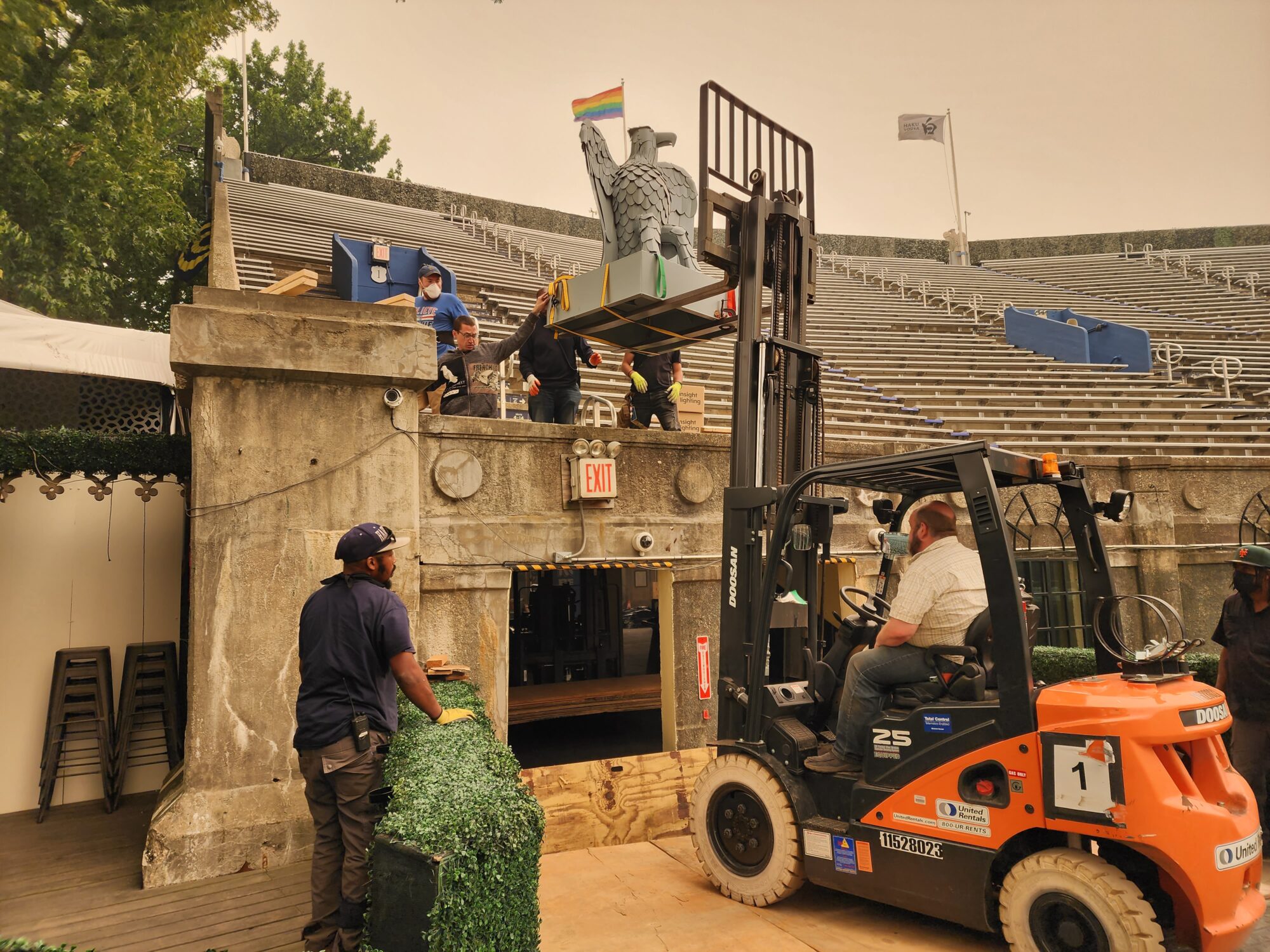
Hoisting up an eagle, Eddie on left, Forest Hills Stadium General Manager Jason Brandt on right.

Deluxe Design is on a mission to design and create exceptional signs, awards, and screen-printed products through optimism, teamwork, and collaboration. Ever since 1986, the firm has been considered an industry leader that maintains solid relationships with organizations and individuals, which span local companies to international corporations such as Live Nation, AEG, Samsung, and Intel. They take pride in identifying a client’s needs and employing a collective organizational experience to facilitate plans for design, execution, and utilizing state-of-the-art equipment and technology to yield exquisite results.

Smith’s mission is to feed his passion, but not without feeding his family. “I’m completely addicted to making things with my hands, and this is what I have to do for a living,” he said. “There are causes that I am passionate about, and sometimes use my art to support it through donating proceeds.”

What can be considered a sculpture is debatable. Smith’s early career focused primarily on hand-built motorcycles, where many were featured internationally in magazines and on television. He also feels fortunate to be selected as one of six artists to create functional public art in Sartell, MN from remnants of a historic paper mill that succumbed to a fire. “I had a well-received series of five metal sugar skulls. I have also been showing a metal butterfly pierced with a two-foot safety pin that I absolutely love.” As for functional art, he creates artistic gates, handrails, and benches.

Let there be light with two eagles at Dave Matthews Band concert.

Unlike the two original eagles that vanished less than three decades after their installation in 1923, the replacements are here to grace and energize the next generations of concertgoers at the historic Stadium.

Forest Hills Festival Uniting Communities For A Generation

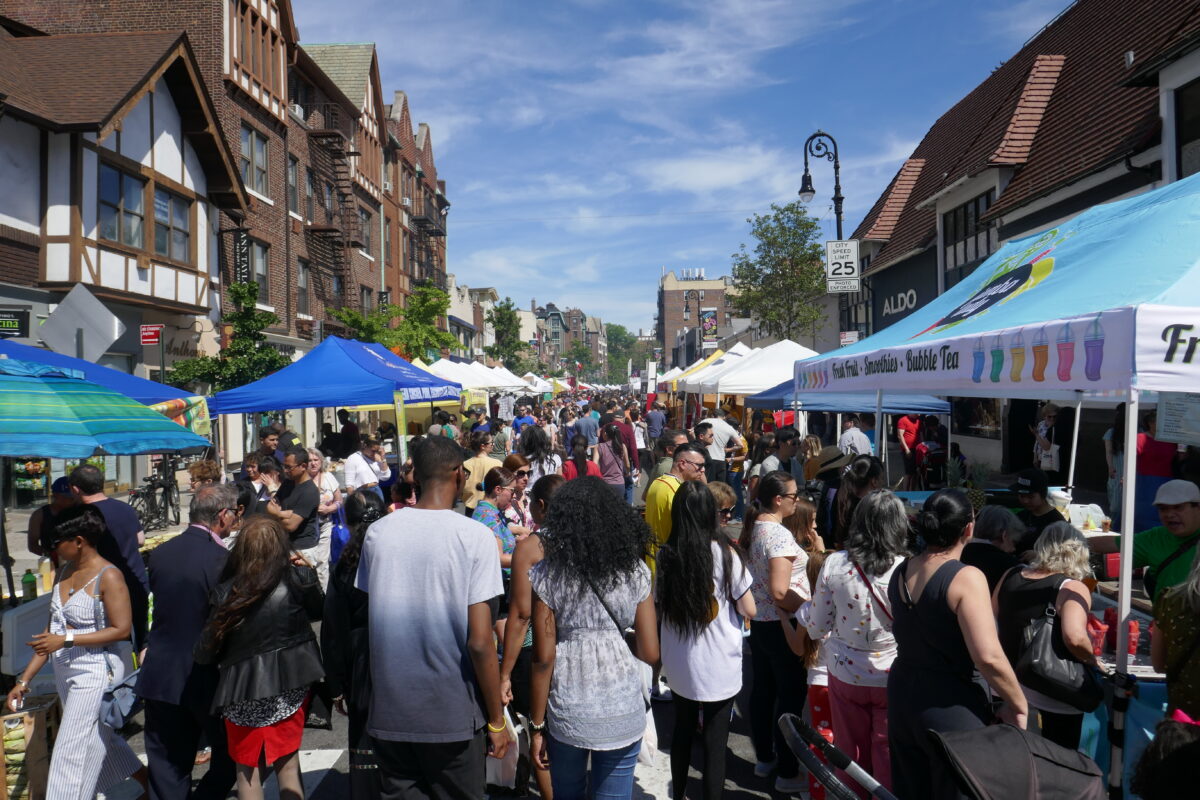
2019 Forest Hills Festival of the Arts on Austin St. Photo: Michael Perlman

By Michael Perlman | mperlman@queensledger.com

For over 20 years, the Forest Hills Festival has been a tradition that unites Forest Hills residents and visitors with local merchants and nearby businesses, offering nearly every type of service.

On June 11 from 10 AM to 6 PM, diverse international foods and high-quality merchandise including novelties will line Austin Street from 69th Road to 72nd Road, and “Restaurant Row” will once again become an outdoor performance venue.

This festival, which is among the most distinctive neighborly and family-friendly events citywide, is the creative vision of Leslie Brown, longtime president of the Forest Hills Chamber of Commerce, whose mission is the 3 C’s: “Commerce, Community, Culture.” “Culture brings the community together and commerce makes the community thrive.” Chamber members consist of 125 local members.

“My goals are to support our community’s small businesses and promote Forest Hills by bringing as many visitors and residents together to enjoy shops, restaurants, and all businesses,” she said.

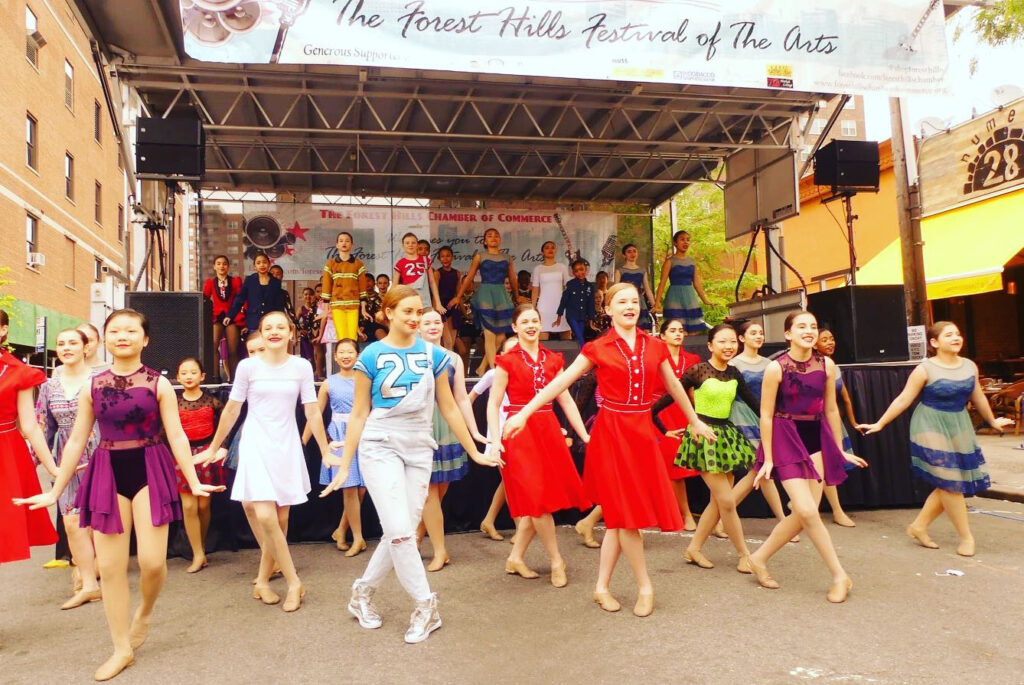
Not only is Brown the founder of the Forest Hills Festival, but Jazz Thursdays each summer. She reminisced, “The festival came about as a way to showcase Forest Hills businesses and allow its business owners and residents to come together at a fun family event.” Part of her vision was to showcase local talent. Throughout the festival’s history, performers included dance students, martial arts students, fencing students, young musicians from local music schools, local jazz singers, and even world-class performers on a large stage. “This year will be the 3rd annual Sandwich Eating Contest, sponsored by Stacked Sandwich Shop,” she said.

This is community at its finest. She said, “Many families and people plan the start of their summer activities by attending the festival. The rides, the local talent showcased at the beginning, and the entertainment that continues in the mid-afternoon is what everyone looks forward to. There is always something to discover and someone to meet.”

The business district began to take shape after Forest Hills’ founding in 1906, and Austin Street would soon be nicknamed, “The Village.” Even today residents and merchants share long relationships of community support, according to Brown. “Business owners will support a patron’s kids’ Little League team, or a customer will spread the word about a business they love. Mutual respect and connections still exist here, so we need to celebrate such communities, since AI and internet shopping lead us away from human contact,” she said.

Not only have a few new stores opened this year, adding to the community’s diverse offerings, but the owners are ethnically diverse. Year-round, Austin Street becomes a magnet for shoppers from the five boroughs and Long Island.

Nancy Valentin, owner of NV Jewelry, founded her business in June 2010 and participated in at least 10 festivals. She feels additionally proud being raised in Forest Hills. Her kiosk will offer earrings, bracelets, necklaces and rings, and of course new jewelry creations. “No matter what circumstances or challenges women have endured in their lives, a piece of jewelry will empower them, and make them feel the very best,” she said.

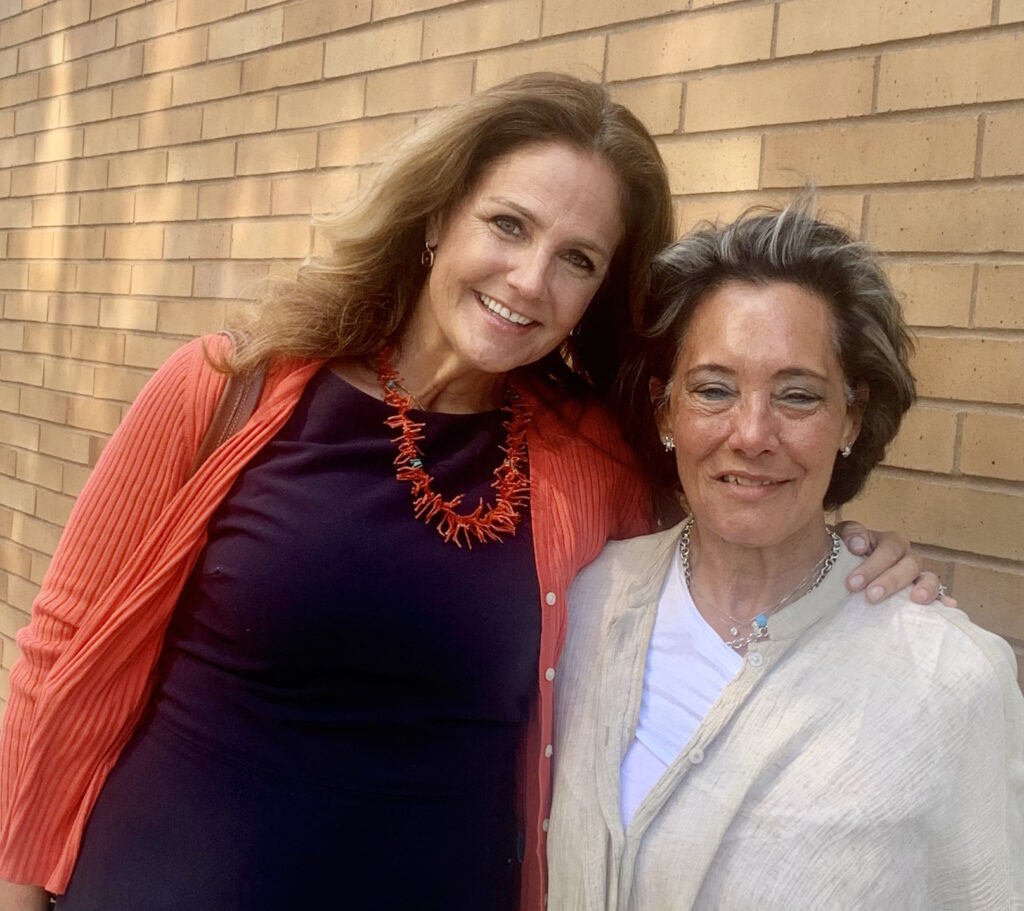
Michelle Charlesworth of Eyewitness & Nancy Valentin of NV Jewelry.

Valentin embraces the sense of celebration that runs throughout the streets of the festival, as well as the rapport she builds with longtime and new clients. “Leslie Brown does such an amazing job selecting diverse vendors. She always cares about the needs of others, which truly shows,” she continued.

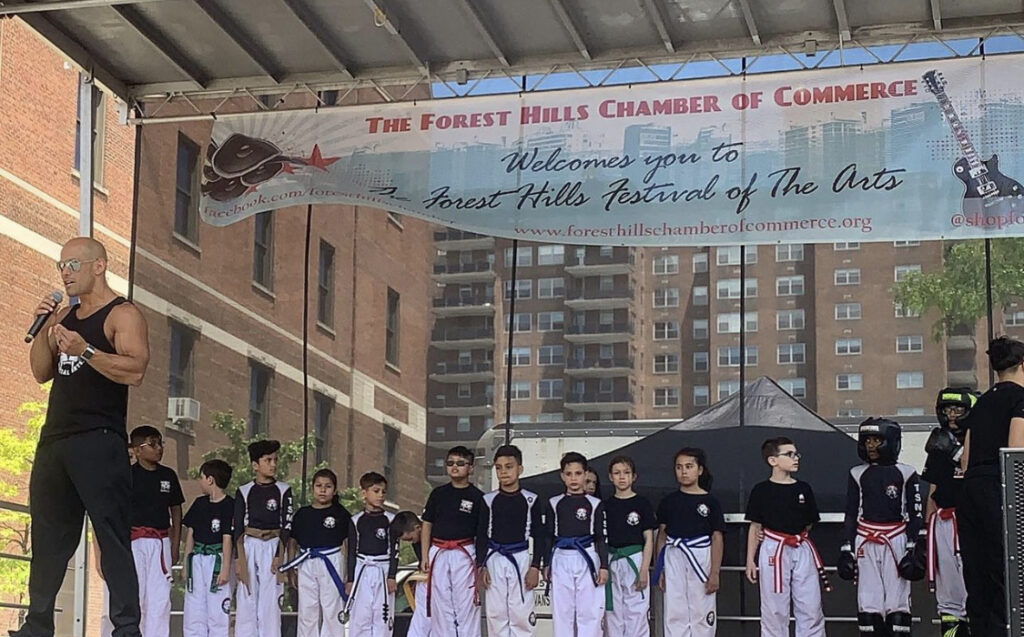
“The Forest Hills Festival is one event I look forward to all year long,” said Christopher Iavarone, owner of Tiger Schulmann’s Martial Arts at 73-25 Woodhaven Boulevard, which serves the community since 2009 and puts on a show every year. The students will take the stage and provide demonstrations.

Sensei Christopher Iavarone of Tiger Schulmann’s Martial Arts, Demonstration on Restaurant Row.

“It enables me to plug into the community and showcase kids who worked hard in their classes and give a platform to express themselves through martial arts. I choreograph the moves and the music. The community will have an ‘inside view of our school’ on a daily basis.” Kickboxing and jiu-jitsu are the true forms of the art, but by having different people perform, introduces a new dynamic each year. “When we put up a tent and have a huge tiger, it brings smiles to our community, and then we get to work with people one-on-one,” he continued.

Iavarone explained his mission. “Self-defense and physical conditioning are two most important aspects. We help kids who aren’t confident, but then are able to defend themselves from bullies. Adults also benefit greatly, as soon as they step through our door.” He considers his classes as a 3D activity. “It’s fun, teaches a life skill, and you get fit.”

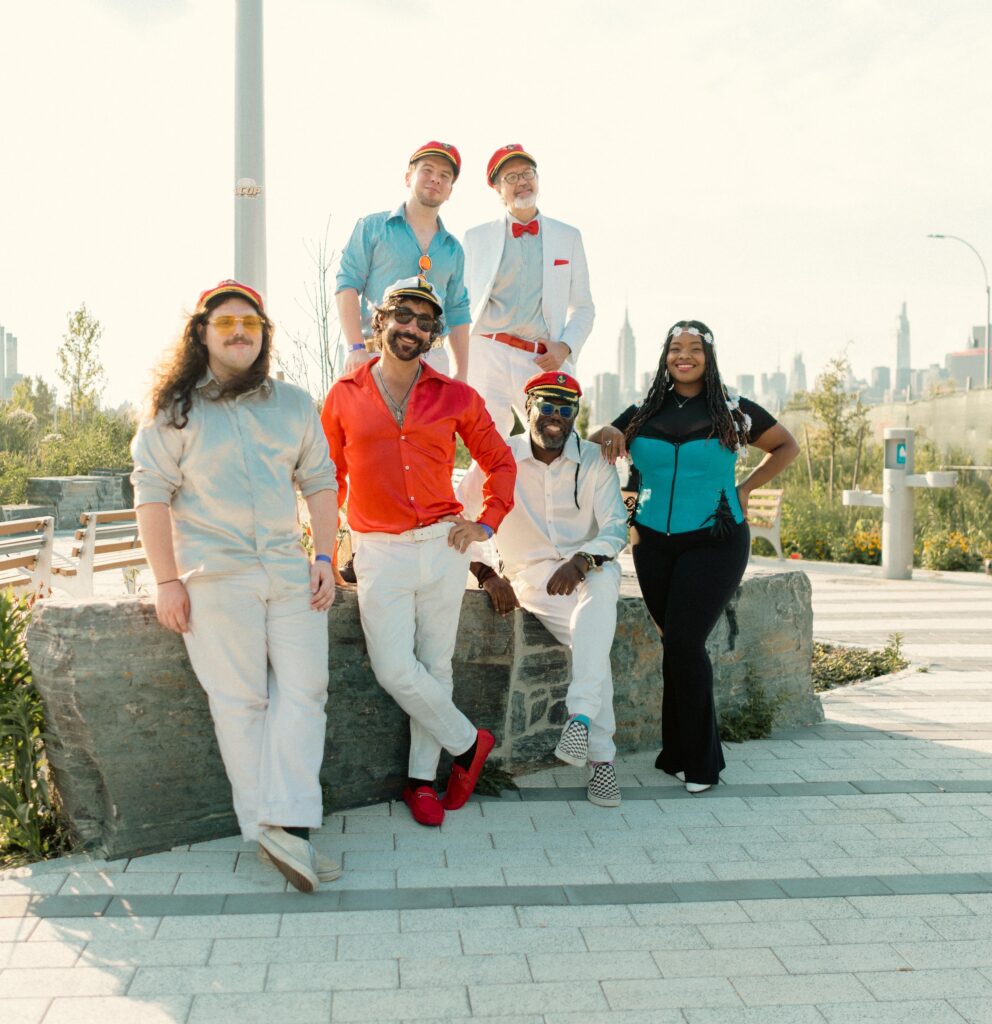
The musical sensation, Yacht Lobsters, is sailing the waves and will newly take the grand stage on Restaurant Row. The seven-piece ensemble will engage a large audience at 3 PM, followed by a second set at 4:10 PM.

Yacht Rock is a genre that is a conglomeration of many artists, mostly from the 1970s and early 1980s. As a tribute band, the goal is typically to emulate their sounds. “For a tribute to be unique, it’s almost an oxymoron, but we take it pretty seriously. We go beyond copying music by taking songs that we heard a million times and love, and doing something unique,” explained musician David Mendelson of Yacht Lobsters, who anticipates performing and giving back to his birthplace, Forest Hills.

Singing sensation Yacht Lobsters. Photo: Arazelly Guevara

The character of the musicians also distinguishes them from other tribute bands, and Mendelsohn considers their harmonious teamwork a blessing. Afterall, vocal harmonies are a significant element of the genre. “We are trained musicians from NYC, who I feel are some of the best in the world,” he said.

Some staples of Yacht Rock are “Africa” by Toto and “You Make My Dreams Come True” by Hall & Oates. Their repertoire even reflects the sounds of Steely Dan, which bears Forest Hills roots. Yacht Lobsters is big on medleys, and therefore takes segments of classics and consolidates them along a theme, which may include some titles that may not qualify as Yacht Rock, but complements it. “The Magic Medley,” consisting of “Magic” by Olivia Newton-John and “Magic” by Pilot, and it may also allow the audience to hop on a “Magical Mystery Tour” by The Beatles.

Also original is how songs typically performed by high tenor males take on a new context through their female solo vocalist, Charly Kay, a master of blue-eyed soul. The band also takes pride in jamming and improvisation, varying from typical Yacht Rock.

Since the mid-2000s, Rysa Childress, owner of All Star Studios, made a mark on the Forest Hills Festival. She explained, “The kids love dancing for their very own community, and we hope it spreads joy to all. After the performance, our booth turns into one big dance party. You can stop by to get information about our programs and free trials, to just say hi, or to dance with us.”

All Star Studios team performing at their best, 2021. Photo: Rysa Childress

As a small business owner, she strives for a family atmosphere and giving back to the community through their art form is emphasized to all dance students. She explained, “Our Shining Star dance team does do competitions, but that is not our main focus. The teams do a multitude of performances to share their love of dance with the community and fundraise for those in need. Outside of their year-end recital, many team dancers perform for seniors in nursing homes, kids in programs at Queens Center mall, and have done an amazing job with fundraising events and shows for Autism Awareness organizations.” In their studio, she coordinated the PJammin’ Party to fundraise for American Childhood Cancer Association, donate time, gifts, or money to City Harvest, Forestdale Foster Care & Social Services, and From Our Hearts To Your Toes.

For a few years, Dream City, owned by Corrie Hu, has been a festival participant. Dream City is a children’s play and learn center that is on a mission to create a fun and safe learning environment, sparking curiosity while encouraging social, emotional, physical, and cognitive development.

Corrie Hu, founder of Dream City, 2nd from left.

Hu opened prior to the pandemic in January 2020. She reminisced, “While we were only open for 7 weeks before NYC shut down, I was so touched and amazed at the support from our community, and that we were welcomed back as soon as it was safe to re-open. Dream City is a type of business that requires a high level of trust from parents to bring the most cherished people in their lives to our business, and I am forever grateful for their trust in us.”

Participant Stephanie Khan is a perfect example of a business that recently underwent expansion. Now the Stephanie Khan Medical Office is located at 110-78 Queens Boulevard. Many years ago, statistics revealed that there is a shortage in primary care physicians. Therefore, nurse practitioners were to fill in the gap of primary care. She wants fairgoers to be educated on what is a nurse practitioner and how they can help the health of their loved ones.

Khan explained, “Many illnesses and complications are manageable through medication and lifestyle choices. It is important to have strong communication and relationship with your healthcare provider, which is something I strive for. I also focus on shared decision-making, when it comes to treatment options. My goal is for people to feel empowered over their health and to empower future nurses and nurse practitioners to follow my lead in improving primary care.”

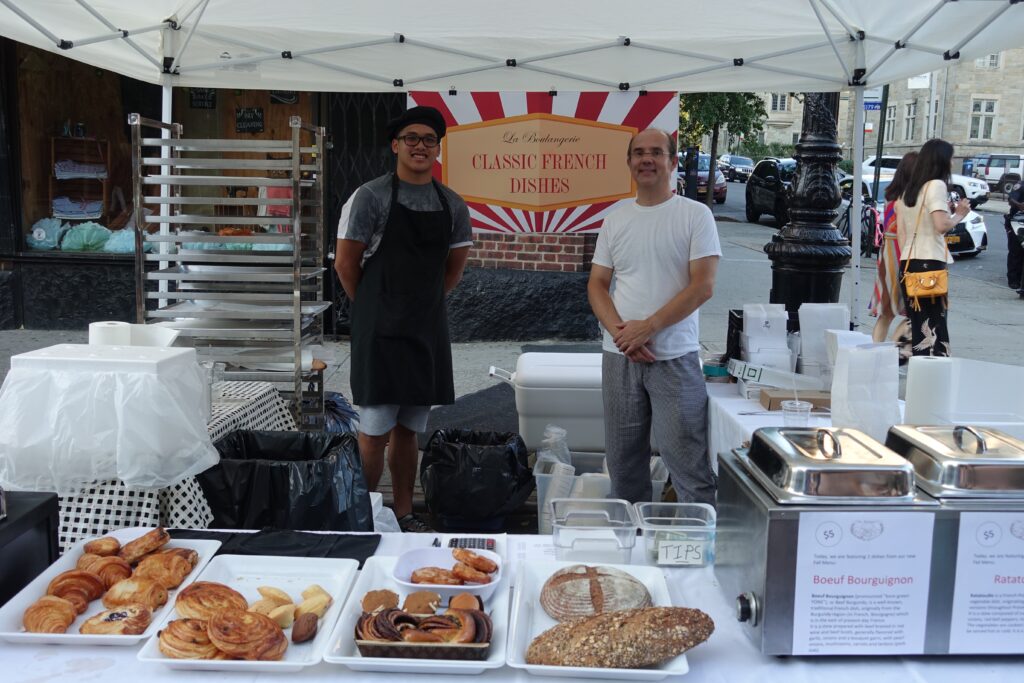
Chef François Danielo and fifth-generation breadmaker of La Boulangerie de François at 109-01 72nd Road, is a mainstay at the festival. He has participated in nearly all since opening in 2011, initiating an authentic bakery cafe experience in Forest Hills. He will always cherish the community’s response. “I will always remember the first time we made crepes outside for a 14th of July, French Bastille Day,” he said.

Francois Danielo of La Boulangerie, right, in September 2017. Photo: Michael Perlman

As patrons sit at a communal table at the café and observe the art of baking through a viewing window, fairgoers have observed the preparation of crepes, in addition to enjoying native pastries. When asked about his favorites, he selected the croissant, and as for more recent additions, Ispahan and Caramel Petit Gateau.

Danielo considers Forest Hills a small town that grants a great warm feeling. “Our bakery is like the town bakery, when patrons come and buy their bread and croissants.”

Twenty-four-year resident Christine Sheehan opened Dude’s Delicious Dog Treats last year. Her kiosk will offer homemade dog treats with quality ingredients. She aspires to grow the brand and business, while contributing to the health of dogs.

Dude’s Delicious Dog Treats table setup. Photo: Christine Sheeha

In response to last year’s festival, she said, “I was thrilled that we sold out, but more importantly with the great community response and most specifically our dog community. Many of our dog park buddies not only purchased items, but to sing the praises of our products to other dog owners. It really warmed my heart to see so much support and meet other dog parents and dogs.”

She founded her business stemming from a passion for dogs, baking, and the many lovely residents she met as a result of getting her dog, Dude. “I never thought that a dog would enrich our lives the way it has, but my husband and I can no longer think of life without him,” she said.

Sheehan will be in front of the new Pet Club that opened on May 14 at 71-24 Austin Street. “Our businesses can support each other by being a gathering area for dog owners,” she said.

Uniting Generations Through Memorials Around Forest Hills

By Michael Perlman | mperlman@queensledger.com

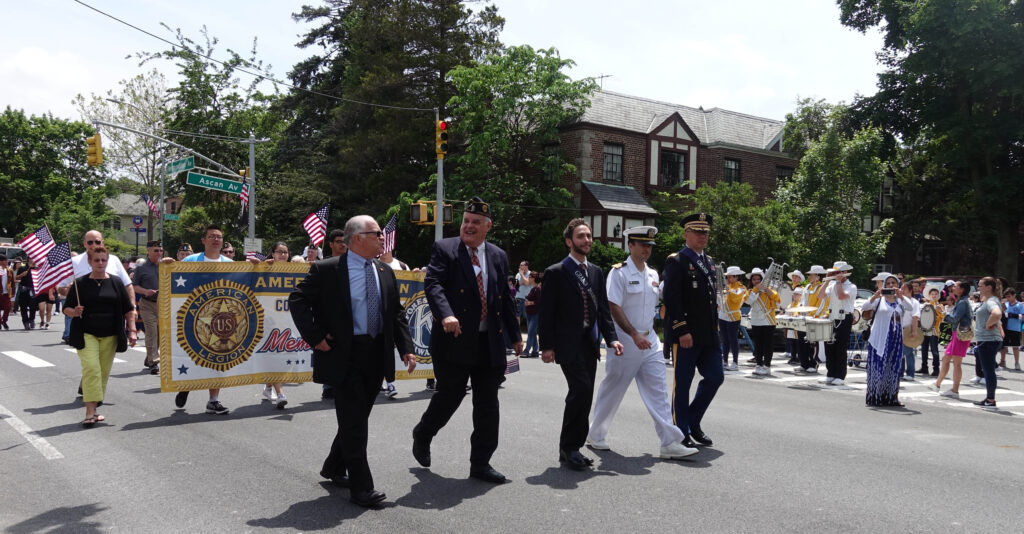
Throughout Forest Hills, a number of monuments, parks, buildings, and parade routes keep the memory of America’s bravest alive. May we never cease to honor those who dedicated their soul to our country.

On Flagpole Green, formerly Village Green in Forest Hills Gardens, stands an ornate Neo-Classical pink granite and green and gold bronze monument, which honors 102 residents and was dedicated in 1920. The WWI Soldiers & Sailors Memorial was designed by renowned American sculptor Adolph Alexander Weinman (1870 – 1952), who lived nearby at 236 Greenway South and operated a studio at 234 Greenway South.

The memorial reads, “Erected by the citizens of Forest Hills in recognition of the patriotic spirit and loyal devotion of the men of this community who served in the Military Forces of The United States in The Great War.” The design represents “The Call to Overseas” above the names on the tablet, including Dr. Joseph MacDonald, Gerald MacDonald, Henry MacDonald, George C. Meyer who served as president of Cord Meyer, and David and Howard Springsteen of the community’s farming family, when Forest Hills was known as Whitepot. Since last summer, residents observed meticulous restoration work, resulting in the polishing of the bronze tablet, which developed a green patina, as far back as most residents can recall.

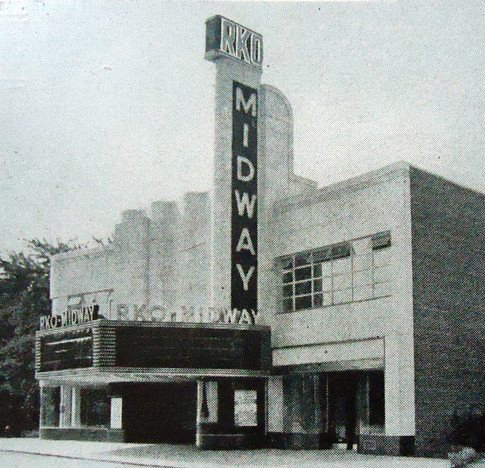
Midway Theatre Upon Completion in 1942.

The historic Art Moderne style Midway Theatre at 108-22 Queens Boulevard, with its accordion-like façade and vertical beacon, was designed in 1942 by America’s foremost theater architect, Thomas Lamb. Upon making an entrance, theatergoers once took pride in an illuminated Battle of Midway mural. When community residents picked up a copy of The Forest Hills-Kew Gardens Post on September 18, 1942, they came across an ad, which read, “The Midway Theatre has been so named and dedicated as a tribute to the gallant men of our armed forces, who achieved so brilliant a victory at Midway Island.” Patrons were ready for a single-screen theater, where they could enjoy films and attempt to escape the traumas of WWII.

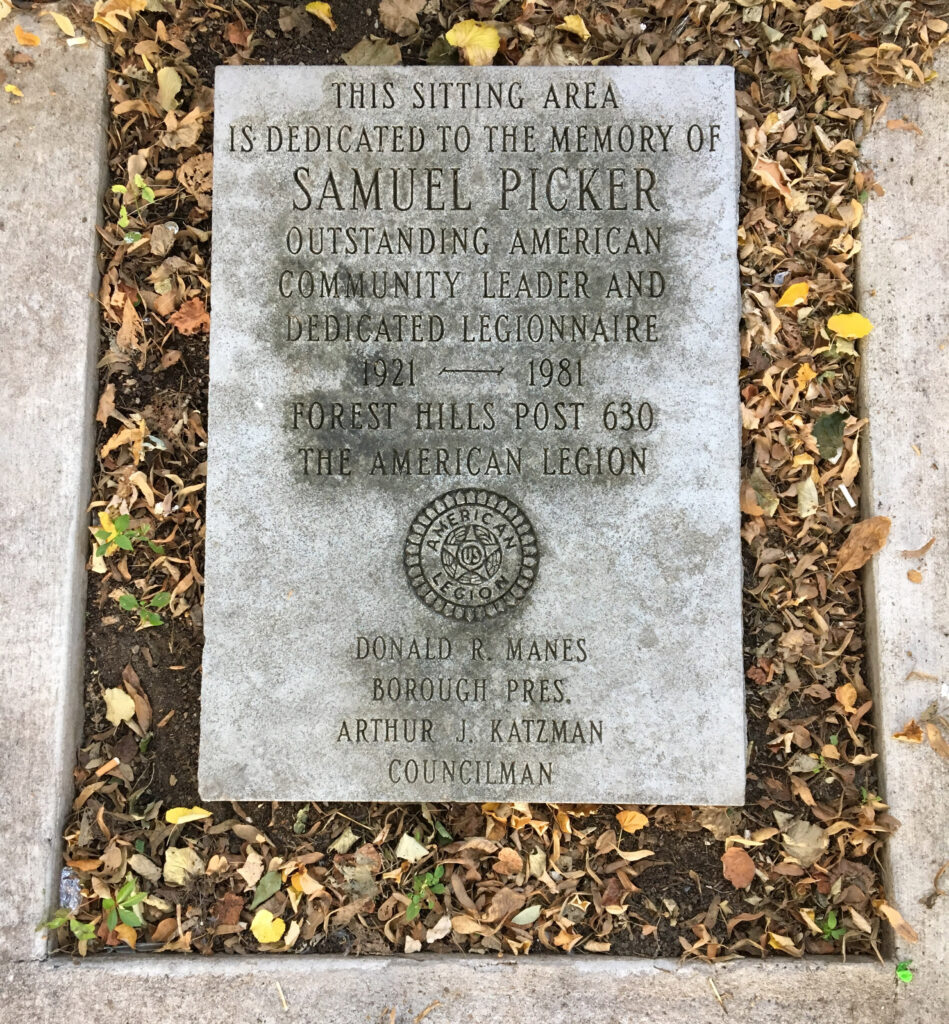
Enter the small forested setting of Samuel Picker Square at 69th Avenue and Burns Street near Forest Hills Stadium and Chatwick Gardens. Situated alongside the fence in an often overlooked spot is a stone bearing an inscription: “This Sitting Area is Dedicated to the Memory of Samuel Picker; Outstanding American, Community Leader and Dedicated Legionnaire; 1921 – 1981; Forest Hills Post 630, The American Legion.” It then bears the names of past officials, Borough President Donald R. Manes and Councilman Arthur J. Katzman.

Samuel Picker Square stone dedication. Photo by Michael Perlman

Samuel J. Picker, a Renaissance man, wore several hats, mostly throughout the 1960s and 1970s, consistently fulfilling his humanitarian spirit. They included Queens County American Legion Commander, Governor of District 20-K Lions International, Queens Cancer Crusade committee member, and President of the National American Legion Press Association. He served as Grand Marshal of the American Legion County Parade in Ridgewood in June 1971, which began with exercises at the War Memorial on Myrtle Avenue and surpassed expectations with 15,000 guests. He also served as president of the Guide Dog Foundation for the Blind, which offered philanthropic gift guide dogs and rehab to qualified blind applicants, where masters and guide dogs were duly trained at the Foundation’s center in Smithtown.

Picker owned the longtime Continental Hardware at 102-01 Metropolitan Avenue. As of 1976, he was a Queens County Grand Jurors Association member, and in 1977, he became founder and first president of the Forest Hills Chamber of Commerce. In 1978, Lieutenant Governor-Elect Mario Cuomo presented him with the Henry G. Wenzel Medal of the American Cancer Society at the Biltmore Hotel dinner dance.

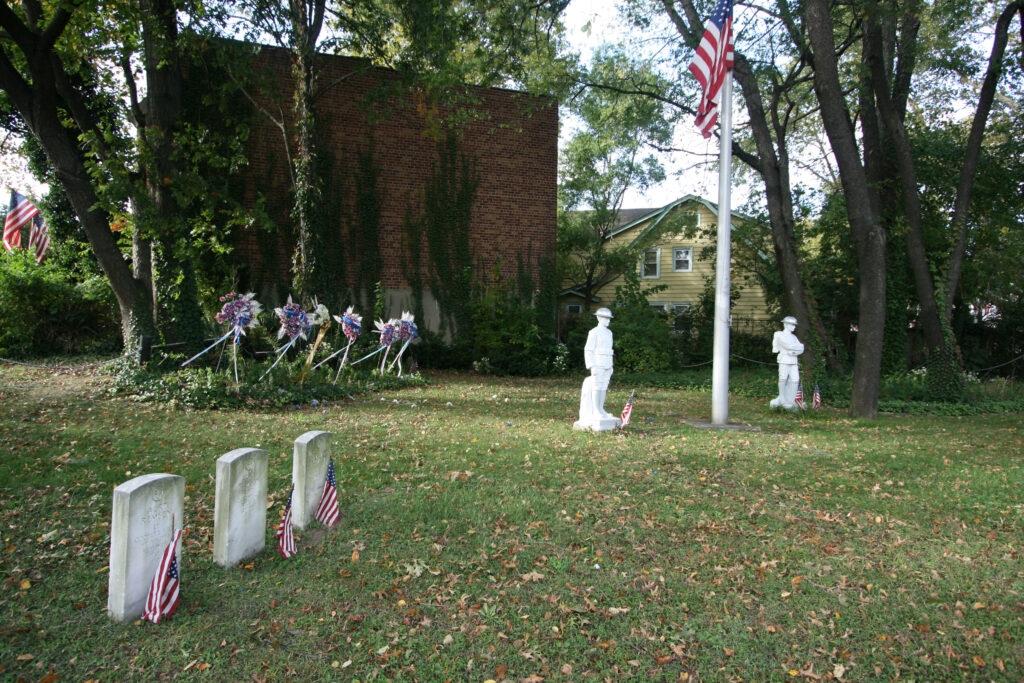
The tour continues with Forest Hills’ earliest extant tributary site, Remsen Cemetery, which was landmarked in 1981. Situated on a park-like setting between Trotting Course Lane and Alderton Street, the cemetery contains tombstones dating from 1790 through 1819. Flanking a flagpole, two doughboys honor Forest Hills’ service in WWI.

Later addition of limestone tombstones at Remsen Cemetery with doughboys. Photo: Michael Perlman

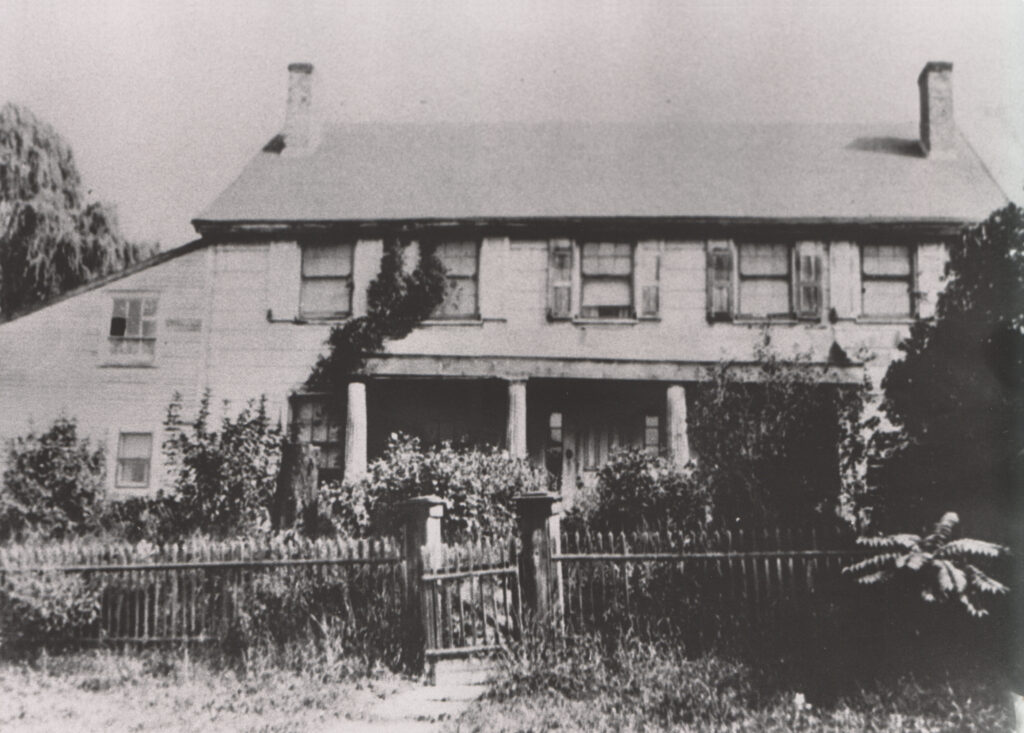
In Colonial times, it was popular for families to have private cemeteries close to home. The Remsen family erected a homestead on their farm adjacent to the cemetery in 1699, which stood until 1925. Jeromus Remsen Sr. (1735 – 1790) fought in the French and Indian War. As colonel of the Kings and Queens County Militia in the Battle of Long Island, he commanded the 7th New York Regiment in the American Revolutionary War.

The Remsen Park Coalition’s 1981 plaque states, “Within this park lies the remains of Revolutionary War Veteran Colonel Jeromus Remsen. Buried in the confines of this site were his cousins Major Abraham Remsen, Captain Luke Remsen, Lieutenant Aurt Remsen and their families. The Remsen family was amongst the first settlers of this area, originally known as White Pot.” A 1925 survey revealed brownstone grave inscriptions of Jeromus, Anna, Jerome (two), Cornelius, Ann Elizabeth, Bridget, and Major Abraham Remsen. The Veterans Administration erected non-brownstone graves that memorialize Colonel Remsen, Maj. Abraham Remsen, and brothers Aurt and Garrett Remsen, who were also Revolutionary War officers. The vanishing of some brownstone tombstones remains a mystery.

Remsen Farmhouse. Courtesy of Michael Perlman

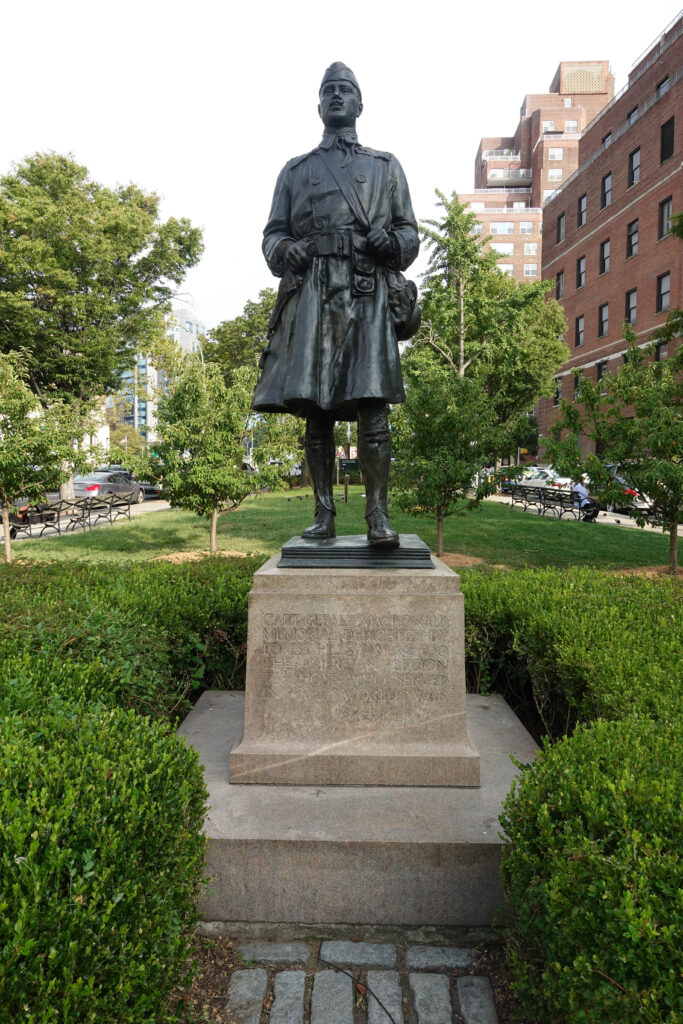
The Captain Gerald MacDonald Statue stands prominently in MacDonald Park as a bronze sculpture bearing homage to Gerald MacDonald (1882 – 1929), a Forest Hills resident and WWI veteran. He was an officer of engineers, who erected bridges and dug trenches. It was dedicated on May 27, 1934 by Mayor Fiorello H. La Guardia, after American Legion Post 630 allocated $1,500 at the request of WWI veteran Henry MacDonald, Gerald’s brother. The granite base inscription reads: “Capt. Gerald MacDonald; Memorial Dedicated By Forest Hills Post No. 630 The American Legion; To Those Who Served In The World War; 1934.”

The statue was sculpted by Henry MacDonald’s brother-in-law, Frederic de Henwood, and designed by architect William Henry Deacy. As for MacDonald Park, it was officially named on April 25, 1933.

WWI Captain Gerald MacDonald Statue. Photo by Michael Perlman

On May 28, 1933, the New York Times reported, “The ceremonies included a parade through Forest Hills by American Legion posts, Boy and Girl Scouts, and civic groups. Colonel F.W. Stopford of the U.S. Army, who was the principal speaker at the ceremonies, praised Mr. MacDonald’s war service as an officer of engineers at the battle of the Meuse-Argonne.” A rare MacDonald Memorial Games brass medal that represents Forest Hills and WWI history, was rediscovered a few years ago on eBay. It features Captain Gerald MacDonald.

Marching in the spirit of our bravest has been a unifying theme of the Forest Hills Memorial Day Parades. Forest Hills residents can trace an extensive route of historic parades. In 1922, red paper poppies were sold by a group of young ladies for 10 cents, and the proceeds benefited the veterans’ Mountain Camp. They hoped that everyone in Forest Hills would wear a poppy, which would pay tribute to wounded soldiers in the war. Lincoln’s Gettysburg Address was read, and the Forest Hills Choral Club led “My Country Tis’ of Thee.”

In June 1923, The Forest Hills Bulletin captured how a multi-generational community bonded and paid tribute: “On Memorial Day, the Forest Hills Post of the American Legion conducted services on the Green, in which they honored Rice Bassett, Whitney Bowles, Clarence O. Collins and Lewis Serlin from Forest Hills, who rendered the supreme sacrifice during the war. Commander Thomas B. Paton, Jr. was in charge.” A parade was led by a fifteen-piece Naval Reserve Band.

It continued, “During the services, an aeroplane circled over the Green, and Comrade John von Hofe dropped a wreath, to which was attached a message from President Harding. The wreath was placed on the memorial tablet and the message, calling upon the people for renewed consecration to ‘the finest sentiments of national love, devotion and loyalty’ was read. The speakers were Robert W. McCleary, Major, Coast Artillery Corps, and Hon. Robert W. Bonynge, ex-Congressman from Colorado, who both made stirring appeals for national patriotism. The Choral Club led the singing: Lead Kindly Light was sung by the post quartet, and Dr. Latshaw led in prayer.” A Memorial Day essay contest would engage the interest of neighborhood children, including those of Public School 3.

On May 31, 1938, The New York Times published, “In Forest Hills, a Memorial Day parade was headed by a detail from the Sixty-second Coast Artillery (Anti-Aircraft). The American Legion and other veteran organizations took part together with youth auxiliary units. The parade started at Austin St and Ascan Ave and proceeded to the Flagpole Green and thence to Jerry MacDonald Park, and to the Forest Hills Theatre, where exercises were held.”

The 2023 parade will begin on May 28 with an opening ceremony at 11 AM and the parade at 12 PM along Metropolitan Avenue. Now it is time to take a look back at American Legion Continental Post 1424 at 107-15 Metropolitan Avenue, which made it all possible. The American Legion was incorporated by Congress in 1919, and is known as the nation’s largest wartime veterans’ service organization. It maintains a mission to mentor youth and sponsor wholesome community programs, advocating patriotism and honor, promoting strong national security, and continued devotion to fellow service members and veterans.

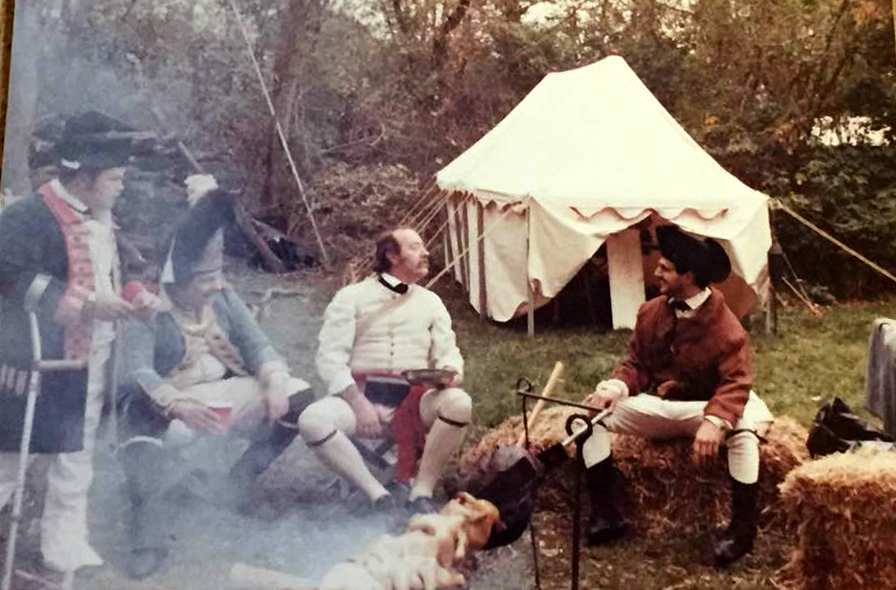
At the American Legion’s Forest Hills post, a plaque commemorates past commanders. The earliest recorded is James P. Grimes in 1946, alongside names including Stanley J. Koerner in 1953, John Civita from 1968 to 1969, and Arthur L. Dunckelman from 1984 to 1987. Former Forest Hills resident Michael Albetta served as parade coordinator from 1978 to 1990, president and founder of the Remsen Park Coalition which helped restore and landmark Remsen Cemetery, and was coordinator of the “Colonel Remsen Memorial Encampment.”

Remsen Memorial Encampment. Courtesy of Michael Albetta

Sponsored by the American Legion Continental Post 1424 and the Remsen Park Coalition, the May 30, 1979 parade was predicted to be the largest of its kind countrywide, with hundreds of marchers and nearly 5,000 spectators. It culminated with ceremonies in commemoration of veterans at Remsen Cemetery, including Revolutionary War Colonel Jeromus Remsen.

The 1980 Forest Hills Memorial Day Festival marked an expansion to a two-day event. On May 25, over 200 Colonial troops participated in the “Colonel Remsen Memorial Encampment,” held at Greenfield Park bordering Union Turnpike. Attendees acquired a taste of Colonial life, complete with the era’s crafts. The next day, over 2,000 marchers proceeded along Metropolitan Avenue from the turnpike, which was the parade’s former starting point.

Ceremony Sparks Dialogue for Tea Garden’s Rebirth

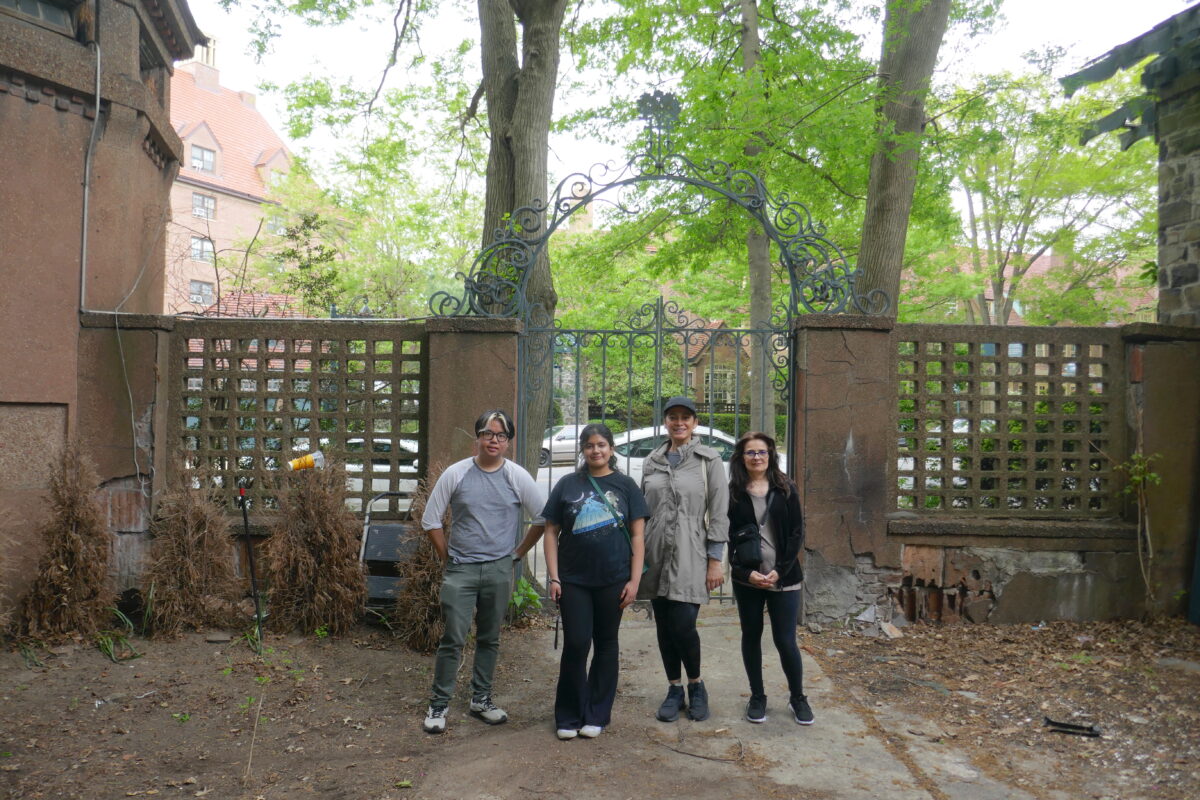
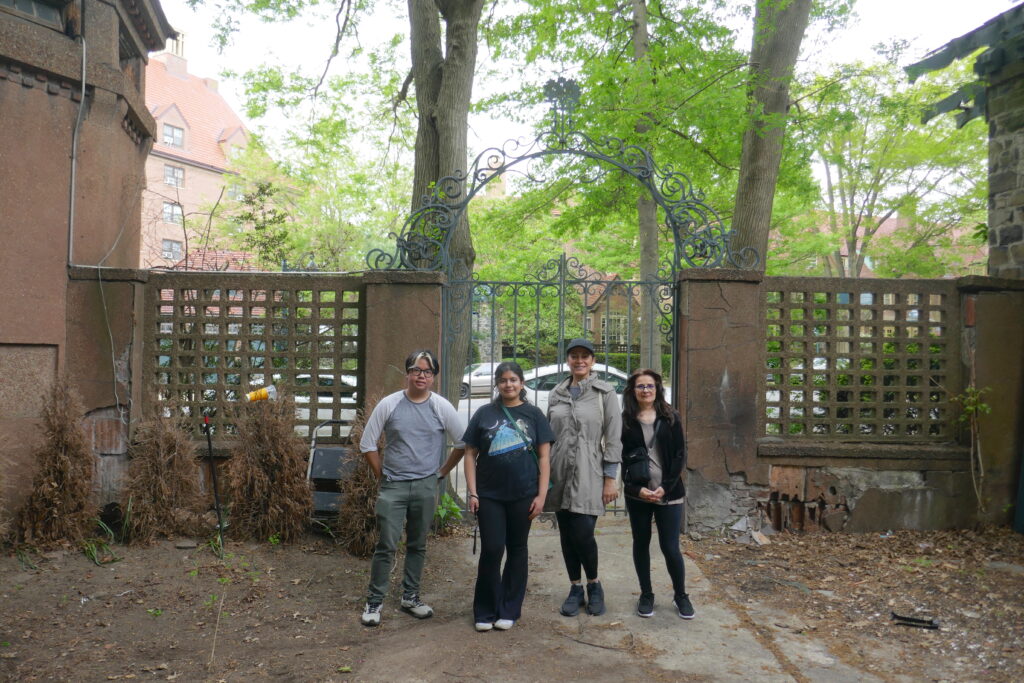
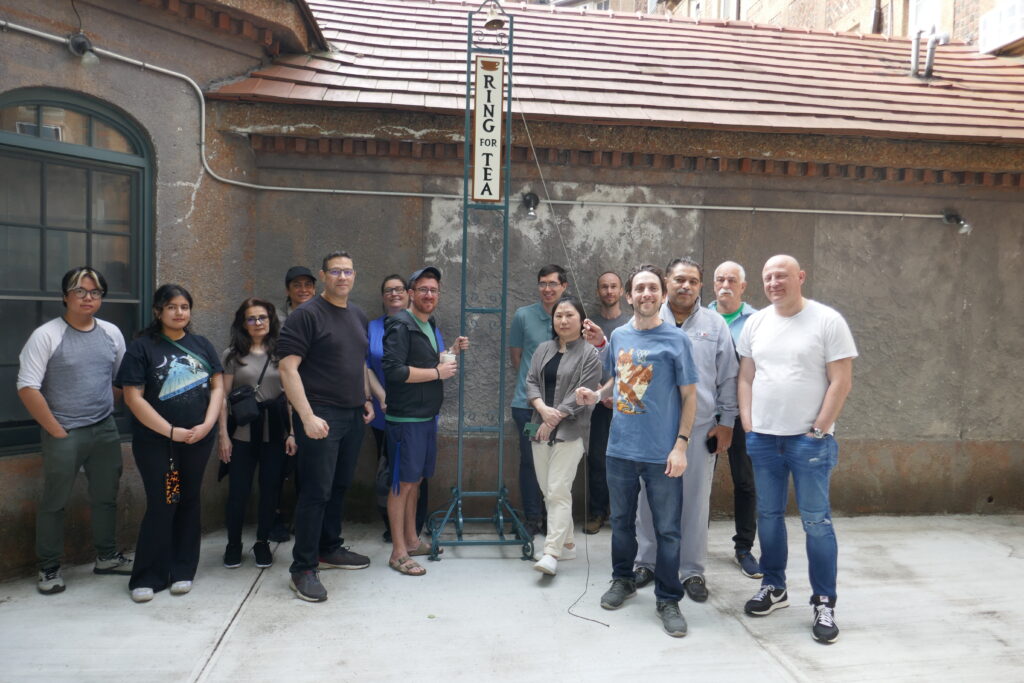
Attendees in front of the historic gate bearing Forest Hills logo. Photo: Michael Perlman

By Michael Perlman | mperlman@queensledger.com
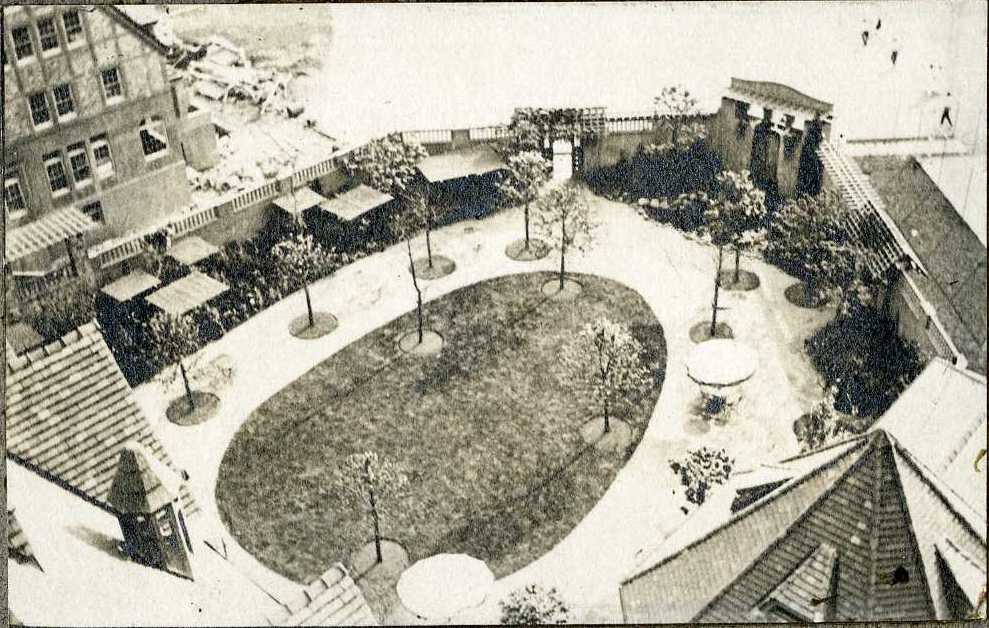
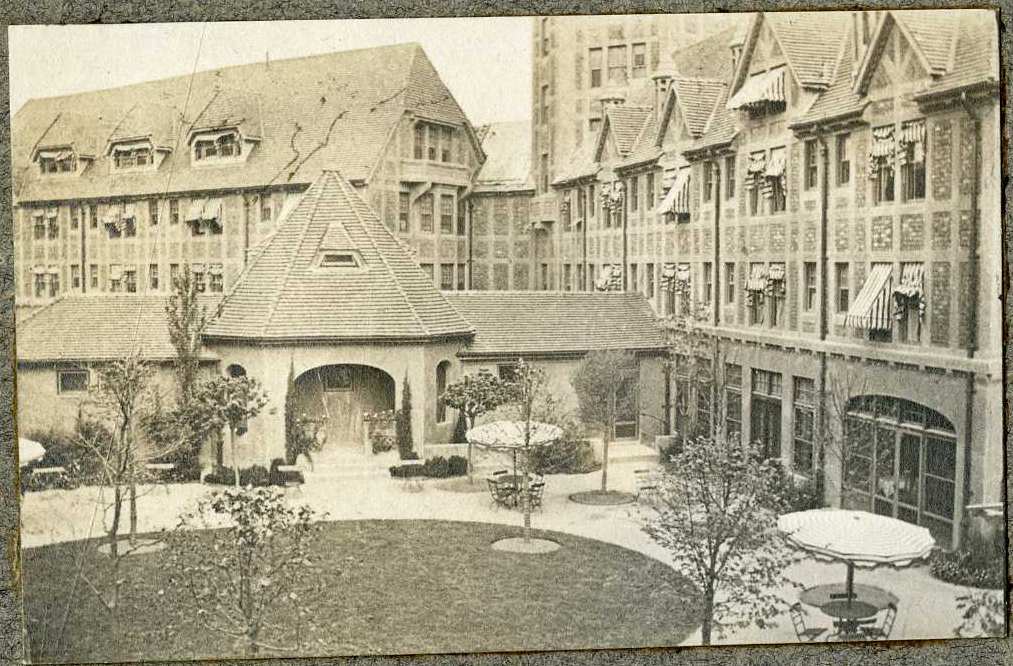
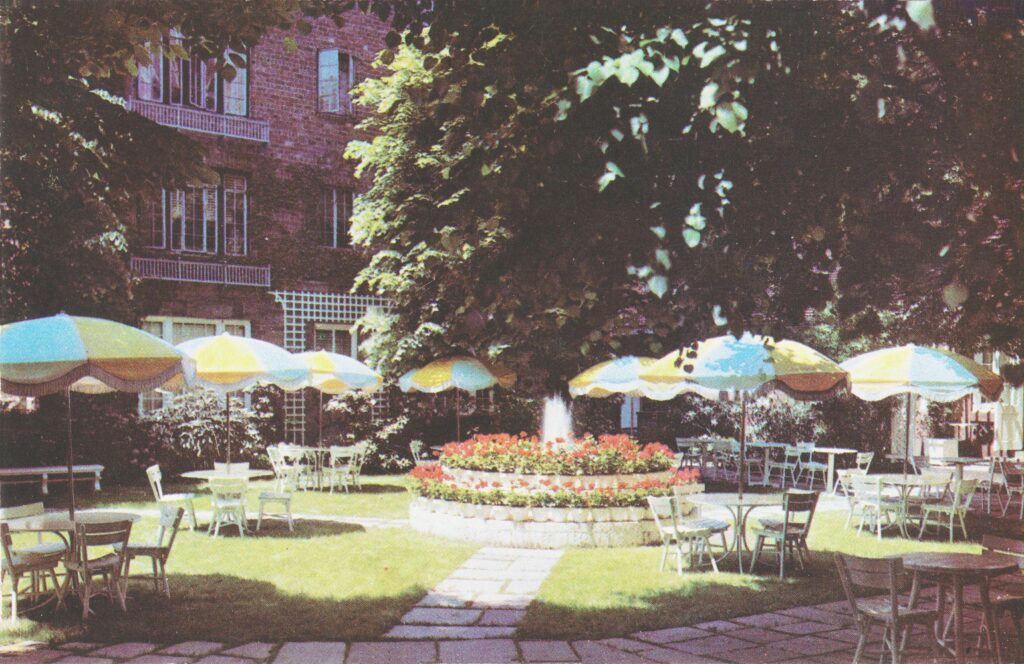
Behind an ornate gate on Greenway Terrace and under an over century-old Gothic archway-inspired tree canopy lies the Tea Garden, which opened in 1912 as part of the iconic Forest Hills Inn. Today, Jade Eatery & Lounge’s party room in Forest Hills Gardens leads to this historic yet long-forgotten Tudor-style retreat, awaiting further restoration and revitalization.

On May 7 at 4 PM, a traditional “Tea Time” gathering took center stage in the Tea Garden, where a very engaged assemblage of members of the New York Tea Society (NYTS) met local residents. They made friends while exploring the art of drinking tea, shared tea stories and site history, and envisioned the garden’s beautification and future capabilities.

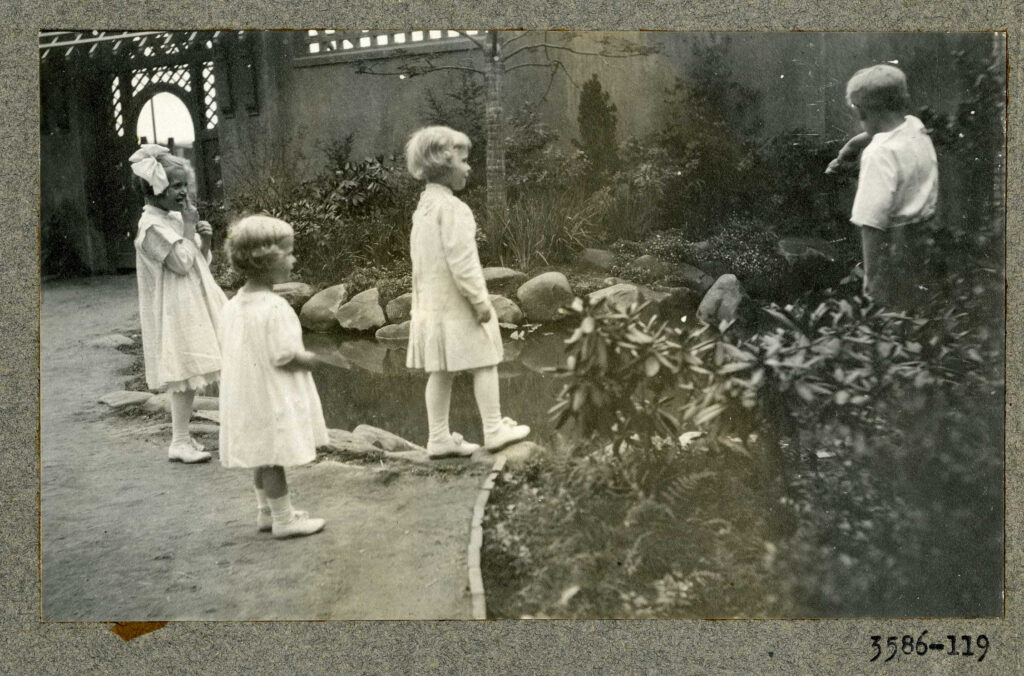
Tea Garden circa 1912. Photo courtesy of Olmsted Archives.

“We want to bring our history back,” said Kumar, the owner of Jade Eatery, who treats patrons like an extended family and shared over an hour of quality time with ceremonial guests. “Everyone is very much excited, and I am so honored to be part of the Tea Garden. The tea society brought along great flavored tea that was nice and hot, and they gave us a great presentation.” Kumar plans to partner with the organization and serve a variety of carefully selected teas.

Tea is the second most consumed drink worldwide. NYTS, which operates out of a Forest Hills tea studio and holds gatherings on weekends and digitally taps into an international fanbase, is on a mission to “facilitate the gathering of tea enthusiasts to promote tastings, discussions and education about tea and tea culture.”

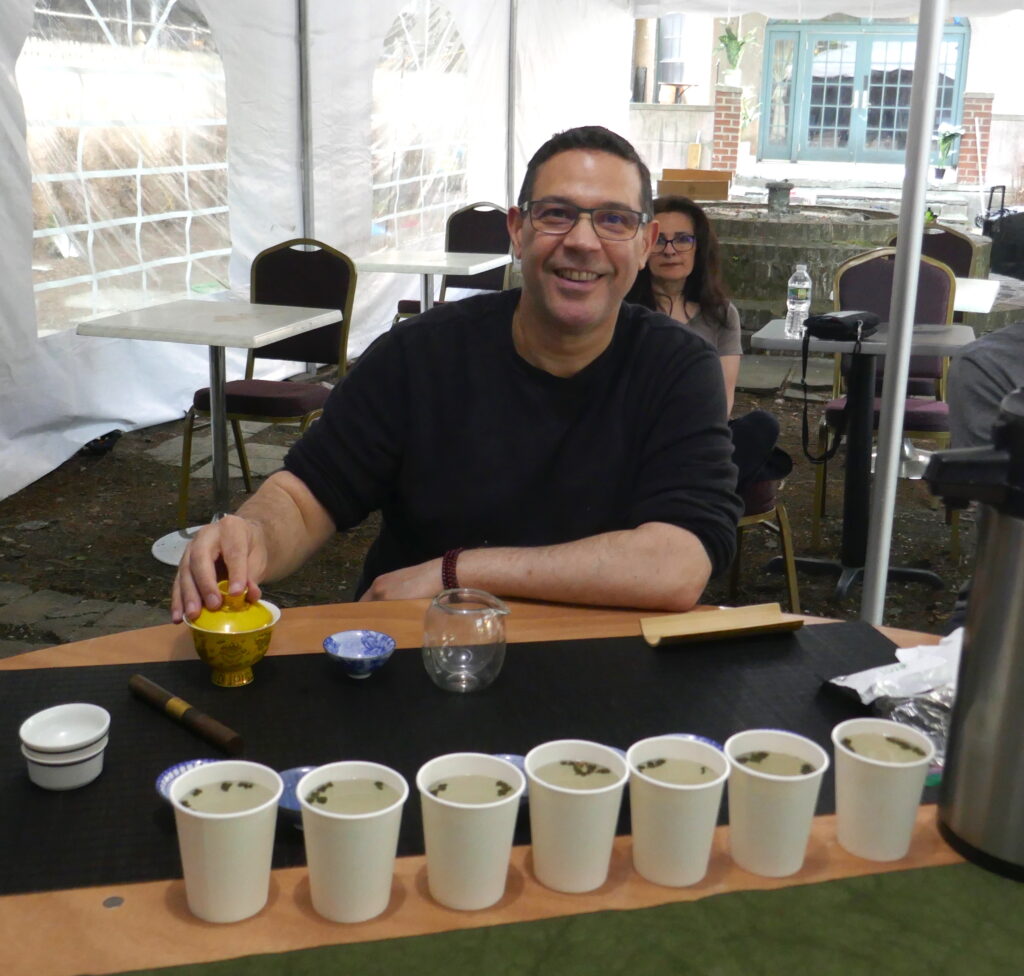
Roy Lamberty, founder and president of NYTS and a director of food and beverage of Marriott Hotels, served a Taiwanese High Mountain Oolong known as Dayuling. “It is a very floral and bright tea, perfect for a spring day. Meeting other Forest Hills neighbors and introducing a Chinese gongfu tea service is our passion at NYTS. If I could do it every day, I would, and I loved meeting everyone,” he said.

Roy Lamberty, New York Tea Society President. Photo by Michael Perlman

Authenticity conveys value. A gaiwan was used and small traditional three-sip cups. “High Mountain Oolong is a tea that holds all of its original nutrients that are within the semi-oxidized tea. It contains hints of chestnut flavor paired with a nutty aroma,” said Forest Hills resident David Edelman, a very active NYTS member since 2020. He is a social studies teacher at Union Square Academy for Health Sciences in Manhattan, who takes his passion a step further by operating a tea club.

Eyeing the future, Lamberty envisions Indian, English, and Chinese tea sessions coexisting, pending Kumar’s approval. “It would be filled with historical and mythological stories, which would amaze guests,” he said.

As for Edelman, he explained, “The NYTS would love to host future tea gatherings in the historic Tea Garden to introduce more people to tea culture, and experience the simple enjoyment of thoughtfully preparing and drinking tea with new friends.”

Edelman imagines spending an afternoon in the garden, ringing the tea bell to order cup after cup. “Ringing the bell helps one to connect with the neighborhood’s allure and hidden history. The Tea Garden is a little gem, hidden within the larger treasure of Forest Hills Gardens.”

He overheard commentary from attendees who discussed a need for local routine historical walking tours. “I could visualize the Tea Garden being the meeting place for such events, as well as a community space to recreate and celebrate local history. One can easily envision music, magic, theater, dance, all within this space.”

The tea gathering continued along the path of restoration, since on March 31, preservationists were first to witness the delivery of a highly stylized “Ring For Tea” stand, after the original vanished approximately 75 years ago. Attendees also rang its circa 1890s bell and drank tea. The replication was made possible through tours and puzzle sales by this columnist, in partnership with volunteer civil engineer Bea Hunt, Flushing Iron Weld and Noble Signs.

The Tea Garden was designed by Forest Hills Gardens principal architect Grosvenor Atterbury and landscape architect Frederick Law Olmsted, Jr. It once accommodated Forest Hills Inn guests and their friends with afternoon teas, dinner dances, plays by The Gardens Players, wedding receptions, dog shows, flower shows and July 4th events. However, when the Forest Hills Inn underwent conversion into a residence in 1968, the Tea Garden gradually became neglected.

Tea Garden circa 1912. Photo courtesy of Olmsted Archives.

The July 12, 1924 edition of The Forest Hills Bulletin read, “The Tea Garden of the Forest Hills Inn is a veritable fairyland, when lighted with Japanese lanterns, with the trickling fountain heard in the background, and a new moon shining overhead. There is no more delightful place in Greater New York for one to spend the dinner hour.” Every evening during the warmer months between 6:30 and 9 PM, a delectable dinner was served, to the music of the Inn Trio, such as Dvorak’s “Humoresque,” Nevin’s “A Day in Venice,” Godard’s “Canzonetta,” and Albeniz’s “A Night In Seville.”

Fast-forwarding nearly 100 years, Alexandra Gecin of Forest Hills first noticed the serenity and relaxation upon stepping into the Tea Garden. She explained, “Imagining the weddings, celebrations and afternoon teas that took place many years ago, as well as a working central fountain, cascading fountain and turtle pond, and thriving plants that existed, only added to its ‘secret garden’ feel. The icing on the cake, and hopefully the start of a fruitful restoration, was Perlman’s replication of the Ring For Tea stand, with a Gardens blue-green paint and a bell from Ukraine.”

NY Tea Society & residents join Kumar at the replicated Ring For Tea stand. Photo courtesy of Jade staff

Gecin also had no idea that a tea society existed in Forest Hills, and considered it a “lovely surprise.” “The second surprise was that the head of the society actually planned a tea ceremony for us and we could chat about it,” she continued.

She shared her vision for the Tea Garden’s future. “In addition to celebrations in a restored Tea Garden, I envision a full British tea service, with finger sandwiches and pastries in the warmer months, and a hot chocolate/s’mores/fondue chalet-type experience in colder months. The fountain could become a fire pit in the winter to gather around. It would also be landscaped with shade-loving perennials and evergreens, to have even more of that garden feel year-round.”

Babylon resident Alexander Nguyen was unaware of how many people were interested in not only tea, but the whole culture and history surrounding tea. “As I grew up, I always thought that tea was just a drink for adults, usually in the morning and during dinner, since it was sweet, sugary, and full of color. Now that I have grown up and experienced the culture of the New York Tea Society, I learned that tea is often more than just a drink, but a centerpiece of social events between friends, and strangers alike, snacking on cookies, or talking about tea.”

Tea Garden in 1950s with famed interior designer Dorothy Draper’s influence. Photo: Michael Perlman Postcard Collection

Nguyen stepped into this columnist’s exhibition at Jade’s gallery, which features restored vintage prints of the Tea Garden. “It made me wonder what events occurred in the garden, what kind of life it had, and what kind of stories could be told from its weathered walls and surface patina,” he said.

Nguyen felt that the Ring For Tea stand’s replication was a delight, adding to a surreal feeling of standing in a place of history upon viewing the vintage photos, which featured the original tea stand.

He explained his vision. “The Tea Garden could be restored to its prime, as a piece of serenity amidst a busy and bustling city. If the fountain were to be restored, then the garden would be like something out of a fairytale; a secluded sanctuary covered by trees and bushes, with the fountain at the center of it all.”

“The Tea Garden is beautiful, even in its semi-abandoned state, and hearing stories about its wedding receptions and the social and communal events at the Forest Hills Inn was very touching,” said Jamaica resident Aayesha Ayub, who found the area to be full of hope for a new life. “It was nice to see people from all walks of life and ages gather to experience a common love and interest. Having a space for the community to connect is my hope, and I would love to plant additional forestry to help create a more beautiful space that people can enjoy once again.”

Children at the cascading fountain & turtle pond circa 1912. Photo courtesy of Olmsted Archives.

The peaceful and inviting Tea Garden and all it represents, is inspiring for its historical value for the community, according to Rosa M. Lazon of Forest Hills. “It could be the perfect space for community gatherings and cultural events, including tea ceremonies and educational artistic events,” she said.

Lazon described her experience as unique and educational, as the members of the tea society are very passionate about sharing their knowledge of tea ceremonies. “I want to express my great appreciation for what all supporters are doing to restore and preserve the Tea Garden,” she continued.

To support the Tea Garden initiative or volunteer, join the Facebook group. Additionally, to become an active member of the New York Tea Society and learn more, visit their page.

Remembering Legends Jerry Springer & Harry Belafonte

Jerry Springer, FHHS Class of 1961 yearbook portrait. Photo courtesy of Herb Kunkes

By Michael Perlman | mperlman@queensledger.com
Each night there will be two brighter stars in the sky in memory of local icons who achieved international recognition. One is Jerry Springer, who was born Gerald Norman Springer in 1944 and passed away on April 27. Another is Harry Belafonte, who was born Harold George Bellanfanti Jr. in 1927 and passed away on April 25.

Jerry Springer, a native of London, who was born in an underground railway station turned bomb shelter, once resided at the Roger Williams at 83-33 Austin Street in Kew Gardens and began 1st grade at Public School 99. He also lived in Park City at 97-07 63rd Road, and was a 1961 Forest Hills High School graduate who pursued drama. In a 2011 clip for PIX 11, where he grew up watching the Yankees from 1 PM to 7:30 PM, he said, “Every single birthday, we come back to New York” and “I have a lot of difficulty giving up my roots. This is my blood living here. I love it and never stopped loving New York.”

In this columnist’s book, “Legendary Locals of Forest Hills and Rego Park,” Springer wrote the foreword, which read: “Forest Hills – It was an idyllic place to grow up. The 1950s: A sense of neighborhood and the American Dream. Friends lived in the same apartment building or on the same block. We went to school together, played in the schoolyard together, and rooted for the same teams together. We were all going to college, and my first job was working as a ball boy at the West Side Tennis Club for the U.S. Tennis Championships. What was not to like?  And Simon and Garfunkel were a year ahead of me at Forest Hills High School.”

Jerry Springer’s 5th grade class, PS 99, 1954, Springer in 4th row, 2nd from right. Photo courtesy of Carol Feigl Paplin.
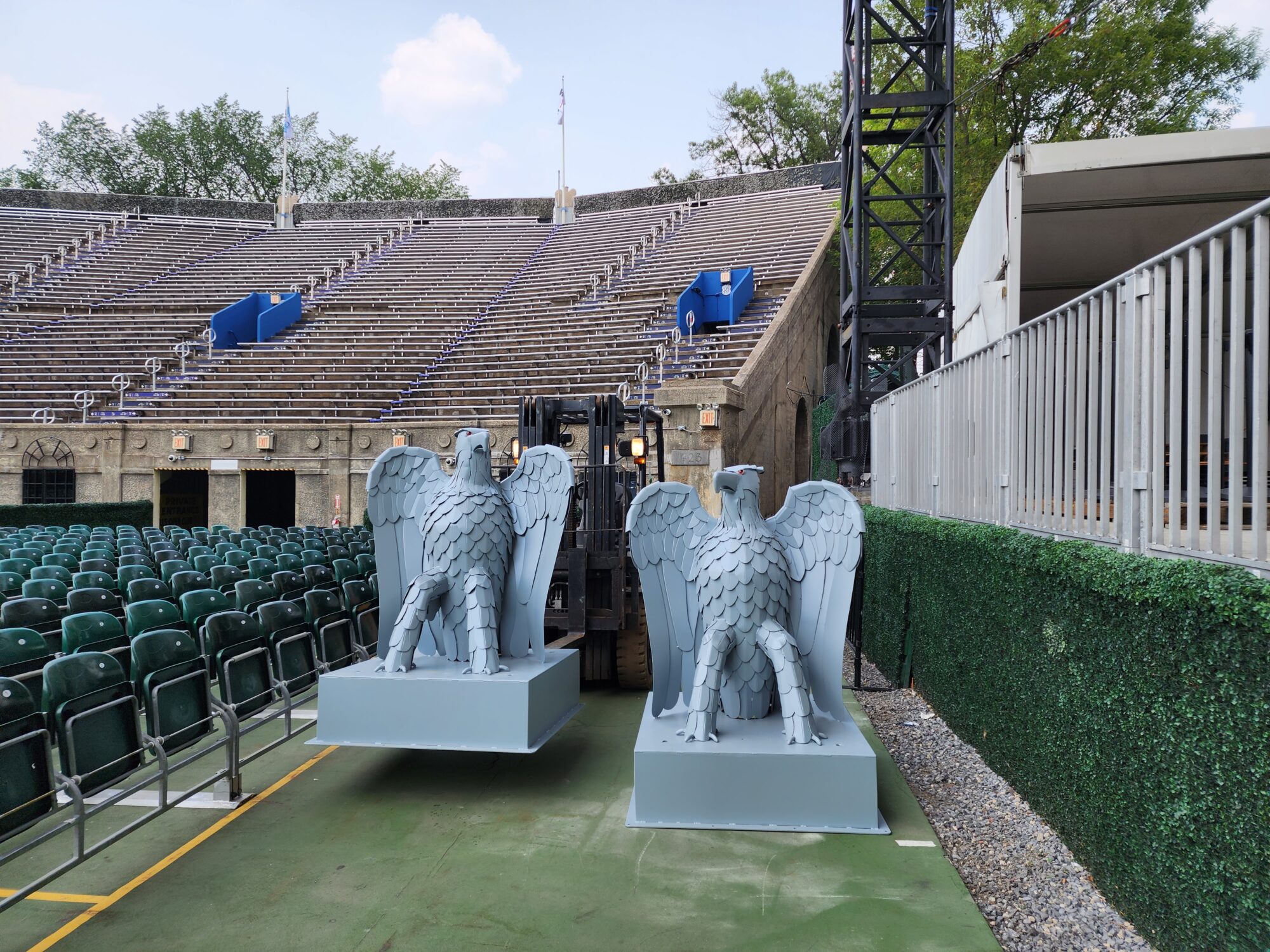
His father, Richard Springer, was the owner of a local shoe shop, whereas his mother, Margot nee Kallmann worked as a bank clerk. Due to the Holocaust, his Jewish parents fled Landsberg an der Warthe in Prussia and emigrated to London. However, most of his relatives passed away as a result.

Springer pursued political science at Tulane University and earned a law degree at Northwestern University. He was an aide for Robert F. Kennedy’s 1968 presidential campaign. As the 56th mayor of Cincinnati, Ohio at age 33 in 1977, he was considered one of the country’s youngest. Pursuing an alternate career path, he became a news anchor and managing editor of NBC in Cincinnati.

In 1991, he began achieving prominence as a television personality on his daily talk show, “The Jerry Springer Show,” which originated with a politically-based format. That was followed by being rebranded in 1994. It featured everyday people on a stage, battling out disputes among family and significant others, which focused on controversial topics. It ran through 2018, holding a record for a longest running talk show, with nearly 5,000 episodes. From 2015 through 2022, he was also the face behind “The Jerry Springer Podcast.”

Springer’s presence on TV and in films was diverse, as he starred in the film “Citizen Verdict,” hosted “Springer on the Radio,” “America’s Got Talent,” “The Price Is Right Live!” in Vancouver’s Boulevard Casino and “Baggage and Tabloid.” His comedic skills were prevalent when he starred as Billy Flynn in the musical, “Chicago.”

Springer was the recipient of various accolades, which included the Laurence Olivier Award for the British musical “Jerry Springer: The Opera,” influenced by his diverse life and talk show. He was also an Emmy Award-winning newscaster and country artist. In 1995, he released an album titled “Dr. Talk.” He also sang Elvis five years ago on “The Ray D’Arcy Show.”

Springer also achieved success as a lawyer with the firm Grinker, Sudman & Springer and was the host of “Judge Jerry,” airing from 2019 to 2022.

Upon Springer’s death in Chicago, Illinois, BBC referenced him as televising “fringes of (American) society to a global audience” and commended him as “an era-defining television host.”

Harry Belafonte, a Harlem native, is being remembered as a talented singer, composer, social activist and actor who broke racial barriers. In fact, Belafonte was a trailblazer as one of the first black singers to sell a million records and have an immense fan base on film. He popularized calypso music with international audiences as of the 1950s and also resided in East Elmhurst at that time. As of 1957, Belafonte had four albums released under RCA Victor, and “Calypso” sold one million copies.

Harry Belafonte singing in 1954. Photo courtesy of Library of Congress.

In an interview with the Long Island Star-Journal in April 1957, he explained that as a child, he owned no records and not even a radio, as a result of his family living in poverty. He said, “We were hungry as kids. We didn’t even have our own hand-me-downs to wear. My father’s clothes were strictly his work clothes as a tailor.”

This charismatic balladeer and folk singer appeared on August 25 to August 27, 1961 at the Forest Hills Music Festival at the iconic Forest Hills Stadium, and had a return engagement on July 31 to August 2, 1964 with singer and songwriter Miriam Makeba. On July 31, he exhibited perfect pitch with flawless tempo, and his repertoire included “Day-O” (The Banana Boat Song), “Every Night When The Sun Goes Down,” “Glory Manager” and “John Henry.” With a harmonious expression, he performed “Jamaica Farewell during the second half of the program. Long Island Star-Journal readers picked up Walter Kaner’s popular column that August and read, “Harry Belafonte pocketed $75,000 for his three shows at the Forest Hills Stadium last weekend. Some 35,000 show-goers shelled out $175,000 to witness his performances.”

Belafonte sang soulful renditions of Jewish classics such as “Hava Nagila” and “Erev Shel Shoshanim” (Evening of Roses). These songs are staples at weddings and Bar/Bat Mitzvahs.

1964 Forest Hills Music Festival poster featuring Harry Belafonte. Photo courtesy of Michael Perlman.

As a humanitarian and performer, he recorded a double album in April 1959, “Belafonte at Carnegie Hall,” which benefited The New Lincoln School and Wiltwyck School.

Boulevard Tavern, later renamed The Boulevard was the go-to entertainment venue and social establishment at 94-05 Queens Boulevard in Rego Park from the 1930s to the late 1960s. It attracted the likes of Belafonte, as well as other big names such as Tony Bennett, Jerry Vale, Steve Lawrence and Eydie Gorme, Connie Haines, and Peggy Lee.

Belafonte starred in films including “Carmen Jones” (1954), “Island in the Sun,” (1957) which was screened at the Midway Theatre, and “Odds Against Tomorrow” (1959). In 1954, he was a Tony Award recipient after starring in John Murray Anderson’s “Almanac.” He also achieved a record as the first black performer to receive an Emmy for “Tonight with Harry Belafonte,” a television special.

As a Civil Rights activist, Belafonte participated in marches and helped coordinate them. He developed a close relationship in 1956 with Martin Luther King Jr. and collaborated, and was joined by other entertainers and elected officials. He made Civil Rights his priority in the early 1960s and produced a benefit concert in response to the Montgomery, Alabama bus boycott that helped King become nationally recognized. He fundraised to bail King among other protestors out of jail and helped coordinate Washington’s Freedom March. In Belafonte’s 2011 memoir, “My Song,” he wrote, “I was having almost daily talks with Martin” and “I realized that the movement was more important than anything else.”

Civil Rights March on Washington, DC, Sidney Poitier, Harry Belafonte, Charlton Heston, 1963 ay Lincoln Memorial. Photo by Rowland Scherma.

In 1985, Belafonte was instrumental in consolidating musicians for the iconic song, USA for Africa’s “We Are The World,” which featured a supergroup of 46 vocalists.

Belafonte was a real estate investor who took much pleasure in owning the Old Farm estate in Chatham, New York, a 21-room apartment at 300 West End Avenue and two condos in the Central Savings Bank Building, situated at 2100 Broadway.

His mighty words include, “I am an activist who happened to be an artist” and “Each and every one of you has the power, the will and the capacity to make a difference in the world in which you live in.” The Harry Belafonte 115th Street Library, a historic McKim, Mead & White building in Harlem, casts a spirit in his memory.

Fill the Form for Events, Advertisement or Business Listing