
Political Whisperer: New York’s Threat to Re-Redraw Congressional Lines

By Robert Hornak
One of the great traditions of American politics is for both political parties to try their best to gerrymander the lines of the political districts in their states. There is nothing new about this or unique to either party.
There has been recent attention brought to this process, sparked by two recent Supreme Court decisions. In 2019, the court ruled that issues related to partisan gerrymandering – the process where district lines are drawn to favor one party over the other – are “beyond the reach of the federal courts” changing how past voting rights cases, that advantaged democrats over republicans, would be considered by the court.
Then in 2024, the SCOTUS ruled in favor of a South Carolina district that was challenged as an unconstitutional racial gerrymander. Writing for the majority, Justice Alito stated, “inferring bad faith based on the racial effects of a political gerrymander in a jurisdiction in which race and partisan preference are very closely correlated” would no longer be accepted as a basis for challenge by the court, recognizing the difference between political and racial gerrymandering.
Now there is talk about drawing new lines in certain red states where partisan gerrymandering in the past had been thwarted by the courts as being racially, not politically based. Texas is leading the charge, looking to redraw their congressional lines to increase partisan advantage, as democrats have already done in many states, looking to fight fire with fire.
Democrats, naturally, are up in arms, screaming about how unethical this effort is, while trying to cover their Cheshire cat grin for having done it themselves so successfully in states like Illinois, California, and Massachusetts.
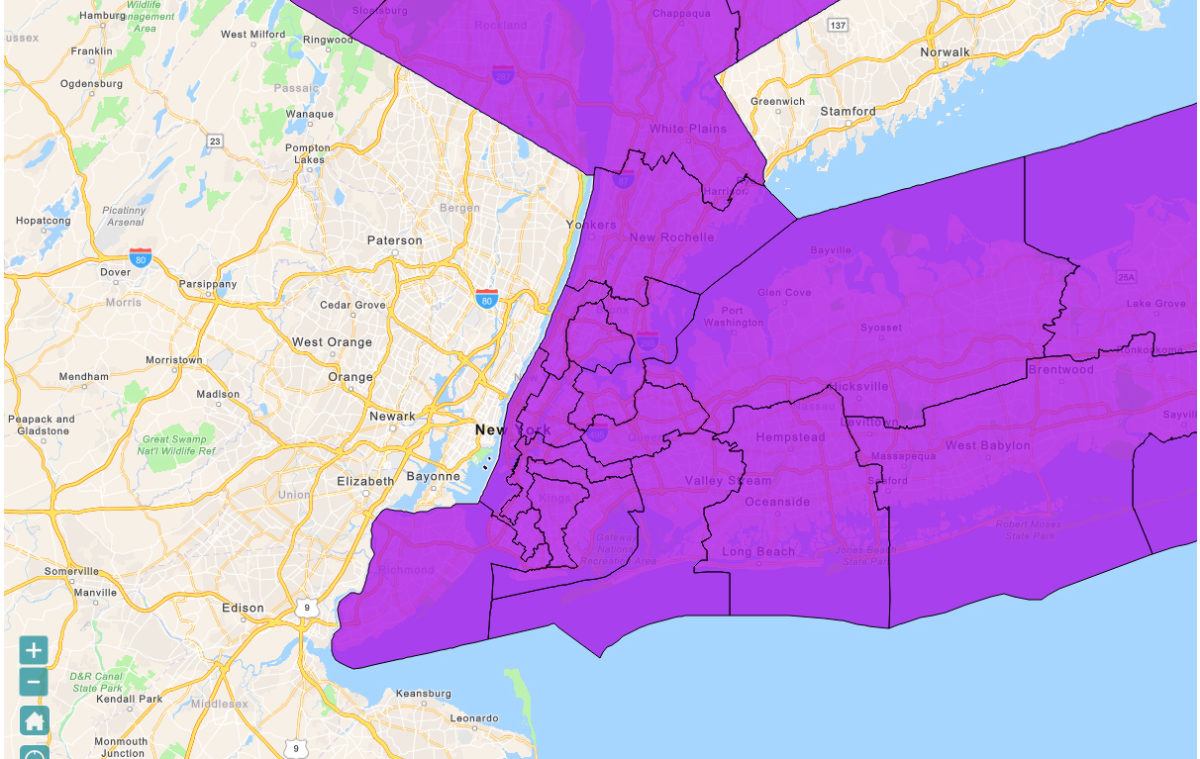
But nowhere were they more blatant about this than in New York. In 2014, NY voters approved a referendum to make the redistricting process “a fair and readily transparent process by which to redraw the lines of state legislative and congressional districts” according to the NYC Independent Redistricting Commission. The newly created IRC would draw the lines of new districts with strict constitutional limitations on gerrymandering to advantage either political party. However, the legislature must approve the final maps, a legislature now dominated by democrats.
Unlike Texas, the NY Constitution mandates that district lines be redrawn once and only once a decade. The IRC submitted their constitutionally required plan for redistricting for the 2022 elections, but they were not gerrymandered enough for the Democrats in Albany.
Unable to get the 2/3 vote required to pass their own gerrymandered lines, the process was handed to the courts. A non-partisan expert was engaged and the court set the new lines. Lines that were generally seen as fair by just about everyone – except the Democrats in power who were highly displeased that Republicans gained three seats that election.
So, committed to finding a better way to gerrymander within constitutional boundaries, Democrats pledged to draw new lines for the 2024 election. And they did. Republicans, who had 11 seats after the 2022 election but lost one in the special election to replace George Santos, went from 10 seats to 7 after 2024.
So now Texas is effectively doing what NY did just a year ago. But not to be outdone, NY Democrats are declaring themselves the masters of gerrymandering and telling Texas Republicans you ain’t seen nothing yet.
While Democrats around the country yell foul and claim that Texas is violating the constitution (although without challenging Texas’ authority in court and with Texas creating three new majority Hispanic districts), NY Democrats are threatening action and pledging to once again redraw NY’s lines and gerrymander them even more with the explicit goal of eliminating five more NY Republicans.
Democratic Senate Deputy Majority Leader Michael Gianaris said very bluntly, “We can come up with lines that comply with constitutional criteria that still accomplish our goal” just as they did in 2024. Only one thing stands in their way, the NYS Constitution. They need to change the state constitution to allow mid-decade redistricting. All this depends on a positive outcome for their referendum in a future election with an electorate that has already expressed their disapproval of partisan gerrymandering.
Robert Hornak is a veteran political consultant who has previously served as the Deputy Director of the Republican Assembly Leader’s NYC office and as Executive Director of the Queens Republican Party. He can be reached at rahornak@gmail.com and @roberthornak on X.