
2023 Ultrasound Technology: How Will Your Fetus Look

Ultrasound technology has been used for decades to image the developing fetus in the womb, providing expectant parents with a glimpse of their baby before it is born. In recent years, there have been significant advancements in ultrasound technology, leading to the development of new and improved methods for imaging the fetus 2023.

One of the most notable developments in ultrasound technology is the use of three-dimensional (3D) and four-dimensional (4D) imaging. While traditional ultrasound uses two-dimensional images, 3D and 4D ultrasound use advanced algorithms to create a more realistic and detailed image of the fetus.

3D ultrasound provides a more lifelike image of the fetus, allowing expectant parents to see their baby’s features more clearly. 4D ultrasound takes this one step further by providing a live video-like image of the fetus, allowing parents to see the baby’s movements and facial expressions in real time.

Another recent development in ultrasound technology is the use of high-frequency transducers. Traditional ultrasound uses low-frequency sound waves, which can result in a less detailed image and can be less comfortable for the patient. High-frequency transducers, on the other hand, use higher frequency sound waves to produce a more detailed image of the fetus. This not only provides a clearer image for the expectant parents, but it can also help doctors make a more accurate diagnosis.

Another advancement in ultrasound technology is the use of “smart” probes. These probes use artificial intelligence to automatically adjust the angle and focus of the ultrasound beam, resulting in a clearer image of the fetus. They also have the ability to recognize specific structures and organs within the womb, allowing for more accurate diagnosis and monitoring of fetal development.

In addition to these technological advancements, there have also been developments in the way that ultrasound images are displayed. In the past, ultrasound images were displayed on film or on a small screen, making it difficult for expectant parents to get a good look at their baby. Today, many ultrasound machines come with large, high-resolution screens that allow for a more detailed and interactive viewing experience.

Overall, the advancements in ultrasound technology have greatly improved the way that fetuses are imaged and have made the experience of pregnancy even more special for expectant parents. With the continued development of these technologies, it is likely that we will see even more improvements in the future.


Contributed With Help From 3D-4D Ultrasound Studio Queens 147-19 Union Tpke, Flushing, NY 11367 (718) 844-2221.

Visit Their Official Queens Ledger Ultrasound Profile Now.
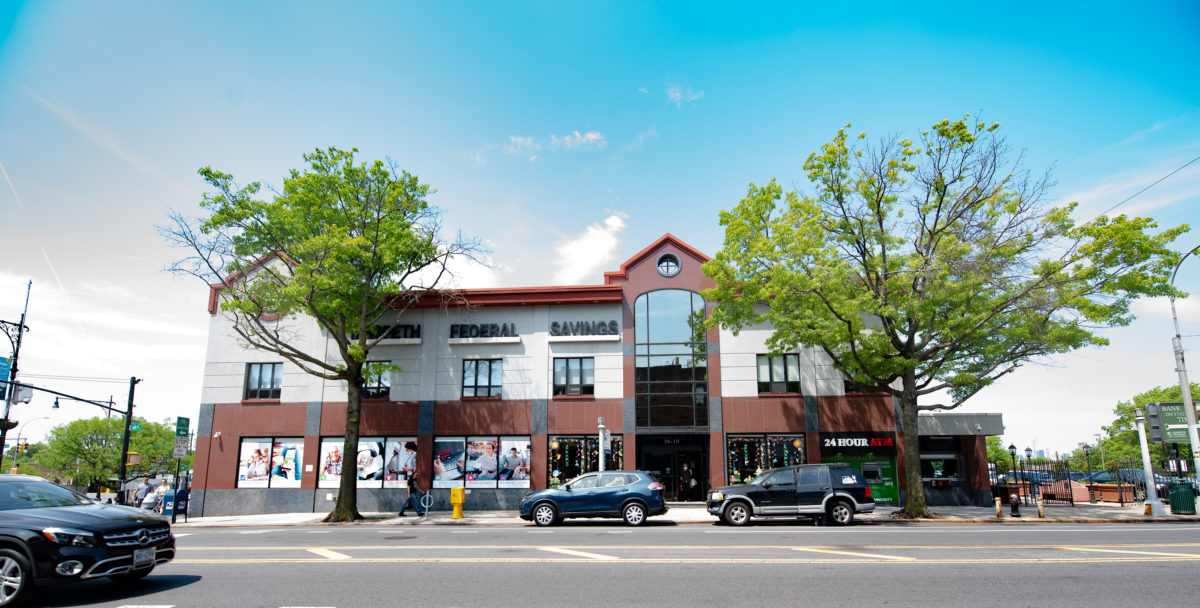
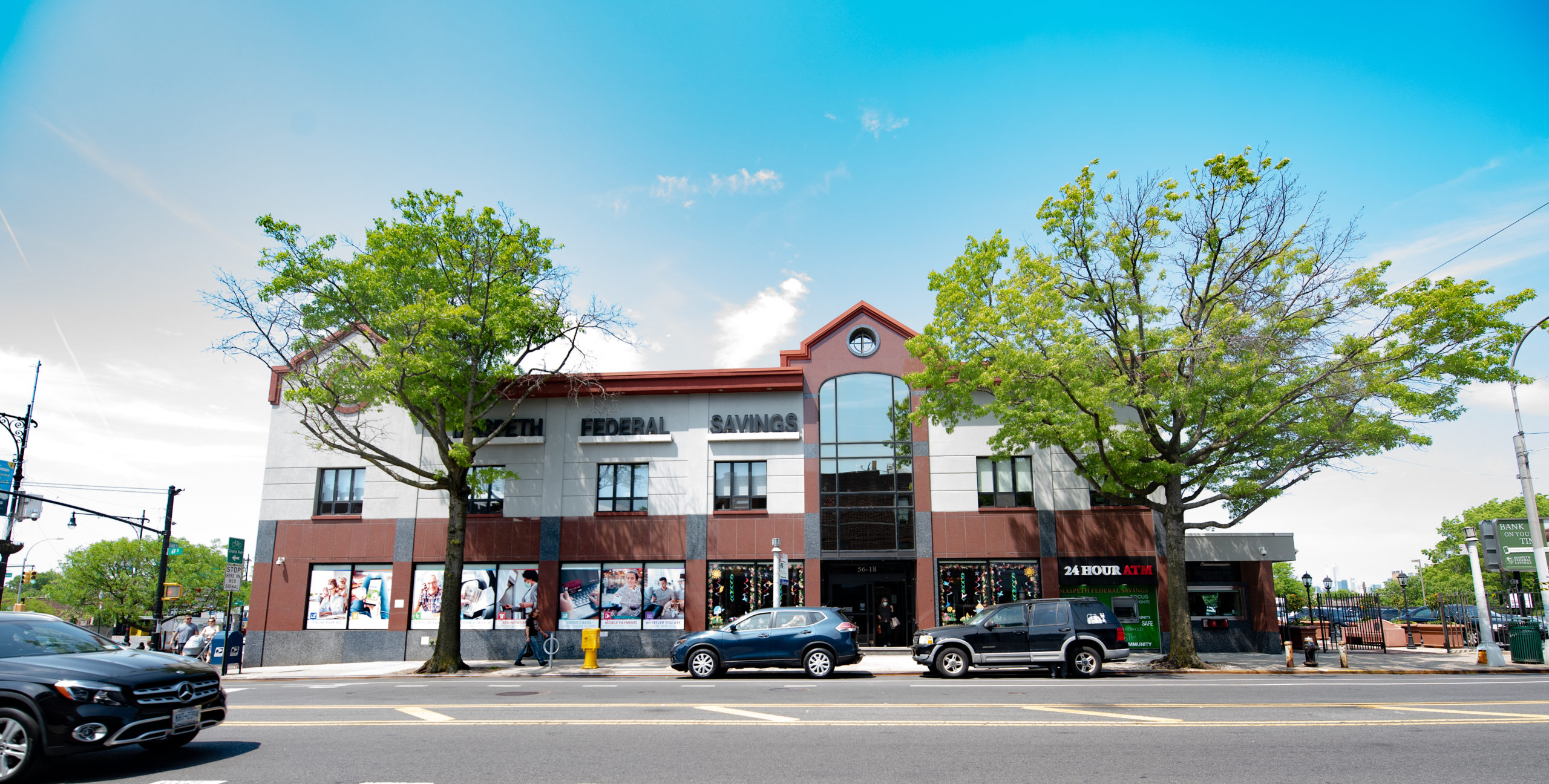
Maspeth Federal Savings becomes an official bank of St. John’s Athletics

Maspeth Federal Savings (MFS) is now an official bank of St. John’s University Athletics, strengthening its visibility and connection across the St. John’s community with basketball game sponsorships and plans to launch an on-campus ATM and co-branded debit card.

The partnership between these two storied New York institutions began in 2018.

MFS has several initiatives reflecting the challenges and values that define young New Yorkers, including their interest in entrepreneurship and environmental, social and governance (ESG).

According to NASDAQ, 40 percent of Gen Zers make financial decisions driven by companies with purpose.

MFS Gen-Z focused programs include: financial literacy seminars to nurture Gen Z’s high entrepreneurial ambitions—more than 70% of people aged 18–24 plan to start a side hustle—and combat the growing amount of financial misinformation targeting youth across social media; robust summer internships providing opportunity and education; sustainability programs including community Recycling Days and electric vehicle charging stations in MFS parking lots; and a Diversity, Equity and Inclusion committee to effect positive change across the MFS community as well as Bank-On certified products to help ensure access to safe and affordable banking for all.

“Many of us at Maspeth Federal Savings are St. John’s alumni, so this initiative is near and dear to our hearts,” said MFS President and Chief Executive Officer Thomas Rudzewick. “We couldn’t be more excited to partner with the next generation as they make plans for tomorrow, be it starting a business, buying a home, planning a trip or pursuing further education.”

Sponsored games include Sunday, Jan. 29 vs. Georgetown at Madison Square Garden.

January’s tipoff marks the 121st meeting of one of the BIG EAST conference’s greatest rivalries between St. John’s and Georgetown.

In their last showdown, the Johnnies topped the Hoyas 90-77 in Washington, D.C.

An additional sponsored game will be held at Carnesseca Arena on February 18th, 2023 against the Creighton Blue Jays.

Launch dates for the debit card and on-campus ATM, located in the Marillac Dining Hall, will be announced in 2023.

“We are thrilled to expand our partnership with Maspeth Federal Savings and further the connection with our campus and fanbase,” added Kevin Waters, St. John’s Sports Properties General Manager. “We look forward to working with them on their creative approach to our partnership.”

For more information, contact Gloria Benfari, MFS Vice President & Marketing Director, at gbenfari@maspethfederal.com.

Maggie’s Little Theater to open Agatha Christie’s ‘The Mousetrap’

By Stephanie Meditz

news@queensledger.com

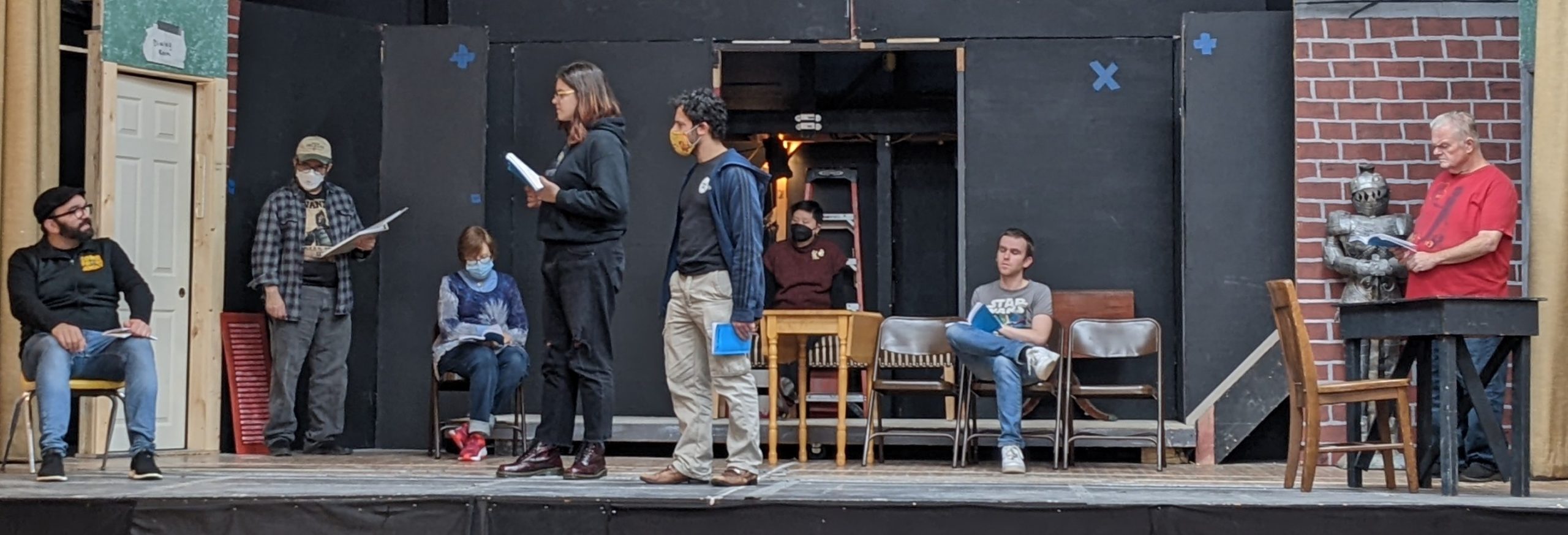
Rehearsals for The Mousetrap began in November and took place both in-person and on Zoom.

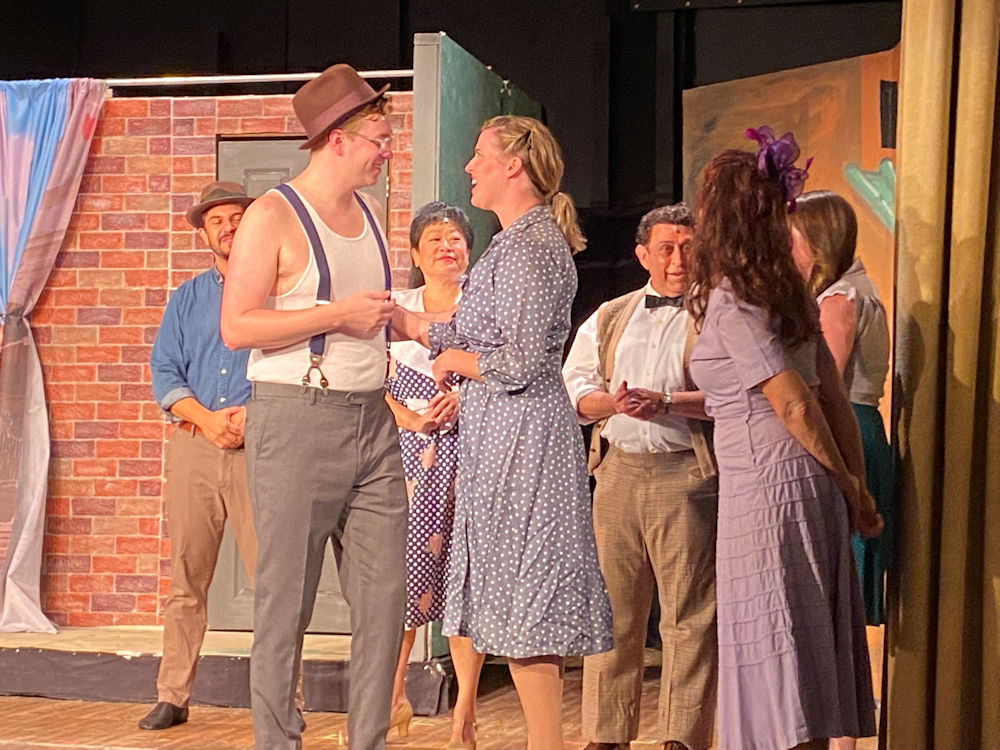
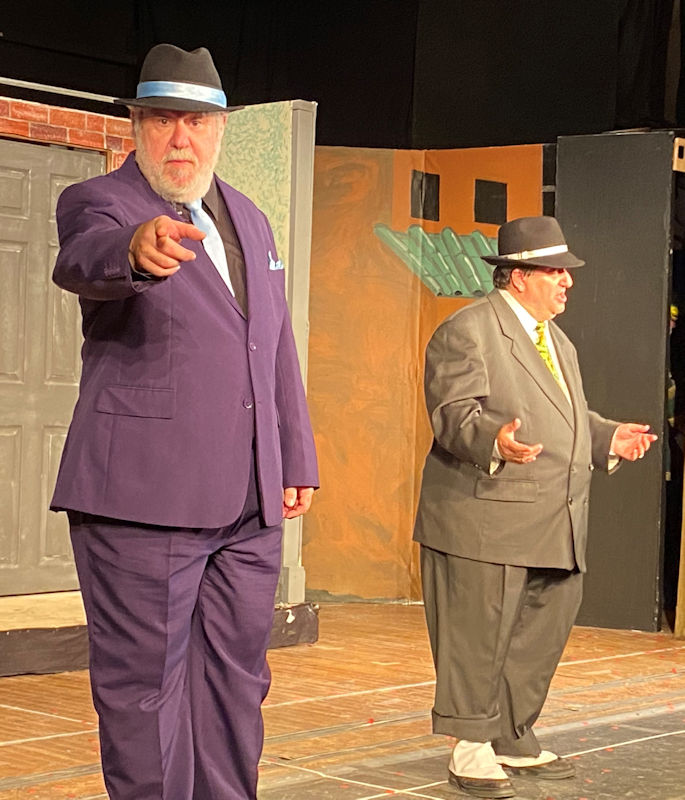
On Feb. 11, Maggie’s Little Theater in Middle Village will open the curtains on its production of Agatha Christie’s 1952 murder mystery, “The Mousetrap.”

The whodunit follows Mollie and Giles as they open their guest house for the first time, only to find themselves snowed in with a murderer. 

Producer and founding member of Maggie’s Little Theater, Dolores Voyer, said that several of the show’s rehearsals took place on Zoom to protect the cast from COVID-19.

“We rehearsed in person most of the time, but when we started this show, our director [Thom Harmon] suggested…to have certain rehearsals not in person. Things that don’t need to be in person, individual work between the director and an actor…don’t need to be on the stage,” she said. “We wanted to keep everybody as safe as possible…when we’re in the theater on the stage, the actors are free to and often do wear masks.” 

This past summer, Maggie’s Little Theater put on a production of “Kiss Me, Kate,” its first performance since before the pandemic. 

Last summer, Maggie’s Little Theater put on its first performance since before the pandemic, Kiss Me, Kate.

“I didn’t realize during the pandemic how much I missed it until we started again, and I think that a lot of people feel that way,” Voyer said. “We kind of got used to being in our own little bubbles, and now that we’re able to safely come out and enjoy live theater again, it’s such a great feeling to be able to collaborate with people and to bring something to the audience.” 

Voyer is especially grateful for the cast of The Mousetrap and their motivation to produce quality work for the audience. 

“This cast is wonderful. We are really lucky to have a couple of longtime veterans of community theater in Queens as well as several people who are new to Maggie’s Little Theater…they’re very dedicated, they’re very interested in the process,” Voyer said. “The amount of chemistry between the actors has really developed so nicely.” 

Cast members who are recurring Maggie’s Little Theater actors include Bernard Bosio, Sarah Nowik and Mark York.

Although Maggie’s Little Theater typically produces more musicals than straight plays, it is primarily interested in producing shows that the audience would like to see. 

Maggie’s Little Theater’s production of Kiss Me, Kate was directed by Bill Logan and choreographed by Amanda Montoni.

“We’ve done some straight plays that are well known, some that are a little less well known,” Voyer said. “This one is kind of both well known and not, because it’s Agatha Christie but it’s a show that’s never been produced on Broadway.”

The Mousetrap has been running in London for 70 years, but it has not seen a Broadway stage in that time per Agatha Christie’s wish. 

The show’s original contract states that it could not move to Broadway or be produced as a movie until it closed in London, and it has not closed. 

“It debuted in 1952, and Agatha Christie herself thought it wouldn’t run more than a few months, but except for the pandemic, it has run continuously from 1952 until now,” Voyer said. 

Performance dates for The Mousetrap are Feb. 11, 17 and 18 at 8 p.m. and Feb. 12 and 19 at 2:30 p.m. 

Tickets are available at https://www.maggieslittletheater.org and are $20 for adults and $18 for children 11 and under and seniors over 65.

Porcelli: The Other Side of Education (1/5)

CTE Shop Class: Now It’s High-Tech

Trade ed New Year’s resolutions

By Mike Porcelli

Every New Year, most of us make resolutions. This year, what should we resolve to do about trade education? Hopefully, we can agree to implement the ideas expressed here each week.

In the years I’ve been advocating for CTE, I’ve discovered that I am not alone.

Every day, more people are speaking out on the need to bring back trade education.

The leading voice among them is Mike Rowe, who I call “the patron saint of trade education.”

His 20-year media campaign has a positive impact on many who are starting to understand the importance of CTE.

Mayor Eric Adams, DOE Commissioner David Banks and many of their staff members have stated that they are bringing back modernized CTE programs. 

But can they do it in time to meet all students’ needs? Not without private sector help.

One of the most gratifying things I’ve discovered is the number of philanthropic leaders who are denouncing the despicable state of our inner-city schools and promoting CTE as a prime solution to the problem.

Many of those providing private funding to restore trade education have been highlighted here. But are those programs as effective as they could be? Not yet.

A major factor that led to my current work to restore trade education was a 2016 article by former mayor Mike Bloomberg and Jamie Dimon, CEO of J.P. Morgan Chase, entitled, “The Skills Schools Aren’t Teaching But Must,” in which they wrote: “Economic growth depends on having a strong middle class open to all Americans, not just college graduates… That’s why vocational education is crucial.” This is even more true today.

They went on to explain how the solution to most of our social and economic problems is training young people for good jobs by reinventing vocational education.

Implementing those ideas is even more crucial today, especially after the decline in education performance because of the learning losses resulting from the pandemic.

In his recent interviews and speeches, Jamie Dimon refers to the “national catastrophe in American education.”

Jamie Dimon, CEO of J.P. Morgan Chase.

He talks about the deplorable state of our schools, and constantly refers to the low inner city graduation rates, and how poorly students who do graduate are prepared for jobs or college.

He outlines his philanthropic efforts to restore trade education and encourages other business and political leaders to also provide more support for such programs.

In response to the ideas Bloomberg & Dimon expressed six years ago, I wrote: The question now is: will school systems make the changes required to bring back the excellent job training programs they offered in the past – with new technologies to train workers for the future?

My answer then was… I hope so.

My hope now is that the public and private sectors not just resolve to provide modern CTE programs for every student who can most benefit from them, but they do it this year.

Let’s resolve to teach: The skills schools aren’t teaching but must… now.

Academic & Trade Education are Two Sides of a Coin. This column explores the impact of CTE programs on students, society, and the economy.

Mike Porcelli: life-long mechanic, adjunct professor, and host of Autolab Radio, is committed to restoring trade education in schools before it’s too late. https://www.linkedin.com/in/mike-porcelli-master-mechanic-allasecerts/ 

MARIA L. COLON

Maria L. Colon passed away on Wednesday, December 28, 2022 at the age of 89. Beloved mother of Frankie Pagan and Maria L. Pagan, and mother-in-law of Sonia. Loving grandmother of Angeline. Cherished great-grandmother of Jerome, Jaxon and Jeremiah. Funeral Services held at Papavero Funeral Home on Tuesday, January 2, 2023. Interment followed at Cementerio Municipal Nuevo de Toa Alta, Toa Alta, Puerto Rico under the direction of Papavero Funeral Home, 72-27 Grand Avenue, Maspeth NY 11378.

Is Buying A House & Getting A Mortgage In NYC Worth It In 2023

Home prices in NYC refuse to drop. And interest rates have gone up as well, increasing the cost of homeownership from month to month. Unsurprisingly, many home buyers are left wondering: Is buying a house still worth it in 2023?

The short answer is yes. If you’re financially ready, buying a house is still worth it — even in the current market. Experts largely agree that buying and owning a home remains a smarter financial move than renting for many.

If you’re on the fence about a home purchase or worried about getting a mortgage in NYC with the non-stop rate increases that we see, here’s what you should consider.

Benefits of buying a house in 2023

Despite the financial challenges of the current market, there are plenty of reasons why buying a home is still worth it in 2023.

1. Rising Prices Lead To Increased Equity

One of the chief benefits of owning a home is that over time, increased home equity can add to your net worth and give you a low-cost source of cash as needed. The ability to build equity is what sets homeownership apart from renting, which has no return on investment.

“Home buyers who purchase a home today are still likely to see rising property values and increased home equity. That’s because supply is still relatively low compared to buyer demand, so home prices are likely to keep rising, although at a slower pace,” notes National Association of Realtors (NAR) senior economist Gay Cororaton.

Cororaton points out that, even with rising mortgage rates, home prices have held up. As of March 2022, the median sales price was up 15% year-over-year.

“Although home prices have fallen approximately 30% from their peak level in 2006, they have rebounded over the years, with the median single-family existing-home sales price rising at an annual pace of 3.4% from the fourth quarter of 2006 through the fourth quarter of 2021,” Cororaton adds.

Using this metric, if you bought a home 15 years ago, you likely would have accumulated $197,500 in home equity — $141,700 of which would be price appreciation.

“Over the past 30 years, a homeowner who purchased a typical home and sold it today would likely have built up equity of $360,700,” she continues.

It seems that people nowadays really understand and feel secure in real estate investments. In addition, it’s safe to assume that unlike in 2007 when the housing crisis was based on several unpredictable domino effect events, 2023 will be very different. Clearly, the real estate market in New York City currently holds that view.


2. Homeownership Means Fixed Housing Costs

What’s extra nice about buying a home with a fixed-rate mortgage is that “even though the value of your home will increase, your monthly principal and interest payment will remain the same over the life of your loan,” says Jordan Fulmer, owner of Momentum Property Solutions in Huntsville, Alabama.

Jason Gelios, a Michigan-based Realtor, points out that owning real estate is still the top way to create generational wealth. “When you also couple this reasoning with the fact that rents are increasing at record levels, it makes more financial sense to own a home and gain equity.”

“There aren’t too many investments that can provide the returns that real estate can,” he says.

3. Owning Gives You Opportunities Renting Does Not

Of course, there are several other advantages to buying a home today. These include:

  • The ability to customize your home the way you see fit, unlike a rental unit that likely won’t allow for personalization


  • Greater privacy from neighbors, especially if you select a single-family detached home


  • This money can be used to fund home improvement projects, pay off debt, cover the cost of a wedding or other major expense, or virtually anything you desire.


  • The ability to claim a mortgage interest deduction on your taxes if you finance your property


  • The chance to build a stronger credit rating and improve your credit score if you finance a mortgage and pay your bills on time.


  • And then there are other, less tangible benefits many homeowners experience. For instance, you’ll likely have more room to raise a family and grow your household. And you may build roots in your community and enjoy greater stability over time. Consider that renters are four times more inclined to relocate in a given year versus homeowners, per the U.S. Census.

Contributed With Help From a Local Queens, NY Mortgage Broker: R&J Capital Mortgage & Loan Brokers Of NY 80-02 Kew Gardens Road, Suite 1040 Queens, NY 11415 (718) 520-7000 https://www.getmemortgage.com/.

Porcelli: The Other Side of Education (12/29)

CTE Shop Class: Now It’s High-Tech

Who makes the holidays happy?

By Mike Porcelli

Workers put up the first Rockefeller Christmas Tree in 1931. (Photo courtesy of Tishman Speyer)

As we celebrate our many year-end holiday traditions and enter a new year and a new chapter in our lives – let’s teach our children, and many adults, about the many skilled workers who make the holiday season possible.

“Tis the season to be jolly” …we greet each other with, “Merry Christmas, Happy Chanukah and Happy Holidays.” But do we ever consider what it takes to make the holidays happy? Most people don’t think about all the things we take for granted, and the skilled trade workers who help us enjoy the holidays.

For example, the symbol of the season in this city – the Rockefeller Center Christmas tree. It is a brilliantly decorated emblem of the spirit of the holidays.

This tradition, originated by the construction workers who built Rockefeller Center during the Great Depression, continues to attract millions of admirers each year. How many skilled workers did it take to build Rockefeller Center, and how many more are needed to recreate this iconic attraction every Christmas? Starting with the farmers who grow the tree, to the many workers who cut it down, load it onto an oversize trailer, transport it over highways others build, and use huge cranes to lift it onto a stand built by others…not to mention those who use more cranes to install millions of lights and decorations that make it the national representation of the season. Don’t forget the electrical workers who power those lights, and countless other skilled tradesmen.

In addition to the millions of visitors admiring “The Tree” each year, millions more use every means of conveyance to travel home for the holidays. How happy would this season be without the cars, trains, and planes that transport us to holiday family dinners? Without the people who build those vehicles and keep them running, many of us would have a very lonely holiday.

As children, we believe the toys delivered by Santa come from the North Pole. As we grow older, we learn how goods and services are really produced. But for decades, many schools have misled students with another fiction – that the skilled trades are not valuable careers, and they must be college educated to become successful.

Unlike the myth of the North Pole – this one is harmful…depriving many students of rewarding careers.

Children know that without the skilled elves who build the toys and load them onto Santa’s sleigh, there would be nothing under their trees. In the real world, it’s time for schools everywhere to begin promoting the value of trade education and celebrating the work of the millions of skilled CTE graduates – by producing more of them. Schools MUST provide more CTE training, before those who make our holidays happy are gone.

Use this holiday season to teach young children the importance of Santa’s skilled worker elves and teach adults the value of all real-world skilled trade workers. Our New Year’s resolution should be: Create more CTE programs for all students who can benefit from them.

Enjoy the happy holidays provided by our skilled trade workers. We need: many, many more – and then some!

Teach them – now and in the future…and tools make great gifts for many of us!

Academic & Trade Education are Two Sides of a Coin. This column explores the impact of CTE programs on students, society, and the economy.

Mike Porcelli: life-long mechanic, adjunct professor, and host of Autolab Radio, is committed to restoring trade education in schools before it’s too late. https://www.linkedin.com/in/mike-porcelli-master-mechanic-allasecerts/ 

Op-Ed: Double down MTA, Queens needs more trains

By Juan Ardila, Assembly District 37 Elect

QNS rendering via Friends of the QNS.

Give credit where credit is due with the Interborough Express proposed by Gov. Hochul: For a governor to finally take notice of an underused freight-rail line running from Brooklyn into Queens, and pushing to convert that line to passenger rail, is an idea whose time has finally come.

The IBX, as proposed, would run 14 miles through these two boroughs without going through Manhattan. The governor and the MTA, in other words, are taking a real interest in helping all New Yorkers with their daily commute, and not just those traveling to Manhattan.

Moving away from Manhattan-centered planning is what Queens and the outer boroughs have long deserved, and addressing the mass transit needs of some of our long-marooned communities simply makes sense.

Converting this long right-of-way from freight to commuter rail, as opposed to asking the MTA to build out entirely new and expensive infrastructure, is cost-effective.

It also makes environmental sense as it helps to alleviate our city’s dependence on automobiles, which currently crowd our streets and highways.

Lastly, it makes economic sense, because the city benefits when more people have better mass-transit access to jobs, schools and other essential places like daycares and hospitals.

But I implore the governor and the MTA: Don’t stop there. Keep going and double down by revisiting the QNS plan, a recently studied proposal to reactivate and repurpose freight rail along the Lower Montauk Branch which runs through central Queens and can connect Long Island City to nearby neighborhoods like Maspeth, Ridgewood, Middle Village — all the way to Jamaica.

The governor can help us make Queens, the MTA’s most underserved borough after Staten Island, the sort of inter-connected, environmentally friendly, economic powerhouse it was meant to be.

The IBX and the QNS lines are also remarkably similar. Both are publicly owned right-of-ways that have been used sparingly for years by freight-rail companies.

Both can be converted comparatively cheaply, by infrastructure-expense standards, to include passenger service, sharing the same space with freight.

Passenger service can run during the day and freight can run in the off-hours. The QNS would be 90 percent less expensive to build out per mile than the Second Ave. subway plan by comparison.

Moreover, both the IBX plan and the QNS both call for a planned stop at Metropolitan Ave. in Middle Village, which could turn this growing neighborhood into a mass transportation hub.

If both lines are built, a 14-mile line would have 23 miles of new interconnectivity. This would be groundbreaking for those who live along these lines.

Right now, many of the areas where the unused QNS line lies are commonly referred to as transit deserts. What’s it like to live in a transit desert? I happen to know because I live in Maspeth. I can walk faster than most of the local buses through my neighborhood. People around here own cars out of necessity, not as a luxury. That’s not how New Yorkers should live.

This is no charity request either. Queens’ population has been exploding in recent decades.

Long Island City is one of the fastest-growing neighborhoods in all of America, period, while neighborhoods like Ridgewood and Jamaica are only getting more populated.

Neighborhoods along the QNS line are home to thousands of workers from all trades who are looking for better ways to get around. Approximately 95,000 existing jobs and three of NYC’s most important industrial business zones lie within a half-mile of the QNS line, so if both the IBX and the QNS are built, those workers will have a real chance of finding better jobs across the entire region with greater access to mass transportation.

What’s more, the nonprofit advocacy group Friends of the QNS, which has been promoting reactivating the Lower Montauk line for more than half a decade, has spent this summer working with a bicycle advocacy group here in Queens to promote a greenway that could be added alongside the train line.

The DOT and the MTA should review these proposals, because, despite all the pressures and complaints from drivers about congestion and parking, we have to find a way to share our city with bikes and other alternative forms of transportation.

I was glad to see that the QNS line was included in the MTA’s list of ideal projects in its 20-year Needs Assessment report (a 2018 DOT feasibility report has already made it clear that the proposal is feasible).

Rather than simply adding it onto a long list of to-do projects that may never get done, let’s make this one happen.

Local Podiatrist Data May Prove Link Between Hammertoe & Diabetes

If you have diabetes, you may be aware of how diabetic Neuropathy can affect your feet. Diabetic Neuropathy can cause numbness and other sensations in the feet and legs, which tends to mask any pain a person might feel from any cuts or sores they might have on their feet. If these wounds aren’t cared for properly, it can lead to infection.

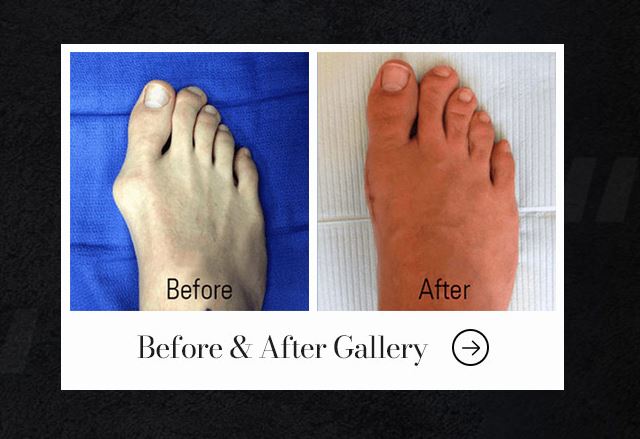
This nerve damage from diabetes can increase your chances of developing certain foot problems, like hammertoe, which is a contracture deformity, or bending, of one or both joints in the little toes.

The most common cause of hammertoe is an imbalance of the muscles and tendons, which is usually due to structural or neurological changes in the foot that occur over time. “The small muscles [and] tendons in the foot can be affected by [diabetic] Neuropathy,” says local podiatrist William Spielfogel, DPM, chief of the division of podiatry at Lenox Hill Hospital. When the nerve endings in the small muscles and tendons aren’t functioning well, the imbalance can cause the toe to contract up, he says.

If the toe is contracted and rubs up against the top of the shoe, and you have a lack of sensation, you can develop a sore on that toe, which could lead to an ulceration and further complications, says Dr. Spielfogel.

How To Prevent Hammertoe When You Have Diabetes

Hammertoe is often aggravated by shoes that don’t fit you properly. If a toe is too long and is forced into a cramped position with too-tight shoes, it could cause a hammertoe. “Think about the shoes that you’re wearing. You might need bigger shoes or better fitting shoes, or maybe you don’t tie your shoelaces so tight,” says Minisha Sood, MD, an endocrinologist in New York City. Your feet can get larger with age or after certain body changes like pregnancy. So just because you’ve always worn a size 8.5 in the past doesn’t mean you should now. Different shoe brands can also vary widely in how they fit. If you have diabetes, it’s a good idea to get your feet measured and properly sized wherever you go shoe shopping. Sometimes hammertoe may also result from previous trauma to the toe.

Along with making sure you have the proper fitting shoes, managing your blood sugar and taking care of your feet regularly are the most important steps you can take to prevent any foot problems that may develop with diabetes. Take a look every day to make sure there aren’t any spots that are red, says Dr. Sood. “Address little cuts and scrapes, and cracked skin areas early, and don’t let them kind of fester and collect bacteria, because that can turn into infection.”


Contributed with help from:

Ideal Podiatrist Astoria, Foot & Ankle Doctor, DPM 31-16 30th Ave. #203, Astoria, NY 11102 (718) 626-3338

Ideal Podiatry is an award winning foot & ankle clinic in the heart of Astoria, Queens. Our medical services enjoy the highest Google rating in our are with over 250+ verified 5-star Google reviews. From Orthotics, Pain, Ingrown toenails, Bunions, Fungus, Hammertoe & Surgery – we can handle all your foot & ankle based needs.

HENRY MANUEL ABREU

Henry Manuel Abreu passed away on Thursday, December 22, 2022 at the age of 25. Beloved son of Henry and Jossie. Loving brother of Tiffany, Erika, Hendry and Mateo. Cherished uncle of Maya Jane and Arielle. Dear grandson of Carmen Diaz. Beloved Fiance of Analyse. Mass of Christian Burial offered at St. Adalbert’s Church on Tuesday, December 27, 2022 10:00AM. Private Cremation followed at Fresh Pond Crematory, Middle Village NY under the direction of Papavero Funeral Home, 72-27 Grand Avenue, Maspeth NY 11378.

Fill the Form for Events, Advertisement or Business Listing